
Phosphorus Overload and Bone Demineralization
Updated May 2026
The excessive use of phosphate additives in UK processed foods disrupts the delicate calcium-phosphorus balance. This report explains how high phosphorus levels trigger parathyroid hormone to strip calcium from bones.
Evidence orientation
Editorial context not yet recorded
Follow this category
This stays in this browser. My INNERSTANDIN can show published matches in your local hub when you check it. It does not send email, push, or alert notifications.
Local learning review
A private browser aid for revisiting ideas. It is not an alert or a health recommendation.
Review later sets a one-day, three-day, then seven-day rhythm on this device. Choose it only when you want to revisit this article.
Overview
In the realm of modern nutritional science, phosphorus has long been relegated to the shadow of its more famous partner, calcium. We are told from childhood that calcium builds strong bones, yet we are rarely informed of the biological antagonist that can systematically dismantle them. Phosphorus is an essential element, a vital component of the hydroxyapatite crystal that gives bones their rigidity, a backbone for our DNA, and a primary currency in cellular energy through Adenosine Triphosphate (ATP). However, in the 21st-century industrial food landscape, this essential mineral has been weaponised through the ubiquitous use of inorganic phosphate additives.
The fundamental crisis we face is not merely a deficiency of nutrients, but a profound disruption of the Calcium-Phosphorus (Ca:P) ratio. Evolutionary biology suggests that the human body is optimised for a ratio of approximately 1:1. In the modern British diet, dominated by ultra-processed foods (UPFs) and "hidden" additives, this ratio has skewed violently toward 1:3 or even 1:4. This is not a benign shift.
As a senior biological researcher for INNERSTANDING, I must posit that this systemic phosphorus overload is a primary, yet largely ignored, driver of the UK’s escalating rates of osteoporosis, chronic kidney disease (CKD), and cardiovascular calcification. The mechanism is elegant in its tragedy: when the blood is flooded with highly bioavailable inorganic phosphates, the body’s endocrine system views this as an emergency. To maintain homeostasis, it triggers a hormonal cascade that effectively "mines" the skeleton for calcium to buffer the excess, leading to a slow, invisible leaching of bone density.
Fact: Unlike organic phosphorus found naturally in proteins, which is only 40–60% absorbed by the human gut, inorganic phosphate additives used in processed foods have an absorption rate of nearly 100%.
This report will dissect the molecular pathways of this demineralisation, expose the industrial logic behind the phosphorus glut, and provide a framework for biological reclamation.
The Biology — How It Works
To understand phosphorus overload, one must understand the regulatory feedback loops managed by the parathyroid glands, the kidneys, and the intestines. Under normal physiological conditions, serum phosphorus levels are kept within a very narrow range (typically 0.81 to 1.45 mmol/L in adults).
The Endocrine Sentinels
The primary regulator of this balance is the Parathyroid Hormone (PTH). When serum phosphorus levels rise, or calcium levels fall, the parathyroid glands—four tiny nodules located behind the thyroid—secrete PTH. In a healthy state, PTH performs three main tasks:
- It signals the kidneys to excrete excess phosphorus through urine (phosphaturia).
- It stimulates the kidneys to produce Calcitriol (the active form of Vitamin D), which increases calcium absorption from the gut.
- It activates osteoclasts (bone-dissolving cells) to release calcium from the skeletal reservoir into the bloodstream.
The Problem of Chronicity
In the context of the modern diet, this system is never "off." When a British consumer eats a meal consisting of processed ham (treated with sodium phosphates), a soft drink (containing phosphoric acid), and a bakery product (using phosphate leavening agents), the serum phosphorus spikes. The parathyroid glands respond with a massive surge of PTH.
Because the intake of phosphorus is chronic—occurring at breakfast, lunch, snack time, and dinner—the body enters a state of Secondary Hyperparathyroidism. The "bone-stripping" mechanism becomes a permanent feature of the individual’s physiology. The skeleton is no longer a structural frame; it becomes a chemical buffer, constantly sacrificed to prevent the blood from becoming too rich in phosphate, which would otherwise lead to lethal soft-tissue calcification.
Mechanisms at the Cellular Level
At the microscopic scale, the disruption is even more insidious, involving a complex crosstalk between the bones and the kidneys mediated by a relatively recently discovered hormone called Fibroblast Growth Factor 23 (FGF23).
The FGF23-Klotho Axis
FGF23 is produced by osteocytes (cells within the bone) in response to high phosphate levels. Its primary role is to tell the kidneys to stop reabsorbing phosphate and to suppress the production of active Vitamin D.
- The Klotho Co-receptor: For FGF23 to work, it must bind to a protein called Klotho in the kidneys. Klotho is often referred to as an "anti-ageing" protein; high levels are associated with longevity, while low levels are seen in premature ageing and chronic disease.
- The Suppression of Vitamin D: High phosphorus levels directly inhibit the enzyme 1-alpha-hydroxylase. This enzyme is responsible for converting 25-hydroxyvitamin D into its active form, 1,25-dihydroxyvitamin D (Calcitriol).
This creates a metabolic "double-bind." High phosphorus not only strips calcium from the bones via PTH but also prevents the body from absorbing new calcium by suppressing Vitamin D activation. This leaves the body with only one source of calcium to balance the blood chemistry: the bones themselves.
Osteoclast Overdrive
At the cellular interface of the bone matrix, the RANK/RANKL/OPG pathway is the master switch for bone remodelling.
- RANKL is a signalling molecule that tells precursor cells to become osteoclasts (the cells that eat bone).
- OPG (Osteoprotegerin) is the "decoy" that stops this process.
- Chronic PTH elevation, driven by phosphorus overload, increases the production of RANKL and decreases OPG.
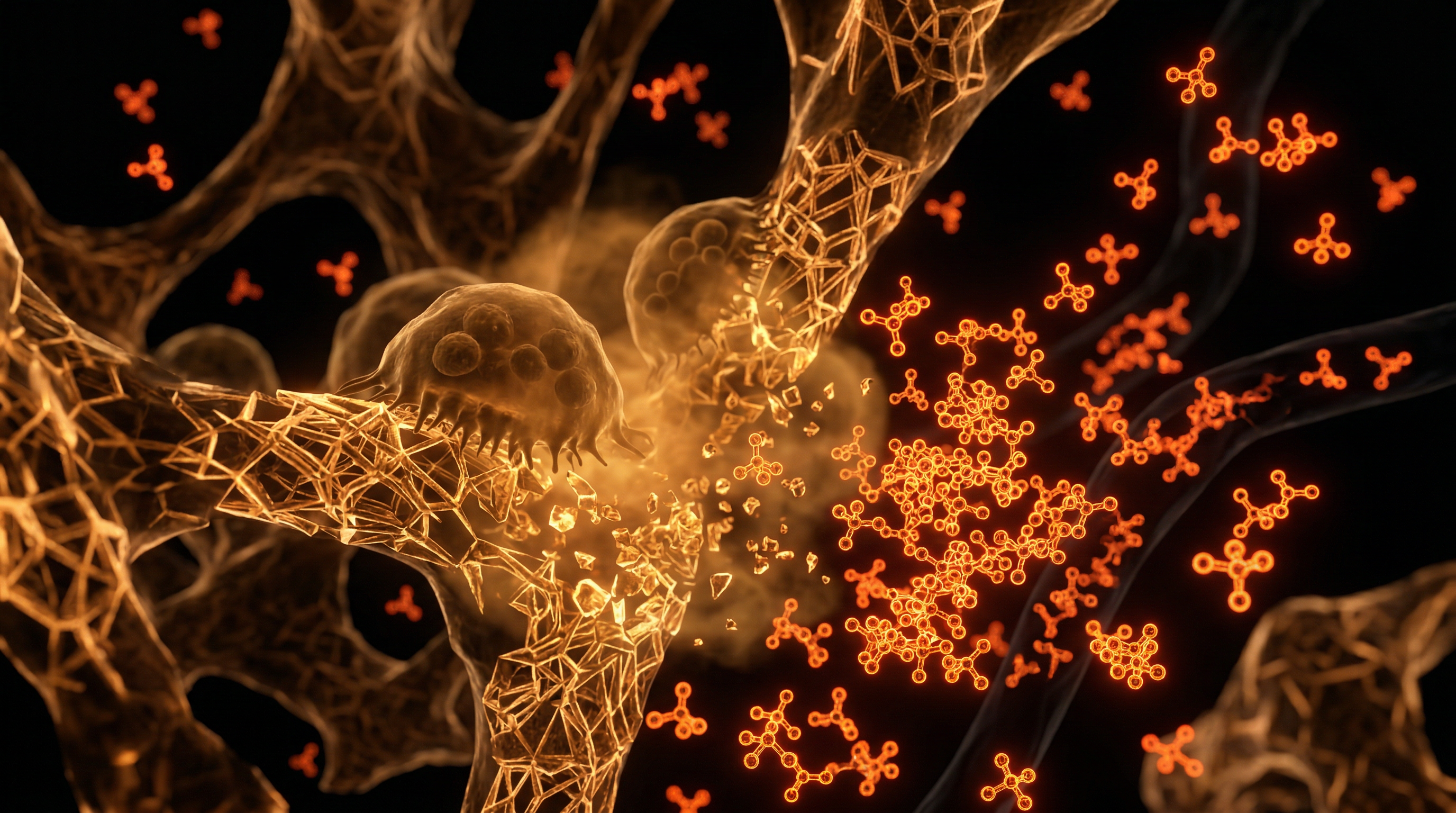
The result is an environment where bone resorbing activity far outpaces bone building (osteoblast activity). The hydroxyapatite crystals, which consist of calcium and phosphorus, are dissolved. Interestingly, while the body wants the calcium to balance the serum, it does not want the extra phosphorus it just released from the bone. This creates a vicious cycle where the body must work even harder to excrete the phosphorus it just liberated from its own structure.
Environmental Threats and Biological Disruptors
The "Phosphorus Crisis" is not a natural phenomenon; it is an industrial one. The shift in the British food supply over the last forty years has introduced a category of phosphorus that the human gut is not evolved to handle: Inorganic Phosphate Additives.
The Additive Arsenal
Food manufacturers use phosphates for a variety of "technological" reasons. They are cheap, effective, and multi-functional. Common additives include:
- E338 (Phosphoric Acid): Used in colas for a "tangy" bite and to prevent mould growth.
- E450 (Diphosphates): Used as leavening agents in crumpets, scones, and cakes.
- E339 (Sodium Phosphates): Used in processed meats (ham, sausages, "plumped" chicken) to retain water and increase weight, thus increasing profit margins.
- E341 (Calcium Phosphates): Used as anti-caking agents in powdered spices and "instant" soups.
The Bioavailability Trap
Natural phosphorus in plant foods (like beans and nuts) is mostly bound as Phytic Acid. Humans lack the enzyme phytase to break this down efficiently, meaning we only absorb about 30–50% of it. In animal products, phosphorus is bound to proteins, resulting in about 60% absorption.
Crucial Fact: Inorganic phosphates in additives are not bound to proteins or fibres. They are free salts that are nearly 100% absorbed in the duodenum almost immediately after ingestion. This produces a "phosphate spike" that natural food sources simply cannot mimic.
The "Plumping" Phenomenon
In the UK, a significant source of hidden phosphorus is "plumped" meat. Supermarkets and wholesalers often inject cheap chicken breasts or pork loins with a "brine" containing sodium phosphates. This allows the meat to hold up to 15% more water. The consumer is not only paying for water but is also ingesting a potent demineralising agent that never appears on a nutrition table as a mineral gram-count.
The Cascade: From Exposure to Disease
The physiological consequences of phosphorus overload extend far beyond the skeleton. When the Ca:P ratio is chronically disturbed, a cascade of systemic failure begins.
1. Skeletal Fragility (Osteoporosis and Osteopenia)
This is the most direct outcome. The constant "mining" of the skeleton reduces Bone Mineral Density (BMD). In the UK, the NHS treats osteoporosis primarily with bisphosphonates (which stop bone resorption), but they rarely address the dietary phosphorus-to-calcium imbalance that is driving the resorption in the first place.
2. The Calcium-Phosphorus Product and Vascular Calcification
When the concentrations of calcium and phosphorus in the blood exceed a certain threshold (the Ca x P product), they precipitate out of the liquid state and form solid crystals.
- These crystals do not return to the bone. Instead, they deposit in the tunica media of the arterial walls.
- This leads to Arteriosclerosis (hardening of the arteries), causing hypertension and increasing the risk of myocardial infarction and stroke.
Essentially, the calcium that was supposed to be in your hips and spine ends up in your heart and carotid arteries.
3. Renal Exhaustion
The kidneys are the primary exit route for phosphorus. Overloading the kidneys with inorganic phosphates forces the renal tubules to work at maximum capacity. This high-pressure filtration causes inflammation and oxidative stress within the nephrons. Over decades, this contributes to the UK's growing epidemic of Chronic Kidney Disease (CKD), particularly in the ageing population.
4. Metabolic Acidosis
Phosphate is an acidifying agent. A diet high in phosphoric acid and phosphate salts contributes to a low-grade metabolic acidosis. To buffer this acidity, the body again looks to the skeleton, as bone minerals (carbonates and phosphates) are the most effective alkaline buffers available.
What the Mainstream Narrative Omits
The silence regarding phosphorus overload in mainstream nutritional advice is deafening. While the "war on sugar" and the "war on salt" have dominated headlines, phosphorus has remained the "ghost additive."
The Labelling Loophole
In the UK and the EU, food manufacturers are required to list phosphate additives by their E-number or name in the ingredients list. However, they are not required to list the total phosphorus content in the nutritional information panel (where fat, sugar, and salt are listed).
- This means a consumer can look at two brands of ham—one natural and one "plumped" with phosphates—and see no difference in the "minerals" section.
- Nutritional databases used by GPs and dietitians often rely on "raw ingredient" data, which frequently ignores the phosphorus added during industrial processing.
The RDA Myth
The Recommended Dietary Allowance (RDA) for phosphorus for UK adults is approximately 550mg to 700mg. However, studies of modern Western diets suggest many individuals are consuming upwards of 2,500mg to 3,000mg per day. The mainstream narrative suggests that because "phosphorus is in everything," deficiency is impossible, so we shouldn't worry about it. This is a logical fallacy. The danger is not deficiency; it is the toxic ceiling.
The Profit Incentive
Phosphates are a "miracle" for the food industry. They prevent fats from separating, keep "cream" stable in non-dairy whiteners, make bread fluffier, and allow meat to hold more water. To acknowledge the skeletal and cardiovascular dangers of phosphorus would require a complete overhaul of the ultra-processed food industry. It is much easier for the system to sell calcium supplements (which are poorly absorbed) and osteoporosis drugs than to regulate the phosphate content of the UK’s food supply.
The UK Context
The UK presents a unique and troubling case study for phosphorus overload due to several cultural and economic factors.
The UPF Capital of Europe
The UK consumes more Ultra-Processed Foods than any other nation in Europe, with over 50% of the average British diet coming from industrialised food sources. This correlates directly with a higher intake of phosphate-heavy additives compared to Mediterranean nations where whole foods are more prevalent.
The British Bakery and "Crumpet Culture"
A staple of the British diet—the crumpet—is a significant phosphorus delivery system. To achieve the characteristic "holes" and spongy texture, large amounts of SAPP (Sodium Acid Pyrophosphate) are used. A single crumpet can contain more inorganic phosphorus than a large serving of natural steak, but because it is "bread," it is perceived as harmless.
NHS Limitations
The NHS standard blood test (the U&E or Urea and Electrolytes panel) does not routinely include serum phosphate unless the patient shows signs of advanced renal failure. Furthermore, serum phosphate is a poor indicator of total body burden. Because the body will sacrifice bone to keep blood levels "normal," a person can have perfectly "normal" blood phosphate while their skeleton is being rapidly demineralised. To see the true damage, one would need to test PTH and FGF23 levels—tests which are almost never performed in primary care.
Observation: The British medical model focuses on the symptom (fragile bones) rather than the upstream driver (phosphorus-induced hormonal bone mining).
Protective Measures and Recovery Protocols
As a senior researcher, I must emphasise that the damage caused by phosphorus overload is largely reversible, provided the endocrine axis is restored to balance. The goal is to lower PTH and FGF23 levels and stop the "mining" of the skeleton.
1. The "Clean Meat" Protocol
British consumers must become hyper-vigilant about meat sources.
- Avoid any meat labelled as "basted," "seasoned," or containing "water, salt, and stabilisers."
- Source meat from local butchers who do not use injection brines.
- If eating supermarket meat, choose "Organic" labels, as organic standards in the UK strictly limit the use of phosphate additives.
2. The Magnesium Mandate
Magnesium is the natural biological antagonist to phosphorus. Phosphorus inhibits magnesium absorption, and magnesium deficiency stimulates the parathyroid glands to release more PTH.
- Increasing magnesium intake (through leafy greens, seeds, or high-quality supplements like Magnesium Glycinate) helps to "calm" the parathyroid glands.
- Magnesium also helps to keep calcium in its dissolved state in the blood, preventing the "Ca x P" precipitation that leads to vascular calcification.
3. The Vitamin K2 and D3 Synergy
While Vitamin D is necessary for calcium absorption, it must be paired with Vitamin K2 (specifically the MK-7 form).
- Vitamin D increases the demand for calcium.
- Vitamin K2 activates Osteocalcin, which "grabs" the calcium in the blood and nails it into the bone matrix.
- K2 also activates Matrix Gla Protein (MGP), which prevents calcium from depositing in the arteries.
Without K2, a high-calcium diet (often recommended for bone health) can actually accelerate arterial hardening in a high-phosphorus environment.
4. Natural Phosphate Binders
Certain foods act as natural binders in the gut, preventing the absorption of inorganic phosphates.
- Calcium-rich whole foods (like high-quality fermented dairy) eaten with a meal can bind to phosphorus in the digestive tract, forming an insoluble complex that is excreted rather than absorbed.
- Fibre-rich cruciferous vegetables also slow the transit and absorption of free phosphates.
5. Eliminating the "Liquid Siphon"
Soft drinks, particularly colas, must be viewed not just as sugar-delivery systems but as "liquid bone-siphons." The phosphoric acid in these drinks is a direct hit to the blood’s pH and mineral balance. Switching to mineral water (rich in bicarbonate) helps to buffer acidity without sacrificing bone mineral.
Summary: Key Takeaways
The phosphorus-bone crisis is a testament to the "Innerstanding" principle: that the most significant threats to our health are often the ones we are told are "essential" or "safe."
- The Core Conflict: The human body cannot distinguish between the organic phosphorus it needs and the inorganic phosphate additives that poison its regulatory systems.
- The Endocrine Sabotage: Excessive phosphorus triggers PTH to strip bones of calcium and triggers FGF23 to shut down Vitamin D activation, effectively "starving" the skeleton.
- The Industrial Shield: Labelling laws in the UK protect the manufacturer's right to hide phosphorus content, leaving the consumer blind to their true intake.
- The Skeletal Price: Osteoporosis is not merely a "calcium deficiency"; it is often a "phosphorus surplus" state.
- The Path Forward: Recovery requires a radical rejection of ultra-processed foods, a focus on magnesium/K2 synergy, and a return to "unplumped," natural protein sources.
We must stop looking at bone health as a matter of simply "adding" more calcium. We must instead stop the "Silent Scavenger"—the industrial phosphorus that is liquefying the British skeleton from the inside out. True biological sovereignty begins with the reclamation of our mineral balance.
"References for Further Research:"
- Journal of the American Society of Nephrology: "Phosphate Additives in Food—A Health Risk."
- British Journal of Nutrition: "The Calcium-to-Phosphorus Ratio in the UK Diet."
- The Lancet: "FGF23 and Cardiovascular Mortality."
- Public Health England: "Nutrient analysis of processed foods."
This article is provided for informational and educational purposes only. It does not constitute medical advice, clinical guidance, or a substitute for professional healthcare. Information reflects cited research at time of publication. Always consult a qualified healthcare professional before acting on any health information.
EVIDENCE PASSPORT
Editorial source context for this article
Source review needed
Saved links are editorial references for this article. They may support specific claims rather than every sentence. Open and assess each source in context. This passport does not independently verify them.
Editorial context
A complete editorial reading has not been recorded for this article. Source links remain available for you to open and assess directly.
Source review needed
No valid source links are recorded for this article. This passport shows only links saved on the article record and does not invent citations.
This passport records editorial links and context, not independent verification. Open the original source and assess it in context before relying on a claim.
Medical Disclaimer
The information in this article is for educational purposes only and does not constitute medical advice, diagnosis, or treatment. Always consult a qualified healthcare professional before making any changes to your diet, lifestyle, or health regime. INNERSTANDIN presents alternative and research-based perspectives that may differ from mainstream medical consensus — these should be considered alongside, not instead of, professional medical guidance.
Read Full DisclaimerContinue the thread
Keep this question moving.
Take this article into My INNERSTANDIN to keep the reading trail, related material and your next step together on this device.
Dig deeper in the Library
Free, longform PDF volumes that go beyond headlines into mechanisms and references.