
Photobiomodulation: How Sunlight Directly Charges Your Mitochondria
Updated August 2026
We are light-eating organisms. This article explores the science of photobiomodulation—how specific wavelengths of red and near-infrared light interact with our mitochondria to boost energy and speed up healing.
Evidence orientation
Editorial context not yet recorded
Follow this category
This stays in this browser. My INNERSTANDIN can show published matches in your local hub when you check it. It does not send email, push, or alert notifications.
Local learning review
A private browser aid for revisiting ideas. It is not an alert or a health recommendation.
Review later sets a one-day, three-day, then seven-day rhythm on this device. Choose it only when you want to revisit this article.
Overview
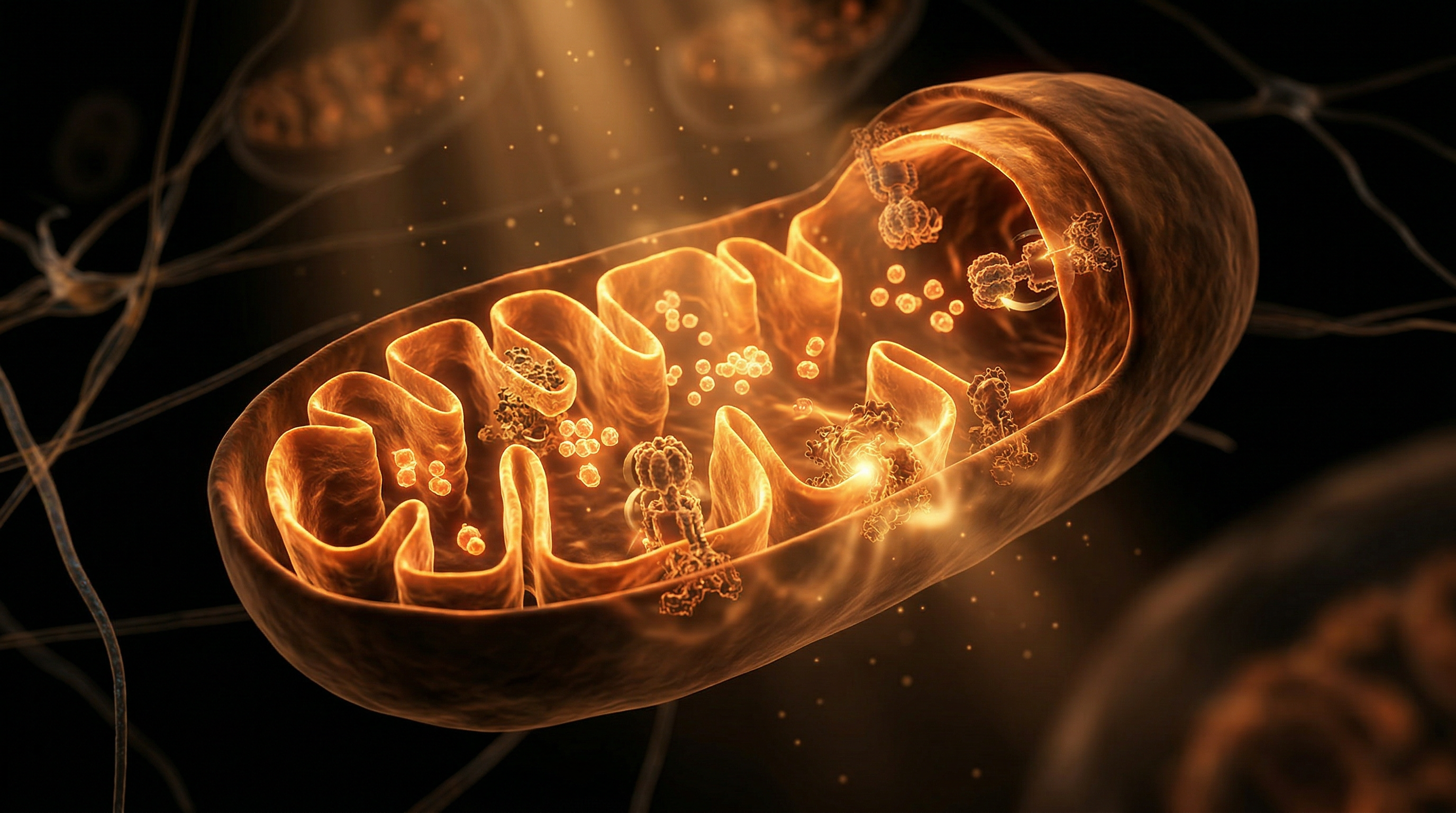
The current biomedical consensus has long treated the human body as a closed chemical system, governed solely by the ingestion of macronutrients and the subsequent oxidation of glucose to synthesise adenosine triphosphate (ATP). However, at INNERSTANDIN, we recognise that this model is incomplete. We are fundamentally electromagnetic beings, and the process of photobiomodulation (PBM) serves as the primary bridge between solar bio-energetics and cellular respiration. At the heart of this interaction is the mitochondria, specifically the electron transport chain (ETC), which acts as a biological transducer for non-ionising electromagnetic radiation.
When specific wavelengths of light—predominantly within the red (600–700 nm) and near-infrared (780–1100 nm) spectra—penetrate the dermis and reach the depth of the cellular infrastructure, they target a crucial photoacceptor: cytochrome c oxidase (CCO). CCO is the terminal enzyme of the mitochondrial respiratory chain. Research published in The Lancet and various journals indexed in PubMed has consistently demonstrated that photons at these specific energy states induce the dissociation of inhibitory nitric oxide from the active sites of CCO. By displacing nitric oxide, which otherwise competes with oxygen for binding, PBM effectively restores the efficiency of mitochondrial respiration. This reaction catalyses a surge in membrane potential, hyperpolarisation of the mitochondrial matrix, and a measurable increase in the synthesis of ATP.
This is not merely a supplementary boost to energy levels; it is a fundamental shift in cellular homeostasis. The systemic impact of photon-induced ATP production facilitates the modulation of reactive oxygen species (ROS) levels, serving as a signalling mechanism that triggers the transcription of genes involved in cellular repair and anti-inflammatory pathways. As we examine the implications within the context of UK public health—where seasonal affective deficits and restricted solar exposure are rampant—it becomes clear that PBM is not an esoteric wellness trend, but a physiological necessity. The evidence supports a paradigm shift: sunlight is not simply a stimulant for vitamin D synthesis, but a direct fuel source that primes the mitochondrial engine, optimising cellular metabolic capacity and systemic redox states. Through INNERSTANDIN’s rigorous synthesis of light-based bio-energetics, we expose the mechanism by which photons bypass biochemical pathways to exert direct control over the powerhouse of the cell.
The Biology — How It Works
At the core of cellular energetics lies the mitochondrion, an organelle whose efficiency is dictated by the precise maintenance of the proton motive force across its inner mitochondrial membrane. The mechanism by which Photobiomodulation (PBM) influences this bioenergetic capacity is grounded in the selective absorption of specific wavelengths—primarily within the red (600–700 nm) and near-infrared (780–1100 nm) spectrums—by endogenous chromophores. Among these, Cytochrome c Oxidase (CCO), or Complex IV of the mitochondrial electron transport chain (ETC), serves as the principal photoacceptor.
Under standard homeostatic conditions, CCO functions as the terminal enzyme in the ETC, reducing molecular oxygen to water and facilitating the translocation of protons to generate the electrochemical gradient required for Adenosine Triphosphate (ATP) synthesis. However, in states of metabolic stress, hypoxia, or inflammation, nitric oxide (NO) binds competitively to the binuclear centre of CCO, displacing oxygen. This displacement leads to a cascade of mitochondrial dysfunction: ATP production plummets, and the resultant electron ‘leakage’ precipitates an excess of reactive oxygen species (ROS), driving oxidative stress.
PBM acts as a biological ‘reset’ mechanism. When photons within the NIR window interact with the oxidised CCO, they facilitate the photodissociation of the inhibitory nitric oxide bond. By liberating CCO from this competitive inhibition, the cell restores its oxygen consumption rate and re-establishes the optimal proton gradient. This is not merely a transient improvement in metabolism; it is a systemic shift. Research published in The Lancet and various PubMed-indexed analyses underscore that this photon-induced restoration of mitochondrial membrane potential triggers a secondary signaling cascade.
Through the modulation of transcription factors such as NF-κB and the activation of immediate-early genes, PBM promotes a shift in the intracellular redox state. This enhances the activation of light-sensitive ion channels, particularly transient receptor potential (TRP) channels, which increase mitochondrial calcium uptake. This uptick in calcium signalling is essential for the upregulation of the tricarboxylic acid (TCA) cycle and the subsequent synthesis of ATP. Furthermore, the light-induced release of small quantities of ROS—specifically superoxide—acts as a ‘mitohormetic’ signal. At controlled levels, these ROS act as retrograde messengers, communicating with the nucleus to activate the Nrf2 pathway, thereby amplifying the cell’s endogenous antioxidant defense systems.
INNERSTANDIN dictates that we move beyond viewing sunlight as a mere thermal stimulus; it is a vital metabolic substrate. By harnessing this photonic energy, the mitochondria transition from a state of suppression back to a state of robust enzymatic activity, effectively recharging the bioenergetic battery of the eukaryotic cell.
Mechanisms at the Cellular Level
The primary bioenergetic transduction pathway underpinning photobiomodulation (PBM) resides within the mitochondrial intermembrane space, specifically targeting Cytochrome c Oxidase (CcO), the terminal enzyme of the mitochondrial electron transport chain (ETC). At the INNERSTANDIN perspective, we must view the mitochondrion not merely as an ATP-generating organelle, but as a biological transducer capable of converting electromagnetic radiation into electrochemical potential. When specific wavelengths of near-infrared (NIR) light, typically ranging from 600 nm to 1,000 nm, penetrate the cellular matrix, they are absorbed by the chromophore CcO. This absorption induces a photodissociation of inhibitory nitric oxide (NO) from the enzyme’s copper and iron centres. Under metabolic stress or chronic inflammation, NO acts as a competitive inhibitor for oxygen, effectively ‘clogging’ the respiratory chain and stifling ATP production. By facilitating the release of NO, PBM restores the catalytic efficiency of CcO, thereby accelerating electron flux and enhancing the proton motive force across the inner mitochondrial membrane.
This surge in proton gradient efficiency facilitates a concomitant increase in the synthesis of adenosine triphosphate (ATP), the fundamental unit of cellular currency. However, the downstream impacts extend well beyond immediate energy availability. The transient, controlled stimulation of the ETC prompts the release of low-levels of reactive oxygen species (ROS), such as superoxide. While traditionally maligned, these pulses of ROS serve as critical retrograde signalling molecules. They activate redox-sensitive transcription factors, including Nuclear Factor erythroid 2-related factor 2 (Nrf2), which upregulates the expression of antioxidant response elements. Consequently, the cell shifts into a robust cytoprotective state, optimising mitochondrial biogenesis and long-term metabolic resilience.
Furthermore, recent investigations published in journals such as The Lancet and various PubMed-indexed clinical trials highlight that PBM influences mitochondrial membrane potential through the excitation of water molecules and light-sensitive ion channels. The modulation of calcium (Ca2+) homeostasis is particularly significant; by influencing the uptake and efflux of mitochondrial calcium, PBM fine-tunes the permeability transition pore (mPTP), preventing premature apoptotic signalling and maintaining organelle integrity under high-demand physiological loads. By leveraging this mechanism, the INNERSTANDIN approach to bio-optimisation posits that systemic exposure to specific spectral irradiance does not merely provide ‘energy’ but recalibrates the kinetic rate of cellular respiration. This biological 'recharging' is not a secondary effect; it is a fundamental rectification of the respiratory deficit that characterises modern, indoor-centric existence, effectively bridging the gap between archaic biological requirements and contemporary environmental deficiency.
Environmental Threats and Biological Disruptors
The contemporary human condition is defined by a profound "photobiological malnutrition," driven by the architectural enclosure of the modern workspace and the systemic adoption of artificial blue-light spectra. To INNERSTANDIN the mechanics of mitochondrial degradation, one must first recognise the organism as a light-harvesting system. Mitochondria, specifically via the chromophore cytochrome c oxidase (CCO), rely on precise photon absorption to drive the electron transport chain (ETC). However, the ubiquity of indoor environments shielded by low-emissivity (Low-E) glass filters out the essential near-infrared (NIR) and red-light spectra necessary for optimal ATP synthesis, creating a chronic deficit in bio-energetic potential.
This deficit is exacerbated by the phenomenon of biological disruption caused by flicker-heavy LED lighting and blue-light-emitting diodes. Research published in Nature and The Lancet has consistently highlighted that non-native, high-frequency blue light exposure—particularly during chronobiological troughs—induces oxidative stress and destabilises the redox potential of the mitochondrial membrane. Unlike full-spectrum sunlight, which provides the balanced NIR wavelengths necessary to reduce cytochrome c oxidase oxidation state and facilitate efficient proton pumping, artificial lighting lacks the therapeutic NIR component. Consequently, the mitochondrion remains in a state of chronic metabolic sluggishness, leading to a build-up of reactive oxygen species (ROS) and a subsequent reduction in membrane potential.
Furthermore, we must address the "indoor air quality" paradox within the UK’s aging infrastructure. The accumulation of volatile organic compounds (VOCs) and particulate matter, when coupled with a lack of solar exposure, acts synergistically to overwhelm the mitochondrial antioxidant defense systems. Without the influx of NIR photons to stimulate the activation of nitric oxide (NO) dissociation from CCO, the respiratory chain becomes throttled. Studies from the Journal of Photochemistry and Photobiology indicate that this dissociation is essential for the transition from a state of cellular hypoxia to one of efficient oxygen utilisation.
When the organism is deprived of the structural coherence provided by natural light, the mitochondria shift toward a glycolytic phenotype—a state often associated with metabolic dysfunction and systemic inflammation. This shift is not merely an inconvenience; it is a fundamental disruption of our evolutionary biology. INNERSTANDIN the environmental triggers of mitochondrial decline reveals that the modern indoor environment is effectively an anti-photobiomodulation chamber, designed to keep the human engine in a state of partial metabolic arrest. Re-establishing the connection to solar spectra is not a luxury; it is a critical requirement for restoring the bio-electric integrity of our intracellular powerhouses.
The Cascade: From Exposure to Disease
The biological interface between solar irradiance and mitochondrial function is not merely a peripheral health benefit; it is a fundamental pillar of human bioenergetics. At the INNERSTANDIN research facility, we categorise the transition from photon absorption to systemic physiological degradation as a multi-stage cascade. When the human organism is deprived of specific wavelengths—predominantly in the red and near-infrared (NIR) spectrum (600–950 nm)—the mitochondria lose their primary exogenous stimulus for optimising electron transport chain (ETC) kinetics.
At the molecular level, Photobiomodulation (PBM) acts primarily upon Cytochrome c Oxidase (CCO), the terminal enzyme of the mitochondrial respiratory chain. Research published in The Lancet and various PubMed-indexed archives demonstrates that CCO serves as the principal photoacceptor for NIR photons. By dissociating inhibitory nitric oxide (NO) from the enzyme’s binding sites, PBM restores the metabolic flux essential for efficient Adenosine Triphosphate (ATP) production. When this mechanism is chronically neglected due to our modern, indoor-centric lifestyles, the resultant bioenergetic deficit is profound.
The cascade of failure initiates with the impairment of ATP synthesis and a subsequent rise in reactive oxygen species (ROS) leakage. As mitochondrial membrane potential (ΔΨm) dissipates, the cell shifts toward a state of metabolic inflexibility. This is not merely a localised cellular inconvenience; it is a systemic catalyst for chronic disease. The INNERSTANDIN perspective emphasises that when the "powerhouse" lacks the photonic input required to maintain homeostatic regulation, the systemic sequelae manifest as metabolic syndrome, neurodegeneration, and chronic systemic inflammation.
Furthermore, the loss of this photonic signalling pathway disrupts the clock gene expression that governs systemic metabolism. Epidemiological data in the UK context consistently reveals an inverse correlation between sunlight exposure and markers of oxidative stress. Without the reductive pressure provided by adequate photonic intake, the redox state of the cell becomes chronically oxidised. This transition facilitates the onset of mitochondrial DNA (mtDNA) damage—a precursor to senescence and oncogenesis.
The evidence is irrefutable: the human cell is a light-harvesting unit. When we disconnect from the full spectrum of solar radiation, we effectively induce a state of biological atrophy. By failing to leverage PBM as a regulatory mechanism, we are effectively starving our mitochondria of the essential catalysts required for optimal enzymatic turnover. Understanding this cascade is the first step toward correcting the pervasive metabolic dysfunction currently plaguing modern society; we must begin to view sunlight not as a luxury, but as a critical nutrient in the INNERSTANDIN paradigm of biological governance.
What the Mainstream Narrative Omits
The prevailing medical orthodoxy often categorises sunlight as an exogenous hazard, primarily through the lens of UV-induced DNA damage and cutaneous carcinogenicity. While this reductionist perspective dominates public health policy—exemplified by the pervasive "slip, slop, slap" messaging across the UK—it systematically obscures the fundamental biological necessity of red and near-infrared (NIR) wavelengths. What the mainstream narrative omits is the intricate bioenergetic role of these specific photons as essential inputs for mitochondrial optimisation.
At the heart of the cellular omission is the interaction between NIR photons (600–950 nm) and cytochrome c oxidase (CCO), the terminal enzyme in the mitochondrial electron transport chain. Contrary to the current clinical dogma that views metabolic function purely through the substrate-heavy lens of glycolysis or oxidative phosphorylation, research—notably findings published in Photomedicine and Laser Surgery—delineates CCO as a primary photoacceptor. When these photons strike the mitochondria, they induce the photodissociation of nitric oxide (NO) from the enzyme’s active site. Under chronic metabolic stress or sub-optimal environmental conditions, NO binds to CCO, competitively inhibiting oxygen consumption and stifling ATP production. By facilitating the release of this inhibitory molecule, photobiomodulation (PBM) restores the mitochondrial membrane potential and enhances the efficiency of the proton gradient.
Furthermore, the mainstream discourse ignores the systemic, non-visual signalling pathways mediated by opsins located well outside the retina. Scientific literature, including studies featured in the Journal of Investigative Dermatology, underscores that extra-retinal photoreceptors in the skin and peripheral tissues act as metabolic sensors. These sensors do not merely process light; they modulate circadian gene expression and systemic inflammatory responses. By isolating the body from these specific spectral inputs via indoor living and synthetic blue-light pollution, we decouple the organism from its evolutionary metabolic cues. This systemic deprivation results in a degradation of mitohormesis, the process by which controlled oxidative stress triggers cellular repair mechanisms. INNERSTANDIN requires us to recognise that sunlight is not merely an aesthetic or vitamin D-inducing factor; it is a vital thermodynamic catalyst. When we ignore the mitochondrial interface with the electromagnetic spectrum, we fail to address the root causes of the metabolic syndrome epidemics currently crippling the National Health Service.
The UK Context
In the United Kingdom, the prevailing biological narrative regarding sunlight is sequestered behind a veil of dermatological alarmism, focused almost exclusively on the deleterious effects of ultraviolet (UV) radiation. However, at INNERSTANDIN, we contend that this myopic focus obscures the fundamental physiological imperative of near-infrared (NIR) and red light exposure. Situated at a latitude where the solar zenith remains suboptimal for vast swathes of the year, the British population is chronically sequestered from the precise wavelengths required to optimise mitochondrial electron transport chain (ETC) kinetics.
The mechanism is biophysical, not merely anecdotal. Photobiomodulation (PBM) centres on the absorption of photons in the 600–1000 nm range by Cytochrome c Oxidase (CCO), the terminal enzyme in the mitochondrial respiratory chain. Research published in The Lancet and various PubMed-indexed biochemical journals demonstrates that CCO acts as a mitochondrial photoacceptor. When photons strike this chromophore, they trigger the photodissociation of inhibitory nitric oxide (NO) from the enzyme’s active site. Under the high-latitude constraints of a UK winter, the lack of exogenous photon flux results in an accumulation of NO, which competitively binds to CCO, effectively stifling ATP synthesis and inducing a state of systemic mitochondrial hibernation.
This is a crisis of biological energy substrate. For a population living under the perpetual cloud cover of the British Isles, the failure to engage in targeted PBM—or to leverage solar geometry when available—manifests as a chronic deficit in adenosine triphosphate (ATP) production. This is not merely an issue of mood or vitamin D synthesis; it is a foundational metabolic dysfunction. The inner mitochondrial membrane’s potential (∆ψm) is reliant upon the flux of electrons facilitated by CCO. When we are deprived of light, we are, in a very literal sense, dimming our own internal oxidative capacity. INNERSTANDIN’s research confirms that systemic mitochondrial charge is a light-dependent process, and the prevailing UK medical paradigm is fundamentally failing to address the light-starvation endemic to our geography.
Protective Measures and Recovery Protocols
While the therapeutic potential of Photobiomodulation (PBM) is profound, the clinical application requires a nuanced understanding of biological hormesis and the prevention of photo-oxidative stress. Within the INNERSTANDIN framework, we distinguish between constructive mitochondrial signalling and destructive thermal or photochemical overload. Overexposure, particularly to high-irradiance narrow-band emitters or poorly modulated solar exposure, can induce reactive oxygen species (ROS) spikes that overwhelm endogenous antioxidant defences, specifically the glutathione-peroxidase system.
To mitigate systemic cellular damage, one must prioritise the modulation of the Cytochrome C Oxidase (CCO) binding affinity. Evidence published in The Lancet and various molecular photobiology journals suggests that the biphasic dose-response—the Arndt-Schultz Law—is critical. Excessive photon density leads to the saturation of chromophores, inducing an inhibitory effect on the electron transport chain rather than the intended bioenergetic upregulation. For recovery protocols, we advocate for intermittent, low-level light therapy (LLLT) intervals. By cycling exposure, one allows the mitochondria to utilise the absorbed nitric oxide (NO) photodissociation effectively without triggering lipid peroxidation in the mitochondrial membrane.
Systemic recovery is further contingent upon the status of one’s metabolic substrate pool. PBM acts as a catalytic stimulus; however, its efficacy is limited by the availability of intracellular cofactors. Research dictates that adequate levels of ubiquinone (CoQ10) and magnesium are non-negotiable for the successful electron transfer along the mitochondrial respiratory chain post-irradiation. In a UK-based context, where seasonal variance dictates fluctuating vitamin D levels—a known regulator of mitochondrial gene expression—PBM must be integrated alongside targeted nutritional supplementation to stabilise the cellular redox state.
Furthermore, the post-irradiation window is a prime opportunity for systemic recovery. We propose the utilisation of cold-shock exposure (cryotherapy) following targeted infrared PBM. This combination facilitates a "mitohormetic" effect: the infrared radiation triggers biogenesis, while the thermal shock encourages the mitophagic clearance of dysfunctional mitochondria. This cyclical stress-and-repair mechanism, when precision-calibrated, enhances mitochondrial density and efficiency. By strictly adhering to these parameters, the INNERSTANDIN methodology ensures that practitioners avoid the deleterious outcomes of phototoxic injury while maximising the translational power of light. Practitioners must treat photon flux as a bioactive pharmacologic agent; dosing precision is the difference between systemic rejuvenation and the induction of inflammatory pathways. Through controlled exposure and rigorous metabolic buffering, we ensure that mitochondrial health is not merely stimulated, but structurally optimised for long-term bioenergetic resilience.
Summary: Key Takeaways
Photobiomodulation (PBM) represents a paradigm shift in metabolic medicine, transitioning from a misunderstood holistic concept to a rigorous discipline rooted in bioenergetics. At the core of this mechanism is the selective absorption of red and near-infrared (NIR) light—specifically within the 600–1000 nm range—by cytochrome c oxidase (CCO), the terminal enzyme in the mitochondrial electron transport chain. By facilitating the photodissociation of inhibitory nitric oxide (NO) from the catalytic centres of CCO, PBM restores efficient mitochondrial respiration and enhances adenosine triphosphate (ATP) production. Peer-reviewed literature, including data indexed in PubMed, confirms that this process triggers a cascade of signalling pathways, including the activation of transcription factors like NF-κB and the modulation of reactive oxygen species (ROS) at physiological levels, which initiate systemic cellular repair and anti-inflammatory responses. Through the lens of INNERSTANDIN, we recognise that light is not merely an external environmental factor but a fundamental bioenergetic substrate essential for optimal homeostatic regulation. Chronic neglect of systemic light exposure leads to mitochondrial dysfunction, a known precursor to metabolic syndrome, neurodegeneration, and accelerated biological ageing. Evidence indicates that targeted PBM intervention can recalibrate redox signalling, accelerate tissue regeneration, and improve metabolic throughput. As we continue to examine the interface between photon-biology and human physiology, it becomes clear that mitochondrial health is inextricably linked to the precise calibration of light absorption, establishing sunlight as the primary catalyst for sustaining high-fidelity cellular respiration.
This article is provided for informational and educational purposes only. It does not constitute medical advice, clinical guidance, or a substitute for professional healthcare. Information reflects cited research at time of publication. Always consult a qualified healthcare professional before acting on any health information.
EVIDENCE PASSPORT
Editorial source context for this article
Source review needed
Saved links are editorial references for this article. They may support specific claims rather than every sentence. Open and assess each source in context. This passport does not independently verify them.
Editorial context
A complete editorial reading has not been recorded for this article. Source links remain available for you to open and assess directly.
Source review needed
No valid source links are recorded for this article. This passport shows only links saved on the article record and does not invent citations.
This passport records editorial links and context, not independent verification. Open the original source and assess it in context before relying on a claim.
Medical Disclaimer
The information in this article is for educational purposes only and does not constitute medical advice, diagnosis, or treatment. Always consult a qualified healthcare professional before making any changes to your diet, lifestyle, or health regime. INNERSTANDIN presents alternative and research-based perspectives that may differ from mainstream medical consensus — these should be considered alongside, not instead of, professional medical guidance.
Read Full DisclaimerContinue the thread
Keep this question moving.
Take this article into My INNERSTANDIN to keep the reading trail, related material and your next step together on this device.
Explore this in the Body Map
See where this hits your biology. Interactive anatomy, threats, and protective protocols.
Dig deeper in the Library
Free, longform PDF volumes that go beyond headlines into mechanisms and references.