
Photodermatology and Polycyclic Aromatic Hydrocarbons: The Synergy of UV and Urban Pollutants
Updated April 2026
Evidence orientation
Editorial context not yet recorded
Follow this category
This stays in this browser. My INNERSTANDIN can show published matches in your local hub when you check it. It does not send email, push, or alert notifications.
Local learning review
A private browser aid for revisiting ideas. It is not an alert or a health recommendation.
Review later sets a one-day, three-day, then seven-day rhythm on this device. Choose it only when you want to revisit this article.
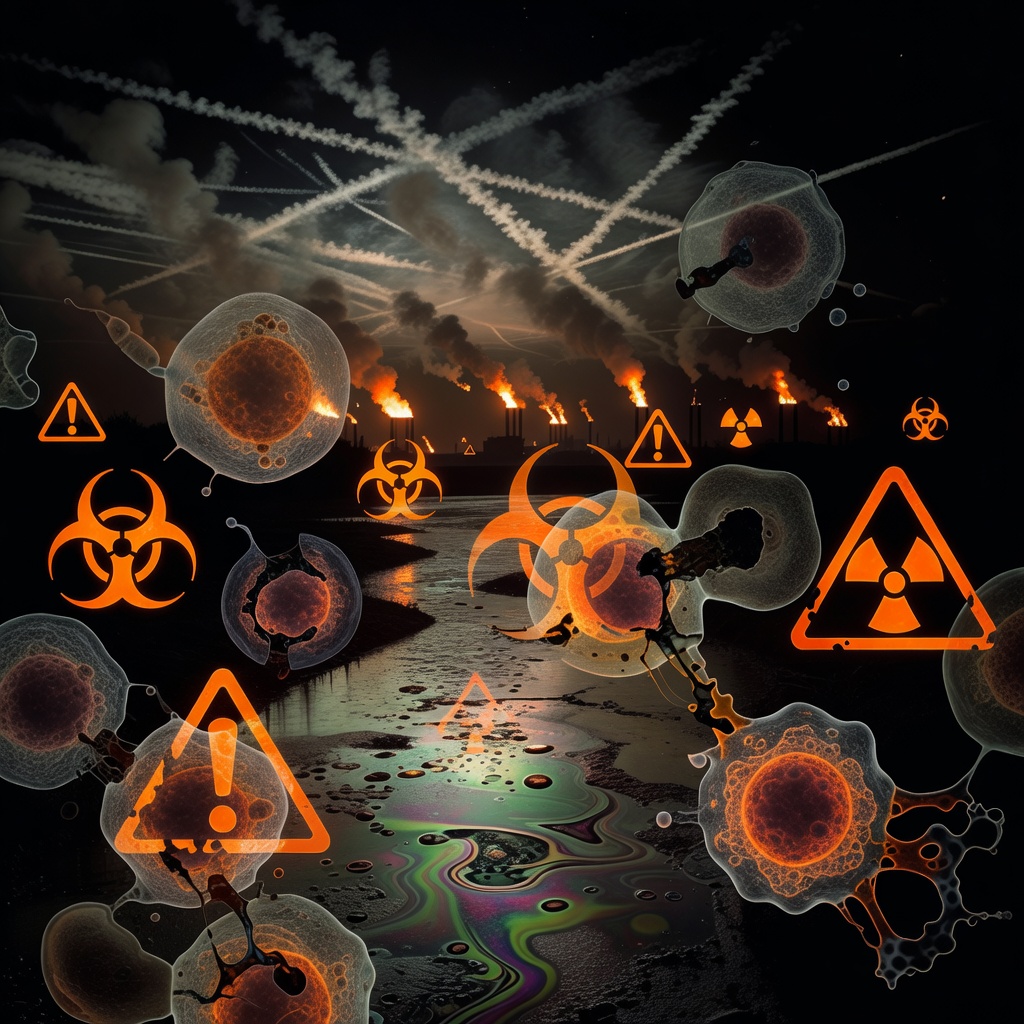
In the pursuit of radiant health and longevity, the modern individual is often led to believe that the primary adversary of the skin is the sun. We are conditioned to view Ultraviolet (UV) radiation as a singular, external threat—the sole architect of wrinkles, hyperpigmentation, and cellular mutation. However, the emerging field of photodermatology is revealing a far more complex and insidious reality.
The true danger to our biological integrity does not lie in the sun alone, but in the lethal synergy between UV radiation and urban environmental pollutants, specifically Polycyclic Aromatic Hydrocarbons (PAHs). This "toxic cocktail" represents a paradigm shift in how we must understand skin health and systemic detoxification. For the INNERSTANDING community, peeling back the layers of this environmental interaction is essential for reclaiming our biological sovereignty in an increasingly industrialised world.
The Silent Invaders: What are Polycyclic Aromatic Hydrocarbons?
To understand the threat, we must first identify the antagonist. Polycyclic Aromatic Hydrocarbons (PAHs) are a group of over 100 different chemicals formed during the incomplete combustion of organic substances. In our modern landscape, they are ubiquitous. They are found in vehicle exhaust (particularly diesel), industrial emissions, tobacco smoke, and even the "cosy" wood-burning stoves that have seen a resurgence in British homes.
While PAHs are known carcinogens when inhaled or ingested, their impact on the skin is frequently overlooked. These molecules are lipophilic, meaning they are easily absorbed into the fatty layers of our skin. Once lodged within the cutaneous tissue, they do not remain dormant. They wait for a catalyst—and that catalyst is sunlight.
Key Fact: Research indicates that the combination of PAHs and UV radiation is significantly more damaging than the sum of their individual effects. This phenomenon, known as photo-pollution, creates a pro-oxidant environment that overwhelms the skin’s natural defence mechanisms.
The Biological Mechanism: A Molecular Betrayal
The synergy between UV and PAHs operates through a sophisticated biochemical pathway that hijacks our cellular machinery. The primary player in this process is a protein called the Aryl Hydrocarbon Receptor (AhR).
The AhR Gateway
The Aryl Hydrocarbon Receptor (AhR) acts as a chemical sensor within our skin cells. When PAHs from the atmosphere land on the skin, they bind to the AhR, essentially "unlocking" a doorway into the cell’s nucleus. Once activated, the AhR triggers the production of enzymes (such as CYP1A1) intended to detoxify these pollutants.
However, when UV light strikes a cell where PAHs are present, a catastrophic reaction occurs. The UV energy "excites" the PAH molecules, leading to the massive production of Reactive Oxygen Species (ROS)—unstable molecules that tear through cellular structures.
Oxidative Stress and DNA Damage
This surge in ROS leads to:
- Lipid Peroxidation: The destruction of the skin's protective lipid barrier, leading to chronic dehydration and "inflammaging."
- Mitochondrial Dysfunction: The powerhouses of our cells are damaged, leading to a loss of cellular energy and premature senescence.
- Direct DNA Adducts: PAHs can bind directly to our DNA. When combined with UV-induced mutations, the risk of photocarcinogenesis (skin cancer) increases exponentially.
The UK Context: Urban Toxicity and "Log Burner" Culture
For those living in the United Kingdom, the risk of PAH-UV synergy is particularly acute. Despite the perception of the UK as a temperate climate with limited sun, the environmental reality is different.
The Diesel Legacy and Urban Density
British cities, from London to Manchester, have historically struggled with high levels of particulate matter from diesel engines. These particles act as "sponges," soaking up PAHs and delivering them directly to the skin of commuters and urban dwellers. Even on overcast days, UVA radiation—which makes up 95% of the UV reaching the Earth—penetrates through clouds and glass, providing the energy needed to activate these surface-level pollutants.
The Resurgence of Wood Smoke
A growing concern in the UK is the rise of domestic wood-burning stoves. Recent data suggests that wood burning in UK homes now produces more particulate pollution than all the traffic in the country. This smoke is rich in benzo[a]pyrene, one of the most potent and well-studied PAHs. For an individual living in a leafy suburb, the invisible plume of smoke from a neighbour's chimney can coat the skin in PAHs, which are then photo-activated by the morning sun during a walk or run.
The "Exposome": More Than Just Sun Damage
In the realm of INNERSTANDING, we must adopt the concept of the Exposome—the totality of environmental exposures an individual encounters over their lifetime. The traditional dermatological focus on "intrinsic aging" (genetics) versus "extrinsic aging" (sun) is outdated.
The modern "Urban Exposome" includes:
- UVA and UVB Radiation.
- Particulate Matter (PM2.5 and PM10).
- Nitrogen Dioxide (NO2).
- Polycyclic Aromatic Hydrocarbons (PAHs).
When these factors converge, they accelerate the breakdown of collagen and elastin through the activation of Matrix Metalloproteinases (MMPs). This is why individuals living in highly polluted urban areas often show signs of skin aging—such as "age spots" and deep wrinkles—up to 10% faster than those in rural environments, even when sun exposure levels are identical.
Key Fact: PAHs don't just sit on the skin; they can enter the systemic circulation via the skin, contributing to the body’s total toxic load and placing a heavier burden on the liver and kidneys for detoxification.
Protective Strategies: A Holistic Approach to Defence
Standard sunscreens (SPF) are designed to block UV, but they offer little protection against the chemical infiltration of PAHs. To truly defend against this synergy, we must employ a multi-layered strategy that focuses on neutralisation, barrier reinforcement, and internal detoxification.
1. Topical Antioxidant Neutralisation
Because the damage is driven by Reactive Oxygen Species (ROS), the first line of defence is a robust antioxidant shield.
- Vitamin C (L-Ascorbic Acid): Neutralises free radicals and supports collagen synthesis.
- Vitamin E (Tocopherol): Prevents lipid peroxidation in the skin’s barrier.
- Ferulic Acid: Specifically shown to stabilise other antioxidants and provide additional protection against urban pollutants.
2. Physical and Chemical Barriers
- Niacinamide (Vitamin B3): A powerhouse for urban skin health. It inhibits the AhR pathway, reduces the penetration of pollutants, and strengthens the skin's ceramic barrier.
- Non-Nano Zinc Oxide: Unlike chemical filters, zinc oxide provides a physical "shield" that can help prevent some particulate matter from making direct contact with the skin's surface.
3. The Ritual of "Double Cleansing"
In a polluted environment, the evening cleanse is non-negotiable. PAHs are lipophilic, meaning they bond to the oils on your skin. A water-based cleanser alone is insufficient. Using an oil-based cleanser followed by a gentle, pH-balanced wash ensures that the "toxic film" accumulated throughout the day is thoroughly removed before it can penetrate further.
4. Internal Detoxification and Nutritional Support
The skin is a reflection of internal health. To combat the systemic effects of PAH exposure, we must support the body’s endogenous antioxidant systems.
- Sulforaphane: Found in cruciferous vegetables (broccoli sprouts), sulforaphane is a potent inducer of Phase II detoxification enzymes, helping the body clear PAHs more efficiently.
- Glutathione: The body’s "master antioxidant." Supplementing with precursors like N-Acetyl Cysteine (NAC) or using liposomal glutathione can help mitigate the oxidative stress caused by the UV-PAH synergy.
- Polyphenol-Rich Diet: Consuming a spectrum of colourful plants provides the phytonutrients (like resveratrol and EGCG) that help the skin repair from the inside out.
Truth-Exposing: The Cosmetic Industry’s Blind Spot
It is important to expose a hard truth: many "anti-pollution" skincare products on the market are little more than marketing gimmicks. Simply adding a film-forming polymer to a cream does not address the biochemical reality of the Aryl Hydrocarbon Receptor (AhR) or the photo-activation of PAHs.
True protection requires ingredients that actively interfere with the molecular signalling of pollutants. Furthermore, the reliance on chemical sunscreens can, in some cases, be counterproductive, as certain older chemical filters can themselves become unstable when exposed to both UV and high levels of pollution, potentially adding to the oxidative burden.
Key Takeaways for Urban Resilience
- Synergy is the Secret: UV radiation acts as a catalyst for environmental pollutants like PAHs, making them far more toxic to our skin and DNA than they would be in isolation.
- The AhR Pathway: This cellular "sensor" is the gateway through which pollutants trigger inflammation and aging. Controlling its activation is the future of dermatology.
- UK Risks are Real: Urban air quality and the increase in wood-burning smoke make the UK a high-risk environment for photo-pollution damage, regardless of the temperature.
- Comprehensive Defence: Protection must go beyond SPF. It requires topical antioxidants (Vitamin C, E, Niacinamide), diligent cleansing, and internal support via detoxification-boosting nutrients like sulforaphane.
- Conscious Living: Awareness of our environment—choosing walking routes away from heavy traffic and ensuring indoor air quality—is just as vital as the products we apply to our faces.
Conclusion
Understanding the interplay between photodermatology and Polycyclic Aromatic Hydrocarbons is a vital component of INNERSTANDING. We no longer live in a pristine natural environment; we live in a chemically dense one. By acknowledging the synergy between the sun and urban pollutants, we move beyond the simplistic "sunscreen vs. no sunscreen" debate.
True skin health and detoxification require a sophisticated, conscious approach to our environment. We must honour the sun as a source of life, while simultaneously shielding ourselves from the industrial pollutants that turn its light into a catalyst for decay. Through knowledge, ritual, and targeted nutrition, we can maintain our biological integrity and thrive in the modern world.
This article is provided for informational and educational purposes only. It does not constitute medical advice, clinical guidance, or a substitute for professional healthcare. Information reflects cited research at time of publication. Always consult a qualified healthcare professional before acting on any health information.
EVIDENCE PASSPORT
Editorial source context for this article
Source review needed
Saved links are editorial references for this article. They may support specific claims rather than every sentence. Open and assess each source in context. This passport does not independently verify them.
Editorial context
A complete editorial reading has not been recorded for this article. Source links remain available for you to open and assess directly.
Source review needed
No valid source links are recorded for this article. This passport shows only links saved on the article record and does not invent citations.
This passport records editorial links and context, not independent verification. Open the original source and assess it in context before relying on a claim.
Medical Disclaimer
The information in this article is for educational purposes only and does not constitute medical advice, diagnosis, or treatment. Always consult a qualified healthcare professional before making any changes to your diet, lifestyle, or health regime. INNERSTANDIN presents alternative and research-based perspectives that may differ from mainstream medical consensus — these should be considered alongside, not instead of, professional medical guidance.
Read Full DisclaimerContinue the thread
Keep this question moving.
Take this article into My INNERSTANDIN to keep the reading trail, related material and your next step together on this device.
Explore this in the Body Map
See where this hits your biology. Interactive anatomy, threats, and protective protocols.
Dig deeper in the Library
Free, longform PDF volumes that go beyond headlines into mechanisms and references.