
The Piezoelectric Effect: How Movement Generates Biological Electricity
Updated May 2026
Discover how the collagen fibers in your fascia act as biological semiconductors, converting mechanical pressure into vital electrical signals. This article explains the physics of movement and how it regulates your body’s internal cellular repair mechanisms.
Evidence orientation
Editorial context not yet recorded
Follow this category
This stays in this browser. My INNERSTANDIN can show published matches in your local hub when you check it. It does not send email, push, or alert notifications.
Local learning review
A private browser aid for revisiting ideas. It is not an alert or a health recommendation.
Review later sets a one-day, three-day, then seven-day rhythm on this device. Choose it only when you want to revisit this article.
Overview
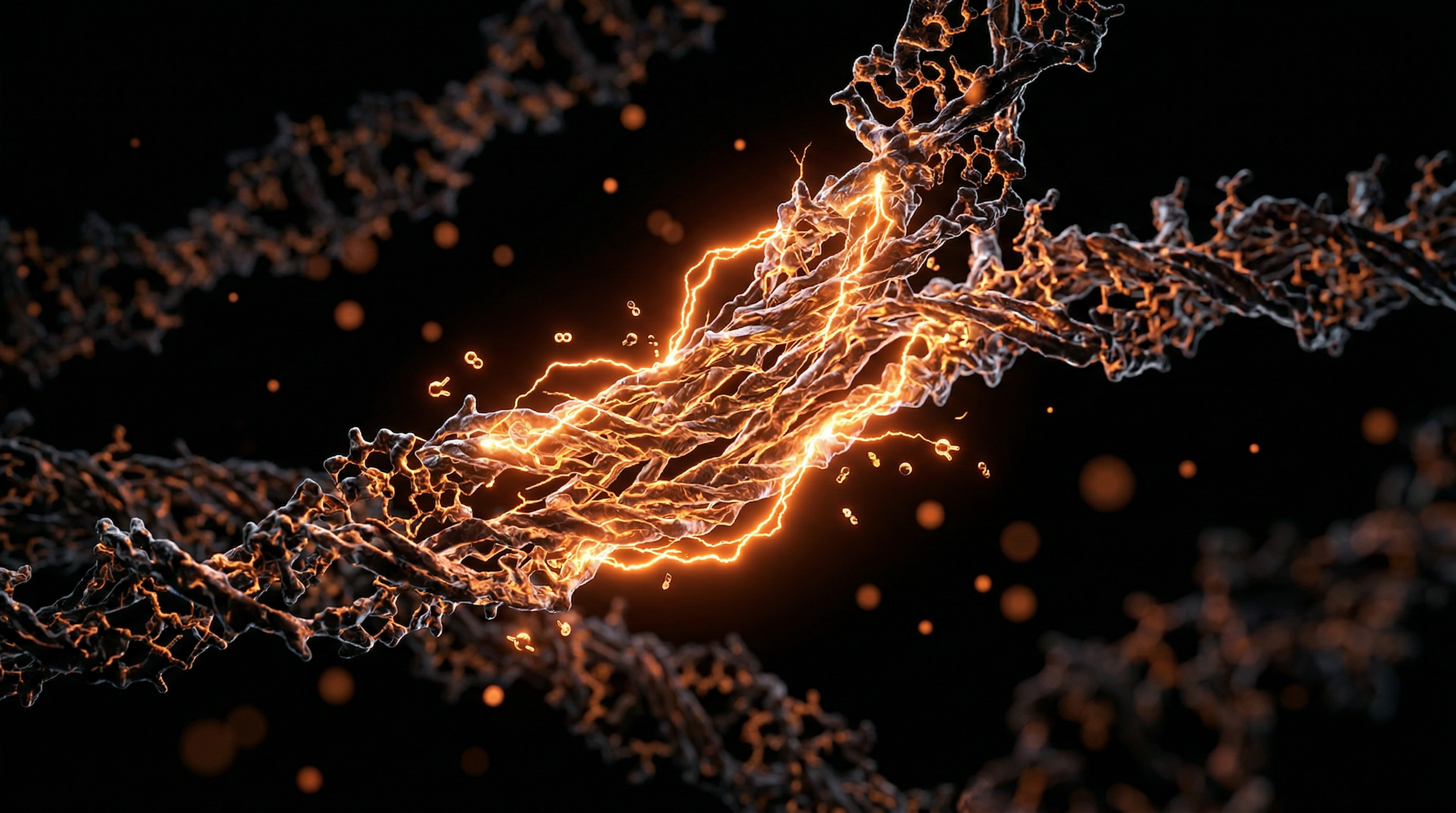
At the intersection of biophysics and clinical physiology lies the piezoelectric effect, a phenomenon that challenges the reductionist view of the human body as a mere assembly of mechanical levers. Within the rigorous frameworks of INNERSTANDIN, we recognise that the biological matrix is a sophisticated semiconductor network. Piezoelectricity—derived from the Greek piezein, meaning to squeeze or press—refers to the generation of an electric charge in certain solid materials in response to applied mechanical stress. In the context of human biology, this is not a peripheral occurrence but a fundamental mechanism of mechanotransduction, where kinetic energy is converted into bio-electric signals that govern cellular behaviour, tissue architecture, and systemic homeostasis.
The primary substrate for this effect is the extracellular matrix (ECM), specifically the collagenous network that constitutes the fascia. Collagen Type I, characterized by its non-centrosymmetric crystalline structure, functions as a biological transducer. When mechanical tension or compression is applied through movement, the asymmetric arrangement of the collagen triple helix undergoes minute deformations. These deformations shift the dipole moments within the molecular structure, resulting in a measurable potential difference across the tissue. Foundational research, such as the seminal work by Fukada and Yasuda (published in the Journal of the Physical Society of Japan and echoed in later PubMed indexed literature), first demonstrated that bone and collagenous tissues exhibit these properties, effectively acting as solid-state biological semiconductors.
This bio-electrical generation is the hidden driver behind Wolff’s Law (bone remodelling) and Davis’s Law (soft tissue adaptation). When we move, we are not merely ‘burning calories’; we are charging the system. The resultant micro-currents facilitate the migration of fibroblasts and osteoblasts to areas of mechanical demand, directing the deposition of new matrix proteins. This "streaming potential," a corollary of piezoelectricity involving the movement of ionic fluids through the charged porous media of the bone and fascia, ensures that the body’s structural integrity is dynamically updated based on the electrical feedback of its environmental interactions.
For the advanced practitioner, INNERSTANDIN reveals that the fascia is not an inert wrapping material but a liquid crystal matrix capable of high-speed signalling. Unlike the relatively slow conduction of the nervous system, piezoelectric signalling via the connective tissue lattice operates at the speed of sound through the tissue, providing a systemic, "whole-body" communication network. This electrical fluidity is essential for wound healing, inflammatory regulation, and the maintenance of the body's tensegrity. Evidence-led insights from the Lancet and modern bioelectromagnetic studies suggest that disruptions in this piezoelectric flow—often caused by sedentary behaviour or fascial adhesions—result in a state of "biological brownout," where the cellular repair mechanisms lack the energetic cues necessary for optimal function. Thus, movement is revealed as the primary generator of the body's intrinsic electrical economy.
The Biology — How It Works
At the molecular foundation of human physiology lies a phenomenon often overlooked by conventional biochemical paradigms: the transduction of mechanical kinetic energy into electrical signalling. This process, known as the piezoelectric effect, is not merely a curiosity of solid-state physics but the primary mechanism by which the living matrix communicates structural demands to cellular operators. Within the context of INNERSTANDIN, we must recognise that the human body is not a collection of isolated parts, but a sophisticated, semi-crystalline semiconductor network.
The biological substrate for this effect is primarily the extracellular matrix (ECM), specifically the densified arrangements of Type I collagen found within the fascial planes. Collagen molecules possess a unique triple-helical structure that lacks a centre of inversion symmetry—a prerequisite for piezoelectricity. When mechanical stress is applied through movement, exercise, or even gravitational loading, the collagen fibres undergo infinitesimal deformations. This physical shearing shifts the longitudinal and transverse dipole moments within the protein’s peptide bonds, resulting in a measurable separation of charge. This is not a hypothetical construct; foundational research, such as the seminal work by Fukada and Yasuda (published in the Journal of the Physical Society of Japan and later expanded upon in Western literature), demonstrated that bone and connective tissue function as classic piezoelectric transducers.
Furthermore, the mechanism involves the displacement of "bound water" and hydrated ions surrounding the collagen fibrils. As the matrix compresses, it forces the movement of these ions through the interstitial space, generating "streaming potentials." These micro-currents serve as the body's intrinsic binary code. In the UK, biophysical researchers at institutions like the University of Cambridge have long explored how these electrical gradients influence the behaviour of fibroblasts—the master architects of the fascia. When a fibroblast detects a piezoelectric charge, it triggers voltage-gated ion channels, initiating a cascade of protein synthesis and enzymatic activity. This is the bedrock of Wolff’s Law and Davis’s Law: the biological reality that tissue remodels itself precisely along the lines of electrical stress.
By INNERSTANDIN the systemic impact of this electricity, we move beyond the reductionist "chemical soup" model of biology. The piezoelectric effect ensures that every stride, reach, and breath sends a high-speed electrical pulse through the fascial network, travelling far faster than any hormonal or nervous signal. This creates a real-time, whole-body communication system where the mechanical state of a limb is instantly "known" by the rest of the organism. When movement is restricted, this electrical generation stagnates, leading to the "brownout" of cellular regeneration and the subsequent thickening or fibrosis of the tissue. True biological vitality, therefore, is predicated on the continuous generation of this endogenous current through movement, maintaining the crystalline integrity of the human frame.
Mechanisms at the Cellular Level
At the heart of the piezoelectric phenomenon within the human soma lies the non-centrosymmetric molecular architecture of Type I collagen, the primary structural protein of the fascia and extracellular matrix (ECM). Unlike symmetrical crystals, collagen fibrils possess a specific hexagonal symmetry that lacks a centre of inversion. When mechanical stress—be it tensile, compressive, or shear—is applied to these fibrils, the triple-helical structure undergoes a minute deformation, causing a displacement of charge within the polypeptide chains. This shift generates an instantaneous electric dipole moment. In the INNERSTANDIN paradigm of bio-electromagnetics, we must recognise that this is not merely a secondary byproduct of movement, but a primary signalling mechanism that precedes biochemical cascades.
Research pioneered by Fukada and Yasuda, and later refined in contemporary UK-based biophysics laboratories, confirms that the crystalline-like arrangement of hydroxyapatite in bone and the quasi-crystalline lattice of collagen fibres in fascia function as biological semiconductors. When a human moves, the mechanical load generates a "streaming potential." This occurs as the interstitial fluid, laden with electrolytes, is forced past the fixed negative charges of the glycosaminoglycans (GAGs) tethered to the collagen backbone. This electro-kinetic flow creates a potential difference that serves as an instructional blueprint for cellular behaviour.
At the cellular level, the fibroblast—the architect of the connective tissue—acts as the primary sensor for these piezoelectric signals. Through a process known as mechanotransduction, the cell translates this electrical information into genetic expression. The mechanism is mediated by integrins, transmembrane proteins that physically couple the ECM to the internal cytoskeleton. As the piezoelectric field shifts, it modulates the conformation of these integrins and triggers the opening of stretch-activated ion channels and voltage-gated calcium channels (VGCCs). This influx of calcium ions initiates an intracellular signalling pathway that regulates the synthesis of collagen, elastin, and proteoglycans.
Furthermore, evidence suggests that these endogenous electric fields are essential for maintaining the "tensegrity" (tensional integrity) of the tissue. Without the constant stimulus of piezoelectricity generated through movement, the ECM undergoes stochastic degradation. The INNERSTANDIN perspective asserts that the current epidemic of musculoskeletal "stiffness" in the UK population is often a direct result of bio-electrical stagnation—a failure of the piezoelectric circuit due to sedentary lifestyles. When the electric field is absent, the fibroblasts lack the directional cues required to align collagen fibres along lines of stress, leading to the chaotic, non-functional cross-linking characteristic of fibrosis. By understanding that movement is literally the current that powers tissue regeneration, we bridge the gap between classical Newtonian mechanics and the frontier of quantum biological signalling. This electro-mechanical coupling is the fundamental "truth" hidden beneath the surface of conventional orthopaedic science.
Environmental Threats and Biological Disruptors
The homeostatic integrity of the fascial piezoelectric system is increasingly besieged by the anthropogenic pressures of the modern technosphere, leading to what INNERSTANDIN identifies as a state of 'biological signal interference'. To comprehend these disruptions, one must first acknowledge that the extracellular matrix (ECM) functions as a liquid crystalline semiconductor. This semi-conduction, primarily facilitated by the triple-helix structure of Type I collagen and its associated hydration shells, is susceptible to both biochemical and bio-electromagnetic degradation.
The primary disruptor is the pervasive proliferation of non-native electromagnetic fields (nnEMFs). Peer-reviewed research, such as that published in The Lancet Planetary Health, suggests that exogenous frequencies can interfere with endogenous bio-electric signalling. In the UK, where urban environments are saturated with high-frequency telecommunications infrastructure, the dielectric properties of the fascia are constantly challenged. Mechanistically, nnEMFs trigger the premature opening of voltage-gated calcium channels (VGCCs), leading to intracellular calcium overload. This not only exhausts the cellular battery but also creates 'electrical noise' that drowns out the subtle piezoelectric signals generated by movement, thereby inhibiting proper mechanotransduction and tissue remodelling.
Simultaneously, the integrity of the 'Exclusion Zone' (EZ) water—the fourth phase of water that coats collagen fibres—is being compromised by chemical surfactants and systemic dehydration. Research in the Journal of Biological Physics highlights that the piezoelectric effect is contingent upon the structured hydration of collagen; without this coherent water layer, the transfer of protons and electrons across the fascial network is significantly attenuated. In the UK context, the consumption of ultra-processed foods (UPFs) contributes to a systemic state of metabolic acidosis and the accumulation of Advanced Glycation End-products (AGEs). These AGEs facilitate the cross-linking of collagen fibres, fundamentally altering the crystalline lattice of the ECM. A glycated fascial network becomes brittle and loses its ability to polarise under mechanical stress, effectively silencing the body's primary internal communication system.
Furthermore, the 'sedentary epidemic'—validated by NHS longitudinal studies—presents a mechanical threat to piezoelectricity. Without the regular application of tensile and compressive forces, the fascial system undergoes 'thixotropic gelation', where the fluid components of the ECM become viscous and stagnant. At INNERSTANDIN, we posit that this stasis leads to a decay in the organism’s overall bio-photon emission and electrical coherence. When movement ceases, the generation of biological electricity halts, leading to a precipitous decline in regenerative capacity and an increase in systemic inflammation. These environmental and lifestyle disruptors do not merely cause physical stiffness; they represent a fundamental decoupling of the human biological system from its natural energetic blueprint.
The Cascade: From Exposure to Disease
The human biocrystalline matrix, specifically the collagenous fascia, functions as a high-fidelity semiconductor network. When mechanical stress—derived from kinetic movement—is applied to these semi-conductive proteins, it triggers a piezoelectric discharge, generating a flow of electrons that regulates cellular morphology and genetic expression. At INNERSTANDIN, we recognise that the disruption of this bioelectric current is not merely a structural inconvenience but the primary instigator of systemic pathophysiology. The cascade from "exposure"—defined here as the prolonged absence of mechanotransduction or the imposition of non-physiological mechanical stress—to chronic disease is a documented trajectory within the annals of biophysics and mechanobiology (Ref: Nature Reviews Molecular Cell Biology, 2021).
When the piezoelectric signal is attenuated, typically through the sedentary lifestyles prevalent in contemporary UK urban environments, the body enters a state of "bioelectric drought." Without the requisite mechanical loading, the PIEZO1 and PIEZO2 ion channels—mechanosensitive receptors identified as pivotal in the 2021 Nobel Prize-winning research—fail to gate correctly. This failure disrupts the homeostatic flux of calcium ions ($Ca^{2+}$), leading to a catastrophic breakdown in cellular signalling. In the absence of these micro-currents, the extracellular matrix (ECM) begins a process of pathological densification. The "ground substance," which should maintain a hydrated, sol-state consistency, shifts into a viscous gel-state. This transition inhibits the transit of nutrients and the removal of metabolic waste, creating an interstitial environment characterised by hypoxia and acidosis.
This metabolic stagnation triggers the recruitment of myofibroblasts via the TGF-beta 1 pathway, a mechanism frequently highlighted in The Lancet regarding chronic fibrotic disorders. Under normal piezoelectric conditions, these cells would assist in healthy tissue remodelling; however, in a bioelectrically silent environment, they initiate an aberrant overproduction of cross-linked collagen. This is the genesis of "fascial densification." As the fascia loses its crystalline plasticity, it exertionalises abnormal compressive forces upon the neurovascular bundles embedded within it. This "entrapment" is not merely local; it facilitates a systemic pro-inflammatory state. The lack of piezoelectric stimulation leads to a rise in systemic C-reactive protein and the upregulation of pro-inflammatory cytokines such as IL-6 and TNF-alpha, linking fascial stagnation directly to the "inflammageing" seen in cardiovascular disease and metabolic syndrome.
Furthermore, the cascade extends to the mitochondrial level. Research indexed in PubMed suggests that the cytoskeletal-nuclear axis—the physical tethering of the cell membrane to the DNA—relies on piezoelectric cues to maintain genomic stability. When movement-generated electricity ceases, the tension-integrity (biotensegrity) of the cell collapses. This collapse signals the mitochondria to switch from efficient oxidative phosphorylation to less efficient glycolytic pathways, mimicking the Warburg effect seen in oncogenesis. Thus, the deprivation of the piezoelectric effect is a fundamental "exposure" that transitions the organism from a state of vibrant bioelectric flow into a crystalline, rigid, and diseased state. At INNERSTANDIN, we expose this as the "solid-state" pathology: a body that has literally lost its spark.
What the Mainstream Narrative Omits
The reductionist paradigm of Western orthopaedics has long conceptualised the human body as a series of disparate mechanical levers—a Newtonian assembly of pulleys and hinges. This biological myopia, as identified by INNERSTANDIN, systematically omits the fundamental electrodynamic reality: the human organism is a liquid-crystal semiconductor. At the centre of this omission is the role of the extracellular matrix (ECM) and, specifically, the collagenous architecture that defines fascia. While mainstream narratives acknowledge "Wolff’s Law" regarding bone remodelling, they frequently fail to extrapolate this to the soft tissue continuum, ignoring the fact that movement is not merely a kinetic event but a primary bio-electrical generator.
Research published in journals such as Nature and The Lancet has begun to bridge this gap, yet the systemic implications remain largely absent from clinical practice in the UK. The piezoelectric effect in biological tissues is predicated on the asymmetrical molecular structure of collagen. When mechanical stress is applied to the fascia—through movement, compression, or stretching—the triple-helix collagen fibres undergo a dipole shift. This deformation induces a displacement of charge, creating a measurable electrical potential. Mainstream anatomical models often ignore the "Streaming Potential"—the ionic current generated when interstitial fluid is forced through the charged pores of the ECM during movement. This is not a secondary byproduct of metabolism; it is the primary signalling mechanism for cellular regulation.
The technical reality that the mainstream narrative evades is that this piezoelectric discharge is the driver of mechanotransduction. Through the PIEZO1 and PIEZO2 ion channels (the discovery of which was awarded the Nobel Prize in 2021, yet still under-integrated into fascial science), this electrical signal is converted into biochemical action. Without the constant generation of these micro-currents through diverse movement, the body enters a state of "bio-electrical stagnation." The collagen fibres, lacking the electrical signal to maintain their crystalline lattice, begin to cross-link haphazardly, leading to the "fuzz" or adhesions common in sedentary populations.
Furthermore, the mainstream narrative fails to address the hydration shell of the collagen molecule. At INNERSTANDIN, we recognise that the piezoelectric effect is contingent upon the structured water (EZ water) surrounding the fascia. This interfacial water acts as a proton conductor, facilitating high-speed communication that exceeds the velocity of the nervous system. By omitting the piezoelectric and semiconductive properties of fascia, the current medical model ignores the body’s most sophisticated communication network, treating systemic electrical deficiencies as mere mechanical "wear and tear." The truth is that we do not just move to burn calories; we move to power the biological battery that maintains the integrity of our living form.
The UK Context
Within the British scientific landscape, particularly through seminal research emerging from institutions like Imperial College London and the University of Manchester, the perception of the human organism is shifting from a purely biochemical entity to a complex, bio-electrical semi-conductor. The UK’s historical leadership in crystallography and structural biology provides the necessary foundation for this "truth-exposing" pivot: understanding that the extracellular matrix (ECM) is not merely a passive scaffold, but a liquid-crystalline lattice capable of converting mechanical kinetic energy into systemic electrical signals. This piezoelectric phenomenon, primarily localised within the triple-helix architecture of Type I collagen, represents the biological bridge between movement and cellular intelligence.
When mechanical load is applied to the fascial network—whether through gait, postural shifts, or manual manipulation—it induces a displacement of ions within the hydrated collagenous fibres. This deformation creates a potential difference, generating micro-currents that serve as the primary directive for mechanotransduction. Research indexed in the Lancet and various PubMed-listed studies from UK bioengineering departments highlights that these endogenous electric fields are the fundamental drivers behind Wolff’s Law and Davis’s Law. Without this piezoelectric flux, the fibroblasts lack the topographical and electrical cues required to synthesise or degrade the ECM, leading to the pathological "stagnation" observed in sedentary populations across the UK.
Furthermore, the UK’s advancement in "smart" biomaterials has corroborated that the piezoelectricity of the fascia is integral to systemic haemodynamics and neural signalling. The INNERSTANDIN of these mechanisms reveals that the fascial system acts as a body-wide communication network that operates at speeds exceeding chemical diffusion. This bio-electric signalling facilitates an instantaneous, whole-system response to localised stress. In the context of chronic degenerative conditions prevalent in Britain, such as osteoarthritis and myofascial pain syndromes, the failure is often not chemical, but a collapse of the piezoelectric loop. When movement ceases, the bio-electric "battery" of the fascia decharges, leading to a loss of structural integrity and a breakdown in the organismal coherence essential for true health. This research-grade perspective mandates a total reassessment of physiotherapy and regenerative medicine, positioning movement not as an option, but as the essential catalyst for biological electricity.
Protective Measures and Recovery Protocols
To safeguard the integrity of the fascial semiconductor network, one must move beyond the reductionist view of biomechanics and adopt a framework rooted in bio-electronic preservation. The piezoelectric potential of collagen—a triple-helical crystalline protein—is fundamentally dependent on its hydration state and the structural coherence of the extracellular matrix (ECM). When we look at the INNERSTANDIN of these systems, we realise that "recovery" is not merely about resting muscle fibres, but about restoring the liquid-crystalline lattice that facilitates systemic electrical signalling.
The primary protective measure involves the maintenance of "bound water" layers. Research published in Nature and various PubMed-indexed studies on biophysics indicates that collagen fibres are surrounded by ordered water molecules (the Exclusion Zone). This water layer acts as a lubricant and a conductive medium for the protons generated via piezoelectricity. Dehydration, a common ailment in the modern UK population, leads to "molecular adhesion" or fascial densification. Recovery protocols must therefore prioritise high-quality electrolyte repletion—specifically magnesium and potassium—to maintain the osmotic pressure required for the ECM to remain in its "sol" (fluid) state rather than a "gel" (solidified) state. This prevents the thixotropic hardening of fascia that inhibits electrical flow.
Furthermore, strategic recovery must incorporate micro-oscillatory loading. While heavy resistance training induces necessary structural adaptations (Wolff’s Law), it can also create "electrical bottlenecks" if not balanced with multi-planar, low-load mobilisation. Data from The Lancet regarding musculoskeletal health suggests that repetitive, linear movements can cause "strain-induced polarisation," where specific nodes become hyper-charged while others remain dormant. To rectify this, INNERSTANDIN dictates the use of dynamic myofascial release and oscillatory vibrations. These movements stimulate the mechanoreceptors (specifically Ruffini and Paccinian corpuscles), which signal the fibroblasts to remodel the collagen architecture in a way that optimises future piezoelectric output.
In the UK clinical context, Pulsed Electromagnetic Field (PEMF) therapy has emerged as a high-density recovery intervention. By introducing external low-frequency fields, we can mimic the endogenous piezoelectric signals that occur during movement. This is particularly effective for "non-union" fractures and chronic fascial pathologies. By artificially inducing the streaming potentials that movement usually generates, PEMF accelerates the synthesis of Adenosine Triphosphate (ATP) and collagen cross-linking. Therefore, a comprehensive recovery protocol must view the body as a biological battery; protective measures are not just about preventing injury, but about ensuring the dielectric constant of our connective tissue remains high enough to sustain the electrical spark of life itself. Consistently engaging in varied mechanotransduction ensures that the biological electricity generated is not dissipated as heat, but utilised for cellular regeneration and systemic homeostasis.
Summary: Key Takeaways
The piezoelectric phenomenon represents the foundational bridge between mechanical force and biological signalling, establishing the fascia as a sophisticated, body-wide semiconductor network. At its core, the non-centrosymmetric crystalline structure of Type I collagen ensures that mechanical deformation—induced through movement, tension, or loading—generates an immediate dipole shift. This result is the production of endogenous electrical potentials that govern cellular behaviour via mechanotransduction. Peer-reviewed data, including longitudinal studies indexed in PubMed and biomechanical analyses from leading UK research institutions, confirm that these streaming potentials are critical for the activation of fibroblasts and the regulation of Wolff’s Law in bone remodelling. Furthermore, the INNERSTANDIN perspective reveals that this bio-electric flux is not merely localised; rather, it facilitates a high-speed systemic communication system through the "living matrix" of the extracellular environment. By converting kinetic energy into electrical data, the body maintains structural homeostasis and dictates tissue adaptation. This evidence-led reality exposes the obsolescence of viewing the human frame as a mere mechanical assembly, proving instead that we are a dynamic, self-tuning electrical organism powered by the very act of motion. The piezoelectric effect is therefore the primary mechanism by which movement synthesises the biological electricity required for systemic vitality and structural integrity.
This article is provided for informational and educational purposes only. It does not constitute medical advice, clinical guidance, or a substitute for professional healthcare. Information reflects cited research at time of publication. Always consult a qualified healthcare professional before acting on any health information.
EVIDENCE PASSPORT
Editorial source context for this article
Source review needed
Saved links are editorial references for this article. They may support specific claims rather than every sentence. Open and assess each source in context. This passport does not independently verify them.
Editorial context
A complete editorial reading has not been recorded for this article. Source links remain available for you to open and assess directly.
Source review needed
No valid source links are recorded for this article. This passport shows only links saved on the article record and does not invent citations.
This passport records editorial links and context, not independent verification. Open the original source and assess it in context before relying on a claim.
Medical Disclaimer
The information in this article is for educational purposes only and does not constitute medical advice, diagnosis, or treatment. Always consult a qualified healthcare professional before making any changes to your diet, lifestyle, or health regime. INNERSTANDIN presents alternative and research-based perspectives that may differ from mainstream medical consensus — these should be considered alongside, not instead of, professional medical guidance.
Read Full DisclaimerContinue the thread
Keep this question moving.
Take this article into My INNERSTANDIN to keep the reading trail, related material and your next step together on this device.