
Pleomorphism and the Internal Milieu
Updated May 2026
This article examines the biological mechanism whereby microbes change form based on their environment. It highlights the work of Antoine Béchamp as a superior model to Pasteur's monomorphism.
Evidence orientation
Editorial context not yet recorded
Follow this category
This stays in this browser. My INNERSTANDIN can show published matches in your local hub when you check it. It does not send email, push, or alert notifications.
Local learning review
A private browser aid for revisiting ideas. It is not an alert or a health recommendation.
Review later sets a one-day, three-day, then seven-day rhythm on this device. Choose it only when you want to revisit this article.
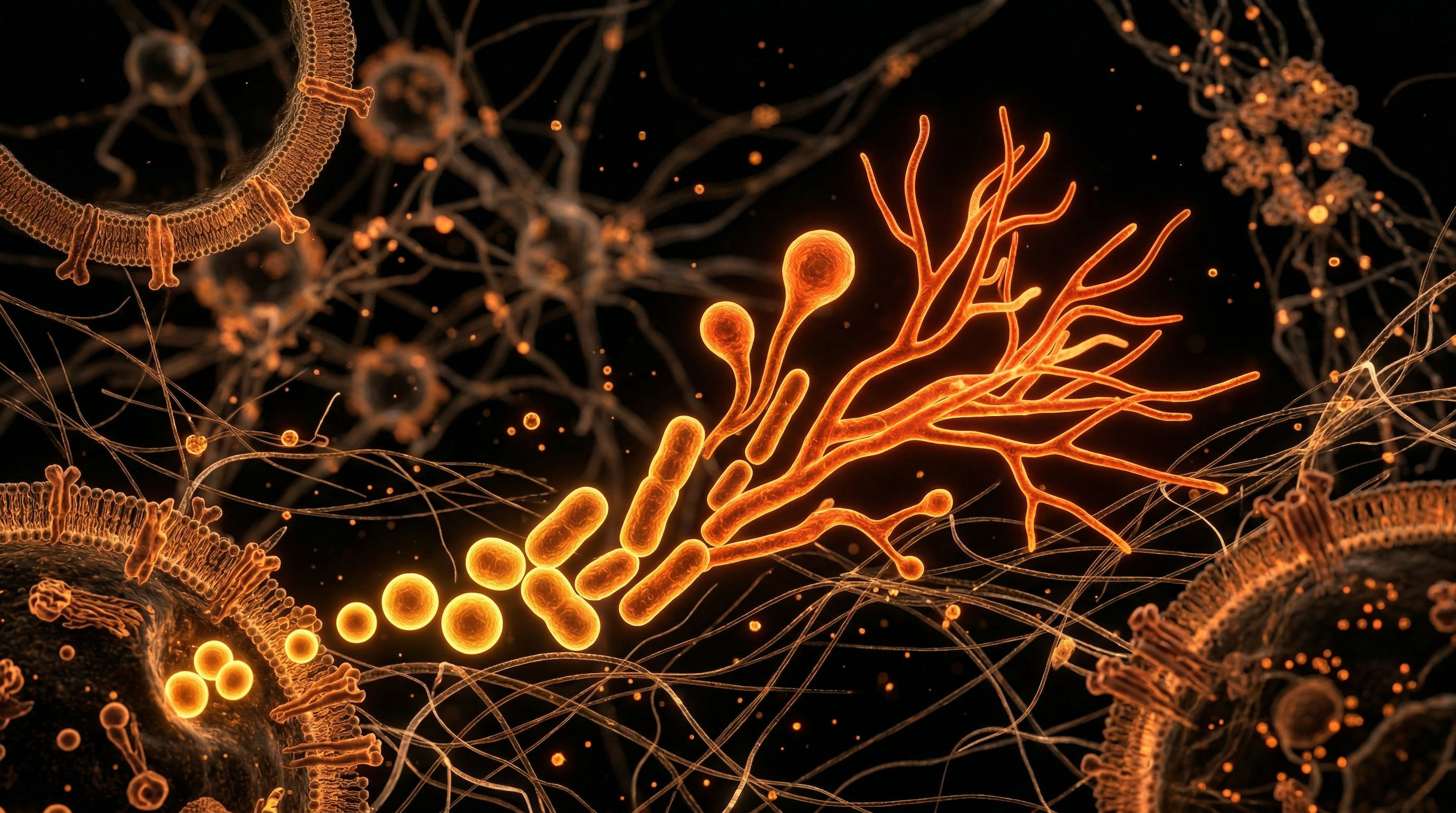
Overview
In the annals of biological science, few conflicts have been as consequential, yet as systematically obscured, as the 19th-century debate between Louis Pasteur and Antoine Béchamp. While modern medicine is built almost exclusively upon Pasteur’s Germ Theory—the notion that specific, external microbes invade the body to cause specific diseases—there exists a far more sophisticated and scientifically robust paradigm known as Terrain Theory. At the heart of this theory lies the principle of Pleomorphism.
Pleomorphism, derived from the Greek pleon (more) and morphe (form), is the biological phenomenon whereby microorganisms change their shape, function, and pathogenicity in direct response to the environment in which they reside. This environment is known as the Internal Milieu (milieu intérieur), a term coined by the great French physiologist Claude Bernard.
For over a century, the mainstream medical establishment has operated under the dogma of Monomorphism—the belief that a bacterium remains a bacterium and a virus remains a virus, fixed in their identity. However, through the lens of pleomorphism, we recognise that what we label as "pathogens" are often merely later-stage evolutionary forms of our own internal biological elements, triggered into metamorphosis by a toxic or imbalanced terrain.
This article serves as a comprehensive deconstruction of the pleomorphic cycle, an examination of the microzyma—the fundamental unit of life—and a call to return to a biological model that privileges the health of the host over the eradication of the microbe. In an era of burgeoning chronic illness and antibiotic resistance, understanding the internal milieu is no longer a matter of historical curiosity; it is a prerequisite for survival.
Callout Fact: On his deathbed, Louis Pasteur is reported to have admitted, "Le microbe n'est rien, le terrain est tout" (The microbe is nothing, the terrain is everything), effectively conceding the argument to his rival, Antoine Béchamp.
The Biology — How It Works
To understand pleomorphism, one must first abandon the "warfare" model of biology. In the monomorphic view, the body is a sterile vessel occasionally invaded by "bad guys." In the pleomorphic view, the body is a complex ecosystem where life and death are in a constant state of flux.
The Microzyma: The Indestructible Seed
Antoine Béchamp identified the most basic unit of biological life not as the cell, but as the Microzyma (meaning "small ferment"). These are microscopic, sub-cellular granules that are present in all living things—humans, animals, plants—and even persist in fossils for millions of years.
Unlike cells, which can be destroyed by heat, pressure, or time, microzymas are virtually indestructible. They are the builders of cells and the recyclers of organisms. Their function is entirely determined by the Internal Milieu.
The Morphological Shift
In a healthy, slightly alkaline internal environment, microzymas work to build and maintain the body’s tissues. They act as enzymes and catalysts for metabolic processes. However, when the terrain becomes acidic, toxic, or deprived of oxygen, the microzymas undergo a survival-based transformation.
- Stage 1: The Healthy State – Microzymas exist in a symbiotic relationship with the host, aiding in cellular repair.
- Stage 2: The Fermentative State – As the environment sours, microzymas aggregate to form primitive bacteria (cocci).
- Stage 3: The Pathogenic State – If the toxicity persists, these bacteria evolve into more complex rods (bacilli) and eventually into fungal forms.
This transformation is not an invasion from the outside; it is a biological "cleanup crew" evolving from within to ferment and break down weakened or dying tissue. Disease, therefore, is not a "catchable" event, but a biological process of the terrain.
The Enderlein Cycle
Later researchers, such as Professor Günther Enderlein, expanded on Béchamp’s work. He documented the life cycle of these organisms, which he termed Endobionts. He observed that these organisms move through stages of development:
- Protits (Smallest forms)
- Chondrites (Aggregated forms)
- Ascit (Bacterial stages)
- Mycelial (Fungal stages)
Enderlein proved that the higher, more pathogenic stages could be "down-regulated" back into harmless protits if the chemical balance of the blood and tissues was restored.
Mechanisms at the Cellular Level
The shift from health to disease occurs within the Extracellular Matrix (ECM)—the fluid-filled space that surrounds every cell in the human body. This is the true "Internal Milieu."
pH and Voltage: The Master Switches
The primary triggers for pleomorphic change are pH (potential Hydrogen) and Redox Potential (voltage).
- Alkaline Terrain (pH 7.35–7.45): This is the "sweet spot" for human biology. In this range, microzymas remain in their beneficial, sub-cellular forms. Oxygen is readily available, and mitochondrial function is peak.
- Acidic Terrain: When the pH drops, the oxygen levels in the ECM plummet. This creates an anaerobic environment. In the absence of oxygen, cells must switch from aerobic respiration to fermentation.
Callout Fact: Cancer cells are known to be anaerobic ferments. Dr. Otto Warburg won the Nobel Prize for showing that cancer cannot thrive in an oxygen-rich, alkaline environment, validating the core tenets of Terrain Theory.
The Role of Enzymes
Enzymes are the "labourers" of the microzymas. In a healthy milieu, enzymes facilitate the synthesis of proteins and the replication of DNA. In a degraded milieu, microzymas switch their enzymatic output to proteolytic and fermentative enzymes. These enzymes are designed to dissolve the host's own proteins, which the mainstream mistakenly identifies as "viral" activity or "bacterial infection."
Mineral Balance and Electrical Conductivity
The internal milieu acts as a biological battery. Minerals like magnesium, potassium, and sodium act as electrolytes that maintain the electrical charge of the cell membrane.
- The Zeta Potential: This is the electrical charge that keeps blood cells and microbes suspended and flowing. When the terrain becomes toxic, the Zeta potential drops, causing blood cells to "clump" (Rouleau effect). This stagnation further acidifies the tissue, providing the perfect breeding ground for pleomorphic evolution.
Environmental Threats and Biological Disruptors
If the internal milieu determines the form of the microbe, we must ask: what is poisoning our milieu? Modern life is an unprecedented assault on the biological terrain.
1. Chemical Toxins and Heavy Metals
Heavy metals such as Mercury, Aluminium, and Lead act as catalysts for pleomorphism. These metals disrupt the electrical conductivity of the ECM and displace essential minerals like zinc and selenium.
- Glyphosate: This ubiquitous herbicide acts as a chelator, stripping the body of minerals and destroying the gut microbiome—the primary "theatre" of pleomorphic activity.
2. Electromagnetic Fields (EMF)
Recent research into bio-electromagnetics suggests that microbes are highly sensitive to frequencies. Non-ionising radiation from 4G, 5G, and Wi-Fi can trigger "stress responses" in microbes, causing them to accelerate their pleomorphic shift into pathogenic forms as a survival mechanism. It is no coincidence that historical "pandemics" often align with shifts in global electrification.
3. Pharmaceuticals
- Antibiotics: These are "anti-life" (anti-bios). While they may kill the bacterial stage of a microbe, they do nothing to address the microzymas. Instead, they drive the microzymas into more resilient, fungal forms or "Cell Wall Deficient" (CWD) bacteria that are invisible to the immune system.
- Vaccines: By bypassing the primary mucosal barriers and injecting foreign proteins and adjuvants directly into the milieu, vaccines can cause a systemic "shock" to the terrain, triggering long-term pleomorphic imbalances.
4. Dietary Acids
The modern diet, rich in refined sugars, processed flours, and pasteurised dairy, is inherently acid-forming. Sugar, in particular, is the primary fuel for the fungal stage of the pleomorphic cycle. Candida albicans is not a "parasite" we catch; it is the pleomorphic evolution of our own microzymas responding to an over-sugared, acidic environment.
The Cascade: From Exposure to Disease
Disease does not happen overnight; it is a progressive "souring" of the biological soil. This cascade follows a predictable path that mainstream medicine treats as separate, unrelated conditions.
Phase 1: Enervation
The first stage is a loss of vital energy. This may be due to stress, lack of sleep, or poor nutrition. When the body's electrical energy drops, it can no longer effectively eliminate metabolic waste.
Phase 2: Toxaemia
Waste products (toxins) begin to build up in the blood and lymph. This is the "pre-symptomatic" stage. The microzymas begin to notice the change in the milieu.
Phase 3: Irritation and Inflammation
The body attempts to "burn off" the toxins. This is inflammation. Mainstream medicine suppresses this with anti-inflammatories, which is the worst possible course of action, as it stops the "cleanup" and pushes the toxins deeper into the tissues.
Phase 4: Ulceration and Suppuration
As the terrain becomes more acidic, microzymas evolve into bacteria to help decompose the damaged cells. This produces pus and discharge (suppuration). We call this an "infection," but it is actually a biological sanitation process.
Phase 5: Induration and Fungation
The body begins to wall off the toxic areas with fibrous tissue (cysts, tumours). Microzymas have now reached the fungal stage. They are no longer just cleaning; they are fermenting the host's tissue because the environment is no longer viable for human life.
Callout Fact: In a famous experiment, Royal Raymond Rife showed that by changing the medium (the terrain) in which a "virus" was grown, he could turn it into a bacterium, and by changing it again, into a fungus. He proved that the germ was not the cause, but the result of the environment.
What the Mainstream Narrative Omits
The suppression of pleomorphism is not a scientific failure; it is a commercial necessity. The "Germ Theory" is the foundation of the trillion-dollar pharmaceutical industry.
The Profitability of the "Magic Bullet"
If germs are the enemy, then we need an endless supply of "bullets"—antibiotics, antivirals, and vaccines. If, however, the terrain is the key, then the solution lies in nutrition, detoxification, and lifestyle—factors that cannot be patented.
- Monomorphism leads to Dependency: By convincing the public that disease is a "random strike" from an external invisible enemy, the medical establishment creates a state of perpetual fear and dependency on external interventions.
- Pleomorphism leads to Sovereignty: If you understand that your health is a reflection of your internal milieu, the power returns to you. You are no longer a victim of a "flu season"; you are the steward of your own biological soil.
The Erasure of Béchamp
In the late 1800s, Béchamp was the most respected scientist in France, holding professorships in pharmacy, chemistry, and biology. Yet, today, his name is absent from medical textbooks. This "damnatio memoriae" was necessary to clear the path for Pasteur’s industrialised medicine, which was heavily funded by the burgeoning chemical and banking dynasties of the time.
The UK Context
The United Kingdom presents a unique case study in the degradation of the internal milieu. As the cradle of the Industrial Revolution, the British Isles have a long history of environmental challenges that have shaped the pleomorphic state of its population.
The NHS and the Reductionist Trap
The National Health Service (NHS), while an institution of great social value, is fundamentally built on the Pasteurian model. The focus is almost entirely on "symptom management" and "early detection" rather than the cultivation of the internal milieu. This has led to a crisis of chronic disease in the UK:
- Type 2 Diabetes: A classic disease of the terrain, driven by dietary acidification and the subsequent fungal shift in the gut.
- Water Fluoridation: Large swathes of the UK (particularly the North East and Midlands) have fluoride added to their water. Fluoride is a potent enzyme poison and a known disruptor of the internal milieu, shifting the pleomorphic balance toward pathogenic states.
The "English Disease" and Vitamin D
The UK’s lack of sunlight is a major factor in terrain degradation. Vitamin D is not just a vitamin; it is a seco-steroid hormone that regulates the immune response and maintains the alkalinity of the blood. Without adequate "solarisation," the British population is more susceptible to the "winter flu," which, from a pleomorphic perspective, is simply a seasonal "detoxification crisis" triggered by the lack of ultraviolet light and the resulting acidification of the tissues.
Agricultural Practices
The UK’s heavy use of nitrogen-based fertilisers has led to mineral depletion in the soil. Because our internal milieu is built from the "external milieu" (the soil), if the British soil is depleted of magnesium and selenium, the British people will lack the necessary "buffers" to maintain an alkaline state, making them a fertile ground for pleomorphic pathogens.
Protective Measures and Recovery Protocols
If the problem is the "souring" of the terrain, the solution is the "sweetening" or restoration of the milieu. This process, often called Biological Medicine, focuses on three pillars: Alkalisation, Detoxification, and Remineralisation.
1. Restoration of pH
The first step is to shift the body from an anaerobic, fermentative state back to an aerobic, oxidative state.
- Dietary Shift: Moving away from "The Three Whites" (white sugar, white flour, white dairy). Emphasising green leafy vegetables and bitter herbs which are naturally alkalising.
- Lemon Water: Though acidic in nature, lemon juice becomes highly alkaline once metabolised, providing essential anionic minerals that help "wash" the ECM.
2. Remineralisation
The microzymas need specific mineral catalysts to function in their healthy state.
- Magnesium: The master mineral. Essential for over 300 enzymatic reactions. Transdermal magnesium (magnesium oil) is often most effective for bypassing a compromised gut.
- Humic and Fulvic Acids: These "soil-based" substances are essentially concentrated microzymas and minerals from ancient forests. They help to re-establish the electrical potential of the cell membranes.
3. Biological Isopathy
Based on Enderlein’s work, Isopathy uses homeopathic-style preparations of the microbes themselves to "down-regulate" pathogenic forms.
- Sanum Remedies: These are specific remedies used in European biological medicine to communicate with the endobionts, encouraging them to return to their harmless, protit stage.
4. Environmental Hygiene
Protecting the milieu from external disruptors:
- Water Filtration: Using reverse osmosis or high-quality carbon filters to remove fluoride, chlorine, and pharmaceutical residues.
- EMF Mitigation: Turning off Wi-Fi at night and avoiding the use of mobile phones against the head to prevent the "stress-triggering" of internal microbes.
5. Oxygenation
Since pleomorphic pathogens are anaerobic (they hate oxygen), increasing oxygen delivery is vital.
- Deep Breathing: Practices like the Wim Hof Method can rapidly shift the blood pH toward alkalinity.
- Ozone Therapy: Under the guidance of a practitioner, ozone can directly oxidise toxins and kill off the fungal stages of the pleomorphic cycle without harming the host's cells.
Summary: Key Takeaways
The science of Pleomorphism and the Internal Milieu represents a profound shift in how we view life, health, and disease. It moves us away from a paradigm of fear and toward one of responsibility.
- Microbes are not "fixed": They are dynamic entities that change form based on the state of the host's internal environment.
- The Germ is not the Cause: Bacteria and fungi are the symptoms of a degraded terrain, acting as biological scavengers to decompose dead or toxic tissue.
- The Internal Milieu is the Key: pH, voltage, and mineral balance are the master controls of our biology.
- Disease is a Process, Not an Event: What we call "illness" is often the body's desperate attempt to detoxify and rebalance its own ecosystem.
- True Medicine is Stewardship: Instead of "killing" the pathogen, we must "heal" the soil.
By embracing the wisdom of Antoine Béchamp and the proponents of Terrain Theory, we can move beyond the limitations of the "Magic Bullet" and build a future of true biological resilience. The microbe is nothing; the terrain is everything. It is time we started acting like it.
"References for Further Study:"
- Béchamp or Pasteur? A Lost Chapter in the History of Biology by Ethel Douglas Hume.
- The Blood and Its Third Element by Antoine Béchamp.
- Blood Examination in Darkfield by Günther Enderlein.
- The Terrain Is Everything (Innerstanding Publications).
This article is provided for informational and educational purposes only. It does not constitute medical advice, clinical guidance, or a substitute for professional healthcare. Information reflects cited research at time of publication. Always consult a qualified healthcare professional before acting on any health information.
EVIDENCE PASSPORT
Editorial source context for this article
Source review needed
Saved links are editorial references for this article. They may support specific claims rather than every sentence. Open and assess each source in context. This passport does not independently verify them.
Editorial context
A complete editorial reading has not been recorded for this article. Source links remain available for you to open and assess directly.
Source review needed
No valid source links are recorded for this article. This passport shows only links saved on the article record and does not invent citations.
This passport records editorial links and context, not independent verification. Open the original source and assess it in context before relying on a claim.
Medical Disclaimer
The information in this article is for educational purposes only and does not constitute medical advice, diagnosis, or treatment. Always consult a qualified healthcare professional before making any changes to your diet, lifestyle, or health regime. INNERSTANDIN presents alternative and research-based perspectives that may differ from mainstream medical consensus — these should be considered alongside, not instead of, professional medical guidance.
Read Full DisclaimerContinue the thread
Keep this question moving.
Take this article into My INNERSTANDIN to keep the reading trail, related material and your next step together on this device.