
Potassium-Sodium Pump Failure in Processed Diets
Updated May 2026
The UK's reliance on processed convenience foods has inverted the natural potassium-to-sodium ratio required for cellular voltage. We investigate the mechanical impact on myocardial function and vascular pressure regulation.
Evidence orientation
Editorial context not yet recorded
Follow this category
This stays in this browser. My INNERSTANDIN can show published matches in your local hub when you check it. It does not send email, push, or alert notifications.
Local learning review
A private browser aid for revisiting ideas. It is not an alert or a health recommendation.
Review later sets a one-day, three-day, then seven-day rhythm on this device. Choose it only when you want to revisit this article.
Overview
In the modern landscape of nutritional science, we are witnessing a systemic biological catastrophe that is as silent as it is deadly. For decades, the public health narrative has fixated on "low fat" or "low calorie" dogmas, while the very foundation of our cellular existence—the electrolytic gradient—has been systematically dismantled by the industrial food complex. At the heart of this collapse is the Sodium-Potassium Pump (Na+/K+-ATPase), a biological engine so vital that it consumes nearly one-third of the energy produced by a human at rest.
The United Kingdom, now a global leader in the consumption of Ultra-Processed Foods (UPFs), has sleepwalked into a state of chronic cellular voltage failure. By inverting the evolutionary ratio of potassium to sodium, the modern British diet has essentially short-circuited the human body. We are no longer merely looking at "high blood pressure" as an isolated symptom; we are observing the mechanical failure of the myocardial and vascular systems under the weight of an evolutionary mismatch.
This article serves as a technical exposé on how the transition from whole, earth-grown foods to convenience-based synthetic matrices has compromised the resting membrane potential of our cells. We will explore the molecular mechanics of the pump, the environmental factors driving its degradation, and the suppressed reality of how our current food system ensures a state of permanent, sub-clinical mineral bankruptcy.
Key Fact: Evolutionary biology suggests our ancestors consumed approximately 10,000 mg of potassium and less than 1,000 mg of sodium daily. Today, the average UK adult consumes roughly 2,500 mg of potassium and over 3,500 mg of sodium—a complete inversion of the biological blueprint.
##
The Biology — How It Works
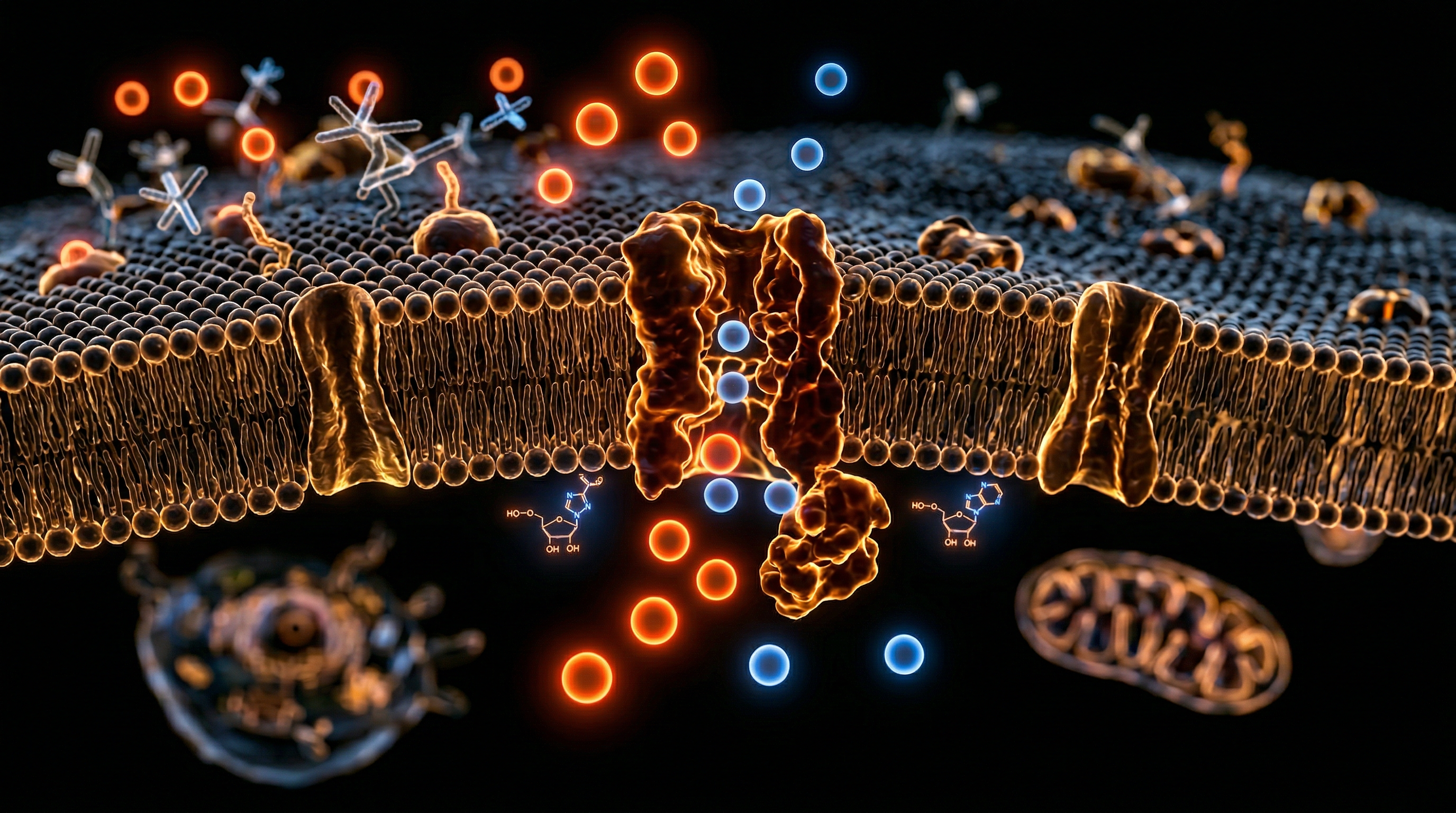
To understand the gravity of the current dietary crisis, one must first grasp the elegance of the Na+/K+-ATPase enzyme. Located in the plasma membrane of virtually every human cell, this protein functions as a biological "sump pump," working tirelessly against the laws of entropy to maintain a specific internal environment.
The 3:2 Exchange
The pump operates through a cycle of conformational changes powered by Adenosine Triphosphate (ATP). In every single cycle, the pump exports three sodium (Na+) ions out of the cell and imports two potassium (K+) ions into the cell. Because there is an unequal exchange of cations (three out for two in), the pump creates a net negative charge inside the cell.
The Resting Membrane Potential
This process creates what biologists call the Resting Membrane Potential (RMP), typically measured at -70 to -90 millivolts (mV). This voltage is the "battery charge" of the cell. Without this specific electrical gradient:
- Neurons cannot fire signals.
- Muscle fibres (including the heart) cannot contract or relax.
- Nutrients (like glucose and amino acids) cannot be transported into the cell via secondary active transport.
The Myocardial Necessity
In the heart, the stakes are exponentially higher. The myocardium relies on a rapid influx of sodium and an efflux of potassium to create the Action Potential that drives a heartbeat. If the extracellular environment is flooded with sodium and depleted of potassium, the concentration gradient flattens. The "battery" loses its charge, and the heart must work significantly harder to move ions against an increasingly hostile osmotic pressure.
##
Mechanisms at the Cellular Level
The failure of the potassium-sodium pump is not a sudden event but a gradual erosion of cellular homeostasis. When we ingest a diet dominated by processed cereals, tinned goods, and ready meals, we trigger a cascade of molecular malfunctions.
Intracellular Dehydration and Swelling
Sodium is "osmotically active," meaning it pulls water toward it. Under normal conditions, the pump keeps sodium concentrations low inside the cell. When the pump fails—either due to lack of ATP or an overwhelming influx of dietary sodium—sodium builds up intracellularly. This causes the cell to pull in excess water, leading to cellular oedema (swelling). This swelling triggers inflammatory pathways and can lead to apoptosis (programmed cell death).
The Role of ATP and Magnesium
The pump is an ATPase, meaning it is an enzyme that breaks down ATP to harness energy. Crucially, this reaction requires Magnesium (Mg2+) as a cofactor. In the context of the UK diet, which is also chronically deficient in magnesium due to soil depletion, the pump is effectively starved of its spark plug. You can have all the potassium in the world, but if your magnesium levels are low, the pump remains dormant.
Calcium Dysregulation
There is a secondary mechanism called the Sodium-Calcium Exchanger (NCX). This exchanger relies on the sodium gradient created by the Na+/K+ pump to move calcium out of the cell. When the primary pump fails, sodium levels rise inside the cell, which halts the NCX. Calcium then builds up in the cytoplasm of vascular smooth muscle cells.
- The Result: The arteries cannot relax. They remain in a state of chronic constriction, leading to systemic hypertension and permanent vascular remodelling.
##
Environmental Threats and Biological Disruptors
The degradation of our cellular voltage is not an accident of nature; it is a byproduct of an industrialised environment that prioritises shelf-life over human life.
The "Hidden" Sodium in Processed Matrices
Most people believe that "cutting out table salt" is enough. However, in the UK, over 75% of sodium intake comes from processed foods where salt is used as a functional ingredient (preservative, colour stabiliser, and texture enhancer) rather than a seasoning.
- Bread and Cereals: Surprisingly, some supermarket breads contain as much salt per slice as a packet of crisps.
- Flavour Enhancers: Monosodium Glutamate (MSG) and other sodium-based additives provide a "stealth" dose of sodium that bypasses the salty taste receptors but still enters the bloodstream.
Soil Depletion and the Potassium Drought
Even for those attempting to eat "healthy," the biological deck is stacked against them. Modern intensive farming practices in the UK have focused on NPK fertilisers (Nitrogen, Phosphorus, Potassium). While potassium is added to the soil, it is often in a form that promotes rapid plant growth (biomass) at the expense of nutrient density. Furthermore, the over-application of glyphosate and other pesticides chelates minerals in the soil, making them unavailable to the plant.
The Sugar-Insulin-Potassium Axis
The high intake of refined carbohydrates and Ultra-Processed Foods leads to chronic hyperinsulinaemia (elevated insulin). Insulin has a profound effect on the Na+/K+ pump; while it acutely stimulates the pump to move potassium into cells (often used in hospitals to treat hyperkalaemia), chronic insulin resistance leads to a "leakage" of potassium from the cells into the urine.
Callout: Modern humans are essentially "leaking" potassium through their kidneys while being "force-fed" sodium through their diet. This is a recipe for bio-electric bankruptcy.
##
The Cascade: From Exposure to Disease
The failure of the potassium-sodium pump is the "patient zero" of metabolic and cardiovascular disease. Once the electrolytic ratio is inverted, a predictable cascade of pathology follows.
Stage 1: Endothelial Dysfunction
The endothelium—the thin lining of the blood vessels—is the first to suffer. Without the correct potassium-to-sodium ratio, the endothelium cannot produce Nitric Oxide (NO), the gas responsible for vasodilation. The vessels become stiff, brittle, and prone to micro-tears.
Stage 2: Left Ventricular Hypertrophy (LVH)
As the heart struggles to pump blood through constricted, high-pressure vessels, the muscle of the left ventricle thickens to compensate. This is Left Ventricular Hypertrophy. Because the pump is failing, the heart muscle cells cannot efficiently reset their electrical charge between beats, leading to arrhythmias and atrial fibrillation.
Stage 3: The Renal Feedback Loop
The kidneys are designed to be the ultimate arbiters of mineral balance. However, when faced with a chronic deluge of sodium and a drought of potassium, the Renin-Angiotensin-Aldosterone System (RAAS) becomes chronically activated. This system, meant for short-term survival during dehydration, now stays "on" permanently, further increasing blood pressure and causing scarring (fibrosis) in the kidney tissues.
Stage 4: Neuro-Inflammation and Cognitive Decline
The brain is the most electrically active organ in the body. The Na+/K+ pump is responsible for the reuptake of neurotransmitters like glutamate. When the pump fails, glutamate lingers in the synaptic cleft, leading to excitotoxicity—the literal frying of neurons. This is now being linked to the rising rates of vascular dementia in the UK.
##
What the Mainstream Narrative Omits
The mainstream medical establishment, particularly within the NHS framework, focuses almost exclusively on Sodium Reduction. While reducing sodium is beneficial, it is only half of the equation—and perhaps the less important half.
The Myth of the "Standard Blood Test"
When a GP orders a "U&Es" (Urea and Electrolytes) blood test, they are measuring extracellular potassium. However, 98% of the body's potassium is supposed to be inside the cells. A patient can have "normal" blood potassium levels while being severely depleted at the cellular level. By the time potassium shows as "low" on a standard blood test, the patient is in a state of near-emergency. The medical system ignores the Sub-clinical Deficiency that precedes overt disease by decades.
The Profitability of Symptoms
Treating the root cause—the restoration of the potassium-sodium ratio—requires dietary intervention and soil regeneration, neither of which are profitable for the pharmaceutical industry. Instead, the focus remains on ACE Inhibitors, Beta Blockers, and Statins. These drugs manage the symptoms of a failing pump but do nothing to restore the cellular voltage. In fact, many diuretics used to treat hypertension actually increase the loss of potassium, creating a vicious cycle of dependency.
The "Salt Sensitive" Fallacy
Mainstream advice often labels people as "salt sensitive," implying their genetics are at fault. In reality, most "salt sensitivity" is simply a Potassium Deficiency. If the body has sufficient potassium, it can effectively excrete excess sodium. Without potassium, the body has no choice but to retain sodium to maintain osmotic pressure.
##
The UK Context
The United Kingdom presents a unique and troubling case study in electrolytic collapse.
The Rise of the Ready Meal
The UK consumes more ultra-processed food than any other country in Europe. Recent data suggests that UPFs make up over 50% of the British diet, and for children in lower-income brackets, this figure can rise to 80%. These foods are engineered for "hyper-palatability," which almost always involves a high sodium-to-potassium ratio.
Soil Health in the British Isles
Centuries of intensive sheep and cattle grazing, followed by industrial arable farming, have left British soils depleted. Research has shown that the mineral content of British vegetables has declined by up to 40% since the 1940s. A potato grown in the UK today contains significantly less potassium than its post-war counterpart.
The "Cost of Living" Impact
Potassium-rich foods—avocados, leafy greens, wild-caught salmon, and organic tubers—are increasingly becoming "luxury items." The cheapest calories available in British supermarkets are white bread, pasta, and frozen processed meals, all of which are sodium-heavy and potassium-void. This creates a socio-economic divide in cellular health.
##
Protective Measures and Recovery Protocols
Restoring the potassium-sodium pump requires more than just a reduction in salt; it requires a radical re-mineralisation of the body.
1. Achieving the "Golden Ratio"
The goal should be a potassium-to-sodium ratio of at least 4:1. This means for every 1,000 mg of sodium, you should ingest 4,000 mg of potassium.
- Action: Prioritise high-potassium "powerhouses" such as baked potatoes (with skin), spinach, beet greens, coconut water, and white beans.
2. The Magnesium Mandate
As established, the pump cannot function without ATP, and ATP cannot be utilised without magnesium.
- Action: Supplement with highly bioavailable magnesium (such as Magnesium Glycinate or Malate) and consume magnesium-rich foods like pumpkin seeds and dark chocolate (85%+).
3. Eliminating "Anti-Nutrients"
Phytic acid in unsoaked grains and legumes can bind to minerals, preventing their absorption.
- Action: Traditional food preparation methods—soaking, sprouting, and fermenting—are essential for mineral bioavailability.
4. Therapeutic Hydration
Drinking large amounts of plain, demineralised water (distilled or reverse osmosis) can actually flush out precious electrolytes.
- Action: Add a pinch of Celtic Sea Salt or Himalayan Salt to your water. These salts contain trace minerals (including potassium and magnesium) that help the water enter the cell rather than just diluting the extracellular fluid.
5. Glucose Control
Since high insulin causes potassium wasting, maintaining stable blood sugar is a prerequisite for electrolytic health.
- Action: Implement Intermittent Fasting and reduce the consumption of refined sugars to allow the kidneys to properly regulate mineral excretion.
##
Summary: Key Takeaways
The failure of the potassium-sodium pump is the invisible engine driving the UK’s chronic disease epidemic. To reclaim our health, we must move beyond the simplistic "low salt" narrative and embrace the complex bio-electricity of the cell.
- The Pump is Life: Every thought, heartbeat, and movement is powered by the Na+/K+-ATPase pump. It is the most important enzyme in the body.
- The Inversion is the Problem: Our biology is evolved for high potassium and low sodium. Modern processed diets have completely inverted this, leading to cellular "short-circuiting."
- Voltage is Health: A cell with low voltage (low RMP) is a cell prone to cancer, inflammation, and death. Maintaining the electrical gradient is the primary goal of nutrition.
- Magnesium is the Key: You cannot fix a potassium deficiency without first addressing magnesium deficiency. They are synergistic partners in cellular energy.
- Mainstream Blindness: Standard blood tests often fail to detect intracellular mineral bankruptcy. Do not rely on "normal" results if you exhibit symptoms of hypertension or fatigue.
- Dietary Sovereignty: In a world of processed food and depleted soil, we must be intentional about mineral intake. Potassium is not just a nutrient; it is the currency of our bio-electric existence.
By understanding and protecting the Potassium-Sodium Pump, we can begin to reverse the tide of cardiovascular and metabolic decay that has come to define modern life. The power to heal begins at the cellular level, one ion at a time.
This article is provided for informational and educational purposes only. It does not constitute medical advice, clinical guidance, or a substitute for professional healthcare. Information reflects cited research at time of publication. Always consult a qualified healthcare professional before acting on any health information.
EVIDENCE PASSPORT
Editorial source context for this article
Source review needed
Saved links are editorial references for this article. They may support specific claims rather than every sentence. Open and assess each source in context. This passport does not independently verify them.
Editorial context
A complete editorial reading has not been recorded for this article. Source links remain available for you to open and assess directly.
Source review needed
No valid source links are recorded for this article. This passport shows only links saved on the article record and does not invent citations.
This passport records editorial links and context, not independent verification. Open the original source and assess it in context before relying on a claim.
Medical Disclaimer
The information in this article is for educational purposes only and does not constitute medical advice, diagnosis, or treatment. Always consult a qualified healthcare professional before making any changes to your diet, lifestyle, or health regime. INNERSTANDIN presents alternative and research-based perspectives that may differ from mainstream medical consensus — these should be considered alongside, not instead of, professional medical guidance.
Read Full DisclaimerContinue the thread
Keep this question moving.
Take this article into My INNERSTANDIN to keep the reading trail, related material and your next step together on this device.
Explore this in the Body Map
See where this hits your biology. Interactive anatomy, threats, and protective protocols.
Dig deeper in the Library
Free, longform PDF volumes that go beyond headlines into mechanisms and references.