
Social Jetlag: The Mismatch Between Biological Clocks and Modern UK Work Culture
Updated May 2026
Social jetlag occurs when our biological internal clock is forced to misalign with the social schedules of work and social life. This chronic state of circadian disruption is linked to increased cardiovascular risk and significant metabolic disturbances in the UK population.
Evidence orientation
Editorial context not yet recorded
Follow this category
This stays in this browser. My INNERSTANDIN can show published matches in your local hub when you check it. It does not send email, push, or alert notifications.
Local learning review
A private browser aid for revisiting ideas. It is not an alert or a health recommendation.
Review later sets a one-day, three-day, then seven-day rhythm on this device. Choose it only when you want to revisit this article.
Overview
In the modern landscape of British industrial and corporate life, a silent, invisible epidemic is eroding the fundamental biological integrity of the population. This is not a viral pathogen or a chemical contaminant in the traditional sense, but a temporal misalignment known as Social Jetlag. The term, coined by the visionary chronobiologist Till Roenneberg, describes the chronic discrepancy between an individual's internal biological clock—their chronotype—and the rigid, often arbitrary constraints of social and professional schedules.
For the majority of the UK workforce, the Monday-to-Friday routine is not merely a logistical necessity; it is a profound physiological stressor. When we force ourselves awake with an alarm clock hours before our internal biology is ready to transition into a wakeful state, we are effectively inducing a state of permanent "jetlag" without ever leaving the ground. This is not a minor inconvenience or a matter of "willpower." It is a violent disruption of the circadian rhythm, the 24-hour cycle that governs every physiological process from DNA repair to metabolic rate.
In the United Kingdom, it is estimated that over 70% of the workforce suffers from at least one hour of social jetlag, with nearly 30% experiencing a discrepancy of two hours or more between their work-day and free-day sleep patterns.
This article aims to expose the biological mechanisms behind this crisis, detailing how the UK’s adherence to a "9-to-5" archetype—a relic of the industrial revolution—is driving a surge in cardiovascular disease, Type 2 diabetes, and neurodegenerative decline. We will move beyond the superficial "sleep hygiene" advice found in mainstream media to explore the cellular machinery that is being ground down by our refusal to respect the sun and the internal biological timing that mirrors it.
##
##
The Biology — How It Works
To understand social jetlag, one must first understand the Suprachiasmatic Nucleus (SCN). Nestled within the hypothalamus, the SCN is the "master clock" of the human body. It consists of approximately 20,000 neurons that receive direct input from the retina via the retinohypothalamic tract. This pathway is not designed for vision but for the detection of light intensity and wavelength, specifically to synchronise our internal biology with the external solar cycle.
The SCN does not operate in isolation. It acts as the conductor of an immense biological orchestra, sending hormonal and neural signals to peripheral clocks located in every organ, tissue, and cell. These clocks ensure that the liver is ready to process nutrients during the day, the heart is prepared for increased blood pressure during activity, and the brain is primed for glymphatic clearance (waste removal) during the night.
The Chronotype Spectrum
Humanity does not possess a uniform internal clock. Instead, we exist on a spectrum of chronotypes, determined largely by genetics—specifically variations in the length of the PER (Period) genes.
- Larks (Early Chronotypes): Individuals whose biological peak occurs early in the day. They thrive in the current 9-to-5 structure.
- Owls (Late Chronotypes): Individuals whose biological "morning" begins much later. For an Owl, being forced to start work at 8:00 AM is the physiological equivalent of a Lark being forced to start work at 3:00 AM.
Social jetlag occurs when an individual (usually an Owl) must truncate their sleep to meet societal demands, creating a "sleep debt" that they attempt to "repay" on weekends. This constant shifting of the sleep-wake phase—back and forth every five days—wreaks havoc on the body’s ability to maintain homeostasis.
Chronic social jetlag is significantly more damaging than acute sleep deprivation because it creates a state of permanent "circadian desynchrony," where the master clock in the brain and the peripheral clocks in the organs are no longer speaking the same language.
##
##
Mechanisms at the Cellular Level
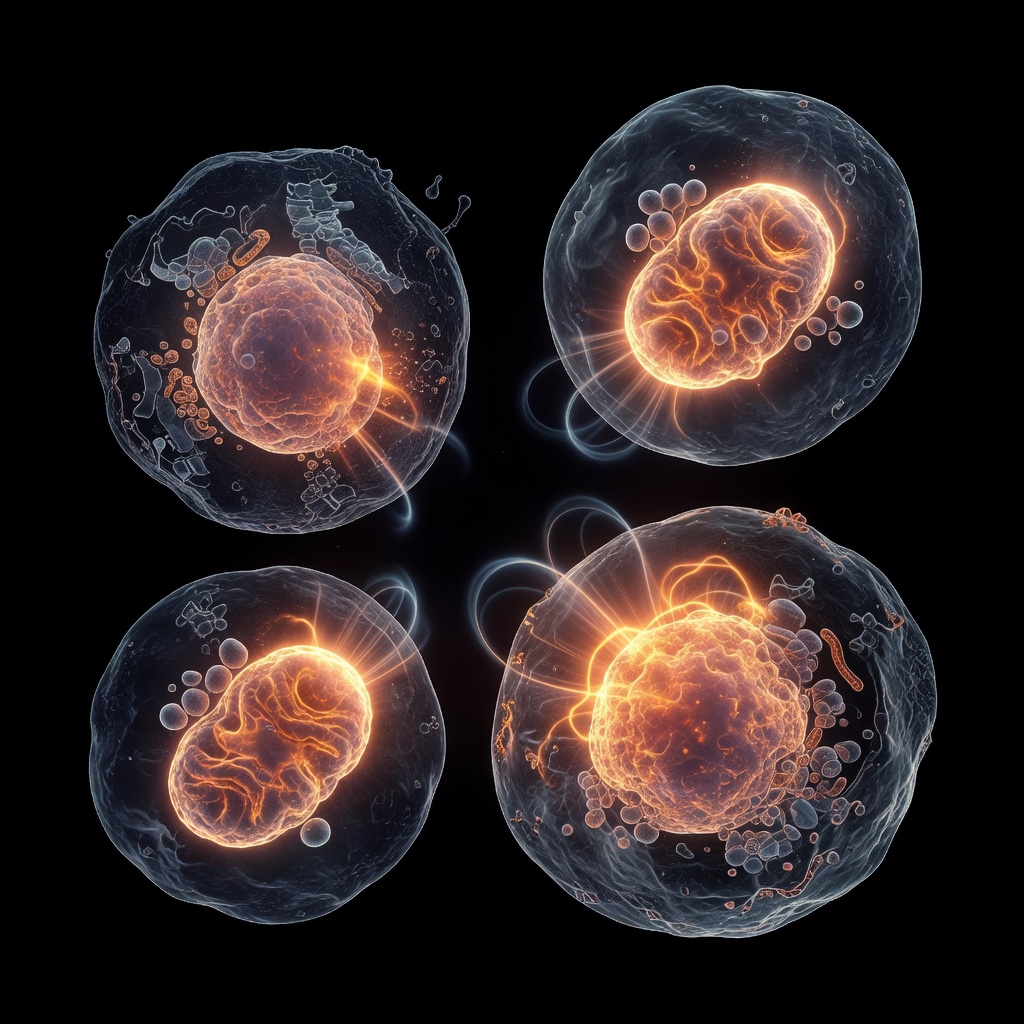
At the heart of the circadian system is a complex molecular engine known as the Transcription-Translation Feedback Loop (TTFL). This is a self-sustaining cycle within the cell nucleus that takes roughly 24 hours to complete.
The TTFL Machinery
The primary drivers of this loop are two proteins: CLOCK (Circadian Locomotor Output Cycles Kaput) and BMAL1 (Brain and Muscle ARNT-Like 1). Together, they form a heterodimer that binds to the DNA, promoting the transcription of Period (PER1, PER2, PER3) and Cryptochrome (CRY1, CRY2) genes.
- As PER and CRY proteins accumulate in the cytoplasm, they eventually re-enter the nucleus and inhibit the activity of CLOCK and BMAL1.
- This creates a negative feedback loop: once the "inhibitor" proteins reach a certain threshold, they stop their own production.
- Over the course of the night, these proteins are degraded by enzymes like Casein Kinase 1 epsilon (CK1ε), allowing the cycle to begin anew the following morning.
The Role of SIRT1 and AMPK
When social jetlag occurs, this molecular loop is fractured. The protein SIRT1, a NAD+-dependent deacetylase, is a key link between the circadian clock and metabolism. SIRT1 interacts with the CLOCK-BMAL1 complex to modulate the expression of metabolic genes. In a state of circadian disruption, SIRT1 activity is compromised, leading to impaired mitochondrial function and reduced AMPK (AMP-activated protein kinase) activation.
AMPK is the body’s "metabolic master switch." When social jetlag suppresses AMPK, the body loses its ability to sense energy needs correctly. This results in the cell remaining in a "growth and storage" mode rather than a "repair and burn" mode, directly contributing to the accumulation of visceral fat and cellular senescence.
##
##
Environmental Threats and Biological Disruptors
The UK's modern environment is hostile to the circadian rhythm. We live in a state of biological twilight, where we are never exposed to enough natural sunlight during the day and never experience true darkness at night.
Blue Light and Melanopsin
The SCN is particularly sensitive to "blue light" (wavelengths around 450-480 nanometres). In the natural world, this light is abundant in the morning sky, signalling the suppression of melatonin (the hormone of darkness) and the release of cortisol (the hormone of alertness). However, the UK’s reliance on LED lighting and digital screens has created a crisis of Artificial Light at Night (ALAN). These devices emit concentrated blue light that stimulates the intrinsically photosensitive retinal ganglion cells (ipRGCs). These cells contain melanopsin, a photopigment that tells the SCN the sun is still up. Even a brief exposure to a smartphone screen at 11:00 PM can delay melatonin onset by up to 90 minutes, pushing the biological clock further into the night and exacerbating social jetlag.
The Toxicity of Night-Time Feeding
The British "takeaway culture" and late-night snacking are significant biological disruptors. The liver and pancreas have their own peripheral clocks. Insulin sensitivity is naturally higher in the morning and lower in the evening. When we consume high-glucose or high-fat meals late at night—forced by long commutes or late shifts—we are feeding the body at a time when the pancreas is "offline." This leads to prolonged postprandial glucose spikes and the deposition of fat in the liver (Non-Alcoholic Fatty Liver Disease).
Atmospheric Pollutants
Emerging research indicates that particulate matter (PM2.5), a significant issue in London and other UK urban centres, can penetrate the blood-brain barrier and cause neuroinflammation in the SCN. This inflammation "muffles" the clock's signal, making it harder for the body to distinguish between day and night, further locking the individual into a state of chronic social jetlag.
##
##
The Cascade: From Exposure to Disease
The physiological fallout of social jetlag is not contained within the sleep cycle; it cascades through every system in the body, manifesting as chronic disease.
Metabolic Syndrome and Obesity
Social jetlag is a potent "obesogen." Studies have shown that for every hour of social jetlag, the risk of being overweight or obese increases by roughly 33%. This is driven by a disruption in the hunger hormones leptin (satiety) and ghrelin (hunger).
- In the misaligned state, leptin levels drop and ghrelin levels spike, specifically for high-carbohydrate, calorie-dense foods.
- Simultaneously, the disruption of the CLOCK-BMAL1 cycle in adipose tissue leads to the hypertrophy (enlargement) of fat cells rather than the creation of new, healthy fat cells.
Cardiovascular Destruction
The UK has some of the highest rates of cardiovascular disease in Europe, and social jetlag is a significant, often ignored, risk factor. The cardiovascular system follows a strict circadian rhythm: blood pressure naturally dips at night and rises sharply in the morning (the "morning surge"). When social jetlag forces an individual out of bed during their biological night, the sympathetic nervous system is hyper-activated. This leads to:
- Endothelial Dysfunction: The lining of the blood vessels becomes rigid and prone to plaque formation.
- Systemic Inflammation: Elevated levels of C-Reactive Protein (CRP) and Interleukin-6 (IL-6), markers of chronic low-grade inflammation.
- Arrhythmias: The heart’s internal electrical timing is disrupted, increasing the risk of atrial fibrillation.
A study of over 100,000 UK Biobank participants revealed that individuals with irregular sleep patterns (high social jetlag) had a significantly higher risk of developing atherosclerotic plaques in the carotid arteries, independent of sleep duration or quality.
Mental Health and Neurodegeneration
The brain's "waste management system," the glymphatic system, is primarily active during deep, slow-wave sleep. Social jetlag truncates this process. The failure to clear beta-amyloid and tau proteins—the hallmarks of Alzheimer’s disease—during the week cannot be compensated for by sleeping in on Sunday. Furthermore, the disruption of the SCN affects the production of neurotransmitters like serotonin and dopamine, leading to the "Monday Blues," which in many cases is actually a clinical manifestation of circadian-induced depression.
##
##
What the Mainstream Narrative Omits
The current discourse around sleep in the UK is dominated by the concept of "sleep hygiene"—using blackout curtains, avoiding caffeine, and keeping a cool room. While useful, this narrative is a convenient distraction from the systemic, biological truth: The problem is not the bedroom; it is the boardroom.
The "Lazy Owl" Myth
Mainstream culture continues to moralise chronotypes. Early risers are viewed as disciplined and productive, while late chronotypes are labelled as lazy or lacking "grit." This is biological prejudice. Chronotype is as much a part of an individual's biology as their height or eye colour. By forcing "Owls" into a 9-00 AM start, UK employers are effectively demanding that 30-40% of their staff work in a state of permanent cognitive impairment.
The Caffeine Trap
The UK's obsession with coffee and "energy" drinks (governed by the FSA but largely unregulated in terms of workplace consumption) is a sticking plaster on a gaping wound. Caffeine works by blocking adenosine receptors in the brain. Adenosine is the molecule that builds up throughout the day to create "sleep pressure." Caffeine does not "wake you up"; it merely masks the signal that you are exhausted. Because caffeine has a half-life of about 5-6 hours, the "afternoon pick-me-up" at 3:00 PM ensures that there is still caffeine in the system at 11:00 PM, preventing the deep sleep necessary for SCN resynchronisation. The mainstream narrative ignores the fact that the UK's productivity is being fueled by a chemical intervention to bypass a biological necessity.
The Economic Cost of Circadian Neglect
Public health bodies like the NHS and the Health and Safety Executive (HSE) focus heavily on physical hazards and stress but largely ignore circadian misalignment. Yet, the loss of productivity due to social jetlag—manifesting as "presenteeism" (being at work but not functioning)—costs the UK economy billions of pounds annually. We are sacrificing the long-term health of the population for the short-term illusion of a synchronised 9-to-5 workforce.
##
##
The UK Context
The United Kingdom presents a unique set of challenges for circadian health. Our geographical location and cultural habits exacerbate the mismatch.
Latitude and Light
The UK’s high latitude means that in winter, many workers commute in the dark and return home in the dark. This "light poverty" means the SCN never receives a strong enough "daytime" signal to anchor the rhythm. During these months, the biological clock tends to "drift," causing an even greater degree of social jetlag as the gap between internal time and the 9-to-5 alarm clock widens.
The Workplace "Hard-Man" Culture
There remains a pervasive "first in, last out" culture in many UK industries, particularly in London’s financial sector and the legal profession. This culture treats sleep as a luxury rather than a biological mandate. The MHRA and other regulatory bodies monitor the safety of drugs, yet there is no regulation regarding "toxic work hours" that result in the same levels of physiological damage as chemical exposure.
Failure of Urban Planning
UK cities are increasingly flooded with high-intensity blue-LED streetlighting. While energy-efficient, the Environment Agency and local councils have failed to consider the "light pollution" impact on the circadian health of residents. This "ecological light trespass" into bedrooms makes it nearly impossible for the urban UK population to achieve the complete darkness required for optimal melatonin production.
##
##
Protective Measures and Recovery Protocols
If the systemic structure of the UK workplace cannot be changed immediately, individuals must take radical, biologically-informed steps to protect themselves. This is not "sleep hygiene"; this is circadian rescue.
Light Management: The "First 20 Minutes"
To anchor the SCN, you must expose your eyes to high-intensity natural light as soon as you wake up.
- Even on a cloudy day in Manchester or London, the lux levels (light intensity) outside are significantly higher than inside any office.
- Spend 20 minutes outside before 9:00 AM. This triggers the early-morning cortisol peak and sets the "timer" for melatonin production 14-16 hours later.
- If natural light is impossible, use a SAD lamp (10,000 lux) for 30 minutes at your desk.
The Darkening Protocol
To counteract the blue light of the modern UK home:
- Switch to "warm" amber bulbs in the evening.
- Use software (like f.lux) or hardware (Blue-light blocking glasses with red/orange lenses) at least three hours before bed. This is not about "eye strain"; it is about protecting the melanopsin pathway in the retina.
- Ensure the bedroom is a "Faraday cage" of darkness. Use blackout blinds and cover every single LED standby light on electronic devices.
Time-Restricted Feeding (TRF)
One of the most powerful ways to "pull" your peripheral clocks back into alignment is through food.
- Constrain all calorie intake to an 8-10 hour window.
- Ensure your last meal is at least 3-4 hours before sleep. This allows the liver and pancreas to enter "repair mode" before the brain enters deep sleep.
- In the UK context, this often means avoiding the "late-night pub meal" or the post-work snack.
The Weekend "Buffer" Strategy
While you cannot fully "repay" sleep debt, you can minimise the "shunting" of your clock.
- Try not to wake up more than 90 minutes later on weekends than you do during the week.
- If you need more sleep, go to bed earlier on Friday and Saturday rather than waking up later on Saturday and Sunday. This prevents the "phase delay" that makes Monday morning so catastrophic.
Supplementation and the UK Regulatory Landscape
In the UK, Melatonin is a Prescription Only Medicine (POM), unlike in the US where it is a supplement. While this limits access, it also prevents the misuse of high-dose, unregulated products. However, other "circadian-friendly" nutrients are available:
- Magnesium Bisglycinate: Essential for the function of the CLOCK proteins and to support the nervous system’s transition to sleep.
- Vitamin D3: In the UK, Vitamin D deficiency is nearly universal in winter. Vitamin D receptors are found in the SCN, and deficiency is directly linked to circadian disruption.
##
##
Summary: Key Takeaways
The mismatch between our biological clocks and the modern UK work culture is not a lifestyle choice; it is a systemic biological failure. The evidence is clear: forcing the body to operate against its internal timing is a primary driver of the UK's most prevalent chronic diseases.
- Chronotype is Genetic: You cannot "train" yourself to be a morning person if your PER genes are programmed for a later start. Attempting to do so causes chronic cellular stress.
- Social Jetlag is a Killer: It is linked to a 33% increase in obesity risk and a significant rise in cardiovascular incidents and Type 2 diabetes.
- Light is the Key: The SCN requires high-intensity morning light and absolute evening darkness to function. Modern UK "biological twilight" is destroying this signal.
- The 9-to-5 is Obsolete: For nearly half the population, the standard UK workday is biologically toxic. Flexibility in start times is not a "perk"—it is a public health necessity.
- Take Radical Responsibility: In the absence of corporate reform, use light therapy, time-restricted feeding, and strict blue-light hygiene to "shield" your biology from the modern environment.
To ignore social jetlag is to ignore the very foundation of human health. We must stop viewing sleep as a negotiable commodity and start recognising it as the rigorous, complex, and uncompromising biological system that it is. The survival of our long-term health depends on us reclaiming our right to live in synchrony with our internal clocks.
This article is provided for informational and educational purposes only. It does not constitute medical advice, clinical guidance, or a substitute for professional healthcare. Information reflects cited research at time of publication. Always consult a qualified healthcare professional before acting on any health information.
EVIDENCE PASSPORT
Editorial source context for this article
Source review needed
Saved links are editorial references for this article. They may support specific claims rather than every sentence. Open and assess each source in context. This passport does not independently verify them.
Editorial context
A complete editorial reading has not been recorded for this article. Source links remain available for you to open and assess directly.
Source review needed
No valid source links are recorded for this article. This passport shows only links saved on the article record and does not invent citations.
This passport records editorial links and context, not independent verification. Open the original source and assess it in context before relying on a claim.
Medical Disclaimer
The information in this article is for educational purposes only and does not constitute medical advice, diagnosis, or treatment. Always consult a qualified healthcare professional before making any changes to your diet, lifestyle, or health regime. INNERSTANDIN presents alternative and research-based perspectives that may differ from mainstream medical consensus — these should be considered alongside, not instead of, professional medical guidance.
Read Full DisclaimerContinue the thread
Keep this question moving.
Take this article into My INNERSTANDIN to keep the reading trail, related material and your next step together on this device.