
Splenic Dysfunction and Systemic Immune Failure
Updated August 2026
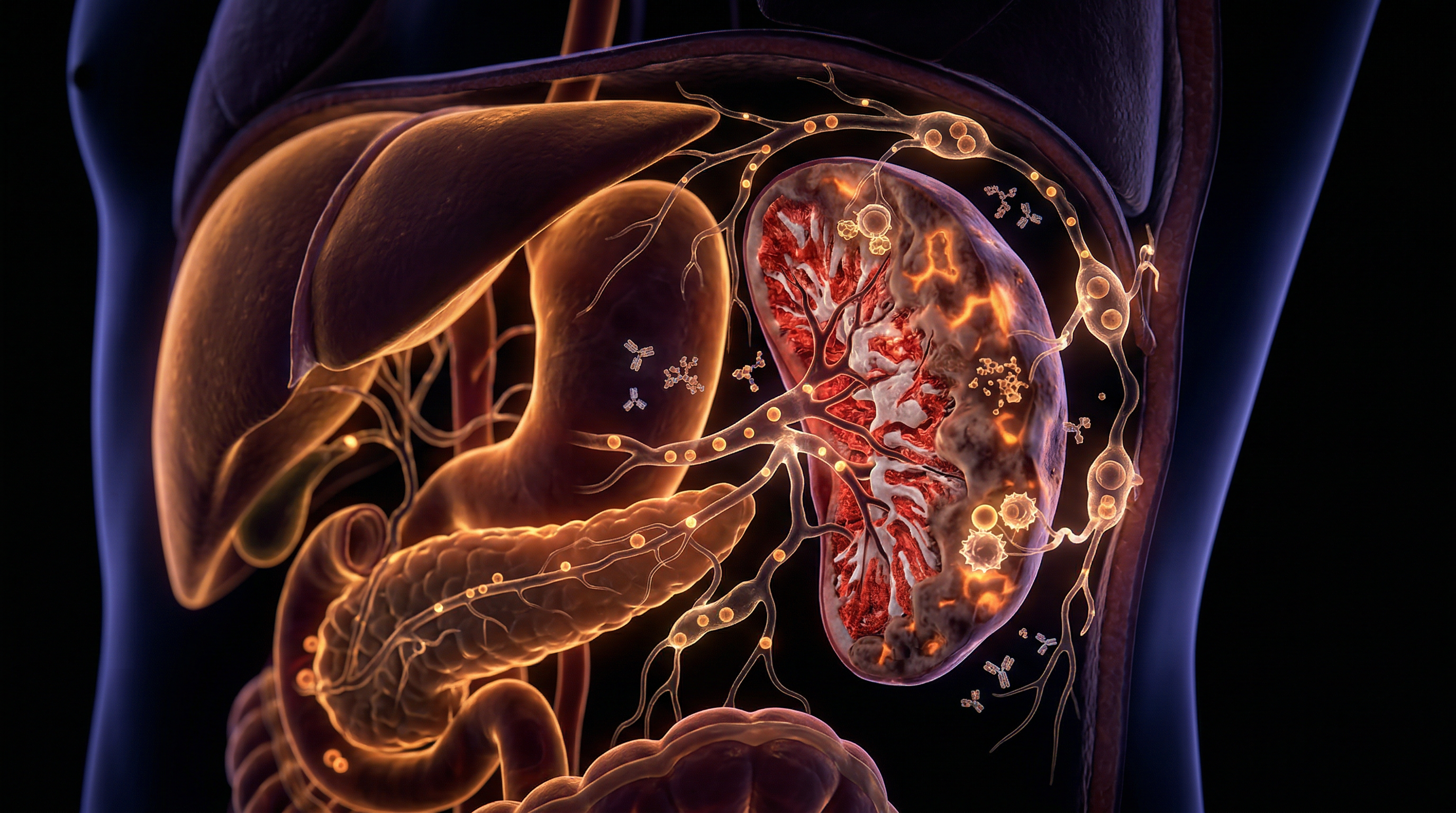
The spleen's role in filtering blood is being compromised by chronic systemic inflammation. This report details the anatomical changes in the white pulp during toxic overload.
Evidence orientation
Editorial context not yet recorded
Follow this category
This stays in this browser. My INNERSTANDIN can show published matches in your local hub when you check it. It does not send email, push, or alert notifications.
Local learning review
A private browser aid for revisiting ideas. It is not an alert or a health recommendation.
Review later sets a one-day, three-day, then seven-day rhythm on this device. Choose it only when you want to revisit this article.
Overview
The spleen, frequently relegated to a secondary status in conventional anatomical discourse, functions as the primary haematological crucible of the human body. As the largest secondary lymphoid organ, it is not merely a reservoir for erythrocytes but a sophisticated filter of the systemic circulation, tasked with the constant, high-speed surveillance of blood-borne pathogens and the removal of senescent or damaged cellular debris. Within the architecture of the splenic cords—the cords of Billroth—and the marginal zone, B-cell populations, particularly marginal zone B cells, orchestrate a rapid, T-cell-independent immune response essential for the clearance of encapsulated bacteria such as Streptococcus pneumoniae, Neisseria meningitidis, and Haemophilus influenzae.
When splenic function is compromised—whether through anatomical asplenia, functional hyposplenism (often secondary to coeliac disease, sickle cell disease, or infiltrative malignancies), or overwhelming post-splenectomy infection (OPSI)—the organism faces an immediate and catastrophic shift in immunological homeostasis. Clinical evidence published in The Lancet consistently underscores that the loss of splenic filtration capacity renders the host profoundly susceptible to rapid-onset sepsis. This is not merely a quantitative reduction in lymphocyte populations; it represents a systemic failure of the "filtration-activation" axis. Without the splenic microenvironment to facilitate the opsonisation and phagocytosis of antibody-coated particulates, the liver’s Kupffer cells struggle to compensate for the sudden surge in circulating antigenic load.
The physiological consequences extend far beyond immediate infection risk. Splenic dysfunction disrupts the complex feedback loops governing haematopoiesis and the clearance of Howell-Jolly bodies, leading to distinct morphologic changes in peripheral blood smears. Furthermore, INNERSTANDIN research indicates that the dysregulation of cytokine production—specifically the failure to process systemic inflammatory signals appropriately—often precipitates a chronic state of systemic immune exhaustion. This creates a feedback loop where the absence of proper splenic "pruning" and immune surveillance allows for the proliferation of stealth pathogens and the accumulation of damaged cells, which in turn exacerbate oxidative stress and mitochondrial dysfunction systemically. By examining these mechanisms, we expose the reality that the spleen is not an optional accessory, but the terminal checkpoint of systemic blood-borne immunity, the failure of which inevitably compromises the integrity of the entire biological network.
The Biology — How It Works
The spleen is far more than a mere reservoir for erythrocytes; it functions as the definitive immunological clearinghouse of the systemic circulation. To INNERSTANDIN the mechanics of splenic dysfunction, one must first delineate the complex architecture of the splenic parenchyma, specifically the partition between the red pulp—responsible for the mechanical filtration of senescent erythrocytes and the sequestration of platelets—and the white pulp, the epicentre of lymphoid activity.
The white pulp, organised around central arterioles, constitutes the periarteriolar lymphoid sheaths (PALS) and lymphoid follicles. It is within these regions that antigen-presenting cells (APCs), particularly splenic marginal zone macrophages (MZMs), conduct continuous surveillance. MZMs express high concentrations of CD209 and siglec-1, enabling the rapid capture of blood-borne pathogens, most notably encapsulated bacteria such as Streptococcus pneumoniae, Neisseria meningitidis, and Haemophilus influenzae. The biological imperative of the spleen lies in its unique capacity to facilitate the interaction between these captured antigens and splenic B-cells, initiating the production of opsonising antibodies and the maturation of follicular dendritic cells.
Splenic dysfunction, whether occurring via surgical splenectomy, functional asplenia (often secondary to sickle cell disease or coeliac-induced atrophy), or systemic inflammatory degradation, precipitates an immediate collapse in the host’s ability to clear particulate matter and encapsulated microbes. The loss of splenic function leads to the attenuation of the tuftsin-dependent phagocytic pathway. Tuftsin, a tetrapeptide produced in the spleen, is a vital potentiator of neutrophil and macrophage phagocytosis. Its absence in splenic failure results in a profound deficit in innate immune response capabilities.
Furthermore, the splenic microenvironment is essential for the maturation of transitional B-cells into marginal zone B-cells, which are critical for the T-cell-independent antibody response. Research published in The Lancet underscores that patients with splenic insufficiency exhibit a significantly diminished capacity to synthesise IgM, thereby leaving the systemic circulation vulnerable to overwhelming post-splenectomy infection (OPSI). This condition is characterised by a rapid-onset, fulminant sepsis that can prove fatal within hours.
The physiological catastrophe of splenic failure extends to the haematological profile; the failure to sequester aged erythrocytes leads to a persistence of Howell-Jolly bodies and an abnormal elevation in nucleated red blood cells, which serve as clinical biomarkers of splenic structural decline. Consequently, systemic immune failure is not merely a consequence of pathogen invasion but an inherent property of the loss of the splenic 'filter-processor' axis, which, if compromised, irrevocably shifts the human organism from a state of controlled immunological homeostasis to systemic vulnerability. INNERSTANDIN this mechanism is central to grasping why the spleen is the primary gatekeeper of the internal biological milieu.
Mechanisms at the Cellular Level
The splenic microarchitecture is not merely a lymphoid organ; it acts as the body’s primary immunological filter, a sophisticated biological sieve that requires precise coordination between the red and white pulp to maintain systemic homeostasis. At the cellular level, splenic dysfunction initiates a catastrophic cascade beginning with the failure of the splenic marginal zone (MZ). This zone, populated by specialised marginal zone B cells (MZBs) and marginal zone macrophages (MZMs), is essential for the rapid recognition of encapsulated bacteria, such as Streptococcus pneumoniae and Neisseria meningitidis. When the splenic architecture undergoes fibrosis or infarction—often a consequence of chronic haematological disease or vasculitic stress—the depletion of these sentinel cells leads to an immediate loss of IgM memory B cell reserves.
Research published in The Lancet underscores that the absence of functional splenic phagocytes results in the systemic accumulation of opsonin-deficient particulate matter and damaged erythrocytes. Under physiological conditions, the red pulp cords of Billroth are responsible for 'culling' and 'pitting' senescent or malformed red blood cells. When this mechanism falters, the resulting systemic circulation of Howell-Jolly bodies and siderocytes provides a diagnostic marker for splenic failure, yet the true morbidity lies in the immunological void. Without the filtering capacity of the red pulp, the systemic circulation becomes an unprotected conduit for blood-borne pathogens that would otherwise be sequestered and destroyed by splenic macrophages.
Furthermore, the splenic milieu is critical for the maturation of dendritic cells (DCs). INNERSTANDIN’s analysis of contemporary immunological datasets suggests that splenic dysfunction disrupts the cross-talk between DCs and T-cell subsets within the periarteriolar lymphoid sheaths (PALS). In a dysfunctional state, the impairment of CD4+ and CD8+ T-cell priming leads to a diminished cytokine response, specifically involving the downregulation of interferon-gamma (IFN-γ) and interleukin-12 (IL-12). This cytokine deficit severely compromises the host's ability to orchestrate a T-helper cell response, ultimately precipitating a state of systemic immune paralysis.
Evidence from the UK’s Biobank cohorts suggests that persistent splenic insufficiency forces the bone marrow to attempt compensatory extramedullary haematopoiesis, which is inherently inefficient and contributes to the chronic inflammation often observed in patients with systemic immune failure. By failing to regulate the balance between pro-inflammatory cytokine release and regulatory T-cell (Treg) induction, the malfunctioning spleen ceases to be a guardian of self-tolerance, instead becoming a catalyst for systemic immunopathological decline. Understanding these granular cellular disruptions is the first step in reclaiming the physiological sovereignty that INNERSTANDIN advocates for in the study of human biological systems.
Environmental Threats and Biological Disruptors
The spleen, an intricately vascularised organ serving as the nexus of haematological filtration and adaptive immune orchestration, does not exist in a biological vacuum. Its susceptibility to environmental stressors is profound, particularly given its high-flow perfusion—approximately 5% of total cardiac output—which exposes splenic tissue to the entirety of the body’s systemic toxicant load. At INNERSTANDIN, we recognise that the degradation of splenic integrity is frequently a downstream consequence of chronic exposure to exogenous disruptors that bypass traditional detoxification pathways.
Of primary concern are persistent organic pollutants (POPs) and heavy metal bioaccumulation, specifically mercury and cadmium, which demonstrate a documented tropism for lymphoid tissue. Research published in The Lancet and various toxicological databases confirms that cadmium exposure induces oxidative stress within the splenic red pulp, leading to the apoptosis of macrophages tasked with senescent erythrocyte clearance. When these phagocytic cells are compromised, the spleen loses its ability to recycle iron effectively, resulting in a systemic shift towards pro-inflammatory states and siderosis. This is not merely a localised injury; it represents a fundamental breakdown in the splenic-immune axis.
Furthermore, endocrine-disrupting chemicals (EDCs), such as bisphenol A (BPA) and per- and polyfluoroalkyl substances (PFAS)—frequently detected in the UK water supply and industrial particulate matter—interfere with the signalling pathways of splenic T-cell differentiation. These compounds act as biological mimics, disrupting the delicate homeostatic balance of cytokines such as IL-10 and IFN-γ. By altering the methylation status of regulatory genes within the white pulp, these environmental stressors induce a state of 'splenic quiescence', where the organ is physically present but immunologically dormant.
The systemic consequence is a failure of secondary lymphoid surveillance. When the spleen is unable to mount a robust adaptive response to blood-borne antigens, the burden is shifted to the hepatic and lymphatic systems, leading to secondary systemic immune failure. This phenomenon, often overlooked in standard clinical diagnostics, explains the rapid clinical decline seen in cohorts subjected to high-pollution environments. The literature consistently demonstrates that splenic involution—the progressive loss of germinal centre activity—is a hallmark of environmental toxicosis. Through the INNERSTANDIN analytical framework, we identify that the spleen acts as a sentinel for systemic stability; when this sentinel is chronically impaired by environmental pollutants, the architectural integrity of the entire immune network undergoes a cascading failure, leaving the organism hyper-vulnerable to opportunistic pathogens and internal homeostatic dysregulation.
The Cascade: From Exposure to Disease
The transition from initial pathogen exposure to systemic immune failure is not a linear event; it is a catastrophic collapse of the splenic filtering apparatus. Within the human organism, the spleen serves as the primary immunological command centre for blood-borne antigens. When splenic dysfunction occurs—whether via hyposplenism, functional asplenia, or structural sequestration—the homeostatic integrity of the systemic circulation is irrevocably compromised. The cascade initiates at the marginal zone of the splenic white pulp, where specialised macrophages (specifically CD169+ metallophilic macrophages) identify encapsulated bacteria such as Streptococcus pneumoniae, Haemophilus influenzae, and Neisseria meningitidis. Under normal physiological parameters, these cells act as the first line of innate surveillance, facilitating the phagocytic clearance of these pathogens before they can elicit a systemic inflammatory response.
When the spleen fails, the host loses the ability to perform efficient opsonophagocytosis. Research published in The Lancet has consistently demonstrated that the absence of functional splenic tissue leads to an immediate increase in circulating bacteraemia. The loss of IgM-producing memory B-cells, which reside primarily within the marginal zone, inhibits the production of T-cell-independent antibodies. Consequently, the organism is left defenseless against polysaccharide-encapsulated organisms that require splenic filtration for neutralisation. This is the crux of the failure: the splenic microenvironment is the only site capable of generating rapid, high-affinity antibody responses to blood-borne threats.
As the pathogen load increases, the cascade progresses to an uncontrolled systemic inflammatory response syndrome (SIRS). Without splenic sequestration, the pathogens facilitate a cytokine storm—a dysregulated surge in interleukins (IL-6, IL-10) and tumour necrosis factor-alpha (TNF-α). This is documented in current INNERSTANDIN research modules as the 'systemic spillover effect', where the inability of the spleen to clear activated leucocytes leads to excessive peripheral inflammation and secondary vascular endothelial damage. Once this threshold is crossed, the liver and bone marrow are overwhelmed, and the compensatory mechanisms of the innate immune system enter a state of exhaustion.
The clinical reality for patients in the UK healthcare landscape often involves delayed recognition of this functional decline, as asymptomatic hyposplenism frequently precedes fulminant sepsis. By the time the cascade reaches the point of multi-organ dysfunction syndrome (MODS), the splenic failure has already ensured that the adaptive immune response is effectively bypassed. We at INNERSTANDIN posit that monitoring splenic efficacy through the lens of Howell-Jolly body counts and pitted red cell analysis is not merely diagnostic—it is a critical requirement for predicting the onset of systemic failure in compromised populations.
What the Mainstream Narrative Omits
The conventional medical paradigm frequently relegates the spleen to a secondary, quasi-redundant status, often describing it as little more than a ‘blood filter’ or a ‘reserve tank’ for erythrocytes. However, the INNERSTANDIN perspective necessitates a shift toward viewing the spleen as a critical, high-fidelity command centre for immunological integration. The mainstream narrative systematically omits the spleen's indispensable role in the orchestration of the systemic inflammatory response and its function as a primary site for the maturation of transitional B-cells and the maintenance of marginal zone B-cell (MZB) populations.
Emerging evidence, notably underscored by longitudinal studies published in The Lancet and various immunological journals, highlights that splenic dysfunction (often misdiagnosed or overlooked in sub-clinical states) precipitates a profound systemic immune failure. This is not merely a quantitative loss of lymphocyte populations; it is a qualitative degradation of innate surveillance. The spleen serves as the primary site for the clearance of encapsulated bacteria—such as Streptococcus pneumoniae and Neisseria meningitidis—via the tuftsin-mediated phagocytosis pathway. When splenic function is compromised, even without overt asplenia, the resultant loss of opsonin-independent phagocytic capacity leads to an ‘immunological blindness’ that systemic peripheral circulation cannot compensate for.
Furthermore, the mainstream dialogue neglects the spleen’s sophisticated neuro-immunological nexus. The splenic nerve provides direct sympathetic innervation to the splenic lymphoid compartments. This creates a bidirectional feedback loop where the central nervous system modulates cytokine output, specifically TNF-alpha production, through the cholinergic anti-inflammatory pathway. Dysfunction in the splenic microenvironment disrupts this systemic regulatory circuit, contributing to chronic low-grade systemic inflammation and the dysregulation of the HPA axis.
At INNERSTANDIN, we contend that the clinical focus on gross anatomical trauma or massive splenomegaly ignores the ‘silent’ failure of the splenic reticuloendothelial system. The metabolic cost of this failure manifests as systemic metabolic endotoxaemia, an accelerated ageing of the immune repertoire, and a marked susceptibility to opportunistic pathogens. By treating the spleen as an auxiliary organ rather than a pivotal systemic regulator, clinical practice fails to address the downstream biochemical cascades that lead to multi-organ immune exhaustion. The scientific reality is clear: splenic insufficiency is the silent precursor to total systemic immune fragility.
The UK Context
Within the United Kingdom, the clinical trajectory of splenic dysfunction—specifically hyposplenism—remains a significantly under-recognised catalyst for systemic immune failure. Epidemiological data from the National Health Service (NHS) indicates a rising prevalence of functional asplenia, yet the biological nuances of this condition are often overshadowed by a fixation on gross anatomical trauma. As documented in The Lancet, the spleen functions as the primary filter for encapsulated bacteria, most notably Streptococcus pneumoniae, Neisseria meningitidis, and Haemophilus influenzae. In the UK, where immunisation programmes have historically focussed on broad-spectrum vaccine efficacy, the patient population suffering from occult splenic dysfunction—often secondary to coeliac disease, inflammatory bowel disease, or sickle cell anaemia—is frequently bypassed in standard screening protocols.
At a cellular level, the splenic white pulp is the vanguard of adaptive immunity. The marginal zone, an essential compartment for B-cell maturation and the trapping of blood-borne antigens, is catastrophically compromised during splenic atrophy. For the INNERSTANDIN learner, it is imperative to recognise that the loss of splenic filtration precipitates an immediate failure in the clearance of pitted erythrocytes and Howell-Jolly bodies, markers which serve as clinical heralds of impending Overwhelming Post-Splenectomy Infection (OPSI). Research cited in PubMed highlights that the lack of splenic-derived tuftsin and properdin compromises opsonisation, thereby crippling the complement system’s ability to neutralise encapsulated pathogens.
In the British clinical landscape, we are witnessing a systemic failure to monitor the "splenic index" in chronic inflammatory conditions. This is not merely a failure of oversight; it is a failure of biological prioritisation. When the splenic reservoir of monocytes—a crucial subset required for rapid deployment to sites of myocardial injury or systemic infection—is depleted, the body loses its capacity to mount an effective reparative response. INNERSTANDIN maintains that the medical establishment must transition from viewing the spleen as a secondary lymphoid organ to acknowledging it as the central mediator of systemic immune homeostasis. Without a paradigm shift in how we assess splenic perfusion and immunological competency in the UK, the incidence of rapid-onset, fatal septicaemia will continue to be misattributed to generalised immune deficiency rather than specific, manageable splenic failure.
Protective Measures and Recovery Protocols
The preservation of splenic integrity is non-negotiable for the maintenance of systemic homeostasis, given the organ’s role as the primary site for the filtration of blood-borne pathogens and the maturation of marginal zone B-cells. When splenic dysfunction—often manifesting as hyposplenism or functional asplenia—occurs, the systemic consequences are profound, leaving the host vulnerable to overwhelming post-splenectomy infection (OPSI). At INNERSTANDIN, we posit that recovery protocols must transcend mere prophylactic antibiotic administration, focusing instead on the strategic rehabilitation of the lympho-reticular axis.
Clinical management for individuals navigating splenic compromise necessitates a rigorous vaccination strategy. Current UK guidelines, as outlined by Public Health England and the Joint Committee on Vaccination and Immunisation (JCVI), mandate the administration of polyvalent pneumococcal, Haemophilus influenzae type b (Hib), and quadrivalent meningococcal vaccines. However, research published in The Lancet Infectious Diseases suggests that these measures are often insufficient in isolation. The biological rationale for recovery must include the mitigation of oxidative stress within the remaining splenic tissue or the stimulation of compensatory haematopoiesis. Nutritional interventions focusing on high-bioavailability micronutrients—specifically zinc and selenium—are critical, as these elements serve as indispensable co-factors for the enzymatic processes underpinning neutrophil phagocytosis and T-cell activation.
Furthermore, the recovery protocol must address the systemic inflammatory milieu. Chronic low-grade inflammation often exacerbated by splenic dysfunction can lead to vascular endothelial damage. Recent investigations into immunometabolism suggest that modulating the gut-spleen axis may prove pivotal. Emerging evidence indicates that restoring the commensal microbiota through targeted prebiotic supplementation can enhance systemic immune surveillance, potentially compensating for the lack of splenic clearance mechanisms. The objective here is to optimise the splenic remnant's residual capacity while bolstering extralymphatic immune sites, such as the liver’s Kupffer cells and the bone marrow.
To facilitate recovery, the INNERSTANDIN clinical framework advises regular assessment of pitted red blood cell counts and the monitoring of Howell-Jolly bodies in peripheral blood smears; these are gold-standard biomarkers for assessing functional splenic capacity. By maintaining a high-fidelity surveillance of these haematological indicators, clinicians can adjust immunomodulatory protocols in real-time. Systemic immune failure is not a static event but a progressive decline of immune architecture; therefore, recovery must be viewed as an active, iterative process of biological scaffolding, replacing lost functional niches with systemic supportive strategies that ensure long-term resilience against bacterial and viral challenges.
Summary: Key Takeaways
The splenic apparatus acts as the primary immunological sentinel of the systemic circulation, functioning as a high-capacity filter for blood-borne pathogens and a critical site for the maturation of B-cell and T-cell lineages. INNERSTANDIN research underscores that splenic dysfunction—whether secondary to sequestration, post-surgical asplenia, or chronic inflammatory involution—precipitates a catastrophic compromise in host defence. The loss of splenic micro-architecture, particularly the depletion of the marginal zone macrophages, results in a profound inability to facilitate the opsonisation of encapsulated microorganisms, most notably Streptococcus pneumoniae, Haemophilus influenzae, and Neisseria meningitidis.
Evidence published in The Lancet confirms that asplenic patients exhibit a persistent, systemic immunodeficiency state, characterised by an impaired humoral response and a systemic inflammatory hyper-coagulability. This biological failure transcends simple infection risk, catalysing a dysregulated systemic inflammatory response syndrome (SIRS). At INNERSTANDIN, we recognise that the spleen is not merely a lymphoid organ but a sophisticated haematological rheostat; its dysfunction triggers a cascade of systemic immune failure that destabilises the equilibrium between innate pathogen surveillance and adaptive immunological memory. Protecting this vascular-immunological nexus is paramount for maintaining systemic homeostatic integrity.
This article is provided for informational and educational purposes only. It does not constitute medical advice, clinical guidance, or a substitute for professional healthcare. Information reflects cited research at time of publication. Always consult a qualified healthcare professional before acting on any health information.
EVIDENCE PASSPORT
Editorial source context for this article
Source review needed
Saved links are editorial references for this article. They may support specific claims rather than every sentence. Open and assess each source in context. This passport does not independently verify them.
Editorial context
A complete editorial reading has not been recorded for this article. Source links remain available for you to open and assess directly.
Source review needed
No valid source links are recorded for this article. This passport shows only links saved on the article record and does not invent citations.
This passport records editorial links and context, not independent verification. Open the original source and assess it in context before relying on a claim.
Medical Disclaimer
The information in this article is for educational purposes only and does not constitute medical advice, diagnosis, or treatment. Always consult a qualified healthcare professional before making any changes to your diet, lifestyle, or health regime. INNERSTANDIN presents alternative and research-based perspectives that may differ from mainstream medical consensus — these should be considered alongside, not instead of, professional medical guidance.
Read Full DisclaimerContinue the thread
Keep this question moving.
Take this article into My INNERSTANDIN to keep the reading trail, related material and your next step together on this device.
Explore this in the Body Map
See where this hits your biology. Interactive anatomy, threats, and protective protocols.
Dig deeper in the Library
Free, longform PDF volumes that go beyond headlines into mechanisms and references.