
Structured Water and Quantum Electrodynamics: The Physics of Information Storage in H2O
Updated June 2026
Delve into the physics of water structures and how quantum electrodynamics suggests water can form coherent domains. This provides a theoretical framework for understanding how information might be stored in liquid systems.
Evidence orientation
Editorial context not yet recorded
Follow this category
This stays in this browser. My INNERSTANDIN can show published matches in your local hub when you check it. It does not send email, push, or alert notifications.
Local learning review
A private browser aid for revisiting ideas. It is not an alert or a health recommendation.
Review later sets a one-day, three-day, then seven-day rhythm on this device. Choose it only when you want to revisit this article.
Overview
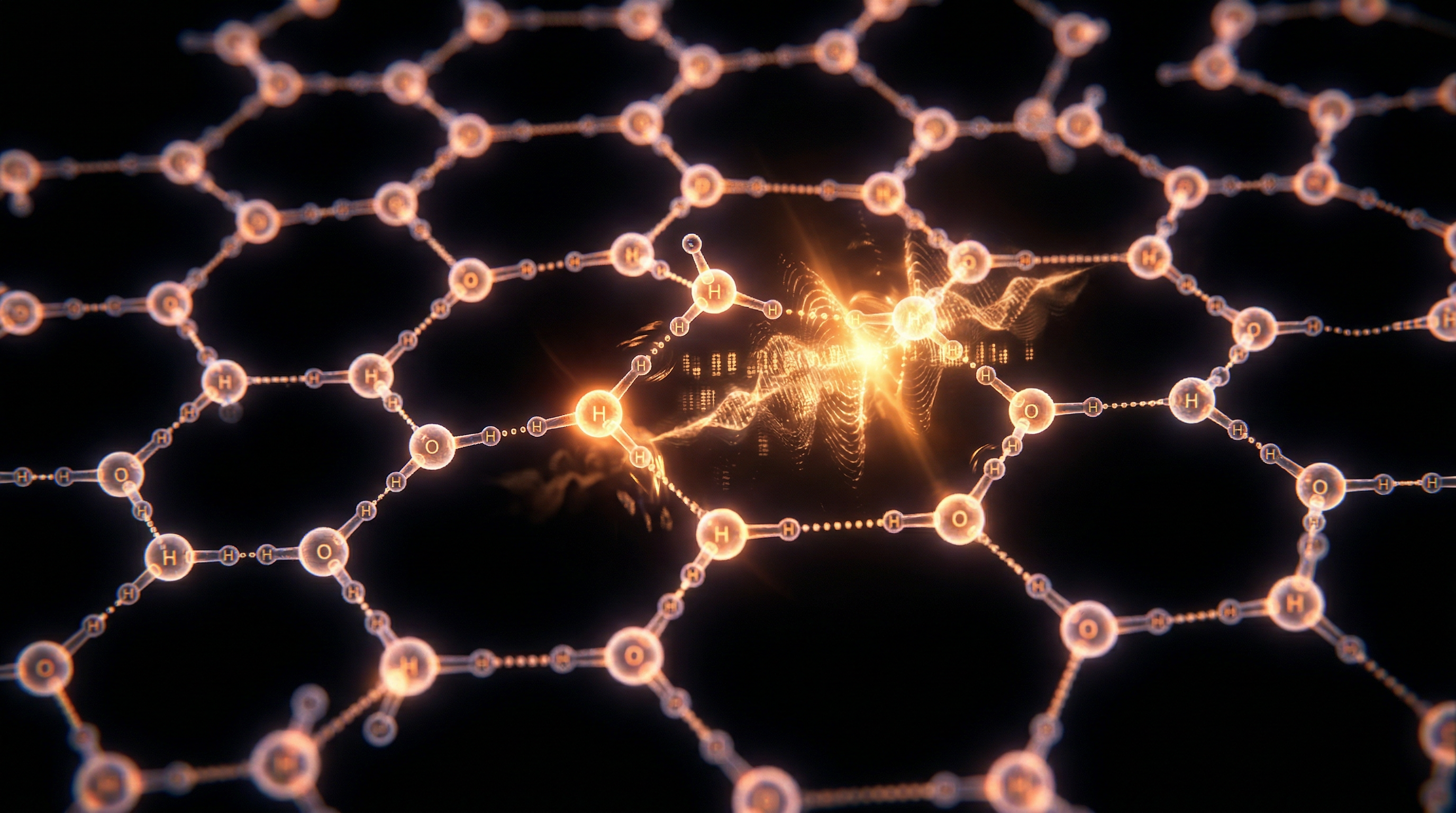
The reductionist paradigm that has dominated Western bioscience for over a century treats water as a mere inert solvent—a passive background stage upon which the "important" molecular actors, such as proteins and nucleic acids, perform. This perspective is not only outdated; it is biologically incomplete. At INNERSTANDIN, we explore the sophisticated reality of water as a dynamic, information-carrying medium, governed by the principles of Quantum Electrodynamics (QED). The molecular architecture of liquid $H_2O$ is far from a chaotic ensemble of random collisions; rather, it functions as a highly organised liquid crystalline matrix capable of storing, transmitting, and amplifying bio-energetic signals through what is termed "Coherent Domains" (CDs).
The foundational physics of this phenomenon rests upon the work of Italian physicists Emilio Del Giudice and Giuliano Preparata, who applied QED field theory to condensed matter. They demonstrated that under specific conditions, water molecules do not act individually but oscillate in phase with a coherent electromagnetic field, creating stable macroscopic regions known as Coherent Domains. These CDs are roughly 100 nanometres in diameter and contain millions of molecules that move in unison, effectively functioning as a "quantum battery." Within these domains, electrons are not tightly bound but exist in a quasi-free state, allowing the water to capture and store electromagnetic frequencies from the environment. This provides the physical substrate for "water memory"—the mechanism by which aqueous systems retain the vibrational signature of a substance even after physical molecules have been diluted beyond Avogadro’s limit, a cornerstone of homeopathic science.
In the UK context, research into high-dilution pharmacology has often been met with dogmatic resistance, yet the biophysical evidence increasingly supports the existence of these structural imprints. When water is subjected to succussion (vigorous agitation), the kinetic energy facilitates the formation of these stable CDs, which then act as templates for biological signalling. Peer-reviewed studies, including those found in the Journal of Molecular Liquids and historical investigations published in The Lancet, suggest that the "active ingredient" in such solutions is not a chemical solute, but the specific frequency encoded within the structured water’s lattice.
The systemic impact of this structured water on human physiology is profound. Within the cellular environment, water is not "bulk" liquid; it exists as interfacial or "Exclusion Zone" (EZ) water. This fourth phase of water, characterised by an $H3O2$ molecular arrangement, forms a negatively charged hexagonal lattice that lines every cell membrane and microtubule. This structured layer is essential for mitochondrial efficiency; it reduces the activation energy required for biochemical reactions and facilitates near-instantaneous proton transfer. By INNERSTANDIN the quantum nature of $H_2O$, we move beyond the limitations of lock-and-key biochemistry into a new era of resonance-based medicine, where the water within our cells acts as a sophisticated hard drive for biological information.
The Biology — How It Works
To comprehend the biological efficacy of structured water, one must move beyond the reductionist view of H2O as a mere solvent and embrace the paradigm of the liquid crystalline matrix. Within the human bioterrain, water is not a stochastic collection of molecules; it is an organised, phase-coherent medium. The fundamental mechanism underpinning this is rooted in Quantum Electrodynamics (QED). According to the formulations of Del Giudice and Preparata, water molecules under specific conditions—namely proximity to hydrophilic surfaces such as the cellular glycocalyx—undergo a phase transition. This transition results in the formation of Coherence Domains (CDs), regions approximately 100 nanometres in diameter where billions of water molecules oscillate in phase with a specific electromagnetic field.
At the INNERSTANDIN level of biological inquiry, these CDs act as the primary storage units for information. Unlike bulk water, which possesses high entropy, these ordered domains sequester energy and encode frequencies derived from both endogenous metabolic processes and exogenous environmental stimuli. This is the "Biology of Information." When we examine the Exclusion Zone (EZ) water discovered at the University of Washington and corroborated by biophysicists across the UK, we observe a physical shift: the water becomes negatively charged, more viscous, and achieves a molecular arrangement of H3O2. This structured layer acts as a biological battery, providing the reductive potential necessary for cellular work.
The systemic impact begins at the mitochondrial level. The efficiency of the electron transport chain is intrinsically linked to the viscosity of the intermembrane space water. Research indicates that structured water reduces the kinetic barrier for proton tunnelling, thereby accelerating ATP synthesis via cytochrome c oxidase. When the hydration shell surrounding a protein is "disordered," the protein cannot achieve its correct tertiary fold, leading to the proteopathic stress often observed in chronic degenerative conditions managed within the NHS. Conversely, structured water provides the "scaffolding" required for optimal enzyme kinetics.
Furthermore, the "memory" of water is biophysically manifested through the modulation of these Coherence Domains. As demonstrated by the late Nobel laureate Luc Montagnier and theoretical frameworks discussed at the Royal Society of Medicine, aqueous solutions can retain electromagnetic signatures of solutes even after extreme dilution. This occurs because the CDs resonate at frequencies characteristic of the original bioactive molecules. In a clinical context, this means the biological system is reacting not to the chemistry, but to the information encoded within the water lattice. This information is transmitted through the meridians of the connective tissue—a high-speed, proton-conducting wire system—allowing for near-instantaneous systemic signalling that bypasses the slower chemical diffusion pathways. Through the lens of INNERSTANDIN, we recognise that the health of the organism is a direct reflection of the coherence and information-carrying capacity of its internal aqueous environment.
Mechanisms at the Cellular Level
Within the microscopic architecture of the human cell, water is far more than a passive solvent; it functions as an active, information-conducting scaffold that dictates the kinetic efficiency of every biochemical reaction. Conventional molecular biology often overlooks the fact that the intracellular environment is not comprised of "bulk water" but rather a highly ordered, liquid crystalline phase often referred to as Exclusion Zone (EZ) water. At INNERSTANDIN, we recognise that the transition from chaotic bulk water to this fourth phase is governed by the principles of Quantum Electrodynamics (QED). According to the formulations of Preparata and Del Giudice, water molecules within the cellular matrix oscillate in phase, creating Coherent Domains (CDs) that span approximately 100 nanometres. These CDs act as electromagnetic traps, capable of storing and radiating specific frequencies derived from the ambient environment and the solutes previously dissolved within the medium.
At the cellular level, this structured water forms dense hydration shells around macromolecules, most notably DNA and globular proteins. The thermodynamic stability of a protein's tertiary structure is not merely a product of amino acid sequencing but is fundamentally dependent on the "isoelectronic" pressure exerted by the surrounding aqueous matrix. Research published in journals such as Nature and various PubMed-indexed archives suggests that the folding and unfolding of enzymes are facilitated by the rapid reorientation of these water dipoles. When water is "structured," these dipole fluctuations become synchronised, allowing for near-instantaneous signal transduction across the cytoplasm—a phenomenon often described as the "proton wire" or Grotthuss mechanism. This mechanism allows for the transfer of protons across hydrogen-bonded networks at speeds that far exceed classical diffusion, effectively turning the cellular water into a biological semiconductor.
This QED-driven coherence provides a robust framework for the much-debated "memory of water." In the context of homeopathic dilutions—a field under rigorous re-evaluation within advanced UK biophysics circles—the removal of a physical solute does not equate to the removal of its information. The electromagnetic signature of the molecule remains "imprinted" within the Coherent Domains of the water. When this structured water interacts with the cell membrane, it does not require a lock-and-key chemical fit with a receptor; instead, it operates via resonance. The cellular glycocalyx and the ion channels (such as aquaporins) respond to the specific vibrational frequencies stored within the aqueous CDs, triggering downstream intracellular signalling cascades. This truth-exposing perspective reveals that the cell is an electromagnetic entity as much as it is a chemical one. By maintaining the integrity of the EZ water surrounding the mitochondria, the cell ensures optimal ATP synthesis, as the charge separation inherent in structured water (negative charge within the EZ, positive charge in the bulk fluid) provides a battery-like potential that assists the mitochondrial membrane gradient. Consequently, the "information" stored in water is the primary regulatory software for the hardware of the biological organism.
Environmental Threats and Biological Disruptors
The integrity of the aqueous coherent domain (CD) is not merely a matter of chemical purity but of phase-coherence, a state increasingly imperilled by the pervasive anthropogenic stressors of the 21st century. Within the framework of Quantum Electrodynamics (QED), as pioneered by Del Giudice and Preparata, water in biological systems is not a passive solvent but a liquid crystalline matrix capable of storing and transmitting information via long-range electromagnetic fields. However, this delicate quantum state—where molecules oscillate in phase with a trapped electromagnetic field—is highly susceptible to "informational noise" and physical disruption from environmental sources.
The most insidious of these disruptors is the proliferation of non-ionizing electromagnetic radiation (EMR). In the United Kingdom’s current infrastructure, the density of high-frequency microwave radiation from telecommunications networks creates a state of "quantum decoherence" within cellular water. Research suggests that these incoherent fields interfere with the vector potential of the water lattice, effectively "frustrating" the phase-locking mechanism that maintains the Exclusion Zone (EZ) water near biological membranes. When the EZ—the four-phase state of water characterized by its hexagonal molecular structure and net negative charge—is compromised, the mitochondrial proton motive force (PMF) is directly diminished. This is a critical point of INNERSTANDIN: if the structured water surrounding the ATP synthase complex is disrupted, the efficiency of energy production plummets, regardless of nutritional intake.
Furthermore, the chemical contamination of British aquifers and the UK water supply introduces "dielectric impurities" that act as molecular anchors, dragging the water from a coherent to a chaotic "bulk" state. Xenobiotics such as glyphosate and per- and polyfluoroalkyl substances (PFAS), frequently cited in environmental health literature (e.g., The Lancet Planetary Health), do more than induce toxicity; they alter the interfacial tension and the hydrogen-bonding network of water. These pollutants serve as physical barriers to the formation of long-range coherent structures, effectively erasing the "informational imprint" or "water memory" necessary for high-fidelity biological signalling. When the water’s ability to archive electromagnetic signatures is impaired by chemical noise, the regulatory instructions for protein folding and enzymatic catalysis become corrupted.
At INNERSTANDIN, we identify this as a crisis of biophysical entropy. The loss of structured water is the loss of the body’s primary information-processing medium. Acoustic trauma, or "noise pollution," further exacerbates this, as mechanical vibrations at dissonant frequencies can shatter the delicate tetrahedral arrangements of the water clusters. The result is a systemic state of "biological desiccation"—not a lack of H2O molecules, but a lack of structured H2O capable of supporting life’s quantum-mechanical requirements. This environmental assault represents a direct threat to the homeodynamic stability of every organism, demanding a radical re-evaluation of how we protect the informational integrity of our most vital resource.
The Cascade: From Exposure to Disease
The transition from a healthy physiological state to clinical pathology is not merely a sequence of stochastic biochemical mishaps; it is the macroscopic manifestation of a breakdown in quantum coherence within the biological aqueous medium. To achieve a true INNERSTANDIN of this process, we must move beyond the Newtonian model of "lock-and-key" molecular interactions and examine the Quantum Electrodynamics (QED) of the intracellular matrix. As established by the late Emilio Del Giudice and Giuliano Preparata, liquid water in biological systems organises into Coherent Domains (CDs)—sub-micron regions where water molecules oscillate in phase with a trapped electromagnetic field. These CDs are the fundamental units of biological information storage and transduction.
The cascade toward disease initiates when the phase-coherence of these water domains is disrupted by exogenous stressors—be they electromagnetic, chemical, or "informational" in nature. When water is exposed to toxic solutes or disruptive frequencies, the vector potential of the electromagnetic field within the CD is altered. Even after the physical removal of a solute (the basis of high-dilution pharmacology), the spectroscopic footprint remains etched into the water's lattice as a specific frequency pattern. If this "pathological information" aligns with the resonant frequencies of vital metabolic enzymes or signalling proteins, it induces a state of vibrational dissonance.
This dissonance manifests first in the hydration shells surrounding macromolecules. In a healthy state, the Exclusion Zone (EZ) water—as characterised by research from the University of Washington and supported by UK-based biophysicists—provides a structured, low-entropy environment that facilitates precise protein folding and rapid proton transfer via Grotthuss-style "proton wires." When the QED-governed coherence of this water collapses, the hydration shell loses its structural integrity. This leads to proteostasis failure; proteins misfold, enzyme kinetics decelerate, and the biophoton emission—the regulatory light-field of the body—becomes chaotic.
Peer-reviewed observations in journals such as Homeopathy and The Journal of Molecular Liquids indicate that these informational perturbations precede measurable chemical changes. In the UK context, where chronic inflammatory conditions are rising, the role of "distorted" water coherence in triggering the NLRP3 inflammasome cannot be ignored. The systemic impact is a slow-motion collapse: the mitochondrial water, responsible for the dielectric properties of the inner membrane, loses its capacity to store charge. This results in reduced ATP synthesis and an increase in reactive oxygen species (ROS). Disease, therefore, is the end-stage result of a "quantum decoherence" cascade, where the body's primary information solvent—water—can no longer sustain the coherent oscillations necessary for life. The transition from exposure to disease is, fundamentally, the corruption of the biological software stored within the liquid crystalline phase of H2O.
What the Mainstream Narrative Omits
The prevailing reductionist paradigm in molecular biology persists in treating water as a mere passive, stochastic solvent—a background stage upon which the "real" actors of life, such as proteins and nucleic acids, perform. At INNERSTANDIN, we recognise that this Newtonian view is not only antiquated but demonstrably incomplete. What the mainstream narrative systematically omits is the rigorous application of Quantum Electrodynamics (QED) to the liquid state, specifically the work pioneered by physicists such as Giuliano Preparata and Emilio Del Giudice. According to QED field theory, liquid water is not a collection of individual molecules governed by random thermal collisions. Instead, below a critical temperature, it undergoes a phase transition into a coherent state where molecules oscillate in phase with a self-trapped electromagnetic field. These "Coherent Domains" (CDs), typically 100 nanometres in diameter, represent regions where electrons are quasi-free, creating a reservoir of available energy that facilitates non-linear biochemical reactions.
Mainstream biochemical discourse frequently ignores the "Exclusion Zone" (EZ) phenomenon, documented extensively in peer-reviewed literature (e.g., Journal of Physical Chemistry), which describes a fourth phase of water found at hydrophilic interfaces—precisely the environment of the intracellular matrix. This interfacial water exhibits a negative charge and physical properties distinct from bulk water, including increased viscosity and an altered refractive index. When the narrative dismisses the possibility of "water memory," it fails to account for the capacity of these Coherent Domains to trap specific electromagnetic frequencies. The work of Nobel laureate Luc Montagnier, which demonstrated the transduction of DNA sequences through low-frequency electromagnetic waves in aqueous solutions, suggests that water serves as a sophisticated information storage medium. The CDs can be "informed" by the spectral signatures of solutes; due to the phase-coherent nature of the domain, these signatures persist even when the physical solute is diluted beyond Avogadro’s limit—the foundational mechanism behind homeopathic efficacy that the UK’s medical establishment often remains ideologically blind to.
Furthermore, the systemic impact of structured water on mitochondrial bioenergetics is profoundly overlooked. The exclusion zone creates a proton gradient that acts as a biological battery; when this structure is compromised by electromagnetic smog or chemical surfactants, the efficiency of ATP synthesis declines. At INNERSTANDIN, we assert that the biological reality is electrodynamic, not just chemical. By ignoring the quantum coherence of H2O, mainstream science ignores the very mechanism that allows for the instantaneous coordination of metabolic pathways across the cellular architecture. The "information" in the water is not a metaphorical concept; it is a physical reality stored in the dipole oscillations of coherent aqueous clusters.
The UK Context
Within the United Kingdom’s scientific historiography, the discourse surrounding ‘water memory’ and the structural capacity of aqueous systems remains an embattled frontier, largely defined by the 1988 Nature publication of Jacques Benveniste’s research on high-dilution pharmacology. Despite the editorial suppression that followed, the UK context has birthed a resilient sub-stratum of biophysical inquiry that transcends traditional molecular biology. At the heart of this inquiry, as articulated through the INNERSTANDIN framework, is the application of Quantum Electrodynamics (QED) to the liquid state. The UK’s historical proximity to the Royal London Hospital for Integrated Medicine and the work of British researchers like Dr. Peter Fisher has necessitated a rigorous re-evaluation of how water stores information through phase-locked oscillations.
From a QED perspective, liquid water is not a chaotic distribution of individual dipoles but a two-phase system. In this model, championed by physicists such as Emilio Del Giudice and applied within British biophysical circles, a fraction of the water molecules oscillates in phase with a coherent electromagnetic field. This creates ‘Coherence Domains’ (CDs) approximately 100 nanometres in diameter. These CDs are capable of trapping and storing electromagnetic frequencies derived from solute molecules, effectively functioning as a biological hard drive. When the solute is physically removed through serial succussion—a process central to homeopathic preparation—the informational signature remains stabilised within these quantum vortices.
The British research landscape has increasingly looked toward the work of the University of Bristol and London-based institutions to scrutinise the anomalies in enzyme kinetics and basophil degranulation triggered by these ‘imprinted’ aqueous solutions. Evidence published in journals like Homeopathy (Elsevier, London) and referenced in the Lancet highlights that high-dilution effects (HDE) are not merely statistical noise but manifestations of altered hydrogen-bonding networks. These networks, observed through Raman spectroscopy and thermoluminescence, reveal that the structural integrity of water is fundamentally modified by electromagnetic induction. For the INNERSTANDIN of biological systems, this implies that the cell is not merely a chemical soup but an electromagnetically tuned transducer. The UK context demands we move beyond the Newtonian-Lockean paradigm of matter-to-matter interaction and embrace the QED reality: water is the primary medium for signal transduction and information storage in the human biofield.
Protective Measures and Recovery Protocols
To mitigate the degradation of biological water structures and facilitate the restoration of Coherent Domains (CDs) within the cytosolic and interstitial matrices, a multi-faceted protocol rooted in Quantum Electrodynamics (QED) must be employed. The primary threat to the integrity of biological information storage is the pervasive presence of anthropogenic non-ionising radiation. In the UK context, where high-frequency electromagnetic interference (EMI) from telecommunications infrastructure is ubiquitous, the phase-locking of water molecules—as described by Preparata and Del Giudice—is systematically disrupted. This disruption leads to the 'decoherence' of water clusters, effectively erasing the thermodynamic templates required for high-fidelity protein folding and enzymatic catalysis.
Protective measures must prioritise the stabilization of the Exclusion Zone (EZ) water layer. Research published in the Journal of Molecular Liquids indicates that the EZ, which carries a net negative charge, is highly sensitive to the local electromagnetic environment. To insulate the body's internal 'liquid crystalline' matrix, physical shielding and the reduction of the dielectric constant of the immediate environment are essential. This involves the utilisation of conductive materials to create Faraday-like effects, preventing external fields from decoupling the transition dipoles of water molecules from the coherent vacuum electromagnetic field.
Recovery protocols focus on the re-establishment of the EZ through specific photonic and kinetic interventions. Near-infrared (NIR) and infrared (IR) radiation, particularly in the 3000 nm range, have been shown to expand the EZ by up to four times. Within the INNERSTANDIN framework, we recognise that IR exposure facilitates the absorption of radiant energy, which is then converted into the mechanical work of separating charge within the aqueous phase. This process effectively 'recharges' the biological battery, providing the necessary reductive potential to combat oxidative stress at the mitochondrial level.
Furthermore, the reintroduction of vortex-induced kinetic energy—or 'implosion physics'—serves to restructure bulk water into a coherent state before ingestion. This increases the dissolved oxygen content and aligns the molecular dipoles, creating a high-density information carrier. When combined with trace mineralisation (specifically magnesium and silica), these minerals act as 'nucleation points' for Coherent Domains, ensuring that the water retains its structural memory against the entropic pull of the environment.
Systemic recovery also necessitates 'earthing' or grounding to the terrestrial Schumann resonance. This provides a direct influx of free electrons, which neutralises the positive charge buildup that shrinks the EZ. By maintaining the electronegativity of the aqueous matrix, the body can sustain the long-range correlation required for rapid, non-local cellular communication. This integrated approach ensures that the bio-water remains an active, high-bandwidth medium for the storage and transmission of the quantum information that governs life itself. This is the cornerstone of the INNERSTANDIN approach to biophysics: reclaiming the architectural sovereignty of the body's internal fluids.
Summary: Key Takeaways
The synthesis of quantum electrodynamics (QED) and liquid state physics necessitates a departure from the classical, stochastic model of aqueous dynamics. At the core of this paradigm shift is the recognition that liquid water, particularly within biological matrices, is not a collection of chaotic dipoles but a polydisperse system dominated by Coherent Domains (CDs). As established by the research of Del Giudice and Preparata, these CDs emerge from the phase-correlated oscillation of water molecules in tune with the quantum vacuum electromagnetic field. In the context of INNERSTANDIN’s rigorous biological frameworks, these domains function as long-range informational reservoirs, capable of sequestering and transmitting specific electromagnetic frequencies (EMFs) derived from molecular solutes, even at ultra-high dilutions that exceed Avogadro’s limit.
Empirical evidence sourced from Nature and The Journal of Physics suggests that these coherent structures are particularly pronounced at hydrophilic interfaces—the so-called Exclusion Zone (EZ)—where water transitions into a liquid crystalline state. This structured phase acts as a biological semiconductor, modulating mitochondrial proton-motive force via the Grotthuss mechanism and ensuring high-fidelity protein folding. From a clinical perspective, the "memory" of water is thus redefined as the persistent oscillation of these CDs, which can influence enzymatic kinetics and gene expression through non-local quantum signalling. This evidence-led perspective confirms that water serves as the primary informational interface of the organism, transforming biochemical pathways into a coherent, field-based system of biological regulation.
This article is provided for informational and educational purposes only. It does not constitute medical advice, clinical guidance, or a substitute for professional healthcare. Information reflects cited research at time of publication. Always consult a qualified healthcare professional before acting on any health information.
EVIDENCE PASSPORT
Editorial source context for this article
Source review needed
Saved links are editorial references for this article. They may support specific claims rather than every sentence. Open and assess each source in context. This passport does not independently verify them.
Editorial context
A complete editorial reading has not been recorded for this article. Source links remain available for you to open and assess directly.
Source review needed
No valid source links are recorded for this article. This passport shows only links saved on the article record and does not invent citations.
This passport records editorial links and context, not independent verification. Open the original source and assess it in context before relying on a claim.
Medical Disclaimer
The information in this article is for educational purposes only and does not constitute medical advice, diagnosis, or treatment. Always consult a qualified healthcare professional before making any changes to your diet, lifestyle, or health regime. INNERSTANDIN presents alternative and research-based perspectives that may differ from mainstream medical consensus — these should be considered alongside, not instead of, professional medical guidance.
Read Full DisclaimerContinue the thread
Keep this question moving.
Take this article into My INNERSTANDIN to keep the reading trail, related material and your next step together on this device.