
Tesamorelin: Targeting Deep Visceral Adipose Tissue
Updated May 2026
Tesamorelin is a growth hormone-releasing hormone analogue specifically designed to reduce stubborn visceral fat. It addresses the metabolic risks associated with central obesity and cardiovascular disease.
Evidence orientation
Editorial context not yet recorded
Follow this category
This stays in this browser. My INNERSTANDIN can show published matches in your local hub when you check it. It does not send email, push, or alert notifications.
Local learning review
A private browser aid for revisiting ideas. It is not an alert or a health recommendation.
Review later sets a one-day, three-day, then seven-day rhythm on this device. Choose it only when you want to revisit this article.
Overview
In the landscape of modern endocrinology, few challenges are as insidious or as physiologically destructive as the accumulation of visceral adipose tissue (VAT). While the mainstream media and aesthetic-focused fitness industries concentrate almost exclusively on subcutaneous fat—the visible layer beneath the skin—biological researchers recognise that the true "hidden killer" resides deeper within. This is the fat that enshrouds the vital organs: the liver, the heart, and the intestines. It is not merely a passive storage site for excess calories; it is a hyperactive, pathogenic endocrine organ.
Tesamorelin represents a sophisticated, surgical-grade biochemical intervention designed to address this specific pathology. As a synthetic analogue of Growth Hormone-Releasing Hormone (GHRH), Tesamorelin (comprising 44 amino acids with an added hexenoyl group) does not merely "burn fat" in the colloquial sense. Rather, it recalibrates the body’s endogenous hormonal signaling to selectively target and metabolise deep-seated visceral stores that are often resistant to traditional caloric restriction and cardiovascular exercise.
For years, the scientific community has observed a paradoxical decline in natural Growth Hormone (GH) secretion in individuals suffering from central obesity. This decline creates a vicious cycle: low GH levels prevent the effective breakdown of VAT, and the presence of VAT further suppresses GH production through inflammatory feedback loops. Tesamorelin breaks this cycle. By stimulating the pituitary gland to release GH in its natural, pulsatile fashion, it restores a youthful metabolic environment, specifically geared toward the reduction of trunk fat and the improvement of lipid profiles.
Key Statistic: Clinical trials have demonstrated that Tesamorelin can reduce visceral adipose tissue (VAT) by up to 15-20% in as little as 26 weeks, a feat rarely achieved through diet and exercise alone in metabolic-compromised patients.
The urgency of this intervention cannot be overstated. High levels of VAT are directly correlated with systemic insulin resistance, dyslipidaemia, and a heightened risk of coronary artery disease. As we delve into the mechanisms and the biological disruptors that necessitate such a treatment, we must shift our perspective from "weight loss" to "metabolic restoration."
The Biology — How It Works
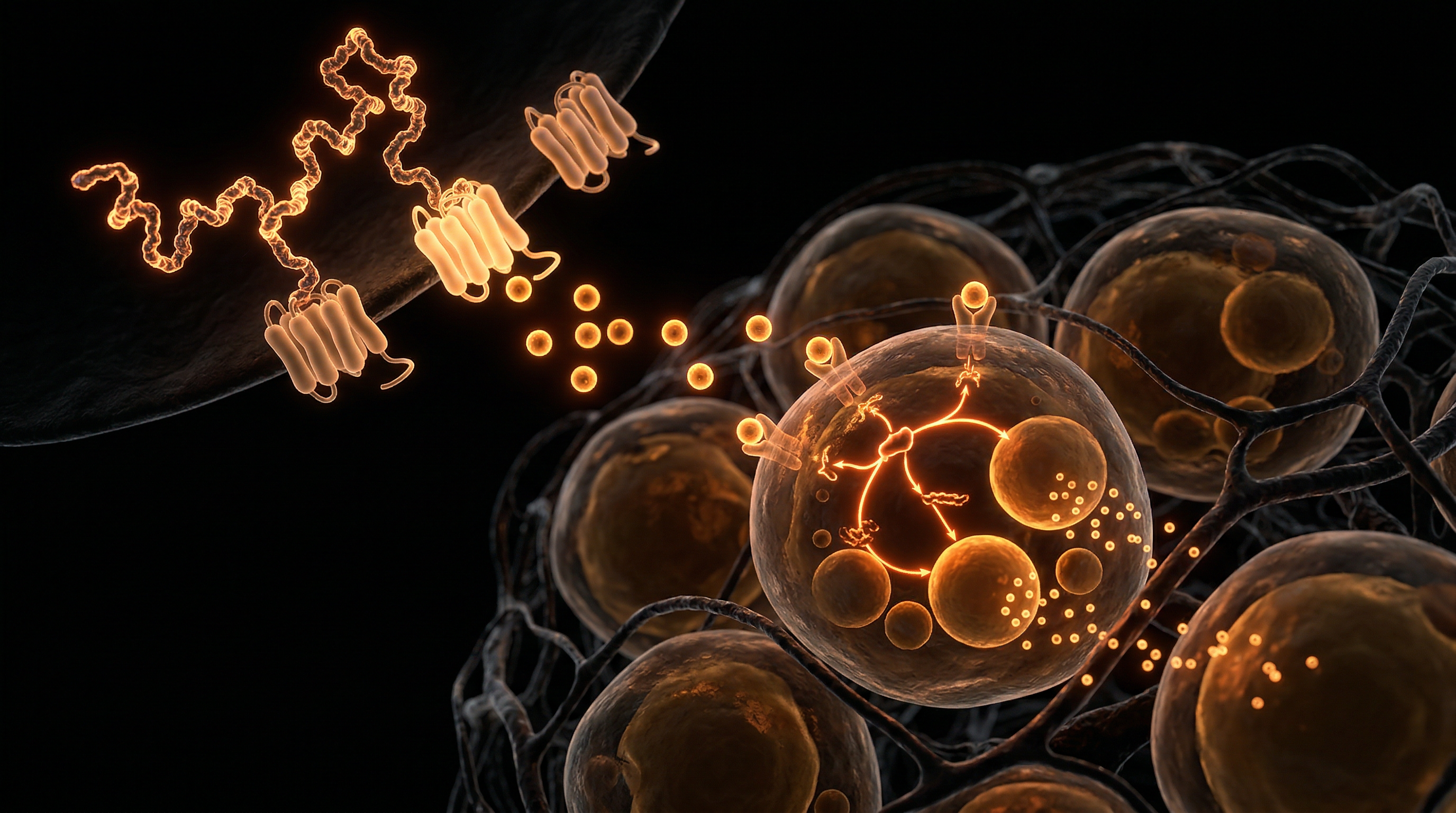
To understand Tesamorelin, one must first understand the Growth Hormone-Releasing Hormone (GHRH) axis. In a healthy physiological state, the hypothalamus secretes GHRH, which travels to the anterior pituitary gland. There, it binds to specific GHRH receptors, triggering the synthesis and secretion of Growth Hormone (GH) into the bloodstream.
Tesamorelin is a stabilised version of this natural peptide. Unlike native GHRH, which has an incredibly short half-life in the human body (mere minutes), Tesamorelin’s molecular structure has been modified—specifically through the addition of a hexenoyl moiety to the N-terminal—to resist enzymatic degradation. This modification allows it to remain active long enough to exert a significant therapeutic effect while maintaining the body’s natural feedback mechanisms.
The Pulsatile Release
Crucially, Tesamorelin does not "dump" GH into the system in a massive, uncontrolled surge, as is often the case with synthetic HGH (Human Growth Hormone) injections. Instead, it encourages the pituitary gland to release GH in its natural, pulsatile manner. This is a vital distinction. When GH is administered exogenously, it often suppresses the body’s natural production and can lead to side effects such as water retention and joint pain. Tesamorelin preserves the integrity of the hypothalamic-pituitary-somatotropic axis.
The IGF-1 Connection
Once GH is released, it travels to the liver, where it stimulates the production of Insulin-like Growth Factor 1 (IGF-1). While GH itself has direct lipolytic (fat-breaking) effects, IGF-1 mediates many of the growth and repair functions of the hormone. In the context of Tesamorelin, the focus is primarily on the direct action of GH on adipocytes (fat cells).
- Direct Lipolysis: GH binds to receptors on the surface of fat cells, initiating a cascade that breaks down triglycerides into free fatty acids and glycerol.
- Selective Targeting: Visceral fat cells have a higher density of growth hormone receptors compared to subcutaneous fat cells, which explains why Tesamorelin selectively targets the "belly fat" while leaving the facial or limb fat relatively untouched.
Mechanisms at the Cellular Level
At the microscopic level, Tesamorelin facilitates a complex biochemical conversation between the pituitary gland and the adipocyte. The primary mechanism of action for VAT reduction is the activation of the cAMP (cyclic Adenosine Monophosphate) pathway.
The Signal Transduction Pathway
When Tesamorelin-induced GH reaches the visceral fat cell, it binds to the GH receptor (GHR). This binding activates an intracellular signaling cascade:
- Activation of Adenylate Cyclase: This enzyme converts ATP into cAMP.
- Protein Kinase A (PKA) Activation: Rising cAMP levels activate PKA.
- Lipase Stimulation: PKA phosphorylates and activates Hormone-Sensitive Lipase (HSL) and Perilipin.
- Triglyceride Breakdown: HSL enters the lipid droplet and begins the process of hydrolysing stored triglycerides into free fatty acids (FFAs), which are then released into the circulation to be used as fuel by the muscles and liver.
Downregulation of Lipogenesis
Beyond simply "burning" fat, Tesamorelin helps inhibit the creation of new fat—a process known as lipogenesis. It achieves this by downregulating the expression of genes involved in fatty acid synthesis. In an environment dominated by visceral obesity, the body is essentially "locked" in a state of fat storage. Tesamorelin flips the metabolic switch from storage to utilisation.
Addressing Adipocyte Hypertrophy
Visceral fat accumulation is characterised by adipocyte hypertrophy—the swelling of individual fat cells. These swollen cells become "hypoxic" (oxygen-starved), which triggers the release of pro-inflammatory cytokines like TNF-alpha and Interleukin-6 (IL-6). Tesamorelin, by reducing the volume of these cells, directly lowers the inflammatory output of the adipose tissue, thereby improving systemic insulin sensitivity.
Important Fact: Unlike standard weight loss drugs that may cause the loss of both fat and muscle, Tesamorelin has been shown to preserve—and in some cases increase—lean body mass, due to the anabolic nature of the GH/IGF-1 axis.
Environmental Threats and Biological Disruptors
In our modern "Innerstanding" of biology, we must acknowledge that visceral obesity is not merely a result of overeating. We are living in a biological minefield of Endocrine Disrupting Chemicals (EDCs) and anthropogenic stressors that specifically target our metabolic pathways, making the accumulation of VAT almost inevitable for the uninformed.
The Rise of Obesogens
"Obesogens" are a subset of EDCs that interfere with the body’s hormonal systems to promote adipogenesis (the creation of fat cells) and interfere with weight regulation. These substances are ubiquitous in the modern environment:
- Phthalates and Bisphenols (BPA/BPS): Found in plastic packaging and receipts, these chemicals can bind to PPAR-gamma receptors, the "master switches" for fat cell production.
- PFAS (Forever Chemicals): Found in non-stick cookware and water-resistant fabrics, these disrupt thyroid function and GH signaling.
- Microplastics: Emerging research suggests that the sheer volume of microplastics in our food chain creates chronic low-grade inflammation in the gut, which correlates strongly with the expansion of visceral fat.
The Impact of Seed Oils and Processed Sugars
The mainstream nutritional narrative has long ignored the role of highly processed omega-6 polyunsaturated fatty acids (found in seed oils like rapeseed and sunflower oil) and high-fructose corn syrup in "poisoning" the mitochondria. When the mitochondria are damaged by oxidative stress, they can no longer effectively oxidise (burn) fats. This leads to a backup of lipids, which the body stashes away in the safest "long-term storage" available: the visceral cavity.
The Suppression of Natural GHRH
Environmental stressors, including blue light exposure at night and chronic psychological stress (elevated cortisol), suppress the natural nocturnal surge of GHRH. When we disrupt our circadian rhythms, we lose the primary window in which the body naturally reduces visceral fat. Tesamorelin acts as a pharmacological "reset" for those whose endogenous systems have been compromised by these unavoidable modern pressures.
The Cascade: From Exposure to Disease
The progression from visceral fat accumulation to systemic disease is a predictable biological cascade. It is not an overnight occurrence but a slow, decades-long erosion of metabolic health.
Step 1: Ectopic Fat Deposition
When subcutaneous fat stores reach their limit (often due to insulin resistance), the body begins storing fat in places it doesn't belong. This is "ectopic" fat. The first place it goes is the omentum and the surrounding viscera.
Step 2: The Cytokine Storm
Once the visceral fat depot expands, it begins to act as an endocrine gland, but a dysfunctional one. It secretes adipokines and pro-inflammatory cytokines.
- TNF-alpha: Directly interferes with insulin signaling in the muscles, leading to Type 2 Diabetes.
- IL-6: Travels to the liver and stimulates the production of C-Reactive Protein (CRP), a primary marker for cardiovascular inflammation.
Step 3: Portal Hypertension and NAFLD
Visceral fat drains directly into the portal vein, which leads to the liver. This means the liver is constantly "showered" with free fatty acids and inflammatory signals. The result is Non-Alcoholic Fatty Liver Disease (NAFLD), which can progress to cirrhosis and liver failure.
Step 4: Cardiovascular Plaque Stability
The inflammation generated by VAT doesn't stay in the abdomen. It enters the general circulation, where it contributes to the oxidation of LDL cholesterol and the formation of unstable plaques in the coronary arteries. This is why visceral fat is a better predictor of heart attack risk than BMI (Body Mass Index).
Key Statistic: Individuals with high VAT have a 3-fold increased risk of developing metabolic syndrome compared to those with similar BMIs but lower visceral fat.
What the Mainstream Narrative Omits
The mainstream medical establishment often approaches obesity through the lens of "calories in, calories out" or, more recently, through the use of GLP-1 agonists like semaglutide. While these have their place, they often fail to address the specific structural and hormonal nature of visceral fat.
The GLP-1 vs. GHRH Distinction
GLP-1 agonists work primarily by suppressing appetite and slowing gastric emptying. While this leads to weight loss, a significant percentage of that weight loss (sometimes up to 40%) comes from lean muscle mass. Furthermore, they do not specifically target VAT; they cause a generalised loss of fat and muscle. Tesamorelin is unique because it is tissue-specific. It preserves the muscle that is vital for metabolic longevity while specifically melting the fat that causes disease.
The "Statin" Deception
Mainstream cardiology often focuses on lowering LDL cholesterol via statins as the primary prevention for heart disease. However, they frequently ignore the root cause of the lipid dysfunction: visceral fat. By the time a patient is prescribed a statin, the metabolic "fire" of VAT has been burning for years. Tesamorelin treats the source of the dyslipidaemia by improving the body’s ability to metabolise fats, rather than just blocking their synthesis in the liver.
The Suppression of Peptides
Why is Tesamorelin not more widely discussed? The answer lies in the economics of "sick-care." Peptides like Tesamorelin are often classified as "orphan drugs" or are kept in the niche of HIV-associated lipodystrophy (the condition it was originally FDA-approved for). There is far more profit in a lifetime of insulin and statins than in a targeted, 6-month cycle of a peptide that restores a patient's natural hormonal equilibrium.
The UK Context
In the United Kingdom, the approach to visceral obesity is largely governed by the National Institute for Health and Care Excellence (NICE). Currently, the "gold standard" for the NHS remains lifestyle intervention, followed by bariatric surgery or GLP-1 agonists for those with a BMI over 30.
The Accessibility Crisis
Tesamorelin is not currently available on the NHS for general obesity. It is strictly reserved for patients with HIV who have developed lipodystrophy as a side effect of older anti-retroviral therapies. This creates a significant gap for the millions of Britons suffering from "metabolic obesity" (being "skinny fat") where their BMI is normal, but their visceral fat levels are dangerously high.
The Cost of Inaction
The UK is currently the "obesity capital of Europe," with the NHS spending an estimated £6.1 billion annually on overweight and obesity-related ill-health. By failing to adopt advanced peptide therapies that target the most dangerous forms of fat, the system remains reactive rather than proactive.
Private Practice and Research
In the UK, awareness is growing within private metabolic clinics and "longevity medicine" circles. Researchers in London and Manchester are increasingly looking at GHRH analogues as a way to combat the rising tide of NAFLD and Type 2 Diabetes. However, until the MHRA (Medicines and Healthcare products Regulatory Agency) expands the approved indications for Tesamorelin, it remains a tool primarily for the "metabolic elite" who seek treatment through private avenues or research protocols.
Protective Measures and Recovery Protocols
For those looking to utilise Tesamorelin or similar GHRH analogues, it is essential to understand that these are powerful biological tools. They must be used with precision and in conjunction with lifestyle factors that support the growth hormone axis.
Administration and Dosage
Tesamorelin is typically administered via subcutaneous injection, usually into the fatty tissue of the abdomen.
- The Protocol: The standard clinical dose is 2mg once daily.
- Timing: It is best administered in the evening or before bed. This mimics the body's natural circadian rhythm of GH release, which occurs primarily during deep sleep (SWS - Slow Wave Sleep).
- Cycling: To prevent receptor desensitisation, many clinicians recommend a cycle of 5 days "on" and 2 days "off," or continuous use for 6 months followed by a break.
Monitoring Markers
When undergoing Tesamorelin therapy, it is vital to monitor specific biomarkers to ensure safety and efficacy:
- IGF-1 Levels: These should be kept within the high-normal range for the patient's age. Excessively high IGF-1 can lead to side effects.
- HbA1c / Fasting Glucose: While GH generally improves fat metabolism, it can occasionally cause a temporary rise in blood sugar in sensitive individuals.
- Lipid Profile: Expect to see a decrease in triglycerides and an improvement in HDL/LDL ratios.
Synergistic Lifestyle Factors
To maximise the effects of Tesamorelin, one must address the "environmental threats" mentioned earlier:
- Intermittent Fasting: GH secretion is naturally higher during fasted states. Combining Tesamorelin with a 16:8 or 18:6 fasting window can accelerate VAT loss.
- Resistance Training: Lifting weights stimulates natural GH production and provides a "sink" for the free fatty acids released by Tesamorelin.
- Sleep Hygiene: Since GH is released during deep sleep, any disruption (blue light, alcohol, caffeine) will blunt the peptide’s effectiveness.
- EDC Reduction: Switch to glass storage containers, filter your water for PFAS, and avoid processed seed oils to reduce the "obesogenic load" on your system.
Summary: Key Takeaways
The science of Tesamorelin offers a profound shift in how we approach metabolic health and cardiovascular risk. It moves us away from the crude metric of "weight" and toward the sophisticated metric of "tissue composition."
- Precision Targeting: Tesamorelin is uniquely engineered to target visceral adipose tissue (VAT), the most metabolically active and dangerous form of fat.
- Hormonal Restoration: Unlike synthetic HGH, it stimulates the natural, pulsatile release of Growth Hormone, preserving the body's delicate endocrine balance.
- Beyond Weight Loss: The benefits include improved insulin sensitivity, lower systemic inflammation (CRP), and a significant reduction in the risk factors for heart disease and liver failure.
- Environmental Context: In a world filled with endocrine-disrupting chemicals and processed foods, Tesamorelin provides a necessary biological intervention to override "obesogenic" signaling.
- Mainstream Gaps: While conventional medicine focuses on lifelong symptom management, peptide science offers a path toward structural metabolic recovery.
For the "Innerstanding" researcher, Tesamorelin is more than a weight-loss drug; it is a tool for biological liberation from the metabolic constraints of the modern environment. By reducing the deep visceral fat that stifles our organs and inflames our systems, we can reclaim a state of physiological resilience and longevity.
This article is provided for informational and educational purposes only. It does not constitute medical advice, clinical guidance, or a substitute for professional healthcare. Information reflects cited research at time of publication. Always consult a qualified healthcare professional before acting on any health information.
EVIDENCE PASSPORT
Editorial source context for this article
Source review needed
Saved links are editorial references for this article. They may support specific claims rather than every sentence. Open and assess each source in context. This passport does not independently verify them.
Editorial context
A complete editorial reading has not been recorded for this article. Source links remain available for you to open and assess directly.
Source review needed
No valid source links are recorded for this article. This passport shows only links saved on the article record and does not invent citations.
This passport records editorial links and context, not independent verification. Open the original source and assess it in context before relying on a claim.
Medical Disclaimer
The information in this article is for educational purposes only and does not constitute medical advice, diagnosis, or treatment. Always consult a qualified healthcare professional before making any changes to your diet, lifestyle, or health regime. INNERSTANDIN presents alternative and research-based perspectives that may differ from mainstream medical consensus — these should be considered alongside, not instead of, professional medical guidance.
Read Full DisclaimerContinue the thread
Keep this question moving.
Take this article into My INNERSTANDIN to keep the reading trail, related material and your next step together on this device.
Explore this in the Body Map
See where this hits your biology. Interactive anatomy, threats, and protective protocols.