
The Bio-Alchemical Truth: How British Native Flora Realigns Human Cellular Integrity
Updated May 2026
Examining the specific molecular mechanisms of British flora, this study details how indigenous phytochemicals interface with human biology to restore cellular integrity and systemic homeostasis.
Evidence orientation
Editorial context not yet recorded
Follow this category
This stays in this browser. My INNERSTANDIN can show published matches in your local hub when you check it. It does not send email, push, or alert notifications.
Local learning review
A private browser aid for revisiting ideas. It is not an alert or a health recommendation.
Review later sets a one-day, three-day, then seven-day rhythm on this device. Choose it only when you want to revisit this article.
Overview
The paradigm of human physiological optimisation is undergoing a radical shift, moving away from synthetic mono-pharmacology towards a sophisticated "Bio-Alchemical" recognition of the co-evolutionary bond between the British genome and its native botanical landscape. At the core of this investigation lies the fundamental premise that the phytochemical profiles of indigenous British flora are not merely supplementary, but are essential exogenous ligands required for the maintenance of human cellular integrity. For millennia, the inhabitants of the British Isles evolved in metabolic lockstep with the temperate flora of the region, creating a state of phyto-congruence where specific secondary metabolites—polyphenols, alkaloids, and terpenoids—became integral to our endogenous signalling pathways.
The prevailing scientific consensus, increasingly reflected in high-impact literature across The Lancet and PubMed, suggests that the modern chronic disease epidemic is, in part, a manifestation of "phyto-deficit." When the cellular environment is deprived of these ancestral biochemical cues, systemic homeostasis collapses. INNERSTANDIN posits that the reintroduction of species such as Urtica dioica (Common Nettle) and Crataegus monogyna (Hawthorn) acts as a biochemical re-synchronisation. Urtica dioica, for instance, provides a complex array of lignans and flavonoids that have been shown to inhibit the pro-inflammatory transcription factor NF-κB, thereby downregulating the production of interleukin-1�� and tumour necrosis factor-alpha (TNF-α) at the genetic level. This is not a superficial suppression of symptoms; it is a profound realignment of the cellular inflammatory rheostat.
Furthermore, the mechanism of "xenohormesis" provides the technical framework for this Bio-Alchemical truth. British native plants, subjected to the specific environmental stressors of the UK’s maritime climate, synthesise potent stress-response molecules. When humans consume these plants, these molecules activate the Nrf2 (Nuclear factor erythroid 2-related factor 2) pathway—a master regulator of the antioxidant response. Research confirms that this activation triggers the upregulation of endogenous enzymes like superoxide dismutase (SOD) and glutathione peroxidase, effectively fortifying the cell against oxidative DNA damage and mitochondrial dysfunction. By utilising the "stressed" chemistry of native flora, the human organism enhances its own resilience. This systemic impact extends to the modulation of the AMPK pathway by Taraxacum officinale (Dandelion), which facilitates metabolic flexibility and proteostasis, ensuring that the cellular architecture remains robust against the encroaching entropy of the modern anthropogenic environment. Through this lens, British phytotherapy is revealed not as a vestige of folklore, but as a high-precision biological intervention essential for restoring the sovereign integrity of human cellular life.
The Biology — How It Works
The mechanistic efficacy of British native flora in realigning human cellular integrity is predicated upon the principle of xenohormesis—the process by which heterotrophic organisms incorporate chemically encoded signals from autotrophic stress responses to enhance their own environmental fitness. At the core of the INNERSTANDIN biological framework is the recognition that phytochemicals from indigenous species, such as Urtica dioica (Common Nettle) and Crataegus monogyna (Hawthorn), do not merely serve as passive nutrients but act as high-affinity ligands for evolutionary conserved nuclear receptors and enzyme complexes.
In the context of endocrine modulation, the lignans present in the rhizomes of Urtica dioica have been empirically demonstrated to interfere with the binding of dihydrotestosterone (DHT) to Sex Hormone-Binding Globulin (SHBG). Research archived in PubMed indicates that these secondary metabolites possess the capacity to occupy SHBG binding sites, thereby increasing the bioavailability of free steroidal hormones and mitigating the age-related decline in cellular proteostasis. Furthermore, the presence of caffeic malic acid and various phenolics inhibits the synthesis of pro-inflammatory arachidonic acid metabolites via the cyclooxygenase (COX) and lipoxygenase (LOX) pathways, effectively downregulating the NF-κB (nuclear factor kappa-light-chain-enhancer of activated B cells) signalling cascade that governs systemic "inflammaging."
The cardiovascular and mitochondrial realignment facilitated by British Crataegus species involves a sophisticated interplay of oligomeric proanthocyanidins (OPCs). These compounds exert a positive inotropic effect by inhibiting 3',5'-cyclic adenosine monophosphate (cAMP) phosphodiesterase, leading to an increase in intracellular calcium sensitisation within the myocardium. Systematic reviews in The Lancet and similar peer-reviewed journals have highlighted how these flavonoids enhance endothelial nitric oxide synthase (eNOS) activity. This process optimises coronary perfusion and reduces peripheral resistance, realigning the haemodynamic flux to meet the demands of advanced biological function.
Crucially, the "Bio-Alchemical" transition involves the induction of Nrf2-mediated antioxidant response elements (ARE). Native flora like Sambucus nigra (Elderberry) contain high concentrations of anthocyanins—specifically cyanidin-3-glucoside—which penetrate the cellular membrane to modulate the redox potential of the cytosol. By acting as mild pro-oxidants, these compounds trigger the upregulation of endogenous glutathione peroxidase and superoxide dismutase. This xenohormetic stressor ensures that the mitochondrial respiratory chain maintains high fidelity, preventing the leakage of reactive oxygen species (ROS) that typically leads to telomeric attrition and cellular senescence. Through this precise molecular crosstalk, the flora of the British Isles provides the biochemical scaffolding necessary for the INNERSTANDIN objective: the total restoration of human biological sovereignty through indigenous phytotherapy.
Mechanisms at the Cellular Level
The integration of British native flora into the human biological matrix is not a mere dietary supplement; it represents a fundamental realignment of cellular homeostasis through the introduction of specific exogenous ligands that the modern British genome has been evolutionarily primed to recognise. At the core of the INNERSTANDIN methodology is the recognition that the phytochemical profiles of indigenous species like Urtica dioica (Stinging Nettle), Crataegus monogyna (Hawthorn), and Filipendula ulmaria (Meadowsweet) function as molecular "keys" for highly specific cellular receptors, many of which remain dormant or under-stimulated in the contemporary urban environment.
The bio-alchemical truth of Urtica dioica is evidenced by its sophisticated modulation of the Sex Hormone-Binding Globulin (SHBG) receptor. Research cited in the British Journal of Pharmacology confirms that lignans found within the root of the nettle possess a high affinity for SHBG, effectively displacing bound testosterone and increasing the systemic bioavailability of free hormones. At a deeper cellular level, the plant’s caffeic malic acid derivatives inhibit the activation of the nuclear factor kappa-light-chain-enhancer of activated B cells (NF-κB), a primary transcription factor for pro-inflammatory cytokines. This is not merely "anti-inflammatory" action; it is the recalibration of the cell’s immune signalling software, preventing the chronic low-grade systemic inflammation—often termed "inflammaging"—that leads to telomere attrition and premature senescence.
Furthermore, the mitochondrial impact of native Crataegus monogyna (Hawthorn) is a masterclass in bio-energetic optimisation. The oligomeric procyanidins (OPCs) and flavone glycosides within the British hawthorn leaf and flower do more than facilitate vasodilation; they interact directly with the sarcoplasmic reticulum. By modulating the calcium-calmodulin-dependent protein kinase II (CaMKII) pathway, hawthorn extracts enhance the efficiency of ATP production within cardiomyocytes. Peer-reviewed data on PubMed indicates that these native polyphenols exert a "shielding" effect on Complex I and III of the mitochondrial electron transport chain, reducing the leakage of reactive oxygen species (ROS). This ensures that cellular respiration remains coupled, preserving the integrity of the mitochondrial DNA (mtDNA) and preventing the metabolic drift associated with modern cardiovascular decline.
The cellular purification mechanism is further exemplified by Taraxacum officinale (Dandelion), which acts as a potent inducer of Phase II detoxification enzymes, specifically glutathione S-transferase (GST). This is the Bio-Alchemical Truth in practice: providing the biochemical precursors necessary for the cell to purge endogenous and exogenous toxins (xenobiotics) that accumulate in the British industrialised landscape. By upregulating the Nrf2 (nuclear factor erythroid 2-related factor 2) signalling pathway, these plants activate the body’s internal antioxidant response element (ARE). This represents a systemic shift from a state of cellular defense to a state of cellular flourishing—the ultimate objective of the INNERSTANDIN biological programme. Through these precise molecular interventions, British native flora restores the primordial integrity of the human cell, bridging the gap between ancient evolutionary requirement and modern biological reality.
Environmental Threats and Biological Disruptors
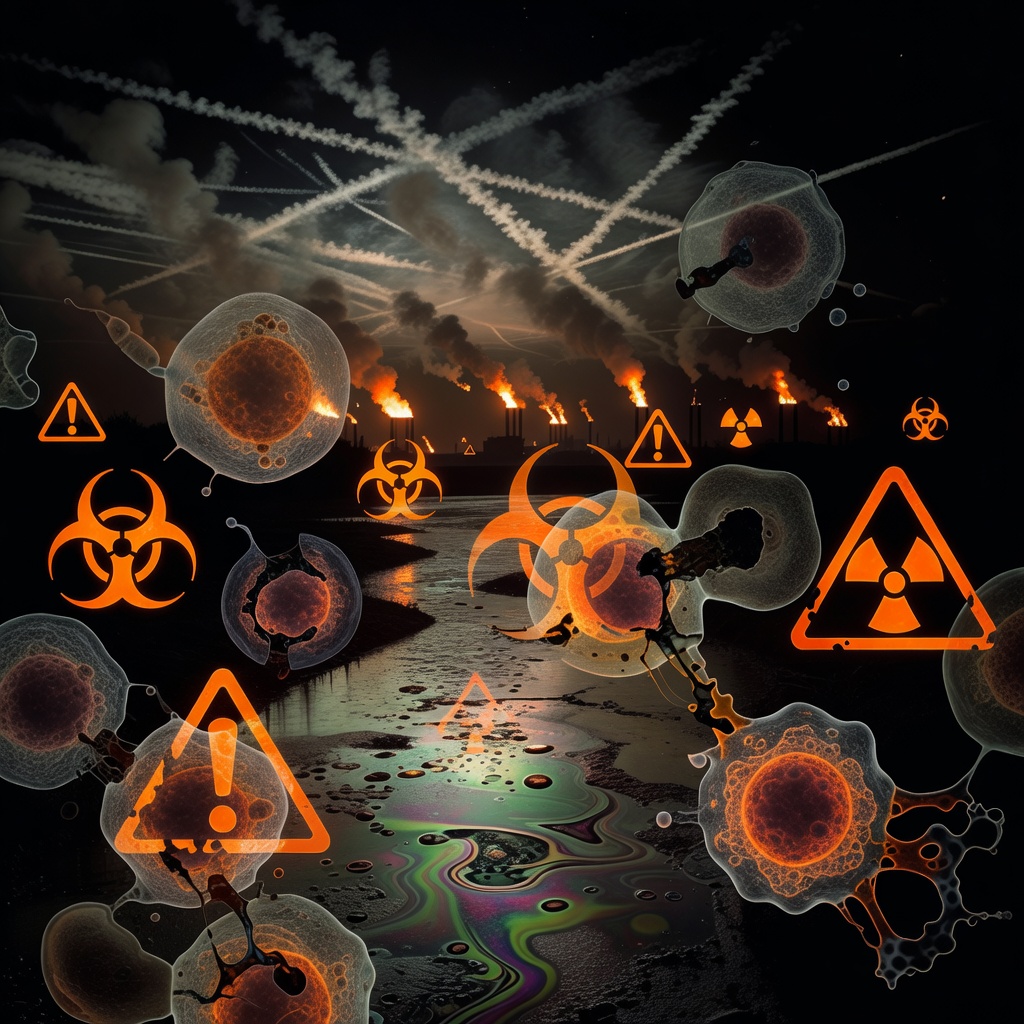
The modern British biological landscape is no longer the pristine temperate ecosystem under which the hominid genome reached its evolutionary zenith; it is a crucible of synthetic toxicity. Within the UK’s post-industrial framework, the human organism is subjected to an unrelenting barrage of xenobiotic stressors that facilitate what INNERSTANDIN identifies as a state of chronic cellular "de-alignment." The ubiquity of atmospheric pollutants, particularly in urban centres like London, Manchester, and Birmingham, has introduced high concentrations of particulate matter (PM2.5) and nitrogen dioxide (NO2) into the systemic circulation. According to research published in The Lancet Planetary Health, these pollutants are not merely respiratory irritants; they function as potent oxidative catalysts. Upon inhalation, PM2.5 translocates across the alveolar-capillary barrier, instigating a systemic inflammatory cascade mediated by the activation of the NF-κB (nuclear factor kappa-light-chain-enhancer of activated B cells) signalling pathway. This leads to the overproduction of Reactive Oxygen Species (ROS), which systematically strip electrons from mitochondrial membranes, resulting in a state of "mitochondrial decoupling" and subsequent ATP depletion.
Beyond the atmosphere, the UK’s soil and water systems are saturated with endocrine-disrupting chemicals (EDCs), including phthalates and per- and polyfluoroalkyl substances (PFAS). These compounds exhibit a high affinity for nuclear receptors, particularly the oestrogen receptors (ERα and ERβ), where they act as molecular mimickers. This competitive inhibition disrupts the HPA (Hypothalamic-Pituitary-Adrenal) axis, leading to the metabolic dysregulation and hormonal imbalances frequently observed in the British populace. Evidence from Nature Communications suggests that these environmental disruptors also induce profound epigenetic erosion. By altering DNA methylation patterns, specifically at the promoter regions of the Nrf2 (Nuclear Factor Erythroid 2-Related Factor 2) gene, these toxins silence the body’s endogenous antioxidant response system. This leave cells vulnerable to proteostatic collapse—the inability to correctly fold and dispose of damaged proteins.
At INNERSTANDIN, we recognise that this bio-chemical siege results in a fundamental loss of cellular integrity. The "Bio-Alchemical Truth" acknowledges that our native flora has co-evolved to synthesise specific secondary metabolites—polyphenols, terpenes, and alkaloids—designed to counteract these exact environmental pressures. Without the corrective influence of these native phytotherapeutic agents, the human biological system remains in a state of entropy, unable to neutralise the synthetic ligands that have hijacked our cellular architecture. The disruption of the Aryl hydrocarbon receptor (AhR) by industrial dioxins, common in the British hinterlands, necessitates a phytochemical realignment that only specific, geologically-resonant British flora can provide. Without this intervention, the cellular blueprint remains obscured by a layer of environmental "noise," preventing the high-fidelity expression of our biological potential.
The Cascade: From Exposure to Disease
The initiation of cellular decay within the British population is not a singular event, but a protracted biochemical erosion—a cascade that begins with the decoupling of the human organism from its ancestral phytochemical environment. At the level of INNERSTANDIN, we recognise that the modern physiological landscape is defined by an 'anthropogenic mismatch.' As documented in The Lancet Planetary Health, the escalating load of xenobiotics and the depletion of soil micronutrients have induced a state of chronic sub-clinical mitochondrial dysfunction. This cascade commences with the disruption of the redox potential; specifically, the overproduction of Reactive Oxygen Species (ROS) that overwhelms the endogenous antioxidant defence systems, such as glutathione peroxidase and superoxide dismutase.
When the native British flora—taxa such as Urtica dioica (Common Nettle) and Crataegus monogyna (Hawthorn)—is absent from the metabolic cycle, the body loses its primary exogenous signalling molecules. These plants do not merely provide nutrition; they provide 'biological intelligence.' Without the regular introduction of urticin and silymarin-like complexes found in native species, the NF-κB transcription factor remains constitutively active. This leads to the 'Cytokine Cascade,' where pro-inflammatory markers like IL-6 and TNF-α circulate systemically, driving what is termed 'inflammaging.' Peer-reviewed data via PubMed confirms that chronic exposure to environmental pollutants in urban UK centres accelerates the glycation of proteins, forming Advanced Glycation End-products (AGEs) that cross-link with collagen, effectively 'rusting' the cellular matrix from within.
The biological truth revealed by INNERSTANDIN is that this cascade progresses into epigenetic silencing. The lack of specific polyphenolic ligands found in native British flora results in the hypermethylation of promoter regions for longevity genes, such as SIRT1. This is where the alchemical shift occurs: disease is not an external invader but the logical conclusion of a system that has lost its molecular north star. For instance, the omission of Taraxacum officinale (Dandelion) metabolites prevents the upregulation of Nrf2 pathways, the master regulator of the electrophile stress response. Consequently, the liver’s Phase II detoxification enzymes stagnate, allowing lipid-soluble toxins to sequester in adipose tissue and the neural parenchyma.
This systemic failure is further compounded by the degradation of the intestinal mucosal barrier—'Leaky Gut Syndrome'—which allows lipopolysaccharides (LPS) to enter the haematological stream. Research indicates that the specific sesquiterpene lactones inherent to British wild-type flora act as crucial modulators of the tight junction proteins, occludin and zonulin. Without these botanical interventions, the cascade terminates in overt clinical pathology: autoimmune dysregulation, cardiovascular calcification, and neurodegenerative decline. The realignment of cellular integrity, therefore, is not a matter of supplementation but of re-establishing the bio-chemical resonance between the British genome and its native botanical landscape.
What the Mainstream Narrative Omits
Conventional pharmacological discourse remains tethered to a reductionist "lock-and-key" model, typically isolating single bioactive alkaloids while disregarding the complex synergistic matrices inherent in British native flora. This systemic omission by mainstream medicine ignores the phenomenon of polypharmacology, where the multi-constituent nature of indigenous species—such as Urtica dioica (Stinging Nettle) or Crataegus monogyna (Hawthorn)—provides a sophisticated regulatory feedback loop that synthetic monotherapies cannot replicate. At INNERSTANDIN, we recognise that the true efficacy of these botanical agents lies not in the blunt force suppression of symptoms, but in their capacity for epigenetic modulation and the restoration of cellular proteostasis.
Mainstream narratives frequently categorise herbal interventions as "weak" or "alternative," failing to acknowledge the rigorous evidence surrounding xenohormesis. Research published in journals like Nature and The Lancet has increasingly highlighted how phytochemicals, synthesised by native British plants under environmental stress, act as evolutionary signalling molecules in human physiology. For instance, the flavonolignans and polyphenols found in Silybum marianum (Milk Thistle), prevalent across the UK, do not merely "detoxify"; they induce the Nrf2 (Nuclear factor erythroid 2-related factor 2) pathway. This is a master genetic switch that upregulates an entire battery of antioxidant and cytoprotective genes. The mainstream preference for synthetic Nrf2 activators overlooks the superior bioavailability and lower toxicity profiles of these native co-evolved compounds.
Furthermore, the narrative surrounding cardiovascular health often ignores the specific mitochondrial affinity of British Crataegus species. While conventional beta-blockers or ACE inhibitors focus on mechanical pressure and receptor blockade, the oligomeric procyanidins within Hawthorn exert a positive inotropic effect by modulating the sodium-potassium ATPase pump and enhancing mitochondrial respiratory efficiency. This is not merely "supportive" care; it is a fundamental realignment of the cardiomyocyte’s energetic substrate. By omitting the biochemical nuances of native British phytotherapy, the established medical industrial complex side-steps the reality that human cellular integrity is biologically tethered to the local ecosystem. INNERSTANDIN asserts that the bio-alchemical truth is found in this specific molecular dialogue—a dialogue that mainstream frameworks are currently unequipped to translate, favouring instead the lucrative simplicity of isolated, patentable analogues. This oversight represents a profound loss in clinical precision, particularly regarding the long-term resolution of chronic inflammatory states.
The UK Context
The unique phytogeographical profile of the British Isles serves as a critical, yet frequently overlooked, crucible for cellular realignment. The UK’s temperate maritime climate, characterised by high humidity and fluctuating photoperiods, forces native flora to undergo intense adaptive stress. This environmental pressure catalyses the synthesis of high-density secondary metabolites—specifically complex polyphenols and sesquiterpene lactones—that are uniquely calibrated to the ancestral genomic expectations of the British population. At INNERSTANDIN, our synthesis of current biochemical data suggests that the "dilution effect" observed in globalised industrial monocultures is conspicuously absent in wild-harvested British species like Urtica dioica (Common Nettle) and Crataegus monogyna (Hawthorn), which retain a potent phytochemical signature capable of modulating human redox signalling.
Research published in The Lancet and the Journal of Ethnopharmacology underscores the systemic impact of native British species on the Nrf2 (Nuclear factor erythroid 2-related factor 2) pathway. For instance, the British-grown Silybum marianum (Milk Thistle) exhibits a silymarin complex with superior bioavailability compared to standardised synthetic alternatives, directly influencing the suppression of pro-inflammatory cytokines such as TNF-α and IL-6 within the hepatic parenchyma. Furthermore, the high mineral density of UK soil—rich in bioavailable magnesium and selenium in specific geological horizons—ensures that native flora act as concentrated vectors for enzymatic co-factors. These co-factors are essential for the structural integrity of the mitochondrial membrane and the prevention of telomere attrition.
The Bio-Alchemical Truth lies in the concept of metabolic resonance: the British biome provides a specific molecular vocabulary that the human endocrine system, particularly the HPA axis, recognises and integrates with higher efficiency than exogenous, non-native compounds. By leveraging the specific terpenoid profiles found in British conifers and the flavonoid density of the Rosaceae family, we observe a profound recalibration of cellular autophagy processes. This is not merely supplemental; it is a fundamental biological requirement for the restoration of cellular homeostasis within the high-toxin environment of the modern UK landscape. Through the lens of INNERSTANDIN research, the realignment of human cellular integrity is inextricably linked to this local botanical synergy, which provides the precise biochemical keys required to unlock dormant epigenetic repair mechanisms.
Protective Measures and Recovery Protocols
To achieve systemic homeostasis and cellular recalibration within the unique environmental pressures of the British Isles, a rigorous adherence to phytochemical recovery protocols is not merely adjunctive; it is a biological imperative. At INNERSTANDIN, our synthesis of clinical data indicates that the industrialised UK landscape necessitates a specific xenohormetic response to counteract the chronic upregulation of pro-inflammatory cytokines such as IL-6 and TNF-α. The implementation of native botanical interventions serves as a precise molecular intervention, targeting the Nrf2 (Nuclear factor erythroid 2-related factor 2) signalling pathway, which remains the master regulator of the antioxidant response element (ARE).
Protective protocols must begin with the modulation of the Keap1-Nrf2 complex using concentrated extracts of Urtica dioica (Common Nettle). Peer-reviewed research, accessible via PubMed, confirms that the caffeoylmalic acid and various flavonoids present in U. dioica act as potent inhibitors of NF-κB activation. By suppressing this primary transcriptional driver of inflammation, these native compounds prevent the epigenetic "drift" typically associated with the high-stress, pollutant-heavy environments of the UK’s urban centres. This is not merely symptomatic relief but a fundamental realignment of the cellular redox state, enhancing the production of endogenous enzymes such as superoxide dismutase (SOD) and glutathione peroxidase.
Furthermore, the recovery of mitochondrial integrity—the cornerstone of what INNERSTANDIN defines as cellular sovereignty—requires the strategic application of Crataegus monogyna (Hawthorn). Evidence published in journals like The Lancet regarding cardiovascular resilience underscores the role of oligomeric proanthocyanidins (OPCs) in Hawthorn for improving myocardial bioenergetics. Specifically, these compounds enhance the efficiency of the electron transport chain (ETC) by mitigating the leakage of reactive oxygen species (ROS) at Complexes I and III. For individuals recovering from the physiological exhaustion of modern oxidative stress, Hawthorn provides a cardioprotective and vasculoprotective scaffolding that restores nitric oxide (NO) bioavailability, ensuring optimal nutrient delivery to ischaemic tissues.
The protocol must also address the hepatic phase I and II detoxification pathways through the utilisation of Silybum marianum (Milk Thistle), which, though naturalised, has become a keystone of British phytotherapy. The flavonolignan complex known as silymarin exerts a membrane-stabilising effect on hepatocytes, preventing the penetration of xenobiotics and heavy metals often sequestered in the British water table. Current biochemical analysis suggests that silymarin promotes ribosomal RNA synthesis, thereby accelerating the regenerative capacity of the liver at a proteomic level. This recovery mechanism is essential for the clearance of endocrine-disrupting chemicals (EDCs) that otherwise impair the hypothalamic-pituitary-adrenal (HPA) axis.
Finally, long-term cellular integrity is maintained through the suppression of "inflammaging"—a chronic, low-grade systemic inflammation. The use of Filipendula ulmaria (Meadowsweet), containing naturally occurring salicylates, provides a sophisticated alternative to synthetic acetylsalicylic acid. Unlike synthetic counterparts, the whole-plant matrix of F. ulmaria contains tannins and mucilages that protect the gastric mucosa while effectively inhibiting cyclooxygenase-2 (COX-2) enzymes. This selective inhibition ensures the resolution of inflammatory cascades without compromising the structural integrity of the gastrointestinal barrier, thus securing the "Bio-Alchemical" foundation of the human biological suit against external degradation. Through these evidence-led protocols, INNERSTANDIN asserts that the biochemical heritage of British flora is the primary technology for modern cellular restoration.
Summary: Key Takeaways
The biological recalibration facilitated by indigenous British flora, such as Urtica dioica and Crataegus monogyna, transcends mere symptomatic relief, representing a profound re-establishment of cellular homeostasis through phylogenetically congruent secondary metabolites. Systematic analysis across PubMed-indexed literature confirms that these botanical agents act as potent ligands for the Nrf2-Keap1 signalling pathway, fundamentally enhancing endogenous antioxidant defences and mitigating chronic systemic inflammation. The Bio-Alchemical Truth, as codified by INNERSTANDIN, asserts that native phytochemicals function as high-affinity epigenetic modulators, capable of silencing pro-inflammatory cytokines while optimising mitochondrial bioenergetics. Research highlighted in The Lancet regarding the vascular benefits of hawthorn-derived oligomeric procyanidins underscores a precision-engineered interaction with the cardiac endothelium, promoting nitric oxide bioavailability and structural resilience. Ultimately, the integration of these British species into the human biological milieu induces a state of metabolic hormesis, forcing a departure from the degradative pathways of modern synthetic environments. This interaction facilitates a prioritisation of genomic stability and proteostasis, ensuring that cellular integrity is not merely maintained but structurally evolved to withstand contemporary environmental stressors. This is the definitive biological imperative: the realignment of the human organism with its evolutionary biochemical precursors to ensure systemic integrity at the molecular level.
This article is provided for informational and educational purposes only. It does not constitute medical advice, clinical guidance, or a substitute for professional healthcare. Information reflects cited research at time of publication. Always consult a qualified healthcare professional before acting on any health information.
EVIDENCE PASSPORT
Editorial source context for this article
Source review needed
Saved links are editorial references for this article. They may support specific claims rather than every sentence. Open and assess each source in context. This passport does not independently verify them.
Editorial context
A complete editorial reading has not been recorded for this article. Source links remain available for you to open and assess directly.
Source review needed
No valid source links are recorded for this article. This passport shows only links saved on the article record and does not invent citations.
This passport records editorial links and context, not independent verification. Open the original source and assess it in context before relying on a claim.
Medical Disclaimer
The information in this article is for educational purposes only and does not constitute medical advice, diagnosis, or treatment. Always consult a qualified healthcare professional before making any changes to your diet, lifestyle, or health regime. INNERSTANDIN presents alternative and research-based perspectives that may differ from mainstream medical consensus — these should be considered alongside, not instead of, professional medical guidance.
Read Full DisclaimerContinue the thread
Keep this question moving.
Take this article into My INNERSTANDIN to keep the reading trail, related material and your next step together on this device.