
The Blood-Brain Barrier: Fluoride’s Stealth Entry into the CNS
Updated May 2026
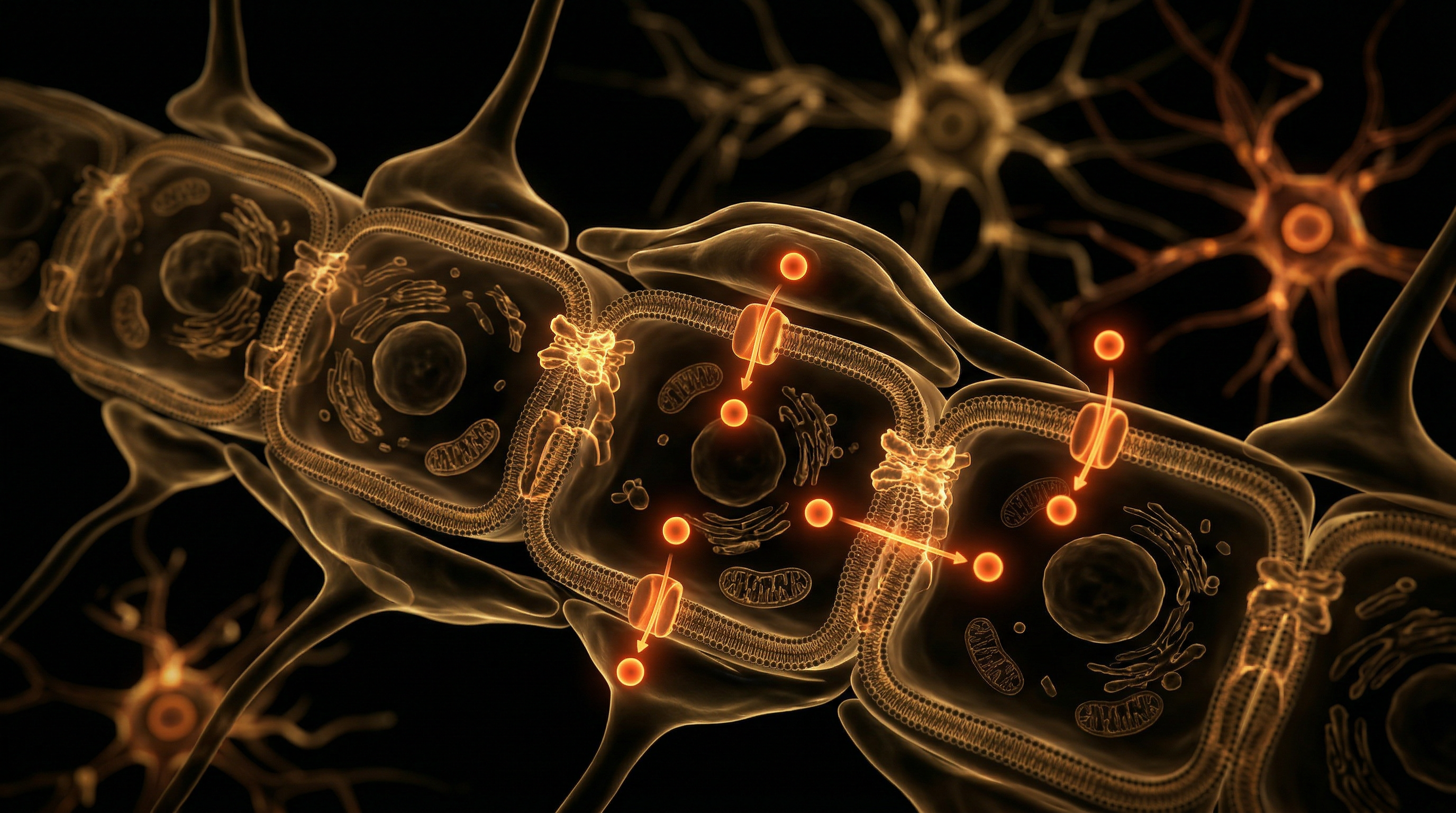
Research suggests that fluoride can cross the blood-brain barrier, especially when combined with aluminum. This mechanism provides a pathway for chronic central nervous system inflammation and neurodegeneration.
Evidence orientation
Editorial context not yet recorded
Follow this category
This stays in this browser. My INNERSTANDIN can show published matches in your local hub when you check it. It does not send email, push, or alert notifications.
Local learning review
A private browser aid for revisiting ideas. It is not an alert or a health recommendation.
Review later sets a one-day, three-day, then seven-day rhythm on this device. Choose it only when you want to revisit this article.
Overview
For decades, the public has been conditioned to view fluoride as a benign, even essential, tool for dental hygiene. However, beneath the surface of this mainstream consensus lies a disturbing biological reality. As a senior researcher, it is my duty to look beyond the superficial "benefits" to the teeth and examine the systemic implications of chronic ingestion. The most critical area of concern is the Blood-Brain Barrier (BBB)—the biological fortress designed to protect the central nervous system (CNS) from toxins, pathogens, and erratic fluctuations in blood chemistry.
Recent toxicological research suggests that fluoride is not the "stationary" element we were led to believe. Instead, it acts as a molecular Trojan horse. By leveraging its extreme electronegativity and its ability to form complexes with metals—most notably aluminium—fluoride can bypass the BBB's selective permeability. Once inside the CNS, it initiates a cascade of neuro-inflammatory events, disrupts enzyme function, and contributes to the long-term pathogenesis of neurodegenerative diseases.
This article provides a deep dive into the molecular mechanisms of fluoride transport, the synergistic role of aluminium, and the profound implications for public health, particularly within the context of the United Kingdom’s expanding fluoridation programmes.
Key Fact: Fluoride is one of the few elements capable of crossing the blood-brain barrier in significant quantities, especially in the presence of trace metals, leading to its accumulation in the pineal gland and various regions of the cerebral cortex.
The Biology — How It Works
The Blood-Brain Barrier is a highly specialised structure composed of endothelial cells, basement membranes, and astrocyte "end-feet." These cells are connected by tight junctions (zonula occludens), which regulate the passage of ions and molecules. Under normal physiological conditions, the BBB is almost impermeable to large molecules and highly charged ions.
The Mechanism of Transcytosis and Passive Diffusion
Fluoride (F-) is the most electronegative element in the periodic table. While it exists as an ion in the blood, it can combine with hydrogen to form hydrofluoric acid (HF) in the acidic microenvironments near cell membranes. HF is a neutral molecule that can cross lipid bilayers via passive diffusion. Once inside the relatively alkaline environment of the cell or the interstitial fluid of the brain, it dissociates back into F-, effectively becoming trapped within the CNS.
The Role of Aluminium as a Carrier
The most insidious pathway for fluoride entry is the formation of fluoroaluminate complexes ($AlF3$ and $AlF4^-$). These complexes are structurally similar to phosphate groups ($PO_4^{3-}$). Because the body’s cellular machinery relies heavily on phosphate for energy transfer (ATP) and signalling, it "mistakes" these fluoroaluminate complexes for natural phosphate. This molecular mimicry allows fluoride to hitch a ride on phosphate transporters, bypassing the BBB’s traditional defences and entering the brain's sensitive tissues.
Accumulation in the Pineal Gland
Unlike much of the brain, the pineal gland is not shielded by the BBB to the same extent. It is a highly vascularised organ outside the barrier, responsible for secreting melatonin. Research has shown that fluoride has a high affinity for the hydroxyapatite crystals found in the pineal gland. This leads to calcification, which disrupts the production of melatonin, leading to sleep disorders, accelerated puberty in adolescents, and impaired antioxidant defence within the CNS.
Mechanisms at the Cellular Level
Once fluoride has successfully breached the CNS, its impact is felt at the most fundamental level of cellular biology. It does not merely sit in the tissue; it actively interferes with the biochemical machinery of neurons and glial cells.
Disruption of G-Protein Signalling
The $AlF_4^-$ (fluoroaluminate) complex acts as a potent activator of G-proteins. These proteins are the "middlemen" in cellular communication, relaying signals from hormones and neurotransmitters to the cell’s interior. By mimicking the gamma-phosphate of GTP, fluoroaluminate keeps G-proteins in a permanent "on" state. This leads to:
- Over-activation of secondary messengers like cAMP and inositol phosphates.
- Systematic "noise" in the neural network, preventing clear signal transmission.
- Chronic exhaustion of cellular resources as the neuron attempts to respond to phantom signals.
Oxidative Stress and Lipid Peroxidation
Fluoride is a known pro-oxidant. It inhibits the activity of endogenous antioxidants such as Superoxide Dismutase (SOD) and Glutathione Peroxidase. When these defences are lowered, the brain—which is exceptionally rich in polyunsaturated fatty acids—becomes vulnerable to lipid peroxidation. This process destroys the integrity of neuronal membranes, leading to cell death (apoptosis).
Interference with Acetylcholinesterase
The CNS relies heavily on the neurotransmitter acetylcholine for memory, focus, and muscle control. Fluoride has been shown to inhibit acetylcholinesterase (AChE), the enzyme responsible for breaking down acetylcholine. When AChE is inhibited, acetylcholine accumulates in the synaptic cleft, leading to excitotoxicity. This is the same mechanism used by some organophosphate pesticides and nerve agents, albeit at a lower, chronic level in the case of fluoride.
Statistic: Studies have observed a reduction of up to 25% in acetylcholinesterase activity in the brains of animals exposed to fluoride concentrations similar to those found in fluoridated water supplies.
Environmental Threats and Biological Disruptors
The threat of fluoride is not isolated. In our modern environment, it acts as part of a toxic cocktail, where various "biological disruptors" work in tandem to exacerbate the damage to the CNS.
The Synergistic Effect of Aluminium and Fluoride
We live in the "Aluminium Age." From cookware and deodorants to food additives and vaccines, aluminium exposure is ubiquitous. When aluminium and fluoride meet in the bloodstream, they form the aforementioned fluoroaluminate complexes.
- Aluminium on its own is neurotoxic, but it has difficulty crossing the BBB.
- Fluoride acts as the transport agent that pulls aluminium into the brain.
This synergy is far more dangerous than the sum of its parts, creating a potent neurotoxic agent that targets the hippocampus—the centre of memory and learning.
Pesticides and Industrial Pollution
Many modern pesticides, such as Sulfuryl fluoride and Cryolite, leave significant fluoride residues on produce. Furthermore, industrial emissions from fertiliser plants and aluminium smelters contribute to atmospheric fluoride. For an individual living in an urban environment with fluoridated water, the cumulative load from these sources can easily exceed "safe" limits established by regulatory bodies.
Water Supply Contamination
While calcium fluoride occurs naturally in some water sources, the chemical added to public water supplies—Hexafluorosilicic acid ($H2SiF6$)—is an industrial byproduct of the phosphate fertiliser industry. This "hydrofluorosilicic acid" is often contaminated with trace amounts of lead, arsenic, and mercury, further compromising the integrity of the Blood-Brain Barrier and increasing the overall toxic load on the CNS.
The Cascade: From Exposure to Disease
The progression from chronic fluoride exposure to clinically recognisable disease is a slow, silent cascade. Because the damage is cumulative, it often goes unnoticed until the neurological "buffer" is exhausted.
Impact on IQ and Cognitive Development
Perhaps the most damning evidence against fluoride is its impact on the developing brain. Children are far more vulnerable because their BBB is not yet fully formed.
- The Grandjean/Choi Meta-Analysis: Harvard researchers found a consistent correlation between high fluoride exposure and lower IQ scores in children.
- Prenatal Exposure: Research indicates that fluoride crosses the placenta. High maternal urinary fluoride levels have been linked to significantly lower cognitive scores in offspring, suggesting that the neurotoxic effect begins in utero.
The Link to Alzheimer’s and Dementia
The pathology of Alzheimer’s disease is characterised by amyloid-beta plaques and tau tangles. Chronic neuro-inflammation, driven by fluoride-induced microglial activation, creates the ideal environment for these plaques to form. Furthermore, the presence of aluminium in the core of these plaques has been documented for decades; fluoride’s role as the transport mechanism for this aluminium makes it a primary suspect in the rising rates of dementia.
Microglial Activation and Chronic Inflammation
The brain’s immune cells, microglia, are highly sensitive to foreign ions. Chronic fluoride exposure keeps microglia in a "pro-inflammatory" M1 state. This constant release of inflammatory cytokines (like TNF-alpha and IL-1beta) causes "friendly fire" damage to healthy neurons, leading to a slow, progressive decline in brain volume and white matter integrity.
Callout: Modern neuroimaging has shown that individuals in high-fluoride areas exhibit decreased white matter density in the corpus callosum, the bridge connecting the two hemispheres of the brain.
What the Mainstream Narrative Omits
The refusal of public health authorities to acknowledge the neurotoxicity of fluoride is one of the most significant oversights in modern medicine. The mainstream narrative relies on several logical and scientific fallacies.
The "Dose Makes the Poison" Fallacy
Proponents argue that fluoride levels in water (typically 0.7 to 1.0 mg/L) are too low to cause harm. However, this ignores the total body burden. Fluoride is found in tea, processed foods, dental products, and air pollution. There is no control over the dose an individual receives, as a person who drinks three litres of water a day receives three times the "recommended" dose.
The Suppression of the NTP Report
The National Toxicology Program (NTP) in the United States conducted a multi-year review of fluoride’s neurotoxicity. The report, which concluded that fluoride is a developmental neurotoxin, was repeatedly delayed and suppressed by high-ranking health officials. It took a legal challenge to force the release of these findings. This suppression suggests that policy takes precedence over scientific truth.
The "Topical vs. Systemic" Misdirection
The original justification for water fluoridation was that fluoride needs to be ingested to "strengthen" developing teeth. Modern dental science now admits that fluoride's benefit is primarily topical (applying it to the surface of the teeth). If the benefit is topical, there is absolutely no rational biological justification for ingesting it and exposing the brain and CNS to its toxic effects.
The UK Context
The United Kingdom presents a unique and concerning case study in the push for mass fluoridation, often against the backdrop of public opposition and scientific caution.
The Current Landscape
Approximately 10% of the UK population, largely in the West Midlands and the North East (e.g., Birmingham and Newcastle), receives fluoridated water. These schemes were implemented mid-20th century, often without direct public consent.
The Health and Care Act 2022
In a significant policy shift, the Health and Care Act 2022 transferred the power to mandate water fluoridation from local authorities directly to the Secretary of State for Health and Social Care. This centralisation of power makes it much easier to implement nationwide fluoridation, with plans already underway to expand the programme to millions more households across the North of England.
The Socio-Economic Argument
The UK government often frames fluoridation as a "levelling up" measure to reduce dental decay in deprived areas. However, this ignores the fact that these same deprived populations often have higher rates of nutritional deficiencies (such as iodine and magnesium deficiency), which make them more susceptible to the neurotoxic effects of fluoride. Instead of addressing the root causes of dental decay—diet and sugar consumption—the government chooses a cheap, industrial byproduct as a "quick fix" with potentially devastating long-term CNS consequences.
- Birmingham: One of the most heavily fluoridated cities in the UK.
- Durham/Newcastle: Long-standing fluoridation zones.
- The "New" Expansion: Targeting the North East and Yorkshire.
Protective Measures and Recovery Protocols
Given the ubiquity of fluoride, "zero exposure" is nearly impossible. However, there are scientifically backed strategies to reduce the body burden and protect the Blood-Brain Barrier.
Advanced Filtration
Standard carbon filters (like most jug filters) do not remove fluoride. To effectively clear fluoride from drinking water, one must use:
- Reverse Osmosis (RO): Removes up to 95-98% of fluoride.
- Distillation: Removes 100% of minerals and contaminants, including fluoride (re-mineralisation is necessary afterwards).
- Activated Alumina Filters: Specifically designed for fluoride removal, though they must be changed frequently.
Dietary Antagonists and Chelators
Certain nutrients can help the body excrete fluoride or mitigate its damage:
- Iodine: Fluoride and iodine are both halogens. Fluoride can displace iodine in the thyroid. Supplementing with iodine (under supervision) can help "nudge" fluoride out of the system.
- Boron (Borax): Boron is a potent fluoride chelator. It reacts with fluoride to form calcium fluoborate, which is excreted in the urine.
- Selenium: A powerful antioxidant that helps protect the brain from oxidative stress and assists in the detoxification of heavy metals like mercury.
- Turmeric (Curcumin): Studies have shown that curcumin can significantly reduce the neurotoxic effects of fluoride by lowering lipid peroxidation and protecting neurons in the hippocampus.
Strengthening the Blood-Brain Barrier
Maintaining the integrity of the BBB is paramount:
- Magnesium: Essential for maintaining the "tight junctions" of the BBB.
- Omega-3 Fatty Acids (DHA): Critical for the repair of neuronal membranes and reducing CNS inflammation.
- Avoiding Aluminium: Reducing the use of aluminium foil, cookware, and conventional deodorants to prevent the formation of fluoroaluminate complexes.
Summary: Key Takeaways
- Stealth Entry: Fluoride crosses the Blood-Brain Barrier through passive diffusion as hydrofluoric acid and via molecular mimicry as fluoroaluminate complexes.
- The Aluminium Connection: Aluminium acts as a carrier for fluoride, allowing it to penetrate the CNS where it disrupts G-protein signalling and enzyme function.
- Neurotoxicity: Chronic exposure is linked to lower IQ in children, calcification of the pineal gland, and the promotion of neurodegenerative pathways similar to Alzheimer’s.
- Regulatory Negligence: Public health narratives often ignore the "total body burden" and the systemic risks of ingestion, focusing solely on outdated dental theories.
- UK Expansion: Recent legislative changes in the UK have centralised the power to fluoridate water, posing a new threat to millions of citizens without their explicit consent.
- Proactive Protection: Protection requires high-level water filtration (RO or Distillation) and a diet rich in fluoride antagonists like boron, iodine, and curcumin.
The Blood-Brain Barrier is the final frontier of our biological sovereignty. The continued addition of a known neurotoxin to our primary life resource—water—is not merely a public health oversight; it is a fundamental breach of medical ethics and biological safety. Understanding the mechanisms of fluoride’s entry into the CNS is the first step toward reclaiming our cognitive health and demanding a shift toward truly safe environmental policies.
This article is provided for informational and educational purposes only. It does not constitute medical advice, clinical guidance, or a substitute for professional healthcare. Information reflects cited research at time of publication. Always consult a qualified healthcare professional before acting on any health information.
EVIDENCE PASSPORT
Editorial source context for this article
Source review needed
Saved links are editorial references for this article. They may support specific claims rather than every sentence. Open and assess each source in context. This passport does not independently verify them.
Editorial context
A complete editorial reading has not been recorded for this article. Source links remain available for you to open and assess directly.
Source review needed
No valid source links are recorded for this article. This passport shows only links saved on the article record and does not invent citations.
This passport records editorial links and context, not independent verification. Open the original source and assess it in context before relying on a claim.
Medical Disclaimer
The information in this article is for educational purposes only and does not constitute medical advice, diagnosis, or treatment. Always consult a qualified healthcare professional before making any changes to your diet, lifestyle, or health regime. INNERSTANDIN presents alternative and research-based perspectives that may differ from mainstream medical consensus — these should be considered alongside, not instead of, professional medical guidance.
Read Full DisclaimerContinue the thread
Keep this question moving.
Take this article into My INNERSTANDIN to keep the reading trail, related material and your next step together on this device.
Explore this in the Body Map
See where this hits your biology. Interactive anatomy, threats, and protective protocols.
Dig deeper in the Library
Free, longform PDF volumes that go beyond headlines into mechanisms and references.