
The Interstitial Fluid Network
Updated May 2026
Beyond the solid matrix lies the interstitium, a fluid-filled highway essential for nutrient delivery and waste removal. Discover why maintaining fluid dynamics within the fascia is critical for preventing systemic toxicity.
Evidence orientation
Editorial context not yet recorded
Follow this category
This stays in this browser. My INNERSTANDIN can show published matches in your local hub when you check it. It does not send email, push, or alert notifications.
Local learning review
A private browser aid for revisiting ideas. It is not an alert or a health recommendation.
Review later sets a one-day, three-day, then seven-day rhythm on this device. Choose it only when you want to revisit this article.
Overview
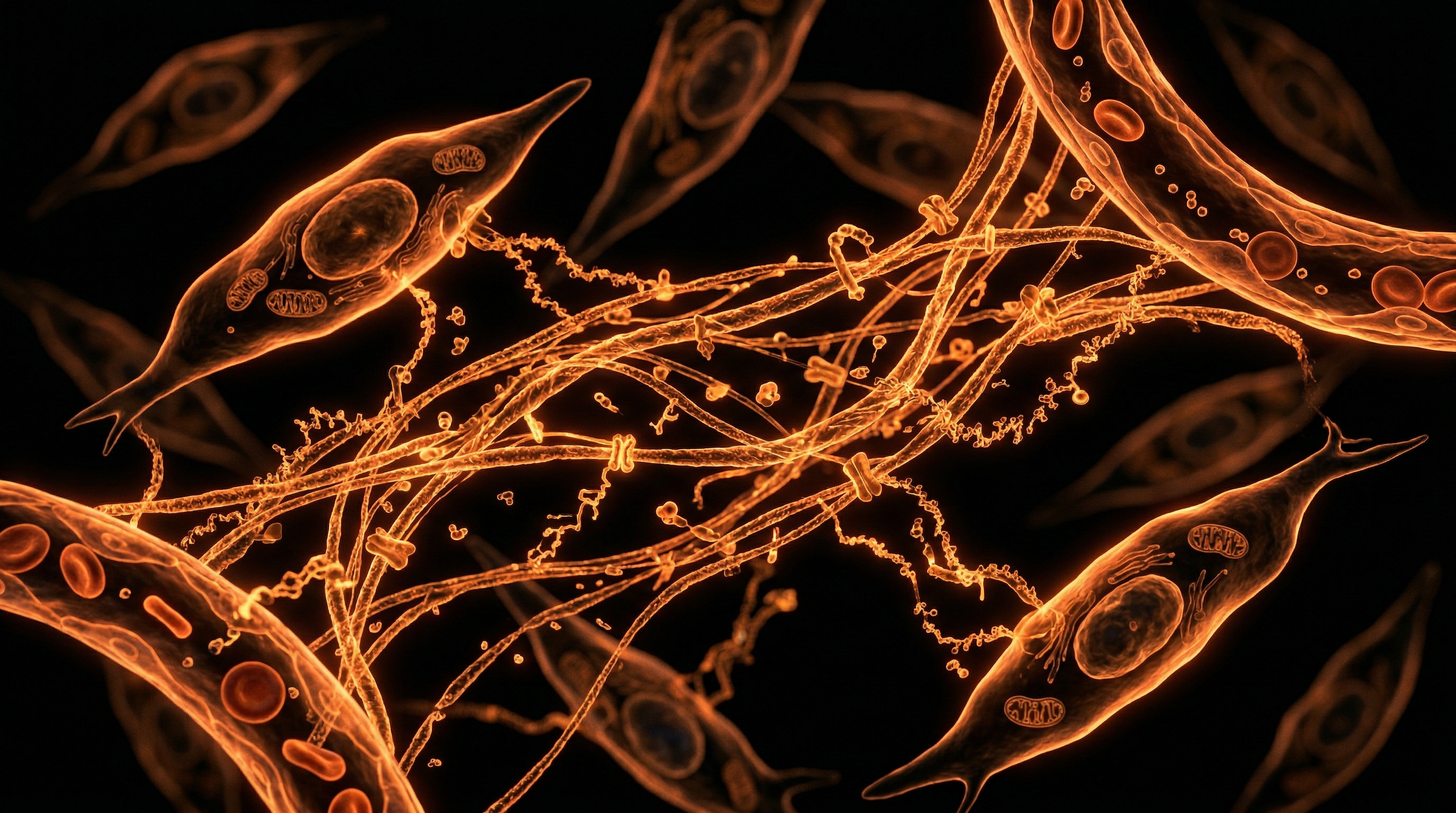
For centuries, the map of human anatomy was thought to be complete. We understood the bones, the musculature, the nervous system, and the circulatory conduits. However, we have long ignored the very environment in which these systems reside. Hidden in plain sight, beneath the dermis and surrounding every organ, lies a complex, fluid-filled highway that scientists are only now beginning to recognise as a functional organ in its own right: the interstitium.
The interstitial fluid network is not merely "filler" or "empty space." It is a sophisticated, dynamic extracellular matrix (ECM) that facilitates the "Third Circulation." While the blood delivers oxygen and the lymph removes large waste particles, the interstitial fluid (ISF) is the primary medium for cellular communication, nutrient transport, and molecular waste disposal. It represents roughly 20% of the human body’s fluid volume, yet it has been systematically overlooked by Western medicine because traditional histological techniques—which involve slicing and dehydrating tissue—collapse the very fluid-filled pockets that define this network.
To understand the interstitium is to understand the "soil" in which our cellular "seeds" grow. If the soil is parched, toxic, or stagnant, the plant withers regardless of the quality of its DNA. Today, we face a silent epidemic of interstitial stagnation, a state where the fluid-filled corridors of the fascia become viscous, acidic, and polluted. This article explores the biophysics of this network, the environmental factors threatening its integrity, and why the "fluid dynamics" of the human body are the next frontier in preventing systemic disease.
Fact: The interstitium was only formally proposed as a distinct organ in 2018, following advancements in in vivo endomicroscopy which allowed researchers to observe living tissue without dehydrating it.
The Biology — How It Works
The interstitium is a body-wide network of interconnected, fluid-filled spaces supported by a meshwork of strong (collagen) and springy (elastin) connective tissue proteins. Unlike a static sponge, this network is a pulsating, living hydraulic system.
The Architecture of the Space
The structural integrity of the interstitium is maintained by Type I Collagen, which provides tensile strength, and Elastin, which allows for recoil. These fibres form a lattice or "scaffolding." Within this scaffold lie the interstitial fluid pockets. These pockets are not empty; they are filled with a gel-like substance rich in glycosaminoglycans (GAGs), such as hyaluronan.
The Flow of Interstitial Fluid (ISF)
Interstitial fluid is derived from blood plasma. As blood reaches the capillaries, the high pressure forces water, ions, and small solutes through the thin capillary walls into the interstitial space. This fluid then bathes the cells, providing them with glucose, amino acids, and chemical signals.
Crucially, the ISF does not just sit there. It is in a constant state of flux. It moves through the collagen lattice, driven by:
- Hydrostatic pressure from the heart.
- Oncotic pressure gradients.
- Mechanical deformation (movement, breathing, and muscle contraction).
Most of this fluid is reabsorbed into the venous system, but approximately 10-15% enters the lymphatic capillaries. This "pre-lymphatic" flow is the most critical stage of detoxification. If the interstitial fluid becomes too viscous, it cannot enter the lymphatic system, leading to tissue congestion.
The Fascial Connection
The interstitium is inextricably linked to the fascia. Fascia is often described as the "cling film" of the body, but it is actually a fluid-conveying system. The fascial layers glide over one another thanks to a lubricant called hyaluronan. When we are sedentary or dehydrated, this hyaluronan thickens—a process known as densification. This turns the "highway" into a "swamp," trapping metabolic by-products and environmental toxins within the local tissue.
Mechanisms at the Cellular Level
To comprehend the importance of the interstitium, we must zoom in on the pericellular space—the immediate vicinity of the cell membrane.
The Sol-Gel Transition
One of the most remarkable properties of the interstitial matrix is its ability to switch between a fluid state (Sol) and a more solid, gelatinous state (Gel). This is a thixotropic property. When we move, apply heat, or experience mechanical vibration, the GAGs in the interstitium become more fluid, allowing for rapid nutrient exchange. In states of chronic stress or immobility, the matrix shifts into a "Gel" state, effectively "locking" the cells in a stagnant environment.
The Glycocalyx: The Cellular Gatekeeper
Every cell is coated in a "sugar forest" known as the glycocalyx. This structure interacts directly with the interstitial fluid. The glycocalyx senses the flow of ISF and translates that mechanical force into biochemical signals—a process called mechanotransduction.
- If the ISF flow is healthy, the glycocalyx signals the cell to maintain normal metabolism.
- If the ISF is stagnant or acidic, the glycocalyx triggers inflammatory pathways, signaling the cell that it is under threat.
Bio-Electric Signalling and Piezoelectricity
Collagen is a piezoelectric material. This means that when collagen fibres are compressed or stretched during movement, they generate a small electrical charge. This charge travels through the interstitial fluid, which acts as a semiconductor. This "liquid crystalline" matrix allows for near-instantaneous communication across the body, far faster than the nervous system’s chemical synapses. This is how the body coordinates systemic healing responses.
Key Term: Exosomes — These are tiny vesicles released by cells into the interstitial fluid. They contain RNA and proteins and act as "messages in a bottle," travelling through the fluid highway to instruct distant cells.
Environmental Threats and Biological Disruptors
In the modern era, our interstitial "ocean" is under assault from substances and forces that did not exist 100 years ago. These disruptors change the viscosity of our internal fluids and damage the scaffolding that supports them.
Glyphosate and Collagen Synthesis
The herbicide glyphosate (widely used in UK and global agriculture) is a structural analogue of the amino acid glycine. Collagen is composed of approximately 33% glycine. There is mounting evidence that the body may mistakenly incorporate glyphosate into collagen strands. This results in "mis-folded" collagen that is less resilient, more prone to glycation, and less efficient at maintaining the fluid-filled pockets of the interstitium.
Fluoridation and Tissue Calcification
In many parts of the UK, water fluoridation is touted as a dental health necessity. However, fluoride has a high affinity for calcium. In the interstitial space, chronic exposure to fluoride can contribute to the "calcification" of the extracellular matrix. This stiffens the fascia, reduces the "Sol-Gel" flexibility, and turns the fluid highway into a rigid, brittle structure.
Microplastics and Nanoparticles
Recent studies have identified microplastics within the human bloodstream, but their final resting place is often the interstitium. These non-biological particles act as "physical obstructions" within the collagen lattice, creating micro-eddies of stagnation and triggering a chronic, low-grade immune response as macrophages attempt—and fail—to digest them.
Non-Native Electromagnetic Fields (nnEMFs)
The interstitial fluid is highly sensitive to electromagnetic frequencies. Because the ISF is a liquid crystal structure, it is susceptible to polarisation. Exposure to high levels of 5G, Wi-Fi, and other nnEMFs can disrupt the coherent structure of "exclusion zone" (EZ) water within the interstitium. This reduces the fluid’s ability to transport ions and can lead to a "clumping" of red blood cells (the Rouleaux effect) and a thickening of the ISF.
The Cascade: From Exposure to Disease
What happens when the interstitial highway is blocked? The result is a predictable cascade of biological decay that Western medicine often treats as separate symptoms rather than a single systemic failure.
Stage 1: Interstitial Acidosis
When the ISF cannot flow, metabolic waste (lactic acid, CO2, urea) accumulates. This lowers the pH of the interstitial environment. Interstitial acidosis is the precursor to almost all chronic pain. Nociceptors (pain-sensing nerves) are highly sensitive to acidity. When the "soil" becomes acidic, the nerves fire constantly, leading to conditions like fibromyalgia and chronic fatigue.
Stage 2: Fibrosis and Adhesions
In response to chronic inflammation and acidity, the body attempts to "shore up" the area by laying down excess collagen. This is fibrosis. The fluid-filled pockets collapse, and the layers of fascia become "stuck" together. These adhesions further restrict movement, creating a feedback loop of stagnation.
Stage 3: The Oncogenic Environment
The most sobering implication of interstitial health is its role in cancer. A stagnant, acidic interstitium is the ideal breeding ground for malignancy.
- Metastasis: It is now understood that many cancer cells travel through the interstitial fluid to reach the lymphatic system.
- Hypoxia: Stagnant fluid limits oxygen delivery. Cancer cells thrive in anaerobic (oxygen-poor) environments.
- Shielding: The thickened, fibrotic matrix can actually shield tumours from the immune system and chemotherapy, preventing "cleansing" agents from reaching the site.
Statistic: Research suggests that over 80% of chronic illnesses can be traced back to "matrix stress"—a state where the extracellular environment is no longer capable of supporting healthy cellular function.
What the Mainstream Narrative Omits
The omission of the interstitium from medical education for so long is not merely a "scientific oversight." It reflects a fundamental flaw in the reductionist paradigm of modern medicine.
The Dissection Artifact
The primary reason we "missed" the interstitium is because of how we study the body. Traditional pathology relies on fixed tissue. To look at a biopsy under a microscope, the tissue is treated with chemicals, sliced thin, and dehydrated. This process drains the fluid, causing the collagen lattice to collapse like a fallen building. Doctors were taught they were looking at "solid" connective tissue, when in reality, they were looking at the dried-out remains of a fluid-filled organ.
The Suppression of Terrain Theory
Mainstream medicine is built on Germ Theory—the idea that disease is caused by external invaders. While pathogens are real, Terrain Theory (championed by Claude Bernard and Antoine Béchamp) argues that the health of the "internal environment" (the interstitium) determines whether a pathogen can take hold. By ignoring the interstitium, the pharmaceutical industry can focus on selling "bullets" for the "germs" while ignoring the "swamp" that allows the germs to flourish.
The Emotional-Physical Link
The interstitium is the physical substrate for what many call the "emotional body." Contractile cells called myofibroblasts exist within the interstitial matrix. These cells contract in response to stress hormones like adrenaline and cortisol. Chronic emotional stress literally "tightens" the fluid network, "squeezing" the ISF out of the pockets and causing systemic stagnation. This link between trauma and physical "stuckness" is rarely addressed in a GP's surgery.
The UK Context
The state of interstitial health in the United Kingdom is particularly precarious due to specific geographical, historical, and regulatory factors.
The Legacy of the Industrial Revolution
Large swathes of the UK, particularly in the Midlands and the North, are "post-industrial landscapes." The soil and water tables in these areas remain contaminated with heavy metals like lead, cadmium, and mercury. These metals are "sequestrated" by the body into the interstitial matrix of the bones and fascia, where they act as long-term disruptors of fluid dynamics.
The UK Water Crisis
British tap water is a chemical cocktail that directly impacts interstitial viscosity.
- Chlorine: Used to disinfect water, it can damage the delicate glycocalyx of the gut lining and, once absorbed, affect the ISF.
- Hard Water: Much of South East England has "hard" water. While mineral-rich, the inorganic calcium carbonate found in tap water is poorly absorbed and can contribute to the "stiffening" of the interstitial matrix in those with poor metabolic health.
- Pesticide Runoff: In rural areas, the runoff from intensive farming (including neonicotinoids and glyphosate) enters the water cycle, ensuring a constant low-level exposure that degrades collagen integrity.
The "Stiff Upper Lip" and Sedentary Culture
The British cultural penchant for "soldiering on" combined with a largely sedentary, office-based workforce has created a population with "frozen" fascia. The lack of varied, multi-planar movement in the UK—replaced by long commutes and "sofa time"—means the interstitial fluid in the lower limbs and pelvis rarely gets the mechanical "pumping" it requires to stay fluid.
Protective Measures and Recovery Protocols
Restoring the health of your interstitial fluid network is not about a single "pill." It requires a shift in how we interact with our environment and our own bodies. The goal is to move from a "Gel" state back to a "Sol" state.
1. Advanced Hydration Strategies
Simply drinking more tap water is insufficient. You must improve the "structure" and "absorption" of the water.
- Structured Water: Use vortexing or infrared light to increase the "EZ" (Exclusion Zone) component of your water.
- Electrolytes: The interstitium requires salts to maintain its osmotic pressure. Use high-quality Celtic sea salt or magnesium bicarbonate.
- Silica Supplementation: Silica is essential for collagen cross-linking. It helps "sweep" aluminium and other toxins out of the interstitial space.
2. Mechanical Pumping (Fascial Release)
The interstitium depends on movement to flow.
- Rebounding: Jumping on a mini-trampoline is perhaps the most effective way to flush the interstitial fluid and the lymphatic system simultaneously.
- Yin Yoga: Holding deep stretches for 3-5 minutes allows the "Gel" state of the fascia to melt into a "Sol" state, rehydrating the deep tissues.
- Dry Brushing: This traditional technique stimulates the pre-lymphatic flow within the dermis, encouraging the movement of ISF toward the lymph nodes.
3. Thermal and Vibrational Therapy
- Infrared Saunas: Deep-penetrating heat vibrates the water molecules in the interstitium, reducing viscosity and allowing for the release of stored toxins.
- Whole Body Vibration (WBV): Using a vibration plate can "break up" densified hyaluronan and stimulate the piezoelectric effect in the collagen scaffolding.
4. Detoxifying the Matrix
- Fulvic and Humic Acids: These organic compounds act as "molecular vacuum cleaners," entering the interstitial spaces to bind with heavy metals and glyphosate, escorting them out through the kidneys.
- Proteolytic Enzymes: Taking enzymes like serrapeptase or nattokinase on an empty stomach can help "digest" fibrotic adhesions and excess fibrin in the interstitial space.
5. Grounding (Earthing)
The interstitium is a semiconductor. By making direct skin contact with the Earth, you allow a flow of antioxidant electrons into the body. This helps neutralise the positive charge of an acidic, inflamed interstitium and restores the coherent electrical signaling required for tissue repair.
Summary: Key Takeaways
- The Interstitium is an Organ: It is a body-wide, fluid-filled network that acts as the primary highway for cellular nutrition and waste removal.
- Flow is Life: Health is defined by the fluid dynamics of this network. Stagnation leads to acidity, inflammation, and eventually, chronic disease or cancer.
- The "Dead Meat" Fallacy: Western medicine missed this organ because it primarily studied dehydrated, dead tissue rather than living, hydrated systems.
- Environmental Assault: Modern toxins like glyphosate, fluoride, and nnEMFs specifically target the integrity of the interstitial matrix.
- Movement is Medicine: Because the interstitium lacks a central pump (like the heart), it relies entirely on mechanical movement, hydration, and thermal energy to maintain its "Sol" state.
- The UK Challenge: Residents of the UK must be particularly vigilant regarding water quality and heavy metal accumulation due to industrial history and current water treatment practices.
To maintain the interstitium is to maintain the purity of your internal ocean. By focusing on the "fluid" rather than just the "solid," we move away from a reactive model of medicine and toward a truly regenerative way of living. The health of the cell is inseparable from the health of the space between the cells. Optimise the interstitium, and you optimise life itself.
This article is provided for informational and educational purposes only. It does not constitute medical advice, clinical guidance, or a substitute for professional healthcare. Information reflects cited research at time of publication. Always consult a qualified healthcare professional before acting on any health information.
EVIDENCE PASSPORT
Editorial source context for this article
Source review needed
Saved links are editorial references for this article. They may support specific claims rather than every sentence. Open and assess each source in context. This passport does not independently verify them.
Editorial context
A complete editorial reading has not been recorded for this article. Source links remain available for you to open and assess directly.
Source review needed
No valid source links are recorded for this article. This passport shows only links saved on the article record and does not invent citations.
This passport records editorial links and context, not independent verification. Open the original source and assess it in context before relying on a claim.
Medical Disclaimer
The information in this article is for educational purposes only and does not constitute medical advice, diagnosis, or treatment. Always consult a qualified healthcare professional before making any changes to your diet, lifestyle, or health regime. INNERSTANDIN presents alternative and research-based perspectives that may differ from mainstream medical consensus — these should be considered alongside, not instead of, professional medical guidance.
Read Full DisclaimerContinue the thread
Keep this question moving.
Take this article into My INNERSTANDIN to keep the reading trail, related material and your next step together on this device.