
The Interstitium: Mapping the Fluid Highways of Biological Medicine
Updated April 2026
Evidence orientation
Editorial context not yet recorded
Follow this category
This stays in this browser. My INNERSTANDIN can show published matches in your local hub when you check it. It does not send email, push, or alert notifications.
Local learning review
A private browser aid for revisiting ideas. It is not an alert or a health recommendation.
Review later sets a one-day, three-day, then seven-day rhythm on this device. Choose it only when you want to revisit this article.
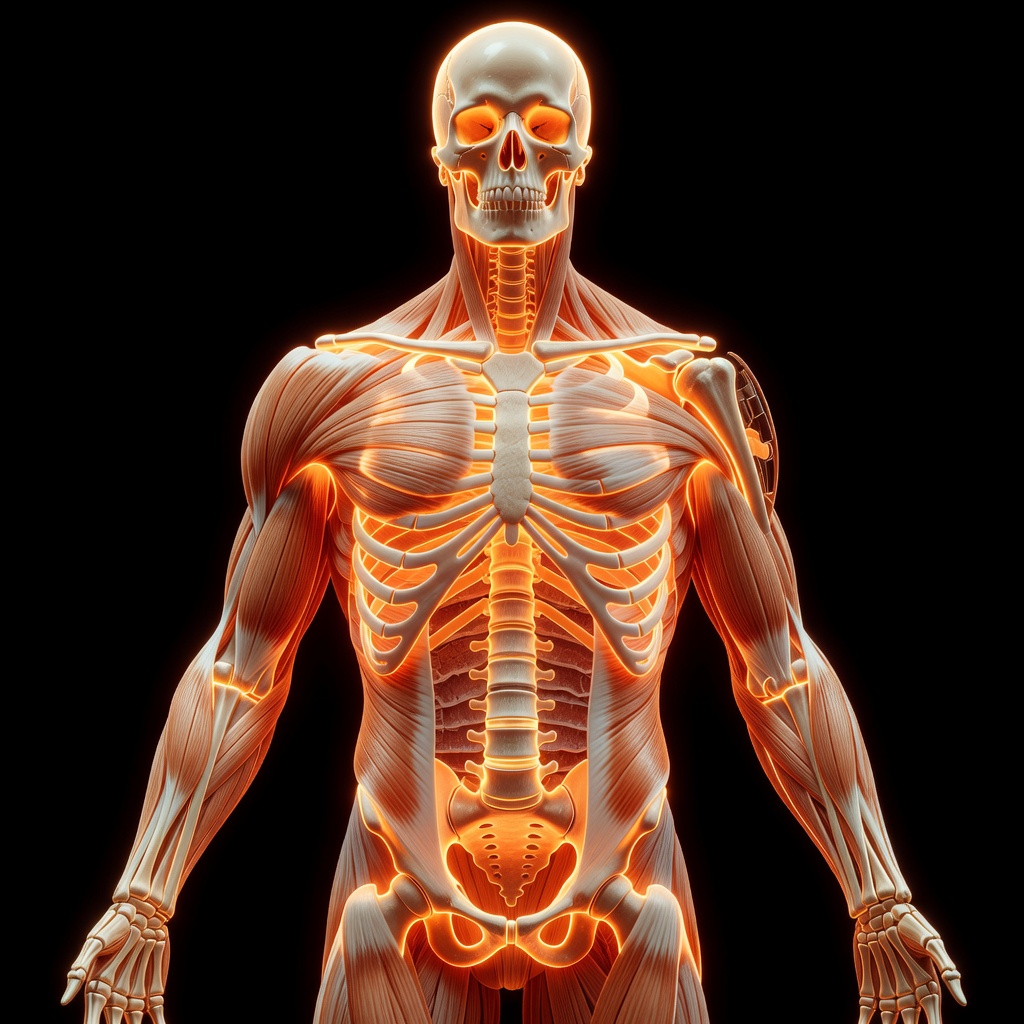
For decades, the standard anatomical model taught in British medical schools presented a compartmentalised view of the human body. We were taught to see organs as discrete units, separated by dense, static "connective tissue" that acted as little more than biological packing material. However, a groundbreaking discovery in 2018—described by researchers as the identification of a "new organ"—has shattered this reductionist perspective.
This organ is the interstitium. Far from being a passive filler, the interstitium is a vast, body-wide network of fluid-filled spaces that serves as the literal "highway" for biological communication and waste removal. In the realm of Biological Medicine and Terrain Theory, the interstitium is not merely an anatomical curiosity; it is the primary theatre of health and disease. It is the milieu intérieur (internal environment) that determines whether a cell thrives or becomes pathological.
The Hidden Highway: An Overview of the Interstitium
The interstitium is a contiguous, fluid-filled space existing between the skin and the organ muscles, lining the digestive tract, lungs, and urinary systems, and surrounding all arteries and veins. Until recently, it went unnoticed because the traditional methods of microscopic study—fixing tissue samples in chemicals and slicing them into thin sections—drained the fluid, causing the structure to collapse like a dried-out sponge.
When viewed in its living, hydrated state using probe-based confocal laser endomicroscopy, the interstitium reveals itself as a complex lattice of collagen and elastin bundles. These bundles are filled with a moving, protein-rich fluid known as interstitial fluid.
"The discovery of the interstitium represents a fundamental paradigm shift in human biology. It confirms that the body is not a collection of parts, but a fluid-dynamic system where the 'spaces in between' are as vital as the organs themselves."
From the perspective of Terrain Theory, the interstitium is the "soil" in which our cellular "seeds" are planted. If the soil is nutrient-rich and free of toxins, the plants grow strong. If the soil is stagnant, acidic, or polluted, disease is inevitable.
Biological Mechanisms: The Engine of the Extracellular Matrix
To understand the interstitium, one must understand its role as the primary component of the Extracellular Matrix (ECM). The ECM provides the structural framework for our cells, but the interstitium provides the transit system.
1. The Pre-Lymphatic Drainage System
The fluid within the interstitium is the precursor to lymph. As it moves through the collagen lattice, it collects cellular waste, metabolic by-products, and toxins. This fluid eventually drains into the lymphatic system to be filtered by the lymph nodes. If the interstitial highway becomes congested—a state known in Biological Medicine as gelosis—the waste backs up, creating a toxic environment for the cells.
2. Bio-Electric Signalling and Mechanotransduction
The collagen fibres that define the interstitium are not just structural; they are piezoelectric. This means they generate electrical signals when compressed or moved. The interstitium acts as a body-wide communication network, transmitting information through fluid pressure and electrical impulses faster than the nervous system. This process, called mechanotransduction, allows cells to respond instantaneously to physical changes in the environment.
3. pH Balance and Homeostasis
The interstitium acts as a massive reservoir for the body’s pH-buffering systems. When the body becomes overly acidic due to poor diet or environmental stress, the interstitium absorbs excess hydrogen ions to protect the blood's delicate pH balance. However, over-reliance on this "buffer zone" leads to latent acidosis within the tissue, causing the interstitial fluid to thicken from a fluid (sol) state to a thick (gel) state, further inhibiting nutrient delivery.
Terrain Theory vs. Germ Theory: Why the Interstitium Matters
Conventional medicine—rooted in Germ Theory—focuses on identifying and killing external pathogens. Biological Medicine, however, focuses on the Terrain. As the great proponent of Terrain Theory, Claude Bernard, famously noted, "The microbe is nothing; the terrain is everything."
The interstitium is the physical manifestation of the terrain. When a person suffers from chronic inflammation, the medical establishment often attempts to suppress the symptom with anti-inflammatories. The practitioner of Biological Medicine looks at the interstitium:
- Is the fluid moving?
- Is it overloaded with environmental toxins?
- Is it sufficiently hydrated to allow for the transit of white blood cells?
When the interstitium is toxic, the immune system’s "patrol cars" (leukocytes) cannot reach their destination efficiently. By focusing on the health of the fluid highways, we empower the body to resolve its own infections and inflammatory states.
The UK Context: A Modern Crisis of Stagnation
In the United Kingdom, we are currently facing a "perfect storm" of factors that compromise interstitial health. The British lifestyle, characterised by long hours of sedentary office work and a diet increasingly reliant on ultra-processed foods, is a direct assault on our fluid dynamics.
The NHS and the "Silo" Problem
The National Health Service (NHS) is structured around specialism. If you have a kidney problem, you see a nephrologist; if you have a skin problem, you see a dermatologist. However, the interstitium links the kidneys to the skin and every organ in between. Because the interstitium is not yet a recognised "specialty" in clinical practice, many patients with systemic, multi-organ symptoms are left without answers, as their issues reside in the "spaces between" that no specialist is trained to look at.
Environmental Factors in the UK
- Water Quality: Many parts of the UK, particularly in the South East, have "hard" water high in inorganic minerals and are treated with fluoride and chlorine. These chemicals can alter the structural integrity of the interstitial fluid, which relies on a specific "ordered" or "structured" state to function optimally.
- Glyphosate Exposure: The widespread use of glyphosate in British industrial farming has been linked to the degradation of collagen—the very scaffolding of the interstitium.
- The "Indoor" Life: Lack of sunlight and grounding (connecting with the Earth's electron field) in the British climate reduces the "zeta potential" of our internal fluids, causing them to clump and stagnate.
Environmental Factors and the Degradation of the Highway
The interstitium is highly sensitive to the modern world. Several factors contribute to the "congestion" of this vital organ:
- Electrosmog (EMFs): Modern wireless technology (5G, WiFi) interacts with the charged ions in our interstitial fluid. Research suggests that chronic EMF exposure can alter the calcium channels in our cells, leading to "leaky" cells that dump waste into the interstitium faster than it can be cleared.
- Microplastics: Emerging studies have found microplastics within the human circulatory system. It is highly likely that these non-biodegradable particles also lodge within the collagen lattice of the interstitium, creating physical blockages.
- Heavy Metals: Mercury, aluminium, and lead have an affinity for the extracellular matrix. These toxins bind to the proteins in the interstitium, turning the fluid "highway" into a "swamp" of toxic storage.
Protective Strategies: Maintaining the Fluid Highway
To optimise the health of the interstitium is to optimise the health of the entire biological terrain. Here are the most effective strategies for maintaining interstitial flow:
1. Hydration and "Structured" Water
Drinking more water is not enough; the water must be able to enter the cells. Focus on filtered, mineralised water. In the UK, investing in a high-quality reverse osmosis filter or a distiller, then remineralising with sea salt, helps ensure the water has the correct surface tension to penetrate the interstitium.
2. Move the Fascia
The interstitium is embedded within the fascia (connective tissue). Static stretching is less effective than "bouncy," multi-directional movement.
- Rebounding: Using a mini-trampoline for 10 minutes a day is perhaps the most effective way to "pump" the interstitial fluid and the lymphatic system.
- Yin Yoga: Long-held poses help to stress the collagen fibres, stimulating them to produce more fluid.
3. Dry Brushing and Manual Lymphatic Drainage
The UK has a rich tradition of hydrotherapy and spa culture that we have largely forgotten. Dry brushing the skin in the direction of the heart manually stimulates the movement of fluid in the superficial interstitium, preventing the "stagnant swamp" effect.
4. Grounding (Earthing)
Connecting your bare feet to the Earth allows for the transfer of free electrons into the body. These electrons help maintain the negative charge of the interstitial fluid, ensuring it remains in a "sol" (fluid) state rather than a "gel" (thick) state. Given the British weather, even 10 minutes on wet grass can be highly therapeutic.
5. Temperature Cycling
Saunas followed by cold plunges (or even alternating hot and cold water in your morning shower) create a "vascular pump" effect. This forces the interstitium to expand and contract, flushing out deep-seated metabolic waste.
Key Takeaways
- The Interstitium is an Organ: It is a body-wide, fluid-filled network that acts as the primary transit system for nutrients, waste, and bio-electric signals.
- Terrain is Key: Chronic disease is often a result of a congested or toxic interstitium (terrain) rather than just the presence of a pathogen.
- Stagnation is the Enemy: The interstitium relies on movement, hydration, and proper pH balance to function. When it stagnates, inflammation begins.
- Holistic Integration: We must move beyond the "siloed" view of the body and recognise that the interstitium connects all systems—immune, digestive, circulatory, and nervous.
- Proactive Defence: By addressing UK-specific challenges like water quality and sedentary lifestyles through rebounding, hydration, and grounding, we can maintain the integrity of our biological highways.
In the final analysis, the discovery of the interstitium is a call to return to the fundamentals of Biological Medicine. It reminds us that we are not machines made of fixed parts, but fluid-dynamic beings whose health is dictated by the quality of the "inner sea." To heal the body, we must first clear the highway.
This article is provided for informational and educational purposes only. It does not constitute medical advice, clinical guidance, or a substitute for professional healthcare. Information reflects cited research at time of publication. Always consult a qualified healthcare professional before acting on any health information.
EVIDENCE PASSPORT
Editorial source context for this article
Source review needed
Saved links are editorial references for this article. They may support specific claims rather than every sentence. Open and assess each source in context. This passport does not independently verify them.
Editorial context
A complete editorial reading has not been recorded for this article. Source links remain available for you to open and assess directly.
Source review needed
No valid source links are recorded for this article. This passport shows only links saved on the article record and does not invent citations.
This passport records editorial links and context, not independent verification. Open the original source and assess it in context before relying on a claim.
Medical Disclaimer
The information in this article is for educational purposes only and does not constitute medical advice, diagnosis, or treatment. Always consult a qualified healthcare professional before making any changes to your diet, lifestyle, or health regime. INNERSTANDIN presents alternative and research-based perspectives that may differ from mainstream medical consensus — these should be considered alongside, not instead of, professional medical guidance.
Read Full DisclaimerContinue the thread
Keep this question moving.
Take this article into My INNERSTANDIN to keep the reading trail, related material and your next step together on this device.