
The Melanin Paradox: Why Subcellular Melatonin is the UK’s Missing Antioxidant
Updated May 2026
New research suggests that near-infrared light triggers subcellular melatonin production, a process largely absent in the sun-deprived UK population. This article reveals why topical antioxidants are insufficient compared to the light-driven internal defense mechanisms of the cell.
Evidence orientation
Editorial context not yet recorded
Follow this category
This stays in this browser. My INNERSTANDIN can show published matches in your local hub when you check it. It does not send email, push, or alert notifications.
Local learning review
A private browser aid for revisiting ideas. It is not an alert or a health recommendation.
Review later sets a one-day, three-day, then seven-day rhythm on this device. Choose it only when you want to revisit this article.
Overview
In the grey, rain-slicked corridors of modern Britain, a silent biological crisis is unfolding. It is a crisis not of pathogens or overt malnutrition, but of photo-starvation. For decades, the public health narrative has focused almost exclusively on Vitamin D as the primary benefit of solar exposure, while simultaneously warning of the carcinogenic dangers of Ultraviolet (UV) radiation. However, this binary perspective has left a devastating gap in our understanding of human physiology.
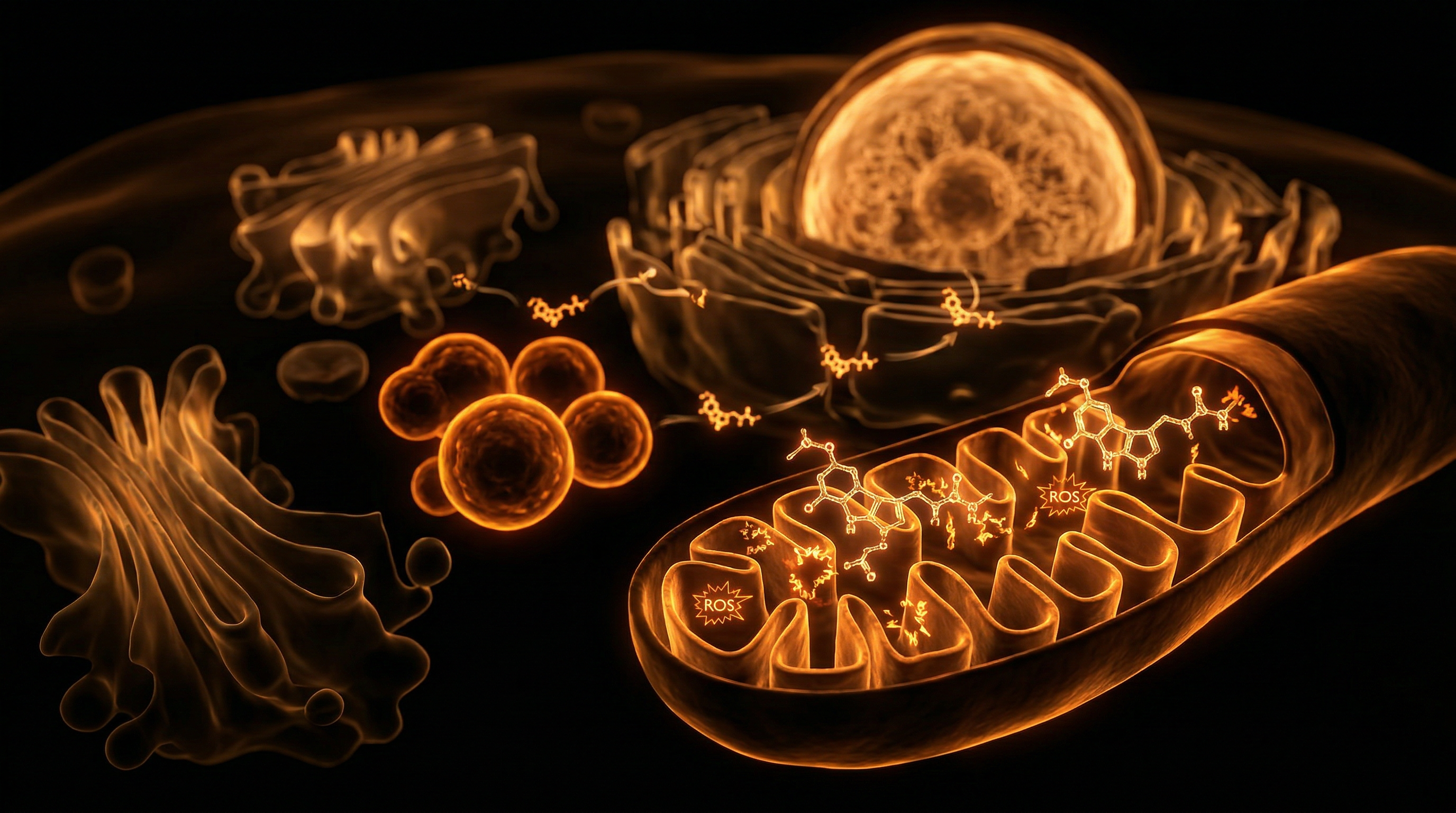
Recent breakthroughs in photobiology have revealed a "Melanin Paradox." While we associate melanin with skin pigment and sun protection, its evolutionary partner—Melatonin—is performing a far more critical role deep within our cells. Specifically, we are discovering that the pineal gland, long thought to be the sole source of melatonin, is responsible for less than 5% of the body’s total production. The remaining 95% is subcellular melatonin, synthesised within the mitochondria of every cell in the body, triggered specifically by Near-Infrared (NIR) light.
In the United Kingdom, where cloud cover is persistent, the 54th parallel limits solar intensity, and the "indoor lifestyle" is the cultural norm, the British population is functionally deficient in this internal antioxidant. This is not a deficiency that can be corrected by oral supplementation or topical creams. It is a fundamental disruption of the mitochondrial defence system. This article explores why the UK’s lack of NIR exposure is the hidden driver behind our escalating rates of chronic inflammation, neurodegeneration, and metabolic dysfunction.
Callout Fact: Over 95% of the melatonin in the human body is produced inside the mitochondria in response to Near-Infrared light, yet standard blood tests only measure the 5% produced by the pineal gland for sleep regulation.
The Biology — How It Works
To understand the Melanin Paradox, we must first distinguish between the two types of melatonin. Most people recognise melatonin as the "hormone of darkness," secreted by the pineal gland at night to regulate the circadian rhythm. This is circulatory melatonin.
However, the more significant form is subcellular (mitochondrial) melatonin. This form of the molecule does not enter the bloodstream and has nothing to do with sleep. Instead, it acts as a "site-specific" antioxidant designed to neutralise the toxic by-products of energy production.
The Solar Spectrum and the NIR Window
The sun’s spectrum is composed of UV, visible light, and infrared light. While UV makes up a small percentage, Near-Infrared (NIR) accounts for approximately 50% of solar energy. Unlike UV, which is blocked by glass and clothing, NIR has the unique ability to penetrate deep into human tissue—up to 8 centimetres or more—reaching the brain, muscles, and internal organs.
The Melatonergic Pathway
When NIR photons strike the skin and penetrate the underlying tissues, they are absorbed by Cytochrome c Oxidase, a key enzyme in the mitochondrial respiratory chain. This absorption triggers a cascade of biochemical events. The primary outcome is the up-regulation of the melatonergic pathway within the mitochondria.
In essence, our cells are "solar-powered" antioxidant factories. When we are exposed to natural sunlight—specifically the NIR wavelengths that are present even when it is cloudy—our mitochondria produce melatonin to protect themselves from the Reactive Oxygen Species (ROS) generated during the creation of ATP (cellular energy).
Mechanisms at the Cellular Level
The mitochondrion is the engine of the cell, but engines produce exhaust. This "exhaust" consists of free radicals and ROS. If left unchecked, these molecules damage mitochondrial DNA, lead to protein misfolding, and eventually cause cell death (apoptosis).
Scavenging the "Exhaust"
Subcellular melatonin is the most potent antioxidant known to science. It is significantly more effective than Vitamin C or E because it can cross all biological barriers and is concentrated precisely where the damage occurs: inside the mitochondria.
- Direct Scavenging: Melatonin directly neutralises singlet oxygen and hydroxyl radicals.
- The Antioxidant Cascade: When melatonin neutralises a free radical, it does not become a pro-oxidant itself (as other antioxidants do). Instead, it transforms into a series of metabolites that are also antioxidants, creating a "clearinghouse" effect.
- SIRT3 Activation: Mitochondrial melatonin stimulates Sirtuin 3, an enzyme that repairs DNA and regulates metabolic health.
The Role of Structured Water (EZ Water)
NIR light also interacts with the water inside our cells. According to the research of Dr Gerald Pollack, NIR light expands the "Exclusion Zone" (EZ) water—a fourth phase of water that is more ordered and conductive. This EZ water acts as a battery, assisting the mitochondria in moving protons and electrons more efficiently. When the water in our cells is "structured" by NIR light, the entire process of energy production becomes "cleaner," producing fewer free radicals and requiring less melatonin for clean-up.
Scientific Fact: Melatonin is the only antioxidant that is synthesised within the mitochondria, allowing it to provide immediate, on-site protection against the oxidative stress of ATP production.
Environmental Threats and Biological Disruptors
The British population is living in a "light-toxic" environment that actively suppresses subcellular melatonin production while simultaneously increasing oxidative stress. This is the result of three major environmental shifts.
1. The Glass Barrier
Modern architectural glass is a biological disaster. Most residential and commercial windows in the UK are designed with "Low-E" (low emissivity) coatings. These coatings are excellent at keeping heat in, but they achieve this by filtering out the NIR spectrum. When you sit in a sunlit office in London or Manchester, you are receiving the stimulating blue light (which signals the brain to stop pineal melatonin) but you are receiving zero NIR light to trigger mitochondrial repair. You are "stressing" the cell without providing the "recovery" signal.
2. The Blue Light Plague
The UK has one of the highest densities of LED lighting and screen usage in Europe. LEDs are heavily weighted in the blue-light spectrum. Blue light (High-Energy Visible or HEV light) is inherently oxidative. It increases the production of ROS in the retina and the skin. In nature, blue light is always balanced by NIR light (which is why the sun looks orange at sunrise/sunset). In the modern UK, we are exposed to "naked" blue light—oxidative stress without the infrared antidote.
3. The Death of the Incandescent Bulb
One of the most overlooked environmental changes in recent history was the EU-mandated phase-out of incandescent light bulbs. While "energy efficient," the replacement LEDs and CFLs emit almost no NIR. Old-fashioned incandescent bulbs were essentially NIR heaters that provided a small but consistent dose of "protective" light during the long British winters. By removing them, we have effectively stripped our homes of the only indoor source of mitochondrial support.
The Cascade: From Exposure to Disease
What happens when a population is deprived of its primary internal antioxidant for decades? We see the rise of "Inflammaging"—a state of chronic, low-grade inflammation that accelerates the ageing process and drives the UK’s most common causes of mortality.
Mitochondrial Dysfunction and Cancer
The Warburg Effect describes how cancer cells shift their metabolism away from mitochondrial oxidative phosphorylation toward fermentation. We now know that subcellular melatonin is a key regulator of this switch. High levels of mitochondrial melatonin keep the cell in a healthy, oxidative state. When melatonin drops—due to a lack of NIR exposure—the cell is more likely to revert to a primitive, cancerous metabolic state.
Neurodegeneration: The Brain’s Light Hunger
The brain is the most metabolically active organ in the body, consuming 20% of our oxygen. Consequently, it produces the most ROS. The decline in NIR exposure is closely linked to the UK’s rise in Alzheimer’s and Parkinson’s disease. NIR light can penetrate the skull and reach the cortical surface, triggering melatonin production in neurons. Without this, the brain "rusts" in its own oxidative by-products.
Metabolic Syndrome and Obesity
Mitochondria are the gatekeepers of weight management. When mitochondria are damaged by oxidative stress, they become inefficient at burning fat and glucose. This lead to insulin resistance. The UK’s obesity epidemic cannot be solved by "eating less and moving more" if the cellular engines responsible for burning that fuel are broken due to a lack of photobiomodulation.
Callout Fact: Chronic lack of Near-Infrared light is now being linked to "seasonal mitochondrial collapse," explaining why the UK sees a massive spike in cardiovascular events and respiratory infections during the darker months.
What the Mainstream Narrative Omits
The current public health advice in the UK regarding sunlight is not just incomplete; it is dangerously misleading. It treats the sun as a singular "UV threat" rather than a complex nutrient source.
The Failure of Topical Antioxidants
The skincare industry is worth billions in the UK, with a heavy focus on "Antioxidant Serums" containing Vitamin C or Ferulic Acid. However, these molecules are too large to penetrate deeply into the dermis and cannot enter the mitochondria in any significant quantity. They are a surface-level "band-aid" for a deep-seated cellular deficiency. Subcellular melatonin is thousands of times more effective because it is created in situ.
The SPF Trap
While SPF is necessary to prevent burning during rare British heatwaves, its over-application—often encouraged year-round in "daily moisturisers"—blocks the beneficial effects of the sun. Even more critically, most sunscreens do not block NIR light, but they do prevent the skin from mounting its natural protective response (melanogenesis). This creates a "disharmony" where the skin is exposed to deep-penetrating NIR and heat, but the superficial layers are chemically numbed to the signal of solar intensity.
The Suppression of Light Therapy
In the UK, "Light Therapy" is often relegated to the realm of "wellness" or "alternative medicine," despite thousands of peer-reviewed papers on Photobiomodulation (PBM). The mainstream medical establishment remains fixated on pharmaceutical interventions that attempt to neutralise inflammation after it has occurred, rather than supporting the light-driven biological mechanisms that prevent inflammation in the first place.
The UK Context
The United Kingdom presents a unique "perfect storm" for NIR deficiency. Our geographical location and climate make us the most NIR-deprived population in the developed world.
The 54th Parallel and Solar Geometry
At the UK’s latitude, the sun is at such an angle for six months of the year that almost all UV-B radiation is filtered out by the atmosphere (the "Vitamin D Winter"). However, what is less discussed is that the "NIR Window" is also severely narrowed. While some NIR still reaches the surface on a cloudy day, the intensity is often below the threshold required to trigger significant subcellular melatonin production in modern, indoor-dwelling humans.
The British Indoor Lifestyle
Statistically, the average UK citizen spends 92% of their time indoors. When you factor in the "Glass Barrier" mentioned earlier, it becomes clear that the British population is effectively living in a "Biological Dark Age." We are the first generations of humans to live almost entirely without the NIR spectrum, which has been a constant companion to life since the first unicellular organisms evolved.
Socio-Economic Impact
The burden of this NIR deficiency falls most heavily on the UK’s urban poor, who often live in housing with poor natural light, work in windowless environments (warehouses, supermarkets), and have limited access to high-quality PBM technology. This "Light Inequality" is a significant contributor to the health disparities seen across the country.
Protective Measures and Recovery Protocols
Given that we cannot change the British weather or the Earth's tilt, how can we solve the Melanin Paradox? We must move toward a model of Biological Sovereignty, where we take control of our cellular light environment.
1. Adopt Low-Level Light Therapy (LLLT)
For the UK population, Red Light Therapy (specifically devices emitting 660nm and 850nm) is not a luxury; it is a biological necessity.
- The Morning Dose: 10–20 minutes of NIR exposure to the face and torso in the morning can "prime" the mitochondria for the day, providing a reservoir of melatonin that protects against the oxidative stress of daily life.
- The Recovery Dose: Using NIR on muscle groups or areas of chronic pain after work can accelerate the clearance of metabolic waste.
2. "Sun-Hacking" for the UK Climate
Even on a cloudy day in Manchester, there is NIR light available. To capture it:
- Direct Skin Exposure: Open a window (to bypass the glass) and expose as much skin as possible for 15 minutes, even if it's cold. The cold shock (cryotherapy) and the NIR have a synergistic effect on mitochondrial health.
- The Midday Break: The solar intensity is highest between 11 am and 2 pm. British workers must reclaim the "outdoor lunch break" as a medical necessity, not a leisure activity.
3. Nutritional Support for the Melatonergic Pathway
The body needs raw materials to synthesise melatonin.
- Tryptophan: The precursor to melatonin. Ensure adequate intake through protein-rich foods.
- Magnesium: A critical cofactor in ATP production and the melatonergic pathway. Most of the UK population is magnesium-deficient.
- Chlorophyll: Emerging research suggests that chlorophyll metabolites can enter our mitochondria and, when exposed to NIR light, actually help produce ATP. "Eating your greens" takes on a whole new meaning when combined with light therapy.
4. Environmental Modification
- Bring Back the Glow: Use incandescent or halogen bulbs in the evening to provide at least a small amount of NIR in the home environment.
- Blue-Blockers: Use high-quality blue-light-blocking glasses after sunset to protect the pineal melatonin, while using red light devices to support subcellular melatonin.
Summary: Key Takeaways
The Melanin Paradox reveals that our health is not merely a matter of what we eat and how we move, but how we interact with the electromagnetic spectrum.
- Mitochondrial Melatonin is Key: 95% of your body's melatonin is produced inside your cells to fight "internal rust." It is triggered by Near-Infrared (NIR) light.
- The UK is Light-Starved: Glass, LED lights, and our northern latitude have created a chronic deficiency in NIR, leaving our mitochondria undefended.
- Oral Antioxidants are Not Enough: You cannot "eat" your way out of a light deficiency. Topical and oral antioxidants cannot replace the site-specific protection of light-triggered melatonin.
- Proactive Protection: To survive the modern British environment, one must use Red Light Therapy/PBM, bypass the glass barrier, and consciously seek out the "missing" NIR spectrum.
The science is clear: We are light-beings by biological design. The "Missing Antioxidant" is not a new pill or a superfood; it is the very light we have spent the last century hiding from. For the UK to overcome its current health crisis, we must look beyond the "Vitamin D" narrative and embrace the deep, restorative power of the Near-Infrared spectrum. Our cellular survival depends on it.
This article is provided for informational and educational purposes only. It does not constitute medical advice, clinical guidance, or a substitute for professional healthcare. Information reflects cited research at time of publication. Always consult a qualified healthcare professional before acting on any health information.
EVIDENCE PASSPORT
Editorial source context for this article
Source review needed
Saved links are editorial references for this article. They may support specific claims rather than every sentence. Open and assess each source in context. This passport does not independently verify them.
Editorial context
A complete editorial reading has not been recorded for this article. Source links remain available for you to open and assess directly.
Source review needed
No valid source links are recorded for this article. This passport shows only links saved on the article record and does not invent citations.
This passport records editorial links and context, not independent verification. Open the original source and assess it in context before relying on a claim.
Medical Disclaimer
The information in this article is for educational purposes only and does not constitute medical advice, diagnosis, or treatment. Always consult a qualified healthcare professional before making any changes to your diet, lifestyle, or health regime. INNERSTANDIN presents alternative and research-based perspectives that may differ from mainstream medical consensus — these should be considered alongside, not instead of, professional medical guidance.
Read Full DisclaimerContinue the thread
Keep this question moving.
Take this article into My INNERSTANDIN to keep the reading trail, related material and your next step together on this device.