
The NHS Diagnostic Void: Why Environmental Illnesses Are Being Labelled as Fibromyalgia
Updated May 2026
Many patients are mislabeled with unexplained fatigue when the true cause is environmental toxicity. We analyze how current UK protocols fail to identify biological stressors.
Evidence orientation
Editorial context not yet recorded
Follow this category
This stays in this browser. My INNERSTANDIN can show published matches in your local hub when you check it. It does not send email, push, or alert notifications.
Local learning review
A private browser aid for revisiting ideas. It is not an alert or a health recommendation.
Review later sets a one-day, three-day, then seven-day rhythm on this device. Choose it only when you want to revisit this article.
Overview
In the clinical corridors of the National Health Service (NHS), a quiet epidemic is being masked by a label of convenience. Currently, an estimated 1.2 to 2.8 million people in the United Kingdom are living with a diagnosis of Fibromyalgia. Characterised by widespread musculoskeletal pain, fatigue, sleep disturbances, and cognitive dysfunction, Fibromyalgia has become the ultimate "wastebasket diagnosis"—a clinical cul-de-sac where patients are sent when the standard battery of NHS tests returns "normal" results.
However, a growing body of evidence from the vanguard of environmental medicine and molecular biology suggests that Fibromyalgia is rarely a primary condition. Instead, it is often a symptomatic manifestation of a deeper, more insidious biological crisis: Environmental Toxicity. We are currently witnessing a "Diagnostic Void," a systemic failure within the British medical establishment to identify the biological stressors—ranging from mycotoxins and heavy metals to synthetic endocrine disruptors—that are the true drivers of chronic fatigue and pain.
The NHS model, built upon the foundation of acute care and infectious disease management, is fundamentally ill-equipped to handle the complexities of chronic Total Body Burden. When a patient presents with multi-systemic dysfunction, the system’s inability to measure "low-dose" chronic environmental exposure leads to the default application of the Fibromyalgia label. This labels the symptom but ignores the source, effectively gaslighting a generation of patients whose biology is buckling under the weight of a toxic modern world.
Fact: According to the Office for National Statistics (ONS), chronic illness rates have surged, yet the average GP appointment in the UK lasts only 9.2 minutes—insufficient time to explore the complex environmental history required to diagnose toxicity.
The Biology — How It Works
To understand why environmental illnesses are mislabelled as Fibromyalgia, we must first understand the prevailing medical narrative versus the biological reality. The NHS typically categorises Fibromyalgia as a Central Sensitisation Syndrome. The theory suggests that the central nervous system becomes "hypersensitive," amplifying pain signals in a way that is disproportionate to any physical stimulus. While this description is technically accurate regarding the state of the nervous system, it fails to answer the most critical question: Why has the nervous system become sensitised?
The Neuro-Immuno-Endocrine Axis
The human body does not operate in silos. The nervous system, the immune system, and the endocrine (hormonal) system form a tightly integrated loop. When the body is exposed to environmental toxins, this axis is the first to respond.
- The Immune Trigger: Toxins act as "adjuvants" or "haptens," triggering an inflammatory response.
- The Endocrine Shift: Chronic inflammation signals the adrenal glands to overproduce cortisol, eventually leading to Hypothalamic-Pituitary-Adrenal (HPA) axis dysregulation.
- The Nervous System Response: As the HPA axis fails and inflammation persists, the brain’s microglia (immune cells of the brain) become "primed." This leads to neuroinflammation, which creates the "brain fog" and heightened pain sensitivity associated with Fibromyalgia.
The Concept of Total Body Burden
Every individual possesses a unique "toxic bucket." Throughout our lives, we fill this bucket with various environmental exposures. For some, the bucket is large; for others, genetic polymorphisms (such as MTHFR mutations) mean the bucket is small and the drainage system (detoxification) is sluggish. When the bucket overflows, the body enters a state of systemic emergency. In the NHS, this overflow is diagnosed as Fibromyalgia or Chronic Fatigue Syndrome (CFS/ME). In reality, it is Toxicant-Induced Loss of Tolerance (TILT).
Mechanisms at the Cellular Level
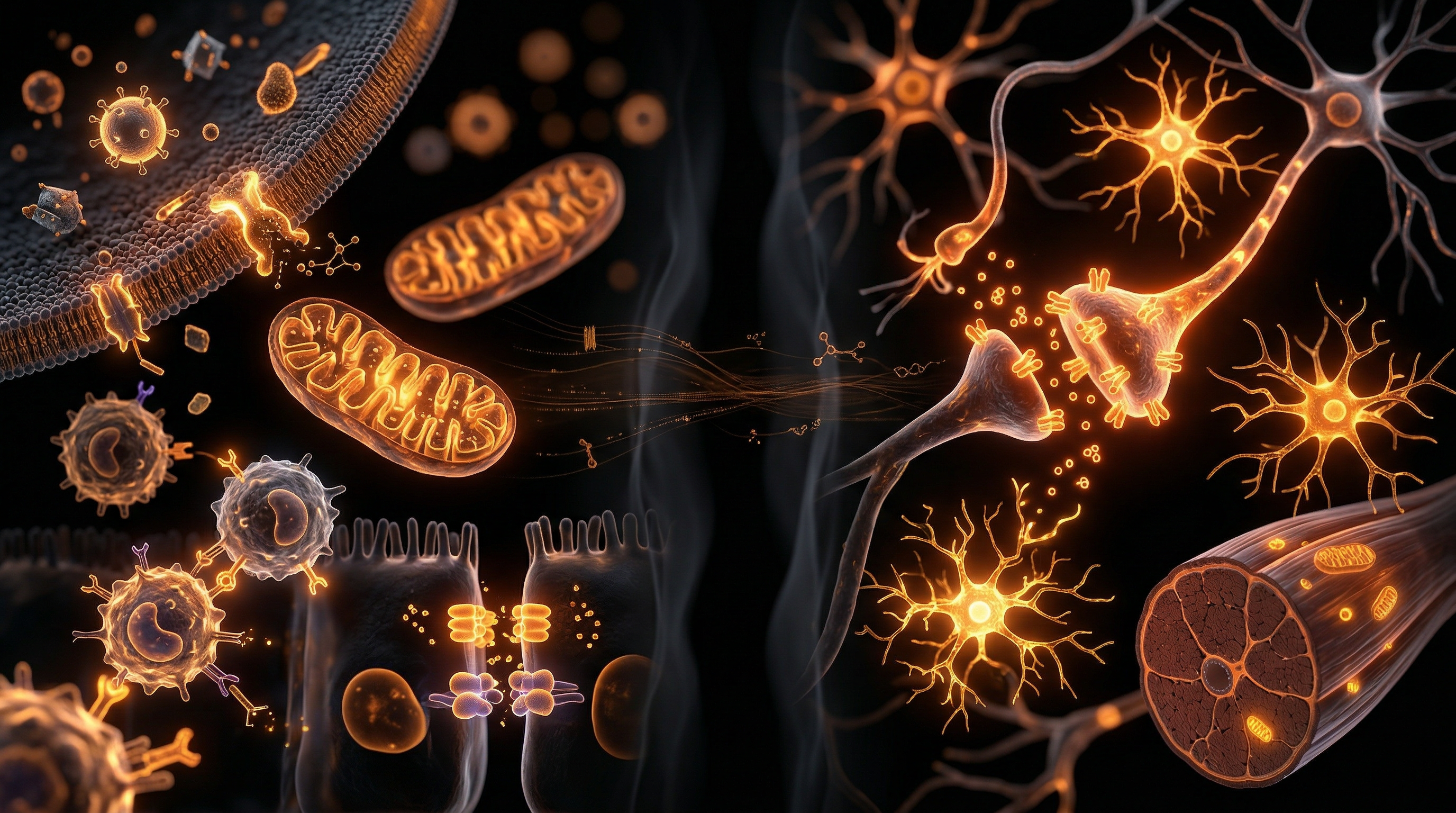
The "void" in NHS diagnostics exists because standard blood tests—Full Blood Count (FBC), Urea and Electrolytes (U&E), and Liver Function Tests (LFT)—only detect organ failure or acute infection. They do not look at the Mitochondria, where the battle of environmental illness is truly fought.
Mitochondrial Dysfunction: The Energy Crisis
The mitochondria are the engines of our cells, responsible for producing Adenosine Triphosphate (ATP). Most environmental toxins—specifically heavy metals like lead and mercury, and pesticides like glyphosate—are direct mitochondrial poisons.
- Inhibition of the Electron Transport Chain (ETC): Toxins bind to the complexes within the mitochondria, slowing down the production of ATP. When ATP levels drop, the body cannot power its basic functions, leading to the profound, "crashing" fatigue seen in Fibromyalgia patients.
- Oxidative Stress: Toxins increase the production of Reactive Oxygen Species (ROS). When the body’s antioxidant reserves (like Glutathione) are depleted, ROS damage the mitochondrial DNA and the cell membrane, creating a cycle of cellular decay.
The Cell Danger Response (CDR)
Dr. Robert Naviaux’s research into the Cell Danger Response provides the missing link in the Fibromyalgia puzzle. When a cell perceives a threat (chemical, biological, or physical), it shifts its metabolism from "growth and repair" to "defence."
- The cell hardens its membrane to prevent viral entry.
- It ejects ATP into the extracellular space to warn neighbouring cells.
- It halts normal metabolic pathways.
If the environmental threat is never removed, the cell stays stuck in CDR. This state, when scaled across the entire body, produces the exact clinical picture of Fibromyalgia: pain (due to extracellular ATP), fatigue (due to halted metabolism), and sensory hypersensitivity (due to the persistent "threat" state).
Important Callout: Standard NHS blood panels do not measure intracellular ATP or mitochondrial respiration, leaving the CDR entirely invisible to the average General Practitioner.
Environmental Threats and Biological Disruptors
The UK landscape is rife with biological and chemical stressors that the NHS protocols largely ignore. These are not rare "accidental" exposures but part of the fabric of modern British life.
1. Mycotoxins (The Mould Crisis)
The UK has some of the oldest and dampest housing stock in Europe. Stachybotrys, Aspergillus, and Penicillium produce secondary metabolites known as mycotoxins. These are lipophilic (fat-soluble) poisons that can cross the blood-brain barrier.
- Impact: Mycotoxins inhibit protein synthesis and induce severe neuroinflammation. Many patients diagnosed with Fibromyalgia are actually suffering from Chronic Inflammatory Response Syndrome (CIRS) caused by water-damaged buildings.
2. Heavy Metals and Metalloids
Despite the ban on lead-based paints, lead remains in old UK plumbing. Furthermore, the use of Amalgam Fillings (which are 50% mercury) is still standard practice in NHS dentistry.
- Impact: Mercury has a high affinity for the central nervous system. It interferes with the uptake of glutamate, a primary neurotransmitter. Excess glutamate leads to "excitotoxicity"—the literal burning out of neurons, manifesting as chronic pain and anxiety.
3. Glyphosate and Agricultural Runoff
The UK’s reliance on industrial agriculture means that glyphosate, the active ingredient in many herbicides, is pervasive in the food supply and groundwater.
- Impact: Glyphosate acts as a "chelator" of essential minerals (like manganese and magnesium) and disrupts the Shikimate pathway in the human gut microbiome. Since 70% of the immune system resides in the gut, this disruption leads to "Leaky Gut," allowing toxins to enter the bloodstream and trigger systemic inflammation.
4. Endocrine Disrupting Chemicals (EDCs)
Phthalates, bisphenols (BPA/BPS), and "forever chemicals" (PFAS) found in UK consumer products act as hormone mimics.
- Impact: By binding to hormone receptors, these chemicals throw the delicate balance of oestrogen and progesterone into chaos. This is why Fibromyalgia disproportionately affects women; their endocrine systems are more sensitive to the "noise" created by these synthetic mimics.
The Cascade: From Exposure to Disease
The journey from environmental exposure to a Fibromyalgia diagnosis follows a predictable, yet ignored, biological cascade. It is rarely a single event, but a "stacking" of stressors.
Phase 1: The Inciting Event
A patient may have a "genetic predisposition" (such as a poor detoxification profile). They are then hit with an inciting event—a bout of glandular fever (Epstein-Barr Virus), a course of broad-spectrum antibiotics, or moving into a damp London flat.
Phase 2: The Loss of Oral and Barrier Tolerance
As the toxic load increases, the body’s barriers (the gut lining and the blood-brain barrier) become permeable. This is the "Leaky" phase. Substances that should stay in the gut or the blood begin to leak into tissues where they don't belong.
Phase 3: Mast Cell Activation Syndrome (MCAS)
The immune system’s "sentinel" cells, the Mast Cells, become hyper-reactive. They begin degranulating and releasing a cocktail of inflammatory mediators (histamine, leukotrienes) in response to benign stimuli like perfumes, temperature changes, or certain foods.
- The NHS Blind Spot: MCAS symptoms—hives, digestive upset, brain fog, and muscle pain—are almost identical to Fibromyalgia. Yet, MCAS is rarely screened for in the UK.
Phase 4: The Systemic Crash
Eventually, the mitochondria can no longer maintain the energy requirements of the body. The nervous system shifts into a permanent "Sympathetic Dominance" (Fight or Flight). This is where the patient is labelled with Fibromyalgia. They are in a state of biological bankruptcy.
What the Mainstream Narrative Omits
The current NHS narrative suggests that Fibromyalgia is a "functional" disorder, a term that often serves as a polite euphemism for "psychosomatic." This omission of environmental factors is not merely an oversight; it is a structural failure of the Western medical model.
1. The Siloing of Medicine
In the NHS, if you have gut issues, you see a gastroenterologist. If you have joint pain, a rheumatologist. If you have brain fog, a neurologist. However, environmental illness is multi-systemic. No single specialist takes ownership of the "whole body" toxic load.
2. The Toxicology Gap
Medical students in the UK receive minimal training in toxicology or clinical nutrition. They are taught to identify the symptoms of acute poisoning (like swallowing a bottle of bleach) but are not taught to recognise the signs of chronic, low-dose bioaccumulation.
3. The "Normal" Range Fallacy
The NHS relies on "Reference Ranges" for blood tests, which are based on the average of the population. However, as the UK population becomes increasingly unwell, the "average" becomes a poor marker for "optimal." A patient can have "normal" thyroid levels or "normal" iron levels while being in a state of functional deficiency that causes profound symptoms.
4. The Pharmaceutical Bias
The standard NHS treatment for Fibromyalgia involves Amitriptyline, Duloxetine, or Pregabalin. These drugs are designed to dampen the nervous system's response to pain. They do absolutely nothing to remove the heavy metals or mycotoxins that may be irritating the nerves in the first place. In many cases, these drugs add to the liver’s metabolic burden, further filling the "toxic bucket."
The UK Context
The "Diagnostic Void" in the United Kingdom is exacerbated by specific institutional and economic factors.
NICE Guidelines and the Shift in CFS/ME
For decades, the National Institute for Health and Care Excellence (NICE) recommended Graded Exercise Therapy (GET) and Cognitive Behavioural Therapy (CBT) for fatigue-related illnesses. This was based on the flawed "Biopsychosocial Model," which suggested that patients were simply "fearing" exercise and needed to be de-conditioned. In 2021, NICE finally updated its guidelines to remove GET, acknowledging that it caused harm (Post-Exertional Malaise). While this was a victory, the guidelines for Fibromyalgia (CG120) still lean heavily toward "psychological support" and "pain management" rather than investigative biology.
The Postcode Lottery of Environmental Care
There are virtually no dedicated Environmental Medicine clinics within the NHS. A patient suspected of having heavy metal toxicity or mould illness must often spend thousands of pounds in the private sector for functional testing (such as Great Plains or Genoa Diagnostics). This creates a two-tier system where only the wealthy can afford to find the root cause of their "Fibromyalgia," while the rest are left with a prescription for antidepressants.
The Industrial Heritage and Housing Crisis
The UK’s history as the cradle of the Industrial Revolution means our soil and urban environments are heavily contaminated with legacy pollutants. Combined with a modern housing crisis where landlords often ignore "black mould," the British public is uniquely exposed to the very triggers the NHS refuses to test for.
Protective Measures and Recovery Protocols
If the NHS will not provide the map out of the Diagnostic Void, patients and practitioners must look toward Functional Medicine and Bio-Regulatory approaches. Recovery from environmental illness requires a systematic de-escalation of the toxic load.
1. Source Removal (The Prime Directive)
You cannot heal in the same environment that made you sick.
- Mould Remediation: If a home has a damp problem, it must be professionally remediated. Air purifiers with HEPA and VOC filters (like IQAir or Blueair) are essential.
- Clean Water: Utilising Reverse Osmosis (RO) filtration to remove fluoride, chlorine, and heavy metals from UK tap water.
2. Enhancing the "Drainage" Pathways
Before "detoxing," one must ensure the drainage pathways are open. If you mobilise toxins but cannot excrete them, you will experience a "Herxheimer Reaction" (a severe flare of symptoms).
- The Liver: Supporting Phase I and Phase II detoxification with Milk Thistle, NAC (N-Acetyl Cysteine), and TUDCA.
- The Lymphatic System: Dry brushing, rebounding, and manual lymphatic drainage.
- Bowel Regularity: Ensuring at least one to two bowel movements a day to prevent the re-absorption of toxins (autointoxication).
3. Targeted Chelation and Binding
Once drainage is open, agents can be used to "mop up" toxins.
- Activated Charcoal and Bentonite Clay: Effective for binding mycotoxins in the gut.
- Zeolite (Clinoptilolite): A volcanic mineral that can trap heavy metals and environmental chemicals.
- Modified Citrus Pectin: Proven to reduce the total body burden of lead and arsenic.
4. Mitochondrial Resuscitation
To pull a patient out of the "Cell Danger Response," the mitochondria need specific co-factors:
- CoQ10 (Ubiquinol): A vital component of the electron transport chain.
- PQQ (Pyrroloquinoline Quinone): Promotes mitochondrial biogenesis (the creation of new mitochondria).
- Magnesium Malate: Often the most effective form of magnesium for the muscle pain associated with Fibromyalgia.
5. Nervous System Retraining
Because the brain has been "primed" for danger, biological detoxification is often not enough. One must also calm the Vagus Nerve. Techniques such as the Nerva programme, DNRS (Dynamic Neural Retraining System), or simple breathwork help shift the body from Sympathetic (Stress) to Parasympathetic (Rest and Digest) mode.
Summary: Key Takeaways
The label of Fibromyalgia, as applied by the NHS, is frequently a clinical dead-end that fails to account for the modern reality of environmental toxicity.
- The Diagnosis is a Symptom: Fibromyalgia is not a cause; it is a description of a nervous system under siege by external biological stressors.
- The Mitochondrial Engine: Most "unexplained fatigue" is actually mitochondrial dysfunction caused by mycotoxins, heavy metals, and pesticides.
- The NHS Void: Standard UK medical protocols are designed for acute care and are currently blind to the "Total Body Burden" of chronic environmental exposure.
- The Path to Recovery: Healing requires a multi-phased approach: removing the environmental source, opening drainage pathways, binding toxins, and retraining the nervous system out of the "Cell Danger Response."
The British medical establishment must evolve. Until the NHS integrates environmental toxicology into its primary care model, millions will remain trapped in the Diagnostic Void—labelled with a chronic condition they are told they must "manage," when in reality, they are waiting to be cleansed. The era of dismissing environmental illness as "all in the mind" must end; the biology is clear, and the truth is written in our cells.
This article is provided for informational and educational purposes only. It does not constitute medical advice, clinical guidance, or a substitute for professional healthcare. Information reflects cited research at time of publication. Always consult a qualified healthcare professional before acting on any health information.
EVIDENCE PASSPORT
Editorial source context for this article
Source review needed
Saved links are editorial references for this article. They may support specific claims rather than every sentence. Open and assess each source in context. This passport does not independently verify them.
Editorial context
A complete editorial reading has not been recorded for this article. Source links remain available for you to open and assess directly.
Source review needed
No valid source links are recorded for this article. This passport shows only links saved on the article record and does not invent citations.
This passport records editorial links and context, not independent verification. Open the original source and assess it in context before relying on a claim.
Medical Disclaimer
The information in this article is for educational purposes only and does not constitute medical advice, diagnosis, or treatment. Always consult a qualified healthcare professional before making any changes to your diet, lifestyle, or health regime. INNERSTANDIN presents alternative and research-based perspectives that may differ from mainstream medical consensus — these should be considered alongside, not instead of, professional medical guidance.
Read Full DisclaimerContinue the thread
Keep this question moving.
Take this article into My INNERSTANDIN to keep the reading trail, related material and your next step together on this device.