
The NHS Ticking Clock: Immunosenescence in the UK Population
Updated May 2026
An analysis of how accelerated immune ageing is placing an unprecedented burden on British healthcare systems. We examine the socio-economic implications of a population with diminishing thymic function.
Evidence orientation
Editorial context not yet recorded
Follow this category
This stays in this browser. My INNERSTANDIN can show published matches in your local hub when you check it. It does not send email, push, or alert notifications.
Local learning review
A private browser aid for revisiting ideas. It is not an alert or a health recommendation.
Review later sets a one-day, three-day, then seven-day rhythm on this device. Choose it only when you want to revisit this article.
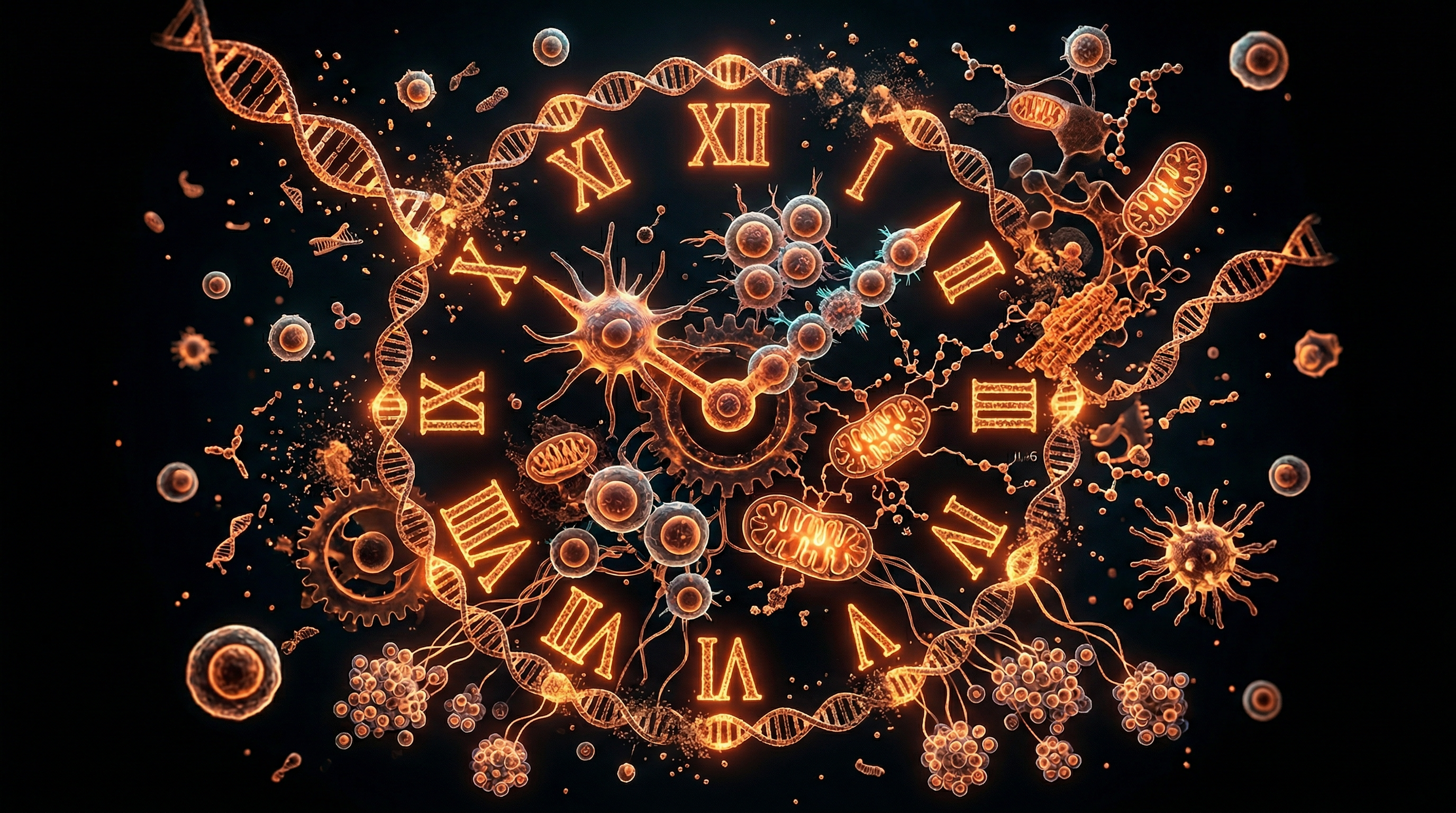
Author: Senior Biological Researcher, INNERSTANDING Date: October 2023 Category: Thymus Gland & Immune Ageing Tags: UK Health, NHS, Demographics, Policy
Overview
The United Kingdom is currently facing a silent biological catastrophe that transcends the headlines of winter crises and industrial action. While the political discourse focuses on wait times and funding allocations, the underlying driver of systemic collapse is rarely mentioned: the rapid biological degradation of the British populace’s immune systems. This phenomenon, known as immunosenescence, represents the progressive decline of the immune system’s efficacy as a function of age, but more alarmingly, it is being accelerated by environmental, nutritional, and systemic factors unique to the modern British lifestyle.
At the heart of this crisis lies the thymus gland, a small organ located in the upper chest that serves as the "schoolroom" for our immune system. In the UK, we are witnessing a phenomenon I term "The Accelerated Involution," where the thymus is shrinking and losing function decades earlier than historically recorded. This creates a population that is chronologically young but immunologically geriatric.
The consequences for the National Health Service (NHS) are existential. We are no longer dealing with a system designed to fix acute injuries; we are managing a population whose internal "defence department" has retired early. This article explores the deep-tissue biology of this decline, the environmental triggers rampant in the British Isles, and the policy failures that have allowed our collective biological resilience to wither.
The Biology — How It Works
To understand the crisis, one must first understand the thymus-immune axis. The immune system is bifurcated into two main arms: the innate (immediate, non-specific) and the adaptive (specialised, memory-based). The adaptive arm relies heavily on T-lymphocytes (T-cells).
The thymus is the primary lymphoid organ responsible for the development and "education" of these T-cells. Progenitor cells migrate from the bone marrow to the thymus, where they undergo a rigorous selection process to ensure they can recognise foreign pathogens without attacking the body's own tissues—a process known as central tolerance.
Statistic: By the age of 50, the average person has lost approximately 80% of their functional thymic epithelial space, replaced instead by non-functional adipose (fat) tissue. In the UK, recent biopsies suggest this "fatty replacement" is occurring faster in younger cohorts than in previous generations.
The Process of Thymic Involution
Thymic involution is the natural shrinking of the gland. It begins shortly after puberty, but its rate is not fixed. The process involves:
- Reduction in Thymic Epithelial Cells (TECs): These cells provide the necessary signals for T-cell maturation.
- Adipocyte Infiltration: The functional lymphoid tissue is replaced by fat.
- Decreased Thymic Output: The production of naïve T-cells—those that have not yet encountered a pathogen—drops precipitously.
When naïve T-cell production falls, the body must rely on the "memory" cells it already has. This is the biological equivalent of a nation trying to fight a modern war with a shrinking army of veterans who only know how to fight the last war, with no new recruits being trained for emerging threats.
Mechanisms at the Cellular Level
At the microscopic level, immunosenescence is driven by several interlocking biological failures. Understanding these is crucial to recognising why current NHS protocols are failing to stem the tide of chronic illness.
1. Telomere Attrition and Replicative Senescence
T-cells must divide rapidly to fight infections. However, each division shortens the telomeres—the protective caps on the ends of chromosomes. Once telomeres reach a critical shortness, the cell enters a state of senescence. It doesn't die; instead, it becomes a "zombie cell."
2. The Senescence-Associated Secretory Phenotype (SASP)
Senescent cells are not benign. They secrete a cocktail of pro-inflammatory cytokines, growth factors, and proteases known as SASP. This creates a state of chronic, low-grade systemic inflammation termed "inflammageing."
- IL-6 and TNF-alpha: These specific cytokines are chronically elevated in the ageing British population, contributing to the "brain fog" and fatigue reported by millions.
- T-cell Exhaustion: Constant exposure to these inflammatory signals causes T-cells to express inhibitory receptors (like PD-1), effectively "turning off" their ability to kill virally infected or cancerous cells.
3. Mitochondrial Dysfunction
The "powerhouses" of the immune cells begin to fail. In the UK context, poor metabolic health—driven by high sugar intake and sedentary lifestyles—leads to mitochondrial fragmentation. This prevents T-cells from generating the massive energy surge required for an effective immune response, leading to the "lingering coughs" and "slow recoveries" that now plague the British workforce.
4. Epigenetic Drift
The "software" of our DNA becomes corrupted. Changes in DNA methylation patterns mean that even when the body has the genetic code to fight an illness, the immune cells can no longer "read" the instructions properly.
Environmental Threats and Biological Disruptors
The acceleration of immunosenescence in the UK is not an accident; it is a product of our environment. The British Isles present a unique set of stressors that act as biological catalysts for thymic decay.
The "Grey Sky" Deficiency: Vitamin D3
The UK’s latitude means that for six months of the year, UVB radiation is insufficient for Vitamin D synthesis. Vitamin D3 is not just a vitamin; it is a potent immunomodulatory hormone.
Fact: The VDR (Vitamin D Receptor) is expressed in almost all immune cells, including the thymus. Chronic deficiency, which affects an estimated 60% of the UK population in winter, directly accelerates thymic atrophy.
Ultra-Processed Foods (UPF) and Glycation
The UK has the highest consumption of ultra-processed foods in Europe. These foods are rich in Advanced Glycation End-products (AGEs).
- AGEs cross-link with the collagen in the thymus, physically hardening the organ.
- High blood sugar levels lead to the glycation of immune receptors, rendering them "blind" to pathogens.
Air Pollution and Particulate Matter (PM2.5)
In major UK hubs like London, Birmingham, and Manchester, PM2.5 levels frequently exceed WHO guidelines. These micro-particles are small enough to enter the bloodstream, where they trigger a constant, unnecessary innate immune response. This "distraction" drains the metabolic reserves of the thymus, forcing it into premature senescence.
Endocrine Disruptors (EDCs)
The UK’s water and food supply contain significant levels of phthalates and bisphenols. These chemicals mimic oestrogen and interfere with the androgen receptors in the thymus. Since the thymus is highly sensitive to sex hormones, this chemical interference triggers early involution.
The Cascade: From Exposure to Disease
What does a population with a failing thymus look like? It doesn't just look like "getting old"; it looks like a systemic collapse of public health.
1. The Rise of Autoimmunity
When the thymus fails to properly "screen" T-cells, autoreactive cells—those that attack the body's own tissues—leak into the peripheral blood. This explains the explosion of autoimmune conditions in the UK, from Hashimoto’s thyroiditis to Rheumatoid Arthritis. The NHS is currently seeing a 3-9% annual increase in autoimmune diagnoses.
2. Cancer Surveillance Failure
The immune system's primary job is not just fighting bacteria; it is immunosurveillance—finding and killing mutated cells before they become tumours. A senescent immune system lacks the "killer" CD8+ T-cells necessary for this task. The UK's rising cancer rates in the under-50s are a direct reflection of diminished thymic surveillance.
3. The "Tripledemic" and Infectious Vulnerability
We saw this clearly during the 2020-2022 period. Those with "older" immune systems, regardless of their chronological age, were most at risk. In the UK, the phenomenon of the "Tripledemic" (Flu, COVID-19, and RSV) is now an annual threat because the collective T-cell repertoire of the population has become too narrow to adapt to shifting viral strains.
4. The Metabolic Feedback Loop
Immunosenescence drives insulin resistance, and insulin resistance drives further immunosenescence. This feedback loop is the primary reason why Type 2 Diabetes is now the largest single expenditure for the NHS.
What the Mainstream Narrative Omits
The mainstream health discourse in the UK focuses on "lifestyle choices" or "genetic bad luck." However, as researchers at INNERSTANDING, we must expose the truths that the institutionalised medical complex ignores.
The "Sickness Industry" Profitability
There is no "Thymus Clinic" in the NHS. Why? Because thymic regeneration—using cheap, off-patent substances like zinc, or lifestyle interventions like prolonged fasting—does not generate the same revenue as lifelong biological drugs for autoimmune disease. The system is designed for chronic disease management, not biological restoration.
The Iatrogenic Factor
Certain common medical interventions in the UK may actually hasten immune ageing. For example:
- Overuse of Antibiotics: By decimating the gut microbiome, we remove the primary training ground for the immune system, leading to a "lazy" and eventually senescent thymus.
- Statins and Mitochondria: While controversial, some research suggests that aggressive statin use can interfere with mitochondrial function in T-cells, potentially trading cardiovascular risk for immune risk.
The Failure of the "One-Size-Fits-All" Policy
Public health policy in the UK treats an 80-year-old and a 30-year-old as biologically distinct, yet ignores the fact that many 30-year-olds now possess the T-cell profile of an octogenarian. The refusal to implement biological age testing (such as T-cell receptor excision circle or TREC analysis) on the NHS means we are treating the wrong age.
The UK Context
The UK is uniquely positioned for an immunosenescence catastrophe due to the structure of the NHS and our specific demographic shifts.
The Demographic "Silver Tsunami"
The UK population is ageing, but the "health span" (the years lived in good health) is decreasing. We are keeping people alive longer through pharmacological intervention, but their immune systems are functionally "dead." This creates a massive cohort of "high-frequency users" of the NHS—people who require constant hospitalisation for minor infections because their thymus can no longer mount a response.
The Cost of Multi-morbidity
The NHS was built on the model of the "single disease." You have a broken leg; we fix it. You have pneumonia; we give you penicillin. But immunosenescence causes multi-morbidity—the simultaneous presence of three or more chronic conditions.
- Fiscal Impact: Multi-morbidity accounts for over 70% of the NHS budget.
- Staffing Crisis: The complexity of treating immunosenescent patients leads to burnout among GPs and hospital staff, who feel they are "treading water" against a tide of biological decay.
The "Postcode Lottery" of Biological Age
Research shows a stark divide in thymic health between the affluent South East and the post-industrial North of England.
Fact: A man in Blackpool may reach "immunological exhaustion" 15 years earlier than a man in Richmond, London, due to the cumulative impact of "The English Disease"—a combination of poor diet, lack of Vitamin D, and environmental toxins.
Protective Measures and Recovery Protocols
While the institutional outlook is grim, biological research offers clear pathways for thymic rejuvenation and the reversal of immunosenescence. If the NHS were to adopt these, the "ticking clock" could be slowed.
1. Micronutrient Loading: The "Thymic Trio"
- Zinc: Essential for the function of thymulin, a hormone required for T-cell differentiation. Most UK adults are sub-clinically deficient.
- Vitamin D3 + K2: Must be taken at higher doses than the current "Government RDA" (which is only enough to prevent rickets, not to support the thymus).
- Selenium: A powerful antioxidant that protects the thymus from oxidative stress.
2. Metabolic Autophagy: Prolonged Fasting
Research indicates that prolonged fasting (48–72 hours) can trigger a "reset" of the immune system. It forces the body to recycle old, senescent white blood cells and stimulates the hematopoietic stem cells to produce fresh, naïve T-cells.
3. Thymic Peptides
While not yet mainstream in the UK, the use of Thymosin Alpha-1 (a synthetic version of a natural thymic peptide) has shown incredible results in "waking up" the immune systems of the elderly. This is a frontier of medicine that the UK’s MHRA (Medicines and Healthcare products Regulatory Agency) remains stubbornly hesitant to embrace.
4. Temperature Stress (Saunas and Cold Plunges)
The British tradition of the "bracing walk" has a biological basis. Exposure to cold triggers Heat Shock Proteins (HSPs), which act as molecular chaperones, helping to refold damaged proteins in immune cells and slowing the rate of senescence.
5. Grounding and Circadian Alignment
The disconnection from natural light cycles and the "electrosmog" of modern UK cities disrupts the production of melatonin. Melatonin is not just a sleep hormone; it is a potent protector of the thymus gland. Restoring circadian rhythms is a foundational step in immune recovery.
Summary: Key Takeaways
The crisis facing the NHS is not merely financial or organisational; it is biological. The "ticking clock" is the sound of millions of British thymus glands involuting prematurely.
- Immunosenescence is the root cause: Most chronic diseases overwhelming the NHS are downstream effects of a senescent immune system.
- The Thymus is the Key: This "forgotten organ" is the master regulator of human health span. Its early decay is the primary driver of the UK’s health crisis.
- Environmental Acceleration: The UK’s climate, diet, and pollution levels are uniquely toxic to thymic health.
- Reactive Medicine is Failing: The NHS cannot "prescribe" its way out of this with more drugs; it requires a paradigm shift toward immunological restoration.
- Individual Agency is Required: In the absence of state-led thymic health programmes, citizens must take proactive steps—fasting, supplementation, and metabolic management—to preserve their internal defences.
If we do not address the biological age of the British population, no amount of funding will save the NHS. The clock is ticking, and the alarm is already sounding in our hospitals. It is time we listened to the biology.
This article is provided for informational and educational purposes only. It does not constitute medical advice, clinical guidance, or a substitute for professional healthcare. Information reflects cited research at time of publication. Always consult a qualified healthcare professional before acting on any health information.
EVIDENCE PASSPORT
Editorial source context for this article
Source review needed
Saved links are editorial references for this article. They may support specific claims rather than every sentence. Open and assess each source in context. This passport does not independently verify them.
Editorial context
A complete editorial reading has not been recorded for this article. Source links remain available for you to open and assess directly.
Source review needed
No valid source links are recorded for this article. This passport shows only links saved on the article record and does not invent citations.
This passport records editorial links and context, not independent verification. Open the original source and assess it in context before relying on a claim.
Medical Disclaimer
The information in this article is for educational purposes only and does not constitute medical advice, diagnosis, or treatment. Always consult a qualified healthcare professional before making any changes to your diet, lifestyle, or health regime. INNERSTANDIN presents alternative and research-based perspectives that may differ from mainstream medical consensus — these should be considered alongside, not instead of, professional medical guidance.
Read Full DisclaimerContinue the thread
Keep this question moving.
Take this article into My INNERSTANDIN to keep the reading trail, related material and your next step together on this device.
Explore this in the Body Map
See where this hits your biology. Interactive anatomy, threats, and protective protocols.
Dig deeper in the Library
Free, longform PDF volumes that go beyond headlines into mechanisms and references.