
The Role of Side-Sleeping in Optimal Brain Detoxification
Updated May 2026
Research suggests that lateral sleep positions significantly enhance glymphatic transport efficiency compared to supine or prone positions. Adopting this posture may optimize the clearance of neurotoxic proteins during the night.
Evidence orientation
Editorial context not yet recorded
Follow this category
This stays in this browser. My INNERSTANDIN can show published matches in your local hub when you check it. It does not send email, push, or alert notifications.
Local learning review
A private browser aid for revisiting ideas. It is not an alert or a health recommendation.
Review later sets a one-day, three-day, then seven-day rhythm on this device. Choose it only when you want to revisit this article.
Overview
For decades, the scientific community operated under a fundamental misunderstanding of the human brain’s waste-management capabilities. While every other organ in the human body is serviced by the lymphatic system—a complex network of vessels that drains toxins, metabolic byproducts, and cellular debris—the brain was thought to be an outlier. It was believed that the most metabolically active organ in the body simply recycled its waste or relied on slow, passive diffusion to stay clean. This was a catastrophic oversight in our understanding of neurology.
In 2012, a groundbreaking discovery by Dr. Maiken Nedergaard at the University of Rochester changed the paradigm. She identified the Glymphatic System, a macroscopic waste clearance system that utilises a sub-layer of glial cells to flush the brain. However, the discovery of the system was only the first piece of the puzzle. Subsequent research has revealed that this "brain-washing" mechanism is not a constant process; it is strictly nocturnal, and more importantly, it is highly dependent on sleep posture.
Current bio-imaging data suggest that the lateral (side-sleeping) position is not merely a preference of comfort, but a physiological imperative for neurological health. The efficiency of clearing neurotoxic proteins—specifically amyloid-beta and tau proteins—is significantly enhanced when the head is positioned laterally. In contrast, sleeping on one’s back (supine) or stomach (prone) appears to impede this vital drainage, potentially leading to a "congested brain."
As we face a global epidemic of neurodegenerative diseases, from Alzheimer’s to Parkinson’s, we must look beyond the pharmaceutical interventions that have failed for forty years. We must look at the mechanics of the night. This article explores why the way you lie in bed may be the most critical biohack for long-term cognitive preservation.
Fact: The glymphatic system is up to 90% more active during sleep than during wakefulness, as the brain's interstitial space increases by 60% to allow fluid to flow.
##
The Biology — How It Works
To understand why side-sleeping is superior, one must first grasp the mechanics of the Glymphatic System. The term "glymphatic" is a portmanteau of "glial" (the support cells of the brain) and "lymphatic." This system functions as a hydraulic plumbing network that hitches a ride on the brain’s blood vessels.
The Perivascular Space
The brain is encased in a protective barrier, but it is also highly vascularised. Surrounding these blood vessels is a small gap known as the Virchow-Robin space or the perivascular space. It is within these tunnels that cerebrospinal fluid (CSF) is pumped. Under the influence of the arterial pulse, CSF is driven into the brain tissue, where it mixes with the interstitial fluid (ISF)—the fluid surrounding individual brain cells.
The Rinse Cycle
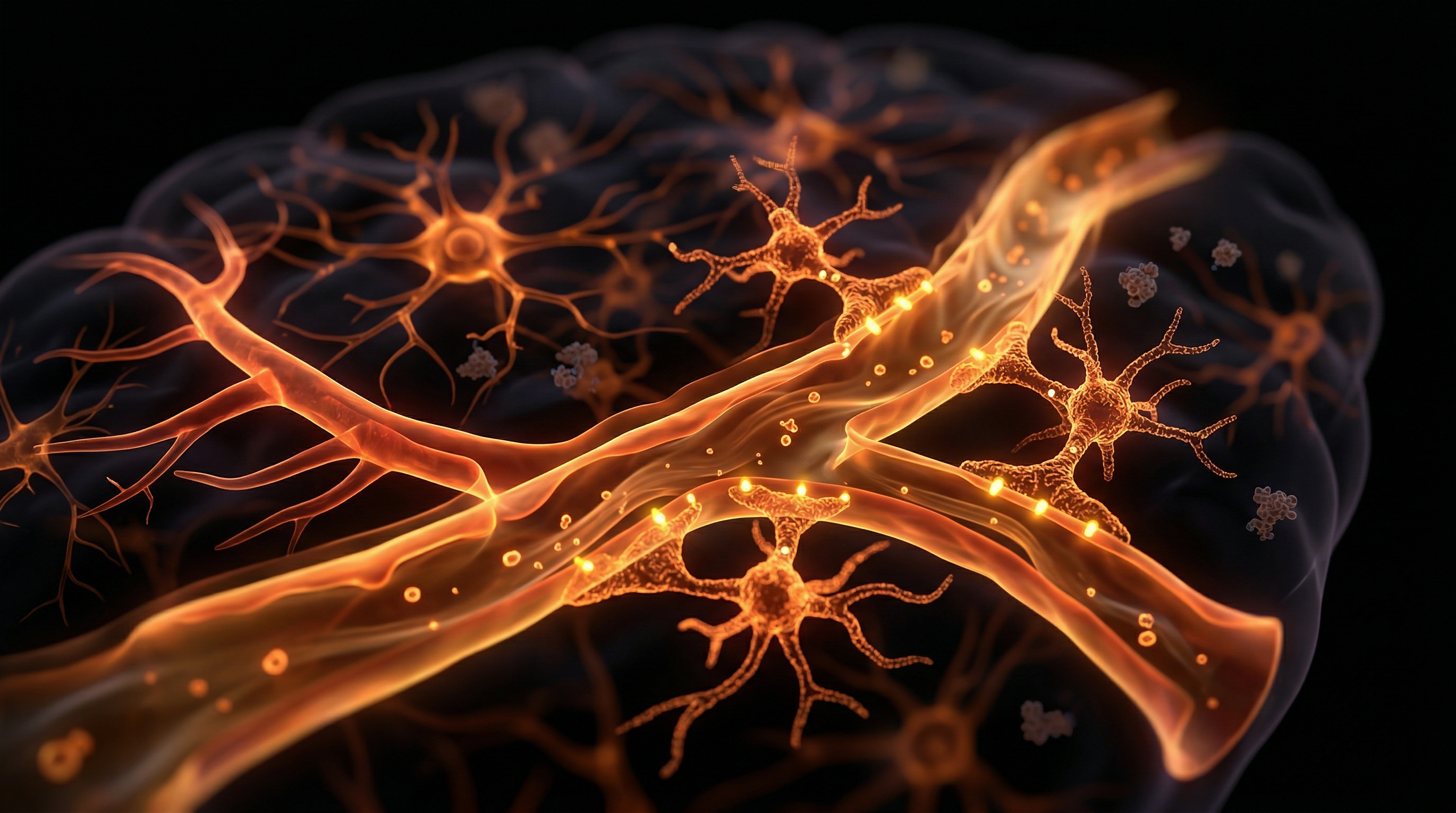
As we enter deep, non-REM sleep, the brain undergoes a remarkable physical transformation. The astrocytes (star-shaped glial cells) shrink in size. This shrinkage creates larger channels between the neurons. The CSF then surges through these widened gaps, "scrubbing" the cells and picking up metabolic waste products like amyloid-beta, which are the primary constituents of the plaques found in Alzheimer’s patients. This toxic "sludge" is then pushed toward the veins and eventually exits the cranium via the meningeal lymphatic vessels located in the dura mater, draining down into the deep cervical lymph nodes in the neck.
The Lateral Advantage
Why does posture matter? The movement of CSF is not merely powered by the heartbeat; it is influenced by gravitational pressure and venous return. Research utilizing Dynamic Contrast-Enhanced MRI has demonstrated that the lateral position maximises the transport of CSF through the brain.
In the lateral position, the heart is positioned in a way that facilitates a more efficient blood flow and, consequently, a more potent arterial pulse to drive the glymphatic pump. Furthermore, the drainage of the "dirty" fluid out of the brain into the neck is most unobstructed when lying on the side. When supine, the vessels at the back of the neck can become slightly compressed by the weight of the head, and in the prone position, the necessary turning of the neck restricts the very pathways meant to evacuate toxins.
##
Mechanisms at the Cellular Level
At the heart of the glymphatic pump is a specific protein channel called Aquaporin-4 (AQP4). These channels are located on the astrocytic endfeet, which wrap around the brain’s vasculature like insulation on a pipe.
The Role of Aquaporin-4 (AQP4)
AQP4 acts as a gateway, allowing CSF to move from the perivascular spaces into the brain parenchyma. Without these channels, the fluid would simply bounce off the blood vessels and never reach the neurons that need cleaning.
- In a healthy brain, AQP4 is "polarised," meaning it is highly concentrated at the endfeet near the vessels.
- In states of chronic inflammation or poor sleep, these channels become "depolarised," spreading out across the cell body and losing their efficiency.
Interstitial Volume Expansion
During wakefulness, the brain is packed tight. Neurons are firing, and the space for fluid movement is minimal. This is a survival mechanism; the brain needs to be "switched on" for cognition. However, this creates a build-up of adenosine and other metabolites. When we transition into sleep, the noradrenergic system (the system responsible for arousal) shuts down. The resulting drop in norepinephrine causes the brain cells to contract, increasing the interstitial volume by approximately 60%.
Convective Flow vs. Diffusion
The mainstream view once held that waste was removed via simple diffusion—the slow movement of molecules from high to low concentration. We now know the brain uses convective flow (or bulk flow). Think of the difference between a sponge sitting in a puddle (diffusion) and a sponge being held under a running tap (convective flow). The lateral sleeping position optimises the pressure gradients required for this "running tap" effect, ensuring that the fluid moves with enough force to dislodge proteins that have begun to aggregate.
##
Environmental Threats and Biological Disruptors
While posture is a vital mechanical factor, the glymphatic system does not operate in a vacuum. We live in an increasingly hostile environment that actively degrades our brain’s ability to detoxify, regardless of how we sleep.
Heavy Metal Accumulation
The modern environment is saturated with neurotoxic metals, most notably aluminium and mercury. Aluminium, often found in cookware, deodorants, and as an adjuvant in certain medical interventions, has a high affinity for the brain. It acts as a "pro-oxidant," causing the very proteins we are trying to flush out—amyloid-beta—to clump together more tightly. These "sticky" proteins are much harder for the glymphatic system to move, even in the optimal lateral position.
Fluoride and the Pineal Gland
The pineal gland, located outside the blood-brain barrier, is responsible for the production of melatonin. Melatonin is not just a sleep hormone; it is a master antioxidant that triggers the glymphatic "wash cycle." The UK’s widespread water fluoridation and the prevalence of fluoride in dental products lead to the calcification of the pineal gland. A calcified pineal gland produces less melatonin, meaning the signal to start the "rinse cycle" is weakened, leaving the brain in a state of permanent metabolic "stagnation."
Electromagnetic Fields (EMFs)
The rise of 5G, Wi-Fi, and pervasive cellular signals has introduced a new disruptor. Research indicates that pulsed EMFs can interfere with the voltage-gated calcium channels (VGCCs) in our cells. This leads to an influx of calcium into the cell, triggering inflammatory cascades and potentially altering the permeability of the blood-brain barrier (BBB). When the BBB is compromised, more toxins enter the brain, overwhelming the glymphatic system's capacity to keep up.
Blue Light and Circadian Rhythm
The "blue light" emitted from smartphones and LED bulbs suppresses the natural rise of melatonin in the evening. This delays the onset of the deep sleep phases where glymphatic clearance is most active. Even if a person sleeps on their side, if they have been staring at a screen until 11 PM, their brain may never reach the requisite depth of sleep to activate the AQP4 channels effectively.
##
The Cascade: From Exposure to Disease
What happens when the glymphatic system fails? The result is not immediate, but a slow, progressive decline that many mistake for "normal ageing." This is the Neuro-Degenerative Cascade.
The Accumulation of "Sludge"
When waste clearance is reduced by even 10-20% due to poor posture or environmental toxins, a surplus of metabolic debris remains in the brain every morning.
- Amyloid-beta begins to form oligomers—small, toxic clusters that interfere with synaptic communication.
- Tau proteins, which usually stabilise the internal structure of neurons, begin to misfold and create "neurofibrillary tangles."
The Inflammatory Loop
The presence of these proteins triggers the brain’s immune cells, the microglia. Initially, the microglia try to eat the plaques (phagocytosis). However, if the glymphatic "drain" is clogged, the microglia become chronically activated. They begin releasing pro-inflammatory cytokines (like TNF-alpha and IL-1beta). This chronic inflammation further damages the AQP4 channels on the astrocytes, creating a vicious cycle where inflammation leads to less drainage, which leads to more protein accumulation, which leads to more inflammation.
The Path to Alzheimer’s and Parkinson’s
By the time a patient shows symptoms of memory loss (Alzheimer’s) or motor tremors (Parkinson’s), the glymphatic system has likely been failing for 20 to 30 years. Parkinson’s, in particular, is linked to the accumulation of alpha-synuclein in the substantia nigra. Recent studies suggest that alpha-synuclein is also cleared via the glymphatic pathway.
Statistic: Individuals who consistently report poor sleep quality or "supine-dominant" sleep have a significantly higher "amyloid burden" in the precuneus and hippocampus—the areas of the brain first affected by Alzheimer's.
Chronic Traumatic Encephalopathy (CTE)
Even in younger individuals, such as athletes, glymphatic failure is a major concern. After a concussion, the AQP4 channels can remain displaced for weeks. If the individual does not prioritise lateral sleep and "brain rest," the proteins released by the injury can stagnate, leading to the early-onset dementia known as CTE.
##
What the Mainstream Narrative Omits
The discovery of the glymphatic system and its postural dependence should have been front-page news. It should have fundamentally altered the advice given in every GP surgery. Yet, it remains relegated to the fringes of "biohacking." Why?
The Pharmaceutical Bias
The current medical-industrial complex is built on the "Pill for an Ill" model. There is no profit to be made in advising the public to sleep on their side with a supportive pillow. The primary focus of Alzheimer’s research has been the development of drugs that "mop up" amyloid-beta after it has already formed plaques. These drugs (like aducanumab) have seen questionable success and come with significant side effects. The mainstream narrative ignores preventative mechanics in favour of post-symptomatic chemistry.
The Ignoring of the "Clogged Pipe"
Modern neurology treats the brain as a computer (electrical) rather than a biological organ (hydraulic). By ignoring the hydraulic nature of the brain, doctors fail to address the "plumbing" issues. If your house was flooding because the drains were blocked, you wouldn't keep buying new carpets (medication); you would unblock the drains. The lateral sleep position is the most basic "drain-unblocking" tool we possess.
The Suppression of Environmental Factors
Discussing the role of fluoride or EMFs in neurological health is often dismissed as "fringe." This is despite clear evidence that the glymphatic system is highly sensitive to the chemical and electrical environment. To admit that our modern infrastructure—from the water we drink to the signals in the air—is impeding our brain's ability to clean itself would require a systemic overhaul that the powers-to-be are unwilling to undertake.
The "Mattress Industry" Influence
Much of the mattress industry focuses on "comfort" and "plushness," often failing to provide the structural support necessary to maintain a neutral spinal and lateral position. Soft mattresses often cause the body to "hammock," forcing the sleeper onto their back or into a twisted prone position, which kinks the "hoses" of the neck.
##
The UK Context
In the United Kingdom, the implications of glymphatic research are particularly dire. The UK is currently facing a "dementia timebomb," with Alzheimer’s Research UK estimating that one in three people born today will develop dementia in their lifetime.
The NHS Burden
The NHS is currently overwhelmed by the costs of treating neurodegenerative diseases. Despite this, there is almost no public health messaging regarding sleep hygiene or postural optimisation. The British "stiff upper lip" attitude toward sleep—where "getting by" on six hours of poor-quality sleep is seen as a badge of honour—is a cultural barrier to neurological health.
UK Environmental Factors
- Water Fluoridation: Large swathes of the UK, including the West Midlands and parts of the North East, have artificially fluoridated water. This, combined with the high tea consumption in the UK (tea is naturally high in fluoride), puts the British pineal gland at significant risk.
- Sedentary Lifestyle: The UK has one of the highest rates of sedentary behaviour in Europe. Physical activity is known to "prime" the glymphatic system by increasing heart rate and promoting vascular health.
- The "British House": Many older UK homes suffer from damp and mould. Exposure to mycotoxins from mould is a known disruptor of the blood-brain barrier and a significant load on the glymphatic system.
Research Institutions
While the UK is home to world-class institutions like the UCL Queen Square Institute of Neurology, much of the focus remains on genetics. While genetics load the gun, environment and lifestyle pull the trigger. There is a desperate need for a UK-wide initiative that focuses on the mechanical prevention of cognitive decline.
##
Protective Measures and Recovery Protocols
Knowing that the lateral position is essential is only the first step. To truly optimise brain detoxification, one must adopt a holistic protocol that addresses both the mechanics of sleep and the environmental factors that impede it.
1. Mastering the Lateral Position
Simply lying on your side is not enough; you must maintain spinal neutrality.
- The Pillow Factor: Your pillow should be exactly as thick as the distance from your neck to the edge of your shoulder. This ensures that the head does not tilt up or down, which would compress the jugular veins or cervical lymphatics.
- Body Pillows: Use a "long" pillow between the knees and arms. This prevents the body from rolling into the prone (stomach) position during the night.
- The "Left-Side" Advantage: While both sides are beneficial, sleeping on the left side is often recommended for those with digestive issues (GERD), as it keeps the stomach below the oesophagus. Some research also suggests left-side sleeping may slightly improve venous return to the heart.
2. Environmental Detoxification
- Fluoride Filtration: If you live in a fluoridated area, use a high-quality water filter (Reverse Osmosis or Bone Char) that specifically removes fluoride. Switch to fluoride-free toothpaste.
- EMF Mitigation: Switch off your Wi-Fi router at night. Keep your smartphone in another room or on "Aeroplane Mode." The brain's electrical environment must be quiet for the glymphatic pump to function at full capacity.
- Heavy Metal Chelation: Consider natural binders like Chlorella or Zeolite (under supervision) to help clear the systemic load of heavy metals, making the "sludge" in the brain easier to flush.
3. Supplementation and Priming
- Melatonin/Tart Cherry: If your circadian rhythm is disrupted, consider 3mg of melatonin or tart cherry juice 90 minutes before bed to signal the glymphatic "start."
- Magnesium Bisglycinate: Magnesium is essential for relaxing the muscles and the nervous system, allowing for the deep non-REM sleep where glymphatic flow peaks.
- Omega-3 Fatty Acids (DHA/EPA): These are vital for maintaining the fluidity of cell membranes and the health of the AQP4 channels.
4. Temperature Control
The brain needs to cool down to enter deep sleep. The optimal room temperature for glymphatic clearance is approximately 18°C (64°F). A hot room keeps the heart rate elevated and prevents the transition into the "rinse cycle."
5. Mouth Taping
While controversial in the mainstream, "mouth taping" with porous surgical tape ensures nasal breathing. Nasal breathing increases Nitric Oxide production, which is a vasodilator. This helps open up the vessels in the brain, facilitating better CSF flow. It also prevents sleep apnoea—a condition that effectively "shuts down" the glymphatic system due to oxygen deprivation.
##
Summary: Key Takeaways
The science is clear, even if the public health warnings are absent. The brain does not have a "delete" button for toxins; it has a drainage system. If we do not respect the mechanics of that system, we face an inevitable accumulation of neurotoxic waste.
- The Glymphatic System is the brain's unique waste-clearance network, primarily active during deep sleep.
- Lateral Sleeping is the most efficient posture for brain detoxification, as it optimises the pressure and flow of cerebrospinal fluid.
- Aquaporin-4 (AQP4) channels are the cellular pumps that drive this "rinse cycle"; they are damaged by inflammation and environmental toxins.
- Environmental Disruptors like fluoride, aluminium, and EMFs act as "clogs" in the system, increasing the risk of Alzheimer's and Parkinson's.
- The UK faces a specific crisis due to water fluoridation, lifestyle factors, and a lack of preventative health focus.
- Optimisation requires a combination of correct postural support (neutral spine lateral), environmental cleaning, and circadian rhythm management.
We must stop viewing sleep as a passive state of "doing nothing." It is an active, hydraulic, and vital process of biochemical purification. By simply changing how we lie in the dark, we can change the trajectory of our cognitive future. The "brain-wash" is not a luxury; it is a necessity for the survival of the human mind in a toxic world.
This article is provided for informational and educational purposes only. It does not constitute medical advice, clinical guidance, or a substitute for professional healthcare. Information reflects cited research at time of publication. Always consult a qualified healthcare professional before acting on any health information.
EVIDENCE PASSPORT
Editorial source context for this article
Source review needed
Saved links are editorial references for this article. They may support specific claims rather than every sentence. Open and assess each source in context. This passport does not independently verify them.
Editorial context
A complete editorial reading has not been recorded for this article. Source links remain available for you to open and assess directly.
Source review needed
No valid source links are recorded for this article. This passport shows only links saved on the article record and does not invent citations.
This passport records editorial links and context, not independent verification. Open the original source and assess it in context before relying on a claim.
Medical Disclaimer
The information in this article is for educational purposes only and does not constitute medical advice, diagnosis, or treatment. Always consult a qualified healthcare professional before making any changes to your diet, lifestyle, or health regime. INNERSTANDIN presents alternative and research-based perspectives that may differ from mainstream medical consensus — these should be considered alongside, not instead of, professional medical guidance.
Read Full DisclaimerContinue the thread
Keep this question moving.
Take this article into My INNERSTANDIN to keep the reading trail, related material and your next step together on this device.
Explore this in the Body Map
See where this hits your biology. Interactive anatomy, threats, and protective protocols.
Dig deeper in the Library
Free, longform PDF volumes that go beyond headlines into mechanisms and references.