
The Thermal Illusion: Why UK ICNIRP Guidelines Fail the Biological Reality
Published April 2026
A critique of the ICNIRP safety guidelines used in the UK, arguing that the thermal-only model ignores well-documented non-thermal biological effects.
Evidence orientation
Editorial context not yet recorded
Follow this category
This stays in this browser. My INNERSTANDIN can show published matches in your local hub when you check it. It does not send email, push, or alert notifications.
Local learning review
A private browser aid for revisiting ideas. It is not an alert or a health recommendation.
Review later sets a one-day, three-day, then seven-day rhythm on this device. Choose it only when you want to revisit this article.
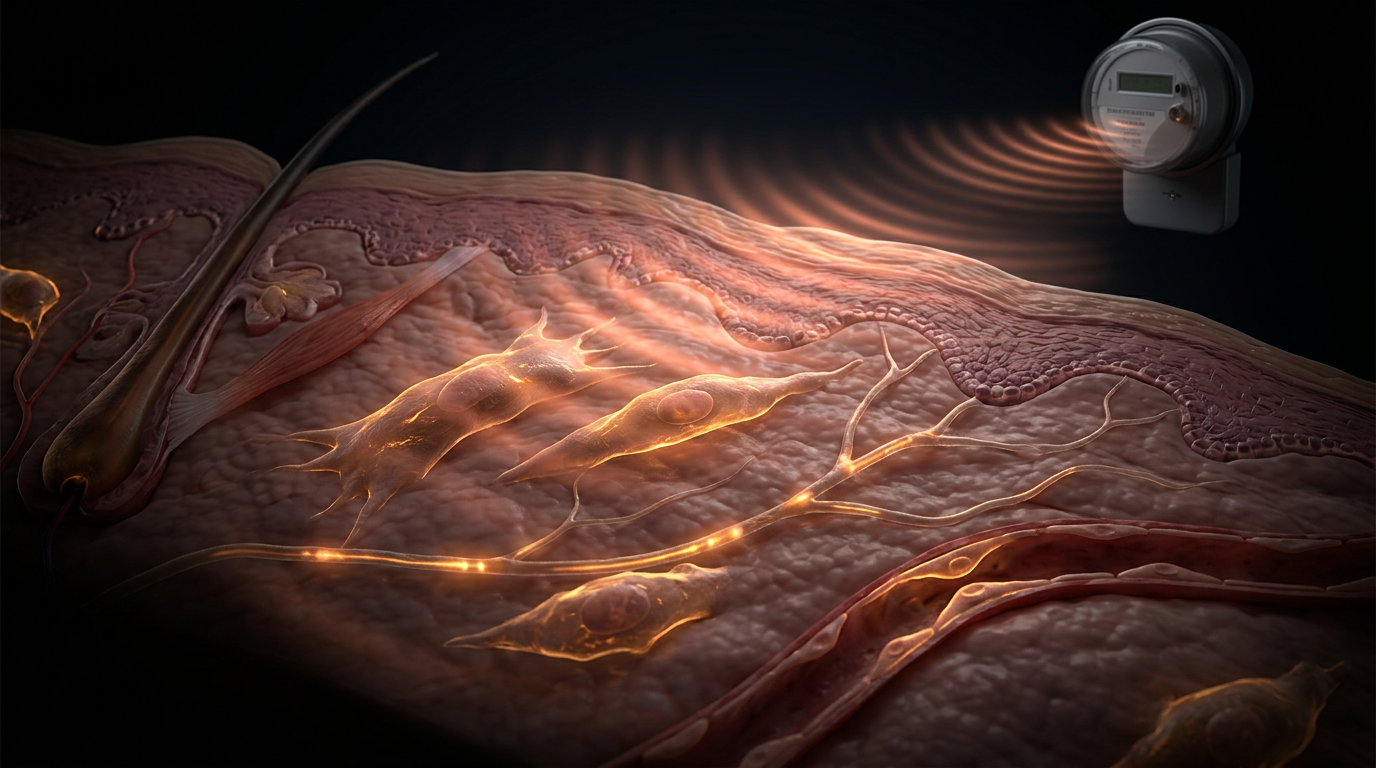
The Thermal Illusion: Why UK ICNIRP Guidelines Fail the Biological Reality. The regulation of smart meters in the United Kingdom is governed by guidelines set by the International Commission on Non-Ionizing Radiation Protection (ICNIRP). These guidelines are the bedrock upon which the wireless industry and Public Health England stand. However, there is a fundamental flaw in this regulatory framework: it is based entirely on the 'thermal paradigm.' This article exposes why this physics-based approach fails to account for the biological reality of human health. The Physics vs.
Biology Conflict. The ICNIRP guidelines were established by physicists and engineers, not biologists or medical doctors. They were designed to protect humans from 'short-term, immediate health effects'—specifically, the heating of tissue (the microwave oven effect). If the radiation from a smart meter does not raise your body temperature by one degree Celsius within six minutes, it is deemed 'safe.' However, biology does not operate on such a crude scale. Our bodies are complex electrochemical systems.
Long before tissue cooks, delicate biological processes—such as gene expression, protein folding, and neurotransmitter balance—are disrupted by the non-thermal effects of electromagnetic frequencies. Frequency Modulation and Biological Windows. One of the most significant omissions in the ICNIRP model is the importance of frequency modulation and pulsing. Biology is sensitive to specific 'windows' of frequency. Just as a specific radio station can only be heard when you tune to the right frequency, our cells respond to specific electromagnetic signals.
The sharp, rapid pulses used by smart meters to transmit data fall within these biological windows, triggering responses that a steady, continuous wave would not. By averaging the exposure over time—a common practice in UK safety assessments—regulators hide the high-intensity peaks of radiation that cause the most biological damage. This 'averaging' is like saying a person is safe if they are hit by a bullet, as long as the average force over 24 hours is low. Precautionary Principle in the Smart Era. In many other countries, the precautionary principle has led to much lower exposure limits.
For example, countries like Russia, Italy, and Switzerland have standards that are significantly more stringent than the UK’s ICNIRP-based limits. This reflects an acknowledgment of the non-thermal research. As the UK rolls out its smart grid, the lack of an updated regulatory framework that accounts for the biological mechanisms—like VGCC activation and BBB permeability—leaves the public in a state of 'uninformed consent.' For the discerning adult, the 'thermal illusion' must be shattered. True safety is not defined by the absence of heat, but by the preservation of biological harmony. Recognizing the gap between regulatory policy and independent science is the first step toward personal protection and advocacy for a safer technological future.
This article is provided for informational and educational purposes only. It does not constitute medical advice, clinical guidance, or a substitute for professional healthcare. Information reflects cited research at time of publication. Always consult a qualified healthcare professional before acting on any health information.
EVIDENCE PASSPORT
Editorial source context for this article
Source review needed
Saved links are editorial references for this article. They may support specific claims rather than every sentence. Open and assess each source in context. This passport does not independently verify them.
Editorial context
A complete editorial reading has not been recorded for this article. Source links remain available for you to open and assess directly.
Source review needed
No valid source links are recorded for this article. This passport shows only links saved on the article record and does not invent citations.
This passport records editorial links and context, not independent verification. Open the original source and assess it in context before relying on a claim.
Medical Disclaimer
The information in this article is for educational purposes only and does not constitute medical advice, diagnosis, or treatment. Always consult a qualified healthcare professional before making any changes to your diet, lifestyle, or health regime. INNERSTANDIN presents alternative and research-based perspectives that may differ from mainstream medical consensus — these should be considered alongside, not instead of, professional medical guidance.
Read Full DisclaimerContinue the thread
Keep this question moving.
Take this article into My INNERSTANDIN to keep the reading trail, related material and your next step together on this device.