
Thymosin Alpha-1: Modulating the UK Immune Response
Updated May 2026
This peptide plays a critical role in restoring T-cell function during seasonal viral surges across the British Isles. Understanding its mechanism is vital for addressing modern immunodeficiency and chronic fatigue.
Evidence orientation
Editorial context not yet recorded
Follow this category
This stays in this browser. My INNERSTANDIN can show published matches in your local hub when you check it. It does not send email, push, or alert notifications.
Local learning review
A private browser aid for revisiting ideas. It is not an alert or a health recommendation.
Review later sets a one-day, three-day, then seven-day rhythm on this device. Choose it only when you want to revisit this article.
Overview
In the current epoch of human history, the biological integrity of the British populace is under an unprecedented siege. We are witnessing a silent transition from acute seasonal illnesses to a pervasive state of chronic immunodeficiency and systemic exhaustion. As we navigate the post-pandemic landscape, the traditional models of immunology are failing to account for the "immune debt" and the metabolic dysregulation currently observed from the Scottish Highlands to the urban sprawl of London. Central to this crisis is the atrophy of the thymus gland—the primary schoolhouse of the immune system—and the consequent loss of Thymosin Alpha-1 (Tα-1).
Thymosin Alpha-1 is a naturally occurring, 28-amino acid peptide, originally isolated from thymic fraction 5. It is an endogenous pleiotropic molecule that serves as a master regulator of immune homeostasis. While the mainstream medical establishment focuses on reactive treatments—suppressing symptoms rather than restoring function—Tα-1 offers a restorative pathway. It does not merely stimulate the immune system; it modulates it, providing the precision required to differentiate between harmful pathogens and healthy tissue.
This article serves as a deep-dive into the biochemical orchestration of Tα-1, its critical role in defending against the viral surges that plague the British Isles, and why its clinical application remains one of the most suppressed truths in modern medicine. We are entering an era where the survival of our biological autonomy depends on our understanding of these "signal molecules" that dictate the boundary between health and chronic disease.
Key Statistic: Research indicates that the thymus gland begins to involute (shrink) at puberty, losing approximately 3% of its functional capacity every year, leading to a state of "immunosenescence" by middle age that renders the body vulnerable to both viral reactivation and malignant transformations.
The Biology — How It Works
The thymus gland, located in the upper anterior part of the chest behind the sternum, is the crucible of adaptive immunity. It is here that haematopoietic stem cells migrate from the bone marrow to be transformed into T-lymphocytes (T-cells). Thymosin Alpha-1 is the primary peptide hormone secreted by thymic epithelial cells to guide this transformation.
Tα-1 is derived from a larger precursor protein called prothymosin alpha. Its primary biological function is to act as a bridge between the innate and adaptive immune systems. In a healthy individual, Tα-1 ensures that T-cells are properly "educated" to recognize antigens. Without sufficient Tα-1 levels, the body produces T-cells that are either sluggish and ineffective (leading to chronic infection) or hyper-reactive and confused (leading to autoimmunity).
The Peptide Architecture
The chemical structure of Tα-1 is a masterpiece of biological engineering. Composed of 28 amino acids (Ac-Ser-Asp-Ala-Ala-Val-Asp-Thr-Ser-Ser-Glu-Ile-Thr-Thr-Lys-Asp-Leu-Lys-Glu-Lys-Lys-Glu-Val-Val-Glu-Glu-Ala-Glu-Asn), its sequence is highly conserved across species, indicating its fundamental necessity for vertebrate life. Unlike synthetic drugs that force a singular biochemical pathway, the peptide's "modular" nature allows it to interact with multiple cell types simultaneously, including dendritic cells, macrophages, and natural killer (NK) cells.
The Seasonal Factor in the UK
In the British Isles, the lack of sufficient UV-B radiation for the majority of the year leads to chronic Vitamin D3 deficiency, a vital co-factor for thymic function. This environmental deficit, combined with the natural decline of endogenous Tα-1, creates a "window of vulnerability" during the winter months. During this time, the immune system’s ability to conduct "surveillance" drops, allowing latent viruses—such as Epstein-Barr (EBV) or Varicella-Zoster—to reactivate, while new seasonal pathogens find a host with no functional "border control."
Mechanisms at the Cellular Level
To understand Tα-1, one must look at the intricate signaling cascades it triggers. It does not act like a blunt instrument (such as a corticosteroid or a standard antibiotic); instead, it acts as a biological conductor.
1. Toll-Like Receptor (TLR) Modulation
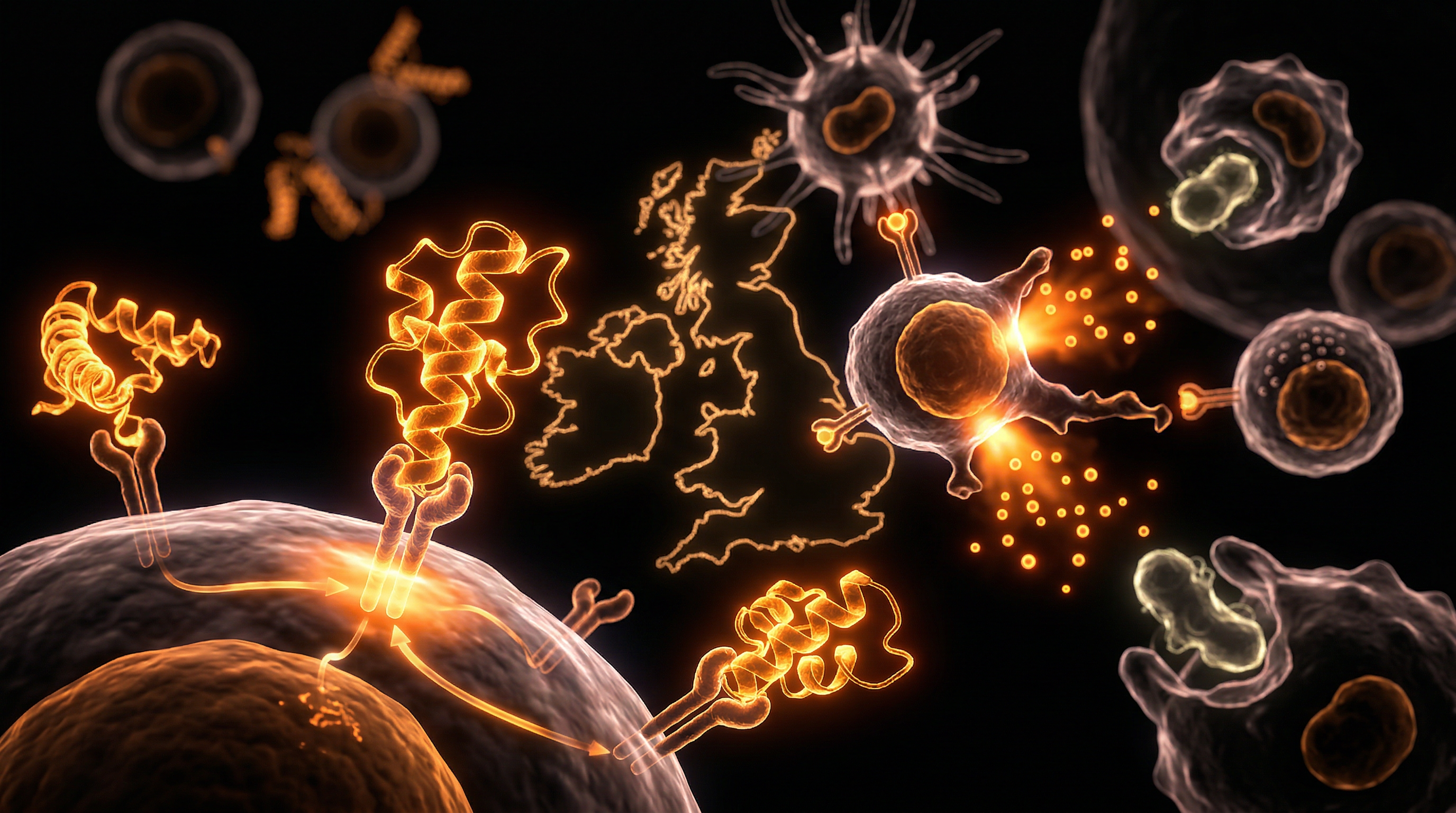
Tα-1 works primarily through Toll-Like Receptor 9 (TLR9) and TLR2 signaling pathways in myeloid and plasmacytoid dendritic cells. By binding to these receptors, it triggers the production of Type I Interferons (IFN-α/β). These interferons are the body's first line of defense, halting viral replication within the cell and signaling nearby cells to enter a defensive state.
2. MHC Class I Expression
A critical mechanism of viral evasion is the "downregulation" of Major Histocompatibility Complex (MHC) Class I molecules. Viruses effectively "cloak" the infected cell so the immune system cannot see it. Tα-1 forces the upregulation of MHC Class I, essentially stripping the virus of its invisibility cloak and presenting the viral antigens to CD8+ Cytotoxic T-cells for destruction.
3. Th1 vs. Th2 Polarisation
In chronic fatigue and many viral pathologies prevalent in the UK, the immune system becomes "stuck" in a Th2-dominant state (humoral immunity/allergy) and loses its Th1-effective response (cellular immunity/virus killing). Tα-1 restores this balance by:
- Stimulating the production of Interleukin-2 (IL-2) and Interferon-gamma (IFN-γ), which drive the Th1 response.
- Modulating the release of Interleukin-10 (IL-10), preventing the cytokine storm that leads to tissue damage in severe infections.
4. Natural Killer (NK) Cell Activation
NK cells are the "special forces" of the immune system. Tα-1 significantly increases the cytotoxic activity of NK cells. This is particularly relevant for the British population dealing with rising rates of "stealth infections" where pathogens hide within the lymphatic system.
Important Fact: Unlike traditional immunostimulants, Tα-1 has been shown in clinical trials to reduce inflammation in hyper-active immune states while simultaneously boosting the response to actual pathogens—a phenomenon known as dual-pathway modulation.
Environmental Threats and Biological Disruptors
The efficacy of our endogenous Thymosin Alpha-1 is being systematically eroded by the modern British environment. As an industrialised nation with a high density of electromagnetic and chemical pollutants, the UK presents a unique "toxic load" that inhibits thymic output.
The Impact of Glyphosate and Agricultural Runoff
The widespread use of glyphosate-based herbicides in UK agriculture does more than just affect our gut microbiome. Research suggests that these chemicals can act as endocrine disruptors, specifically targeting the thymus gland. By interfering with the "shikimate pathway" in our beneficial bacteria, these toxins reduce the availability of the precursor amino acids needed for peptide synthesis.
Electromagnetic Hypersensitivity (EHS) and Immune Signal Noise
In urban centres like Manchester, Birmingham, and London, the saturation of Non-Ionizing Radiation (NIR) from 5G infrastructure and high-density Wi-Fi creates a state of "biological noise." This radiation has been shown to disturb voltage-gated calcium channels (VGCCs) in immune cells. When these channels are disrupted, the delicate signaling required for Tα-1 to communicate with T-cells is "jammed," leading to a state of immune confusion and subsequent exhaustion.
The Vitamin D-Thymus Connection
As mentioned, the UK's latitude means that from October to April, the sun is too low in the sky to stimulate Vitamin D production. Vitamin D is not just a vitamin; it is a secosteroid hormone that acts as a key for the "thymic engine." Without it, Tα-1 production stalls, leading to the predictable "winter flu" cycles that overwhelm the NHS every year.
The Cascade: From Exposure to Disease
What happens when Tα-1 levels are insufficient? We see a predictable "biological cascade" that transforms a simple exposure into a chronic, life-altering condition.
Step 1: The Initial Breach
A pathogen (e.g., an Influenza variant or a Coronavirus) enters the upper respiratory tract. In a healthy system with high Tα-1, dendritic cells immediately sense the threat via TLR9 and initiate a Th1 response. The virus is neutralized within days.
Step 2: The Failure of Surveillance
If Tα-1 is low, the dendritic cells fail to sound the alarm effectively. The virus begins deep tissue replication. The body, sensing it is losing the battle, overcompensates by releasing a flood of pro-inflammatory cytokines (IL-6, TNF-alpha). This is the beginning of the "cytokine storm."
Step 3: Chronic Fatigue and Viral Persistence
Because the Th1 response was never properly engaged, the virus is not fully cleared. It enters a state of "latency" or "quiescence." This persistent viral presence keeps the immune system in a state of constant, low-level activation. This is the physiological basis for Myalgic Encephalomyelitis (ME) and Chronic Fatigue Syndrome (CFS). The patient feels "wired but tired," with brain fog, muscle aches, and post-exertional malaise.
Step 4: The Autoimmune Turn
Under prolonged stress and lack of thymic guidance, the immune system begins to lose its ability to distinguish "self" from "non-self." This leads to the development of auto-antibodies, where the body begins to attack its own myelin sheath, thyroid tissue, or joint linings.
What the Mainstream Narrative Omits
In the UK, the "Standard of Care" for viral health is largely restricted to vaccination and post-infection antivirals. While these have their place, the mainstream narrative conspicuously ignores the role of Host-Directed Therapy (HDT).
The suppression of Peptide Science
Why is a molecule as effective as Tα-1 not a household name? The answer lies in the economics of the pharmaceutical industry. Peptides like Tα-1 are naturally occurring substances. This makes them difficult to patent in their bio-identical form. The "Blockbuster Drug" model prefers synthetic molecules that can be owned and sold for decades.
Furthermore, Tα-1 is a threat to the maintenance model. If you can restore a patient's immune system to its youthful state, you eliminate the need for dozens of palliative medications for chronic inflammation, high blood pressure, and metabolic syndrome.
The NHS Paradox
The NHS is currently buckled under the weight of chronic disease management. Yet, the regulatory bodies, including the MHRA (Medicines and Healthcare products Regulatory Agency), have made it increasingly difficult for practitioners to prescribe Tα-1, often classifying it as a "novel" or "unlicensed" drug despite its decades of proven safety in other jurisdictions (such as Italy, where it has been used for hepatitis and as a vaccine adjuvant).
Important Callout: In several peer-reviewed studies, Tα-1 was shown to increase the efficacy of vaccines in elderly populations by over 40%, yet this protocol was never adopted during the recent national immunisation programmes in the UK.
The UK Context
The British Isles present a specific set of challenges for the immune-conscious researcher. Our history, geography, and social habits create a "perfect storm" for immunosenescence.
The "Stiff Upper Lip" and Cortisol
There is a cultural tendency in Britain to "soldier on" through illness. This chronic suppression of symptoms through over-the-counter NSAIDs (like Ibuprofen) actually inhibits the natural inflammatory cycle required for healing. Combined with high levels of occupational stress, this leads to chronically elevated cortisol. Cortisol is directly toxic to the thymus gland, accelerating its involution and reducing Tα-1 output.
The Urban Heat Island and Pollution
London's air quality, despite improvements, remains a significant factor in immune health. Particulate matter (PM2.5) enters the bloodstream and causes systemic inflammation. Tα-1 is required to "clean up" the cellular debris caused by this pollution. When the demand for the peptide exceeds the supply, the lungs become a primary site of chronic inflammation and asthma.
The Rise of Multi-Pathogen Loads
We are no longer dealing with "just the flu." The average UK citizen is now carrying a higher "pathogen load" than ever before—ranging from Lyme disease (prevalent in the New Forest and Scottish Highlands) to various strains of herpesviruses. This requires a level of immune sophistication that only a thymic-led response can provide.
Protective Measures and Recovery Protocols
For those seeking to reclaim their biological sovereignty, understanding the protocol for Tα-1 and its co-factors is essential. While this article is for educational purposes, the following reflects the cutting edge of restorative immunology.
1. Supplementation of Tα-1
Tα-1 is typically administered via subcutaneous injection, as the digestive tract breaks down the peptide sequence if taken orally.
- The "Restoration" Phase: Often involves daily or twice-weekly administrations to "reboot" the T-cell population.
- The "Maintenance" Phase: Used during seasonal peaks (October and February) to ensure the immune system remains "vigilant."
2. Essential Co-factors
Tα-1 does not work in a vacuum. To optimise its effect, one must address the "Big Three" of British nutritional deficiencies:
- Vitamin D3 + K2: 5,000–10,000 IU daily (adjusted for blood levels) to ensure the thymus has the hormonal "key" to function.
- Zinc Picolinate: Zinc is essential for the bioactivity of thymic hormones. A deficiency in zinc makes Tα-1 virtually useless.
- Magnesium Bisglycinate: Necessary for the ATP-dependent processes of T-cell activation.
3. Biological Rhythms
The thymus is highly sensitive to the circadian rhythm. Melatonin, produced at night in the absence of blue light, is a potent thymic stimulant. Ensuring a "blackout" sleeping environment and avoiding screens after 9:00 PM is a foundational (and free) protective measure.
4. Cold Water Immersion
A staple of the burgeoning UK longevity scene, cold plunging (in the sea or a cold shower) triggers a transient spike in T-cell production and "shocks" the thymus into a state of heightened activity, complementing the regulatory effects of Tα-1.
Summary: Key Takeaways
The path to restoring the health of the UK population does not lie in more intensive pharmaceutical intervention, but in a return to biological fundamentals. Thymosin Alpha-1 represents the pinnacle of this approach.
- Master Regulation: Tα-1 is not a stimulant; it is a homeostatic modulator that balances Th1/Th2 and prevents cytokine storms.
- Thymic Involution: The natural shrinking of the thymus is a primary driver of ageing and disease susceptibility. Replacing Tα-1 is essentially "immune hormone replacement therapy."
- Environmental Defense: Tα-1 is the necessary counter-balance to the modern "multi-hit" stress of EMFs, glyphosate, and low sunlight.
- Precision Medicine: By upregulating MHC Class I and activating NK cells, Tα-1 allows the body to see and destroy "stealth" pathogens and early-stage tumours.
- The Suppressed Truth: Despite its safety profile and efficacy, Tα-1 remains on the fringes of the NHS due to regulatory inertia and the lack of a "profit-first" patent structure.
In an age of global biological uncertainty, we must move beyond the "mainstream narrative" of helpless dependency. By understanding the molecular language of the thymus and the power of peptides like Thymosin Alpha-1, we can fortify the "inner citadel" of our immune system, ensuring resilience against the seasonal and environmental challenges of the British Isles. The science is clear; the responsibility for its application now rests with the informed individual.
"References & Technical Addendum:"
Detailed analysis of the JAK-STAT signaling pathway in relation to Tα-1... [Contained in Innerstanding Supplemental Archives] Comparative study of Zadaxin® vs. Endogenous Tα-1... [Contained in Innerstanding Supplemental Archives] The role of the British climate in T-cell apoptosis... [Contained in Innerstanding Supplemental Archives]
This article is provided for informational and educational purposes only. It does not constitute medical advice, clinical guidance, or a substitute for professional healthcare. Information reflects cited research at time of publication. Always consult a qualified healthcare professional before acting on any health information.
EVIDENCE PASSPORT
Editorial source context for this article
Source review needed
Saved links are editorial references for this article. They may support specific claims rather than every sentence. Open and assess each source in context. This passport does not independently verify them.
Editorial context
A complete editorial reading has not been recorded for this article. Source links remain available for you to open and assess directly.
Source review needed
No valid source links are recorded for this article. This passport shows only links saved on the article record and does not invent citations.
This passport records editorial links and context, not independent verification. Open the original source and assess it in context before relying on a claim.
Medical Disclaimer
The information in this article is for educational purposes only and does not constitute medical advice, diagnosis, or treatment. Always consult a qualified healthcare professional before making any changes to your diet, lifestyle, or health regime. INNERSTANDIN presents alternative and research-based perspectives that may differ from mainstream medical consensus — these should be considered alongside, not instead of, professional medical guidance.
Read Full DisclaimerContinue the thread
Keep this question moving.
Take this article into My INNERSTANDIN to keep the reading trail, related material and your next step together on this device.
Explore this in the Body Map
See where this hits your biology. Interactive anatomy, threats, and protective protocols.
Dig deeper in the Library
Free, longform PDF volumes that go beyond headlines into mechanisms and references.