
Trihalomethanes: The Carcinogenic Byproducts of UK Chlorination
Updated May 2026
Chlorination effectively kills pathogens but creates toxic byproducts when reacting with organic matter in UK reservoirs. This article assesses the long-term cancer risks associated with chronic trihalomethane exposure.
Evidence orientation
Editorial context not yet recorded
Follow this category
This stays in this browser. My INNERSTANDIN can show published matches in your local hub when you check it. It does not send email, push, or alert notifications.
Local learning review
A private browser aid for revisiting ideas. It is not an alert or a health recommendation.
Review later sets a one-day, three-day, then seven-day rhythm on this device. Choose it only when you want to revisit this article.
Overview
For over a century, the United Kingdom has relied upon chlorination as the primary vanguard against waterborne pathogens. Since the pioneering implementation of chlorine disinfection in the late 19th century, the incidence of typhoid, cholera, and dysentery has plummeted, marking one of the greatest triumphs in public health history. However, this victory has come at a hidden, systemic cost. As a senior researcher at INNERSTANDING, my investigation into the biochemical fallout of water treatment reveals a disturbing reality: the very process designed to make our water "safe" is seeding the population with a cocktail of halogenated toxins known as Trihalomethanes (THMs).
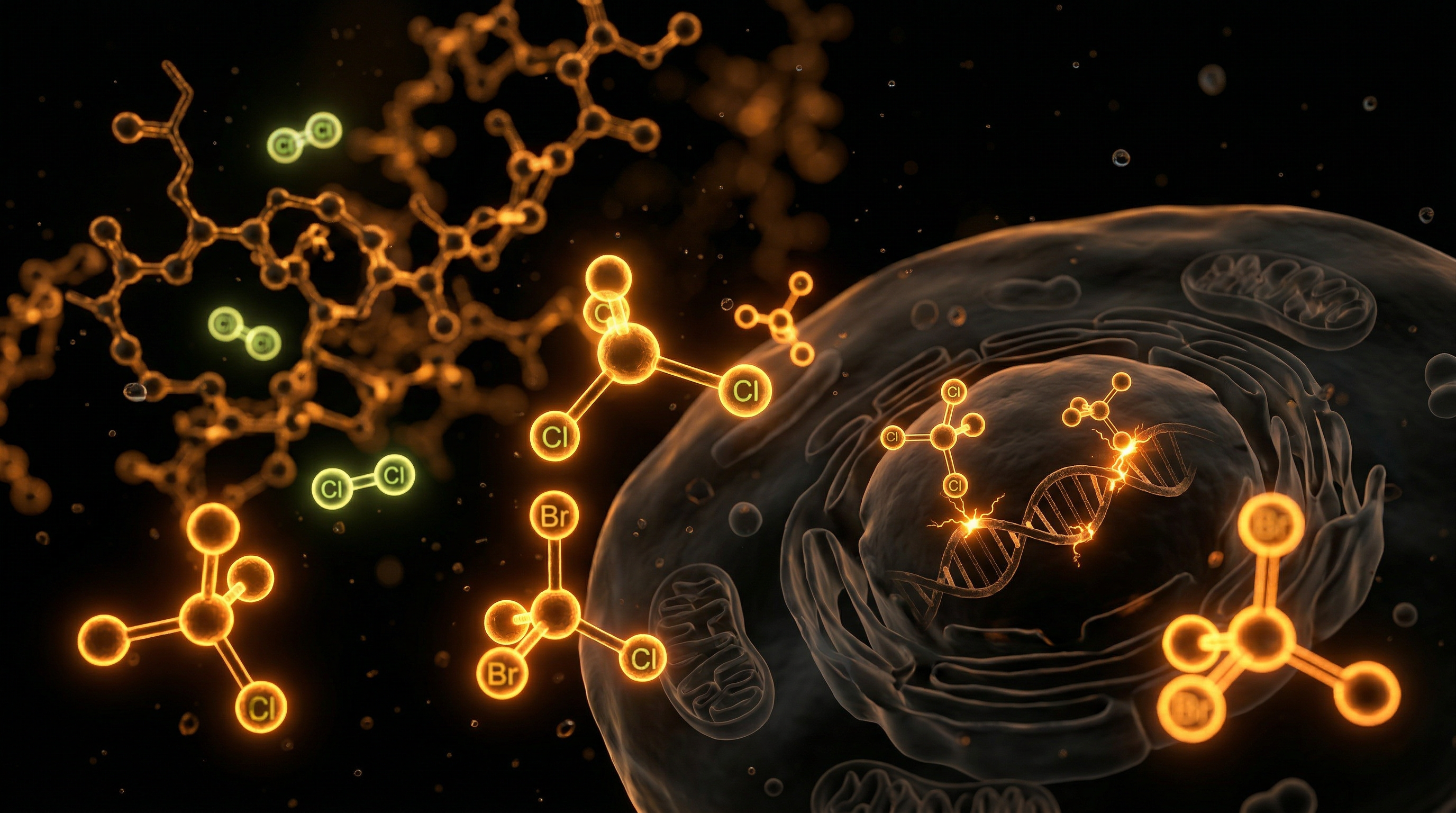
THMs are a class of chemical compounds that form as Disinfection Byproducts (DBPs) when chlorine—a highly reactive oxidant—interacts with naturally occurring organic matter (NOM) such as humic and fulvic acids found in British reservoirs. While the water industry maintains that these levels are kept within "safe" regulatory limits, a mounting body of molecular evidence suggests that chronic, sub-threshold exposure is a significant driver of carcinogenesis, particularly in the bladder and colon, and a potent disruptor of reproductive health.
The UK’s reliance on surface water sources, which are often rich in organic silt and peat-derived matter, creates a unique chemical vulnerability. When we turn on our taps, we are not merely receiving $H_2O$ and a splash of disinfectant; we are ingesting, inhaling, and absorbing a suite of volatile, genotoxic compounds that the human body was never evolved to process. This article serves as a comprehensive deconstruction of the THM crisis, from the molecular mechanisms of DNA damage to the systemic failure of UK regulatory oversight.
Fact: Trihalomethanes were first identified in chlorinated drinking water in 1974. Despite decades of research confirming their mutagenic potential, they remains one of the most prevalent chemical contaminants in the UK domestic water supply.
The Biology — How It Works
To understand the threat of THMs, we must first understand the chemistry of the "chlorine demand." When chlorine gas ($Cl_2$) or sodium hypochlorite ($NaOCl$) is added to water, it acts as a powerful oxidant, tearing electrons from the cell membranes of bacteria and viruses, effectively sterilising the medium. However, chlorine is non-discriminatory. It reacts with any carbon-based precursor it encounters.
The four primary THMs formed in this reaction are:
- Chloroform (Trichloromethane): The most prevalent species, historically used as an anaesthetic but now recognised as a potent hepatotoxin.
- Bromodichloromethane (BDCM): Significantly more genotoxic than chloroform.
- Dibromochloromethane (DBCM): A known mutagen.
- Bromoform (Tribromomethane): Formed primarily when bromide ions are present in the source water.
Routes of Exposure: More Than Just Drinking
A common misconception is that THM exposure is limited to ingestion. In reality, the biological burden is exacerbated by two other critical pathways:
- Dermal Absorption: During a hot bath or shower, the skin—our largest organ—readily absorbs lipophilic THMs. Research indicates that a 10-minute shower can result in a higher internal dose of THMs than drinking two litres of the same water.
- Inhalation: THMs are highly volatile. The steam in a confined shower cubicle becomes a concentrated aerosol of chloroform and BDCM. These compounds pass directly through the alveolar membrane of the lungs into the bloodstream, bypassing the "first-pass" detoxification of the liver.
The Role of Natural Organic Matter (NOM)
The UK landscape is dominated by peatlands and nutrient-rich runoff. When heavy rains wash organic debris into reservoirs, the "organic load" increases. To compensate and ensure bacterial safety, water companies increase chlorine dosages. This "seasonal spiking" leads to periods where the concentration of THMs in the tap water of millions of British households fluctuates wildly, often reaching the upper limits of statutory safety before anyone is the wiser.
Mechanisms at the Cellular Level
At the heart of the THM threat lies a process of metabolic activation. THMs themselves are relatively stable, but once they enter the human body, our own enzymatic pathways transform them into lethal intermediaries.
Cytochrome P450 Activation
The primary metabolism of THMs occurs via the Cytochrome P450 (CYP2E1) enzyme system, primarily in the liver and kidneys. This enzyme attempts to dehalogenate the molecule, but in doing so, it creates highly reactive free radicals and electrophilic species such as phosgene.
Statistic: Studies have shown that individuals with specific genetic polymorphisms in the GSTT1 (Glutathione S-transferase) gene are at a significantly higher risk of bladder cancer from THMs, as they lack the ability to effectively neutralise these reactive metabolites.
Oxidative Stress and Lipid Peroxidation
The metabolism of THMs generates a cascade of Reactive Oxygen Species (ROS). These "molecular vandals" attack the phospholipid bilayer of cell membranes in a process called lipid peroxidation. This not only compromises cell integrity but also produces secondary toxins like malondialdehyde, which further damage cellular structures.
DNA Adduct Formation and Genotoxicity
The most alarming mechanism is the formation of DNA adducts. The reactive metabolites of THMs (particularly those containing bromine) can bind covalently to DNA bases. If the cell attempts to replicate before these adducts are repaired, it results in permanent mutations.
- Brominated THMs are particularly insidious; the carbon-bromine bond is weaker than the carbon-chlorine bond, making them more reactive and significantly more likely to cause "strand breaks" in the double helix.
- This genotoxicity is not limited to the site of exposure; because THMs travel via the bloodstream, they can induce chromosomal aberrations in distal organs, including the bone marrow and bladder epithelium.
Environmental Threats and Biological Disruptors
While the primary focus of THM research is often oncogenesis, their role as Biological Disruptors extends to the endocrine and reproductive systems. The environmental context of the UK—specifically the presence of bromide in groundwater and the discharge of industrial waste—alters the "species distribution" of THMs, making them more toxic than standard chlorination models suggest.
The Bromide Problem
In many coastal areas of the UK or regions with specific geological strata, bromide levels in source water are high. When chlorine is added, it oxidises bromide to hypobromous acid, which then reacts with organic matter to form brominated THMs.
- Bromoform and BDCM are estimated to be 10 to 100 times more carcinogenic than their chlorinated counterparts.
- Current UK regulations aggregate all four THMs into a single "Total THM" (TTHM) limit, ignoring the fact that a water supply high in bromoform is vastly more dangerous than one high in chloroform at the same total concentration.
Endocrine Disruption and Pregnancy
THMs are known to cross the placental barrier. Emerging epidemiological data from the UK and the EU suggest a strong correlation between high THM exposure in the first trimester and:
- Intrauterine Growth Restriction (IUGR): Leading to low birth weight.
- Spontaneous Abortion: THMs may interfere with the hormonal signalling required to maintain a pregnancy.
- Congenital Cardiac Defects: Chronic exposure during critical windows of organogenesis appears to disrupt myocardial development.
Bioaccumulation in the Food Chain?
While THMs are generally considered non-bioaccumulative due to their volatility, their presence in the environment contributes to a "background toxic load." They have been detected in the fatty tissues of fish and in dairy products where chlorinated water was used in processing, suggesting that the tap is only one entry point into the human biological system.
The Cascade: From Exposure to Disease
The journey from a glass of chlorinated water to a clinical diagnosis is a multi-decadal "cascade" of biological failures. The body's repair mechanisms are robust, but they are not designed for the constant, 24/7 chemical bombardment provided by modern infrastructure.
1. The Bladder Cancer Connection
The link between THMs and bladder cancer is the most robust in environmental toxicology. In the UK, bladder cancer is the 11th most common cancer, with approximately 10,000 new cases annually.
Callout: A meta-analysis of over 40 years of data suggests that long-term consumption of chlorinated water (containing >50 µg/L of THMs) is associated with a 21% to 35% increase in the risk of bladder cancer.
The mechanism is simple: THM metabolites are filtered by the kidneys and concentrated in the bladder. The bladder lining (urothelium) is thus held in prolonged contact with these carcinogens before excretion.
2. Colorectal Malignancy
Following ingestion, THMs interact with the gut microbiota and the epithelial lining of the colon. The chronic irritation and DNA damage caused by these compounds, combined with the way chlorine alters the "good" bacteria in the gut (dysbiosis), creates a pro-carcinogenic environment.
3. Hepatic and Renal Toxicity
The liver and kidneys are the primary sites of THM metabolism and excretion. Chronic exposure leads to "fatty liver" (steatosis) and necrotic lesions. Over decades, this cellular attrition reduces the organ's functional reserve, making the individual more susceptible to other metabolic diseases.
4. Neurotoxicity and Cognitive Decline
Recent preliminary studies have begun to explore the link between volatile organic compounds (VOCs) like THMs and neuroinflammation. As lipophilic molecules, THMs can cross the blood-brain barrier. While not yet as established as the cancer link, the potential for THMs to contribute to the UK’s rising rates of neurodegenerative disease is an area of intense concern for researchers outside the mainstream.
What the Mainstream Narrative Omits
The official stance from organisations like the Drinking Water Inspectorate (DWI) and Public Health England is one of "managed risk." However, this narrative contains glaring omissions that mask the true extent of the biological assault.
The "Total THM" Fallacy
As mentioned, the UK limit for Total THMs is 100 micrograms per litre (µg/L). This is a purely administrative number, not a biological one. It fails to account for the vastly higher toxicity of brominated species. A sample containing 90 µg/L of bromoform is treated the same as 90 µg/L of chloroform, despite the former being a much more aggressive mutagen.
Synergistic Toxicity: The Fluoride Factor
In many parts of the UK (such as the West Midlands and parts of the North East), water is both chlorinated and fluoridated. The mainstream narrative never discusses the synergistic effects of these chemicals. Fluoride is a known enzyme inhibitor and can interfere with the DNA repair enzymes (such as DNA ligase) that are supposed to fix the damage caused by THMs. By adding both, the government is simultaneously damaging the DNA and disabling the body’s ability to repair it.
The "Cocktail Effect"
Water is tested for individual chemicals in isolation. There is almost zero research into the "cocktail effect" of THMs combined with microplastics, pesticide runoff (like glyphosate), and pharmaceutical residues (like oestrogen from the pill) that are also prevalent in the UK water supply. The biological reality is a cumulative toxicity that no laboratory model currently captures.
The Economic Bias
The reason the UK continues to use chlorine rather than safer alternatives like Ozone or UV treatment (combined with activated carbon) is simple: cost. Chlorine is cheap, and the infrastructure is already built. The "safe levels" are often set not at the point where they cause zero harm, but at the point where the cost of further reduction is deemed "disproportionate" to the projected health benefits—a cold, actuarial calculation that sacrifices a percentage of the population for the sake of the Treasury.
The UK Context
The United Kingdom presents a unique "perfect storm" for THM exposure. Our geography, climate, and Victorian-era infrastructure create challenges that many other developed nations do not face to the same degree.
Peatlands and "Brown Water"
A significant portion of the UK’s water comes from upland catchments, particularly in Scotland, Wales, and Northern England. These areas are rich in peat. During heavy rainfall, "dissolved organic carbon" (DOC) levels spike. This results in the "tea-coloured" water sometimes seen in reservoirs. To treat this, water companies must use higher doses of chlorine, which inevitably leads to higher THM formation.
Aging Pipe Networks
The UK's water distribution network is notoriously leaky. When pipes lose pressure, there is a risk of external contaminants entering the system. To prevent "regrowth" of bacteria in these miles of aging iron and lead pipes, a "residual" level of chlorine must be maintained all the way to the consumer's tap. This means that people living at the end of a long distribution line often receive water that has had the maximum amount of time to react and form THMs.
Regional Disparities
There is a massive disparity in water quality across the UK.
- London and the South East: High reliance on recycled river water (Thames), which has high organic loads and high bromide levels from industrial and agricultural runoff.
- Scotland: Historically high levels of THMs due to the peaty nature of the lochs.
While companies like Thames Water or United Utilities publish annual reports, these are often averages. They do not reflect the "peak" exposures that occur after a storm or during a heatwave.
Regulatory Lag
The UK’s TTHM limit of 100 µg/L is significantly higher than the 80 µg/L limit set by the US Environmental Protection Agency (EPA). Why is the "safe" level in London 25% higher than in New York? The biological impact of THMs does not change at the border; only the regulatory appetite for risk does.
Protective Measures and Recovery Protocols
Given the systemic nature of THM contamination, the responsibility for protection currently falls upon the individual. As a researcher, I advocate for a multi-layered approach to neutralising this chemical threat.
1. Filtration: The Primary Defence
Standard "jug" filters (like basic Brita) are largely insufficient for THM removal. They are designed for taste and odour (removing chlorine) but often lack the contact time and media volume to strip out volatile THMs.
- Activated Carbon Block: High-quality solid carbon block filters are the gold standard for THM reduction. The carbon adsorbs the organic molecules.
- Reverse Osmosis (RO): A properly maintained RO system, combined with a carbon pre-filter, will remove upwards of 95-99% of all DBPs.
- Whole-House Filtration: To address the dermal and inhalation routes, a whole-house carbon filtration system is essential. This ensures that the water in your shower and bath is as pure as the water you drink.
2. Showering Safety
If a whole-house system is not feasible:
- Reduce Temperature: THMs are more volatile at higher temperatures. Cooler showers reduce inhalation risk.
- Ventilation: Always keep the bathroom window open or the extractor fan on full power to clear the air of aerosolised chloroform.
- Vitamin C Filters: Ascorbic acid (Vitamin C) instantly neutralises chlorine. Showerheads containing Vitamin C ceramic balls can help prevent the initial reaction on the skin, though they may not remove the THMs already formed.
3. Biological Resilience (Nutritional Support)
To counter the "cascade" of disease, one must support the body's natural detoxification and repair pathways:
- Glutathione Support: As the body's master antioxidant, glutathione is used to conjugate and excrete THM metabolites. Supplementing with N-Acetyl Cysteine (NAC), milk thistle (silymarin), and alpha-lipoic acid helps maintain these levels.
- DNA Repair Nutrients: Ensure adequate levels of Zinc, Magnesium, and Methyl-B12, which are critical co-factors for the enzymes that repair DNA strand breaks.
- Selenium: This mineral is vital for the function of glutathione peroxidase, which protects cells from the oxidative stress induced by BDCM and bromoform.
4. Advocacy and Testing
Do not rely on the water company’s "average" report. Independent water testing kits specifically for THMs are available. If your water exceeds 50 µg/L (the level where cancer risk starts to rise significantly in the literature), you have a biological mandate to act.
Summary: Key Takeaways
The issue of Trihalomethanes in UK water is a classic example of a 19th-century solution creating a 21st-century health crisis. While we cannot return to the era of cholera, we must evolve beyond the era of mass-medicated chlorination.
- THMs are unavoidable byproducts of the current UK water treatment model, formed by the reaction of chlorine with organic matter.
- The risk is systemic: Beyond bladder and colorectal cancer, THMs are linked to reproductive issues, liver damage, and DNA mutations.
- Inhalation and dermal absorption are as dangerous, if not more so, than ingestion.
- Regulatory limits in the UK (100 µg/L) are based on economic convenience and outdated toxicology, failing to account for the heightened danger of brominated THMs or synergistic effects with fluoride.
- Individual action is required: Through high-grade carbon filtration, NAC supplementation, and altered bathing habits, one can significantly mitigate the "chlorine cost."
The "innerstanding" of this topic requires us to look past the clear, sparkling appearance of tap water and see the molecular reality. We are living in a chemical experiment where the results are written in the rising charts of chronic disease. It is time to treat our water—and our bodies—with the biological respect they deserve.
This article is provided for informational and educational purposes only. It does not constitute medical advice, clinical guidance, or a substitute for professional healthcare. Information reflects cited research at time of publication. Always consult a qualified healthcare professional before acting on any health information.
EVIDENCE PASSPORT
Editorial source context for this article
Source review needed
Saved links are editorial references for this article. They may support specific claims rather than every sentence. Open and assess each source in context. This passport does not independently verify them.
Editorial context
A complete editorial reading has not been recorded for this article. Source links remain available for you to open and assess directly.
Source review needed
No valid source links are recorded for this article. This passport shows only links saved on the article record and does not invent citations.
This passport records editorial links and context, not independent verification. Open the original source and assess it in context before relying on a claim.
Medical Disclaimer
The information in this article is for educational purposes only and does not constitute medical advice, diagnosis, or treatment. Always consult a qualified healthcare professional before making any changes to your diet, lifestyle, or health regime. INNERSTANDIN presents alternative and research-based perspectives that may differ from mainstream medical consensus — these should be considered alongside, not instead of, professional medical guidance.
Read Full DisclaimerContinue the thread
Keep this question moving.
Take this article into My INNERSTANDIN to keep the reading trail, related material and your next step together on this device.