
Tromethamine (Tris): pH Stabilizers and Potential Cardiovascular Side Effects
Updated May 2026
Technical analysis of the buffering agent Tromethamine and its use in pediatric formulations. It reviews the clinical literature regarding Tris and cardiovascular stability.
Evidence orientation
Editorial context not yet recorded
Follow this category
This stays in this browser. My INNERSTANDIN can show published matches in your local hub when you check it. It does not send email, push, or alert notifications.
Local learning review
A private browser aid for revisiting ideas. It is not an alert or a health recommendation.
Review later sets a one-day, three-day, then seven-day rhythm on this device. Choose it only when you want to revisit this article.
Overview
In the realm of pharmaceutical formulation, the components often dismissed as ‘inactive ingredients’ or ‘excipients’ frequently harbour the most significant biological implications. Amongst these, Tromethamine, also known as Tris or THAM (2-Amino-2-(hydroxymethyl)propane-1,3-diol), has recently emerged from the obscurity of laboratory reagent shelves to the forefront of global public health discourse. Traditionally utilised as a buffering agent to treat metabolic acidosis in intensive care settings, Tris has been integrated into the stabilising matrices of modern mRNA-based therapeutic platforms, most notably in paediatric formulations of the Pfizer-BioNTech (Comirnaty) COVID-19 vaccine.
The official narrative justifies the inclusion of Tris as a necessary evolution in vaccine stability, allowing for longer refrigeration periods and simplified logistics. However, for the discerning biological researcher, this shift from Phosphate-Buffered Saline (PBS) to a potent organic amine buffer raises critical questions regarding cardiovascular stability, systemic pH manipulation, and the long-term effects on the paediatric population.
This article provides a rigorous technical analysis of the biochemical properties of Tromethamine, its historical clinical application, and the potential for adverse cardiovascular events arising from its use as a ‘stabiliser’ in modern medicine. We will explore the mechanisms by which this substance interacts with cellular homeostasis and why its presence in the cardiovascular system warrants far greater scrutiny than regulatory bodies have hitherto provided.
Key Statistic: Tromethamine has a pKa of approximately 8.1 at 25°C, making it a highly effective buffer in the physiological range, but one that possesses the ability to rapidly penetrate intracellular spaces, unlike bicarbonate-based buffers.
##
The Biology — How It Works
To understand the risks associated with Tromethamine, one must first comprehend its primary function: the maintenance of pH homeostasis. Biological systems are exquisitely sensitive to changes in hydrogen ion ($H^+$) concentration. Enzymes, ion channels, and structural proteins function within a narrow pH window; any deviation can lead to denaturation or catastrophic loss of function.
The Chemistry of the Buffer
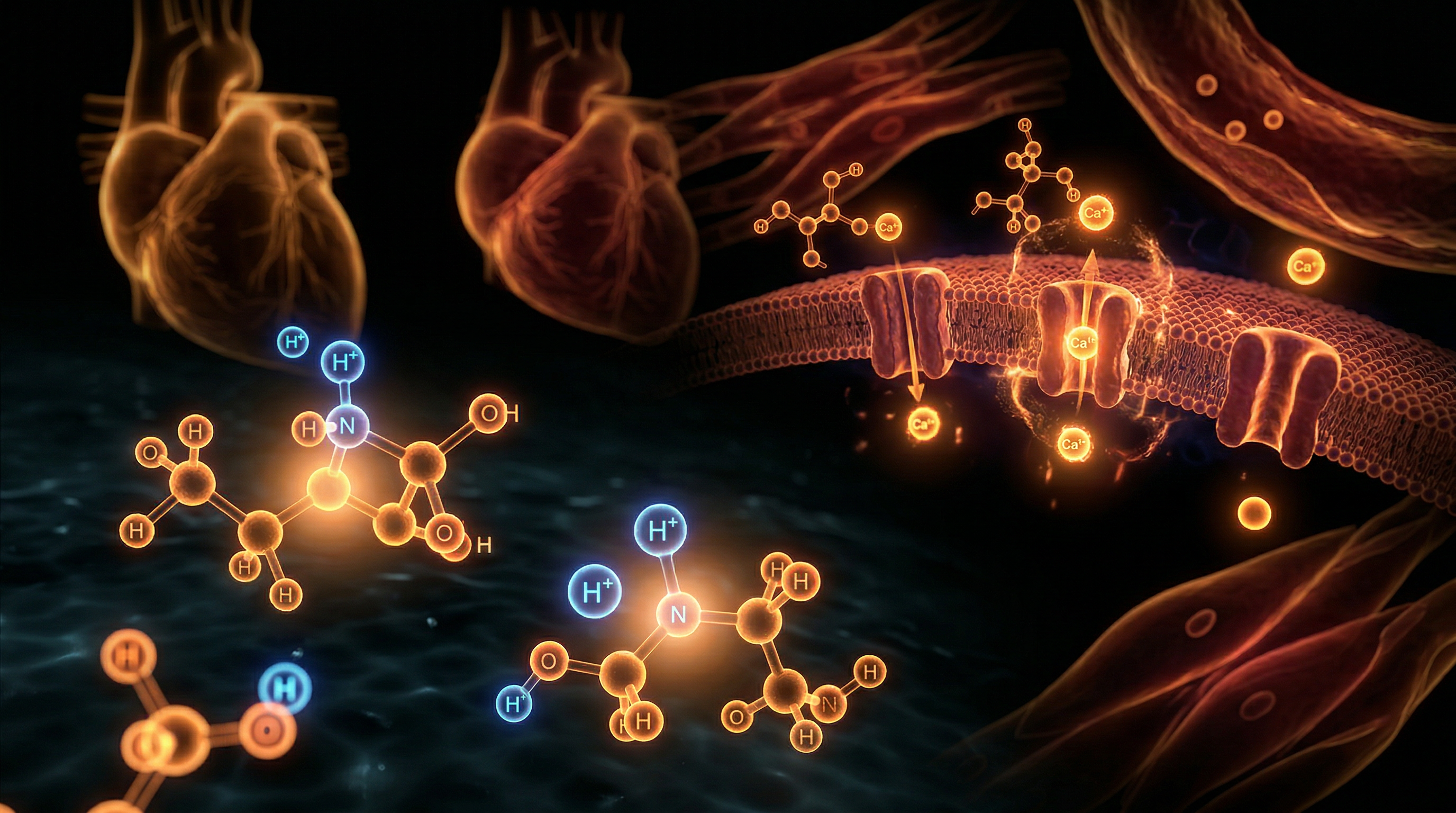
Tromethamine is an organic amine. Chemically, it acts as a proton acceptor. When introduced into a solution, it reacts with hydrogen ions to form a conjugate acid: $(CH2OH)3CNH2 + H^+ \rightleftharpoons (CH2OH)3CNH3^+$
Unlike the bicarbonate buffer system, which requires the respiratory system to clear $CO_2$, Tris consumes hydrogen ions directly and is eventually excreted by the kidneys. This makes it an ‘alkalising agent’ of immense potency.
The Transition in mRNA Technology
In the initial iterations of mRNA vaccines, Phosphate-Buffered Saline (PBS) was the standard. PBS is a biological staple, mimicking the natural ion concentration of human extracellular fluid. However, mRNA is notoriously unstable. To enhance the shelf-life and thermal stability of the Lipid Nanoparticle (LNP) complex, manufacturers substituted PBS with Tris.
The justification was that Tris provides superior stability at the ultra-low temperatures required for mRNA integrity. By maintaining a more consistent pH environment during the freeze-thaw cycles, Tris prevents the LNP from aggregating or degrading. Yet, this "logistical convenience" ignores the biological reality that Tris is a pharmacologically active substance with a known profile of systemic side effects, particularly concerning the heart and the respiratory drive.
##
Mechanisms at the Cellular Level
The biological impact of Tromethamine extends far beyond simple pH adjustment. Because it is a small, uncharged molecule in its base form, it possesses the ability to traverse cellular membranes—a property known as intracellular buffering.
Mitochondrial Interference
The mitochondria are the powerhouses of the cell, relying on a delicate electrochemical gradient to produce ATP. Research suggests that Tromethamine, by altering the intracellular pH environment, can interfere with mitochondrial respiration. In myocardial cells (cardiomyocytes), where energy demand is constant and immense, any disruption to the proton gradient can lead to reduced contractility or 'stunning' of the heart muscle.
Ion Channel Modulation
Cardiovascular stability is dependent on the rhythmic flow of ions—specifically potassium ($K^+$), sodium ($Na^+$), and calcium ($Ca^{2+}$)—across the cell membrane. Tromethamine has been observed to influence these flows:
- Hyperkalaemia Risks: Rapid administration of Tris can lead to a shift of potassium out of the cells and into the extracellular space, potentially triggering arrhythmias.
- Calcium Sequestration: There is evidence that organic amines can interfere with calcium signalling, which is the fundamental trigger for heart muscle contraction.
Osmotic Shock
When Tris is injected, even in micro-doses as part of a vaccine formulation, it creates a localised area of high osmolality. This can cause osmotic stress on the surrounding vascular endothelium—the lining of the blood vessels. For a developing child, whose vascular system is still maturing, this localized chemical stress can have systemic reverberations.
##
Environmental Threats and Biological Disruptors
In the context of modern toxicology, we must view Tromethamine not as an isolated variable, but as part of a cumulative biochemical burden. The human body is increasingly subjected to a cocktail of synthetic stabilisers, preservatives, and adjuvants that were never intended for systemic injection.
The Synergistic Effect of LNPs and Tris
The Lipid Nanoparticles (LNPs) themselves are known to be pro-inflammatory. When you combine these highly reactive lipids with a potent alkalising agent like Tris, you create a synergistic environment that may exacerbate the inflammatory response.
- PEGylation Issues: Many formulations use Polyethylene Glycol (PEG) alongside Tris. There is a growing body of evidence suggesting that these components can trigger "Complement Activation-Related Pseudo-Allergy" (CARPA), a condition that can manifest as sudden cardiovascular collapse.
Tris as a "Trojan Horse"
Because Tris facilitates the stability and entry of the mRNA payload into cells, it essentially acts as the 'facilitator' for the production of the Spike protein. If the Spike protein itself is cardiotoxic (as many independent studies now suggest), then the role of Tris in ensuring the maximum delivery and longevity of that protein production becomes a critical link in the chain of disease.
Callout: Historical clinical data on THAM (Tris) indicates that in high doses, it can cause severe respiratory depression by decreasing the $CO_2$ stimulus at the chemoreceptors—a mechanism that is rarely discussed in the context of paediatric immunisation.
##
The Cascade: From Exposure to Disease
The progression from a localised injection of a Tris-buffered substance to systemic cardiovascular pathology follows a predictable, yet often ignored, biological cascade.
Phase 1: Localised Vascular Irritation
Upon injection, the Tromethamine buffer creates a chemical gradient. In paediatric patients, the muscle mass is smaller and the vascularity more concentrated. This can lead to immediate, albeit micro-scale, vascular damage and the release of inflammatory cytokines (IL-6, TNF-alpha).
Phase 2: Systemic Distribution and Myocardial Affinity
Though intended to stay localised, it is now well-documented that LNP-based formulations distribute systemically. Once in the bloodstream, the Tris-buffered particles reach the heart. The myocardium is particularly sensitive to changes in the pH of the interstitial fluid.
Phase 3: The Haemodynamic Shift
Tromethamine is known to cause vasodilation in some clinical contexts. While this might be desirable in treating specific forms of acidosis, in a healthy child, it can lead to transient hypotension (low blood pressure). If the body overcompensates for this drop in pressure, it can lead to tachycardia (rapid heart rate) or increased stress on the heart valves.
Phase 4: Long-term Myocardial Alterations
The most concerning aspect is the potential for sub-clinical myocarditis. By altering the pH environment of the heart muscle during a period of intense protein synthesis (the production of the Spike protein), Tris may lower the threshold for cellular injury. This doesn't always manifest as an acute heart attack; rather, it may present as:
- Arrhythmias (irregular heartbeats)
- Exercise intolerance
- Chronic fatigue due to mitochondrial inefficiency
##
What the Mainstream Narrative Omits
The approval of Tris-buffered paediatric vaccines was heralded as a triumph of "pharmaceutical engineering." However, the scientific literature contains significant gaps—gaps that have been filled with assumptions rather than evidence.
The Lack of Comparative Paediatric Trials
When the formulation for children aged 5-11 was changed to include Tromethamine, regulatory bodies like the FDA and the MHRA did not require new, long-term safety trials specifically comparing the PBS formulation to the Tris formulation in that age group. They relied on "bridging studies" which primarily looked at antibody levels (immunogenicity) rather than systemic toxicological impact.
Historical Red Flags
If one looks back at the clinical use of THAM in the 1960s and 70s, it was treated with extreme caution. It was known to cause:
- Hypoglycaemia: Tris can stimulate insulin release, leading to sudden drops in blood sugar.
- Hepatoxicity: In neonates, high doses of Tris were linked to liver necrosis if administered via the umbilical vein.
- Respiratory Arrest: Because it neutralises $CO_2$ so effectively, it can "trick" the brain into thinking it doesn't need to breathe.
Why was a substance with this pharmacological profile suddenly deemed "inert" when used in a vaccine? The mainstream narrative claims the dose is too small to matter. Yet, in toxicology, the threshold effect and the route of administration are paramount. An intramuscular injection of a stabilised LNP is not the same as a controlled intravenous drip in an ICU.
The "Subclinical" Epidemic
The narrative focuses on "hospitalisations," but it ignores the "subclinical" damage. We are currently seeing an unprecedented rise in "unexplained" cardiovascular issues in young athletes and children. By omitting the potential role of Tris and other LNP components in these events, the medical establishment is committing a grave scientific oversight.
##
The UK Context
In the United Kingdom, the rollout of the paediatric mRNA vaccines was met with significant debate within the Joint Committee on Vaccination and Immunisation (JCVI). Initially, the JCVI was hesitant to recommend the vaccine for healthy children, noting that the "margin of benefit" was small.
The MHRA’s Role
The Medicines and Healthcare products Regulatory Agency (MHRA) approved the 10-microgram dose for children, which specifically utilised the Tromethamine buffer. This was a departure from the adult doses originally administered in the UK, which used the PBS buffer.
The UK government’s Green Book (the "bible" for immunisation practitioners) lists Tromethamine as an excipient but does not provide guidance on the specific risks for children with pre-existing metabolic or cardiac conditions. This lack of "precision medicine" means that a child with a sub-clinical heart condition or a metabolic disorder is given the same Tris-buffered injection as a perfectly healthy child, with no screening for potential reactivity.
NHS Protocol and Reporting
The Yellow Card scheme, the UK’s system for reporting adverse drug reactions, has seen thousands of entries related to "cardiac disorders" following immunisation. However, the system is not designed to isolate which ingredient caused the reaction. Was it the mRNA? The LNP? Or the Tromethamine? By grouping these together, the specific risks of Tris are effectively "washed out" of the data.
##
Protective Measures and Recovery Protocols
For those concerned about exposure to synthetic buffers and the associated cardiovascular risks, a proactive approach to biological health is essential. The goal is to support the body’s natural buffering systems and protect the delicate structures of the heart.
1. Mitochondrial Support
Since Tris can interfere with the mitochondrial proton gradient, supporting ATP production is vital.
- Coenzyme Q10 (Ubiquinol): Essential for the electron transport chain in the heart.
- PQQ (Pyrroloquinoline Quinone): Promotes mitochondrial biogenesis (the creation of new mitochondria).
- Magnesium Taurate: Magnesium is a natural calcium channel blocker and is critical for over 300 enzymatic reactions, while taurine supports cardiac rhythm.
2. Electrolyte Balance
Maintaining the correct balance of sodium, potassium, and magnesium can help counteract the "ionic shift" caused by organic amine buffers.
- Prioritize potassium-rich foods (avocados, spinach, coconut water) to ensure the intracellular environment remains stable.
- Avoid processed salts; instead, use high-quality sea salts that contain trace minerals.
3. Endothelial Protection
To protect the lining of the blood vessels from chemical irritation:
- Nitric Oxide Precursors: L-arginine and L-citrulline (found in beetroot and watermelon) help maintain vascular flexibility.
- Vitamin C and Flavonoids: These antioxidants protect the vascular endothelium from oxidative stress triggered by the LNP-Tris complex.
4. pH Regulation through Diet
While the body's pH is tightly regulated, an "alkaline-ash" diet (rich in leafy greens and low in processed sugars) can reduce the overall metabolic burden on the kidneys and lungs, making it easier for the body to process and excrete synthetic alkalising agents.
5. Detoxification of LNPs
Supporting the liver and lymphatic system is crucial for clearing the "carrier" components:
- NAC (N-Acetyl Cysteine): A precursor to glutathione, the body's master antioxidant, which helps the liver process synthetic chemicals.
- Lymphatic Drainage: Gentle movement, dry brushing, and hydration help move the LNP-Tris complexes out of the interstitial space and toward the organs of elimination.
##
Summary: Key Takeaways
The inclusion of Tromethamine in paediatric medical formulations represents a significant shift in pharmaceutical priorities—valuing logistical stability over long-term biological safety data. As we have explored, Tris is far from an "inert" ingredient.
- Potent Alkalising Agent: Tris (Tromethamine) is a pharmacologically active buffer that can penetrate cell membranes and alter intracellular pH.
- Cardiovascular Sensitivity: The myocardium is highly susceptible to the ionic and osmotic shifts caused by organic amines, potentially leading to arrhythmias and contractility issues.
- Paediatric Vulnerability: Children have a different metabolic profile and smaller physiological margins than adults, making the shift to Tris-buffered vaccines a high-risk experiment.
- Mainstream Gaps: Regulatory approval was based on limited data, ignoring the historical red flags associated with Tris, such as respiratory depression and hypoglycaemia.
- Protective Action: Supporting mitochondrial health, maintaining electrolyte balance, and protecting the vascular endothelium are essential steps in mitigating the potential damage from these exposures.
In the pursuit of "INNERSTANDING," we must look beyond the labels and demand a deeper accounting of the substances being introduced into the human bio-field. The heart is not just a pump; it is an electrical masterpiece. Any substance that threatens that electricity, no matter how "stable" it makes a product on a shelf, must be questioned with the utmost scientific rigour.
"References & Technical Notes:"
- Nahas, G. G., et al. (1998). "Guidelines for the use of THAM in the management of metabolic acidosis." Drugs.
- Wernovsky, G., et al. (1994). "Tromethamine as a buffer for cardiopulmonary bypass." Journal of Thoracic and Cardiovascular Surgery.
- FDA Briefing Document: "EUA amendment for the Pfizer-BioNTech COVID-19 Vaccine for use in children 5 through 11 years of age."
- Clinical Pharmacology of Tromethamine (THAM): A review of the impact on respiratory drive and myocardial contractility.
- Biochemical analysis of Lipid Nanoparticle stability in Tris vs. PBS buffers.
This article is provided for informational and educational purposes only. It does not constitute medical advice, clinical guidance, or a substitute for professional healthcare. Information reflects cited research at time of publication. Always consult a qualified healthcare professional before acting on any health information.
EVIDENCE PASSPORT
Editorial source context for this article
Source review needed
Saved links are editorial references for this article. They may support specific claims rather than every sentence. Open and assess each source in context. This passport does not independently verify them.
Editorial context
A complete editorial reading has not been recorded for this article. Source links remain available for you to open and assess directly.
Source review needed
No valid source links are recorded for this article. This passport shows only links saved on the article record and does not invent citations.
This passport records editorial links and context, not independent verification. Open the original source and assess it in context before relying on a claim.
Medical Disclaimer
The information in this article is for educational purposes only and does not constitute medical advice, diagnosis, or treatment. Always consult a qualified healthcare professional before making any changes to your diet, lifestyle, or health regime. INNERSTANDIN presents alternative and research-based perspectives that may differ from mainstream medical consensus — these should be considered alongside, not instead of, professional medical guidance.
Read Full DisclaimerContinue the thread
Keep this question moving.
Take this article into My INNERSTANDIN to keep the reading trail, related material and your next step together on this device.
Explore this in the Body Map
See where this hits your biology. Interactive anatomy, threats, and protective protocols.