
Vitamin A Deficiency: The Silent Threat to Night Vision and Epithelial Integrity
Updated May 2026
Despite the UK's developed status, sub-clinical Vitamin A deficiency remains a factor in poor night vision and dry eyes. This vitamin is the core component of rhodopsin, the protein responsible for low-light sensing.
Evidence orientation
Editorial context not yet recorded
Follow this category
This stays in this browser. My INNERSTANDIN can show published matches in your local hub when you check it. It does not send email, push, or alert notifications.
Local learning review
A private browser aid for revisiting ideas. It is not an alert or a health recommendation.
Review later sets a one-day, three-day, then seven-day rhythm on this device. Choose it only when you want to revisit this article.
Overview
In the hierarchy of micronutrients, Vitamin A—or retinol—occupies a position of foundational importance that is frequently underestimated by modern clinical practice. While the "Golden Age" of vitamin discovery in the early 20th century successfully identified the catastrophic consequences of overt deficiency, such as total blindness and infant mortality, a new, more insidious crisis has emerged in the developed world. Here in the United Kingdom, we are witnessing the rise of sub-clinical Vitamin A deficiency (VAD). This is not the dramatic xerophthalmia seen in famine-stricken regions, but a gradual, systemic erosion of visual acuity and cellular resilience that goes largely undiagnosed until significant damage has occurred.
As a senior biological researcher for INNERSTANDING, my objective is to peel back the layers of complacency surrounding this "silent threat." Vitamin A is not merely a "supplemental" factor; it is a critical hormonal precursor that governs the very way we perceive light and the structural integrity of our internal and external barriers. The UK’s current health landscape, dominated by ultra-processed foods, chronic blue-light exposure, and a fundamental misunderstanding of "bioavailability," has created a perfect storm for retinal and epithelial degradation.
The ability to see in the twilight, the moisture of our corneas, and the strength of our respiratory linings all depend on a delicate, retinoid-dependent dance at the molecular level. This article explores the biological machinery of Vitamin A, the environmental factors sabotaging its function, and the "mainstream" narrative failures that have left millions of Britons functionally deficient in the dark.
FACT: Unlike many vitamins that act as simple co-factors, Vitamin A functions more like a hormone, directly influencing the expression of over 500 genes through the Retinoic Acid Receptors (RAR) and Retinoid X Receptors (RXR).
The Biology — How It Works
To understand why Vitamin A is indispensable, we must first distinguish between its various forms. The term "Vitamin A" is an umbrella for a family of fat-soluble compounds known as retinoids.
Preformed Retinol vs. Provitamin A
The most crucial distinction, and one often blurred by food labelling, is between preformed Vitamin A (retinol and its retinal esters) and provitamin A carotenoids (such as beta-carotene). Preformed Vitamin A is found exclusively in animal sources: liver, egg yolks, and full-fat dairy. Provitamin A is found in colourful vegetables like carrots and sweet potatoes.
The biological reality is that the human body does not use beta-carotene directly. It must be converted into retinol in the small intestine. This conversion is notoriously inefficient and highly variable between individuals, governed by the BCO1 (Beta-Carotene Oxygenase 1) gene. For a significant portion of the UK population, the conversion rate is so low that relying solely on plant sources is a recipe for chronic deficiency.
The Lifecycle of Retinol
Once ingested, retinol is esterified and transported via chylomicrons to the liver, where approximately 80–90% of the body’s reserves are stored in stellate cells. When the body requires Vitamin A, it is released from the liver bound to Retinol-Binding Protein (RBP). This complex is then further stabilized by transthyretin (TTR) to prevent it from being filtered out by the kidneys.
This transport system is the first "chokepoint" where deficiency can manifest. If an individual is deficient in protein or zinc, they cannot synthesise enough RBP. Consequently, even if their liver is brimming with stored Vitamin A, the "delivery trucks" are missing, and the eyes and tissues remain starved.
Mechanisms at the Cellular Level
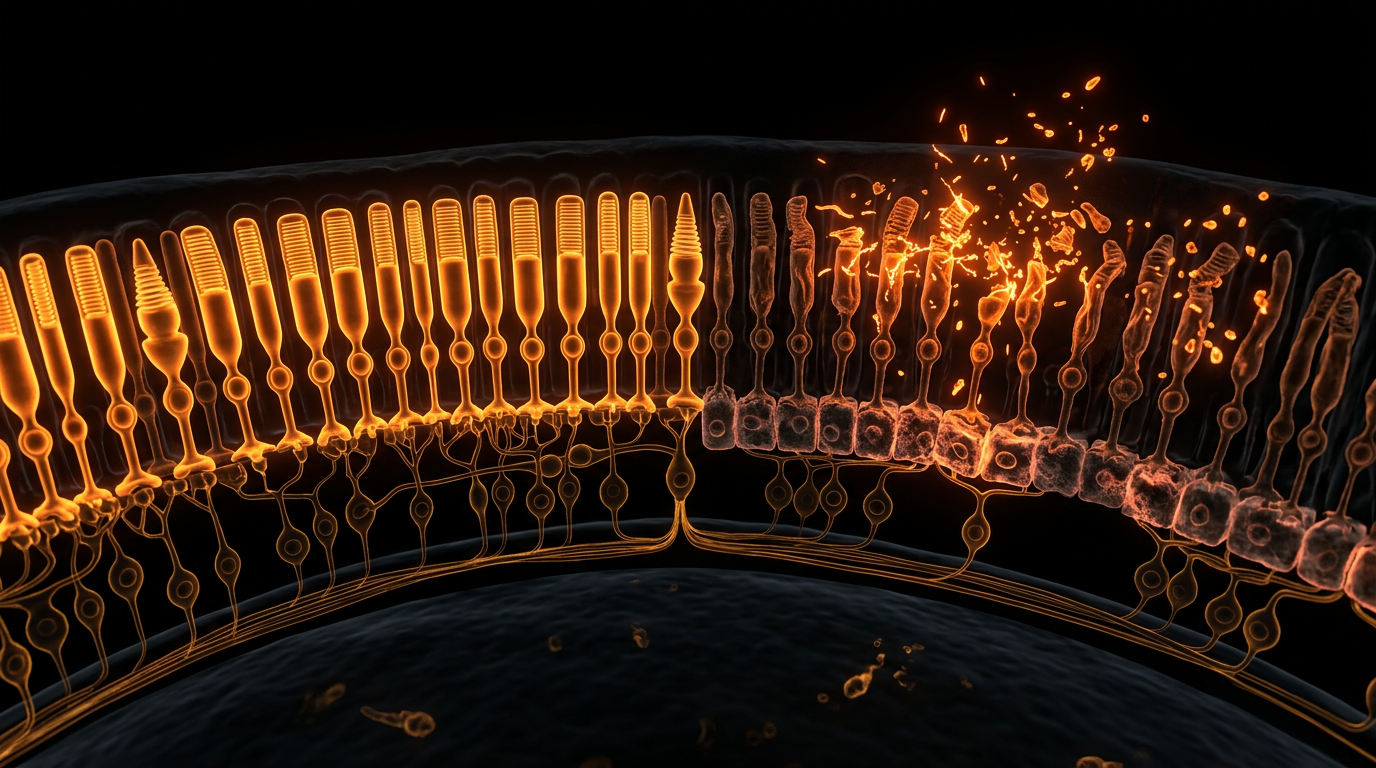
The most profound impact of Vitamin A is found in the Retinal Pigment Epithelium (RPE) and the photoreceptor cells of the eye. This is where the "Visual Cycle" takes place—a continuous loop of chemical reactions that allow us to convert photons into electrical signals.
The Rhodopsin Engine
Rhodopsin is the biological "sensor" for low-light conditions. It is a G-protein-coupled receptor located in the rod cells of the retina. Rhodopsin consists of a protein called opsin chemically bonded to 11-cis-retinal, a derivative of Vitamin A.
When a photon of light hits the retina, it causes the 11-cis-retinal to "flip" or isomerise into all-trans-retinal. This shape change triggers a cascade of electrical impulses that the brain interprets as vision. However, once the retinal has flipped, it is spent. It must be transported out of the rod cell into the RPE, converted back into 11-cis-retinal using specific enzymes (such as RPE65), and then shipped back to the rod cell to be reused.
If Vitamin A levels are low, the "pool" of 11-cis-retinal is depleted. The rod cells cannot regenerate rhodopsin quickly enough, leading to Nyctalopia, or night blindness. This is often the very first clinical sign of deficiency—a struggle to adjust vision when entering a dark room or driving at night.
Epithelial Integrity and Gene Expression
Beyond vision, Vitamin A is the master regulator of epithelial tissue. Epithelial cells cover all the body’s surfaces: the skin, the lining of the lungs, the gut, and the surface of the eye (the cornea and conjunctiva).
Through its metabolite, retinoic acid, Vitamin A signals stem cells to differentiate into mature, functional epithelial cells. Specifically, it promotes the production of goblet cells—specialised cells that secrete mucus (mucin).
In a state of deficiency, a process called squamous metaplasia occurs. The soft, moist, mucus-secreting membranes begin to transform into hard, keratinised tissue. On the eye, this manifests as extreme dryness (xerophthalmia). Without the protective tear film and mucin layer, the cornea becomes vulnerable to ulceration, scarring, and eventually, irreversible blindness.
FACT: The "Visual Cycle" is so metabolic-intensive that the retina has the highest rate of oxygen consumption and nutrient turnover of any tissue in the human body, making it the "canary in the coal mine" for nutritional status.
Environmental Threats and Biological Disruptors
In the modern UK environment, we are facing threats to our Vitamin A status that our ancestors never encountered. These disruptors accelerate the depletion of retinal stores and interfere with the delicate visual cycle.
The Blue Light Assault
We are currently living through an unplanned biological experiment. The advent of high-intensity LED lighting and digital screens (smartphones, laptops) has exposed our retinas to unprecedented levels of short-wavelength blue light.
Blue light is high-energy. When it strikes the retina, it can induce oxidative stress and accelerate the "bleaching" of rhodopsin. Chronic exposure forces the visual cycle to work at an accelerated rate, potentially "burning through" Vitamin A stores faster than the diet can replenish them. This is a primary driver behind the modern epidemic of "Digital Eye Strain" and the worsening of night vision in younger demographics.
The Rise of Malabsorption
Vitamin A is fat-soluble. To absorb it, we require a functioning biliary system (gallbladder and bile) and a healthy gut lining. The modern British diet, high in refined seed oils and ultra-processed carbohydrates, has led to a surge in Non-Alcoholic Fatty Liver Disease (NAFLD) and gallbladder issues. If bile production is compromised, or if the gut is inflamed (leaky gut), the absorption of Vitamin A from food can drop by as much as 70%.
Alcohol and Pharmaceutical Interference
Alcohol is a direct competitor for the enzymes that metabolise Vitamin A. Because the liver prioritises the detoxification of ethanol, Vitamin A metabolism is sidelined. Furthermore, certain common medications, including some cholesterol-lowering drugs (sequestrants) and weight-loss drugs that block fat absorption, directly induce VAD.
FACT: Chronic alcohol consumption doesn't just damage the liver; it induces a "metabolic deficiency" of Vitamin A in the lungs, significantly increasing the risk of respiratory infections and tissue remodelling.
The Cascade: From Exposure to Disease
The progression from sub-clinical deficiency to overt disease is a tiered cascade. Understanding this timeline is vital for early intervention.
Stage 1: The Dark Adaptation Lag
The first symptom is rarely noticed. It is a slight delay in "dark adaptation." When you move from a bright outdoor environment into a dimly lit cinema, your eyes should adjust within minutes. In the early stages of VAD, this process takes significantly longer. Most people shrug this off as "getting older," but it is actually a failure of rhodopsin regeneration.
Stage 2: Bitot’s Spots and Ocular Surface Disease
As the epithelial integrity begins to fail, the white of the eye (the conjunctiva) loses its lustre. Small, foamy-looking triangular patches may appear. These are Bitot’s spots, composed of keratinised epithelial debris. At this stage, the "dry eye" becomes chronic. Artificial tears offer only temporary relief because the underlying problem isn't a lack of saline, but a lack of mucin caused by the disappearance of goblet cells.
Stage 3: Systemic Vulnerability
Because Vitamin A governs the "barriers," the cascade now moves beyond the eyes. The respiratory tract, which should be lined with a "mucociliary escalator" to trap and expel pathogens, becomes dry and keratinised. The individual becomes prone to recurring chest infections, bronchitis, and persistent coughs. The skin may develop follicular hyperkeratosis—tiny, rough bumps on the back of the arms (often mistaken for "chicken skin" or keratosis pilaris).
Stage 4: Xerophthalmia and Corneal Melting
In the final, most severe stage, the cornea becomes so dry and malnourished that it begins to "melt" or liquefy (keratomalacia). This is a medical emergency. Once the cornea scars or perforates, vision is lost forever. While rare in the UK, the sub-clinical stages preceding this are becoming increasingly common.
What the Mainstream Narrative Omits
The current public health discourse around Vitamin A is riddled with half-truths and outdated science. To protect our health, we must confront these omissions.
The "Carrot Myth"
The most pervasive myth is that "carrots are the best source of Vitamin A." This was actually a piece of British propaganda during WWII to explain away the success of radar-equipped pilots. While carrots contain beta-carotene, the conversion to active retinol is highly inefficient.
The Retinol Activity Equivalent (RAE) ratio for beta-carotene is officially 12:1, but in real-world conditions (with poor gut health or low fat intake), it can be as high as 24:1 or even 50:1. Furthermore, genetics play a massive role. Research indicates that up to 45% of the population are "low converters" who possess genetic polymorphisms that slash their ability to turn plant-based pigments into the Vitamin A their eyes desperately need.
The RDA vs. Optimal Health
The Recommended Dietary Allowance (RDA) is designed to prevent "deficiency disease" (like total blindness), not to promote "optimal function." The UK’s RDA for men (700µg) and women (600µg) is, in the opinion of many researchers, the absolute floor. It does not account for the increased demand caused by blue light exposure, chronic stress, or the high oxidative burden of modern life.
The Fear-Mongering of Toxicity
There is a persistent narrative that Vitamin A is "toxic" and that liver consumption should be strictly limited. While it is possible to over-consume preformed Vitamin A (usually through high-dose synthetic supplements), the risk from food-based sources like organic liver is vastly overstated for the general population. Historically, liver was a weekly staple in the British diet. By removing it, we have removed the most bioavailable source of retinol, copper, and B-12—all of which work synergistically for vision.
FACT: The BCO1 gene polymorphism is so common in European populations that nearly half the UK population cannot meet their Vitamin A requirements through vegetables alone, regardless of how many carrots they eat.
The UK Context
The Vitamin A crisis in the United Kingdom is unique, shaped by our specific cultural and economic shifts.
The "Hidden" Hungry and Food Deserts
While the UK is a wealthy nation, "hidden hunger" is rampant. The consumption of fresh, nutrient-dense animal fats has plummeted. In many low-income areas, diet is dominated by "white foods"—bread, pasta, and ultra-processed snacks. These foods are not only devoid of Vitamin A but actually deplete the body’s stores of the minerals (like zinc) required to transport Vitamin A.
The Vegan Trend without Biological Planning
The UK has seen a massive surge in plant-based diets. While well-intentioned, many "new" vegans are unaware of the BCO1 conversion issue. They replace retinol-rich eggs and butter with "fortified" alternatives that often use inferior synthetic forms or rely entirely on beta-carotene. Without careful planning and supplementation of preformed retinol, this demographic is at high risk for sub-clinical VAD within 2–3 years of making the switch.
The British Weather and the Vitamin D Interaction
In the UK, we are obsessed with Vitamin D due to our lack of sunlight. However, Vitamin A and Vitamin D work in a delicate antagonistic-synergistic balance. They compete for the same receptor (the RXR). If an individual "megadoses" Vitamin D (as many do in winter) without adequate Vitamin A, they can inadvertently induce a functional Vitamin A deficiency, as the excess Vitamin D "crowds out" Vitamin A's ability to signal to the genes.
Protective Measures and Recovery Protocols
To combat the silent threat of VAD, we must move beyond the "balanced diet" clichés and adopt a protocol-based approach to retinoid health.
1. Prioritise Preformed Retinol
The most efficient way to restore Vitamin A levels is through the consumption of ruminant liver (beef or lamb). A single 100g serving once a week provides more than enough bioavailable retinol to saturate liver stores. For those who cannot tolerate the taste, high-quality, cold-processed Cod Liver Oil is the gold-standard supplement, as it provides Vitamin A alongside its natural synergistic partners: Vitamin D and Omega-3 fatty acids (DHA).
2. Optimise Zinc and Protein Intake
Vitamin A cannot travel from the liver to the eyes without Retinol-Binding Protein. Synthesis of this protein requires both adequate dietary protein and zinc. Oysters, red meat, and pumpkin seeds are essential co-factor foods. If you are "Vitamin A deficient," you are often "Zinc deficient" by proxy.
3. Manage the Light Environment
To protect the rhodopsin cycle, we must reduce the "drain" on our retinal stores.
- Blue-Blocking Glasses: Wear amber-tinted glasses after sunset to prevent the bleaching of rhodopsin.
- The 20-20-20 Rule: Every 20 minutes, look 20 feet away for 20 seconds to allow the photoreceptors a momentary reprieve.
- Red Light Therapy: Preliminary research suggests that low-intensity 670nm red light may help support mitochondrial function in the RPE.
4. Support Bile and Fat Digestion
Since Vitamin A is fat-soluble, you must "eat fat to absorb A." Ensure every meal containing Vitamin A includes a source of healthy saturated or monounsaturated fat (butter, tallow, olive oil). If you have had your gallbladder removed, taking ox bile salts with meals is non-negotiable for retinoid absorption.
5. Genetic Testing
For those struggling with chronic dry eyes or night blindness despite a "healthy" diet, genetic testing for the BCO1 polymorphism is highly recommended. Knowing you are a "poor converter" changes the dietary strategy from "optional" meat consumption to a biological necessity for preformed retinol.
FACT: Natural Cod Liver Oil contains Vitamin A in its "cis" and "trans" forms, mimicking the complexity of whole food, whereas most cheap multi-vitamins use synthetic "Retinyl Palmitate," which lacks the same biological nuance.
Summary: Key Takeaways
The threat of Vitamin A deficiency in the UK is real, but it is masked by its "sub-clinical" nature. We are not seeing people go blind in the streets, but we are seeing a population with "tired" eyes, failing night vision, and compromised epithelial barriers.
- Rhodopsin is the Key: Night vision depends on the rapid regeneration of rhodopsin, a process that is entirely dependent on the availability of Vitamin A.
- The Barrier Function: Chronic dry eyes and recurring respiratory issues are often the "outward" signs of an internal failure of epithelial integrity due to lack of retinoic acid.
- The Conversion Trap: Do not rely on carrots. Genetic variability means that for many, plant-based beta-carotene is an unreliable source of Vitamin A.
- Modern Stressors: Blue light and malabsorption are depleting our stores faster than ever before.
- Bioavailability Wins: Focus on animal-sourced "preformed" retinol (liver, eggs, cod liver oil) and ensure adequate zinc for transport.
As researchers at INNERSTANDING, we believe that reclaiming your visual and epithelial health starts with acknowledging the biological requirements of the human body. We were not designed for a world of constant blue glare and synthetic nutrition. By returning to nutrient-dense, bioavailable retinoid sources and protecting our eyes from environmental stressors, we can turn the tide on this silent threat.
"The darkness should not be a challenge; it should be something our eyes were built to navigate."
This article is provided for informational and educational purposes only. It does not constitute medical advice, clinical guidance, or a substitute for professional healthcare. Information reflects cited research at time of publication. Always consult a qualified healthcare professional before acting on any health information.
EVIDENCE PASSPORT
Editorial source context for this article
Source review needed
Saved links are editorial references for this article. They may support specific claims rather than every sentence. Open and assess each source in context. This passport does not independently verify them.
Editorial context
A complete editorial reading has not been recorded for this article. Source links remain available for you to open and assess directly.
Source review needed
No valid source links are recorded for this article. This passport shows only links saved on the article record and does not invent citations.
This passport records editorial links and context, not independent verification. Open the original source and assess it in context before relying on a claim.
Medical Disclaimer
The information in this article is for educational purposes only and does not constitute medical advice, diagnosis, or treatment. Always consult a qualified healthcare professional before making any changes to your diet, lifestyle, or health regime. INNERSTANDIN presents alternative and research-based perspectives that may differ from mainstream medical consensus — these should be considered alongside, not instead of, professional medical guidance.
Read Full DisclaimerContinue the thread
Keep this question moving.
Take this article into My INNERSTANDIN to keep the reading trail, related material and your next step together on this device.
Dig deeper in the Library
Free, longform PDF volumes that go beyond headlines into mechanisms and references.