
Vitamin A (Retinol) and Immune Surveillance Decay
Updated May 2026
True Vitamin A (retinol) is becoming rarer in the UK diet compared to poorly converted beta-carotene. This article discusses retinol's role in maintaining epithelial integrity and T-cell differentiation.
Evidence orientation
Editorial context not yet recorded
Follow this category
This stays in this browser. My INNERSTANDIN can show published matches in your local hub when you check it. It does not send email, push, or alert notifications.
Local learning review
A private browser aid for revisiting ideas. It is not an alert or a health recommendation.
Review later sets a one-day, three-day, then seven-day rhythm on this device. Choose it only when you want to revisit this article.
Overview
In the landscape of modern nutritional science, a quiet but devastating erosion is occurring. We are witnessing the systematic disappearance of pre-formed Vitamin A (retinol) from the Western diet, specifically within the United Kingdom. While the public is led to believe that a diet rich in colourful vegetables provides all the "Vitamin A" necessary for health, this represents a fundamental biological misunderstanding—or perhaps a convenient obfuscation.
True Vitamin A, known as retinol, is a fat-soluble alcohol found exclusively in animal tissues. It is a potent biological morphogen, a molecule that dictates the very architecture of our cells and the vigilance of our immune system. In contrast, the carotenoids (such as beta-carotene) found in plants are merely precursors, requiring complex, energy-dependent enzymatic conversion that is frequently compromised by genetics, gut health, and metabolic dysfunction.
The consequence of this "Retinol Gap" is Immune Surveillance Decay. This is not merely a tendency to catch more colds; it is a profound failure of the body’s ability to maintain the integrity of its physical barriers and the "identity" of its immune cells. Without sufficient retinol, the boundary between the "self" and the "environment" dissolves, leading to a cascade of chronic inflammatory conditions, auto-immunity, and a heightened susceptibility to malignant transformations.
This article serves as an urgent technical briefing on the biological necessity of retinol, the mechanisms by which its deficiency destroys immune surveillance, and the environmental factors that are accelerating this systemic decay.
Fact: Approximately 45% of the Western population carries genetic polymorphisms (SNPs) in the BCMO1 gene, which can reduce the conversion of plant-based beta-carotene into active retinol by up to 90%.
The Biology — How It Works
To understand why retinol is indispensable, we must move beyond the "vitamin" label and view it as a nuclear hormone precursor. Retinol does not simply facilitate chemical reactions; it enters the cell nucleus and alters the expression of our DNA.
The Conversion Fallacy
The mainstream narrative frequently uses the term "Vitamin A" as an umbrella for both retinol and carotenoids. Biologically, this is a category error. Retinol is the "ready-to-use" currency of the body. When we consume animal-based retinol (found in liver, grass-fed butter, and egg yolks), it is easily absorbed and transported to the liver in chylomicrons.
In contrast, beta-carotene must be cleaved by the enzyme beta-carotene 15,15'-monooxygenase (BCMO1). This process is notoriously inefficient. Even in a perfectly healthy individual, the conversion ratio is roughly 12:1 by weight, and often much worse. Factors that inhibit this conversion include:
- Hypothyroidism (Low thyroid hormone slows BCMO1 activity).
- Zinc deficiency (Zinc is a required co-factor).
- Poor gut health/malabsorption.
- Low-fat diets (retinol and carotenoids require fat for absorption).
The Retinoic Acid Signalling Pathway
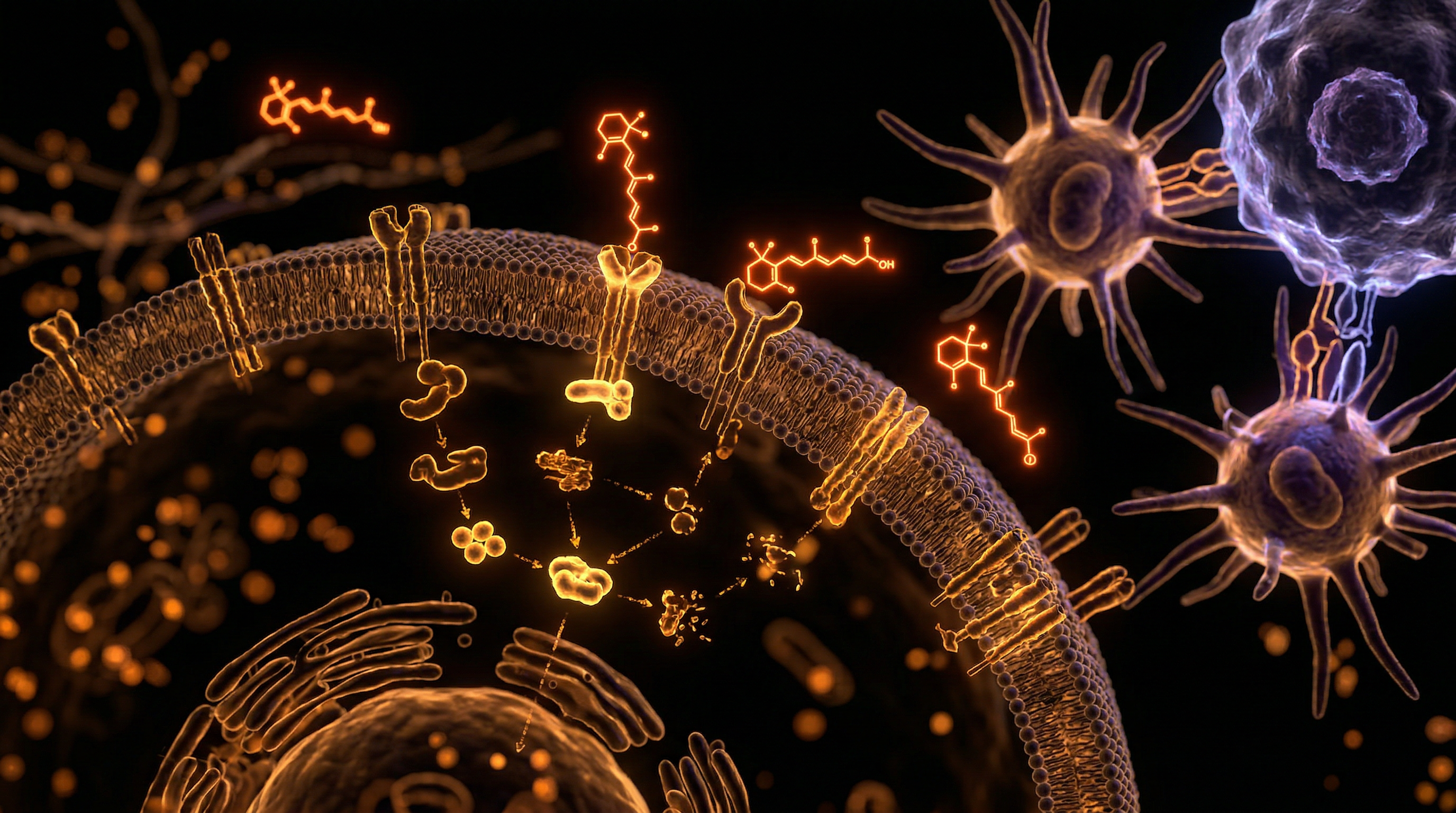
Once retinol reaches the target cell, it is converted into its most active metabolite: All-Trans Retinoic Acid (ATRA). ATRA acts as a ligand for two classes of nuclear receptors:
- RAR (Retinoic Acid Receptors)
- RXR (Retinoid X Receptors)
These receptors sit directly on specific sequences of DNA known as Retinoic Acid Response Elements (RAREs). When ATRA binds to these receptors, it acts like a "master key," turning on thousands of genes responsible for cellular differentiation, barrier maintenance, and immune modulation. Without this key, the cell remains in an undifferentiated, "confused," or hyper-proliferative state.
Epithelial Integrity: The First Line of Defence
The body’s primary defence is not the white blood cell, but the epithelium—the sheets of cells that line our skin, lungs, gut, and urogenital tract. Retinol is the primary regulator of keratinisation and mucin production.
- In the lungs, retinol ensures that the lining is moist and ciliated (to sweep out pathogens).
- In the gut, it maintains the "tight junctions" between cells, preventing the systemic leakage of toxins (Leaky Gut).
- Deficiency leads to squamous metaplasia, where soft, protective membranes turn into hard, dry, dysfunctional tissue.
Mechanisms at the Cellular Level
The "decay" of immune surveillance occurs when the immune system loses its ability to distinguish between harmless proteins and dangerous invaders, and when it loses the "patrol" capacity to identify and destroy mutated (cancerous) cells. Retinol is the central orchestrator of this surveillance.
T-Cell Differentiation and Homing
One of the most critical roles of Retinoic Acid (RA) is the education of T-lymphocytes.
- T-Regulatory Cells (Tregs): RA promotes the differentiation of naive T-cells into Foxp3+ Tregs. These are the "peacekeepers" of the immune system that prevent autoimmunity.
- Th17 Balance: In the absence of RA, the body overproduces Th17 cells, which are highly pro-inflammatory and associated with tissue destruction.
Furthermore, RA provides T-cells with "biological GPS." It induces the expression of α4β7 integrin and CCR9—homing receptors that tell the immune cells to migrate specifically to the mucosal surfaces (the gut and lungs). Without retinol, your "soldiers" are drafted but never sent to the front lines where the invasion is actually happening.
Secretory IgA (sIgA)
The primary antibody responsible for neutralising pathogens before they enter the bloodstream is Secretory IgA. Retinol is a mandatory co-factor for the "class-switching" of B-cells into IgA-producing cells. A retinol-deficient individual may have normal systemic immunity (in the blood) but have zero "border security" (in the mucus), leaving them perpetually vulnerable to respiratory and gastrointestinal infections.
Natural Killer (NK) Cell Vigilance
NK cells are the elite assassins of the immune system, responsible for detecting cells that have been hijacked by viruses or have become cancerous. Retinol enhances the cytotoxic activity of NK cells. When retinol levels drop, NK cells become "blind," allowing nascent tumours to evade detection and grow unchecked. This is the essence of immune surveillance decay.
Environmental Threats and Biological Disruptors
The modern environment has become a "retinol-stripping" landscape. Even if an individual consumes moderate amounts of Vitamin A, several modern factors actively deplete these stores or block their action.
The Glyphosate Connection
The pervasive use of glyphosate-based herbicides in UK agriculture is a primary disruptor. Research indicates that glyphosate can interfere with the cytochrome P450 enzymes responsible for both the activation and degradation of retinoic acid. By disrupting the delicate balance of RA metabolism, glyphosate can induce a state of "functional vitamin A deficiency" even when blood levels appear normal.
Blue Light and Retinal Burn-out
Our eyes contain the highest concentrations of retinoids in the body. The "Visual Cycle" involves the constant regeneration of 11-cis-retinal. Modern exposure to high-intensity artificial blue light from LEDs and screens places an unprecedented demand on our retinoid stores. The body prioritises vision; if the eyes are constantly "burning" through retinal to process artificial light, systemic pools are drained to compensate, leaving the immune system bankrupted.
Endocrine Disruptors and RAR Interference
Chemicals such as BPA (Bisphenol A) and certain phthalates have been shown to interfere with the RAR and RXR receptors. These "molecular mimics" can bind to the receptors, blocking the real Retinoic Acid from sending its signals. This "signal jamming" prevents the DNA from receiving the instructions needed to repair the gut lining or produce T-regulatory cells.
The Alcohol and Zinc Paradox
The UK has significant rates of sub-clinical zinc deficiency and high alcohol consumption. Alcohol competes for the same enzymes (alcohol dehydrogenase) that convert retinol into its active forms. Zinc is required for the synthesis of Retinol Binding Protein (RBP), the taxi that carries Vitamin A through the blood. Without zinc, Vitamin A stays trapped in the liver, unable to reach the tissues that need it.
The Cascade: From Exposure to Disease
The decay of immune surveillance is not an overnight event; it is a multi-stage collapse.
Stage 1: The Barrier Breach
The first sign of retinol decay is the thinning of the mucosal barriers. This manifests as:
- Dry eyes and "night blindness."
- Chronic "sinusitis" or dry, unproductive coughs.
- Food sensitivities (the result of the gut lining becoming permeable).
Stage 2: Loss of Oral Tolerance
As the Foxp3+ T-regulatory cells decline, the body loses "oral tolerance." This is why we are seeing an explosion of adult-onset allergies and Coeliac-like symptoms. The immune system, lacking the "calming" signal of retinoic acid, begins to attack common proteins like gluten, dairy, or pollen.
Stage 3: The Autoimmune Pivot
In this stage, the "blind" immune system begins to attack "self" tissue. Conditions like Hashimoto’s thyroiditis, Rheumatoid Arthritis, and Inflammatory Bowel Disease (IBD) are deeply linked to the failure of the RAR/RXR signalling pathways. Without retinol to enforce the "identity" of the tissue, the body treats its own organs as foreign invaders.
Stage 4: Malignant Escape (Cancer)
The final stage of surveillance decay is the failure to detect mutated cells. Retinoic acid is a known anti-proliferative agent. Many cancers involve a "silencing" of the RARE genes. When the body lacks the retinol to keep cells in their differentiated state, they revert to an "embryonic" state of rapid, uncontrolled growth.
What the Mainstream Narrative Omits
The current nutritional guidelines in the UK (the NHS and Public Health England) are based on preventing acute deficiency diseases like Xerophthalmia (total blindness). They are not designed for optimal immune surveillance.
The "Toxicity" Scaremongering
There is a pervasive fear of "Vitamin A toxicity." This fear is largely based on studies using synthetic retinyl palmitate or high doses in smokers (the CARET study), where the synthetic form behaved differently than food-based retinol. In reality, documented cases of toxicity from food sources (like liver) are vanishingly rare and usually require massive, sustained intakes alongside a deficiency in Vitamin D.
Important Callout: Vitamin A and Vitamin D are antagonistic yet synergistic. They share the RXR receptor. Taking high doses of Vitamin D (which is currently trendy) without sufficient Vitamin A can actually induce a functional Vitamin A deficiency, as the Vitamin D "hogs" the receptors, preventing Vitamin A from doing its job.
The Failure of Fortification
The UK fortifies margarine and some cereals with synthetic Vitamin A. However, these are often the "palmitate" or "acetate" forms, which are poorly regulated by the body compared to the natural forms found in animal fats, which come packaged with the necessary enzymes and co-factors for absorption.
The Beta-Carotene Myth
The most significant omission is the failure to distinguish between "Pro-Vitamin A" (carrots) and "Pre-formed Vitamin A" (liver). By listing them as the same on food labels (as International Units or Retinol Equivalents), the public is deceived into thinking a salad is immunologically equivalent to a serving of cod liver oil.
The UK Context
The United Kingdom is currently facing a unique "perfect storm" regarding retinol deficiency.
The Death of Offal
Historically, the British diet was rich in retinol. "Liver and onions" was a weekly staple. Kidney, heart, and cod liver were common. Following the "fat-heart" hypothesis of the 1970s and 80s, these nutrient-dense foods were demonised due to their cholesterol and saturated fat content. We replaced the most bioavailable source of immune-supportive nutrition with refined grains and seed oils.
The Post-BSE Trauma
The "Mad Cow Disease" (BSE) crisis in the 1990s led to a systemic distrust of organ meats and "unusual" animal parts. An entire generation of Britons grew up without ever consuming liver, thus missing the primary dietary source of retinol.
The Soil and the Grass
UK intensive farming has moved away from "pasture-raised" livestock. Retinol levels in butter, cream, and egg yolks are directly dependent on the animal’s consumption of green grass. As cows are moved into CAFOs (Concentrated Animal Feeding Operations) and fed grain/soy, the retinol content of British dairy has plummeted. A "pale" butter is a sign of a retinol-depleted product.
The Vitamin D Obsession
Because of the UK’s lack of sunlight, there has been a massive push for Vitamin D supplementation. While well-intentioned, this "monotherapy" has created a widespread Retinoid/Calciferol imbalance. Many Britons are now "D-replete" but "A-deficient," leading to calcification issues and the very immune decay described in this article.
Protective Measures and Recovery Protocols
To halt the decay of immune surveillance, we must restore the body's retinol status while respecting its biochemical complexity.
1. Prioritise Pre-formed Retinol (The "Offal" Strategy)
The most efficient way to restore retinol levels is the consumption of organic, pasture-raised ruminant liver.
- Frequency: 100g to 150g of liver per week is sufficient for most adults.
- Source: Ensure the animal was grass-fed, as grain-fed liver has significantly lower vitamin concentrations.
2. High-Vitamin Cod Liver Oil (HVCLO)
Unlike standard "fish oil," which is stripped of its vitamins, HVCLO contains the natural ratio of Vitamin A to Vitamin D. This is the traditional British "winter tonic" that protected generations from respiratory decay.
- Look for: Fermented or extra-virgin processing methods that do not use high heat.
3. Address the Co-factors
Retinol cannot function in a vacuum. To ensure the Retinoic Acid pathways are open, you must have:
- Zinc: Found in oysters, red meat, and pumpkin seeds. Zinc allows the liver to release stored Vitamin A.
- Vitamin K2: Found in fermented foods and aged cheeses. K2 works with A and D to ensure calcium is directed to bones and not the soft tissues.
- Magnesium: Required for the activation of all nuclear receptors.
4. Mitigate Disruptors
- Filter Water: Use a high-quality filter (Reverse Osmosis or Berkey) to remove fluoride and pesticide residues that interfere with thyroid and retinoid signalling.
- Blue Light Blocking: Use "Amber" or "Red" lenses after sunset to preserve the retinal pools in the eyes.
- Organic Sourcing: Reduce glyphosate exposure by choosing organic for the "Dirty Dozen" crops.
5. Genetic Testing
Individuals who suspect they have "poor conversion" (long-term vegans who remain pale and prone to infection) should test for the BCMO1 SNP. If you are a "poor converter," plant-based sources will never be enough to maintain your immune surveillance.
Summary: Key Takeaways
The erosion of immune surveillance in the UK is a silent, nutritional crisis. By confusing "Vitamin A" with plant-based carotenoids, the mainstream narrative has left the population vulnerable to a collapse of epithelial integrity and a failure of immune "vision."
- Retinol is a Hormone: It governs DNA expression, not just basic metabolism.
- The Barrier is Key: Immune decay begins when the skin, gut, and lung linings fail to receive "remodelling" signals from retinol.
- Surveillance Requires Focus: T-cells and NK cells need retinol to "see" and "home in" on threats.
- The Modern Trap: Blue light, glyphosate, and the "Vitamin D-only" trend are depleting our internal retinol stores at an unprecedented rate.
- Restoration is Possible: Through the targeted reintroduction of organ meats, high-quality cod liver oil, and the balancing of key co-factors (Zinc/K2).
The choice is clear: we can continue to ignore the biological necessity of pre-formed retinol and suffer the inevitable rise in chronic disease, or we can return to the ancestral wisdom of nutrient-dense, animal-based nutrition to restore our body's primary line of defence.
Author: Senior Biological Researcher, INNERSTANDING Date: October 2023 Subject: Immunology & Nutritional Biochemistry
This article is provided for informational and educational purposes only. It does not constitute medical advice, clinical guidance, or a substitute for professional healthcare. Information reflects cited research at time of publication. Always consult a qualified healthcare professional before acting on any health information.
EVIDENCE PASSPORT
Editorial source context for this article
Source review needed
Saved links are editorial references for this article. They may support specific claims rather than every sentence. Open and assess each source in context. This passport does not independently verify them.
Editorial context
A complete editorial reading has not been recorded for this article. Source links remain available for you to open and assess directly.
Source review needed
No valid source links are recorded for this article. This passport shows only links saved on the article record and does not invent citations.
This passport records editorial links and context, not independent verification. Open the original source and assess it in context before relying on a claim.
Medical Disclaimer
The information in this article is for educational purposes only and does not constitute medical advice, diagnosis, or treatment. Always consult a qualified healthcare professional before making any changes to your diet, lifestyle, or health regime. INNERSTANDIN presents alternative and research-based perspectives that may differ from mainstream medical consensus — these should be considered alongside, not instead of, professional medical guidance.
Read Full DisclaimerContinue the thread
Keep this question moving.
Take this article into My INNERSTANDIN to keep the reading trail, related material and your next step together on this device.
Explore this in the Body Map
See where this hits your biology. Interactive anatomy, threats, and protective protocols.
Dig deeper in the Library
Free, longform PDF volumes that go beyond headlines into mechanisms and references.