
Vitamin B12 Bio-equivalence: Why Plant-Based Analogues Induce B12 Deficiency
Updated May 2026
Reveals the danger of pseudo-B12 found in algae which can mask a true deficiency. It reinforces the necessity of ruminant meat for B12 status.
Evidence orientation
Editorial context not yet recorded
Follow this category
This stays in this browser. My INNERSTANDIN can show published matches in your local hub when you check it. It does not send email, push, or alert notifications.
Local learning review
A private browser aid for revisiting ideas. It is not an alert or a health recommendation.
Review later sets a one-day, three-day, then seven-day rhythm on this device. Choose it only when you want to revisit this article.
Overview
In the modern landscape of nutritional science, few topics are as rife with misinformation as the bio-equivalence of Vitamin B12. As the global dietary shift leans increasingly towards plant-centric models, a silent biological crisis is unfolding. Vitamin B12, or cobalamin, is not merely a nutrient; it is a complex organometallic molecule essential for DNA synthesis, neurological function, and cellular energy production.
The prevailing narrative suggests that B12 can be adequately sourced from fortified foods or specific botanical "superfoods" such as algae, seaweed, and fermented soy. However, from the perspective of evolutionary biology and molecular biochemistry, this claim is not only false—it is dangerous. The "B12" found in the plant kingdom often consists of pseudo-B12 (corrinoids), structural analogues that are biologically inactive in humans.
Crucially, these analogues do more than just fail to provide nutrition; they actively compete with real cobalamin for transport sites, effectively "clogging" the body’s metabolic machinery. This creates a physiological paradox where blood tests may show "normal" B12 levels while the tissues are starving at a cellular level. To understand why ruminant meat is the only viable cornerstone for B12 status, we must peel back the layers of molecular deception inherent in plant-based alternatives.
Fact: Research indicates that up to 80% of the B12-like compounds found in Spirulina are actually inactive analogues (pseudo-B12), which have zero co-enzyme activity in human physiology.
The Biology — How It Works
Vitamin B12 is unique among vitamins for two reasons: it contains a metal ion (cobalt) and its absorption requires an intricate, multi-step "hand-off" system spanning the entire digestive tract.
The Corrin Ring Structure
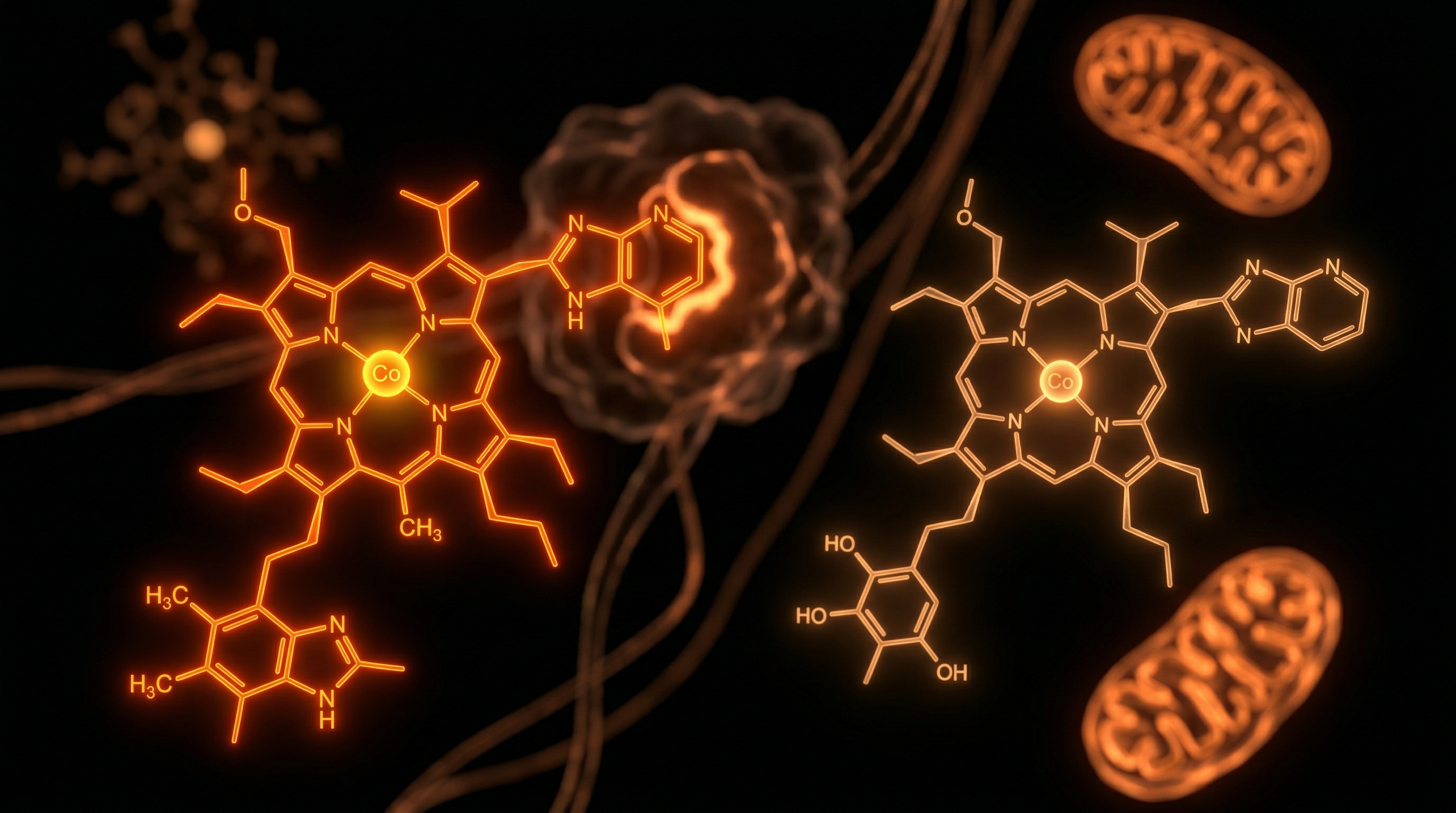
At the heart of B12 is a corrin ring, which resembles the porphyrin ring found in haem (haemoglobin) and chlorophyll. However, while haem centres on iron and chlorophyll on magnesium, B12 centres on a cobalt atom. This cobalt atom is the functional hub of the molecule. In animal tissues, this cobalt is attached to ligands like a methyl group (methylcobalamin) or a deoxyadenosyl group (adenosylcobalamin). These are the "bio-active" forms ready for immediate use by human cells.
The Journey of Absorption
Human B12 absorption is a marvel of biological engineering. It is not a matter of simple diffusion.
- Gastric Release: In the stomach, B12 is cleaved from animal protein by hydrochloric acid and pepsin.
- Haptocorrin Binding: To protect it from the acidic environment, B12 binds to haptocorrin (R-protein) secreted in saliva.
- The Pancreatic Phase: In the duodenum, pancreatic proteases digest haptocorrin, releasing the B12.
- Intrinsic Factor (IF): Gastric parietal cells secrete Intrinsic Factor, which then binds to B12. This IF-B12 complex is the only "key" that can unlock the receptors in the terminal ileum (the end of the small intestine).
- Transcobalamin II: Once absorbed into the blood, B12 is carried by Transcobalamin II, the specific taxi that delivers it to the liver and peripheral tissues.
The Ruminant Advantage
Ruminant animals (cows, sheep, deer) possess a symbiotic relationship with billions of bacteria in their rumen. These bacteria synthesise true cobalamin from cobalt found in the soil and grass. The animal then absorbs this B12 and concentrates it in its tissues—primarily the liver, kidneys, and muscle meat. When we consume ruminant meat, we are accessing a highly concentrated, pre-filtered, and biologically active form of the nutrient that has been perfectly prepared for human metabolic pathways.
Mechanisms at the Cellular Level
To understand why analogues are toxic, we must examine what B12 actually does inside the cell. There are two primary enzymatic reactions that require B12 as a co-factor. Without these, cellular life grinds to a halt.
1. The Cytosolic Pathway: Methionine Synthase
In the fluid of the cell (cytosol), B12 exists as methylcobalamin. It acts as a co-factor for the enzyme methionine synthase. This enzyme performs a critical "recycling" task: it takes a methyl group from 5-methyltetrahydrofolate (folate) and gives it to homocysteine, converting it back into methionine.
- Methionine is the precursor to S-adenosylmethionine (SAMe), the body’s universal methyl donor. Methylation is responsible for "switching" genes on and off, repairing DNA, and producing neurotransmitters like dopamine and serotonin.
- The Danger: If B12 is missing or replaced by an analogue, homocysteine levels rise. High homocysteine is a potent neurotoxin and a major driver of cardiovascular inflammation and arterial plaque formation.
2. The Mitochondrial Pathway: Methylmalonyl-CoA Mutase
Inside the mitochondria (the cell's power plants), B12 takes the form of adenosylcobalamin. It is required by the enzyme methylmalonyl-CoA mutase to convert methylmalonyl-CoA into succinyl-CoA.
- Succinyl-CoA is an essential component of the Krebs Cycle, the process that generates ATP (cellular energy).
- It is also vital for the synthesis of haemoglobin, the protein that carries oxygen in the blood.
- The Danger: When this pathway is blocked by B12 deficiency (or analogues), Methylmalonic Acid (MMA) builds up in the blood and urine. MMA is a specific marker of B12 deficiency; high levels indicate that the mitochondria are failing to produce energy and that the nervous system is under threat.
The Pseudo-B12 Sabotage
Pseudo-B12 (cobamides) possess a slightly different structure in the lower ligand of the corrin ring (e.g., adenine instead of 5,6-dimethylbenzimidazole).
- These analogues have a high affinity for haptocorrin.
- They can sometimes bind to Intrinsic Factor, though with less efficiency.
- Crucially, once they enter the cell, they cannot be converted into methylcobalamin or adenosylcobalamin.
- They sit in the enzyme’s "active site" like a broken key in a lock. The enzyme is occupied, but no reaction occurs. This is competitive inhibition, and it explains why consuming algae can actually accelerate the onset of deficiency symptoms.
Environmental Threats and Biological Disruptors
The modern world is increasingly hostile to B12 status. Even for those consuming animal products, several environmental and pharmaceutical factors can undermine the bio-availability of this critical nutrient.
The "Soil Depletion" Myth vs. Reality
A common plant-based argument is that "meat-eaters only get B12 because animals are supplemented because the soil is depleted." This is a half-truth designed to equalise the playing field. While intensive factory farming (monocropping-based feedlots) can lead to mineral deficiencies in livestock, the fundamental biological truth remains: ruminants on pasture are the most efficient accumulators of B12. Soil health is vital, but the human digestive tract is not designed to extract B12 from "dirty vegetables." The concentration of true cobalamin in soil-dwelling bacteria is several orders of magnitude lower than what is required to sustain human neurological health.
Pharmaceutical Disruptors
Several widely used medications directly interfere with the B12 pathway:
- Proton Pump Inhibitors (PPIs): Drugs like Omeprazole suppress stomach acid, which is required to cleave B12 from protein. Long-term use is a guaranteed route to deficiency.
- Metformin: This common diabetes medication interferes with the calcium-dependent absorption of the B12-IF complex in the ileum.
- Nitrous Oxide: Often used in dental procedures ("laughing gas"), this gas oxidises the cobalt atom in B12, rendering it permanently inactive. A single exposure can trigger acute neurological collapse in someone with borderline B12 levels.
The Glyphosate Impact
The ubiquitous herbicide glyphosate acts as a potent mineral chelator. It binds to metals like cobalt in the soil and within the gut microbiome of ruminants. By disrupting the shikimate pathway in bacteria, glyphosate can suppress the very micro-organisms responsible for B12 synthesis, making the "nose-to-tail" consumption of organic, pasture-raised animals more critical than ever.
The Cascade: From Exposure to Disease
B12 deficiency does not happen overnight. The liver stores several years' worth of cobalamin. However, once those stores are depleted—or compromised by pseudo-B12—the cascade of systemic failure begins.
Phase 1: The Haematological Mask
Traditionally, B12 deficiency was identified by megaloblastic anaemia (enlarged, immature red blood cells). However, the modern "health-conscious" diet is often high in synthetic folic acid (from fortified grains) or natural folate (from leafy greens).
Warning: High folate intake can "mask" B12 deficiency by allowing DNA synthesis to continue in red blood cells, even while the nervous system is rotting. The blood count looks normal, but the biological disaster continues unabated.
Phase 2: Neurological Demyelination
B12 is essential for the maintenance of the myelin sheath, the fatty insulation around nerve fibres. Without active cobalamin, the fatty acids in the myelin sheath become abnormal. This leads to Subacute Combined Degeneration of the Spinal Cord (SCD).
- Symptoms begin with "pins and needles" (paraesthesia) in the hands and feet.
- Progresses to loss of balance (ataxia), muscle weakness, and eventually paralysis.
- Cognitive decline, often misdiagnosed as early-onset dementia or Alzheimer's, is a frequent manifestation of chronic B12 starvation.
Phase 3: Psychological and Psychiatric Manifestations
The brain is a massive consumer of methyl groups. When B12-driven methylation fails:
- Production of serotonin, dopamine, and melatonin drops.
- Patients experience profound depression, "brain fog," and anxiety.
- In severe cases, "B12 madness" (megaloblastic madness) can occur, involving hallucinations and paranoia.
The Pediatric Crisis
The most tragic consequence of the plant-based B12 myth is seen in infants. Mothers on vegan diets who do not supplement correctly (or who rely on "natural" algal sources) pass on very little B12 through breast milk. The result is often permanent developmental delay, brain atrophy, and in some cases, infant mortality.
What the Mainstream Narrative Omits
The nutritional establishment frequently ignores the distinction between ingestion and utilisation. By focusing solely on the "amount" of B12 on a label, they overlook the bio-equivalence factor.
The Fortification Fallacy
Most fortified foods use cyanocobalamin. This is a synthetic form of B12 where the cobalt atom is attached to a cyanide molecule.
- While stable and cheap, the body must first decyanate the molecule (remove the cyanide) and then add a methyl group to make it useful.
- For individuals with common genetic mutations like MTHFR or those with high oxidative stress, this conversion is highly inefficient.
- Furthermore, the "cyanide" load, while small, must be detoxified by the liver using glutathione, further depleting the body’s antioxidant reserves.
The "B12 is Bacterial, Not Animal" Deception
Proponents of plant-based diets often claim that B12 is not an "animal" nutrient but a "bacterial" one, suggesting we can simply bypass the animal. This is a massive oversimplification of human ecology. While it is true that bacteria synthesise B12, the human small intestine—where B12 is absorbed—is located above the large intestine, where most of our B12-producing bacteria reside. We cannot absorb the B12 our own gut bacteria produce. We are evolutionarily adapted to let ruminants do the "fermenting" and "concentrating" for us, then consuming their nutrient-dense tissues.
Testing Inadequacy
The standard "Serum B12" test is notoriously unreliable.
- It measures the total B12 in the blood, including both active cobalamin and inactive analogues.
- It does not tell you if the B12 is actually getting inside the cells.
- A person can have "mid-range" serum B12 and still have severe tissue deficiency.
Callout: To get a true picture of B12 status, one must test Methylmalonic Acid (MMA) and Homocysteine. If these are elevated, B12 is not working, regardless of what the serum levels say.
The UK Context
In the United Kingdom, the push for "sustainable" diets has led to a surge in B12-related health issues that the NHS is struggling to manage.
The Rise of "Veganuary" and Nutritional Illiteracy
The UK has seen some of the highest growth in plant-based eating globally. However, public health messaging has failed to keep pace with the biological realities of these diets. Many British citizens are unknowingly replacing high-quality, B12-rich British Beef and Lamb with highly processed "analogue" meats that are fortified with inferior cyanocobalamin and contain anti-nutrients that hinder mineral absorption.
The NHS Guidelines Gap
Current NHS guidelines for B12 deficiency are often criticised by specialists for being outdated. The "threshold" for deficiency is set significantly lower than in countries like Japan, where B12 levels below 500 pg/mL are treated aggressively to prevent neurological decline. In the UK, patients often have to wait until they are clinically anaemic before B12 injections are offered, by which time permanent nerve damage may have already occurred.
The Ruminant Heritage
The UK is home to some of the world's finest pasture-based livestock systems. Ruminants like the North Devon ("Red Ruby") or the Highland cow are perfectly adapted to the British climate, converting "un-arable" hillside grass into the most bio-available B12 on the planet. Ignoring this indigenous food source in favour of imported, industrially-processed plant proteins is not just a culinary loss—it is a public health disaster.
Protective Measures and Recovery Protocols
If you have been relying on plant-based sources or have been exposed to the disruptors mentioned above, a strategic "Nose-to-Tail" recovery plan is essential.
1. Prioritise Ruminant Liver
Ruminant liver is the most concentrated source of B12 in existence.
- Beef Liver contains roughly 60–100 mcg of B12 per 100g.
- Compare this to the RDA of 2.4 mcg, and you see that liver is not just food; it is a biological "reloading" tool.
- Liver also provides the necessary co-factors (folate, riboflavin, copper) that work in synergy with B12.
2. The "Nose-to-Tail" Approach
B12 is found throughout animal tissues, but concentrations vary.
- Kidneys and Heart: Excellent secondary sources.
- Red Meat: Lamb and beef are superior to poultry or pork for B12.
- Shellfish: Oysters and clams are incredible B12 sources for those who include seafood.
3. Smart Supplementation (If Necessary)
If a deficiency is already established, oral intake may not be enough due to the Intrinsic Factor bottleneck.
- Hydroxocobalamin Injections: The gold standard in the UK for bypassing the gut and quickly restoring liver stores.
- Sublingual Methylcobalamin: Absorbed through the mucous membranes under the tongue, bypassing the need for stomach acid and IF.
- Avoid Cyanocobalamin: Opt for Methyl- or Adenosylcobalamin to provide the body with the "ready-to-use" co-enzyme forms.
4. Remove the Saboteurs
- Eliminate "pseudo-B12" sources like spirulina, chlorella, and unfermented soy.
- Assess the necessity of PPIs or Metformin with a practitioner.
- Reduce exposure to glyphosate-sprayed crops which compromise the ruminant-soil B12 cycle.
Summary: Key Takeaways
The modern "B12 crisis" is a direct result of ignoring evolutionary biology in favour of dietary ideology. To maintain health, one must understand that not all "B12" is created equal.
- Bio-equivalence is a Myth: Plant-derived B12 analogues (pseudo-B12) are biologically inert in humans and can worsen deficiency by blocking real B12 receptors.
- The Masking Effect: High folate intake from plant-based diets can hide the signs of B12 deficiency on standard blood tests, allowing neurological damage to go undetected.
- Ruminants are Essential: Cows and sheep are the biological "refineries" that convert bacterial cobalt into the methylcobalamin humans require for DNA and nerve health.
- Nose-to-Tail Nutrition: Liver and ruminant meats are the only reliable, bio-available sources of true cobalamin.
- Test Correctly: Do not rely on "Serum B12" alone. Insist on MMA and Homocysteine testing to ensure your cellular machinery is actually functioning.
The quest for health begins with INNERSTANDING—looking past the labels and understanding the deep molecular requirements of the human body. The animal kingdom provides the "key" to our neurological and cellular vitality; to discard it in favour of plant-based analogues is to invite biological decline.
This article is provided for informational and educational purposes only. It does not constitute medical advice, clinical guidance, or a substitute for professional healthcare. Information reflects cited research at time of publication. Always consult a qualified healthcare professional before acting on any health information.
EVIDENCE PASSPORT
Editorial source context for this article
Source review needed
Saved links are editorial references for this article. They may support specific claims rather than every sentence. Open and assess each source in context. This passport does not independently verify them.
Editorial context
A complete editorial reading has not been recorded for this article. Source links remain available for you to open and assess directly.
Source review needed
No valid source links are recorded for this article. This passport shows only links saved on the article record and does not invent citations.
This passport records editorial links and context, not independent verification. Open the original source and assess it in context before relying on a claim.
Medical Disclaimer
The information in this article is for educational purposes only and does not constitute medical advice, diagnosis, or treatment. Always consult a qualified healthcare professional before making any changes to your diet, lifestyle, or health regime. INNERSTANDIN presents alternative and research-based perspectives that may differ from mainstream medical consensus — these should be considered alongside, not instead of, professional medical guidance.
Read Full DisclaimerContinue the thread
Keep this question moving.
Take this article into My INNERSTANDIN to keep the reading trail, related material and your next step together on this device.
Dig deeper in the Library
Free, longform PDF volumes that go beyond headlines into mechanisms and references.