
Vitamin D Deficit: Northern Genetic Vulnerability
Updated May 2026
UK populations carry genetic adaptations for vitamin D synthesis that are failing under modern indoor conditions. This deficit is a primary driver of seasonal affective disorder and immune failure.
Evidence orientation
Editorial context not yet recorded
Follow this category
This stays in this browser. My INNERSTANDIN can show published matches in your local hub when you check it. It does not send email, push, or alert notifications.
Local learning review
A private browser aid for revisiting ideas. It is not an alert or a health recommendation.
Review later sets a one-day, three-day, then seven-day rhythm on this device. Choose it only when you want to revisit this article.
Overview
The human organism is a living record of solar interaction. For the better part of two million years, our ancestors existed in an unbroken rhythmic dance with the sun, their biology finely tuned to the spectral fluctuations of equatorial light. However, as Homo sapiens migrated out of Africa and settled in the high-latitude regions of Northern Europe and the British Isles, a profound biological crisis emerged: the scarcity of ultraviolet B (UVB) radiation.
To survive, our ancestors underwent one of the most rapid and visible evolutionary transformations in history. The selective pressure for survival drove a radical depigmentation of the skin, a genetic adaptation designed to maximise the capture of every fleeting photon of UVB. This was not merely a cosmetic change; it was an urgent metabolic necessity to facilitate the synthesis of cholecalciferol (Vitamin D3), a secosteroid hormone that governs over 2,000 genes—approximately 10% of the human genome.
Today, this ancient genetic machinery is failing. In the modern UK, we are witnessing a catastrophic "mismatch" between our evolutionary heritage and our contemporary environment. We carry the genomes of outdoor-dwelling, sun-dependent hunter-gatherers, yet we live 90% of our lives indoors, shielded by glass, smothered in chemical sunscreens, and bathed in artificial blue light. This disconnect is not merely a matter of "mild deficiency"; it is a systemic biological collapse that underpins the UK’s epidemics of autoimmune disease, seasonal depression, and chronic immune failure.
Key Fact: Current estimates suggest that over 60% of the UK population is clinically deficient in Vitamin D during the winter months, with a significant percentage remaining insufficient even during the peak of summer.
The Biology — How It Works
Vitamin D is unique among vitamins because it is not, in the strictest sense, a vitamin at all. It is a pro-hormone that the body synthesises through a complex photobiological process. The journey begins in the skin, specifically in the keratinocytes of the stratum basale and stratum spinosum.
The Photolytic Transformation
When UVB radiation (wavelengths between 290 and 315 nm) penetrates the skin, it is absorbed by 7-dehydrocholesterol. This interaction triggers a photolytic reaction that breaks the B-ring of the steroid structure, forming pre-vitamin D3. Within hours, through a process of thermal isomerisation, this unstable precursor is converted into cholecalciferol.
The Two-Step Hydroxylation
Cholecalciferol itself is biologically inert. It must undergo two specific hydroxylations to become active:
- The Hepatic Phase: In the liver, the enzyme CYP2R1 converts cholecalciferol into 25-hydroxyvitamin D [25(OH)D], also known as calcifediol. This is the primary storage form and the marker measured in clinical blood tests.
- The Renal and Local Phase: In the kidneys (and importantly, locally within the immune system and various organs), the enzyme CYP27B1 converts 25(OH)D into 1,25-dihydroxyvitamin D [1,25(OH)2D], or calcitriol. This is the "master key"—the biologically active hormone.
The Genetic Adaptation of the North
Northern European populations carry specific mutations in the SLC24A5 and SLC45A2 genes, which reduced melanin production. Melanin is an evolutionary "sunblock"; while it protects against DNA damage in the tropics, in the North, it prevents the synthesis of Vitamin D. By shedding melanin, our ancestors increased their Vitamin D synthesis efficiency by five to ten times compared to darker-skinned individuals. However, even this high-efficiency system requires solar input that the modern British environment no longer provides.
Mechanisms at the Cellular Level
To understand why a deficit is so devastating, we must look at the Vitamin D Receptor (VDR). The VDR is a nuclear receptor protein found in almost every cell in the human body, from the heart and brain to the T-cells of the immune system.
Genomic Signalling
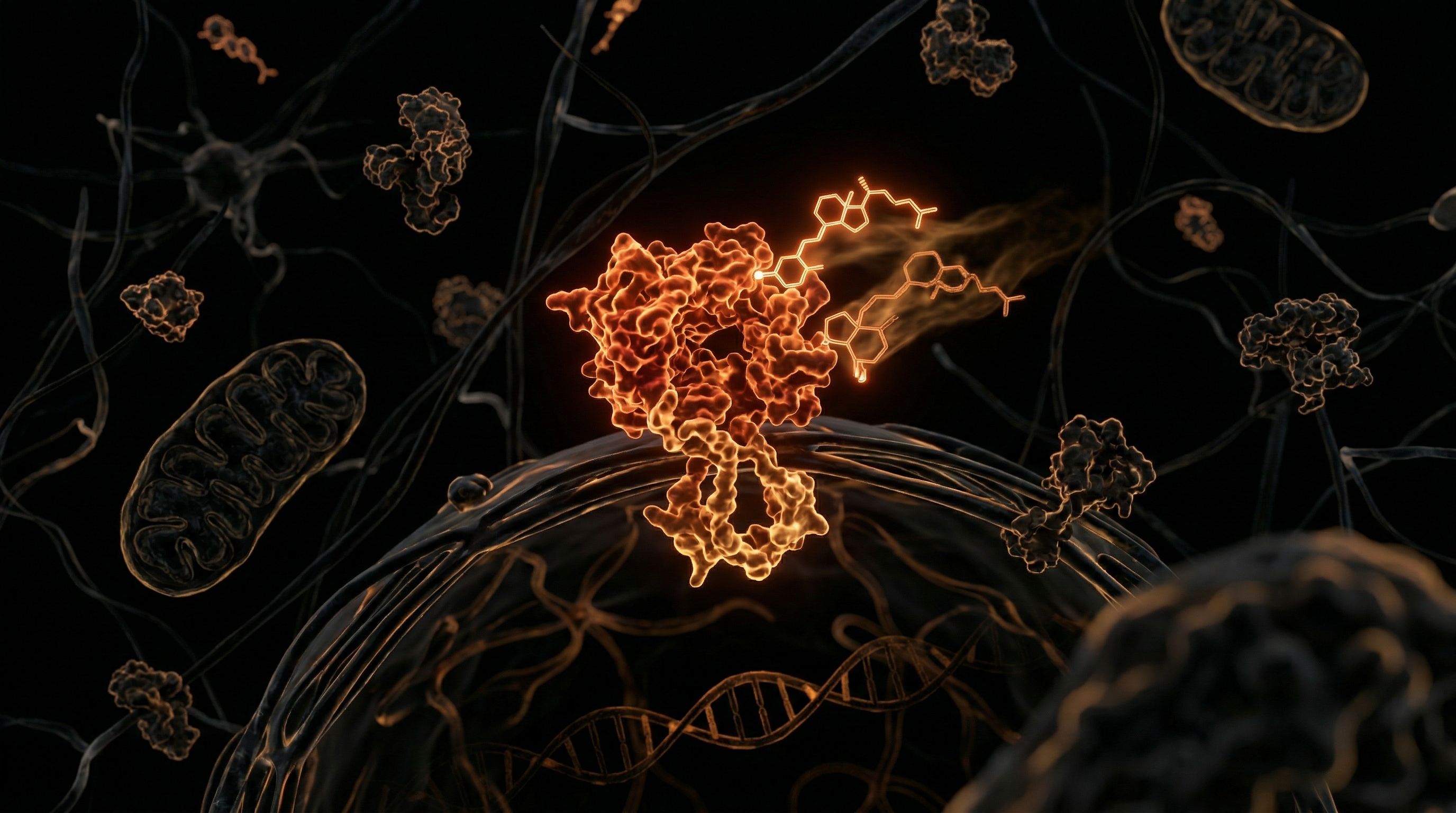
When active calcitriol binds to the VDR, the receptor forms a complex with the Retinoid X Receptor (RXR). This complex then migrates into the cell nucleus, where it binds to Vitamin D Response Elements (VDREs) on our DNA. This process literally "switches on" or "silences" specific genes.
The "Cytokine Storm" Buffer
In the immune system, Vitamin D acts as a master modulator. It enhances the innate immune response—the body’s "first responders"—by stimulating the production of cathelicidins and defensins, which are natural antimicrobial peptides that destroy the cell walls of bacteria and viruses. Simultaneously, Vitamin D down-regulates the adaptive immune system’s pro-inflammatory response. It inhibits the production of Th1 cytokines (such as IL-6 and TNF-alpha) which, when unchecked, lead to the "cytokine storms" seen in severe respiratory infections and autoimmune flares.
Neuro-Endocrine Regulation
In the brain, the VDR is heavily expressed in the substantia nigra and the hypothalamus. Vitamin D is a crucial co-factor for the enzyme tryptophan hydroxylase (TPH2), which converts the amino acid tryptophan into serotonin.
- Serotonin is the primary neurotransmitter responsible for mood regulation and impulse control.
- In the absence of Vitamin D, serotonin production in the brain collapses, providing a direct molecular mechanism for Seasonal Affective Disorder (SAD).
Callout: Vitamin D deficiency reduces the expression of the gene for tyrosine hydroxylase, the rate-limiting enzyme in the synthesis of dopamine, directly linking low sun exposure to anhedonia and cognitive fatigue.
Environmental Threats and Biological Disruptors
The modern environment has created a "perfect storm" that renders our northern genetic adaptations obsolete. We are living in a state of biological darkness, even when the sun is shining.
The "Vitamin D Winter"
In the UK, located between 50°N and 60°N latitude, the sun’s angle of incidence is too low for most of the year to allow UVB rays to penetrate the atmosphere. From October to April, the atmosphere filters out almost 100% of the UVB required for synthesis. During these months, the British population relies entirely on stored Vitamin D in the liver and adipose tissue—stores that are rarely sufficient to last six months.
The Glass Barrier
Modern office and residential glass are designed to block UV radiation. While glass allows UVA (which causes skin ageing and DNA damage) to pass through, it almost entirely blocks UVB. Consequently, sitting by a sunny window provides zero Vitamin D synthesis while potentially increasing the risk of skin damage and suppressing the immune system through UVA exposure.
Air Pollution and Particulate Matter
Atmospheric pollutants, particularly nitrogen dioxide (NO2) and particulate matter (PM2.5), absorb and scatter UVB radiation before it can reach the ground. Research indicates that individuals living in highly polluted urban centres like London or Manchester require significantly longer sun exposure to achieve the same Vitamin D levels as those in rural coastal areas.
The Adipose Sequestration Paradox
Vitamin D is fat-soluble. In an increasingly sedentary and obese population, Vitamin D is frequently sequestered within adipose (fat) tissue, making it unavailable for use by the liver and kidneys. This means that an overweight individual may require two to three times the dose of Vitamin D as a lean individual to achieve the same circulating blood levels.
The Cascade: From Exposure to Disease
When the genetic requirement for Vitamin D is not met, a systemic "domino effect" occurs, leading to a cascade of chronic health failures.
The Immune Failure
The seasonal nature of the "flu season" is not a coincidence of temperature; it is a direct consequence of the Vitamin D nadir. When levels drop below 50 nmol/L (the standard UK "sufficient" mark, which many experts argue is too low), the T-cells remain dormant. Research has shown that without Vitamin D, T-cells cannot "arm" themselves to recognise and attack pathogens. This leaves the host vulnerable to every circulating respiratory virus, from the common cold to more severe pathogens.
The Autoimmune Explosion
Multiple Sclerosis (MS) provides a haunting map of Vitamin D deficit. The prevalence of MS increases dramatically as one moves further from the equator. Scotland has one of the highest rates of MS in the world. The theory, now widely accepted in ancestral biology, is that Vitamin D is essential for the "training" of Regulatory T-cells (Tregs). These cells are responsible for distinguishing between foreign invaders and the body's own tissues. Without sufficient D, the immune system loses its "self-awareness" and begins attacking the myelin sheath or the joints.
The Bone-Brain Axis
While the mainstream focuses on rickets and osteoporosis, the neurological impact is often more immediate. Low Vitamin D is linked to:
- Cognitive Decline: The VDR is involved in the clearance of amyloid-beta plaques in the brain.
- Sleep Architecture: Vitamin D receptors in the brainstem play a role in the sleep-wake cycle. Deficiency is strongly correlated with sleep apnoea and insomnia.
Statistic: A meta-analysis published in the British Medical Journal involving 25 clinical trials found that Vitamin D supplementation reduced the risk of acute respiratory tract infections by up to 50% in those who were severely deficient.
What the Mainstream Narrative Omits
The current health guidelines in the UK regarding Vitamin D are not only insufficient; they are dangerously outdated. There is a profound silence concerning several "inconvenient truths" that challenge the status quo of the pharmaceutical and cosmetic industries.
The Fallacy of the RDA
The NHS Recommended Dietary Allowance (RDA) of 400 IU (10mcg) per day was established solely to prevent rickets—a Victorian-era bone deformity. It was never intended to support optimal immune function, gene expression, or mental health. Modern research suggests that for a Northern European adult, a maintenance dose of 4,000 to 5,000 IU is often required to maintain optimal blood levels (above 100 nmol/L).
The Sunscreen Conflict
For decades, the public has been told that "there is no such thing as a healthy tan" and that sunscreen should be applied at all times. This narrative, heavily funded by the multi-billion pound cosmetic industry, ignores the biological necessity of UV. While high-intensity, intermittent burning is dangerous, low-intensity, frequent exposure is an evolutionary requirement. By blocking 99% of UVB synthesis, sunscreen is a primary driver of the modern Vitamin D crisis.
The "Supplementation Failure" Myth
Mainstream media often cites studies claiming "Vitamin D supplements don't work." A closer inspection of these studies usually reveals one of three fatal flaws:
- Low Dosage: Using only 400-800 IU, which is insufficient to move blood levels.
- Lack of Co-factors: Administering Vitamin D without Magnesium or Vitamin K2.
- Baseline Ignorance: Testing people who are already sufficient, where no further benefit would be expected.
The Suppression of Viral Research
During the recent global respiratory crisis, evidence regarding Vitamin D’s protective role was largely sidelined in favour of more expensive, patented pharmaceutical interventions. For a "senior biological researcher," this suppression of cheap, off-patent nutritional science is the most egregious failure of modern institutional medicine.
The UK Context
The United Kingdom represents a "ground zero" for northern genetic vulnerability. Our ancestors thrived here for millennia because they lived in the elements; they were farmers and labourers who spent 12 hours a day outdoors.
The "English Disease"
In the 19th century, rickets was so prevalent in British industrial cities that it became known across Europe as "The English Disease." The coal smoke of the Industrial Revolution created a permanent smog that blocked UVB, combined with the movement of the population from sun-drenched fields into dark factories. We are currently living through "Rickets 2.0," only now the symptoms are invisible: depression, chronic fatigue, and autoimmune "brain fog."
The Latitude Problem
The "line of insufficiency" is generally accepted as 37°N. The entirety of the UK lies well above this. Even on a clear day in February in Manchester (53°N), the atmosphere is so thick at that solar angle that no Vitamin D can be produced, regardless of skin colour.
The Ethnic Vulnerability
A critical sub-narrative in the UK context is the heightened vulnerability of Black, Asian, and Minority Ethnic (BAME) populations. While the fair-skinned indigenous population is struggling, those with higher melanin levels are at a massive disadvantage. A person of South Asian descent in London may require 30 to 45 minutes of midday sun to synthesise the same amount of Vitamin D that a fair-skinned person produces in 6 minutes. This biological reality is rarely addressed with the urgency it requires in public health policy.
Protective Measures and Recovery Protocols
To overcome a northern genetic vulnerability, one must move beyond "guidelines" and into the realm of biological optimisation.
1. The Gold Standard: Testing
The only way to manage Vitamin D is to measure it.
- Deficient: < 50 nmol/L (Emergency status)
- Insufficient: 50 - 75 nmol/L (Sub-optimal, immune system compromised)
- Optimal: 100 - 150 nmol/L (Where the genetic machinery functions best)
- Therapeutic: 150 - 200 nmol/L (Often required for those with MS or autoimmune conditions)
2. The Trinity: D3, K2, and Magnesium
Vitamin D does not work in a vacuum. Taking high doses of D3 in isolation can be counter-productive.
- Vitamin K2 (MK-7): Vitamin D increases calcium absorption. Without K2, that calcium can end up in the soft tissues (arteries and kidneys) instead of the bones and teeth. K2 activates osteocalcin, which directs calcium to the skeleton.
- Magnesium: This is the most critical co-factor. The enzymes that convert Vitamin D into its active form (CYP2R1 and CYP27B1) are magnesium-dependent. If you are magnesium deficient (as 70% of the UK population is), your Vitamin D will remain stored and inactive, potentially leading to "Vitamin D resistance."
3. Sensible Sun Exposure: The "Shadow Rule"
During the British summer (May to August), use the shadow rule: If your shadow is shorter than you are, the sun is high enough to produce Vitamin D. Aim for 10–20 minutes of exposure to as much skin as possible (without burning) during the solar noon (12:00 - 14:00).
4. Supplementation Strategy
For most UK adults during the "Vitamin D Winter," a daily dose of 4,000 IU to 5,000 IU of Vitamin D3 (in an oil-based softgel or liquid form) is required to maintain optimal levels. This should be paired with at least 100mcg of Vitamin K2 and 400mg of Magnesium Malate or Glycinate.
5. Biological Light Hygiene
Understand that "light is information." In the winter, supplement your Vitamin D, but also seek out Full Spectrum Light Therapy (SAD lamps) to stimulate the retina and provide the neurological signals that the "sun is present," even when the UVB is absent.
Summary: Key Takeaways
- Genetic Mismatch: Northern Europeans evolved fair skin to survive low-UV environments, but modern indoor lifestyles have broken this delicate metabolic balance.
- The Master Hormone: Vitamin D3 is a secosteroid that regulates 10% of the human genome; its absence is a systemic "software failure" for the body.
- The UK Crisis: Above 50°N, UVB synthesis is impossible for six months of the year, creating a predictable annual collapse in public health.
- Immune & Mood Link: Deficiency is a primary driver of the UK’s high rates of Seasonal Affective Disorder (SAD) and autoimmune diseases like Multiple Sclerosis.
- Mainstream Failure: RDAs are set to prevent acute bone disease, not to foster optimal human health. Standard advice often ignores the vital necessity of co-factors like Magnesium and K2.
- The Protocol: Optimal health requires maintaining blood levels between 100–150 nmol/L through testing, targeted high-dose supplementation, and the rejection of "sun-phobia."
The "Northern Genetic Vulnerability" is not a life sentence; it is a call to biological consciousness. By acknowledging our evolutionary needs and the limitations of our current environment, we can reclaim the vitality that our ancestors fought so hard to preserve in the dim light of the North.
This article is provided for informational and educational purposes only. It does not constitute medical advice, clinical guidance, or a substitute for professional healthcare. Information reflects cited research at time of publication. Always consult a qualified healthcare professional before acting on any health information.
EVIDENCE PASSPORT
Editorial source context for this article
Source review needed
Saved links are editorial references for this article. They may support specific claims rather than every sentence. Open and assess each source in context. This passport does not independently verify them.
Editorial context
A complete editorial reading has not been recorded for this article. Source links remain available for you to open and assess directly.
Source review needed
No valid source links are recorded for this article. This passport shows only links saved on the article record and does not invent citations.
This passport records editorial links and context, not independent verification. Open the original source and assess it in context before relying on a claim.
Medical Disclaimer
The information in this article is for educational purposes only and does not constitute medical advice, diagnosis, or treatment. Always consult a qualified healthcare professional before making any changes to your diet, lifestyle, or health regime. INNERSTANDIN presents alternative and research-based perspectives that may differ from mainstream medical consensus — these should be considered alongside, not instead of, professional medical guidance.
Read Full DisclaimerContinue the thread
Keep this question moving.
Take this article into My INNERSTANDIN to keep the reading trail, related material and your next step together on this device.
Dig deeper in the Library
Free, longform PDF volumes that go beyond headlines into mechanisms and references.