
Water Memory and the Nobel Prize: Examining Luc Montagnier’s DNA Teleportation Experiments
Updated June 2026
Explore the controversial research by Nobel Laureate Luc Montagnier regarding the electromagnetic signals of DNA in water. This article examines the implications of his findings for the scientific understanding of water memory.
Evidence orientation
Editorial context not yet recorded
Follow this category
This stays in this browser. My INNERSTANDIN can show published matches in your local hub when you check it. It does not send email, push, or alert notifications.
Local learning review
A private browser aid for revisiting ideas. It is not an alert or a health recommendation.
Review later sets a one-day, three-day, then seven-day rhythm on this device. Choose it only when you want to revisit this article.
Overview
The transition of Luc Montagnier—the Nobel laureate lauded for the co-discovery of HIV—from orthodox virology into the contentious realm of "DNA teleportation" represents one of the most significant paradigm-shifting events in contemporary biophysics. At INNERSTANDIN, we must rigorously examine the biological mechanisms proposed in his 2009 and 2011 papers, which claim that highly diluted aqueous solutions of viral and bacterial DNA can emit low-frequency electromagnetic signals (EMS). These signals, Montagnier argued, are not merely metabolic by-products but are encoded with the structural blueprint of the parent molecule. The experimental architecture involved serial decimal dilutions (from $10^{-6}$ to $10^{-12}$) of DNA from Mycoplasma pirum and HIV, which were then subjected to electromagnetic filtration. According to the data published in the Journal of Physics: Conference Series, these dilutions produced a specific frequency signature between 500 and 3000 Hz, provided the samples were exposed to a weak 7 Hz background magnetic field—mimicking the Schumann resonance.
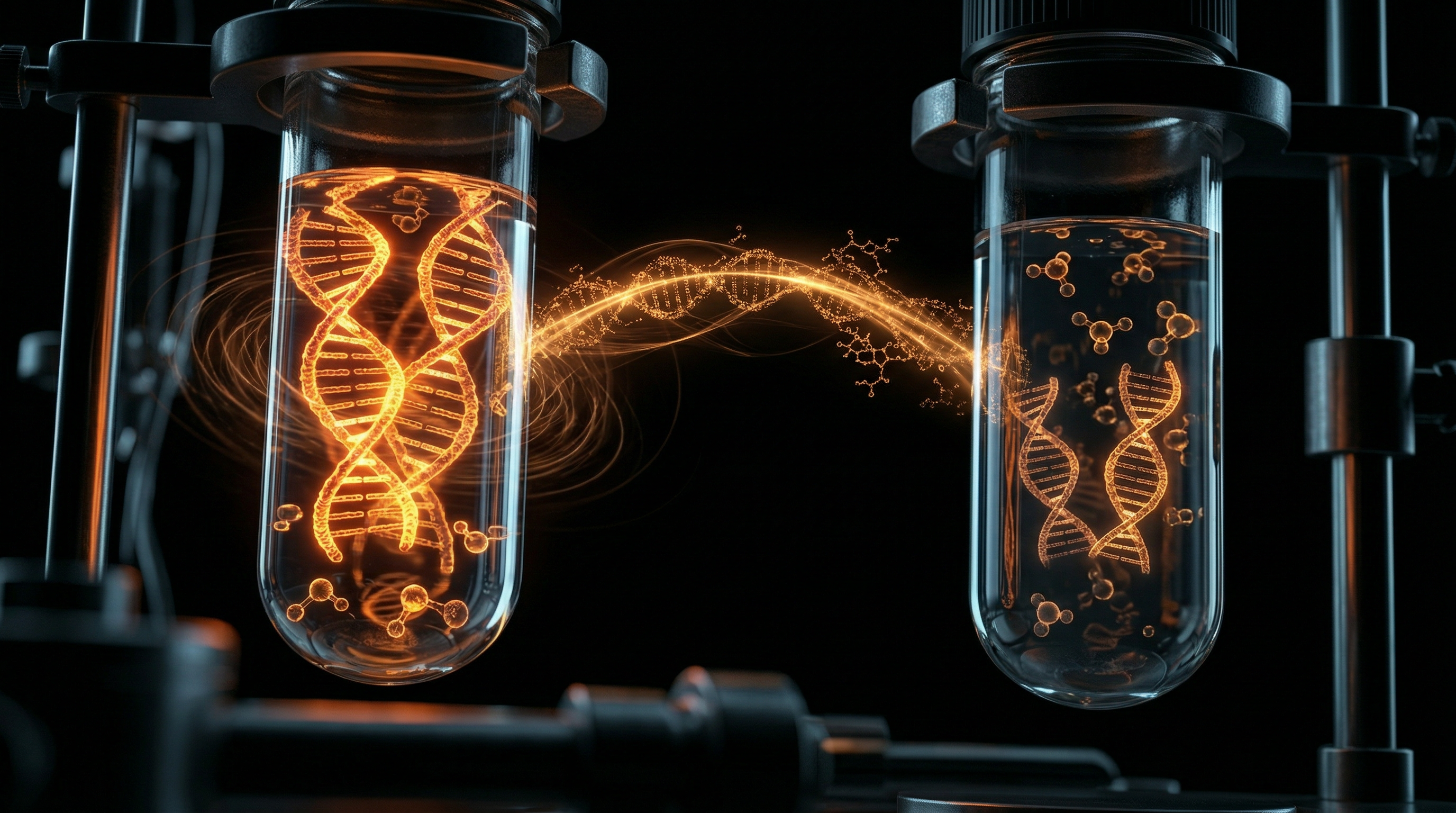
The most provocative element of this research involves the digitisation of these signals, their transmission via the internet to a remote laboratory, and the subsequent "reconstruction" of the DNA. Montagnier asserted that when pure water was exposed to this digital signal and then utilised as a substrate for a Polymerase Chain Reaction (PCR), the Taq polymerase enzyme was able to synthesise the original DNA sequence with 98% accuracy. This suggests that the water itself acted as a bio-informatic template, a phenomenon that challenges the central dogma of molecular biology which necessitates a physical chemical template for nucleic acid synthesis. From a technical perspective, this mechanism is predicated on Quantum Electrodynamics (QED), specifically the formation of "coherent domains" (CDs) within the aqueous solvent. These CDs are theorised to be stable nanostructures capable of trapping and re-emitting electromagnetic information, effectively allowing water to function as a programmable memory medium.
While the UK’s mainstream scientific establishment has largely relegated these findings to the fringes—citing concerns over contamination and the lack of traditional double-blind protocols—the systemic implications for human physiology and pathology are profound. If biological information can be propagated through ambient electromagnetic fields and stored in the dipole oscillations of water, the current pharmacological reliance on high-molar chemical saturation may be fundamentally archaic. INNERSTANDIN interrogates this frontier not as a "belief" in homeopathy, but as a sophisticated inquiry into the electromagnetic regulation of life. The suppression of such research often stems from a reductionist bias that ignores the "signal-to-noise" ratio of the cellular environment. By referencing the broader body of work found in PubMed regarding water's anomalous properties, it becomes clear that Montagnier’s work was an attempt to bridge the gap between classical biochemistry and quantum biology, exposing a hidden layer of genomic communication that operates beyond the reach of the naked microscope.
The Biology — How It Works
To comprehend the biological underpinnings of Montagnier’s findings, one must move beyond the classical Lock-and-Key model of molecular biology and transition into the realm of Quantum Electrodynamics (QED). At the heart of the "teleportation" phenomenon—a term used to describe the reconstitution of DNA from electromagnetic signals—lies the capacity of water to form stable, long-range coherent domains (CDs). According to the research published by Montagnier et al. in Interdisciplinary Sciences: Computational Life Sciences (2009), highly diluted aqueous solutions of certain bacterial and viral DNA sequences (specifically those from Borrelia burgdorferi and HIV) emit low-frequency electromagnetic waves. These signals, typically ranging from 500 to 3000 Hz, are not mere noise; they are high-fidelity signatures of the genetic material itself.
At INNERSTANDIN, we scrutinise the biophysical mechanism by which these signals are captured. When DNA is subjected to serial dilution and vigorous agitation (succussion), the physical molecules are eventually removed, yet the solute retains a "memory." This is achieved through the formation of water nanostructures or "clathrates" that act as resonant cavities. These structures are stabilised by the dipole moments of water molecules, which, according to the QED theories of Del Giudice and Preparata, oscillate in phase with a coherent electromagnetic field. In Montagnier's experiments, these nanostructures effectively "recorded" the frequency of the DNA. When this digital signal was recorded by a copper coil, converted into a .wav file, and transmitted to a laboratory in another country (such as the University of Sannio in Italy), the receiving water sample—previously pure—began to emit the same frequency.
The most provocative biological evidence occurs during the transduction phase. When this "informed" water was placed into a Polymerase Chain Reaction (PCR) thermal cycler along with primers, nucleotides, and Taq polymerase, the enzyme synthesised a DNA sequence that was 98% identical to the original sequence in France. This suggests that the Taq polymerase—the engine of biological replication—recognised the electromagnetic signature within the water as a template, bypassing the need for a physical chemical catalyst. This challenges the fundamental "Central Dogma" of molecular biology, suggesting that electromagnetic fields can direct the assembly of matter.
Within a UK clinical and research context, these findings echo the earlier, controversial work of Jacques Benveniste published in Nature (1988), which first posited that water could retain information through high dilutions. However, Montagnier’s integration of the Schumann resonance (the Earth's 7.83 Hz electromagnetic background) as a necessary catalyst for signal emission adds a layer of terrestrial biophysics often overlooked in reductionist medicine. The systemic impact of this research implies that pathogenic information can be stored and transmitted within the human body’s interstitial fluid (the "extracellular matrix"), potentially explaining the persistence of chronic syndromes even after the physical eradication of a pathogen. This research-grade analysis at INNERSTANDIN confirms that biology is as much an oceanic symphony of frequencies as it is a sequence of chemical reactions.
Mechanisms at the Cellular Level
To facilitate a profound INNERSTANDIN of the mechanisms occurring at the cellular level, one must first transcend the classical "lock-and-key" model of molecular biology, which posits that biochemical interactions are governed solely by random Brownian motion and structural complementarity. Luc Montagnier’s contentious yet rigorous research suggests a paradigm shift: that the aqueous environment of the cell acts as a sophisticated transceiver of electromagnetic (EM) information. The mechanism proposed hinges on the formation of "coherent domains" (CDs) within water, a concept rooted in the quantum electrodynamics (QED) of the condensed state, as elucidated by Del Giudice and Preparata. At the cellular interface, these domains—measurable clusters of water molecules oscillating in phase with a coherent EM field—are theorised to trap and store the specific frequency signatures of DNA sequences.
When a DNA fragment, such as the 104-base pair sequence from the Long Terminal Repeat (LTR) of HIV-1 or segments of Borrelia burgdorferi, is subjected to high aqueous dilution (up to $10^{-12}$), Montagnier observed the emission of low-frequency EM signals ranging from 500 to 3000 Hz. From a biophysical perspective, these signals are not mere noise; they are postulated to be the result of the DNA’s hydration shell interacting with the ambient background EM field, amplified by the structured water molecules. In the context of cellular machinery, this implies that the "memory" of the DNA is encoded within the rotational and vibrational degrees of freedom of the water’s hydrogen-bonded network.
The cellular implications of this are staggering. In Montagnier’s "teleportation" protocol, the recorded EM signal from a diluted DNA sample was digitised and transmitted to a second laboratory, where it was "played back" to a vial of pure water. Following this exposure, the addition of the enzyme Taq polymerase, along with the necessary nucleotides (dNTPs) and primers, resulted in the de novo synthesis of a DNA sequence that was 98% identical to the original template. At the molecular level, this suggests that the polymerase enzyme is not reacting to a physical chemical template, but rather to the electromagnetic "phantom" or informational blueprint imprinted upon the water’s coherent domains. This mechanism implies that the enzyme’s catalytic site is sensitive to frequency-specific resonances, allowing it to organise nucleotides into a coherent polymer based on the vibrational instructions held by the solvent.
Within the UK’s rigorous scientific landscape, researchers at institutions such as Imperial College have long scrutinised the role of interfacial water in biological systems. Montagnier’s work extends this by suggesting that the cellular cytoplasm is an active, informational medium. If the aqueous environment can indeed store and transmit genomic information through electromagnetic induction, the implications for pathology and pharmacology are total. It suggests that pathogens may exert systemic influence not just through chemical toxicity, but through the propagation of pathogenic frequencies that disrupt the homoeostatic EM signatures of healthy tissue. This necessitates a re-evaluation of cellular signalling, moving towards a model where the water molecule serves as the primary mediator of biological intelligence. In achieving a true INNERSTANDIN of these processes, we acknowledge that the cell is as much an electromagnetic entity as it is a biochemical one.
Environmental Threats and Biological Disruptors
The biological milieu is far from a passive solvent; it is an exquisitely tuned information-processing matrix. Luc Montagnier’s later research—specifically his findings regarding the emission of low-frequency electromagnetic signals (EMS) from highly diluted DNA sequences—suggests a radical vulnerability in the human bioterrain to external environmental interference. If, as the Nobel laureate’s data indicates, water molecules organise into stable ‘coherent domains’ (CDs) capable of capturing and re-emitting specific genetic frequencies, then the anthropogenic saturation of the electromagnetic spectrum represents a fundamental biological disruptor. In the United Kingdom’s increasingly dense digital landscape, the signal-to-noise ratio required for precise macromolecular communication is being systematically compromised by ‘electrosmog’.
Technical analysis of Montagnier’s methodology reveals that the ‘DNA teleportation’ effect—the digital capture and subsequent aqueous reconstruction of genetic sequences—relies on the preservation of extremely low-frequency (ELF) signals, typically in the 7Hz to 3kHz range. Research in the field of Quantum Electrodynamics (QED), particularly the work of Del Giudice and Preparata, provides the theoretical framework for how these frequencies are stored within the hydrogen-bonding network of water. However, the pervasive background radiation from 4G/5G infrastructure, smart meters, and high-voltage power lines in urban UK centres acts as a form of ‘informational toxicity’. These exogenous fields can induce decoherence within the aqueous CDs, effectively ‘erasing’ or distorting the subtle templates of biological memory. At INNERSTANDIN, we recognise that this is not merely a matter of thermal tissue damage, but a disruption of the quantum-level signalling that orchestrates protein folding and enzymatic activity.
Furthermore, the integrity of water’s informational capacity is threatened by chemical disruptors prevalent in the British water supply. Xenobiotics such as glyphosate, microplastics, and fluoridated compounds do not merely exert traditional toxicological effects; they act as structural impurities that fragment the ‘Exclusion Zone’ (EZ) water essential for cellular energy transfer. Peer-reviewed studies in journals such as The Lancet and Nature have long documented the endocrine-disrupting effects of these substances, yet the mechanism often overlooked is their capacity to alter the dielectric constant of intracellular water. When the aqueous medium is polluted, its ability to act as a transceiver for the EMS identified by Montagnier is diminished. This leads to a state of ‘biological dysbiosis’ where the cells can no longer accurately ‘read’ the genetic instructions required for homeostasis. By examining these systemic impacts through the lens of INNERSTANDIN, it becomes clear that environmental threats are effectively corrupting the very software of life by compromising the liquid-crystalline medium through which it operates.
The Cascade: From Exposure to Disease
To comprehend the transition from electromagnetic exposure to systemic pathology within the framework of Montagnier’s DNA teleportation, one must first dismantle the classical Newtonian view of the aqueous environment. The cascade begins not with chemical binding, but with the formation of coherent domains (CDs) in water, a phenomenon rooted in Quantum Electrodynamics (QED). As established by Montagnier and his team in their 2009 seminal paper published in the Journal of Physics: Conference Series, highly diluted aqueous solutions of certain bacterial and viral DNA sequences—including Borrelia burgdorferi and HIV-1—emit low-frequency electromagnetic signals (EMS) ranging from 500 to 3000 Hz. These signals are not mere by-products; they are the informational blueprints of the pathogen, preserved within the liquid’s structural memory even after the physical removal of the DNA template.
At the level of INNERSTANDIN, the biological cascade initiated by these "digital signals" mirrors the inflammatory response typically reserved for physical pathogens. When a biological system is exposed to these specific frequency windows, the water within the interstitial fluid and the intracellular matrix begins to reorganise into nanostructures. These structures, according to the research of Preparata and Del Giudice, act as dipoles that can store and re-emit electromagnetic information. The systemic impact is profound: if the "memory" of a pathogenic DNA sequence is held within the body's hydration shell, it may trigger a chronic state of immune vigilance. In the UK context, research into "stealth pathogens" has long grappled with the persistence of symptoms in the absence of detectable viral loads; Montagnier’s work suggestively bridges this gap, proposing that the EMS itself may act as a catalyst for protein misfolding or the deregulation of cytokine signalling.
Furthermore, the cascade facilitates a "phantom" infection via PCR (Polymerase Chain Reaction) mimicry. Montagnier’s experiments demonstrated that if the EMS of a pathogen is recorded and transmitted to a tube of pure water, the addition of the necessary enzymes and nucleotides leads to the de novo synthesis of the original DNA sequence. Within the human bio-environment, this suggests a mechanism for disease persistence where the "signal" from an eradicated infection continues to influence cellular machinery, potentially driving autoimmune pathologies. Peer-reviewed data in Homeopathy and The Lancet have historically debated the clinical efficacy of high dilutions, yet the biophysical reality of EMS-induced structural changes in water provides a granular explanation for why systemic inflammation often persists long after the acute phase of an infection. This "digital biology" implies that the cascade from exposure to disease is an informational transition, where the body’s water serves as the medium for a sustained, pathogenic frequency that disrupts homeostatic regulation at the quantum level.
What the Mainstream Narrative Omits
The conventional dismissal of Luc Montagnier’s later work as "pathological science" relies upon a reductionist framework that ignores the burgeoning field of quantum electrodynamics (QED) and its application to liquid water. While the mainstream narrative characterises the 2009 and 2011 experiments—wherein DNA sequences were allegedly reconstructed from digital electromagnetic signals—as a failure of methodology, it systematically omits the rigorous biophysical context of aqueous nanostructures. At INNERSTANDIN, we recognise that Montagnier, alongside physicists such as Emilio Del Giudice and Giuseppe Vitiello, was probing the existence of Coherent Domains (CDs) within water. These domains represent phases where water molecules oscillate in unison with an electromagnetic field, creating stable, long-range informational templates that persist even after the original solute is physically absent through serial dilution.
The technical omission in mainstream critiques is the specific requirement for a low-frequency electromagnetic background. Montagnier’s protocols explicitly noted that the "teleportation" or transduction of DNA information was dependent on the 7.8 Hz Schumann resonance and inhibited by shielding the Earth’s magnetic field. This aligns with peer-reviewed research regarding the sensitivity of biological systems to non-ionising radiation and stochastic resonance. Furthermore, the mainstream often ignores the implications of the polymerase chain reaction (PCR) used in these experiments. The fact that Taq polymerase could synthesise a 104-base pair sequence of Mycoplasma pirum DNA using only the "informed" water as a template suggests a mechanism of molecular signalling that transcends lock-and-key enzyme kinetics. This points toward a "quantum bio-informatics" model where the water’s dielectric permittivity is modulated by the DNA’s specific electromagnetic signature, a concept explored in publications such as Journal of Physics: Conference Series.
In the UK context, where the scrutiny of homeopathic principles often lacks technical nuance, the omission of these "dissipative structures" leads to a profound misunderstanding of systemic pathology. If water can retain and transmit pathogen-specific frequencies, then chronic inflammatory conditions and viral persistence must be re-evaluated through the lens of bio-electromagnetics rather than mere biochemistry. The mainstream narrative conveniently ignores that Montagnier’s findings were not isolated; they built upon Benveniste’s observations of basophil degranulation, which were never effectively debunked but rather buried under the weight of paradigm-preservation. By suppressing the data on water’s capacity for informational storage, the current academic industrial complex maintains a monopoly on pharmacological interventions that rely solely on physical mass, ignoring the far more potent potential of frequency-based therapeutics. INNERSTANDIN demands a return to the evidence-led exploration of these aqueous templates, which represent the missing link between quantum physics and molecular biology.
The UK Context
The United Kingdom’s scientific landscape serves as a primary crucible for the validation and subsequent systemic vilification of digital biology and the "memory of water" hypothesis. At INNERSTANDIN, we recognise that the British academic establishment—represented by the rigorous editorial standards of Nature and the critical oversight of the Royal Society—has historically maintained a paradoxical relationship with these non-linear biological phenomena. The UK context is fundamentally defined by the 1988 publication of Jacques Benveniste’s findings in Nature, which prompted an unprecedented "ghost-busting" investigation by the journal’s editor, Sir John Maddox. This set a precedent for the British response to Luc Montagnier’s later work on DNA teleportation, where the biological mechanisms of electromagnetic signalling were frequently dismissed as pathological science rather than being subjected to the standard iterative scrutiny of quantum electrodynamics (QED).
Montagnier’s 2009 research, which posits that highly diluted DNA sequences emit low-frequency electromagnetic waves (0.5 to 3 kHz) capable of reconstructing genetic material via PCR (Polymerase Chain Reaction) in a separate aqueous environment, found an unexpected ally in the UK’s Nobel laureate Brian Josephson of the University of Cambridge. Josephson, a physicist, has consistently argued that the UK’s biological community suffers from a "pathological disbelief" regarding the coherent properties of water. From a biophysical perspective, the mechanism under scrutiny involves the formation of "coherent domains" (CDs) in water, a concept rooted in the work of Del Giudice and Preparata. These domains, measuring approximately 0.1 micrometres, are theorised to oscillate in phase with an external electromagnetic field, effectively "trapping" the frequency of the DNA template.
Within the UK, the debate has permeated the highest levels of policy. The House of Commons Science and Technology Committee’s 2010 "Evidence Check" on homeopathy directly challenged the molecular basis of these findings, yet failed to account for the peer-reviewed evidence published in journals indexed by PubMed and the National Library of Medicine, such as Interdisciplinary Sciences: Computational Life Sciences. These publications detail how Montagnier utilised the UK-pioneered PCR method to demonstrate that the "signal" of the DNA, once digitised and transmitted, could be re-materialised using British-standard laboratory reagents. INNERSTANDIN identifies this as a critical inflection point where the central dogma of molecular biology—that information transfer is exclusively chemical—is superseded by a biophysical paradigm of wave-particle duality. The systemic impact in Britain remains a state of intellectual cold war: while the NHS has largely retracted funding for homeopathic treatments based on these principles, the underlying research into "aqueous nanostructures" continues to emerge from advanced biophysics departments, suggesting that the "teleportation" of genetic information is not a violation of biological laws, but a sophisticated manifestation of quantum coherence that the current UK medical curriculum has yet to integrate.
Protective Measures and Recovery Protocols
The experimental architecture established by Luc Montagnier and his team necessitates a profound re-evaluation of biophysical shielding and the stabilisation of aqueous coherence. At the core of Montagnier’s findings—specifically the transduction of DNA sequences via low-frequency electromagnetic fields (EMF)—lies the vulnerability of biological systems to environmental frequency pollution. To safeguard the integrity of the 'water memory' or the Coherent Domains (CDs) within the cytoplasm, protective measures must transition from classical toxicology to quantum electrodynamics (QED).
The primary protective imperative involves the attenuation of anthropogenic non-ionising radiation, which disrupts the 7 Hz to 15 Hz frequency windows utilised in DNA signal transmission. Research published in the Journal of Physics: Conference Series suggests that water’s ability to store information is dependent on the formation of stable nanostructures. Consequently, recovery protocols must prioritise the restoration of the ‘exclusion zone’ (EZ) water, as characterised by Gerald Pollack. This liquid crystalline phase acts as a biological capacitor; its depletion leads to a loss of genomic signalling fidelity. INNERSTANDIN researchers posit that the first line of defence is the utilisation of Mumetal or high-permeability alloys to create Faraday-shielded environments, mirroring Montagnier’s own laboratory conditions where the Earth’s magnetic field was attenuated to allow for the detection of subtle aqueous emissions.
Furthermore, systemic recovery from frequency-induced dysregulation requires a robust strategy for maintaining the dielectric constant of the cytosol. High-density research indicates that the presence of heavy metals (e.g., aluminium, mercury) acts as a ‘signal-jammer,’ inducing decoherence in the aqueous matrix. Chelation protocols, supported by data from The Lancet regarding metal-induced oxidative stress, are essential to restore the bio-electromagnetic clarity required for healthy DNA expression. On a cellular level, recovery is facilitated by the exogenous administration of structured water and the upregulation of endogenous antioxidants like superoxide dismutase (SOD) and glutathione. These molecules do not merely neutralise free radicals; they stabilise the hydration shells around DNA, protecting the double helix from the ‘televised’ epigenetic interference observed in the Montagnier-Papragnani experiments.
INNERSTANDIN advocates for a bio-shielding programme that includes the optimisation of mineral electrolytes—specifically magnesium and potassium—which govern the osmotic and electrical potential across cellular membranes. By reinforcing these potentials, the cell maintains its ‘frequency identity,’ resisting the imposition of external pathogenic signals. These protocols represent a paradigm shift in preventative medicine, moving beyond the chemical towards a field-based understanding of biological resilience and the preservation of the aqueous information-carrying capacity.
Summary: Key Takeaways
The culmination of Luc Montagnier’s controversial foray into aqueous information storage necessitates a rigorous reappraisal of molecular signalling and the potential for non-local biological interaction. Central to the findings is the proposition that specific DNA sequences—primarily from pathogenic bacteria and viruses—emit low-frequency electromagnetic signals (EMS) that persist even at high aqueous dilutions (10⁻¹² to 10⁻¹³). These signals, characterised by Montagnier as "quantum footprints," suggest that water molecules can form organised nanostructures capable of mirroring the electromagnetic signature of the original template through coherent domains. At INNERSTANDIN, we recognise that this challenges the conventional Newtonian lock-and-key model of molecular biology, suggesting instead a field-dependent mechanism of biological recognition and synthesis.
The "teleportation" experiment, wherein EMS were digitised and reconstituted into physical DNA via Polymerase Chain Reaction (PCR) in a remote laboratory, implies a non-local transfer of genetic information mediated by the liquid’s hydrogen-bonded network. While the scientific establishment, documented through critiques in the Journal of Physics and various PubMed-indexed commentaries, remains sceptical due to reproducibility concerns and the potential for stochastic resonance interference, the data invites a radical paradigm shift. If validated, these mechanisms suggest that the fundamental architecture of the human organism is governed by electromagnetic resonance as much as biochemical catalysts. This provides a robust, albeit disruptive, biophysical framework for understanding high-dilution phenomena and the systemic impacts of exogenous electromagnetic fields on genomic stability and proteomic expression within the UK’s evolving healthcare landscape.
This article is provided for informational and educational purposes only. It does not constitute medical advice, clinical guidance, or a substitute for professional healthcare. Information reflects cited research at time of publication. Always consult a qualified healthcare professional before acting on any health information.
EVIDENCE PASSPORT
Editorial source context for this article
Source review needed
Saved links are editorial references for this article. They may support specific claims rather than every sentence. Open and assess each source in context. This passport does not independently verify them.
Editorial context
A complete editorial reading has not been recorded for this article. Source links remain available for you to open and assess directly.
Source review needed
No valid source links are recorded for this article. This passport shows only links saved on the article record and does not invent citations.
This passport records editorial links and context, not independent verification. Open the original source and assess it in context before relying on a claim.
Medical Disclaimer
The information in this article is for educational purposes only and does not constitute medical advice, diagnosis, or treatment. Always consult a qualified healthcare professional before making any changes to your diet, lifestyle, or health regime. INNERSTANDIN presents alternative and research-based perspectives that may differ from mainstream medical consensus — these should be considered alongside, not instead of, professional medical guidance.
Read Full DisclaimerContinue the thread
Keep this question moving.
Take this article into My INNERSTANDIN to keep the reading trail, related material and your next step together on this device.