
Zinc-Copper Imbalance: A Biological Root of Schizophrenia
Updated May 2026
Severe mineral imbalances are frequently misdiagnosed as permanent psychiatric conditions in the UK. We explore the role of zinc in NMDA receptor function and neurotransmitter synthesis.
Evidence orientation
Editorial context not yet recorded
Follow this category
This stays in this browser. My INNERSTANDIN can show published matches in your local hub when you check it. It does not send email, push, or alert notifications.
Local learning review
A private browser aid for revisiting ideas. It is not an alert or a health recommendation.
Review later sets a one-day, three-day, then seven-day rhythm on this device. Choose it only when you want to revisit this article.
Overview
For decades, the psychiatric establishment in the United Kingdom has operated under a reductionist "chemical imbalance" model that focuses almost exclusively on neurotransmitter levels—specifically dopamine and serotonin. While the National Health Service (NHS) continues to label schizophrenia as a chronic, incurable brain disorder requiring lifelong antipsychotic medication, a growing body of biological research suggests we are looking at the wrong end of the microscope. We are treating the smoke, not the fire.
At INNERSTANDING, we believe in the primacy of biological truth over institutional convenience. Schizophrenia is not a monolithic disease; it is a symptomatic expression of profound biochemical disruptions. One of the most significant, yet systematically ignored, drivers of these disruptions is the Zinc-Copper imbalance.
The delicate see-saw between Zinc (Zn) and Copper (Cu) governs the most fundamental aspects of human cognition, sensory perception, and emotional regulation. When this ratio is skewed—typically manifesting as severe zinc deficiency coupled with copper toxicity—the result is a physiological "storm" that mimics the clinical presentation of schizophrenia.
In the UK, thousands of patients are currently "managed" in mental health wards for what is, in reality, a metabolic and mineralogical crisis. By failing to screen for metallothionein dysfunction, pyrrole disorder, or ceruloplasmin deficiency, the mainstream medical narrative effectively sentences patients to a life of iatrogenic harm and cognitive decline. This article serves as an exhaustive investigation into how mineral dysregulation serves as a biological root for what we call schizophrenia.
Fact: Research conducted by the late Dr. Carl Pfeiffer and subsequently the Walsh Institute found that over 90% of patients diagnosed with "paranoid schizophrenia" exhibit significantly elevated serum copper levels and depleted zinc levels.
The Biology — How It Works
To understand why a mineral imbalance can cause auditory hallucinations or catatonia, we must first understand the antagonistic and synergistic relationship between Zinc and Copper. These are not merely "trace elements"; they are the primary architects of our neurological architecture.
The Antagonistic See-saw
Zinc and Copper share a reciprocal relationship regulated by the intestinal protein metallothionein. Under normal physiological conditions, they exist in a precise 1:1 ratio in the blood. However, they compete for absorption sites. An excess of copper inevitably leads to a depletion of zinc, and vice versa.
Zinc is a constituent of over 300 enzymes and is crucial for DNA synthesis, immune function, and—most importantly for psychiatry—the regulation of the NMDA (N-methyl-D-aspartate) glutamate receptors. It acts as the brain’s primary "brake" system, preventing over-excitation.
Copper, conversely, is a stimulant. It is an essential cofactor for the enzyme dopamine beta-hydroxylase (DBH), which converts dopamine into norepinephrine (noradrenaline). When copper levels rise excessively, this conversion process accelerates, leading to a depletion of dopamine in certain brain regions and a flood of norepinephrine. This creates a state of "physiological panic"—the biological substrate of paranoia.
The Role of Ceruloplasmin
Copper does not float freely in the blood; it is carried by a transport protein called ceruloplasmin. In a healthy individual, 95% of copper is "bound" to ceruloplasmin, rendering it non-toxic. However, in many schizophrenic patients, there is a failure in this binding process. This results in high levels of "Free Copper," which is highly reactive and crosses the blood-brain barrier, causing oxidative stress and "burning" sensitive neural tissues.
Mechanisms at the Cellular Level
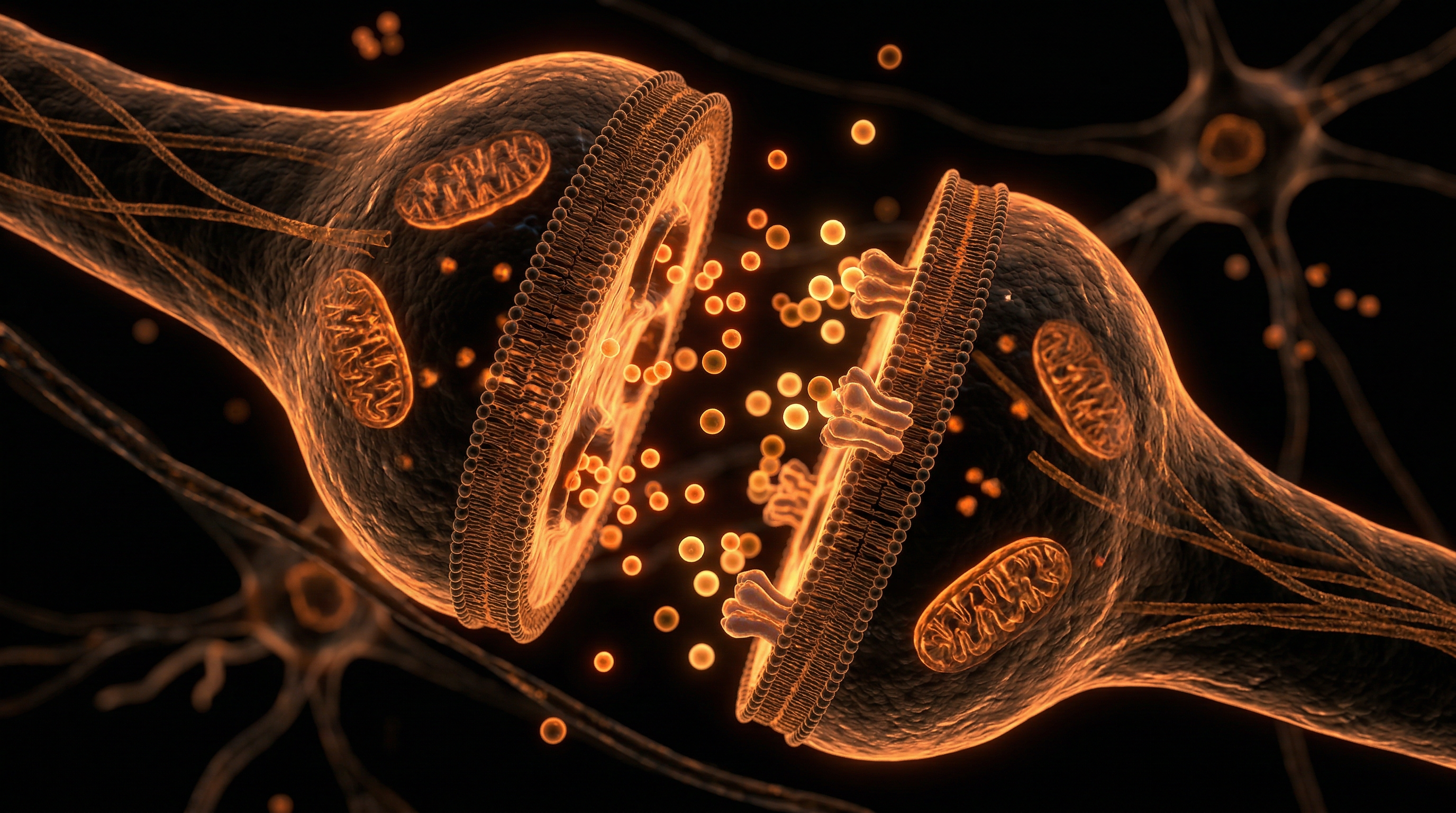
The transition from a mineral imbalance to a psychotic break occurs at the synapse. The "Zinc-Copper See-saw" dictates how neurons communicate, and when the balance breaks, the communication becomes incoherent.
NMDA Receptor Hypofunction
One of the most robust theories in modern neuroscience is the Glutamate Hypothesis of Schizophrenia. It posits that the primary defect is not in dopamine, but in the NMDA receptors.
Zinc is found in high concentrations in the synaptic vesicles of glutamatergic neurons. It is co-released with glutamate and acts as a potent modulator of the NMDA receptor. Without sufficient zinc, these receptors become "leaky" or unresponsive. This leads to a breakdown in sensory gating—the brain’s ability to filter out irrelevant stimuli. When the NMDA receptors fail, the world becomes a terrifying cacophony of unfiltered data, leading to the "word salad" and sensory overload characteristic of schizophrenia.
Oxidative Stress and the Mitochondria
Free copper is a potent pro-oxidant. Through the Fenton Reaction, excess copper generates hydroxyl radicals—the most damaging molecules in the body. These radicals attack the lipid membranes of neurons and the delicate machinery of the mitochondria.
- Lipid Peroxidation: The brain is 60% fat. Copper-induced oxidation literally "rancidifies" the myelin sheath and neuronal membranes.
- Mitochondrial Decay: Schizophrenic patients often show decreased ATP production. High copper inhibits the enzymes within the electron transport chain, starving the brain of the energy required to maintain signal integrity.
The GABA/Glutamate Balance
Zinc is a mandatory cofactor for the enzyme glutamic acid decarboxylase (GAD), which converts the excitatory neurotransmitter glutamate into the inhibitory neurotransmitter GABA.
Callout: A zinc-deficient brain is a brain without a mute button. The lack of GABA leads to a state of permanent neuro-excitability, which is often misinterpreted as "mania" or "agitated psychosis."
Environmental Threats and Biological Disruptors
The human body is not a closed system. Our internal mineral ratios are a reflection of our environment. The modern UK environment is, unfortunately, a "Copper-Toxic" landscape that actively leaches zinc from the population.
The "Copper Age" of Plumbing
In the UK, the vast majority of domestic plumbing utilizes copper piping. In areas with "soft" or acidic water, copper ions are leached into the drinking supply. For an individual with a genetic predisposition toward poor copper excretion (low metallothionein), daily consumption of tap water can lead to a slow, cumulative poisoning of the central nervous system.
The Oestrogen Connection
Oestrogen and copper are biological partners. When oestrogen levels rise, copper levels rise in tandem (this is why copper levels spike during pregnancy). The widespread use of the Combined Oral Contraceptive Pill in the UK has led to an epidemic of "copper-overload" in young women. This can trigger "Post-Pill Psychosis" or severe depression, which is frequently misdiagnosed as an endogenous psychiatric condition rather than a temporary hormonal/mineral imbalance.
Industrial Agriculture and Soil Depletion
British soil is notoriously depleted of zinc due to intensive farming practices and the use of superphosphate fertilisers, which inhibit zinc uptake by plants. The "Standard British Diet", high in processed grains and low in organ meats or shellfish, provides almost no bioavailable zinc. Furthermore, the high consumption of phytates (found in unsoaked grains and legumes) and refined sugars further depletes the body’s zinc reserves.
Pyroluria: The Internal Drain
A significant subset of the population (estimated at 10% of the general population and up to 50% of those with schizophrenia) suffers from Pyroluria (or Kryptopyrroluria). This is a genetic metabolic condition where the body overproduces "pyrroles"—byproducts of haemoglobin synthesis. These pyrroles bind irreversibly to Zinc and Vitamin B6, escorting them out of the body via the urine. No amount of "healthy eating" can overcome this genetic drain; it requires targeted high-dose supplementation.
The Cascade: From Exposure to Disease
How does a person go from being a "normal" teenager to a "schizophrenic" young adult? The cascade is usually triggered by a period of high stress or hormonal transition.
Phase 1: The Depletion Trigger
During puberty, the body's demand for zinc skyrockets for growth and sexual development. If the individual is already "low-zinc" due to diet or pyroluria, the brain’s supply is cannibalized for physical growth.
Phase 2: The Copper Surge
As zinc drops, its "antagonist" copper rises unchecked. The individual begins to experience increased anxiety, sleep disturbances, and "racing thoughts." In the UK, this is often the point where a GP prescribes an SSRI. However, many SSRIs can actually worsen the oxidative stress in a copper-toxic brain, accelerating the decline.
Phase 3: Neurotransmitter Chaos
The high copper drives the conversion of dopamine to norepinephrine. This creates a "Dopamine Dip" in the prefrontal cortex (leading to negative symptoms like apathy and social withdrawal) and a "Norepinephrine Flood" in the amygdala (leading to paranoia and hyper-vigilance).
Phase 4: The Psychotic Break
The final stage occurs when the NMDA receptors fail due to total zinc exhaustion. The brain can no longer distinguish between internal thoughts and external sounds. Auditory hallucinations begin. The "voices" are essentially the brain’s internal monologue being perceived as external due to a failure in synaptic timing and sensory gating.
What the Mainstream Narrative Omits
The mainstream psychiatric narrative, championed by the Royal College of Psychiatrists, relies on the DSM-5—a manual that categorises diseases based on clusters of symptoms rather than biological markers. This approach is equivalent to a mechanic trying to fix a car based on the sound of the engine without ever opening the bonnet.
The Rejection of "Biotypes"
Research by the Walsh Institute has categorised schizophrenia into distinct biotypes, including:
- Over-methylated (High Copper/Low Zinc)
- Under-methylated (Histadelia)
- Pyrrole Disorder
- Gluten Sensitivity/Malabsorption
The mainstream narrative treats all of these as "Schizophrenia," applying the same heavy-handed antipsychotic (D2 dopamine antagonists) to every patient. For an over-methylated, copper-toxic patient, these drugs may provide temporary sedation but do nothing to address the underlying neuro-inflammation.
The Pharmaceutical Stranglehold
There is no "patent" on zinc or vitamin B6. A protocol that cures a patient through mineral rebalancing is a financial disaster for the pharmaceutical industry, which relies on the "recurring revenue" model of chronic disease management. In the UK, the influence of Big Pharma on medical school curricula ensures that doctors are trained in pharmacology but remain illiterate in biochemistry.
The Myth of Genetic Determinism
The narrative often suggests schizophrenia is "genetic," implying it is a fixed fate. In reality, it is epigenetic. While someone may have the "genes" for poor copper metabolism, those genes only express themselves in the presence of environmental triggers (zinc deficiency, high copper intake, stress). By changing the "soup" the genes sit in, we can turn the "disease" off.
The UK Context
The situation in the United Kingdom is particularly dire due to the structure of the NHS. While the NHS provides "free" care, it is a rigid, top-down system that is slow to integrate new biochemical findings.
The 10-Minute Consultation
A GP in the UK has approximately 10 minutes per patient. It is impossible to discuss mineral ratios, soil depletion, or pyroluria in this timeframe. It is much faster to write a prescription for Olanzapine or Risperidone.
The Lack of Functional Testing
In the UK, getting a serum zinc or copper test on the NHS is incredibly difficult for "psychiatric" patients. Even when performed, the "normal ranges" are often too broad to be clinically useful. For example, a "normal" copper level may still be high enough to cause psychosis in a sensitive individual, especially if the Free Copper percentage is not calculated.
Statistic: It is estimated that less than 1% of UK psychiatric patients have ever had their copper-to-zinc ratio tested, despite the established link in scientific literature.
The Postcode Lottery of Care
Access to "Integrated" or "Orthomolecular" psychiatry in the UK is almost entirely restricted to the private sector. This creates a two-tier system: the wealthy can afford the tests and supplements to actually recover, while the poor are relegated to the "chemical cosh" of state-funded wards, where the diet consists of nutrient-void hospital food that further exacerbates mineral imbalances.
Protective Measures and Recovery Protocols
Recovery from a "schizophrenia" diagnosis via mineral rebalancing is not a "quick fix." It requires a scientific, measured approach to avoid "Copper Dumping"—a phenomenon where excess copper is released into the bloodstream too quickly, causing a temporary worsening of psychiatric symptoms.
Step 1: Accurate Testing
One must move beyond simple serum tests. A comprehensive profile should include:
- Serum Zinc: Target should be 100-120 mcg/dL.
- Serum Copper: Target should be 70-100 mcg/dL.
- Ceruloplasmin: Used to calculate the "Free Copper" percentage. (Free Copper should be <25%).
- Urinary Pyrroles (HPL): To check for Pyroluria.
- Whole Blood Histamine: To determine methylation status.
Step 2: The Zinc Loading Protocol
Zinc must be introduced gradually. Zinc Picolinate or Zinc Gluconate are generally well-tolerated. High doses (e.g., 50mg-100mg) are often required initially to displace the stored copper from the liver and brain.
Step 3: Supporting the Exit Routes
As copper is displaced, the body must be able to excrete it. This requires:
- Vitamin C: Acts as a gentle copper chelator.
- Molybdenum: Competes with copper and aids in its excretion through the kidneys.
- Vitamin B6 (as P5P): Crucial for those with pyroluria to re-establish neurotransmitter synthesis.
- Manganese: Helps manage the "excitatory" phase of copper detox.
Step 4: Dietary Shifts
Patients must switch to a "Zinc-Rich, Low-Copper" diet during the recovery phase.
- Avoid: Shellfish, soybeans, chocolate, and organ meats (high in copper).
- Increase: Grass-fed beef, pumpkin seeds (in moderation), and cruciferous vegetables.
- Water: Utilise high-quality reverse osmosis filtration to remove copper ions from tap water.
Step 5: Metallothionein Promotion
The goal is to heal the body's natural mineral-management system. Certain nutrients, including glutathione and selenium, help support the production of metallothionein, ensuring that once the balance is restored, it stays that way.
Summary: Key Takeaways
The tragedy of modern psychiatry in the UK is the refusal to acknowledge the human body as a biological machine that requires specific "fuel" to function. Schizophrenia is often the "check engine light" for a system running on the wrong mineral ratio.
- Zinc is the Brain’s Anchor: It stabilizes NMDA receptors and regulates GABA. Without it, the brain enters a state of hyper-excitability and sensory failure.
- Copper is the Brain’s Current: In excess, it "electrocutes" the nervous system, driving paranoia through norepinephrine overproduction and causing massive oxidative damage.
- The NHS Blind Spot: The UK medical system is currently designed to manage symptoms with drugs rather than solve the underlying mineralogical causes.
- Misdiagnosis is Epidemic: Many cases of "permanent" schizophrenia are actually reversible cases of copper toxicity, pyroluria, or zinc deficiency.
- Recovery is Possible: Through precise testing and the slow, scientific rebalancing of minerals, individuals can—and do—recover their cognitive function and leave the "schizophrenia" label behind.
The path to INNERSTANDING requires us to look past the labels and into the cells. If we are to solve the mental health crisis in Britain, we must stop sedating the symptoms and start feeding the brain what it actually needs to be sane. It is time to move beyond the DSM and into the lab. The "voices" in the head may simply be the cry of a brain starving for zinc.
This article is provided for informational and educational purposes only. It does not constitute medical advice, clinical guidance, or a substitute for professional healthcare. Information reflects cited research at time of publication. Always consult a qualified healthcare professional before acting on any health information.
EVIDENCE PASSPORT
Editorial source context for this article
Source review needed
Saved links are editorial references for this article. They may support specific claims rather than every sentence. Open and assess each source in context. This passport does not independently verify them.
Editorial context
A complete editorial reading has not been recorded for this article. Source links remain available for you to open and assess directly.
Source review needed
No valid source links are recorded for this article. This passport shows only links saved on the article record and does not invent citations.
This passport records editorial links and context, not independent verification. Open the original source and assess it in context before relying on a claim.
Medical Disclaimer
The information in this article is for educational purposes only and does not constitute medical advice, diagnosis, or treatment. Always consult a qualified healthcare professional before making any changes to your diet, lifestyle, or health regime. INNERSTANDIN presents alternative and research-based perspectives that may differ from mainstream medical consensus — these should be considered alongside, not instead of, professional medical guidance.
Read Full DisclaimerContinue the thread
Keep this question moving.
Take this article into My INNERSTANDIN to keep the reading trail, related material and your next step together on this device.