Chapter 01
The thyroid and its place in your body
A small gland with a body-wide reach
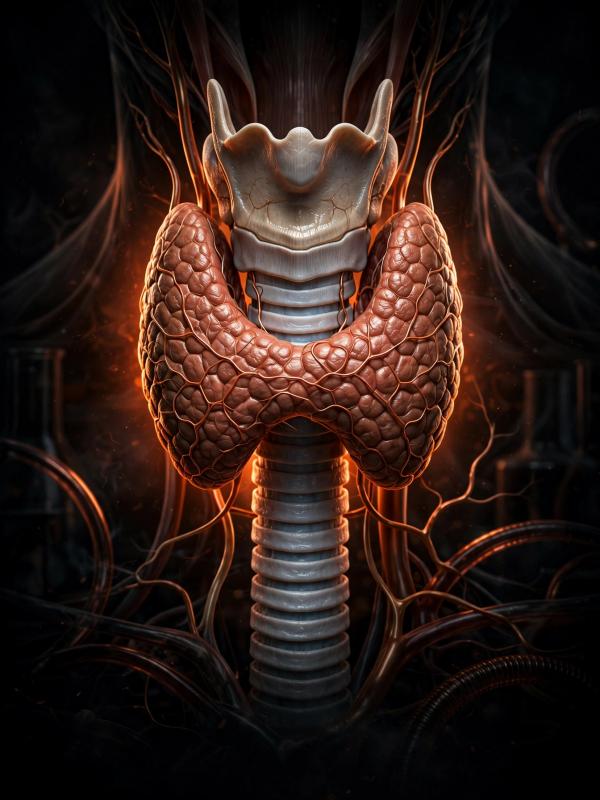
Your thyroid sits low at the front of your neck, in front of the windpipe. Its two lobes normally lie on either side and are joined by a narrow bridge called the isthmus. A larger thyroid is called a goitre; enlargement describes its size, not whether it is overactive, underactive or cancerous.
The gland makes hormones that travel in the blood and influence energy use, heat production, heart function, muscles, digestion, the nervous system and many other tissues. In childhood they are especially important for growth and brain development. The thyroid does not control these systems alone, so a change in one symptom cannot by itself tell you what your thyroid is doing.
The parathyroid glands are small, separate glands usually near the back of the thyroid. They help regulate calcium, not thyroid hormone. Their location matters during thyroid surgery because injury or an interruption to their blood supply can cause low calcium. The voice nerves also run close to the thyroid.
How T4 and T3 are made and used
The thyroid is organised into tiny follicles surrounding a stored material called colloid. Thyroid cells take up iodide from the blood and use the enzyme thyroid peroxidase to attach iodine to the protein thyroglobulin. These building blocks are joined to make thyroid hormones, which can be stored in the gland and released into the circulation when needed.
Most hormone released by the gland is thyroxine, known as T4 because it contains four iodine atoms. Some is triiodothyronine, or T3. T4 is also converted to T3 in tissues by enzymes called deiodinases. T3 interacts with receptors inside cells and changes the activity of genes involved in many body functions. These processes are coordinated across organs; a blood concentration alone cannot describe every event inside every tissue.
Most T4 and T3 in blood are carried on proteins. The small unbound portions are called free T4 and free T3. Changes in binding proteins, including those occurring in pregnancy or with oestrogen-containing medicines, can alter total hormone measurements even when the free hormone picture is different. Free tests are commonly used with TSH, but results still need the laboratory method and clinical context.
The brain-thyroid feedback loop
A region of the brain called the hypothalamus produces thyrotropin-releasing hormone, or TRH. This signals the pituitary gland at the base of the brain to release thyroid-stimulating hormone, TSH. TSH stimulates the thyroid to produce and release hormone. Circulating thyroid hormone feeds back to the brain and pituitary, normally reducing TSH when hormone availability rises.
If the thyroid itself struggles to make enough hormone, the pituitary usually sends a stronger signal and TSH rises. If thyroid hormone is excessive, TSH is usually suppressed. This feedback is why TSH is useful in many adults. It is not a direct measurement of thyroid hormone and depends on an intact pituitary response.
A pituitary or hypothalamic problem can produce central hypothyroidism: FT4 is low but TSH may be low, normal or sometimes mildly raised inappropriately for that FT4. A TSH result in range cannot by itself rule this out when the clinical setting points to central disease. The pattern is assessed with other pituitary information, often with specialist input.
Chapter 02
Recognising symptoms and asking better questions
When the system slows down
An underactive thyroid can develop gradually. Symptoms include tiredness, feeling cold, constipation, dry skin or hair, hair loss, weight gain, difficulty concentrating, low mood, a hoarse voice and heavier or irregular periods. Some people have only a few of these; others notice a change in function before they can name a symptom.
These are real symptoms, but none is specific to hypothyroidism. Anaemia, sleep disturbance, depression, menopause, medicines and many other conditions can produce overlapping experiences. Weight can also change for reasons unrelated to thyroid hormone. A useful assessment considers the whole history rather than assuming that every symptom must have a single cause.
Untreated or inadequately treated hypothyroidism can affect cardiovascular health and, in pregnancy, the mother and baby. Severe longstanding deficiency can very rarely lead to myxoedema coma, an emergency. Treatment and monitoring are intended to restore hormone levels and function while avoiding excess replacement.
When thyroid hormone is excessive
Excess thyroid hormone can cause a fast or irregular heartbeat, palpitations, heat intolerance, sweating, tremor, irritability, disturbed sleep, loose stools, muscle weakness and weight loss. Appetite may increase and weight does not always fall. Fatigue can occur in both underactivity and overactivity, so tiredness does not reveal the direction of a thyroid problem.
Persistent untreated excess can contribute to atrial fibrillation, heart failure and bone loss. Some people have eye symptoms or a visible thyroid enlargement, particularly with Graves’ disease, but these signs are not present in everyone. Symptoms and blood results together guide the speed and type of assessment.
In older adults the presentation may be less typical: a new irregular pulse, weakness, weight loss or a change in mood or function may be more noticeable than a dramatic tremor. An irregular heartbeat or chest symptoms need their own assessment rather than waiting to see whether thyroid tests improve.
Preparing for a GP appointment
Record what changed, when it began, how it affects daily activities and whether it is getting better or worse. Include changes in heart rate, bowel habit, temperature tolerance, weight, sleep, periods, fertility, neck swelling and eyes if relevant. Bring previous results with dates and units, rather than only a description such as “normal”.
Tell the clinician about thyroid or other autoimmune disease in you or your family, past surgery or radioiodine, pregnancy or recent birth, and pituitary disease or treatment to the head. List prescription medicines, non-prescription products and supplements, including biotin. A timeline is useful when symptoms or results have changed after starting a medicine.
NICE recommends considering thyroid tests when there is clinical suspicion, while recognising that a single symptom may have other explanations. It recommends testing people with type 1 diabetes or another autoimmune disease, or new-onset atrial fibrillation. If symptoms continue after an initial assessment, agree what else will be investigated and when you will review the plan.
Chapter 03
Thyroid blood tests: what each result can tell you
TSH, free T4 and free T3
TSH is the pituitary signal to the thyroid. FT4 is an estimate of the unbound portion of thyroxine circulating in the blood; FT3 estimates unbound triiodothyronine. Each answers a different question. In usual primary thyroid disease, a high TSH with low FT4 points to hypothyroidism, while a low TSH with high FT4 or FT3 points to thyrotoxicosis.
For adults when pituitary disease is not suspected, NICE suggests starting with TSH. If it is high, FT4 is measured in the same sample; if it is low, FT4 and FT3 are measured in the same sample. This staged approach can identify important patterns without assuming every test is equally useful in every situation.
FT3 is especially useful when TSH is low: in some people FT3 is high while FT4 is still in range. A normal T3 does not exclude hypothyroidism. For children and young people, and for adults when pituitary disease is suspected, NICE suggests TSH and FT4 together, adding FT3 if TSH is low.
Reading the common patterns
High TSH and low FT4 generally indicate overt primary hypothyroidism. High TSH with FT4 in range is called subclinical hypothyroidism. “Subclinical” describes the blood pattern, not proof that a person has no symptoms. A mildly raised TSH can be temporary, which is one reason for repeating it before some treatment decisions.
Low TSH with high FT4 or FT3 is overt thyrotoxicosis. Low TSH with both FT4 and FT3 within their reference intervals is called subclinical hyperthyroidism. A suppressed TSH can have several explanations, including thyroid disease, medicine, acute illness or, depending on the situation, a pituitary problem. The cause and persistence matter.
Low FT4 with a low, normal or inappropriately only mildly raised TSH can suggest central hypothyroidism, but severe illness, certain medicines and laboratory interference can imitate it. An unusual result requires clinical review and often confirmation, not a diagnosis from a chart alone. High FT4 with an unsuppressed TSH is also discordant and deserves a check for medicine timing, assay problems and less common explanations.
Reference ranges, trends and uncertainty
A reference interval is a laboratory comparison range, not a guaranteed personal wellness zone or a sharp boundary between health and disease. Laboratories may use different methods and ranges. Interpret the actual value, unit, interval, symptoms, medication, prior results and whether the result is changing. Pregnancy and childhood require context-specific interpretation.
A result just outside the interval is not automatically an emergency or a lifelong diagnosis. A result far outside it, a rapidly changing pattern or a concerning clinical picture may need faster action. A result within the interval does not make a person’s symptoms imaginary and does not rule out every non-thyroid cause.
NICE advises considering repeat thyroid tests if symptoms worsen or new symptoms develop, but no sooner than six weeks after the previous test in routine suspected dysfunction. The clinician may choose a different interval for pregnancy, medication changes or urgent circumstances. Ask what the repeat is intended to settle and what will happen with each possible result.
Chapter 04
Antibodies, interference and difficult results
TPO antibodies, thyroglobulin antibodies and TRAb
Thyroid peroxidase antibodies, or TPO antibodies, suggest an autoimmune thyroid process in the right setting. Thyroglobulin antibodies can also occur in autoimmune disease. A positive antibody test does not by itself say whether hormone levels are currently too high or too low, and antibodies can be found in some people whose thyroid function is normal.
For adults with TSH above the reference range, NICE says to consider measuring TPO antibodies but not to repeat them routinely. The reason is practical: TSH and FT4 guide thyroid function and treatment monitoring more directly than chasing changes in TPO antibody numbers. For children NICE advises measuring TPO antibodies and notes possible repeat testing at transition to adult services.
TSH receptor antibodies, often called TRAb, are different. Some stimulate the TSH receptor and drive Graves’ hyperthyroidism; TRAb tests can help identify Graves’ as the cause of thyrotoxicosis. They also have specific roles in pregnancy because antibodies can cross the placenta. A negative result does not make every other cause identical, so the rest of the assessment still matters.
Biotin, medicines and the laboratory
High-dose biotin, often sold for hair, skin or nails, can interfere with some thyroid immunoassays and produce misleadingly high or low results. The direction depends on the test method. Tell the clinical team and laboratory exactly what you take and when. Ask how long your particular product should be paused before testing; do not assume a single interval applies to every dose or assay.
Medicines and supplements can influence thyroid production, test interpretation or absorption of levothyroxine. Examples include amiodarone and lithium, as well as iron, calcium and some indigestion treatments that interfere with replacement absorption. Never stop a necessary prescription on your own because a result looks unusual. Provide the complete list, including recent changes.
If test results do not fit the symptoms or each other, ask the clinician whether repeat sampling, a different assay or laboratory advice is appropriate. Inconsistent dosing or the timing of a tablet relative to a blood draw may matter. Keep the testing routine consistent and follow the team’s instructions rather than changing the dose to influence the next result.
Illness, reverse T3 and additional tests
Serious illness can alter thyroid blood tests even when the thyroid is not the primary problem. NICE advises against testing during an acute illness unless the illness itself is suspected to be due to thyroid dysfunction. If an abnormal result occurs during a hospital admission, interpretation may require the clinical course and follow-up after recovery.
Reverse T3 is an inactive product of thyroid hormone metabolism. Its concentration can change with illness, but it does not reliably diagnose hypothyroidism in otherwise healthy people and is not a routine substitute for TSH and FT4. A proposed treatment based solely on a reverse T3 value should be examined against the clinical question and evidence of benefit.
A scan, antibody test or ultrasound is selected for a reason. A hormone result describes function; a scan may help show patterns of activity; ultrasound describes structure. If a result remains unexplained, ask what a proposed additional test could change and whether a specialist or clinical biochemist should review it.
Chapter 05
Underactive thyroid and Hashimoto’s disease
Why a thyroid can become underactive
Primary hypothyroidism means the thyroid itself cannot supply enough hormone. In the UK, autoimmune Hashimoto’s disease is a leading cause. Immune activity gradually damages thyroid tissue in many people, although the speed and pattern vary. A person can have autoimmune antibodies and normal hormone levels before hypothyroidism develops, or may never progress to it.
Other causes include previous thyroid surgery, radioactive iodine, certain medicines, radiotherapy and some forms of thyroid inflammation. A temporary low phase can follow thyroiditis, whereas low function after complete thyroid removal is permanent. Establishing the cause helps determine whether replacement is likely to be lifelong and what follow-up is needed.
Hashimoto’s is associated with other autoimmune conditions. NICE advises offering coeliac disease testing to people with autoimmune thyroid disease. The outcome of a coeliac test has implications for care and potentially for medicine absorption; discuss testing before adopting a gluten-free diet because testing can be affected by avoiding gluten.
Overt and subclinical hypothyroidism
Overt primary hypothyroidism is usually identified by a high TSH and low FT4. NICE recommends levothyroxine, a manufactured form of T4, as first-line treatment. The dose is individual, based on age, heart history, results and response. Most people with permanent loss of thyroid function need continuing replacement.
Subclinical hypothyroidism means TSH is raised but FT4 remains within the laboratory interval. NICE recommends considering levothyroxine for adults when TSH is at least 10 mIU/L on two occasions three months apart. For adults under 65 with symptoms and TSH above range but below 10 on two tests three months apart, it suggests considering a six-month treatment trial.
During a trial, the team reviews both TSH and symptoms. If symptoms persist when TSH is in range, NICE says to consider stopping treatment, with follow-up. That is a guideline-based shared decision, not a demand to tolerate symptoms without further investigation. Pregnancy, children and other special circumstances follow different pathways.
In the TRUST trial of older adults with persistent subclinical hypothyroidism, levothyroxine did not improve the trial’s symptom and tiredness scores compared with placebo over one year. That does not mean every older person with high TSH is identical or that overt hypothyroidism should be left untreated. It supports weighing expected benefit and risk rather than treating every borderline result automatically.
Watching without losing track
If an adult’s subclinical hypothyroidism is not treated, or treatment has been stopped after a trial, NICE suggests TSH and FT4 once a year if features such as thyroid antibodies or previous surgery suggest underlying disease. Without such features it suggests testing every two to three years. The clinician can review sooner if circumstances or symptoms change.
A normal thyroid function test in someone with autoimmune thyroid antibodies is not the same as an absence of symptoms. Nor do antibodies prove that an unrelated symptom is caused by the thyroid. Ask for a clear plan covering new symptoms, other possible causes, pregnancy plans and when thyroid tests will be reconsidered.
If a person’s thyroid is underactive, treatment replaces a hormone the body lacks. It does not erase every possible source of fatigue, brain fog, pain or mood change. It is reasonable to request a wider clinical assessment while thyroid treatment is being optimised.
Chapter 06
Levothyroxine: making treatment work
Starting, adjusting and monitoring
Levothyroxine is prescribed in micrograms, not milligrams. NICE suggests a starting dose based on body weight for some adults under 65 without cardiovascular disease, and a lower starting dose with gradual increases for adults aged 65 or over and those with cardiovascular disease. These are clinical starting considerations, not instructions to calculate or change your own prescription.
For primary hypothyroidism, the goal is a TSH within the reference range and relief of symptoms without causing TSH suppression or thyrotoxicosis. NICE suggests TSH testing approximately every three months until stable, defined as two similar in-range results three months apart, then yearly. If symptoms continue, consider FT4 alongside TSH.
Symptoms can take weeks to months to improve. TSH can take up to six months to return to range after a very high starting value or prolonged untreated disease. The dose and the date of the last change belong beside each blood result. Review sooner when a clinician considers the situation urgent or when pregnancy changes the monitoring plan.
A repeatable routine and missed doses
NHS guidance says to take levothyroxine on an empty stomach, 30 to 60 minutes before the first meal, caffeine-containing drinks such as tea or coffee, or other medicines. Swallow tablets with water and aim for a consistent daily routine. Ask the pharmacist for an achievable schedule if work, sleep or other medicines make this difficult.
Calcium, iron, antacids and some other products can reduce or alter absorption. Ask a pharmacist how far apart to take each product and tell the prescriber when these are started or stopped. A changed dose requirement can also reflect difficulties with the routine, an interaction or a condition affecting absorption, rather than a failure of effort.
If you forget a dose, NHS guidance says to take it when remembered unless it is nearly time for the next one; then skip the missed dose. Do not take two doses together to make up for it. If a child’s dose is missed, ask a doctor or pharmacist. If more than prescribed has been taken, seek pharmacist advice as soon as possible, or NHS 111 if a pharmacist cannot be reached.
Persistent symptoms and other thyroid preparations
If you are still unwell, ask for a structured review: the original diagnosis, your actual test results, dose history, timing and absorption, other medicines, possible associated conditions and other causes of symptoms. NICE allows a clinician to consider dose adjustment for persistent symptoms while avoiding a suppressed TSH or thyrotoxicosis. A useful plan has a defined review date and an agreed way to judge whether it helped.
NICE does not routinely offer liothyronine, manufactured T3, either alone or with levothyroxine for primary hypothyroidism, because evidence has not established an advantage over T4 alone and long-term adverse effects are uncertain. It also advises against natural thyroid extract for primary hypothyroidism because evidence of benefit is insufficient and long-term safety is uncertain; the extract lacks UK marketing authorisation.
These recommendations do not mean that persistent symptoms should be dismissed. If a treatment option is proposed, discuss the evidence, monitoring, possible effects on the heart and bones, prescribing responsibility and an agreed way to assess benefit. Do not buy thyroid hormones or change doses without an appropriately qualified prescriber.
Chapter 08
Thyroiditis: when inflammation changes the picture
A changing course over time
Thyroiditis means inflammation of the thyroid and covers several distinct conditions. In some, damage to thyroid cells releases stored hormone, causing a temporary thyrotoxic phase. As stores become depleted, thyroid hormone may fall and an underactive phase can follow. Not everyone experiences both phases, and timing varies.
Painless thyroiditis and postpartum thyroiditis can follow this pattern. Most people recover thyroid function, but some remain hypothyroid or develop it later. Repeat blood tests are important because a single snapshot may catch only one part of the course. Symptoms and the date of pregnancy or a possible trigger help interpret the sequence.
Management depends on the phase and severity. A beta-blocker can help troublesome symptoms of temporary thyrotoxicosis if appropriate. Levothyroxine may be used during a significant low-hormone phase, with later reassessment where recovery is possible. This differs from Graves’ disease, where antithyroid medicine can reduce hormone production.
Painful thyroiditis, infection and medicines
Subacute thyroiditis often causes a tender or painful thyroid, sometimes with pain extending towards the jaw or ears, and can follow an infection. It may produce an early excess-hormone phase followed by a low phase. Clinicians assess the history, examination and tests, and may use anti-inflammatory treatment according to severity and individual suitability.
Bacterial infection of the thyroid is a different, less common problem. Significant neck pain with fever or a rapidly worsening swelling needs prompt clinical assessment rather than assuming it is a harmless thyroid flare. Treatment depends on the cause and can include antibiotics or other procedures.
Medicines including amiodarone and some immune treatments can be associated with thyroid dysfunction or inflammation. The pattern and management differ by medicine and mechanism. Tell both the prescriber and thyroid team about symptoms and results; stopping an essential medicine without a coordinated plan can create a separate risk.
Distinguishing thyroiditis from Graves’
A low TSH and raised thyroid hormone confirms a hormone pattern, not its source. A recent birth, a painful neck, the rate of onset, TRAb results and previous blood tests can all inform the assessment. A radionuclide uptake scan may help in selected cases, but it is not appropriate during pregnancy and may be unsuitable during breastfeeding.
Because a leaking inflamed gland is not necessarily making too much new hormone, using a medicine that blocks production may not solve the problem. Equally, assuming every low TSH after pregnancy is thyroiditis could miss Graves’ disease. Ask what evidence supports the proposed diagnosis and when repeat tests will identify a transition to a low-hormone phase.
A clear follow-up plan should name who will order the next blood test, when it is due, what symptoms require earlier contact and whether long-term monitoring is needed after recovery. The same language, “thyroiditis”, includes conditions with different outcomes.
Chapter 09
Thyroid eye disease
What happens behind the eyes
Thyroid eye disease is an autoimmune inflammatory condition affecting tissues around and behind the eyes, including muscles, fat, eyelids and tear glands. Swelling can cause gritty or watery eyes, light sensitivity, redness, a staring appearance, discomfort or eyes that project forwards. Stiff eye muscles can cause double vision.
It is most often associated with Graves’ disease, but can occur before or after a thyroid diagnosis and when thyroid function is high, low or normal. Eye disease can follow a different course from blood hormone results. A normal thyroid result does not by itself rule out an eye problem.
The effect on appearance, work, driving and confidence can be considerable. Assessment by an eye specialist and thyroid specialist helps distinguish inflammation that is active from persistent structural changes after inflammation settles. Tell them if vision, comfort or daily activities have changed.
Protecting sight and choosing treatment
For mild irritation, lubricating drops, gels or ointment can protect the eye surface and improve comfort. If eyelids do not close fully, the surface can dry and become damaged. A specialist can advise on appropriate eye care and how to manage double vision, including prisms where suitable.
More active or severe disease can require specialist anti-inflammatory treatment, sometimes with intravenous steroids or other therapies. Surgery may be needed to relieve pressure on the optic nerve or protect the eye, and surgery for persistent eye position, muscle or eyelid problems can be considered after inflammation settles. Treatment depends on severity, activity and local availability.
Smoking increases the risk and worsens outcomes in thyroid eye disease; support to stop is a meaningful part of care. Stable thyroid hormone levels also matter. Radioiodine can trigger or worsen eye disease, so discuss existing eye symptoms, smoking and precautions when deciding on treatment for Graves’ disease.
When eye symptoms need immediate attention
Seek medical assessment without delay and ask for immediate specialist eye referral if vision becomes blurred and does not clear when blinking or covering each eye in turn, colours look less bright or different between the eyes, double vision occurs looking straight ahead or down, or symptoms worsen over days or weeks. These can signal sight-threatening disease.
Pressure on the optic nerve or damage to the cornea can threaten sight. Do not wait for a routine thyroid blood test or assume that eye symptoms will settle when the thyroid is treated. Sudden or severe loss of vision needs emergency eye assessment.
Chapter 10
Goitre, nodules and thyroid cancer
What a lump does and does not mean
A goitre is an enlarged thyroid. A nodule is a localised lump within it. Both are common and most nodules are not cancer. A thyroid can have normal function, be overactive or be underactive whether or not a nodule is present. Blood tests assess function; they do not reliably decide whether a lump is benign or malignant.
A clinician considers the history, examination and risk factors. Rapid enlargement, a new hoarse voice, difficulty swallowing or breathlessness should prompt timely clinical assessment. Severe breathing difficulty is an emergency. Previous neck irradiation and a family history of certain thyroid cancers may alter the level of concern and the assessment.
For a thyroid nodule being assessed for malignancy, NICE recommends greyscale ultrasound using an established grading system. The size and ultrasound appearance, together with the clinical picture, determine whether a needle sample or surveillance is appropriate. An incidental finding does not automatically mean an operation is necessary.
Understanding a needle sample
Fine-needle aspiration cytology, or FNAC, uses a thin needle to collect cells for examination. NICE recommends ultrasound guidance for thyroid FNAC and uses a UK reporting system. The result can be inadequate, benign, indeterminate, suspicious or malignant. These labels describe the sample, not a promise that uncertainty has disappeared.
An inadequate sample, often called Thy1, usually leads to repeat sampling. A benign Thy2 result may lead to further ultrasound or discharge after the assessment is complete, depending on the circumstances. Some indeterminate results require another sample, surveillance or diagnostic removal of one thyroid lobe. Suspicious or malignant results lead to a specialist discussion of surgery and further management.
Ask which nodule was sampled, what the actual category means, whether the sample was adequate, whether ultrasound and cytology agree, and what follow-up is planned. A biopsy can be repeated when the first sample did not provide enough information; this is different from saying that the first result showed cancer.
If cancer is diagnosed
Thyroid cancer is not a single disease. The type, size, location and evidence of spread affect treatment. For some small, carefully selected cancers, active surveillance may be discussed; others need surgery and, in selected cases, radioactive iodine or additional treatment. The specialist multidisciplinary team should explain the purpose and trade-offs of the proposed plan.
Removing one lobe is called hemithyroidectomy; removing the whole gland is total thyroidectomy. Risks include changes to voice or swallowing and low calcium related to parathyroid function. Complete removal requires lifelong thyroid hormone replacement. After partial removal, some people still require replacement and need blood tests.
For certain differentiated thyroid cancers, thyroglobulin is used as a follow-up marker after treatment in conjunction with other information. Thyroglobulin is also produced by normal thyroid tissue, so it is not a general screening test for thyroid cancer. Follow-up, imaging, thyroid hormone targets and the role of radioactive iodine depend on the individual cancer and treatment. Ask for the written plan and who to contact between appointments.
Chapter 11
Pregnancy, fertility and the first year after birth
Planning before pregnancy
Thyroid hormones contribute to a healthy pregnancy and to the baby’s development. Untreated or poorly controlled thyroid disease is associated with pregnancy complications, while treatment and monitoring help reduce risks. Tell your GP or thyroid team when planning a pregnancy so there is time to review tests, treatment, antibodies where relevant and the follow-up plan.
Thyroid dysfunction can affect menstrual cycles and fertility, but it is only one possible factor. A previous miscarriage, infertility or a change in periods deserves an individual assessment; thyroid testing may be part of it rather than the whole answer. Pregnancy-specific reference intervals and decisions are not interchangeable with non-pregnant adult thresholds.
If you have had Graves’ disease, tell the maternity team even if you have since had surgery or radioiodine and now take levothyroxine. TSH receptor antibodies can remain relevant because they can cross the placenta and affect the baby. The specialist team can decide whether and when to measure them.
Treatment and tests during pregnancy
RCOG advises thyroid testing in early pregnancy for people with a history of thyroid disease, thyroid surgery or a thyroid swelling, and for certain other risk groups. Symptoms such as tiredness and palpitations can overlap with pregnancy itself, so history, examination and appropriate blood tests matter.
Levothyroxine is used to treat hypothyroidism in pregnancy and is safe when needed. Requirements often increase. Contact the team promptly when pregnancy is confirmed to agree dose changes and regular blood tests rather than waiting for a routine annual check. Do not stop prescribed treatment because you are pregnant.
Hyperthyroidism treatment depends on the cause. Propylthiouracil or carbimazole may be used with specialist oversight, considering pregnancy stage, the risks of each medicine and the lowest effective dose. If pregnancy occurs unexpectedly while taking an antithyroid drug, tell the healthcare professional straight away for an individual plan. Radioactive iodine must not be given in pregnancy.
After birth and while breastfeeding
After delivery, thyroid hormone needs can change. RCOG advises that people taking levothyroxine before pregnancy can generally return to their pre-pregnancy dose after birth, with thyroid blood tests when the baby is about six weeks old. Anyone started on treatment during pregnancy needs an individual review of whether to continue. Agree the plan with your team.
Postpartum thyroiditis can begin after the early postnatal check and may cause a transient excess phase, an underactive phase or both. Anxiety, tiredness and changes in weight can be attributed to the demands of a new baby, so mention new or persistent symptoms to your GP. Graves’ disease can also occur or recur after birth, and the distinction affects treatment.
Levothyroxine can usually be taken while breastfeeding. Antithyroid treatment and breastfeeding can also be discussed with the maternity and thyroid teams, including the medicine, dose and any baby monitoring. Do not make changes based on an online dosing example when a personalised plan is available.
Chapter 12
Babies, children and older adults
Newborn screening and congenital hypothyroidism
Congenital hypothyroidism means thyroid hormone deficiency present from birth. Early recognition and treatment are important for growth and brain development. The UK newborn blood-spot programme uses a TSH-based screen designed to detect primary congenital hypothyroidism. A screen is not the same as a complete assessment of every possible thyroid or pituitary disorder.
The UK programme does not screen reliably for central hypothyroidism, in which the pituitary signal is inadequate. A premature baby can also need a repeat sample because the initial screen may miss delayed TSH elevation. The screening team follows the relevant protocol and arranges further assessment for a positive result.
If a baby has symptoms or there are clinical concerns, seek medical assessment even if a screening result was reported as normal. Treatment and monitoring in a diagnosed infant should be managed promptly by a paediatric specialist, with attention to growth, development and blood tests.
Growing children and young people
Changes in growth, behaviour, energy or school performance may prompt thyroid assessment in a child. Puberty and growth patterns provide important context. As in adults, symptoms are not specific, and a wider assessment may be needed. NICE suggests measuring both TSH and FT4 in children and young people, with FT3 added if TSH is low.
NICE recommends levothyroxine for primary hypothyroidism in children and young people, but dose and blood-test frequency are adjusted to age and development. Infants need more frequent monitoring than older children, and follow-up continues through puberty. Avoid applying adult reference ranges, treatment thresholds or dosing calculations to a child.
Young people who move from paediatric to adult care benefit from a transition plan: their diagnosis, current medicines, the blood-test schedule, how to arrange repeat prescriptions and what to do if symptoms change. Families and young people should know who is responsible for each part of the plan.
Why age and heart health affect decisions
An older adult may have thyroid disease without the textbook combination of symptoms. Unexplained weight loss, an irregular heartbeat, weakness, falls or a change in mood or functioning deserves assessment in its own right. A thyroid test can be part of the investigation, not a replacement for considering other causes.
When starting levothyroxine for primary hypothyroidism, NICE suggests a lower starting dose and titration in adults aged 65 and over and in adults with cardiovascular disease. The reason is to balance correction of deficiency with the effects of increasing thyroid hormone on the heart. Monitoring makes the next adjustment safer.
A mildly raised TSH with normal FT4 in later life needs an individual discussion, not an automatic assumption of benefit from treatment. The TRUST trial found no improvement in its main symptom and tiredness scores from levothyroxine in older adults with subclinical hypothyroidism over one year. More severe abnormalities, different diagnoses and individual circumstances need their own assessment.
Chapter 14
A closer look at treatment pathways and follow-up
Subclinical hyperthyroidism is a pattern, not a single diagnosis
When TSH is below range but FT4 and FT3 are within range, clinicians call the pattern subclinical hyperthyroidism. It may be temporary, associated with a thyroid condition or related to thyroid hormone medication. The degree and persistence of TSH suppression, symptoms, age and heart or bone health all matter when deciding what to do.
NICE suggests seeking specialist advice for adults with two TSH readings below 0.1 mIU/L at least three months apart plus thyroid disease evidence or symptoms of thyrotoxicosis. It suggests specialist advice for all children and young people with this pattern. These are guidance thresholds for a particular situation, not a reason to ignore severe symptoms while waiting for a repeat.
For untreated adults, NICE suggests TSH every six months, adding FT4 and FT3 in the same sample if TSH remains outside range. It suggests more frequent testing for children. Follow-up may stop when TSH has stabilised in the reference range on two similar measurements three to six months apart, according to the clinical picture.
How antithyroid drug courses are monitored
Before antithyroid drugs are started, NICE recommends a full blood count and liver function tests. The team then uses thyroid tests to adjust treatment. It suggests TSH, FT4 and FT3 every six weeks until TSH reaches range, then TSH with additional tests triggered by an abnormal result every three months until medication is stopped.
For adults with Graves’ disease receiving carbimazole as first-line definitive treatment, NICE describes a 12- to 18-month course using either titration, in which the antithyroid dose is adjusted, or block and replace, in which thyroid production is blocked and levothyroxine is added. The team reviews whether further treatment is needed. A child or young person with Graves’ usually receives antithyroid treatment for at least two years, using a titration regimen.
NICE does not recommend routine repeated full blood counts or liver function tests in the absence of clinical suspicion, but new symptoms can require urgent testing. In particular, stop carbimazole and contact a doctor or 111 now for the infection and bruising warning signs described in the emergency chapter. A previously normal blood count does not replace action on new symptoms.
After medication, radioiodine or surgery
For adults after stopping antithyroid drugs, NICE suggests thyroid testing within eight weeks, every three months for the first year and then annually. Relapse is possible even after a successful course. Children have a different schedule. If symptoms return between appointments, contact the team rather than waiting for the planned test.
After radioactive iodine, NICE suggests TSH, FT4 and FT3 every six weeks for the first six months until TSH is in range, with further checks after that according to the result. Falling thyroid function is expected in many cases and replacement is offered if hypothyroidism develops. Radioiodine may not resolve the overactivity immediately, so an interim treatment plan is important.
After total thyroidectomy, replacement is required. After removal of one lobe, NICE suggests TSH and FT4 at two and six months, then TSH yearly with further tests if indicated. Surgery can affect the voice and calcium regulation: ask the surgeon which symptoms to report and how calcium will be checked. Cancer follow-up may include additional tests and a different TSH target based on the individual case.
Chapter 15
Urgent warning signs and a practical care plan
Emergency symptoms: call 999
Thyroid storm is a rare, life-threatening complication of severe thyrotoxicosis. A high temperature and very fast heartbeat together with severe agitation or confusion, jaundice or loss of consciousness may be warning signs. If you suspect thyroid storm, call 999 for an ambulance immediately. Do not wait for a blood test or the next clinic appointment.
Severe untreated hypothyroidism can very rarely cause myxoedema coma, a medical emergency. Severe drowsiness, confusion or reduced consciousness, particularly in a person known to have severe hypothyroidism, needs emergency assessment. Call 999 if someone is unconscious, cannot be awakened or is severely unwell.
A serious allergic reaction can cause sudden swelling of the lips, mouth, tongue or throat, difficulty breathing, faintness or collapse. Call 999 immediately. Severe breathing difficulty from any cause also needs emergency help. Do not drive yourself to A&E; follow the call handler’s instructions.
Carbimazole: act on infection warning signs
Carbimazole can rarely cause a dangerous fall in white blood cells. NHS advice is to stop taking carbimazole and call your doctor or NHS 111 now if you develop a high temperature, sore throat, mouth ulcers, severe tiredness or flu-like symptoms, feel generally unwell or think you have an infection, or notice that you are bruising or bleeding more easily.
Tell the person you speak to that you take carbimazole. A prompt blood count may be needed; do not wait for a scheduled routine blood test. Follow the clinical team’s instructions about any further doses and the plan for controlling your thyroid.
Call your doctor or 111 straight away for yellowing of the skin or whites of the eyes, dark urine or sudden severe abdominal pain while taking carbimazole. These can signal serious liver or pancreatic problems. The medicine leaflet and NHS source include further symptoms that need prompt advice.
Leaving each appointment with a plan
Ask for the working diagnosis and the evidence for it: whether the problem is production of too much hormone, reduced production, inflammation, a structural lump or something not yet clear. Ask for copies of results with units and reference intervals, the date of the next test, the treatment goal and who will contact you with the outcome.
Clarify which symptoms warrant earlier contact. Rapid thyroid swelling, persistent hoarseness, swallowing difficulty or breathlessness need assessment; changes in vision or colour perception, new significant double vision or rapidly worsening eye symptoms require urgent eye assessment. Seek emergency help for severe breathing difficulty or sudden severe illness.
If results are in range but you remain unwell, ask what else could explain the symptoms and how that will be investigated. You can request an explanation, a review of the diagnosis and medication routine, and a plan for follow-up. Thyroid health is best managed as a continuing conversation between your lived experience, the clinical examination and the evidence from tests.
Chapter 16
A whole-person view of thyroid health
Start with the person, then ask what the thyroid can explain
A thyroid result belongs to a person with a history, not just to a laboratory report. A useful whole-person consultation asks when symptoms began, what has changed, whether treatment helped, which medicines are taken and how daily life is affected. Fatigue, slowed thinking, hair changes, constipation, low mood and weight changes deserve attention whether or not the first test provides an answer. A reassuring result can be valuable without being the end of an investigation.
Functional practitioners often describe broader work as looking for contributors or root causes: nutritional adequacy, sleep, digestion, medicines, exposures and other conditions. Their approaches and qualifications differ. NHS clinicians also consider these factors when the history calls for them, though access, consultation time, test selection and interpretation may differ. Ask each practitioner how they move from a possible contributor to evidence that it matters for you.
A good plan separates four questions: is there thyroid dysfunction; is current treatment appropriate; could another condition or practical factor contribute; and which change is worth trying next? These questions can run in parallel. Listening to symptoms and respecting lived experience are compatible with asking for evidence before attributing every symptom to the thyroid.
Mechanism, marker and meaningful outcome
The body uses iodine, selenium and other nutrients in thyroid biology. That is a mechanistic fact. It does not follow that giving extra of each nutrient to everyone with thyroid disease restores the gland or relieves symptoms. A low nutrient level, a changed antibody result and improved daily functioning are different outcomes, and a study measuring one may not establish the others.
In the CATALYST trial selenium lowered thyroid peroxidase antibody levels compared with placebo, but did not improve thyroid-related quality of life more than placebo. Conversely, in a small, uncontrolled supported diet programme, people reported feeling better without a statistically significant change in thyroid hormones or antibodies. Both findings matter, but neither proves a universal treatment.
Before choosing an intervention, ask what it aims to change: a documented deficiency, thyroid hormone levels, a particular symptom, function, or long-term risk. Agree how and when to assess it, what an unwanted effect would look like, and what you will do if it does not help. Practical aims such as being able to work a shift or walk to the shops can matter as much to record as a blood result.
The strengths and limits of expanded testing
A wider assessment may include tests for anaemia, iron status, B12, glucose or coeliac disease when symptoms or history give a reason. A functional practitioner might order these together or add free T3, thyroid antibodies and reverse T3. Ask what decision each result will inform and whether its interpretation is reliable.
Broad testing can uncover a treatable problem, yet the more tests performed, the more likely at least one result will fall outside its reference interval by chance. A borderline finding may reflect ordinary variation, timing, recent illness, medication, assay differences or an early signal requiring follow-up. It should be investigated in context rather than automatically becoming the explanation for every symptom.
Before paying, request the list of tests, laboratory, reference intervals, total cost including repeats, and a plan for unexpected findings. Ask who will explain results, whether that person is qualified to assess the clinical issue and whether information can be shared with your GP. Neither a long report nor a short one substitutes for a follow-up plan.
Chapter 17
Reading an expanded thyroid panel
TSH, free T4 and free T3 in context
In most adults without suspected pituitary disease, NICE advises measuring thyroid-stimulating hormone, or TSH, first. If TSH is above range, the laboratory measures free T4 from the same sample; if TSH is below range, it measures free T4 and free T3. If secondary thyroid disease is suspected, TSH and free T4 should be measured together. This reflex approach matches testing to the question and does not imply that T3 is unimportant.
Free T4 represents the unbound portion of thyroxine in the blood. Free T3 is the unbound fraction of the more active hormone triiodothyronine. Results can change with illness, medicine, time and assay, and circulating free hormone does not directly measure activity inside every tissue. In a treated person, the pattern of TSH, free T4 and symptoms may merit discussion even if no single number is alarming.
NICE advises considering free T4 as well as TSH in adults taking levothyroxine who continue to have symptoms. Free T3 may be requested for particular questions, especially suspected thyrotoxicosis. Some functional practitioners include it more broadly to examine possible conversion patterns; a result alone does not prove poor conversion, establish a tissue deficiency or identify who will benefit from T3 treatment.
Reference intervals, functional targets and units
A laboratory reference interval describes results seen in a defined reference population, usually a central 95% after excluding selected outliers. It is not a border separating everyone who is well from everyone who is ill. Reference intervals vary with the assay, laboratory and population, so use the interval printed beside your own result. They are not interchangeable with a threshold used to make a treatment decision.
Some functional reports propose narrower or midpoint “optimal” intervals for TSH, free T4 or free T3. A narrower interval may be a hypothesis for discussion, but is not automatically a validated treatment target. Ask which study tested the proposed target in people like you against a standard approach and whether treating to it improved symptoms or safety. Do not adjust medication just to move a normal result towards the middle of a chart.
UK laboratories commonly report TSH in mU/L, free T4 and free T3 in pmol/L. Overseas reports may use ng/dL for free T4 and pg/mL for free T3. Approximate conversions are free T4 ng/dL multiplied by 12.87 to give pmol/L, and free T3 pg/mL multiplied by 1.536 to give pmol/L. FT4 1.0 ng/dL is about 12.9 pmol/L and FT3 3.0 pg/mL is about 4.6 pmol/L. Convert the number and its matching interval, never compare a number directly with a range in a different unit.
These conversions do not make different laboratory assays identical. Check whether the measurement is free or total hormone before comparing. Read a result with its date, laboratory, time of collection, dose and relevant health context.
Antibodies, patterns and repetition
Thyroid peroxidase antibodies, abbreviated TPO antibodies, can support an autoimmune explanation for thyroid disease. Thyroglobulin antibodies may also appear on an extended report. Antibodies can be positive when thyroid hormone levels are still within range; a positive result does not by itself establish that replacement hormone is needed immediately.
NICE recommends considering a TPO antibody measurement in adults with TSH above range, but not repeating TPO antibodies routinely. Changes in antibodies do not reliably tell an individual how they feel or whether medication can be stopped. In CATALYST a lower TPO antibody result after selenium did not correspond to an additional quality-of-life benefit or change in levothyroxine dose.
Some people value tracking antibodies while following a lifestyle experiment. Before paying for serial testing, ask how a rise or fall would change care, whether the assay is comparable to the earlier one, and whether there are outcomes more directly connected with your goal. Continuing thyroid-function monitoring when advised is different from frequent antibody measurement.
Preparing for a comparable test
Record the laboratory, date, approximate collection time, medicine and supplements, and timing of the last thyroid dose. T4 levels can vary after a dose, and T3-containing medicines can produce more pronounced peaks. Follow the requesting clinician’s instructions and, where possible, use a consistent schedule for repeat tests rather than inventing your own medication break.
Tell the laboratory and clinician if you take biotin, often included in hair, skin and nail supplements. Some assays can be distorted, sometimes producing a misleadingly low TSH and high hormone levels. NICE advises asking about biotin; the American Thyroid Association has advised stopping it for at least two days before testing, but the necessary interval can depend on dose and assay. Ask your laboratory or prescriber for their instruction, particularly for prescribed high-dose biotin.
Acute illness can change thyroid measurements without indicating a new chronic thyroid disorder. NICE advises not testing during acute illness unless thyroid disease is suspected as a cause. If an unexpected result conflicts sharply with the clinical picture, a repeat sample, review of interference or specialist advice may be more informative than an immediate treatment change.
Chapter 18
T4 to T3 conversion and the reverse T3 debate
Conversion happens in tissues
The thyroid produces T4 and T3; much circulating T3 is also formed when enzymes called deiodinases remove an iodine atom from T4 in tissues. Different deiodinases activate or inactivate hormones, and their activity varies by tissue and circumstances. Levothyroxine supplies T4, which can be converted to T3, although circulating hormone ratios in treated people may differ from those in people without thyroid disease.
This biology is one reason functional practitioners may ask about conversion in a person with persistent symptoms. The question is reasonable, but a single blood sample does not measure deiodinase activity throughout the body. A lower free T3 within a laboratory interval is not by itself proof that every tissue is deficient, and fatigue has many possible causes.
Research into genetic variants affecting deiodinases is ongoing. In the 2021 three-treatment crossover trial, the studied DIO2 variant did not predict outcomes. This small study cannot settle every genetic question, but routine genetic testing is not a proven way to select thyroid hormone treatment for an individual.
What reverse T3 does and does not tell us
Reverse T3, or rT3, is an inactive thyroid hormone metabolite produced from T4 through a different deiodination pathway. Its concentration can change during severe illness and other physiological stresses. The pattern of reduced T3 and altered rT3 in serious non-thyroidal illness is sometimes called low-T3 syndrome; it is a response occurring in a particular clinical context, not a diagnosis to make from an isolated private blood test.
Some practitioners use reverse T3 or a free-T3-to-reverse-T3 ratio to label “blocked conversion” and recommend supplements or T3. A published review found no evidence that measuring rT3 reliably guides the choice between T4 and combination treatment. Ratios depend on units and methods, and their suggested online cut-offs are not established diagnostic thresholds.
A high or low value does not prove that reverse T3 is blocking T3 receptors in the way often described in marketing. Before paying for a test, ask what decision it would change, what evidence validates that decision, and whether the result could be explained by illness or medication. A review of treatment and other causes of symptoms may be more actionable.
Illness, under-fuelling and context
Serious illness, starvation or marked energy restriction can alter thyroid hormone metabolism. A low T3 in an acutely ill person should be interpreted in the setting of illness, medicines and nutritional state. It is not an automatic instruction to self-medicate with thyroid hormone, and a later reassessment may tell a different story.
A person with longstanding unexplained symptoms is not necessarily acutely ill, and discussion of non-thyroidal illness must not be used to dismiss them. Review the course of symptoms and thyroid history. If results conflict or there is concern about pituitary disease, assay interference or unusual patterns, a clinician may seek specialist advice.
Treat a recognised deficiency when indicated, make sure prescribed thyroid medicine is taken consistently, and assess the symptom and function that prompted investigation. Biomarker movement alone is not the finish line.
Chapter 19
When symptoms continue despite treatment
Believe the experience and investigate systematically
Some people treated for hypothyroidism continue to experience fatigue, brain fog, mood changes, pain or difficulty managing their usual activities despite a TSH within range. These symptoms are real and deserve a plan. The result is one piece of information: it does not, on its own, show whether symptoms arise from thyroid treatment, another condition or several overlapping contributors.
Start with the original diagnosis and its cause, the medication history and trends in TSH and free T4. What changed after treatment began? Was there a period of improvement followed by relapse? Have the dose, brand, timing, other medicines, diet or weight changed? Is the person consistently able to take the medicine in a way that suits its formulation?
Then describe symptoms precisely. “Exhausted” may mean sleepiness, weakness, breathlessness, low motivation or worsening after exertion, each suggesting different questions. Agree the most disruptive symptom and its effect on work, caring and relationships. A follow-up date prevents a normal first set of tests from becoming a closed door.
A differential rather than a single answer
The clinician may consider anaemia or iron deficiency, B12 or folate deficiency, coeliac disease, diabetes, sleep apnoea, medication effects, depression or anxiety, menopause, other autoimmune conditions, chronic pain, infection or ME/CFS, guided by the person’s history and examination. This is a set of possibilities, not a diagnosis from a list. A person can have more than one at once.
Heavy menstrual bleeding, a restrictive diet or gastrointestinal symptoms can make an iron assessment particularly relevant. Numbness, balance change, mouth symptoms or dietary risks may point towards B12 assessment. Loud snoring, witnessed pauses in breathing and unrefreshing sleep make sleep apnoea worth discussing. Ask which findings lead the clinician towards or away from each possibility.
NICE’s ME/CFS guidance describes investigations to rule out other diagnoses and additional tests guided by individual circumstances. If exertion consistently worsens symptoms, including a delayed worsening after activity, explain that pattern rather than forcing activity upward. Pursue appropriate alternatives without assuming symptoms are imaginary or automatically blaming thyroid hormone levels.
Results, medication and review over time
If treatment is being absorbed inconsistently, a changing TSH can reflect practical timing issues rather than failure of the medicine itself. Check doses missed, meals, coffee, calcium or iron supplements, acid-suppressing treatment and digestive conditions. An honest discussion works better than blame: caring responsibilities, shift work and cost can all interrupt a theoretically perfect routine.
NICE recommends aiming for TSH within the reference range in adults on levothyroxine and considering dose adjustments for continuing symptoms, while avoiding TSH suppression or thyrotoxicosis. A dose adjustment is a clinical decision, not a promise that more hormone will improve wellbeing. If the biochemical picture and symptoms do not fit, revisit both the result and the differential.
Track a stable baseline before changing several things at once. For example, rate energy and brain fog, record hours of unrefreshing sleep, and note one activity you want to regain. Record new treatments and their dates. Improvement, no change and unwanted effects are all useful information for the next appointment.
When the situation needs prompt attention
Urgent symptoms should not be assigned to a wellness protocol. Chest pain, severe breathlessness, collapse, confusion or a fast or irregular heartbeat with feeling very unwell need urgent assessment; in an emergency call 999. Do not wait for the next routine thyroid blood test or experiment with a supplement.
Repeated vomiting, severe weakness, dehydration or fainting, especially in someone with known adrenal insufficiency, also needs prompt medical advice. NICE provides separate guidance for recognising and managing adrenal crisis. Less dramatic but persistent changes still warrant a timely review with a clinician.
If medication appears to be causing palpitations, tremor or severe insomnia, contact the prescriber promptly for advice rather than increasing, stopping or substituting thyroid hormones on your own. The response depends on severity and the whole clinical picture.
Chapter 20
Making levothyroxine work in everyday life
Timing, food and consistency
Levothyroxine is generally taken once daily with water on an empty stomach. NHS advice commonly suggests at least 30 minutes before breakfast or a caffeinated drink; some local advice asks for longer. The instructions for your preparation and your prescriber’s advice take priority. A consistent routine helps both absorption and interpretation of repeat blood tests.
Calcium and iron supplements, antacids and some other medicines can bind or otherwise interfere with absorption. A four-hour separation is commonly advised for calcium and iron, but ask a pharmacist to check the exact medicines and your product. Calcium-rich foods, coffee, soy and changes in fibre can also matter close to the dose. This is about timing and consistency, not a requirement to permanently avoid nutritious foods.
If mornings are difficult, ask whether an alternative schedule is suitable. Some people use a bedtime routine away from food under clinical guidance. If you make a lasting change in timing, formulation or diet, tell your clinician: the dose that suited one routine may not suit another, and repeat testing may be needed after the change.
Digestive conditions and interacting medicines
Difficulty maintaining expected thyroid levels may prompt a review for coeliac disease, other gastrointestinal problems, altered stomach acidity or a history of relevant digestive surgery, alongside a review of taking the medicine itself. Acid-suppressing medicines and other prescribed drugs can affect treatment in some people. Do not stop another necessary medicine without speaking to its prescriber.
Coeliac disease can impair absorption and may occur alongside autoimmune thyroid disease. Treatment for a confirmed digestive condition can change how much levothyroxine is absorbed, so thyroid blood tests may need review. An unexpectedly high dose requirement is a question to investigate, not proof of malabsorption or a reason for self-escalation.
Take a list or photos of all products to a pharmacist: prescribed drugs, over-the-counter medicines, vitamins, minerals, protein powders, herbal mixtures and occasional antacids. Include doses and time taken. The pharmacist can help design a schedule that avoids important clashes without making the day impossible.
Brands, formulations and dose changes
Tablets and liquid preparations are not identical in their practical handling, and people may notice a change after switching products. If symptoms appear after a change in brand or formulation, record the product name and date, and ask the pharmacist and clinician whether a consistent preparation, assessment or follow-up test would help. Different experiences deserve review rather than an assumption that all products feel the same to everyone.
A liquid formulation may be considered in selected circumstances, including swallowing difficulties or absorption-related questions, but it is not automatically best for all patients. Availability, cost, product instructions and prescriber judgement matter. If a change is made, agree when thyroid bloods and symptoms will be reviewed.
Levothyroxine takes time to reach a stable effect after a change. NICE advises checking TSH every three months until stable, with free T4 added for continuing symptoms, and then usually yearly in adults. Individual circumstances can call for a different schedule. Do not double doses or change the prescription without advice; use the patient information supplied with the medicine and ask the pharmacist what to do after a missed dose.
Separate excessive hormone from unresolved symptoms
An insufficient dose may leave hypothyroidism undertreated, but excess replacement can cause palpitations, tremor, heat intolerance, anxiety or sleep disruption. Persistent TSH suppression carries potential harms, including effects on the heart and bones. Some symptoms overlap with other conditions, so a clinical review and testing matter.
The target is not to push the dose as high as possible. NICE recommends avoiding thyroid hormone excess while considering adjustment in people who remain symptomatic. Certain people have a deliberately different TSH target after thyroid cancer treatment; their specialist plan should not be replaced by general advice for ordinary hypothyroidism.
When symptoms continue, request a review of the full pattern and the original diagnosis, not just a repeat prescription. Bring medication packaging and dated results, and ask what will happen next if the next test is within range but you still feel unwell.
Chapter 21
T4, T3 and animal-derived thyroid: an informed comparison
Why levothyroxine remains the standard starting treatment
Levothyroxine supplies T4 in a stable, measured dose and remains the standard treatment recommended by NICE for primary hypothyroidism. The body converts some T4 to T3. Many patients do well on it, and it has a long-established place in care. Yet a standard starting point does not mean that persistent symptoms on treatment should be dismissed.
The debate concerns whether some people benefit from adding liothyronine, synthetic T3, after careful assessment. Some functional practitioners are more willing to explore T3 earlier or favour different blood targets. NICE does not recommend routine liothyronine for primary hypothyroidism because there is insufficient evidence of important benefit and its long-term adverse effects are uncertain.
The 2023 British Thyroid Association and Society for Endocrinology consensus discusses selected patients who remain symptomatic after optimisation of levothyroxine and consideration of other explanations. This is a pathway for individual specialist assessment, not a claim that everyone with a normal TSH and fatigue needs T3.
What the comparative trials actually found
In Shakir and colleagues’ 2021 randomised, double-blind crossover study, 75 adults received levothyroxine, levothyroxine plus liothyronine, and desiccated thyroid extract for 22 weeks each. Average symptom, quality-of-life, memory and mood outcomes did not differ across treatments; TSH stayed within range and desiccated extract caused a small rise in heart rate.
An exploratory analysis of the third of participants most symptomatic on levothyroxine found greater preference and improvements on several measures with T3-containing treatments. This is a useful signal and a reason for further research, not proof that every symptomatic patient will respond. The study was relatively small, excluded several medical conditions and pregnancy, and cannot establish long-term safety for everyone.
In an earlier crossover trial, desiccated extract did not produce a significant overall quality-of-life improvement over levothyroxine, although there was modest average weight loss and some participants preferred it. Preference and a group average both matter; neither should be confused with a guaranteed individual result.
A specialist-supervised T3 discussion
Liothyronine acts more quickly than levothyroxine and blood T3 can rise after a dose, making dose timing relevant to testing and tolerability. If a trial is considered, the prescriber works out an appropriate regimen, usually reducing T4 when adding T3 rather than simply adding hormone on top. Individual circumstances, other medicines, heart health and local NHS arrangements matter.
Agree the symptoms and functional outcomes to monitor, the review date, blood-testing plan, adverse effects to report, and what would count as sufficient benefit to continue. Do not buy thyroid hormones online or change doses without supervision. A structured trial needs a stopping or adjustment plan as well as a start date.
A 2025 review combined 21 randomised trials, four cohorts and case reports to assess liothyronine safety. It found reassuring results in some comparisons of regulated use, but differences in study design and imprecise estimates leave uncertainty, especially for long-term and individual risks. This does not prove universal harm or universal safety. Palpitations, heart rhythm problems and bone health are important considerations in thyroid hormone excess.
Pregnancy, plans for pregnancy, cardiovascular disease and older age change the balance of treatment decisions. Discuss these with the prescribing clinician or endocrinologist rather than applying a treatment protocol found online.
Desiccated extract and unregulated thyroid products
Desiccated thyroid extract is made from animal thyroid tissue and contains both T4 and T3. Its hormone proportions do not reproduce normal human thyroid secretion, and its T3 content can lead to peaks after a dose. It may appeal to people who prefer an animal-derived preparation or have heard positive experiences; the 2021 trial shows why patient preference deserves to be heard alongside average results.
NICE says not to offer natural thyroid extract for primary hypothyroidism because there is insufficient evidence of benefit and uncertainty about long-term adverse effects. Regulated medicines, imported products and supplements marketed as “thyroid support” are not equivalent categories. Product quality, composition, supply and monitoring can differ.
Discuss interest in extract or T3 with an endocrinologist and your prescribing team. Products bought from informal online sellers can contain unexpected ingredients or hormone amounts. A label saying natural does not establish a safe dose, and stopping a prescribed replacement to try an unregulated product risks both under- and over-treatment.
Chapter 22
Iodine and selenium: essential does not mean unlimited
Iodine as a raw material for thyroid hormone
Iodine is a structural component of thyroid hormones. Too little over time can impair hormone production; too much can also disrupt thyroid function, particularly in susceptible people. The NHS says adults need 140 micrograms a day. This is a population recommendation for total intake, not a prescription to take that amount in addition to a diet already providing it. Individual needs and advice differ in pregnancy and other circumstances.
In the UK, milk and dairy foods, fish, seafood and eggs can contribute iodine. Fortification of plant alternatives varies, so someone replacing dairy may need to check labels and discuss reliable sources, especially during pregnancy planning or pregnancy. Seaweed and kelp can contain very high and unpredictable quantities. The amount in one food, tablet or powder is not always obvious from its name.
A dietitian can review a typical week rather than judge intake from a single meal. Consider allergies, food preferences, cost and the rest of the diet. A spot urine iodine result reflects recent intake and is used to assess populations; it is not a dependable standalone diagnosis of an individual’s long-term iodine status.
Excess iodine and the kelp trap
A product promising to “boost” the thyroid may contain iodine several times higher than normal daily needs, sometimes alongside kelp. Excess iodine can cause either underactive or overactive thyroid function in some people. This is especially relevant in autoimmune thyroid disease, nodular thyroid disease and where iodine-containing medicines or contrast are involved. A normal thyroid result does not confer immunity to excess.
Read the amount per daily serving, the number of servings, and all other supplements. Micrograms, written mcg or μg, and milligrams, mg, differ by a factor of 1,000. The NHS says taking 0.5 mg or less a day in iodine supplements is unlikely to cause harm for most people; that statement is not a recommended thyroid-treatment dose or assurance for every individual.
If an iodine deficiency is suspected, discuss dietary history and any necessary assessment with a clinician or registered dietitian. Do not use high-dose iodine or kelp to replace prescribed thyroid medicine. If a supplement is started or stopped, tell the clinician who monitors your thyroid levels.
Selenium biology and the clinical trial
Selenium is needed for enzymes involved in antioxidant systems and the conversion of thyroid hormones. Selenium status differs between populations and diets. This provides a reason to investigate adequate intake; it does not establish that extra selenium benefits a person who already has enough. Food sources include fish, meat, eggs, cereals and Brazil nuts, whose selenium content varies considerably.
The multicentre CATALYST trial enrolled 412 adults with autoimmune thyroiditis on levothyroxine and assigned them 200 micrograms of selenium-enriched yeast or placebo daily for 12 months. Both groups’ thyroid-related quality of life improved, with no additional improvement from selenium. TPO antibodies were lower with selenium, but there was no effect on levothyroxine dose or the free-T3-to-free-T4 ratio.
The trial is important because it measured a patient-centred outcome as well as a laboratory marker. It does not rule out benefit from correcting a documented deficiency, or settle all questions in every population, but it does not justify promising improved symptoms or reversal of Hashimoto’s from routine high-dose selenium.
Avoiding accumulated selenium
Selenium has a relatively narrow margin between adequate and excessive intake. High long-term intake can cause a garlic-like breath odour, metallic taste, brittle hair and nails, gastrointestinal symptoms and, at higher exposures, serious toxicity. Hair loss can also have many other causes, so it should not be diagnosed from a symptom alone.
Check combined intake from multivitamins, dedicated thyroid products, standalone tablets and frequent Brazil nuts. Because the selenium content of individual nuts varies, using a fixed number of nuts as a precise medicinal dose is unreliable. Do not assume a 200-microgram research dose is the right ongoing dose for you or add it to other products without review.
If a practitioner recommends selenium, ask what deficiency or outcome is being addressed, the dose from every source, duration, potential interactions and review date. A pharmacist or registered dietitian can help weigh benefit against total intake and individual risks.
Chapter 23
Iron, vitamin D and other nutrients
Iron: find the reason as well as the result
Iron is needed for many processes, including oxygen transport, and inadequate iron can contribute to fatigue and other symptoms. Functional practitioners often review ferritin, an iron-storage marker, alongside a full blood count and the history. NHS clinicians also assess iron where symptoms, anaemia or risk factors make it appropriate. Iron deficiency and thyroid disease can coexist; one does not automatically prove the other caused it.
A low ferritin can indicate depleted stores, while ferritin may also rise during inflammation and does not always tell the whole story. Depending on context, clinicians may use additional iron measurements. Results need the laboratory interval, blood count and a clinical assessment. A commercial “optimal ferritin” target for every person is not a substitute for a diagnosis or a safe treatment plan.
Ask why iron is low: menstrual blood loss, diet, gastrointestinal blood loss or impaired absorption are possible contributors. The British Society of Gastroenterology guideline stresses investigating iron deficiency anaemia as well as treating it. Iron tablets can cause digestive side effects and interfere with levothyroxine absorption, so discuss the dose, timing and follow-up with a clinician or pharmacist.
B12, folate and overlapping symptoms
Vitamin B12 deficiency can cause fatigue, anaemia and neurological symptoms, including tingling or balance problems. It can occur with or without anaemia. Diet, gastrointestinal conditions, certain medicines and autoimmune gastritis are among the factors a clinician may consider. A person with thyroid disease can also have a separate B12 problem.
NICE recommends selecting and interpreting B12 tests in context and arranging further assessment when indicated. Treatment depends on the cause and clinical situation; a person with neurological symptoms or suspected malabsorption may need different management from someone with an inadequate dietary intake. Do not assume all low-energy symptoms require B12 injections or wait for severe symptoms before seeking assessment.
Folate is another nutrient involved in blood-cell production. If diet is restricted or absorption is uncertain, assess the broader picture rather than buying a stack of single-nutrient products. Ask whether the test should be taken before starting supplements, how the cause will be investigated and when symptoms and blood results will be reassessed.
Vitamin D: deficiency care versus thyroid claims
Vitamin D supports bone and muscle health and is involved in immune signalling. Observational studies linking low vitamin D levels with autoimmune thyroid disease cannot by themselves show that low vitamin D caused the disease or that high-dose treatment reverses it. Correcting a genuine deficiency and testing whether supplementation changes thyroid disease outcomes are different questions.
The NHS advises adults to consider a daily 10-microgram vitamin D supplement during autumn and winter; people with limited sun exposure and some other groups are advised to consider it year-round. Advice differs for babies and young children. A clinician may recommend a treatment course for a diagnosed deficiency; that is not the same as taking high doses indefinitely.
Excess vitamin D can raise calcium and harm kidneys and other organs. Add up vitamin D in all products, including multivitamins and thyroid blends. Discuss a blood test where the clinical history warrants it, and ask when to review the dose and whether calcium or other measurements are needed.
Zinc, copper, protein and the wider diet
Zinc is involved in many enzymes and immune functions. Meat, shellfish, dairy, beans, nuts and whole grains can contribute, depending on dietary pattern. A very restrictive diet or malabsorption can make an assessment worthwhile, but a general claim that everyone with thyroid disease needs high-dose zinc is not established. Laboratory measurements can be affected by sampling and illness, so ask how a result will be interpreted.
Excess zinc over time can interfere with copper absorption and lead to copper deficiency. Copper is also essential; adding copper indiscriminately is not a solution to an unnecessary zinc dose. Review the amount and duration of all supplements with a qualified clinician, particularly when multiple products contain the same ingredient.
Adequate energy and protein, regular meals where practical, and a varied diet are useful foundations for maintaining muscle and general health. A plant-based diet can meet nutritional needs with planning, although B12 and other nutrients may need particular attention. If illness or restrictions make eating difficult, a registered dietitian can help make an achievable plan rather than adding further exclusions.
Chapter 24
The gut, coeliac disease and dietary protocols
Coeliac disease: investigate before removing gluten
Autoimmune thyroid disease and coeliac disease can coexist. Coeliac disease may cause diarrhoea, bloating, abdominal discomfort, fatigue or nutritional deficiencies, but presentations vary and some people have few obvious digestive symptoms. NICE recommends offering serological testing to people with autoimmune thyroid disease at diagnosis. Discuss testing later too if symptoms or the history make it relevant.
Testing is only accurate when sufficient gluten is being eaten during the diagnostic process. NICE advises eating gluten in more than one meal daily for at least six weeks before testing and not starting a gluten-free diet until diagnosis is confirmed by a specialist. If you have already stopped gluten, do not improvise a challenge; discuss the safest diagnostic plan with your clinician.
NICE advises total IgA and IgA tissue transglutaminase as initial tests for young people and adults, with further testing where needed, including when IgA deficiency is present. A positive blood test usually leads to specialist assessment. A negative test does not always settle the question if suspicion remains high. An accurate diagnosis affects long-term diet, monitoring and family conversations.
For confirmed coeliac disease, a gluten-free diet is treatment for the coeliac disease. It can improve intestinal absorption, potentially changing levothyroxine requirements, so agree appropriate monitoring. A “thyroid diet” advertised online is not a substitute for coeliac diagnostic care and dietetic support.
Gluten-free for Hashimoto’s without coeliac disease?
Some functional practitioners suggest removing gluten for Hashimoto’s even without coeliac disease, arguing that it may affect immune activity or gastrointestinal symptoms. A 2025 systematic review analysed three small randomised studies with 110 participants without coeliac disease. It found no significant change in TSH, free T3 or free T4; evidence was very uncertain. Anti-thyroglobulin and TPO antibody results moved in different directions in the pooled analysis.
The review’s serious methodological limitations and imprecision mean neither a reliable benefit nor a reliable absence of benefit for every outcome has been established. Antibody changes alone do not demonstrate symptom relief or thyroid recovery. A person may have an independently diagnosed wheat allergy or another reason for dietary management, which is a different question from treating everyone with Hashimoto’s by removing gluten.
If you are considering a gluten-free trial for digestive symptoms, discuss coeliac testing first. With a dietitian, define the symptom, a limited review period and a plan for reintroducing foods when appropriate. Replace excluded foods with adequate fibre and other nutrients, and consider cost and social impact. No one should be told they caused an autoimmune condition by eating a normal meal.
Autoimmune protocol: interesting pilot, open questions
The autoimmune protocol, often abbreviated AIP, is a phased elimination approach that removes several categories of food and may later reintroduce them. The theory is that some foods affect immune or digestive symptoms in susceptible people. The plan can also change meal preparation, social support, sleep and attention to health at the same time, making it hard to identify which part, if any, produced an improvement.
In a 2019 pilot, 17 women with Hashimoto’s entered a 10-week online coaching and AIP programme. Sixteen completed symptom questionnaires and reported improved quality of life and symptom scores. Among those tested, there were no statistically significant changes in thyroid function or thyroid antibodies. The study had no control group, was small and combined multiple interventions, so it cannot establish that the diet caused the improvement or that it restores thyroid function.
A restrictive diet can be expensive, socially difficult and nutritionally inadequate if poorly planned. If you wish to try one, first preserve accurate coeliac testing, discuss past disordered eating, medicines and nutritional risks, and agree a supported reintroduction and stopping point. An improvement in comfort is meaningful, but it should not be used as evidence to stop prescribed thyroid hormone.
Microbiome, permeability and commercial panels
Gut microbes interact with diet and immune processes, and the thyroid-gut relationship is an active research topic. Associations between a stool profile and thyroid disease do not establish which organism caused a condition or that changing a commercial score will improve symptoms. Microbiome results are affected by methods, diet, medicines and timing, and an individual test needs a validated clinical action to be worth its cost.
Intestinal permeability is a real biological property, but “leaky gut” panels do not automatically identify the cause of symptoms or prove a treatment is needed. One study found that a commonly used commercial zonulin assay did not measure the intended protein in the assumed way. Ask which test is used and whether its result reliably changes treatment and clinical outcomes.
Similarly, food-specific IgG often reflects exposure rather than a diagnosed allergy or intolerance. Broad IgG panels can produce long exclusion lists without showing which foods are responsible for symptoms. For suspected allergy, coeliac disease or persistent digestive symptoms, ask for the appropriate clinical assessment before restricting whole food groups.
Chapter 25
Eating well without a universal thyroid diet
Build a pattern that fits your life
There is no single diet proven to reverse every form of thyroid disease. A practical starting point is a varied pattern that you can afford, prepare and enjoy: vegetables and fruit, sources of protein, starchy foods including whole grains where suitable, and appropriate calcium and healthy fat sources. The NHS Eatwell Guide describes balance across the day or week, not perfection at each meal.
Think about what the diet supplies as well as what it excludes. Someone who avoids dairy, fish, eggs or meat may need to plan iodine, calcium, B12, iron and protein using suitable alternatives and, where appropriate, supplements. Fortified plant drinks differ, so check the label instead of assuming all are nutritionally interchangeable.
If appetite is low, fatigue makes cooking difficult or the budget is tight, simple meals and frozen or tinned foods can help. Ask for dietetic support if weight is changing unintentionally, a diet is becoming increasingly restrictive or digestive symptoms make eating difficult. A food plan must work in the real conditions of your life.
Soy, brassicas and food timing
Broccoli, cabbage and other brassicas are sometimes described as “goitrogenic” because compounds in these foods can affect iodine handling under particular experimental conditions. This does not mean normal portions must be banned for everyone with thyroid disease. Adequate iodine intake and the overall diet matter; a clinician or dietitian can advise when intake is unusually high or the clinical context is unusual.
Soy foods can be part of a varied diet. The most practical thyroid-treatment issue is that soy consumed close to levothyroxine may affect absorption, particularly when intake changes. Keep the routine consistent and tell your prescriber if you make a substantial change, so blood tests can be interpreted appropriately.
Food decisions should take account of allergies, cultural preferences and coeliac disease where diagnosed. Replacing ordinary foods with expensive “thyroid-safe” products is not automatically necessary. Ask what problem the restriction is intended to solve, what evidence supports it and what nutrients will replace the removed food.
A structured food and symptom experiment
First choose one question: for example, does a particular food consistently precede a digestive symptom? Record the symptom, approximate timing, portion, sleep, medicines and other relevant changes for a short baseline. This does not diagnose an allergy, and a severe immediate reaction needs clinical assessment rather than an unsupervised food challenge.
Agree a proportionate trial with a dietitian where needed: what will be changed, for how long, how you will keep meals adequate, what improvement would matter and how reintroduction will be managed. If coeliac testing may be appropriate, organise it before removing gluten. Avoid changing medication, several supplements and multiple food groups on the same day if your aim is to understand what helps.
Review both benefit and cost. A change that improves symptoms but makes eating severely restricted may need adjustment. If nothing changes, stop the experiment or revise the question rather than accumulating more forbidden foods. Continue medically indicated dietary restrictions, such as a prescribed gluten-free diet for confirmed coeliac disease.
Chapter 26
Sleep, stress, movement and recovery
Sleep is a clinical question as well as a habit
Difficulty sleeping can worsen concentration, mood and daytime fatigue regardless of whether thyroid levels are normal. Ask what happens at night and during the day: difficulty falling asleep, repeated waking, early waking, restless legs, pain, nocturia, snoring or unrefreshing sleep may need different approaches. Record the pattern before assuming the problem is caused by thyroid treatment.
Sleep apnoea can cause loud snoring, pauses or gasping in sleep, morning headache and daytime sleepiness. Ask someone who shares your room what they notice if appropriate, and discuss symptoms with your GP. Do not drive if you are excessively sleepy; assessment and treatment can matter for safety as well as wellbeing.
A regular sleep opportunity, suitable light and noise, a manageable caffeine schedule and a wind-down routine are reasonable starting points. Shift work, caring duties, pain or financial strain can make these difficult. Practical support and assessment of underlying conditions matter more than blaming someone for imperfect sleep habits.
Stress, cortisol and adrenal insufficiency
Stress can affect sleep, concentration, appetite and a person’s ability to cope with illness. Functional consultations may give valuable time to work, relationships and other pressures. Reducing an avoidable burden, accessing support or trying a relaxation practice may improve quality of life; these approaches do not prove that stress caused a person’s thyroid disease.
The popular label “adrenal fatigue” proposes that ordinary chronic stress exhausts the adrenal glands. A systematic review did not establish it as a recognised medical diagnosis, and commercial saliva profiles or supplement packages should not be treated as proof. This is distinct from adrenal insufficiency, a real and potentially serious condition in which appropriate hormone testing and treatment are essential.
NICE recommends investigating suspected adrenal insufficiency based on symptoms, risk and clinical context. Unexplained severe fatigue with features such as weight loss, low blood pressure or recurrent vomiting deserves clinical review; acute collapse or suspected adrenal crisis requires urgent care. Do not use adrenal extracts or corticosteroids on the basis of a wellness test alone.
Movement with respect for your current capacity
Movement can support general physical and mental health, but the starting point should reflect symptoms, medical conditions and what is feasible. Some people may enjoy gentle walks or strength work; others may need to focus on managing daily activities while an underlying problem is assessed. Increase only in a way that is tolerable and agreed with the relevant clinician.
Pay attention to the response after activity, not only during it. If physical or mental exertion produces a disproportionate worsening that may be delayed and prolonged, report this pattern. NICE advises individualised energy management for ME/CFS and against programmes based on fixed incremental increases in activity for people with that condition. A generic exercise target is not a mandate to push through a crash.
Select one outcome that matters, such as preparing a meal without needing the rest of the day to recover. Note the activity, immediate response and following-day response. Adjust the plan with your clinician or therapist; progress can mean avoiding setbacks, not simply doing more.
Weight changes without blame
Weight can change for many reasons, including thyroid function, medicines, sleep, age, illness, appetite and changes in activity. It is not a reliable standalone measure of whether thyroid treatment is correct. A person deserves a careful assessment whether their weight has increased, decreased or remained unchanged.
If weight change is concerning, ask whether thyroid results, medication timing, nutrition, mood and other potential causes need review. Severe calorie restriction may be difficult to sustain and can undermine adequate nutrition. A collaborative plan may focus on strength, energy, consistent meals or metabolic health rather than a single number.
Never use extra thyroid hormone for weight loss. Discuss any proposed weight-management medicine or supplement alongside thyroid treatment and other conditions, and agree how benefits and harms will be monitored.
Chapter 27
Environmental exposures and thyroid health
Mechanistic concern, human association and causation
Thyroid hormone production, transport and signalling can be affected by chemicals in experimental studies. Researchers have examined iodine balance, metals, pesticides, flame retardants and per- and polyfluoroalkyl substances, or PFAS, among other exposures. Laboratory mechanisms provide reasons to investigate, but they do not establish that a particular exposure caused one person’s thyroid disease.
Human studies can find associations between exposure measurements and thyroid markers. Their interpretation is difficult when exposures occur in mixtures, are measured at different times, or are influenced by other factors. Changes in a hormone result are not necessarily the same as a diagnosed disease or improvement in a patient’s symptoms. The ATSDR summarises population-level PFAS evidence while acknowledging limits in what an individual result can predict.
For an individual, a useful history asks about work, hobbies, known spills, contaminated water, smoking, medicines and timing. Specific, plausible exposures deserve appropriate evaluation; a generic claim that everyone with Hashimoto’s has a toxin burden does not explain the individual case.
Proportionate steps and exposure questions
Start with an identifiable exposure rather than buying a broad detox package. If your work involves chemicals or metals, ask the employer about safety data, protective controls and occupational health. The UK Health and Safety Executive describes biological monitoring for selected substances in occupational settings, with interpretation related to the exposure and collection method.
For a suspected local water or environmental problem, consult the relevant water supplier, local authority or public health guidance. Practical steps depend on the known contaminant, concentration and source. Ordinary food, household products or tap water cannot be categorised as dangerous for your thyroid merely because a substance was detected somewhere.
If a clinician considers testing, ask whether the test measures recent exposure, body burden or a clinically useful effect, what reference or action level applies, and what a positive result would change. Avoid replacing nutritious food or safe treatment on the basis of an unsupported claim about “toxins”.
Metal tests, provoked urine and detox claims
Some functional programmes use broad hair or urine panels and attribute symptoms to low-level metal readings. Testing can be valuable when a relevant exposure and validated method are identified, but the specimen, timing, reference population and route of exposure matter. A result outside a commercial reference range is not by itself proof of poisoning or the cause of thyroid symptoms.
A post-chelator or “provoked” urine test measures metals after giving a chelating drug. The American College of Medical Toxicology warns against comparing those results with reference intervals derived from unprovoked samples. A higher result after provocation is expected and does not establish a need for repeated chelation.
Chelating medicines have legitimate uses for selected serious poisoning and can also cause harm. Discuss a suspected exposure with your GP, occupational health service or an appropriate toxicology specialist. Ask what exposure is being investigated and how a test result would change action before purchasing a detox protocol.
Chapter 28
Supplements and interactions: a practical audit
Look at the whole stack
A multivitamin, a hair supplement, a thyroid blend and a greens powder can each contain overlapping iodine, selenium, zinc or biotin. Put them side by side and write the amount per actual daily serving. Convert milligrams and micrograms before adding them. Consider the contribution of regular fortified foods as well as tablets.
Ask why each product is needed, how long it will be taken, what evidence applies to your situation, and how success will be measured. Correcting a clinically identified deficiency has a clearer goal than taking several products indefinitely to chase an “optimal” panel. Cost, side effects and treatment interactions are part of the decision.
Iron and calcium can interfere with levothyroxine absorption; biotin can interfere with some blood assays. Tell the pharmacist and laboratory about the whole list, including products taken only occasionally. Do not change a prescribed medicine on the advice of a supplement seller.
Herbs, thyroid blends and unexpected effects
Herbal products can have active effects and interact with medicines. Ashwagandha is sometimes promoted for stress or thyroid support, but the US National Center for Complementary and Integrative Health advises caution in thyroid or autoimmune disorders and notes possible interactions, including with thyroid hormone medicines. Product composition and doses can vary.
A blend described as “thyroid support” may contain iodine-rich seaweed, multiple minerals or other active ingredients. Check the complete label, amount and source; a natural or traditional description does not establish safety or efficacy. Products sold online may not provide the same assurance as a prescribed medicine.
If a new product is followed by palpitations, tremor, diarrhoea, anxiety or other concerning changes, stop the product and seek advice from a pharmacist or clinician. Severe chest pain, collapse or severe breathlessness warrants emergency care. Keep the packaging for review and report suspected adverse effects through the MHRA Yellow Card scheme when appropriate.
Interactions beyond levothyroxine
The interaction question is wider than one thyroid tablet. Blood thinners, diabetes medicines, sedatives and other prescriptions can interact with some supplements; the exact risk depends on the product and person. Pregnancy, breastfeeding, liver or kidney disease and planned surgery add further reasons to ask for an individual check.
Bring the brand, ingredients, dose and timing to a community pharmacist or prescriber. A photograph of both the front and ingredient panel is useful. Ask what is known, what is uncertain, whether monitoring is needed and whether a simpler plan would achieve the same goal.
You can report suspected medicine and supplement adverse effects through the MHRA Yellow Card scheme. Reporting a suspected reaction does not prove that the product caused it, but it contributes to safety monitoring. Do not wait for a report response if symptoms require urgent clinical care.
Chapter 29
Your consultation and decision workbook
Worksheet 1: your timeline and priorities
Before your appointment, write a short timeline: when your main symptoms began; the date and reason thyroid disease was diagnosed; the initial results if available; treatment, dose and brand changes; and any periods when you felt noticeably better or worse. Add important life events, illnesses, pregnancies, surgery or other diagnoses if relevant. An approximate date is useful when an exact one is unavailable.
Choose up to three symptoms you most want help with. For each, note frequency, severity, time of day, what seems to worsen or relieve it, and what you can no longer do. If activity causes delayed deterioration, describe how long the delay and recovery last. Include symptoms that feel unrelated; the clinician can help decide which connections are important.
Write one concrete priority: for example, “I want enough energy to prepare an evening meal on four days a week” or “I want to understand why I wake unrefreshed.” Ask: “What are the likely explanations? What needs assessment first? What is the next step if the initial results are normal?” Take a trusted person or written notes if that makes the consultation easier.
Worksheet 2: results and medication schedule
Make one row for each thyroid blood test: date; laboratory; TSH, free T4 and free T3 if measured; units and printed reference intervals; dose and brand at the time; blood-draw time; time of last dose; and recent illness or relevant supplements. Note whether biotin was being taken and whether the test provider advised a pause. Bring the original reports if possible.
Make a second list of all prescribed medicines, occasional remedies and supplements. For each, record dose, time of day and reason. Add breakfast, coffee, calcium-rich foods, iron, antacids and any missed doses to a typical day. Ask a pharmacist: “Could any of these interfere with my thyroid medicine or its tests? Can we make a routine I can maintain?”
Do not interpret a trend by comparing a number with a range from another laboratory or a different unit. Ask the clinician to explain any unexpected pattern and whether repeat testing or specialist input is needed. Record the agreed next test date and who will review the result.
Worksheet 3: deciding whether to test or try a treatment
For each proposed test or intervention, write the question it addresses, the potential benefit, the evidence in people like you, the possible harms and total cost. Ask what happens if the result is high, low or normal. If the same action would follow every result, ask whether the test is useful. Ask whether an NHS pathway, accredited laboratory or registered professional is appropriate to the question.
For a treatment trial, record the baseline, who is responsible for prescribing or supervision, starting date, any planned medication adjustment, outcome to measure, review date and reason to stop. Decide which changes can be made one at a time. If considering T3, ask about specialist review, monitoring and what the plan would be if no meaningful benefit occurs.
For a supplement, list total daily intake from all products, possible interactions, duration and what deficiency or symptom it is intended to address. For a dietary intervention, record nutritional replacements and reintroduction. A treatment decision should respect your preferences while making uncertainty and alternatives clear.
Worksheet 4: the follow-up and a coordinated team
At the end of the consultation, write down: the agreed working explanation; tests or referrals and who arranges them; medicines and whether anything changes; what symptom change should prompt earlier contact; and the date or trigger for follow-up. Ask how you will receive results and who will contact you if one requires action.
If working with both an NHS clinician and a functional practitioner, agree what information can be shared between them. Ask each professional about their training, professional registration, scope and experience with thyroid disease. In the UK, dietitian is a protected professional title regulated by the HCPC; other nutrition and wellness titles may have different regulatory arrangements. A register listing alone does not prove a particular treatment is effective.
You can ask for a clear explanation, take time to consider options and seek a second opinion where appropriate. A useful team treats continuing symptoms seriously, checks interactions and avoids asking you to choose between feeling heard and receiving evidence-informed medical care.
A sample review conversation
“My thyroid results are in range, but I still struggle to work because of fatigue and concentration problems. I have brought my timeline and the dates of my medicines. Could we review my original diagnosis, dose and how I take it, and consider other possible causes?”
“Would checking free T4 along with TSH be useful in my case? Do my sleep, bleeding, diet or digestive symptoms suggest any other tests? If a test is not appropriate now, what change would make it worth reconsidering?”
“I would like to understand the evidence for T3 and whether specialist assessment is appropriate. What are the possible benefits, risks and local arrangements? Can we agree the next step and a review date even if the next blood test is normal?”