
5-MeO-DMT and Neuroinflammation: Investigating the Immunomodulatory Potential of the Toad Secretion
Updated April 2026
Evidence orientation
Editorial context not yet recorded
Follow this category
This stays in this browser. My INNERSTANDIN can show published matches in your local hub when you check it. It does not send email, push, or alert notifications.
Local learning review
A private browser aid for revisiting ideas. It is not an alert or a health recommendation.
Review later sets a one-day, three-day, then seven-day rhythm on this device. Choose it only when you want to revisit this article.
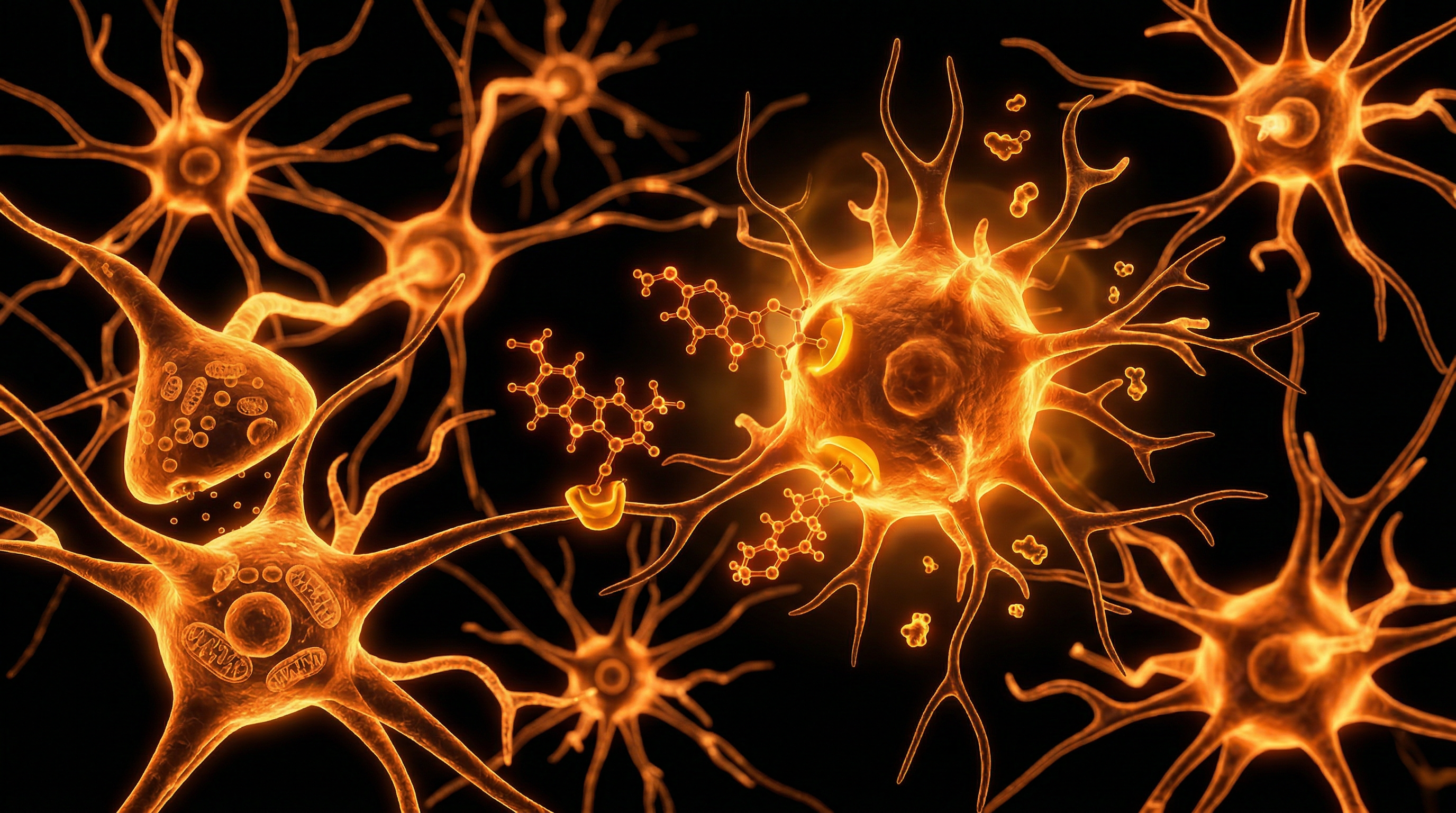
The landscape of modern psychiatry and neurology is undergoing a seismic shift. For decades, the medical establishment viewed psychedelics solely through the lens of hallucinogenic phenomena and spiritual "trips." However, as we peel back the layers of ancient indigenous wisdom and modern molecular biology, a more profound truth is emerging. At the forefront of this revelation is 5-Methoxy-N,N-dimethyltryptamine (5-MeO-DMT), a potent indolealkylamine found in high concentrations in the parotoid glands of the *Sonoran Desert Toad (Incilius alvarius)*.
Beyond the ego-dissolving "white light" experience lies a sophisticated biological mechanism that interacts directly with the human immune system. Recent research suggests that 5-MeO-DMT is not merely a psychological disruptor but a powerful immunomodulator with the potential to quench the fires of neuroinflammation—the underlying driver of the modern mental health epidemic.
The Neuroinflammatory Landscape: The Silent Killer of the Brain
Before investigating the specific role of 5-MeO-DMT, we must understand the adversary: chronic neuroinflammation. Unlike the acute inflammation that heals a wound, neuroinflammation is often a low-grade, persistent "smouldering" of the brain’s innate immune system.
The primary protagonists in this process are microglia—the resident macrophages of the central nervous system. When chronically activated by stress, environmental toxins, or poor diet, microglia release a cascade of pro-inflammatory cytokines (such as TNF-alpha and IL-6) and reactive oxygen species. This state of "molecular friction" is now recognised as a hallmark of:
- Major Depressive Disorder (MDD)
- Treatment-Resistant Anxiety
- Alzheimer’s and Parkinson’s Disease
- Chronic Fatigue Syndrome (ME/CFS)
"The brain’s immune response is a double-edged sword. While essential for protection, chronic activation of inflammatory pathways leads to synaptic pruning and neuronal death. Reversing this state is the 'holy grail' of modern neuroscience."
Biological Mechanisms: How 5-MeO-DMT Modulates the Immune System
The therapeutic potential of 5-MeO-DMT is rooted in its unique pharmacological profile. Unlike its cousin N,N-DMT (the primary active ingredient in Ayahuasca), 5-MeO-DMT shows an extraordinary affinity for the 5-HT1A receptor and, crucially, the Sigma-1 Receptor (S1R).
1. The Sigma-1 Receptor: The Master Switch
The Sigma-1 Receptor is not a traditional neurotransmitter receptor; it is a "chaperone protein" located at the intersection of the endoplasmic reticulum (ER) and the mitochondria. Research indicates that 5-MeO-DMT acts as a potent agonist for S1R. When activated, S1R performs several vital functions:
- Proteostasis: It ensures proteins are folded correctly, preventing the toxic "clumping" seen in neurodegenerative diseases.
- Calcium Signalling: It regulates calcium flow, preventing "excitotoxicity"—the process where nerve cells are overstimulated and damaged.
- Anti-Apoptotic Effects: It protects cells from programmed death under stress.
2. Downregulating Pro-inflammatory Cytokines
In in vitro studies, 5-MeO-DMT has demonstrated the ability to inhibit the production of interleukin-6 (IL-6) and Tumour Necrosis Factor-alpha (TNF-α). By binding to S1R, the molecule suppresses the nuclear factor-kappa B (NF-κB) pathway—the master "on switch" for inflammation in the body. This suggests that the 5-MeO-DMT experience serves as a "system reset" for the immune system, shifting the body from a pro-inflammatory state to an anti-inflammatory, restorative state.
3. Neurogenesis and BDNF
5-MeO-DMT has been shown to upregulate Brain-Derived Neurotrophic Factor (BDNF). BDNF is often described as "fertiliser for the brain," facilitating the growth of new dendrites and strengthening synaptic connections. By reducing inflammation, the molecule creates a "permissive environment" for neuroplasticity to occur.
The Toad Secretion vs. Synthetic Analogues
A point of significant debate within the UK and global communities is the source of the molecule. The secretion of the Incilius alvarius toad contains not just 5-MeO-DMT, but a cocktail of other tryptamines (like bufotenine) and cardiotonic steroids (bufogenins).
While many purists argue for the "entourage effect" of the natural secretion, the scientific community often leans toward synthetic 5-MeO-DMT. This is due to:
- Precision Dosing: The toad secretion varies wildly in potency, making clinical safety difficult to guarantee.
- Ecological Ethics: The Sonoran Desert Toad is currently under extreme pressure from "poaching" and habitat loss.
- Purity: Synthetic versions eliminate the risk of respiratory distress potentially caused by the non-tryptamine toxins found in the toad venom.
The UK Context: Research, Legality, and Relevance
In the United Kingdom, 5-MeO-DMT is classified as a Class A drug under the Misuse of Drugs Act 1971. Despite this restrictive legal framework, the UK is at the epicentre of the "Psychedelic Renaissance."
Clinical Leadership
Institutions like Imperial College London and private entities such as Beckley Psytech are leading the charge in investigating 5-MeO-DMT for Treatment-Resistant Depression (TRD). These trials are critical because the UK's National Health Service (NHS) is currently overburdened by a mental health crisis that traditional SSRIs (Selective Serotonin Reuptake Inhibitors) are failing to resolve.
The "Burnout" Epidemic
The relevance of 5-MeO-DMT to the UK population cannot be overstated. With rising rates of neuro-inflammation-driven burnout in high-pressure urban environments like London and Manchester, the search for "rapid-acting" interventions is intensifying. 5-MeO-DMT offers a potential paradigm shift: instead of daily medication to manage symptoms, a single, professionally facilitated session may address the biological root causes.
Environmental Factors: The Biological "Set and Setting"
In psychedelic therapy, "Set and Setting" usually refers to psychological mindset and physical surroundings. However, from a neurobiological perspective, environmental factors also influence the immunomodulatory outcome of a 5-MeO-DMT session.
- Circadian Rhythm: Disrupted sleep cycles (common in the UK due to light pollution and shift work) can prime microglia for a pro-inflammatory response. Administering 5-MeO-DMT in a state of extreme sleep deprivation may limit its anti-inflammatory potential.
- The Microbiome-Gut-Brain Axis: Emerging evidence suggests that the state of the gut microbiome influences how the brain responds to tryptamines. A diet high in ultra-processed foods may create a "baseline" of systemic inflammation that the molecule must first work to overcome.
- Integration and Quietude: The "afterglow" period is where the anti-inflammatory cascade is most active. A loud, stressful environment post-experience can trigger a cortisol spike, potentially dampening the S1R-mediated healing process.
Protective Strategies and Harm Reduction
While the immunomodulatory potential is immense, 5-MeO-DMT is arguably the most powerful psychoactive substance known to man. It is not a "recreational" drug and carries significant physiological risks if misused.
1. Medical Screening
The most critical protective strategy is the exclusion of individuals with pre-existing heart conditions or those taking certain medications.
Warning: The combination of 5-MeO-DMT and MAOIs (Monoamine Oxidase Inhibitors), found in some antidepressants and Ayahuasca, can be fatal due to Serotonin Syndrome.
2. Facilitation and Safety
The risk of "physical purging" or respiratory suppression requires that the individual never consume the substance alone. A trained sitter must be present to ensure the airway remains clear and to manage any involuntary movements.
3. Preparation and Somatic Integration
To maximise the anti-inflammatory benefits, practitioners recommend a "pre-habilitation" phase involving:
- Anti-inflammatory Diet: Reducing sugar and processed seed oils for two weeks prior.
- Breathwork: To regulate the Autonomic Nervous System (ANS).
- Somatic Therapy: To help the body "digest" the intense release of stored tension often associated with the 5-MeO-DMT experience.
Key Takeaways
The investigation into 5-MeO-DMT represents a transition from "Psychiatry as Symptom Management" to "Neurology as Cellular Restoration."
- Sigma-1 Receptor Activation: 5-MeO-DMT acts as a molecular "chaperone," protecting the brain from protein misfolding and ER stress.
- Cytokine Suppression: The molecule has the capacity to dial down chronic inflammation by inhibiting NF-κB and reducing pro-inflammatory cytokines like IL-6.
- Neuroplasticity: By creating an anti-inflammatory environment and boosting BDNF, it allows the brain to "rewire" itself away from depressive or anxious patterns.
- Ecological Responsibility: Given the conservation status of the Sonoran Desert Toad, synthetic 5-MeO-DMT is the ethical and scientifically preferred route for large-scale therapeutic use.
- The UK's Role: As a hub of psychedelic research, the UK is positioned to translate these molecular findings into clinical realities that could revolutionise NHS mental health protocols.
Conclusion
The "God Molecule" is proving to be a master of the mundane as well as the mystical. While the subjective experience of 5-MeO-DMT may involve a journey to the edge of the universe, its most profound gift may be the quiet, cellular work it performs within the brain. By quenching neuroinflammation and fortifying our neural architecture via the Sigma-1 receptor, 5-MeO-DMT offers a radical new path for healing in a world increasingly defined by chronic stress and biological disharmony.
For the INNERSTANDING community, the message is clear: the bridge between the spiritual and the biological is no longer a matter of faith—it is a matter of molecular neuroscience. To understand the toad is to understand the profound resilience of the human brain.
This article is provided for informational and educational purposes only. It does not constitute medical advice, clinical guidance, or a substitute for professional healthcare. Information reflects cited research at time of publication. Always consult a qualified healthcare professional before acting on any health information.
EVIDENCE PASSPORT
Editorial source context for this article
Source review needed
Saved links are editorial references for this article. They may support specific claims rather than every sentence. Open and assess each source in context. This passport does not independently verify them.
Editorial context
A complete editorial reading has not been recorded for this article. Source links remain available for you to open and assess directly.
Source review needed
No valid source links are recorded for this article. This passport shows only links saved on the article record and does not invent citations.
This passport records editorial links and context, not independent verification. Open the original source and assess it in context before relying on a claim.
Medical Disclaimer
The information in this article is for educational purposes only and does not constitute medical advice, diagnosis, or treatment. Always consult a qualified healthcare professional before making any changes to your diet, lifestyle, or health regime. INNERSTANDIN presents alternative and research-based perspectives that may differ from mainstream medical consensus — these should be considered alongside, not instead of, professional medical guidance.
Read Full DisclaimerContinue the thread
Keep this question moving.
Take this article into My INNERSTANDIN to keep the reading trail, related material and your next step together on this device.
Explore this in the Body Map
See where this hits your biology. Interactive anatomy, threats, and protective protocols.
Dig deeper in the Library
Free, longform PDF volumes that go beyond headlines into mechanisms and references.