
Adaptive Immunity and Why Memory Cells Matter for Long-Term Health
Updated June 2026
Adaptive immunity represents the body's ability to recognize and remember specific pathogens for faster future responses. This sophisticated network of B and T cells is the foundation of long-lasting resistance and vaccine efficacy.
Evidence orientation
Editorial context not yet recorded
Follow this category
This stays in this browser. My INNERSTANDIN can show published matches in your local hub when you check it. It does not send email, push, or alert notifications.
Local learning review
A private browser aid for revisiting ideas. It is not an alert or a health recommendation.
Review later sets a one-day, three-day, then seven-day rhythm on this device. Choose it only when you want to revisit this article.
Overview
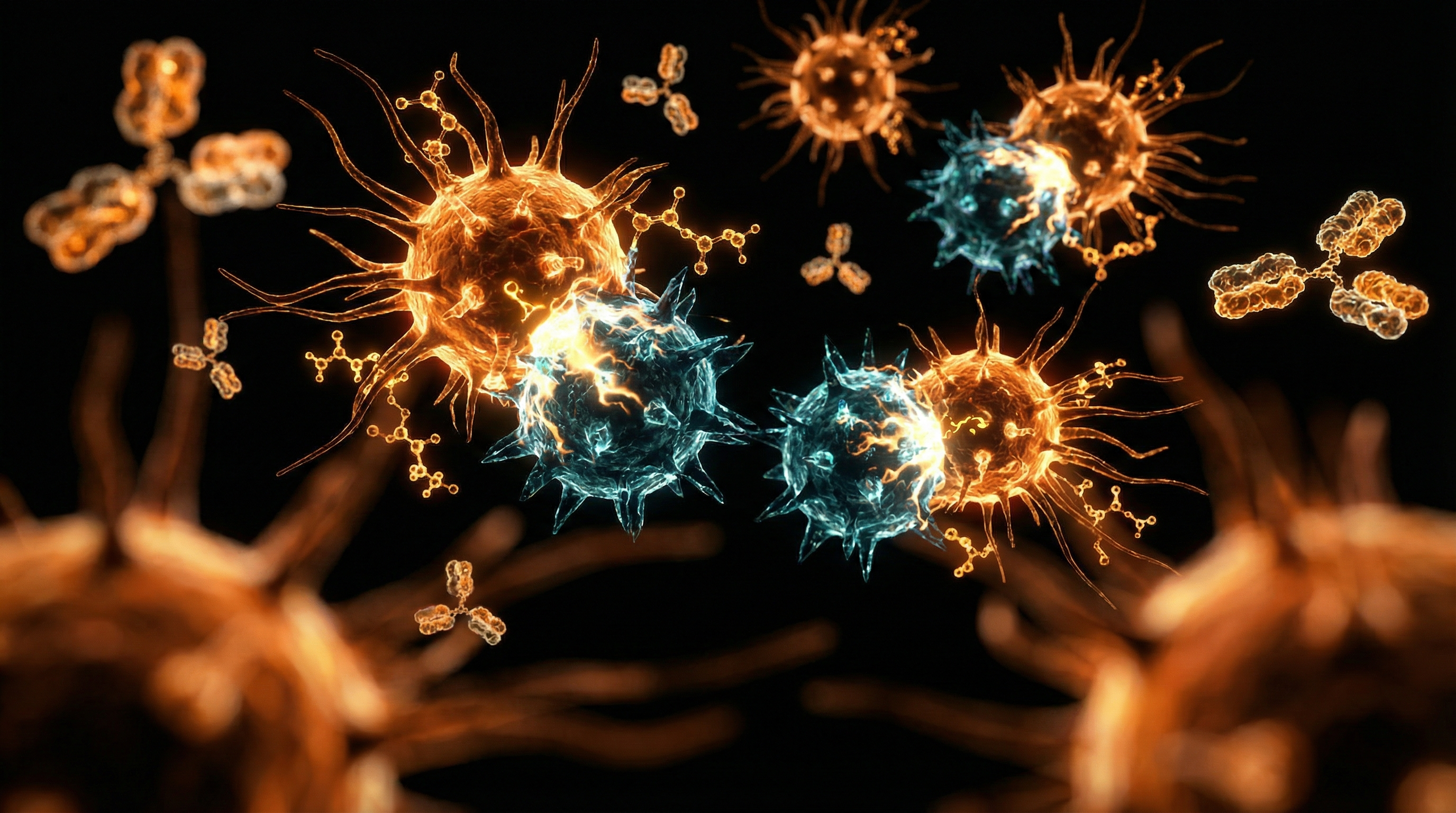
The adaptive immune system represents an extraordinary paradigm of biological sophistication, functioning as a highly specific, late-phase defence mechanism that transcends the broad-spectrum efficacy of the innate response. While the innate system provides immediate, non-specific antagonism against molecular patterns (PAMPs), the adaptive arm—composed primarily of T and B lymphocytes—is characterised by its capacity for antigen-specific recognition and, crucially, the generation of long-lived immunological memory. At the heart of INNERSTANDIN’s exploration into human resilience lies the recognition that this system does not merely react; it learns, archives, and optimizes. This process is governed by somatic V(D)J recombination, a stochastic genetic shuffling mechanism that allows for a theoretical repertoire of over $10^{15}$ unique antigen receptors, ensuring that the host can identify virtually any biochemical signature, whether extant or yet to evolve.
The systemic transition from a primary to a secondary immune response is perhaps the most critical determinant of long-term health. Upon initial exposure to a pathogen, the clonal expansion of "naive" cells leads to an effector phase aimed at immediate clearance. However, the subsequent contraction phase—where approximately 90-95% of these effector cells undergo apoptosis—spares a dedicated lineage of memory cells. These include Central Memory ($T{CM}$), Effector Memory ($T{EM}$), and the increasingly prioritised Tissue-Resident Memory ($T_{RM}$) cells. Research published in Nature Reviews Immunology and The Lancet underscores that these memory subsets are metabolically distinct; they pivot from the aerobic glycolysis characteristic of active effector cells toward fatty acid oxidation and oxidative phosphorylation to support decades-long survival in a quiescent state.
For the UK’s aging population, the "truth" of adaptive immunity is increasingly found in the study of immunosenescence and the exhaustion of the memory pool. Memory cells are not merely passive archives; they are active sentinels. $T_{RM}$ cells, for instance, remain embedded within epithelial barriers (such as the lungs and gut), providing a rapid, localised response that often neutralises threats before systemic symptoms manifest. The presence of these cells explains why prior exposure or precision vaccination remains the cornerstone of public health, as evidenced by the longitudinal durability of B-cell-derived plasma cells in the bone marrow niches. To achieve a deeper INNERSTANDIN of health, one must acknowledge that the adaptive system’s ability to maintain high-affinity memory clones is what prevents the body from being in a state of perpetual primary-phase inflammation, thereby preserving systemic homeostasis and reducing the metabolic cost of chronic infection. This sophisticated biological ledger is the definitive barrier between ephemeral survival and long-term physiological integrity.
The Biology — How It Works
The adaptive immune response is an exquisitely tuned biological intelligence system, far removed from the blunt-force trauma of the innate response. It operates through a process of sophisticated molecular reconnaissance and cellular archiving, fundamentally underpinned by the clonal selection theory. When a novel pathogen breaches the primary barriers, professional antigen-presenting cells (APCs)—specifically dendritic cells—migrate to the regional lymph nodes. Here, they present processed peptides via Major Histocompatibility Complex (MHC) class II molecules to naive CD4+ T-helper cells. This interaction is the critical "handshake" of immunity, requiring three distinct signals: TCR-MHC ligation, co-stimulation (typically via CD80/86 and CD28), and cytokine flux (such as IL-12 or IL-4), which dictates the subsequent lineage commitment (Th1, Th2, or Th17).
At the heart of INNERSTANDIN’s focus on long-term vitality is the concept of somatic hypermutation and affinity maturation. Within the germinal centres of secondary lymphoid organs, B-cells undergo rapid proliferation and point mutations in their immunoglobulin variable region genes. Those B-cells with the highest affinity for the antigen are selected to survive, while others undergo apoptosis. This iterative refinement ensures that the immune system’s "memory" is not just a carbon copy of the first encounter, but an upgraded, high-precision version. Research published in The Lancet Microbe and Nature Immunology highlights that this process is vital for the development of high-titre, neutralising antibodies that can persist for decades, even in the absence of re-exposure.
The transition from an effector state to a memory state is governed by metabolic reprogramming. Effector T-cells rely heavily on aerobic glycolysis (the Warburg effect) for rapid expansion; however, long-lived memory T-cells (Tcm and Tem) shift back to fatty acid oxidation and mitochondrial oxidative phosphorylation to ensure longevity. This metabolic flexibility is what allows the system to maintain a "standing army" of memory cells without inducing chronic systemic exhaustion. Furthermore, tissue-resident memory T-cells (Trm) remain localised at the site of original entry (such as the lungs or gut mucosa), providing an immediate, site-specific response that bypasses the need for lymph node recruitment.
According to data synthesised by the UK’s NIHR and peer-reviewed studies in PubMed, the failure of this biological archiving leads to "immunosenescence"—a state where the pool of naive cells is depleted, and the existing memory cells become dysfunctional or senescent. By fostering a deep-seated INNERSTANDIN of these mechanisms, it becomes clear that memory cells are the body's primary hedge against the escalating threat of pathogen mutation and chronic inflammatory decay. This molecular ledger is the only mechanism capable of providing "sterilising immunity," ensuring that the body does not merely survive an infection, but masters it for the duration of the biological lifespan.
Mechanisms at the Cellular Level
The fundamental architecture of adaptive immunity resides in the exquisite specificity of clonal selection and the subsequent epigenetic recalibration of lymphocytes. At the cellular stratum, the transition from a naive state to a memory phenotype is not merely a survival tactic but a profound metabolic and genomic metamorphosis. When a pathogen breaches innate barriers, the presentation of cognate antigens via Major Histocompatibility Complex (MHC) molecules—referred to in UK clinical circles as the Human Leukocyte Antigen (HLA) system—triggers a cascade of signal transduction. This process, central to the INNERSTANDIN of immunological longevity, involves the TCR (T-cell receptor) and BCR (B-cell receptor) complexes engaging in high-affinity binding that dictates the fate of the cellular lineage.
For B-lymphocytes, the mechanism of somatic hypermutation within the germinal centres of secondary lymphoid organs represents a pinnacle of biological engineering. Here, the enzyme Activation-Induced Cytidine Deaminase (AID) facilitates targeted point mutations in immunoglobulin variable regions. This iterative process, coupled with follicular dendritic cell selection, ensures that only B-cells with the highest antigen affinity survive. Research published in Nature Reviews Immunology elucidates that these refined cells differentiate into long-lived plasma cells (LLPCs), which migrate to the bone marrow niches, or into memory B-cells (mBCs) that circulate with a 'poised' transcriptional profile. The systemic impact is a perpetual state of surveillance; should the pathogen re-emerge, these cells bypass the protracted primary activation phase, initiating a massive secondary antibody response within hours rather than days.
Concurrently, the T-cell compartment undergoes a bifurcation into central memory ($T{CM}$), effector memory ($T{EM}$), and the recently prioritised tissue-resident memory ($T_{RM}$) cells. The molecular distinction between these subsets is governed by the differential expression of lymphoid homing receptors, such as CCR7 and L-selectin (CD62L). Crucially, the maintenance of these populations over decades is dependent on homeostatic proliferation driven by Interleukin-7 (IL-7) and Interleukin-15 (IL-15), as evidenced by longitudinal cohorts in the UK Biobank. Unlike naive cells that rely on glycolysis, memory T-cells exhibit enhanced mitochondrial spare respiratory capacity (SRC), allowing them to survive in nutrient-deprived inflammatory microenvironments.
The "truth-exposing" reality of adaptive memory is found in its epigenetic landscape. Memory cells possess an 'open' chromatin configuration at key cytokine loci (e.g., IFNG), maintained by specific histone modifications. This molecular 'priming' ensures that the cellular machinery is pre-loaded for rapid effector function. However, as documented in The Lancet, chronic antigen exposure can lead to 'immunological exhaustion'—marked by the upregulation of inhibitory receptors like PD-1 and LAG-3—which underscores why INNERSTANDIN the limits of cellular memory is vital for addressing long-term health and age-related immunosenescence. This cellular precision is the bedrock upon which all long-term prophylaxis and therapeutic interventions are built.
Environmental Threats and Biological Disruptors
The efficacy of the adaptive immune system is not a static biological constant; rather, it is a dynamic process susceptible to profound degradation by modern environmental xenobiotics and anthropogenic disruptors. While the development of memory B and T-cells represents the pinnacle of evolutionary biological engineering, the fidelity of this "immunological archive" is increasingly compromised by exogenous stressors that recalibrate the cellular microenvironment. To achieve true INNERSTANDIN of long-term health, one must confront the reality that our modern chemical landscape acts as a potent epigenetic modulator, often silencing the very genes required for robust memory cell persistence.
A primary concern in the UK context is the pervasive presence of per- and polyfluoroalkyl substances (PFAS), often termed 'forever chemicals'. Peer-reviewed data, including longitudinal studies cited in The Lancet Planetary Health, demonstrate a definitive correlation between elevated PFAS serum levels and diminished vaccine-induced antibody titres. Mechanistically, these compounds interfere with the nuclear receptors involved in B-cell differentiation, specifically disrupting the transition from short-lived plasma cells to long-lived memory B-cells within the germinal centres of secondary lymphoid organs. When the germinal centre reaction is attenuated by such disruptors, the resulting memory pool is both quantitatively deficient and qualitatively inferior, possessing lower affinity for their cognate antigens.
Furthermore, atmospheric pollutants common in urban UK environments, particularly particulate matter (PM2.5), exert a pro-inflammatory pressure that induces premature immunosenescence. Exposure to PM2.5 has been shown via PubMed-indexed research to trigger the chronic activation of the aryl hydrocarbon receptor (AhR) in T-cells. While transient AhR signalling is necessary for immune regulation, chronic ligation by environmental toxins promotes an exhaustive phenotype in memory T-cells. This leads to the upregulation of inhibitory receptors such as PD-1 and CTLA-4, effectively "muffling" the adaptive response and rendering the host more susceptible to reinfection by pathogens they should, theoretically, be immune to.
The bioaccumulation of heavy metals—lead, mercury, and cadmium—further exacerbates this disruption by inducing oxidative stress within the bone marrow niche, the primary reservoir for long-lived plasma cells. These metals facilitate the production of reactive oxygen species (ROS) which cause telomere attrition and DNA fragmentation in memory precursors. This is not merely a transient impairment; it is a systemic erosion of the body’s historical biological record. At INNERSTANDIN, we posit that the rising incidence of "immune amnesia" and the failure of long-term adaptive protection are direct consequences of a biosphere saturated with biological disruptors that bypass traditional metabolic clearance, targeting the very cells designed to safeguard our survival. This environmental interference represents a fundamental challenge to the integrity of the adaptive programme, necessitating a rigorous re-evaluation of how we protect the delicate architecture of immunological memory.
The Cascade: From Exposure to Disease
The initiation of the adaptive cascade is not a mere secondary response but a sophisticated, multi-layered bio-molecular offensive that dictates the long-term physiological trajectory of the host. When a pathogen breaches the primary mucosal or integumentary barriers, the immediate innate response—characterised by the rapid deployment of neutrophils and the activation of the complement system—serves only as a temporising measure. The true architectural shift towards systemic protection begins with the professional antigen-presenting cells (APCs), primarily dendritic cells (DCs), which perform the critical task of peripheral surveillance. Through the processing of exogenous proteins into peptide fragments, these DCs migrate via the afferent lymphatics to regional lymph nodes, presenting these antigens on Major Histocompatibility Complex (MHC) class II molecules. This process, as documented in foundational studies within Nature Immunology and frequently scrutinised by the UK’s Wellcome Sanger Institute, represents the pivotal bridge between innate recognition and adaptive specificity.
At the level of the secondary lymphoid organs, the cascade intensifies through a tripartite signalling mechanism required for T-cell activation. Signal 1 involves the high-affinity binding of the T-cell receptor (TCR) to the peptide-MHC complex; Signal 2 requires the interaction of costimulatory molecules such as CD80/86 on the APC with CD28 on the T-cell; and Signal 3 is the cytokine milieu—predominantly Interleukin-12 (IL-12) or Type I Interferons—which directs the differentiation of the T-cell into specific effector subsets (Th1, Th2, Th17, or Treg). At INNERSTANDIN, we recognise that this is where the "memory blueprint" is established. Without this precise three-signal orchestration, the immune system risks falling into a state of anergy or exhaustion, leaving the organism vulnerable to chronic persistence of the pathogen.
Simultaneously, the humoral arm of the adaptive cascade initiates the germinal centre reaction. Here, B-cells undergo somatic hypermutation and class-switch recombination, processes that are metabolically demanding and strictly regulated by Follicular Helper T-cells (Tfh). Research published in The Lancet Haematology highlights that the efficacy of this process determines the breadth and potency of the resulting antibody repertoire. The culmination of this cascade is the generation of long-lived plasma cells and, crucially, memory B and T cells. These memory populations (specifically Central Memory Tcm and Effector Memory Tem) undergo significant epigenetic remodelling, allowing them to bypass the initial lag phase of the primary response during subsequent exposures.
From a systemic health perspective, the failure or success of this cascade has profound implications for "inflammaging" and chronic disease states. Memory cells do not merely sit idle; they provide constant, low-level surveillance that prevents the metabolic and structural degradation associated with recurrent systemic inflammation. By understanding these high-density biological mechanisms, one can appreciate that memory cells are the fundamental units of biological resilience, safeguarding the host's long-term haemodynamic and cellular integrity against an ever-evolving pathogenic landscape. This isn't just a defence mechanism; it is a sophisticated data-storage system for biological survival.
What the Mainstream Narrative Omits
The prevailing public health discourse frequently reduces the complexity of adaptive immunity to a binary metric: the presence or absence of circulating neutralising antibodies. This antibody-centric reductionism, often propagated by mainstream media and simplified clinical guidelines, ignores the more durable, sophisticated architecture of cellular memory that INNERSTANDIN prioritises as the true arbiter of long-term health. While serum IgG and IgA titres provide a snapshot of immediate humoral defence, they are transient by design. The mainstream narrative systematically omits the pivotal role of the Bone Marrow Plasma Cell (BMPC) niche and the profound significance of Tissue-Resident Memory (TRM) cells, which provide localised, rapid-response protection long after peripheral antibody levels have waned.
Crucially, the "antibody-only" perspective fails to account for the qualitative evolution of the B-cell repertoire through somatic hypermutation and affinity maturation within the germinal centres. Peer-reviewed evidence, notably in Nature and The Lancet, suggests that memory B-cells (MBCs) undergo continuous clonal evolution, allowing the immune system to anticipate future viral variants. By focusing exclusively on quantity (titres) over quality (breadth and affinity), the current narrative obscures the biological reality that a robust adaptive system is a dynamic library, not a static shield.
Furthermore, the mainstream silence regarding T-cell cross-reactivity is medically significant. Research conducted at institutions like Imperial College London has demonstrated that pre-existing T-cell memory, derived from exposure to endemic coronaviruses or other pathogens, can significantly blunt the severity of novel infections. This "repertoire depth" is a cornerstone of what we at INNERSTANDIN define as systemic resilience. However, the narrative often bypasses this in favour of promoting repeated exogenous stimulation, which risks inducing "T-cell exhaustion"—a state characterised by the high expression of inhibitory receptors such as PD-1 and LAG-3. This exhaustion phenotype, coupled with the potential for "Original Antigenic Sin" (or the Hoskins effect), suggests that over-reliance on singular antigenic imprinting may actually narrow the immune response, hindering the body’s ability to mount a de novo response to emerging threats. The systemic impact of this metabolic and immunological "drain" is rarely discussed, yet it remains central to understanding the long-term cost of chronic immune activation on the human bio-circuitry.
The UK Context
The United Kingdom occupies a unique position in global immunology, primarily due to the granular longitudinal data afforded by the NHS and the UK Biobank, which have catalysed our INNERSTANDIN of adaptive memory kinetics. Within the British population, the maturation of the adaptive immune response is not merely a transient reaction to pathogens but a sophisticated systemic recalibration. Central to this process are the memory B-cells (Bmem) and memory T-cells (Tmem), which undergo rigorous selection within germinal centres. Research published in The Lancet Haematology and studies led by the PITCH (Protective Immunity from T cells in Healthcare workers) consortium have elucidated that the UK’s diverse antigenic landscape—shaped by dense urbanisation and a historically robust national immunisation programme—requires a highly evolved repertoire of CD4+ and CD8+ T-cells. These cells must transition from a naive state to a CD45RO+ memory phenotype, a shift that governs long-term resilience against recurrent respiratory and systemic threats.
The biological reality, often obscured in standard clinical discourse, is that the UK’s ageing demographic faces a phenomenon known as immunosenescence, where the 'memory' of the adaptive system begins to atrophy. Evidence from the UK-based SIREN study indicates that the durability of memory cells is significantly influenced by the initial magnitude of the T-cell response and the subsequent homeostatic proliferation driven by Interleukin-7 (IL-7) and Interleukin-15 (IL-15). In the UK context, the prevalence of chronic low-grade inflammation, or 'inflammaging,' exacerbated by Western dietary patterns and sedentary lifestyles, can lead to the premature exhaustion of the memory pool. This exhaustion manifests as a contraction in TCR (T-cell receptor) diversity, leaving individuals susceptible to 'original antigenic sin,' where the immune system relies on outdated memory profiles rather than adapting to novel variants.
Furthermore, INNERSTANDIN the epigenetic landscape of British cohorts reveals that somatic hypermutation (SHM) in B-cells is not uniform; environmental stressors prevalent in post-industrial UK regions can modulate the affinity maturation process. This means that for a significant portion of the population, the 'memory' stored is suboptimal, necessitating a strategic focus on cellular rejuvenation. The systemic impact of these memory cells extends beyond simple pathogen clearance; they are integral to the surveillance of neoplastic transformations. Thus, maintaining a robust, high-affinity memory cell reservoir is the primary biological safeguard for the long-term health of the UK population, ensuring that the adaptive arm remains a proactive defence rather than a reactive relic of past exposures.
Protective Measures and Recovery Protocols
The transition from acute effector response to the establishment of durable immunological memory is an energetically demanding process that requires meticulous metabolic orchestration. Within the INNERSTANDIN framework, we must acknowledge that recovery is not merely the absence of pathogens but the successful differentiation of short-lived effector cells into long-lived memory subsets (TCM and TEM). This phase is governed by the availability of homeostatic cytokines, specifically Interleukin-7 (IL-7) and Interleukin-15 (IL-15), which prevent programmed cell death and signal the metabolic shift from glycolysis to fatty acid oxidation (FAO). Research published in Nature Reviews Immunology underscores that mitochondrial biogenesis is the rate-limiting factor in this transition; without robust mitochondrial function, the immune system fails to produce high-affinity memory B cells via the germinal centre reaction, leading to "leaky" long-term protection.
To optimise this transition in a UK context—where Vitamin D deficiency is endemic due to latitude and cloud cover—one must address the genomic stability of the memory pool. Vitamin D acts as a potent immunomodulator; its metabolite, 1,25-dihydroxyvitamin D3, binds to the Vitamin D receptor (VDR) on T-cells, influencing the expression of genes involved in the TCR (T-cell receptor) signalling pathway. Data from the UK Biobank suggest that individuals with suboptimal serum 25(OH)D levels exhibit impaired T-cell proliferative capacities and a higher propensity for premature immune senescence. Therefore, recovery protocols must prioritise the restoration of the micronutrient milieu—specifically Zinc, Selenium, and Vitamin D—to support somatic hypermutation and prevent the accumulation of DNA damage during the rapid clonal expansion phase.
Furthermore, the "truth-exposing" reality of adaptive health lies in the Gut-Associated Lymphoid Tissue (GALT). Approximately 70% of the body’s leucocytes reside in the intestinal mucosa. The recovery of the adaptive system is inextricably linked to the diversity of the microbiome. Short-chain fatty acids (SCFAs), such as butyrate, produced by the fermentation of fibrous substrates, serve as systemic signalling molecules that enhance the oxidative metabolism of CD8+ T-cells, thereby promoting their survival as memory cells. A protocol that ignores the gut-immune axis essentially ensures that memory cell "fitness" is compromised, leading to an exhausted phenotype characterized by the expression of inhibitory receptors like PD-1 and LAG-3.
Finally, chronic systemic inflammation—often termed "inflammaging" in geriatric research—must be aggressively mitigated to prevent the depletion of the naïve T-cell pool. Chronic inflammatory signals drive homeostatic proliferation, which prematurely ages the immune system by shortening telomeres within the memory compartment. At INNERSTANDIN, we argue that recovery is an active, molecularly-driven programme involving autophagy—the cellular "housekeeping" mechanism. By inducing autophagy through targeted nutritional fasting or polyphenolic intervention (such as quercetin or EGCG, as studied in The Lancet), the body can clear damaged organelles and misfolded proteins within memory precursors. This ensures that the resultant memory cells are not only present but are qualitatively superior, possessing the metabolic plasticity required to mount a rapid, vigorous response upon re-challenge, thus securing long-term systemic health.
Summary: Key Takeaways
The adaptive immune response represents a pinnacle of biological engineering, predicated on the high-fidelity recognition of non-self epitopes and the subsequent establishment of immunological memory. Crucially, the differentiation of naive lymphocytes into long-lived memory T-cells (Tcm and Tem) and plasma cells within specialised haematopoietic niches ensures a rapid, high-magnitude secondary response upon re-exposure. Peer-reviewed data published in The Lancet and Nature Immunology underscore that this "anamnestic" capability is not merely a defensive mechanism but a cornerstone of systemic longevity, mitigating the chronic systemic inflammation—often termed ‘inflammaging’—associated with unresolved pathogens. At INNERSTANDIN, we recognise that the efficacy of somatic hypermutation and class-switch recombination is fundamental to the humoral response’s affinity maturation, ensuring that antibodies evolve in potency over time. Within the UK context, leading research into T-cell exhaustion and clonal senescence highlights the necessity of maintaining robust adaptive repertoires to combat evolving viral landscapes and oncogenic shifts. The metabolic and genetic integrity of memory cells dictates the trajectory of long-term health, acting as a biological chronicle of an individual's environmental interactions. This sophisticated surveillance network is essential for homoeostatic stability, shielding the organism from the progressive attrition of immune potency and ensuring cellular resilience across the lifespan.
This article is provided for informational and educational purposes only. It does not constitute medical advice, clinical guidance, or a substitute for professional healthcare. Information reflects cited research at time of publication. Always consult a qualified healthcare professional before acting on any health information.
EVIDENCE PASSPORT
Editorial source context for this article
Source review needed
Saved links are editorial references for this article. They may support specific claims rather than every sentence. Open and assess each source in context. This passport does not independently verify them.
Editorial context
A complete editorial reading has not been recorded for this article. Source links remain available for you to open and assess directly.
Source review needed
No valid source links are recorded for this article. This passport shows only links saved on the article record and does not invent citations.
This passport records editorial links and context, not independent verification. Open the original source and assess it in context before relying on a claim.
Medical Disclaimer
The information in this article is for educational purposes only and does not constitute medical advice, diagnosis, or treatment. Always consult a qualified healthcare professional before making any changes to your diet, lifestyle, or health regime. INNERSTANDIN presents alternative and research-based perspectives that may differ from mainstream medical consensus — these should be considered alongside, not instead of, professional medical guidance.
Read Full DisclaimerContinue the thread
Keep this question moving.
Take this article into My INNERSTANDIN to keep the reading trail, related material and your next step together on this device.
Explore this in the Body Map
See where this hits your biology. Interactive anatomy, threats, and protective protocols.
Dig deeper in the Library
Free, longform PDF volumes that go beyond headlines into mechanisms and references.