
Agricultural Soil Degradation: Microplastics in UK Farmland
Updated May 2026
The application of sewage sludge as fertilizer is introducing massive quantities of microplastics into UK agricultural soils. This alters soil structure, impacts earthworm health, and risks crop contamination.
Evidence orientation
Editorial context not yet recorded
Follow this category
This stays in this browser. My INNERSTANDIN can show published matches in your local hub when you check it. It does not send email, push, or alert notifications.
Local learning review
A private browser aid for revisiting ideas. It is not an alert or a health recommendation.
Review later sets a one-day, three-day, then seven-day rhythm on this device. Choose it only when you want to revisit this article.
Overview
For decades, the agricultural sector has been heralded as the steward of the landscape, a vital cog in the machine of national food security. However, beneath the verdant pastures and golden wheat fields of the United Kingdom, a silent, synthetic crisis is unfolding. The "circular economy" model, promoted by water utility companies and government bodies, has encouraged the widespread application of sewage sludge—the nutrient-rich byproduct of wastewater treatment—as an inexpensive organic fertiliser. While rich in nitrogen and phosphorus, this material is secretly laden with a catastrophic payload: microplastics (MPs) and nanoplastics (NPs).
Current estimates suggest that between 80% and 90% of the microplastics entering wastewater treatment plants are retained in the sludge. In the UK, approximately 3.5 to 4 million tonnes of wet biosolids are spread onto agricultural land annually. This practice translates to an astronomical influx of synthetic polymers into our primary food-producing soils—estimates suggest that UK soils are receiving upwards of 20,000 tonnes of microplastics every single year.
This is not merely an aesthetic or minor environmental nuisance. It is a fundamental alteration of the Earth's "living skin." These particles, ranging from fibrous polyester to fragmented polyethylene, are becoming permanent constituents of the soil matrix. They disrupt the delicate equilibrium of the soil microbiome, impair the health of essential organisms like the earthworm, and, most alarmingly, have been shown to translocate into the vascular systems of the crops we consume. At INNERSTANDING, we believe it is time to peel back the veneer of "sustainable recycling" and examine the biological reality of this plastic infiltration.
Fact: The UK applies roughly 500 kg of microplastics per square kilometre of agricultural land annually through biosolid application—one of the highest rates in Western Europe.
The Biology — How It Works
To understand the impact of microplastics on soil, we must first view the soil not as "dirt," but as a complex biological organism. Soil is a tripartite system composed of mineral particles, organic matter, and living organisms. Microplastics, by definition particles smaller than 5mm, and nanoplastics, smaller than 100nm, act as xenobiotic intrusions that distort the physical and chemical properties of this system.
The Composition of the Infiltrants
The microplastics found in UK farmland are not a monolithic substance. They are a diverse cocktail of polymers including:
- Polyethylene (PE): Found in packaging and agricultural films.
- Polypropylene (PP): Used in textiles and automotive parts.
- Polyvinyl Chloride (PVC): Common in construction debris and pipes.
- Polyethylene Terephthalate (PET): Primarily from synthetic clothing fibres shed during laundering.
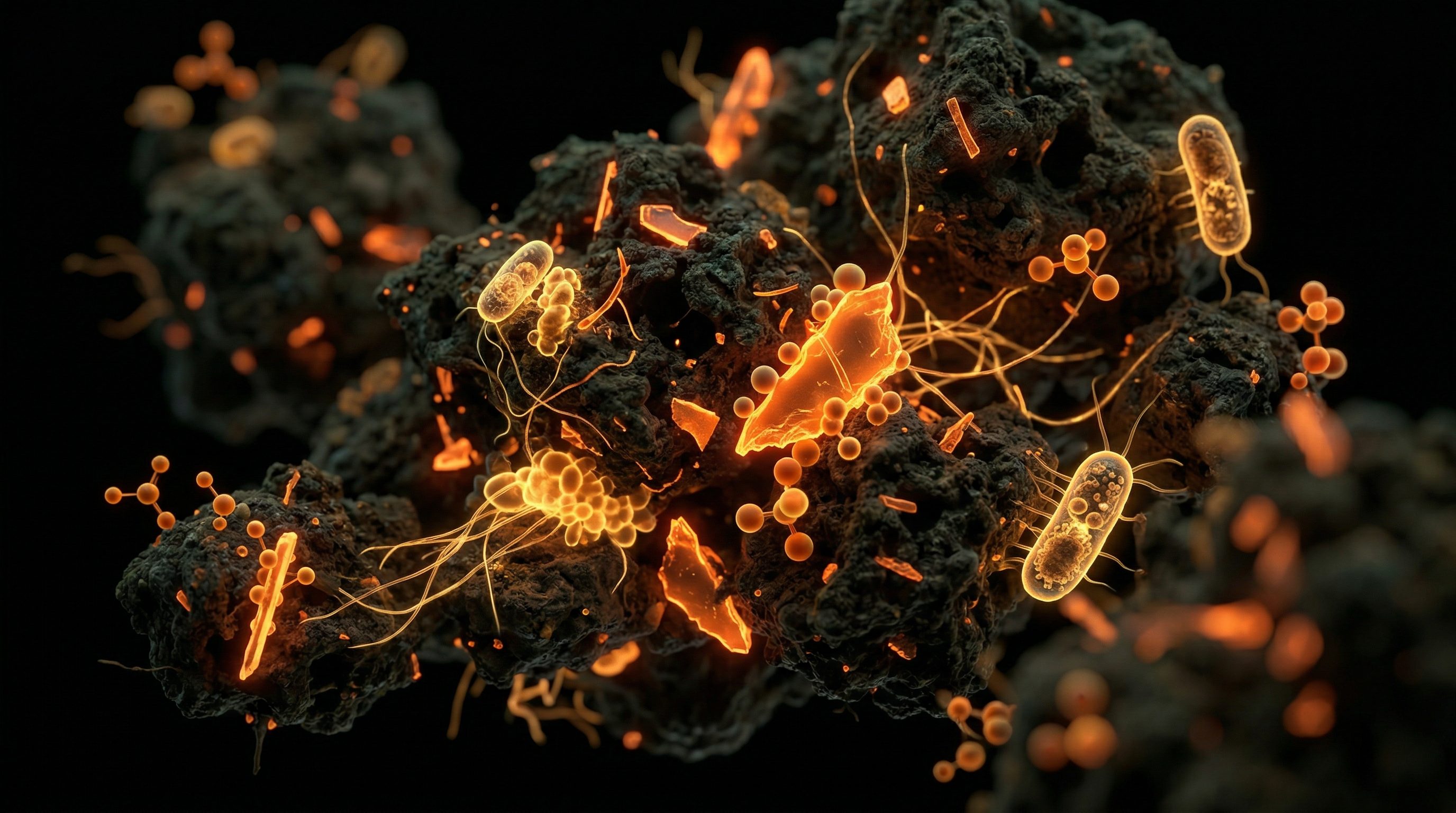
When these particles enter the soil via sewage sludge, they do not remain inert. They undergo a process known as weathering, driven by UV radiation (near the surface), mechanical abrasion from tilling, and microbial enzymatic action. This weathering increases the surface area of the particles, creating a "plastisphere"—a unique microbial biofilm that develops on the surface of the plastic, often harbouring pathogenic bacteria and antibiotic-resistance genes.
Physical Soil Transformation
The introduction of synthetic fibres and fragments fundamentally alters soil architecture. Microplastics change the bulk density of the soil and affect its porosity. Fibrous microplastics, in particular, can create "macro-pores" that accelerate the evaporation of water, leading to increased soil desiccation. Conversely, high concentrations of plastic fragments can lead to the clogging of natural pore spaces, reducing the soil’s oxygen levels (hypoxia) and hindering the movement of water to plant roots.
Interaction with Organic Matter
The chemical affinity between microplastics and natural organic matter (NOM) leads to the formation of organo-plastic complexes. Microplastics, being hydrophobic, can "capture" and hold onto natural carbon, preventing it from being cycled by soil microbes. This interrupts the carbon sequestration potential of the soil, effectively turning a carbon sink into a dysfunctional synthetic repository.
Mechanisms at the Cellular Level
The threat of microplastics escalates as the particle size decreases. Once we enter the realm of nanoplastics, the biological barriers that typically protect organisms begin to fail.
Endocytosis and Root Uptake
For a long time, the scientific consensus was that microplastics were too large to be absorbed by plants. Recent research has shattered this assumption. Through a process called endocytosis, or via cracks at the lateral root emergence sites, nanoplastics and sub-micron microplastics enter the plant’s apoplastic (cell wall) and symplastic (cytoplasmic) pathways.
Once inside the root cortex, these particles are pulled into the xylem, the plant's vascular tissue used for water transport. Driven by transpiration, the plastic particles move upward into the stems, leaves, and eventually the reproductive organs—the fruits and grains that humans consume.
The "Corona" Effect
At the cellular level, microplastics do not act alone. As soon as a plastic particle enters a biological fluid (such as the interstitial fluid of the soil or the sap of a plant), it becomes coated with a "corona" of proteins, lipids, and humic substances. This biomolecular corona dictates how the cell perceives the plastic. If the plastic is coated in proteins that mimic a nutrient, the cell may actively transport the plastic particle across the membrane via receptor-mediated endocytosis, effectively "inviting" the toxin inside.
Intracellular Toxicity
Once inside the cell, nanoplastics exert several toxic mechanisms:
- Oxidative Stress: The presence of a foreign synthetic body triggers the production of Reactive Oxygen Species (ROS). These molecules damage DNA, denature proteins, and cause lipid peroxidation in cell membranes.
- Genotoxicity: Smaller particles can interact directly with the nuclear envelope, potentially causing mutations or epigenetic changes that affect the long-term viability of the crop.
- Metabolic Disruption: Plastics can physically block the passage of ions and nutrients across the mitochondrial membrane, starving the cell of energy (ATP).
Environmental Threats and Biological Disruptors
The most immediate victims of soil plastic contamination are the "ecosystem engineers": earthworms (Lumbricus terrestris and Eisenia fetida). Earthworms are the primary biological processors of soil, and their health is a direct barometer for the health of the entire agricultural system.
Earthworms as Trophic Links
Earthworms ingest microplastics as they consume soil and organic matter. This leads to several catastrophic biological outcomes:
- Intestinal Abrasion: Sharp plastic fragments lacerate the earthworm's digestive tract, leading to internal inflammation and reduced nutrient absorption.
- Growth Stunting: Studies have shown that earthworms in MP-contaminated soils exhibit significantly lower growth rates and higher mortality.
- The "Trojan Horse" Effect: Microplastics are highly efficient at adsorbing persistent organic pollutants (POPs) such as pesticides (DDT, glyphosate), heavy metals (lead, cadmium), and pharmaceuticals. When an earthworm ingests a plastic particle, it is also ingesting a concentrated dose of these chemicals, which are then released into the worm’s tissue due to the acidic environment of the gut.
The Mycorrhizal Fungi Crisis
Beneath the surface, plants form a symbiotic relationship with Arbuscular Mycorrhizal Fungi (AMF). These fungi extend the reach of plant roots, exchanging phosphorus for plant sugars. Microplastics have been shown to inhibit the colonisation of roots by these fungi. This disruption weakens the plant's immune system and forces farmers to use more chemical fertilisers, creating a vicious cycle of dependency and degradation.
Soil Microbiome Shift
Microplastics selectively encourage the growth of certain microbial taxa while suppressing others. High concentrations of PE and PVC can suppress the activity of denitrifying bacteria, which are essential for the nitrogen cycle. Furthermore, the "plastisphere" serves as a breeding ground for pathogens that do not normally thrive in healthy soil, increasing the risk of crop diseases.
The Cascade: From Exposure to Disease
The danger of microplastics in UK farmland is not contained within the field; it is a trans-boundary threat that moves through the trophic levels of the food web. This "cascade" represents the journey of synthetic polymers from a wastewater treatment plant to the human dinner plate.
Bioaccumulation and Biomagnification
When earthworms and soil insects ingest microplastics, they are consumed by birds, amphibians, and small mammals. This is the beginning of bioaccumulation. As we move up the food chain, the concentration of associated toxins—the additives like phthalates and Bisphenol A (BPA)—can increase through biomagnification.
Human Exposure via Crop Consumption
The presence of nanoplastics in the edible portions of vegetables—such as carrots, lettuce, and wheat—presents a direct route of human exposure. Unlike larger plastics that might pass through the human digestive system, nanoplastics are small enough to cross the intestinal barrier and enter the human bloodstream.
The Biological Toll on Humans
While long-term human studies are still in their infancy, the cellular mechanisms observed in animal models are harrowing.
- Endocrine Disruption: Plastic additives (leaching from the particles in the gut or tissues) mimic hormones, particularly oestrogen, leading to reproductive issues, thyroid dysfunction, and developmental delays.
- Chronic Inflammation: The accumulation of microplastics in the liver, spleen, and lymph nodes triggers a chronic immune response, which is a precursor to various autoimmune diseases and potentially certain types of cancer.
- Microbiome Dysbiosis: Human gut bacteria also interact with these plastics, potentially leading to an imbalance in the gut flora, which is increasingly linked to neurological disorders and metabolic syndrome.
What the Mainstream Narrative Omits
The official line from water companies and agricultural regulators is often one of "minimal risk" and "monitoring." However, this narrative is built on a foundation of omission and outdated science.
The "Detection Limit" Deception
Regulatory bodies often claim that plastic levels are "within safe limits." This is a scientific fallacy. Most current testing protocols for soil only detect microplastics down to 100 microns. They are functionally blind to the nanoplastic fraction, which is arguably the most biologically active and dangerous component. By ignoring what they cannot easily measure, regulators are underestimating the plastic burden by orders of magnitude.
The Chemical Cocktail Ignored
Most safety assessments treat microplastics as inert "beads." In reality, they are chemical delivery systems. A single piece of PVC can contain up to 40% its weight in additives—plasticisers, stabilisers, and flame retardants. When these particles are applied to soil, they are not just "plastic"; they are a slow-release chemical weapon. The mainstream narrative focuses on the physical particle while ignoring the leachate toxicity.
The Conflict of Interest in Waste Management
There is a profound financial incentive to ignore this problem. In the UK, the disposal of sewage sludge is a massive logistical challenge. If the application of sludge to farmland were banned due to microplastic contamination, the water industry would face a multi-billion-pound crisis, as they would be forced to incinerate the sludge at a massive cost. Consequently, the industry-funded research often tends to downplay the severity of the ecological impact.
Callout: Modern wastewater treatment was designed to remove pathogens and nutrients, not synthetic polymers. We are using 19th-century logic to solve 21st-century pollution.
The UK Context
The United Kingdom occupies a unique and precarious position in this global crisis. Following Brexit, the UK's regulatory framework for environmental protection has been in a state of flux, often lagging behind the EU's evolving "REACH" regulations.
The Scale of Sludge Application
The UK is one of the world's most prolific users of biosolids in agriculture. Due to the high density of the population and the historical infrastructure of the sewage system (which combines industrial, domestic, and road runoff), the "sludge" in the UK is a particularly toxic slurry.
Geography of Contamination
Contamination is not evenly distributed. Farmland in the East Midlands, East Anglia, and the South East—the "breadbaskets" of the UK—sees the highest rates of biosolid application. These are also the regions with the most intensive crop production, meaning our most productive soils are also our most contaminated.
The Legal Loophole
Current UK legislation, such as the Sludge (Use in Agriculture) Regulations 1989, focuses almost exclusively on heavy metals (lead, mercury, cadmium). These regulations were drafted before the scientific community fully understood the threat of microplastics. As a result, there is currently no legal limit for the concentration of microplastics in sewage sludge applied to UK fields.
Protective Measures and Recovery Protocols
If we are to save the integrity of our agricultural soils, we must move beyond mere observation and into active remediation. The recovery of plastic-choked soil is a monumental task, but biological science offers several pathways.
Phytoremediation and Mycoremediation
Certain plants and fungi have shown the ability to break down or sequester synthetic polymers.
- Mycoremediation: Fungi like Pleurotus ostreatus (Oyster mushroom) produce extracellular enzymes (laccases and peroxidases) that can partially degrade the long-chain polymers in plastics. Inoculating sludge-treated fields with specific fungal spores could accelerate the breakdown of synthetic fibres.
- Hyperaccumulators: Research is ongoing into identifying plants that can "draw up" nanoplastics and concentrate them in their harvestable biomass (which would then be incinerated), effectively "cleaning" the soil over several growing seasons.
Policy Shifts: The "Precautionary Principle"
The UK government must adopt the Precautionary Principle. This includes:
- Mandatory Advanced Filtration: Requiring wastewater treatment plants to install membrane bioreactors (MBR) or sand filtration systems that can capture up to 99% of microplastics.
- Redefining "Clean" Sludge: Implementing a strict cap on the synthetic polymer content of any biosolids destined for agricultural land.
- Investment in Pyrolysis: Instead of spreading raw sludge, the UK should invest in pyrolysis—a process of heating the sludge in the absence of oxygen. This destroys the plastics and pathogens, turning the waste into "biochar," a stable carbon-rich soil additive that is free from microplastics.
Individual Farm Management
Farmers can take immediate steps to mitigate damage:
- Reducing Synthetic Inputs: Minimising the use of plastic mulches and polymer-coated "controlled-release" fertilisers, which add to the plastic burden already present in the sludge.
- Increasing Humic Substances: Adding high-quality compost and biochar can help "buffer" the soil, binding with both plastics and the toxins they leach, reducing their bioavailability to crops and earthworms.
Summary: Key Takeaways
The infiltration of microplastics into UK farmland via sewage sludge is a biological emergency that threatens the very foundation of our food system. This is not a distant threat; it is a current reality that is altering the cellular function of our crops and the health of our soil ecosystem.
- The Vector: Sewage sludge (biosolids) is the primary pathway, depositing tens of thousands of tonnes of synthetic polymers onto UK fields annually.
- Soil Architecture: Plastics disrupt the physical structure of soil, leading to water retention issues and oxygen deprivation for roots.
- Biological Disruption: Earthworms suffer from internal injury and toxic overload, while plants absorb nanoplastics into their vascular systems.
- Human Risk: The translocation of plastics into edible crops and the leaching of endocrine-disrupting chemicals (BPA, phthalates) present a clear and present danger to human health.
- Regulatory Failure: Outdated laws and a focus on heavy metals leave a massive loophole for plastic contamination, driven by the water industry's need for cheap disposal routes.
At INNERSTANDING, we advocate for a radical shift in how we perceive waste and fertility. The "Circular Economy" must not be a "Toxic Loop." Until we address the synthetic reality of our modern fertilisers, the health of our soil—and by extension, ourselves—remains at risk. The ground beneath our feet is being transformed into a synthetic matrix; it is time we demand a return to biological integrity.
This article is provided for informational and educational purposes only. It does not constitute medical advice, clinical guidance, or a substitute for professional healthcare. Information reflects cited research at time of publication. Always consult a qualified healthcare professional before acting on any health information.
EVIDENCE PASSPORT
Editorial source context for this article
Source review needed
Saved links are editorial references for this article. They may support specific claims rather than every sentence. Open and assess each source in context. This passport does not independently verify them.
Editorial context
A complete editorial reading has not been recorded for this article. Source links remain available for you to open and assess directly.
Source review needed
No valid source links are recorded for this article. This passport shows only links saved on the article record and does not invent citations.
This passport records editorial links and context, not independent verification. Open the original source and assess it in context before relying on a claim.
Medical Disclaimer
The information in this article is for educational purposes only and does not constitute medical advice, diagnosis, or treatment. Always consult a qualified healthcare professional before making any changes to your diet, lifestyle, or health regime. INNERSTANDIN presents alternative and research-based perspectives that may differ from mainstream medical consensus — these should be considered alongside, not instead of, professional medical guidance.
Read Full DisclaimerContinue the thread
Keep this question moving.
Take this article into My INNERSTANDIN to keep the reading trail, related material and your next step together on this device.
Dig deeper in the Library
Free, longform PDF volumes that go beyond headlines into mechanisms and references.