
Amyloidogenesis and Neurodegeneration: The Long-Term Risks of Spike Exposure
Updated May 2026
Emerging evidence suggests spike proteins may act as catalysts for misfolded proteins in the brain. We analyze the potential links between viral exposure and accelerated neurodegenerative conditions.
Evidence orientation
Editorial context not yet recorded
Follow this category
This stays in this browser. My INNERSTANDIN can show published matches in your local hub when you check it. It does not send email, push, or alert notifications.
Local learning review
A private browser aid for revisiting ideas. It is not an alert or a health recommendation.
Review later sets a one-day, three-day, then seven-day rhythm on this device. Choose it only when you want to revisit this article.
Overview
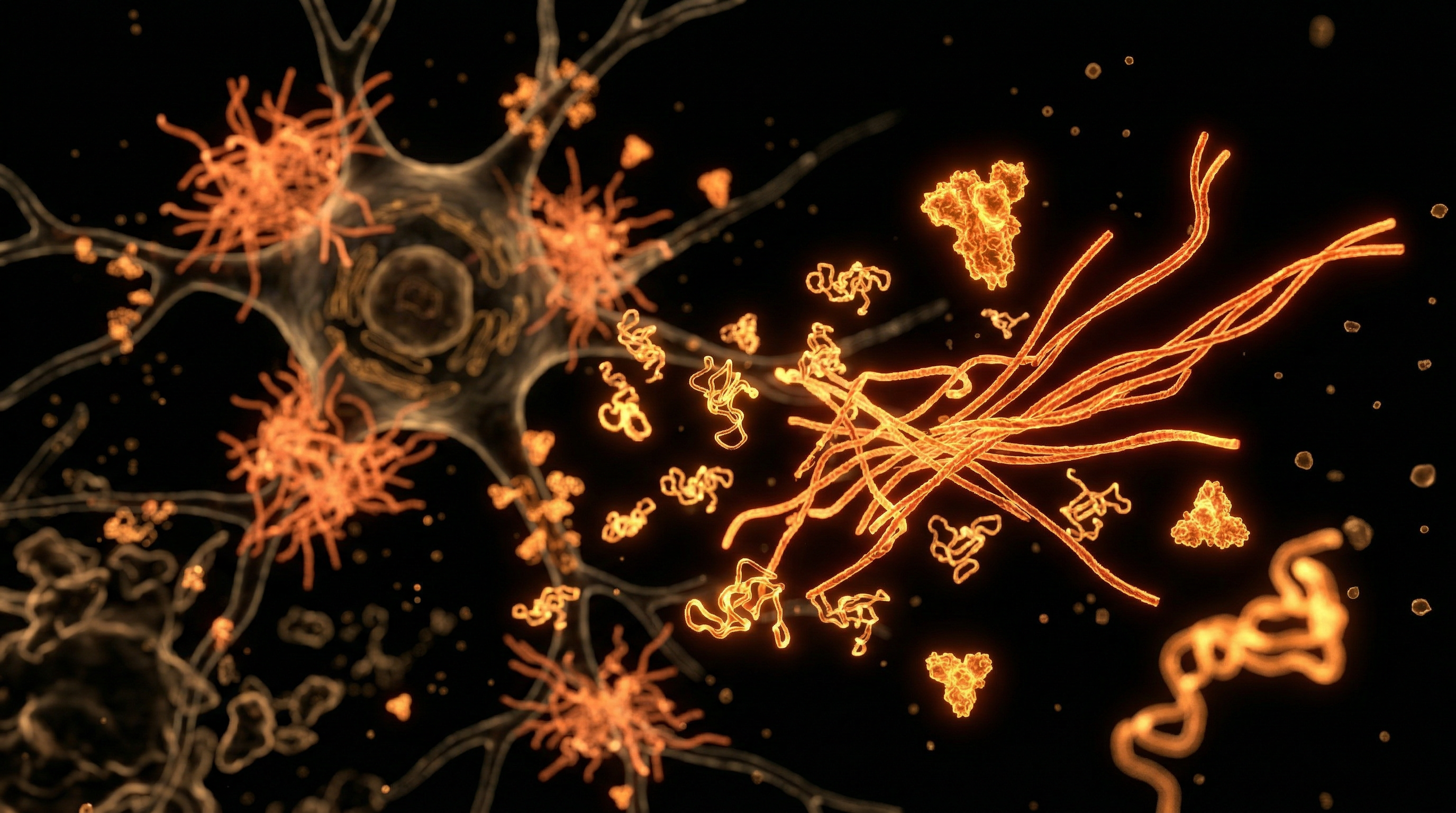
The global health landscape has undergone a seismic shift since the emergence of the SARS-CoV-2 virus and the subsequent mass implementation of spike-protein-based biotechnologies. While initial public health focus remained narrow—centred almost exclusively on acute respiratory distress—a more insidious, long-term threat has been brewing in the shadows of the scientific literature. As a senior biological researcher for INNERSTANDING, I have monitored the mounting evidence suggesting that the spike protein, whether introduced via viral infection or synthetic mRNA instruction, may act as a primary catalyst for amyloidogenesis—the pathological misfolding and aggregation of proteins in the human brain.
We are currently witnessing the early stages of what could be described as a "neurological tsunami." The spike protein is not merely a passive key used by a virus to enter a cell; it is a highly bioactive, pro-inflammatory ligand with the capacity to cross the blood-brain barrier (BBB) and disrupt the delicate proteostatic balance of the central nervous system. This article explores the biochemical reality of how spike protein exposure facilitates the formation of amyloid fibrils—structural hallmarks of Alzheimer’s, Parkinson’s, and Creutzfeldt-Jakob disease—and why the mainstream medical establishment remains dangerously silent on these long-term risks.
Key Fact: Recent in vitro studies demonstrate that the SARS-CoV-2 spike protein contains prion-like domains that can trigger the misfolding of human proteins, including fibrinogen and alpha-synuclein, into insoluble amyloid aggregates.
The Biology — How It Works
To understand the risk, one must first understand the structural complexity of the spike protein itself. The protein is composed of two primary subunits: S1 and S2. While the S1 subunit contains the Receptor Binding Domain (RBD) that attaches to ACE2 receptors, it also harbours specific sequences that are remarkably similar to known amyloidogenic proteins.
The Prion-Like Motif
Computational analysis has identified specific prion-like domains (PrD) within the spike protein, particularly in the RBD. Prions are "infectious" proteins that possess the ability to transmit their misfolded shape onto normal variants of the same protein. In the context of the spike protein, these motifs allow it to interact with human proteins and act as a "seed," initiating a chain reaction of misfolding.
Molecular Mimicry and Seeding
The concept of "seeding" is central to neurodegeneration. Much like a single crystal can cause a saturated solution to solidify, a single misfolded "seed" can cause a cascade of aggregation. The spike protein’s structure allows it to bind to heparin and other amyloid-binding proteins. Once bound, it stabilizes the formation of beta-sheet structures—the primary architecture of toxic amyloid plaques.
- S1 Subunit Persistence: Unlike many viral proteins that are quickly cleared, the spike protein (particularly from synthetic sources) has been shown to persist in the blood and tissues for months.
- Fibrinogen Interaction: The spike protein binds directly to fibrinogen, causing it to form abnormal, "tough" blood clots that are resistant to natural fibrinolysis (the body’s way of breaking down clots). These microclots can starve brain tissue of oxygen, further promoting a neurodegenerative environment.
Mechanisms at the Cellular Level
Once the spike protein gains access to the systemic circulation, it doesn't stay confined to the lungs or the injection site. It utilises the circulatory system to reach the most vulnerable regions of the body, including the brain.
Crossing the Blood-Brain Barrier (BBB)
The BBB is a highly selective semipermeable border that protects the brain from toxins. However, the spike protein has been shown to breach this barrier through several mechanisms:
- Transcellular Transport: Moving directly through the endothelial cells of the brain's blood vessels.
- Inflammatory Disruption: By triggering a "cytokine storm" or localized inflammatory response, the spike protein increases the permeability of the BBB, essentially "opening the gates" for more toxins and spike proteins to enter.
- The Olfactory Route: Evidence suggests the spike protein can travel from the nasal mucosa via the olfactory nerve directly into the frontal lobe of the brain.
Microglial Activation and "Inflammaging"
Inside the brain, the primary immune cells are the microglia. Under normal conditions, microglia act as the brain's "gardeners," clearing out debris and misfolded proteins. However, when they encounter the spike protein, they can become chronically "primed" or hyper-activated.
- M1 Polarization: The spike protein pushes microglia into a pro-inflammatory (M1) state.
- Neuroinflammation: In this state, microglia stop clearing amyloid plaques and instead start releasing neurotoxic cytokines and reactive oxygen species (ROS).
- Synergistic Damage: This creates a feedback loop where the spike protein seeds amyloids, and the brain's immune system, distracted and hyper-activated, fails to clear them, leading to accelerated neurodegeneration.
Statistic: Research published in Journal of Proteome Research indicated that the spike protein can interact with over 20 different human proteins involved in neurodegeneration, significantly increasing the probability of "protein-protein interaction" errors.
Environmental Threats and Biological Disruptors
The spike protein does not operate in a vacuum. Its neurotoxic potential is significantly amplified by the modern environmental "toxic soup." As researchers, we must look at synergistic toxicity—how the spike protein interacts with existing biological disruptors.
Glyphosate and Heavy Metals
The prevalence of glyphosate in the modern diet is a major concern. Glyphosate can act as a glycine analogue, potentially being incorporated into the spike protein during synthesis, which further alters its folding properties. Furthermore, heavy metals like aluminium and mercury are known to cross the BBB and stabilize amyloid fibrils. When the spike protein is introduced into a body already burdened with heavy metals, the rate of amyloid formation is hypothesized to increase exponentially.
Electromagnetic Fields (EMFs)
There is emerging evidence that exposure to high-frequency EMFs can alter calcium signalling in the brain via Voltage-Gated Calcium Channels (VGCCs). Excessive calcium influx into neurons is a known trigger for apoptosis (cell death) and can exacerbate the misfolding processes initiated by the spike protein. The rollout of 5G technology, coinciding with mass spike protein exposure, represents an unprecedented biological experiment on the human population.
The Role of Lipid Nanoparticles (LNPs)
In the context of synthetic spike protein induction, the delivery mechanism—Lipid Nanoparticles—is itself a disruptor. LNPs are designed to be highly penetrative and have been found to cross the BBB. Their inflammatory nature creates the perfect "primer" for the spike protein to cause maximal damage once it is expressed in cerebral tissues.
The Cascade: From Exposure to Disease
The progression from spike exposure to clinical neurodegeneration is not instantaneous. It follows a multi-stage cascade that may take years, or even decades, to fully manifest. This "slow-burn" pathology is why the risk is currently being underestimated by the general public.
Stage 1: Proteostatic Stress
Immediately following exposure, cells experience stress as they attempt to fold or degrade the spike protein. This overwhelms the ubiquitin-proteasome system, the cell's internal waste disposal unit.
Stage 2: Nucleation and Seeding
Spike proteins begin to bind to Amyloid-Beta or Tau proteins. These act as "nucleation sites" where the first insoluble fibrils are formed. At this stage, the individual may experience "brain fog," mild cognitive impairment, or sleep disturbances.
Stage 3: Propagation
Misfolded proteins begin to move from cell to cell via exosomes. This is where the disease becomes self-sustaining. Even if the initial spike protein is eventually cleared, the chain reaction of misfolded human proteins continues.
Stage 4: Clinical Manifestation
Once a critical mass of neurons is lost and the amyloid plaque burden reaches a threshold, clinical symptoms of Alzheimer’s, Parkinson’s, or ALS become apparent. We are currently seeing a disturbing rise in "early-onset" cases of these conditions in younger demographics previously considered at low risk.
Important Fact: The "incubation period" for amyloid-related neurodegeneration can be 10 to 20 years. However, the unique "prion-like" acceleration of the spike protein may compress this timeline to 3 to 5 years.
What the Mainstream Narrative Omits
The refusal of regulatory bodies and major medical journals to highlight the amyloidogenic risk of the spike protein is perhaps the greatest scientific scandal of our time. Several key truths are being systematically suppressed:
- Biodistribution Data: Early regulatory filings suggested that synthetic instructions for the spike protein would stay at the injection site. Subsequent independent studies have proven this to be false, showing distribution to the liver, spleen, and brain.
- The "Prion" Connection: Discussion of "prion-like" domains in the spike protein was initially labelled as "misinformation," despite being clearly visible in the genomic sequence and confirmed by multiple computational models.
- Persistence of the Protein: The mainstream narrative insists that the spike protein is short-lived in the body. However, studies using mass spectrometry have detected the spike protein in the blood for as long as six months post-exposure.
- IgG4 Class Switching: Repeated exposure to the spike protein can lead the immune system to "tolerate" it through IgG4 antibodies, which prevents the body from effectively clearing the protein, thus allowing it to linger and act as an amyloid seed for longer periods.
The pharmaceutical industry’s reliance on "Spike-centric" technology means that admitting the protein's inherent toxicity would lead to a total collapse of the current public health paradigm. Thus, the data is buried in obscure journals, and researchers who speak out are de-platformed.
The UK Context
In the United Kingdom, the implications of this neurological crisis are particularly severe. The NHS is already buckling under the weight of a demographic shift toward an aging population, but the sudden uptick in neurological presentations is threatening to break the system entirely.
- Dementia Statistics: The UK has seen a sharp increase in dementia as a leading cause of death. While this is often attributed to an aging population, the rate of increase in the 50–65 age bracket is cause for significant alarm.
- The "Brain Fog" Epidemic: Millions of Britons are reporting long-term cognitive deficits following viral exposure or "medical interventions." The UK government has largely categorised this under "Long Covid" without investigating the underlying amyloidogenic mechanisms.
- Policy Failures: The UK's Yellow Card system, intended to track adverse events, is woefully under-utilised. Reports of neurological tremors, "vibrations," and cognitive decline are often dismissed as "anxiety," leaving patients without a pathway for detoxification or recovery.
The British public is being left in the dark about the fact that their "post-viral fatigue" might actually be the early stages of a protein-misfolding disorder. Without a shift in policy toward neuroprotective screening and autophagy-inducing protocols, the UK faces a catastrophic burden of care within the next decade.
Protective Measures and Recovery Protocols
While the situation is grave, it is not hopeless. As a researcher, I have looked into the biochemical pathways that can be leveraged to halt or even reverse the amyloidogenic process. The goal is two-fold: clear the spike protein and induce autophagy (the body's natural cellular cleaning process).
Induction of Autophagy
Autophagy is the most effective way to clear misfolded proteins. This can be achieved through:
- Intermittent Fasting: Periods of 18–24 hours of fasting trigger the cell to "eat" its own damaged proteins.
- Water Fasting: Extended fasts (under supervision) are the most potent way to reset the proteostatic system.
- Spermidine and Resveratrol: These compounds mimic the effects of fasting and have been shown to promote the clearance of amyloid-beta.
Enzymatic Breakdown
Specific enzymes can help break down the spike protein and the associated microclots:
- Nattokinase: A fibrinolytic enzyme derived from natto that has shown a remarkable ability to degrade the spike protein in in vitro studies.
- Bromelain: Often used in combination with N-Acetylcysteine (NAC), this enzyme can help break down the structural integrity of the spike protein.
Neuroprotection and Anti-Seeding
- Methylene Blue: At low doses, Methylene Blue acts as a potent mitochondrial energizer and has been studied for its ability to inhibit the aggregation of Tau proteins.
- Curcumin: A powerful anti-inflammatory that can cross the BBB and has a high affinity for binding to and preventing the growth of amyloid plaques.
- Magnesium Threonate: The only form of magnesium that effectively crosses the BBB, essential for maintaining synaptic plasticity and preventing the "priming" of microglia.
Detoxification of Synergistic Toxins
Reducing the total body burden of heavy metals and glyphosate is essential. This includes eating organic, using high-quality water filtration, and considering chelation therapy or binders like zeolite and activated charcoal under professional guidance.
Summary: Key Takeaways
The link between spike protein exposure and neurodegeneration is no longer a matter of "if" but "when" and "how much." We are entering an era where the integrity of our neurological health is under constant assault from both viral and synthetic sources of this toxic protein.
- Amyloidogenesis is the central mechanism of the long-term risk, where the spike protein acts as a "prion-like" seed for protein misfolding.
- The Spike Protein is not confined to the respiratory system; it crosses the blood-brain barrier, causing chronic neuroinflammation and microglial dysfunction.
- Environmental factors, such as glyphosate and EMFs, act as catalysts that speed up the "slow-burn" of neurodegenerative diseases.
- The Mainstream Narrative is intentionally ignoring this 3–5 year horizon of neurological fallout to protect political and financial interests.
- Recovery is possible through targeted protocols focused on autophagy, enzymatic degradation of the spike protein, and aggressive neuroprotection.
As we move forward, it is imperative that individuals take their neurological health into their own hands. Waiting for a "consensus" from the very institutions that oversaw this mass exposure is a dangerous gamble. Awareness, detoxification, and the aggressive promotion of cellular health are our only defences against this silent, amyloidogenic threat. This is the truth that INNERSTANDING seeks to highlight: the biological war for our minds is happening at a molecular level, and our only shield is knowledge and proactive health sovereignty.
This article is provided for informational and educational purposes only. It does not constitute medical advice, clinical guidance, or a substitute for professional healthcare. Information reflects cited research at time of publication. Always consult a qualified healthcare professional before acting on any health information.
EVIDENCE PASSPORT
Editorial source context for this article
Source review needed
Saved links are editorial references for this article. They may support specific claims rather than every sentence. Open and assess each source in context. This passport does not independently verify them.
Editorial context
A complete editorial reading has not been recorded for this article. Source links remain available for you to open and assess directly.
Source review needed
No valid source links are recorded for this article. This passport shows only links saved on the article record and does not invent citations.
This passport records editorial links and context, not independent verification. Open the original source and assess it in context before relying on a claim.
Medical Disclaimer
The information in this article is for educational purposes only and does not constitute medical advice, diagnosis, or treatment. Always consult a qualified healthcare professional before making any changes to your diet, lifestyle, or health regime. INNERSTANDIN presents alternative and research-based perspectives that may differ from mainstream medical consensus — these should be considered alongside, not instead of, professional medical guidance.
Read Full DisclaimerContinue the thread
Keep this question moving.
Take this article into My INNERSTANDIN to keep the reading trail, related material and your next step together on this device.
Explore this in the Body Map
See where this hits your biology. Interactive anatomy, threats, and protective protocols.
Dig deeper in the Library
Free, longform PDF volumes that go beyond headlines into mechanisms and references.