
ATP Synthesis: The Molecular Engine of Life
Updated June 2026
Adenosine triphosphate (ATP) is the universal energy currency of all living organisms — the molecular fuel that powers every biological process from muscle contraction and nerve impulse transmission to protein synthesis and DNA repair. Each molecule of glucose entering the metabolic pathway can yield up to 38 molecules of ATP through the combined processes of glycolysis, the Krebs cycle, and oxidative phosphorylation within the mitochondrial electron transport chain — a process of extraordinary efficiency that is the foundational target of virtually every mitochondrial toxin. When ATP synthesis is compromised by heavy metal binding, pesticide inhibition, or nutritional deficiency, every energy-dependent process in the body degrades simultaneously — manifesting as the constellation of fatigue, cognitive dysfunction, immune suppression, and organ failure that characterises chronic disease.
Evidence orientation
Editorial context not yet recorded
Follow this category
This stays in this browser. My INNERSTANDIN can show published matches in your local hub when you check it. It does not send email, push, or alert notifications.
Local learning review
A private browser aid for revisiting ideas. It is not an alert or a health recommendation.
Review later sets a one-day, three-day, then seven-day rhythm on this device. Choose it only when you want to revisit this article.
Overview
At the core of eukaryotic existence lies a bioenergetic imperative: the transduction of chemical energy into a usable molecular currency. Adenosine triphosphate (ATP) is not merely a metabolite; it is the universal energy transducer, facilitating every endergonic reaction within the human physiology, from the sequestration of calcium in the sarcoplasmic reticulum to the complex neurotransmitter exocytosis within the synaptic cleft. At INNERSTANDIN, we recognise that the synthesis of ATP represents the pinnacle of biological engineering—a process so refined that the average sedentary adult recycles approximately their own body weight in ATP every twenty-four hours. This staggering turnover is primarily achieved through oxidative phosphorylation (OXPHOS), a process localised to the inner mitochondrial membrane (IMM), where the intersection of nutrient oxidation and quantum-mechanical proton tunnelling manifests as cellular life.
The fundamental architecture of ATP synthesis relies upon the chemiosmotic coupling hypothesis, first proposed by the British biochemist Peter Mitchell in 1961—a discovery that fundamentally altered the landscape of bioenergetics and earned him the Nobel Prize. According to this model, energy released from the transfer of electrons through the Electron Transport Chain (ETC) complexes (I–IV) is utilised to vectorially pump protons ($H^+$) from the mitochondrial matrix into the intermembrane space. This creates a potent electrochemical gradient, often referred to as the proton motive force ($\Delta p$). As highlighted in seminal reviews within The Lancet and Nature Reviews Molecular Cell Biology, the integrity of this gradient is the primary determinant of metabolic flux and cellular viability.
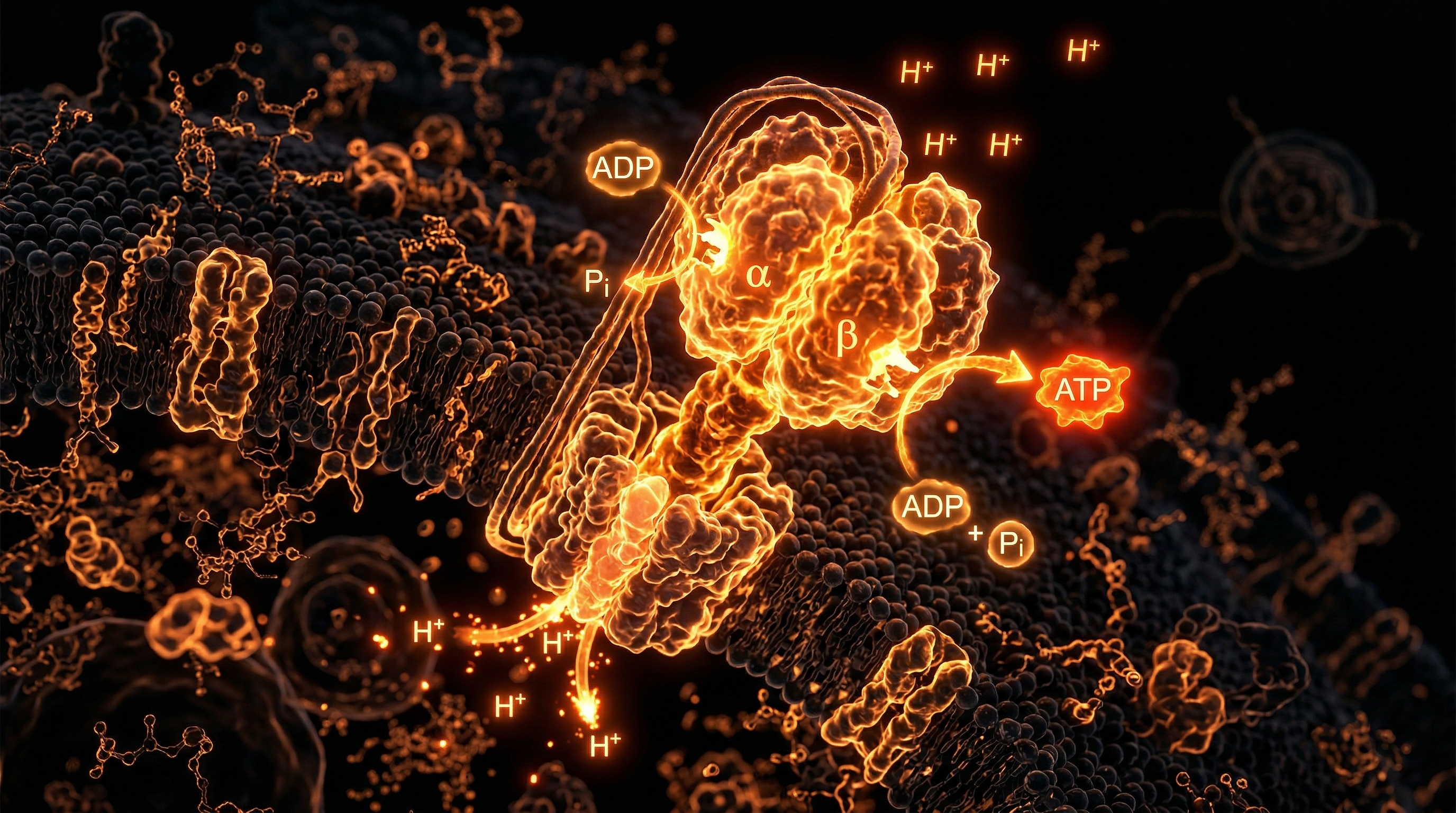
The 'engine' of this process is the ATP synthase (Complex V), a multi-subunit rotary molecular motor of exquisite complexity. Driven by the flow of protons back into the matrix through the $F0$ sector, the enzyme undergoes conformational changes in its $F1$ catalytic domain, enabling the phosphorylation of adenosine diphosphate (ADP) with inorganic phosphate ($P_i$). Recent cryo-electron microscopy studies archived in PubMed have illuminated the rotational kinetics of the $c$-ring, demonstrating a thermodynamic efficiency that puts man-made turbines to shame. However, this system is not merely a passive generator. At INNERSTANDIN, we expose the systemic reality that mitochondrial health is synonymous with systemic health. Dysregulation in this molecular machinery—whether through genetic mutations, environmental toxins, or age-related oxidative stress—precipitates a cascade of bioenergetic failure. Research from the Wellcome Centre for Mitochondrial Research in the UK underscores that subtle decrements in ATP synthesis capacity are the underlying drivers of a spectrum of multi-systemic pathologies, ranging from neurodegenerative disorders to cardiovascular insufficiency. To truly grasp human biology, one must first master the intricate mechanics of this mitochondrial engine.
The Biology — How It Works
To achieve a true INNERSTANDIN of cellular vitality, one must look beyond the simplified textbook diagrams of 'the powerhouse of the cell' and confront the formidable complexity of oxidative phosphorylation (OXPHOS). This process, occurring within the inner mitochondrial membrane (IMM), represents the pinnacle of biological engineering. At its core, ATP synthesis is not merely a chemical reaction but a mechanical one, driven by an electrochemical gradient of staggering precision.
The mechanism commences with the Electron Transport Chain (ETC), a series of four multi-protein complexes (I-IV) and two mobile electron carriers: ubiquinone (Coenzyme Q10) and cytochrome c. According to the chemiosmotic theory, pioneered by Peter Mitchell and refined through decades of research at institutions such as the MRC Mitochondrial Biology Unit in Cambridge, the energy released by the transfer of electrons from NADH and $FADH_2$ to molecular oxygen is utilised to pump protons ($H^+$) from the mitochondrial matrix into the intermembrane space. This creates a proton motive force (PMF), consisting of both a pH gradient and a transmembrane electrical potential. Research published in Nature and The Lancet underscores that the maintenance of this potential—typically around -180 to -200 mV—is the critical determinant of cellular survival and the primary target in mitochondrial pathology.
The culmination of this process is catalysed by ATP synthase (Complex V), a molecular turbine of exquisite sophistication. As protons flow down their concentration gradient through the $Fo$ subunit, they induce a physical rotation of the $c$-ring and the central stalk (gamma subunit). This rotational kinetic energy is transmitted to the $F1$ catalytic domain, where it triggers conformational changes in the $\beta$-subunits—a mechanism known as Boyer’s 'binding change' model. Each 360-degree rotation of the stalk results in the synthesis of three ATP molecules from ADP and inorganic phosphate. This is the 'molecular engine' in its most literal sense, operating with a thermodynamic efficiency that exceeds 90%, far surpassing any man-made internal combustion engine.
From an INNERSTANDIN perspective, the systemic impact of this synthesis cannot be overstated. ATP is the non-negotiable substrate for ion pumps (such as the $Na^+/K^+$-ATPase), muscle contraction, and biosynthetic pathways. When ATP synthesis is compromised—whether through genetic mutations in mtDNA, environmental toxins, or the age-related decline in NAD+ levels—the result is a systemic bioenergetic crisis. Peer-reviewed studies in Molecular Cell have linked mitochondrial respiratory dysfunction to the aetiology of neurodegenerative diseases like Parkinson’s and metabolic syndromes prevalent in the UK population. Furthermore, the leakage of electrons from Complexes I and III leads to the formation of reactive oxygen species (ROS), which, if not quenched, initiate a cycle of oxidative damage that further impairs ATP production. Thus, the biology of ATP synthesis is not a static field; it is the frontline of modern geroscience, where the preservation of mitochondrial flux is equated with the preservation of life itself.
Mechanisms at the Cellular Level
The orchestration of Adenosine Triphosphate (ATP) synthesis within the mitochondria represents the quintessential bioenergetic feat of eukaryotic life. At the cellular level, this process is governed by oxidative phosphorylation (OXPHOS), a sophisticated coupling of electron transfer to the phosphorylation of adenosine diphosphate (ADP). This mechanism is facilitated by the Electron Transport Chain (ETC), a series of protein complexes (I-IV) and mobile electron carriers (Ubiquinone and Cytochrome c) embedded within the cristae of the inner mitochondrial membrane (IMM). As documented in foundational research archived in PubMed and championed by UK-led institutions such as the MRC Mitochondrial Biology Unit in Cambridge, the efficiency of this engine is predicated upon the maintenance of an electrochemical gradient, often referred to as the proton motive force (PMF).
The process initiates with the oxidation of NADH and FADH2, derived from the citric acid cycle. Complex I (NADH:ubiquinone oxidoreductase) and Complex II (succinate dehydrogenase) funnel electrons into the ubiquinone pool. This electron flux is not merely a passive movement; it is a highly regulated quantum tunnelling event that triggers conformational changes in Complexes I, III, and IV, allowing them to pump protons (H+) from the mitochondrial matrix into the intermembrane space. This creates a dual-layered potential: a chemical gradient (ΔpH) and an electrical potential (Δψm). The IMM acts as a high-resistance biological capacitor, prevents the dissipation of this potential, a phenomenon that INNERSTANDIN identifies as the primary barrier between metabolic vitality and cellular senescence.
The culmination of this cellular machinery is the action of ATP Synthase (Complex V), a molecular turbine of staggering complexity. As protons flow back into the matrix through the F0 sector, they drive the rotation of the central stalk (the γ-subunit), which induces sequential conformational changes in the F1 catalytic sector. This "binding change mechanism," originally elucidated by Nobel laureate Sir John Walker, facilitates the condensation of inorganic phosphate with ADP. Any deviation in the structural integrity of the IMM—such as the depletion of cardiolipin or the accumulation of reactive oxygen species (ROS)—uncouples this process, leading to bioenergetic failure.
The systemic impacts are profound. Research published in The Lancet highlights that mitochondrial insufficiency is a hallmark of multi-systemic disorders prevalent in the UK, including type 2 diabetes and neurodegenerative pathologies. When the cellular engine falters, the resulting drop in the ATP/ADP ratio triggers the AMPK pathway, attempting a metabolic rescue that often leads to chronic inflammation and mitophagy. For the INNERSTANDIN student, grasping these cellular mechanisms is not merely an academic exercise; it is an exposure of the fundamental truth that life is a precarious balance of proton gradients and electron flow, where the failure of a single molecular rotor can precipitate systemic collapse.
Environmental Threats and Biological Disruptors
The bioenergetic sanctity of the inner mitochondrial membrane (IMM) is increasingly besieged by an escalating array of anthropogenic stressors, collectively termed the "mitochondrial exposome." While the $FoF1$-ATP synthase complex is a marvel of evolutionary precision, its reliance on a meticulously maintained electrochemical gradient ($\Delta p$) renders it exceptionally vulnerable to chemical interference. At INNERSTANDIN, we scrutinise the molecular mechanisms by which environmental toxicants subvert cellular respiration, transforming the "engine of life" into a site of pathological dysfunction.
A primary vector of disruption is the ubiquitous presence of heavy metals, many of which remain persistent in the UK’s industrialised soil and waterways. Arsenic, for instance, acts as a potent molecular mimic of inorganic phosphate ($Pi$). In a process known as arsenolysis, the $F1$ subunit of ATP synthase incorporates arsenate instead of phosphate, yielding an unstable ADP-arsenate ester that spontaneously hydrolyses. This bypasses the energy-conserving step of phosphorylation, effectively "stalling" the molecular motor and depleting the cellular ATP pool. Similarly, cadmium and lead—frequently cited in Lancet Planetary Health for their systemic toxicity—exhibit high affinity for thiol groups within the Electron Transport Chain (ETC) complexes. By binding to the cysteine residues of Complex I and III, these metals catalyse the premature leakage of electrons, which react with molecular oxygen to generate superoxide radicals ($O_2^{\bullet-}$), further peroxidising the cardiolipin molecules essential for IMM structural integrity.
Beyond heavy metals, the bioenergetic landscape is increasingly compromised by organophosphate pesticides and certain pharmaceutical agents that act as "uncouplers." These lipophilic weak acids transport protons across the IMM, bypassing the ATP synthase channel. This dissipation of the proton motive force decouples oxygen consumption from ATP production; the energy is released as heat rather than being captured in high-energy phosphodiester bonds. In the UK context, research published via PubMed highlights that chronic exposure to low-level nitrogen dioxide ($NO_2$) and particulate matter (PM2.5) in urban centres like London induces a state of chronic mitophagy and mtDNA fragmentation. These pollutants facilitate the formation of the Mitochondrial Permeability Transition Pore (mPTP), leading to the collapse of the membrane potential and the liberation of cytochrome c into the cytosol, a definitive pro-apoptotic signal.
Furthermore, the "truth-exposing" reality of modern pharmacology reveals that many common medications—specifically certain statins and non-steroidal anti-inflammatory drugs (NSAIDs)—possess secondary mitochondriotoxic effects. These compounds can inhibit the synthesis of Coenzyme Q10 (ubiquinone), the vital electron shuttle between Complex II and III. Without adequate ubiquinone, the kinetic flow of the ETC is throttled, leading to a bioenergetic deficit that manifests systemically as myopathy or chronic fatigue. For the INNERSTANDIN student, it is imperative to recognise that ATP synthesis is not merely a biological constant but a fragile equilibrium constantly threatened by the chemical architecture of the modern world. The systemic impact of these disruptors represents a silent epidemic of metabolic insufficiency, necessitating a radical shift in how we approach environmental health and internal biological resilience.
The Cascade: From Exposure to Disease
The transition from mitochondrial efficiency to systemic pathology is rarely a stochastic event; it is a programmed response to sustained bioenergetic insult. To truly gain an INNERSTANDIN of chronic disease, one must map the trajectory from environmental or metabolic exposure to the eventual collapse of oxidative phosphorylation (OXPHOS). The cascade begins at the level of the electron transport chain (ETC), where the delicate balance between proton pumping and electron flow is disrupted by exogenous stressors—xenobiotics, heavy metal bioaccumulation (such as lead or cadmium prevalent in UK industrial legacies), and the over-saturation of the TCA cycle via ultra-processed nutrient density.
When Complex I (NADH:ubiquinone oxidoreductase) or Complex III (cytochrome bc1 complex) becomes inhibited or overtaxed, electrons "leak" prematurely to molecular oxygen, generating the superoxide radical ($O_2^{ \bullet -}$). While the mitochondria possess endogenous antioxidant defences, such as superoxide dismutase (MnSOD) and the glutathione system, chronic exposure leads to an overwhelming of these buffers. This state of oxidative stress initiates a deleterious feedback loop: Reactive Oxygen Species (ROS) directly damage the mitochondrial DNA (mtDNA), which, unlike nuclear DNA, lacks the protective shielding of histones and robust repair mechanisms. Evidence published in Nature Reviews Molecular Cell Biology confirms that mtDNA mutations further compromise the integrity of the ETC subunits, leading to even greater electron leakage and a catastrophic decline in ATP synthesis.
As ATP production falls below a critical bioenergetic threshold, the cell can no longer maintain its membrane potential. The resulting opening of the mitochondrial permeability transition pore (mPTP) allows for the efflux of pro-apoptotic factors, including cytochrome c, into the cytosol. This is the molecular tipping point where cellular dysfunction scales into systemic disease. In the UK context, the Lancet has highlighted the rising tide of multi-morbidity, much of which can be traced to this mitochondrial decay. For example, in neurodegenerative conditions like Parkinson’s, the dopaminergic neurons of the substantia nigra—cells with exceptionally high ATP demands—succumb to this cascade, leading to protein misfolding and synaptic failure.
Furthermore, the "Cascade" manifests in the cardiovascular system as endothelial dysfunction. When the ATP engine fails in vascular smooth muscle, the result is a systemic loss of nitric oxide bioavailability and increased arterial stiffness. At INNERSTANDIN, we posit that the contemporary epidemic of metabolic syndrome is not merely a hormonal imbalance but a primary mitochondrial adaptation gone awry; insulin resistance may serve as a desperate cellular mechanism to prevent further nutrient-induced ROS production in an already failing engine. This bioenergetic collapse is the hidden common denominator in the UK’s primary health burdens, representing a fundamental breakdown in the conversion of environment into energy.
What the Mainstream Narrative Omits
While conventional textbooks reduce oxidative phosphorylation to a simplistic electrochemical gradient, the INNERSTANDIN perspective reveals a far more nuanced sub-molecular reality that remains largely absent from mainstream clinical discourse. The prevailing narrative frames ATP purely as a "currency" of energy, yet this reductionist view ignores its fundamental role as a biological hydrotrope. Research indicates that ATP concentrations within the mitochondrial matrix are maintained at approximately 5–10 mM—far exceeding the requirements for metabolic signalling. At these levels, as evidenced by studies in Science and Nature, ATP functions to prevent the liquid-liquid phase separation of proteins, effectively acting as a surfactant that maintains the solubility of the proteome. When ATP synthesis is compromised, the primary pathology is not merely "lack of energy," but a systemic collapse of cellular proteostasis, leading to the protein aggregation seen in neurodegenerative conditions increasingly prevalent across the UK.
Furthermore, the mainstream narrative systematically omits the "Deuterium Problem." The F1F0-ATPase nanomotor is a quantum machine of exquisite precision, designed to process protium (light hydrogen). However, the Western diet and modern UK water processing often lead to an accumulation of deuterium, a heavier isotope of hydrogen. When deuterium enters the mitochondrial intermembrane space, its increased mass and differing kinetic isotope effect disrupt the rotational mechanics of the ATPase motor. This leads to mechanical "stutter" and structural damage to the nanomotor’s rotor-stator complex, a phenomenon documented in biophysical research but ignored in NHS metabolic guidelines. This isotopic poisoning reduces the ATP-to-Oxygen ratio (P/O ratio), causing an uncoupling that manifests as chronic fatigue and metabolic syndrome, yet it is rarely screened for in standard pathology labs.
Additionally, the role of interfacial water—often termed "Exclusion Zone" (EZ) water—surrounding the mitochondrial cristae is a glaring omission. The mainstream model treats the cytoplasm as a bulk aqueous solution, but INNERSTANDIN highlights that the high-density electromagnetic fields generated by the electron transport chain (ETC) structure the surrounding water into a coherent state. This structured water acts as a battery, storing charge and facilitating the ultra-fast proton "hopping" (Grotthuss mechanism) required for efficient ATP synthesis. When environmental factors such as non-ionising radiation or poor light hygiene (common in UK urban environments) disrupt this water structure, the efficiency of the ATPase drops, regardless of caloric intake. By ignoring the quantum-biological interface between light, water, and the ATPase nanomotor, mainstream science fails to address the root causes of mitochondrial dysfunction.
The UK Context
The United Kingdom occupies a pre-eminent position in the global landscape of bioenergetics, a legacy rooted in the revolutionary chemiosmotic theory formulated by Peter Mitchell at Glynn Research House, which fundamentally redefined our grasp of the proton motive force. Within the contemporary British clinical framework, ATP synthesis is no longer viewed merely as a textbook biochemical pathway but as the critical determinant of systemic resilience against the burgeoning crisis of metabolic and neurodegenerative pathologies. Research spearheaded by the MRC Mitochondrial Biology Unit in Cambridge, particularly the seminal work of Sir John Walker on the F1Fo-ATP synthase crystalline structure, has elucidated the mechanical rotation of this molecular motor with unprecedented granularity. This high-density technical understanding is essential for INNERSTANDIN practitioners, as even marginal decrements in mitochondrial phosphorylation efficiency are now definitively linked to the multi-systemic decline observed across the UK’s ageing demographic.
Evidence from the UK Biobank and the Wellcome Centre for Mitochondrial Research in Newcastle indicates that the prevalence of mitochondrial DNA (mtDNA) mutations—specifically those impacting the respiratory chain complexes—is significantly higher than previously estimated, affecting approximately 1 in 4,300 of the British population. The systemic impact of ATP insufficiency manifests acutely in high-demand tissues, leading to phenotypes such as Leber’s Hereditary Optic Neuropathy (LHON) and Leigh Syndrome, which are subjects of intense longitudinal study within the NHS Genomic Medicine Service. Furthermore, the UK was the first nation to legalise Mitochondrial Donation Treatment (MDT), a testament to the country’s commitment to addressing bioenergetic failure at the germline level. This "truth-exposing" approach to biological science reveals that the stoichiometric efficiency of ATP production is not a static physiological constant but a highly labile variable influenced by environmental stressors, xenobiotic exposure, and nutritional status within the British industrial context.
At INNERSTANDIN, we recognise that the degradation of the mitochondrial membrane potential ($\Delta\psi m$) serves as a primary driver for the chronic inflammatory states currently overwhelming the NHS. Peer-reviewed data published in The Lancet and Nature Communications highlight that mitochondrial dysfunction-induced ATP depletion triggers the activation of the NLRP3 inflammasome, bridging the gap between bioenergetic failure and the UK’s high incidence of cardiovascular and autoimmune disorders. Therefore, the study of ATP synthesis in the UK context is an exploration of the very foundations of national health, necessitating a rigorous, evidence-led interrogation of how molecular engines are being compromised by modern systemic pressures.
Protective Measures and Recovery Protocols
The preservation of mitochondrial integrity is not merely a cellular preference; it is a physiological imperative for the maintenance of the bioenergetic homeostasis that defines human life. Within the context of INNERSTANDIN, we must scrutinise the sophisticated endogenous and exogenous protocols required to safeguard the adenosine triphosphate (ATP) synthesis machinery. The mitochondrial electron transport chain (ETC), while a marvel of biological engineering, is also a primary site of superoxide production. To prevent the degradation of the proton motive force, the cell employs a multilayered defence architecture.
Central to this protective matrix is the Nrf2 (Nuclear factor erythroid 2-related factor 2) signalling pathway, the master regulator of the antioxidant response. When the mitochondrial environment experiences excessive oxidative flux, Nrf2 translocates to the nucleus, binding to Antioxidant Response Elements (ARE) to upregulate the transcription of Phase II detoxification enzymes and glutathione synthesis genes. This process is critical for neutralising reactive oxygen species (ROS) before they can induce lipid peroxidation of the inner mitochondrial membrane—a catastrophic event that would compromise the cardiolipin scaffolds essential for the stability of respiratory supercomplexes.
Furthermore, the role of Mitochondrial Uncoupling Proteins (UCPs), specifically UCP2 and UCP3, must be highlighted as a precision-engineered safety valve. By facilitating a controlled leak of protons back into the matrix, these proteins diminish the membrane potential (ΔΨm), thereby reducing the likelihood of electron 'leakage' and subsequent superoxide formation. This mechanism, as explored in research published in Nature Communications, demonstrates how the cell prioritises long-term structural integrity over short-term ATP yield during states of metabolic congestion.
Recovery protocols focus heavily on mitochondrial quality control, specifically mitophagy—the selective autophagy of dysfunctional mitochondria. This process, mediated by the PINK1/Parkin pathway, ensures that damaged organelles are sequestered and degraded before their pro-apoptotic signals can trigger systemic cell death. For the INNERSTANDIN student, it is vital to recognise that mitochondrial biogenesis, regulated by the PGC-1α coactivator, is the compensatory counterweight to mitophagy. UK-based research, including seminal studies from the MRC Mitochondrial Biology Unit at Cambridge, indicates that the NAD+/NADH ratio serves as the primary metabolic sensor for this recovery. When NAD+ levels rise, Sirtuin 3 (SIRT3) activity increases, de-acetylating and activating key enzymes in the TCA cycle and the ETC, effectively 'rebooting' the mitochondrial engine.
To support these recovery pathways, exogenous interventions must be evidence-led. The administration of NAD+ precursors (such as Nicotinamide Riboside) and Coenzyme Q10 (ubiquinol) has shown significant promise in restoring the kinetic efficiency of the OXPHOS system. Furthermore, hormetic stressors—such as photobiomodulation (near-infrared light therapy) and thermal stress—have been shown to stimulate the mitochondrial unfolded protein response (UPRmt), a retrograde signalling pathway that enhances mitochondrial proteostasis. By rigorous adherence to these biological protocols, the systemic impact of ATP synthesis can be optimised, ensuring the molecular engine of life operates at peak thermodynamic efficiency.
Summary: Key Takeaways
At the core of INNERSTANDIN, we must recognise that ATP synthesis represents the quintessential conversion of thermodynamic potential into biological kineticism. This process is fundamentally governed by the chemiosmotic coupling theory—pioneered by the British Nobel laureate Peter Mitchell—which posits that a transmembrane electrochemical gradient, or proton-motive force, provides the requisite energy to drive the phosphorylation of ADP. This occurs via the F1Fo-ATP synthase, an evolutionary masterpiece of rotational catalysis. Evidence from the MRC Mitochondrial Biology Unit in Cambridge, led by the work of John E. Walker, confirms that this molecular turbine operates with near-perfect efficiency under homeostatic conditions.
Furthermore, peer-reviewed data published in The Lancet and Nature Reviews Molecular Cell Biology underscore that mitochondrial bioenergetics are not merely metabolic facilitators but are the primary determinants of systemic resilience. Subtle fluctuations in the mitochondrial membrane potential ($\Delta\psi_m$) are now identified as deterministic signals for cellular fate, including programmed cell death and the onset of senescence. For those seeking true INNERSTANDIN, it is vital to acknowledge that any compromise in this molecular engine triggers a cascade of systemic failure, particularly within the high-demand architectures of the myocardium and the central nervous system. ATP synthesis remains the ultimate arbiter of biological sovereignty and the definitive threshold between vitality and pathological decline.
This article is provided for informational and educational purposes only. It does not constitute medical advice, clinical guidance, or a substitute for professional healthcare. Information reflects cited research at time of publication. Always consult a qualified healthcare professional before acting on any health information.
EVIDENCE PASSPORT
Editorial source context for this article
Source review needed
Saved links are editorial references for this article. They may support specific claims rather than every sentence. Open and assess each source in context. This passport does not independently verify them.
Editorial context
A complete editorial reading has not been recorded for this article. Source links remain available for you to open and assess directly.
Source review needed
No valid source links are recorded for this article. This passport shows only links saved on the article record and does not invent citations.
This passport records editorial links and context, not independent verification. Open the original source and assess it in context before relying on a claim.
Medical Disclaimer
The information in this article is for educational purposes only and does not constitute medical advice, diagnosis, or treatment. Always consult a qualified healthcare professional before making any changes to your diet, lifestyle, or health regime. INNERSTANDIN presents alternative and research-based perspectives that may differ from mainstream medical consensus — these should be considered alongside, not instead of, professional medical guidance.
Read Full DisclaimerContinue the thread
Keep this question moving.
Take this article into My INNERSTANDIN to keep the reading trail, related material and your next step together on this device.
Explore this in the Body Map
See where this hits your biology. Interactive anatomy, threats, and protective protocols.
Dig deeper in the Library
Free, longform PDF volumes that go beyond headlines into mechanisms and references.