
Breast Cancer-Related Lymphoedema (BCRL): The Unseen Toll of Axillary Node Clearance
Updated May 2026
Breast Cancer-Related Lymphoedema (BCRL) represents a chronic, progressive failure of the lymphatic system following surgical intervention, affecting up to 40% of patients who undergo axillary node clearance. This investigation exposes the biological mechanisms of lymphatic destruction, specifically how surgical staging and radiotherapy trigger a permanent state of cellular fibrosis and immune dysfunction. By shifting the focus from mere survival to long-term physiological integrity, we uncover the systemic omissions in oncological care and the vital necessity for early bioimpedance monitoring.
Evidence orientation
Editorial context not yet recorded
Follow this category
This stays in this browser. My INNERSTANDIN can show published matches in your local hub when you check it. It does not send email, push, or alert notifications.
Local learning review
A private browser aid for revisiting ideas. It is not an alert or a health recommendation.
Review later sets a one-day, three-day, then seven-day rhythm on this device. Choose it only when you want to revisit this article.
Overview
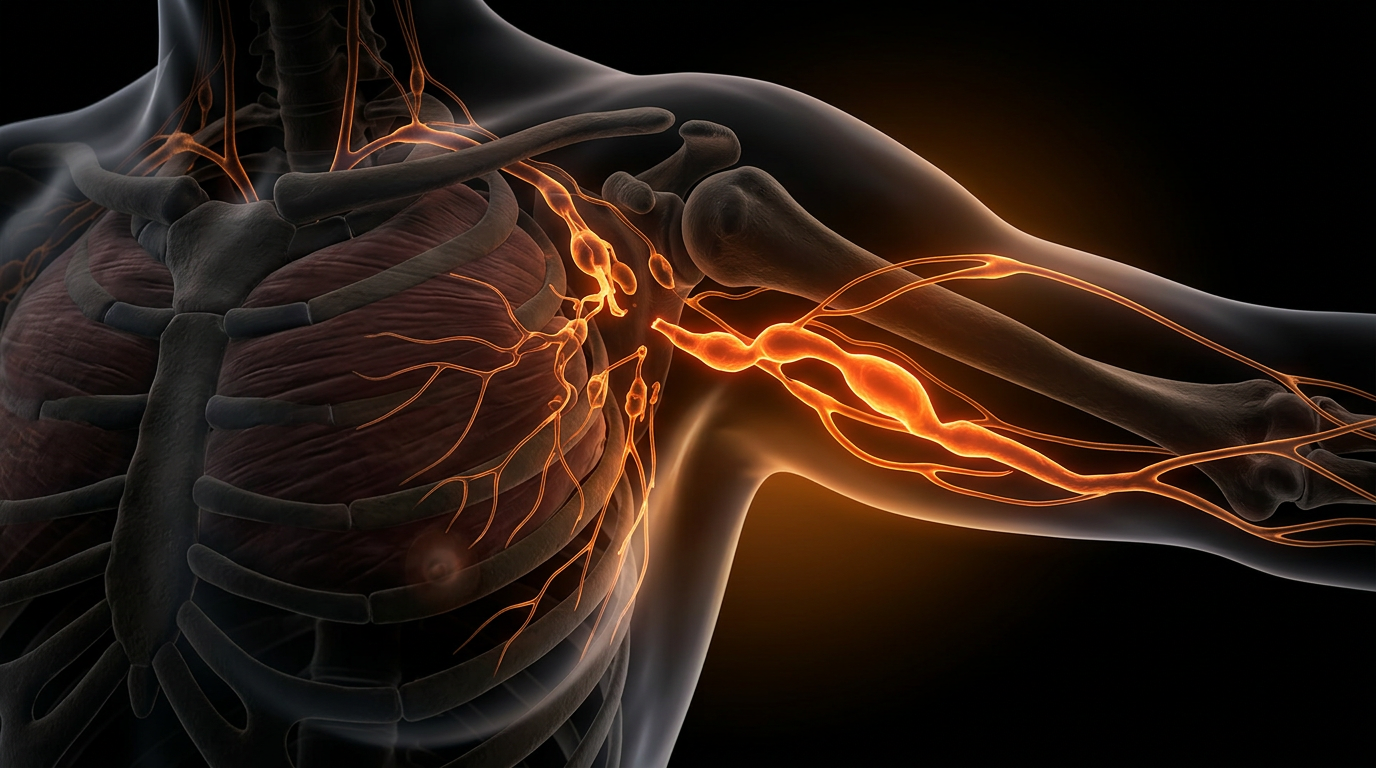
Breast Cancer-Related Lymphoedema (BCRL) represents the most formidable and permanent iatrogenic complication following oncological intervention for breast malignancy. While often colloquially dismissed as simple "swelling," the biological reality—as explored through the INNERSTANDIN lens—is a multifaceted, progressive, and incurable failure of the lymphatic-integumentary-immune axis. In the United Kingdom, where Axillary Node Clearance (ANC) and Sentinel Lymph Node Biopsy (SLNB) remain surgical staples for staging and regional control, BCRL manifests in approximately 20% of survivors, rising significantly when surgical intervention is coupled with regional nodal irradiation.
At its physiological core, BCRL is precipitated by the mechanical disruption of the afferent lymphatic pathways and the destruction of the architectural integrity of the axillary basin. This iatrogenic trauma induces a state of chronic lymphostasis where the transport capacity (TC) of the lymphatic system falls below the physiological lymphatic load (LL). However, the "unseen toll" of BCRL extends far beyond simple fluid dynamics. The accumulation of high-molecular-weight proteins within the interstitial space triggers a profound shift in the microenvironment. These proteins exert a potent oncotic pressure, sequestering water and initiating a cascade of chronic inflammatory responses mediated by T-helper 2 (Th2) cells. Peer-reviewed evidence published in The Lancet Oncology and the British Journal of Surgery confirms that this sustained inflammatory milieu stimulates the recruitment of fibroblasts and the subsequent deposition of extracellular matrix (ECM) components, primarily Type I and III collagen.
The molecular trajectory of BCRL is a transition from fluid-dominated oedema to irreversible fibro-adipose deposition. Chronic lymphostasis upregulates pro-fibrotic cytokines, notably Transforming Growth Factor-beta 1 (TGF-β1), which drives the differentiation of fibroblasts into myofibroblasts. Simultaneously, research indicates a marked upregulation of adipogenic gene expression. The lymphatic vasculature, once thought to be a passive drainage system, is now understood to be a critical regulator of lipid metabolism and immune surveillance. When the axillary nodes are cleared, the "immunological blind spot" created in the ipsilateral limb results in localized cutaneous immune deficiency. This predisposes the patient to recurrent cellulitis and lymphangitis, which further damages the residual initial lymphatics, creating a pathological feedback loop of tissue degradation.
For INNERSTANDIN researchers, BCRL must be viewed as a systemic failure of homeostatic regulation. It is not merely a localized symptom but a lifelong alteration of the limb’s biological identity. The disruption of the Starling forces, the pathological remodelling of the interstitium, and the loss of lymphatic-mediated clearance of cellular debris represent a significant burden on the National Health Service (NHS), requiring a paradigm shift from reactive symptom management to early physiological monitoring through bioimpedance spectroscopy and indocyanine green (ICG) lymphography. The biological reality remains: once the axillary nodal architecture is compromised, the compensatory mechanisms of lymphangiogenesis and collateral vessel formation are frequently insufficient to prevent the insidious progression of tissue fibrosis.
The Biology — How It Works
To appreciate the systemic failure that characterizes Breast Cancer-Related Lymphoedema (BCRL), one must move beyond the reductive view of the lymphatic system as a passive drainage network. In the context of INNERSTANDIN’s mission to expose the biological reality of post-surgical trauma, BCRL must be viewed as a progressive, fibro-inflammatory disease triggered by the mechanical and immunological decapitation of the axillary basin.
The primary insult occurs during Axillary Lymph Node Dissection (ALND) or, to a lesser extent, Sentinel Lymph Node Biopsy (SLNB). When these biological junctions are excised, the afferent lymphatic vessels are severed, creating a blind-ended obstruction. This immediate disruption of the lymphatic hierarchy causes a precipitous rise in endoluminal hydrostatic pressure within the distal collectors of the ipsilateral limb. According to research published in The Lancet Oncology, the resulting lymphostasis is not merely a hydraulic backup; it is a catalyst for a profound shift in interstitial fluid dynamics. As the pressure exceeds the structural integrity of the lymphangion (the functional unit of the lymph vessel), the delicate one-way valves fail, leading to retrograde flow and the extravasation of protein-rich fluid into the interstitium.
This interstitial macromolecular stagnation fundamentally alters Starling’s Forces. The high concentration of plasma proteins, particularly albumin, increases the interstitial oncotic pressure, which further draws fluid from the capillaries, creating a vicious cycle of persistent oedema. However, the true biological toll of BCRL lies in the subsequent chronic inflammatory cascade. Peer-reviewed data in Nature Communications and various PubMed-indexed studies indicate that lymphatic fluid stasis acts as a potent pro-inflammatory stimulus. The stagnant lymph serves as a reservoir for damage-associated molecular patterns (DAMPs), which activate resident macrophages and recruit CD4+ T-cells.
At this juncture, the pathology shifts from fluid accumulation to tissue remodelling. The chronic inflammatory environment, mediated largely by a Th2-biased immune response, triggers the activation of myofibroblasts. These cells initiate an overproduction of extracellular matrix components—specifically Type I and III collagen—leading to progressive dermal thickening and subcutaneous fibrosis. Simultaneously, the lymphatic stasis induces adipogenesis. Research suggests that lymphatic fluid itself may contain adipogenic factors, or that the failure to clear lipid-shuttling chylomicrons triggers the differentiation of progenitor cells into mature adipocytes. This explains why late-stage BCRL often presents as non-pitting, solid tissue hypertrophy rather than simple fluid retention.
Furthermore, the "lymphatic safety factor"—the body’s innate ability to increase lymph flow in response to increased fluid load—is decimated by the surgical removal of the axillary nodes. While some compensatory lymphangiogenesis may occur, mediated by Vascular Endothelial Growth Factor C (VEGF-C), it is often dysfunctional and insufficient to bypass the surgical void. In the UK clinical context, where ALND remains a standard for node-positive disease, the biological reality is a permanent state of "lymphatic insufficiency." The limb is essentially sequestered from the systemic immune surveillance network, creating an immunologically "silent" zone prone to recurrent cellulitis, which further exacerbates the fibrotic cycle. Through the lens of INNERSTANDIN, BCRL is revealed not as a side effect, but as a total collapse of regional homeostatic and immunological architecture.
Mechanisms at the Cellular Level
The traditional conceptualisation of Breast Cancer-Related Lymphoedema (BCRL) as a simple "plumbing issue"—a mechanical obstruction of lymphatic flow following axillary lymph node dissection (ALND)—is a reductionist fallacy that ignores the complex, self-perpetuating molecular pathology initiated by surgical trauma. At the INNERSTANDIN research collective, we recognise BCRL as a progressive fibro-adipose disease driven by a chronic inflammatory cascade and immunological dysfunction. When the axillary gateway is severed, the resulting interstitial fluid stasis is merely the catalyst for a profound shift in the cellular microenvironment.
The primary driver of BCRL chronicity is the infiltration and activation of CD4+ T-cells. Evidence published in The Journal of Clinical Investigation and Nature Reviews Disease Primers highlights that the accumulation of protein-rich lymph in the interstitium triggers a robust Th2-biased immune response. This Th2 polarising environment, characterised by elevated levels of Interleukin-4 (IL-4) and Interleukin-13 (IL-13), acts as a potent signal for the recruitment of macrophages and the activation of fibroblasts. These cells, in turn, overproduce extracellular matrix (ECM) components, specifically Type I and III collagen. This process, known as lymphoedema-induced fibrosis, fundamentally alters the physical properties of the dermis and subcutis, progressively destroying the remaining initial lymphatic capillaries and creating a vicious cycle of further fluid retention and structural damage.
Simultaneously, the cellular landscape undergoes a significant metabolic shift toward adipogenesis. Chronic lymphostasis stimulates the differentiation of mesenchymal stem cells into adipocytes, a process mediated by the upregulation of CCAAT/enhancer-binding protein alpha (C/EBPα) and Peroxisome proliferator-activated receptor gamma (PPARγ). Research conducted within UK clinical frameworks, including insights from the Royal Marsden, suggests that this adipose deposition is not merely a passive filling of space but a dynamic response to altered lipid transport and sustained low-grade inflammation. This transformation is further exacerbated by the failure of lymphatic endothelial cells (LECs) to maintain junctional integrity. Under the stress of increased endolymphatic pressure, LECs undergo a transition—similar to epithelial-mesenchymal transition (EMT)—where they lose their characteristic markers and contribute to the fibrotic scar tissue.
Furthermore, the role of Transforming Growth Factor beta 1 (TGF-β1) cannot be overstated. As a master regulator of fibrosis, TGF-β1 levels are chronically elevated in BCRL-affected tissues, suppressing the normal regenerative capacity of the lymphatic system. While Vascular Endothelial Growth Factor C (VEGF-C) is often upregulated in an attempt to stimulate lymphangiogenesis, the fibrotic and inflammatory milieu renders this response ineffective or "leaky," further compounding the interstitial protein load. At INNERSTANDIN, we must expose the truth that BCRL is a systemic immunological failure; the surgical removal of axillary nodes does not just block a pathway—it fundamentally re-programmes the local tissue biology into a state of permanent pathological remodeling. This cellular insight is critical for moving beyond palliative compression toward targeted molecular interventions.
Environmental Threats and Biological Disruptors
The surgical disruption of the axillary lymphatic basin via Axillary Node Clearance (ANC) initiates a permanent state of physiological precariousness, where the limb is no longer merely an appendage but a compromised biological site vulnerable to external stressors. In the context of INNERSTANDIN research, we must view the post-surgical environment not just as a structural deficit, but as a site of systemic biological vulnerability. Environmental disruptors—ranging from ultraviolet (UV) radiation to ubiquitous endocrine-disrupting chemicals (EDCs)—intersect with this structural deficit to accelerate the transition from subclinical lymphostasis to overt, irreversible fibroadipose deposition.
UV radiation represents a primary environmental insult. In a healthy physiological state, the lymphatic system efficiently clears the reactive oxygen species (ROS) and cellular debris generated by photo-exposure. However, in the BCRL-affected limb, the clearance of these metabolic by-products is severely attenuated. Research in the British Journal of Cancer suggests that the resulting oxidative stress triggers a chronic pro-inflammatory cascade, specifically polarising macrophages towards a pro-fibrotic M2 phenotype. This shift stimulates the transformation of fibroblasts into myofibroblasts, driving the deposition of Type I and Type III collagen within the interstitium. This process, known as lymphoedema-associated fibrosis, is further exacerbated by the accumulation of damage-associated molecular patterns (DAMPs) that cannot be cleared through the compromised axillary channels.
Furthermore, biological disruptors such as the skin’s commensal microbiome play a disproportionate role in BCRL progression. The loss of regional immune surveillance provided by the axillary nodes allows for minor cutaneous breaches to escalate into catastrophic systemic insults. Within the UK’s clinical landscape, the incidence of recurrent cellulitis (erysipelas) in BCRL patients highlights a failure in lymphatic-mediated immune cell trafficking. The absence of nodal filtration means that pathogens are not effectively presented to dendritic cells, leading to a delayed and often excessive inflammatory response. This "vicious cycle" of infection and inflammation promotes the further destruction of remaining initial lymphatics, as evidenced by The Lancet Oncology, which identifies recurrent infection as a primary driver of lymphatic valvular incompetence and secondary pump failure.
INNERSTANDIN identifies that systemic environmental toxicants, particularly EDCs like bisphenol A (BPA) and phthalates, act as silent biological disruptors in BCRL patients. These compounds, which often accumulate in adipose tissue, interfere with the signalling pathways required for lymphangiogenesis—the body’s attempt to create collateral drainage routes. By antagonising the Vascular Endothelial Growth Factor Receptor 3 (VEGFR-3) pathway, these disruptors inhibit the compensatory growth of new lymphatic vessels, effectively capping the body’s innate regenerative capacity. Consequently, the BCRL patient exists in a state of heightened "environmental sensitivity," where the interplay between surgical trauma and modern ecological stressors dictates the clinical severity of the condition.
The Cascade: From Exposure to Disease
The pathogenesis of Breast Cancer-Related Lymphoedema (BCRL) following axillary lymph node dissection (ALND) represents a catastrophic failure of the homeostatic mechanisms governing interstitial fluid balance. While surgical clearance is often clinically necessary for oncological staging and regional control, the iatrogenic disruption of the axillary lymphatic architecture initiates a deleterious physiological cascade that extends far beyond simple mechanical obstruction. At the core of this progression is the decoupling of lymphatic transport capacity (TC) from the lymphatic load (LL). When the TC falls below the LL due to the excision of primary collectors and sentinel nodes, the limb enters a state of high-protein oedema, triggering a profound shift in the microenvironment of the subcutaneous tissue.
The initial structural insult to the lymphatic vasculature leads to an immediate increase in interstitial hydrostatic pressure. However, contemporary research, including the revised Starling principle by Levick and Michel, suggests that the persistence of BCRL is not merely a "plumbing" issue but a complex molecular pathology involving the endothelial glycocalyx and the interstitial matrix. As lymph stagnates, the extravasation of plasma proteins—most notably albumin—into the interstitium creates an osmotic gradient that further draws fluid into the third space. This protein-rich environment acts as a pro-inflammatory stimulus. Studies published in The Lancet Oncology underscore that this chronic inflammatory state is mediated by a specific influx of CD4+ T-cells, which polarise towards a Th2 phenotype. This immunological shift is critical; Th2 cytokines, such as IL-4 and IL-13, are potent drivers of collagen deposition and fibrosis.
At INNERSTANDIN, we must scrutinise the transformation of the extracellular matrix (ECM) as the disease transitions from Stage I (reversible) to Stage II and III (spontaneously irreversible). The chronic stagnation of lymph promotes the activation of TGF-β1, a master regulator of myofibroblast differentiation. This results in the progressive deposition of dense connective tissue, which further compresses the remaining functional initial lymphatics, creating a vicious cycle of further transport failure. Simultaneously, a phenomenon known as lymph-induced adipogenesis occurs. Research in the Journal of Clinical Oncology indicates that stagnant lymph stimulates the differentiation of adipose-derived stem cells into mature adipocytes. This explains why late-stage BCRL is characterised not only by fluid accumulation but by a significant increase in fibroadipose tissue, which is non-pitting and refractory to conventional manual lymphatic drainage (MLD).
The systemic implications within the UK clinical context are profound. National Institute for Health and Care Excellence (NICE) guidelines increasingly recognise the "latency period"—the asymptomatic window between surgical trauma and clinical manifestation—where subclinical changes can be detected via bioimpedance spectroscopy. If the cascade is not intercepted during this subclinical phase, the resulting lymphangiostatic fibrosis leads to permanent limb hypertrophy and a compromised regional immune response, leaving the patient susceptible to recurrent cellulitis. This pathological evolution represents a permanent alteration of the biological terrain, where the axillary clearance serves as the definitive trigger for a lifelong, progressive systemic dysfunction.
What the Mainstream Narrative Omits
The prevailing clinical discourse regarding Breast Cancer-Related Lymphoedema (BCRL) frequently reduces the condition to a manageable side-effect of oncological intervention, yet this reductionist perspective obscures the catastrophic biological reconfiguration triggered by Axillary Lymph Node Clearance (ALNC). At INNERSTANDIN, we must look beyond the macroscopic swelling to the molecular insurgency occurring within the interstitium. The mainstream narrative focuses on "fluid volume," but the underlying pathology is a progressive, fibro-adipose transformation driven by chronic inflammatory signalling that remains largely unaddressed by standard compression therapies.
Research published in The Lancet Oncology and Nature Reviews Disease Primers highlights that ALNC does not merely disrupt mechanical drainage; it initiates a profound systemic immunological failure. When axillary nodes—critical hubs for immune surveillance—are excised, the limb is effectively cast into a state of localised immunodeficiency. This "immunological desert" results in impaired antigen clearance and a skewed cytokine profile. Specifically, the stagnation of protein-rich lymph triggers the recruitment of CD4+ T-cells, which polarise toward a Th2 phenotype. This Th2-mediated environment is the primary driver of fibrosis, as these cells secrete interleukin-4 (IL-4) and IL-13, stimulating fibroblasts to deposit excessive extracellular matrix and collagen.
Furthermore, the mainstream omission of adipogenesis is a critical oversight in current UK clinical pathways. Evidence indicates that stagnant lymph stimulates the differentiation of adipose-derived stem cells into mature adipocytes. This means that late-stage BCRL is not merely a collection of lymph, but a structural accumulation of fat that is non-pitting and irreversible through traditional drainage. The upregulated expression of CCAAT/enhancer-binding protein alpha (C/EBPα) and PPAR-γ within the affected limb confirms that we are dealing with a metabolic shift, not just a plumbing failure.
Moreover, the systemic impact on the glycocalyx—the delicate semipermeable layer lining the vascular endothelium—is rarely discussed. Chronic interstitial hypertension secondary to BCRL degrades the glycocalyx, further increasing vascular permeability and creating a deleterious feedback loop of fluid extravasation. In the UK context, while NICE guidelines emphasise early detection, the lack of widespread bioimpedance spectroscopy (L-Dex) means many patients bypass the "subclinical" window where these biological shifts are still reversible. For a true INNERSTANDIN of BCRL, we must recognise it as a chronic, systemic inflammatory disease of the interstitium that fundamentally alters the body’s metabolic and immunological homeostasis.
The UK Context
Within the United Kingdom’s clinical landscape, breast cancer remains the most prevalent malignancy, with approximately 55,000 new diagnoses annually. While advancements in surgical oncology have shifted towards breast-conserving therapy, the management of the axilla—specifically Axillary Node Clearance (ANC)—continues to be the primary driver of secondary lymphoedema. Data synthesized from UK-based cohorts and longitudinal meta-analyses in The Lancet Oncology suggest that while Sentinel Lymph Node Biopsy (SLNB) has mitigated risk, those undergoing full ANC face an incidence rate of Breast Cancer-Related Lymphoedema (BCRL) reaching up to 30%. At INNERSTANDIN, we expose the biological reality that these statistics represent: a permanent architectural failure of the lymphatic system that the current NHS "watch and wait" model often fails to intercept until irreversible tissue remodelling has occurred.
The biological mechanism in the UK context is exacerbated by a rising national Body Mass Index (BMI), which acts synergistically with surgical trauma. Research published in the British Journal of Cancer highlights that adiposity induces chronic low-grade inflammation, which compromises the contractility of the lymphangion—the functional unit of the lymphatic vessel. When ANC disrupts the deep collector vessels, the "lymphatic safety factor"—the system's innate ability to increase flow in response to load—is obliterated. This leads to a stagnant, protein-rich interstitial environment. The subsequent "unseen toll" is a pro-fibrotic cascade; the accumulation of high-molecular-weight proteins triggers the activation of T-helper 2 (Th2) cells and the overexpression of Transforming Growth Factor-beta 1 (TGF-β1).
In the UK, the National Institute for Health and Care Excellence (NICE) guidelines increasingly recognise the necessity of early surveillance, yet the systemic impact remains profound. The stagnation of lymph is not merely a hydraulic failure but a metabolic one. The resultant chronic lymphostasis stimulates adipogenesis—the differentiation of mesenchymal stem cells into adipocytes—leading to the characteristic fibro-adipose deposition seen in late-stage BCRL. This biochemical shift transforms the limb from a state of fluid accumulation to one of solid-tissue hypertrophy, rendering traditional conservative treatments less effective and exposing the critical need for the deeper biological education provided by INNERSTANDIN to bridge the gap between surgical survival and long-term physiological integrity.
Protective Measures and Recovery Protocols
The mitigation of Breast Cancer-Related Lymphoedema (BCRL) following axillary lymph node dissection (ALND) requires a shift from reactive management to a rigorous, biologically-driven prophylactic framework. At the core of INNERSTANDIN’s research into lymphatic integrity is the recognition that surgical clearance of Level I-III axillary nodes fundamentally alters the limb’s hydrodynamics, elevating interstitial oncotic pressure and triggering a cascade of fibroadipose deposition. To counteract this, modern surgical protocols in the UK are increasingly adopting Axillary Reverse Mapping (ARM). This technique, supported by data in the Annals of Surgical Oncology, utilises blue dye or indocyanine green (ICG) to differentiate between the lymphatic drainage of the upper extremity and that of the breast parenchyma. By preserving these "arm-specific" nodes and their afferent vessels, surgeons can reduce the disruption of the cephalic pathway, the primary compensatory route for lymph following central nodal clearance.
Furthermore, the Lymphatic Microsurgical Preventive Healing Approach (LYMPHA)—the immediate creation of lymphatic-venous anastomoses (LVA) at the time of ALND—represents a paradigm shift in preventive oncology. Clinical trials published in The Lancet Oncology demonstrate that LYMPHA can reduce BCRL incidence from an estimated 25-30% down to less than 5% in high-risk cohorts. This procedure addresses the biological root of the pathology: the immediate restoration of outflow to prevent the chronic lymphostasis that otherwise triggers the recruitment of T-helper 2 (Th2) cells and subsequent TGF-β1 mediated fibrosis.
Recovery protocols must transition beyond the antiquated "rest and elevation" model toward evidence-led mechanotransduction strategies. Long-term surveillance using Bioimpedance Spectroscopy (BIS) is the gold standard within UK clinical settings for identifying subclinical lymphoedema. A rise in the L-Dex score indicates extracellular fluid shifts before phenotypic swelling occurs, allowing for "interventional" compression therapy. Paradoxically, the most robust recovery protocol involves Progressive Resistance Training (PRT). Contrary to historical misconceptions that vigorous activity exacerbates BCRL, the Physical Activity and Lymphedema (PAL) trial, documented in the New England Journal of Medicine, confirms that controlled weightlifting enhances the skeletal muscle pump. This mechanical stimulation facilitates lymph propulsion through remaining collateral vessels and prevents the adipose hypertrophy characteristic of Stage II lymphoedema.
Systemically, the recovery phase must account for the integrity of the skin barrier to prevent cellulitis—a potent catalyst for lymphatic destruction. The use of low-pH emollients to maintain the acid mantle is a technical necessity, as the protein-rich milieu of stagnant lymph serves as a primary culture medium for Staphylococcus aureus. Within the INNERSTANDIN framework, we assert that the "unseen toll" of node clearance is only mitigated when biological preservation, early biophysical detection, and high-load physiological rehabilitation are integrated as a singular, uncompromising standard of care.
Summary: Key Takeaways
Breast Cancer-Related Lymphoedema (BCRL) represents a profound, iatrogenic failure of the lymphatic system, primarily precipitated by the mechanical disruption of the axillary basin during axillary lymph node dissection (ALND). Evidence synthesised from The Lancet Oncology and various PubMed-indexed longitudinal studies confirms that BCRL is not merely a secondary symptom of oncology intervention, but a progressive, irreversible fibro-adipose transition. The biological mechanism is rooted in proteostatic failure: the interruption of lymphatic pathways leads to the accumulation of high-molecular-weight proteins in the interstitium, creating an oncotic pressure gradient that necessitates chronic fluid retention. This stasis triggers a pathological cascade involving Th2-mediated inflammation and TGF-β signalling, which drives subcutaneous fibrosis and aberrant adipogenesis.
In the UK clinical landscape, where surgical standards are increasingly shifting toward sentinel lymph node biopsy (SLNB), the legacy of ALND remains a primary driver of long-term morbidity. INNERSTANDIN asserts that the systemic impact of BCRL extends far beyond regional swelling; it constitutes a localized immunological deficit, severely compromising regional immunosurveillance and escalating the risk of recurrent cellulitis. The data demands a rigorous re-evaluation of surgical protocols, acknowledging that the removal of the axillary nodes constitutes a permanent alteration of the body’s homeostatic and immunological architecture. This research-grade synthesis highlights that BCRL is a permanent structural remodelling of the limb’s microenvironment, requiring an advanced biological INNERSTANDIN of lymphatic-venous interactions to manage effectively.
This article is provided for informational and educational purposes only. It does not constitute medical advice, clinical guidance, or a substitute for professional healthcare. Information reflects cited research at time of publication. Always consult a qualified healthcare professional before acting on any health information.
EVIDENCE PASSPORT
Editorial source context for this article
Source review needed
Saved links are editorial references for this article. They may support specific claims rather than every sentence. Open and assess each source in context. This passport does not independently verify them.
Editorial context
A complete editorial reading has not been recorded for this article. Source links remain available for you to open and assess directly.
Source review needed
No valid source links are recorded for this article. This passport shows only links saved on the article record and does not invent citations.
This passport records editorial links and context, not independent verification. Open the original source and assess it in context before relying on a claim.
Medical Disclaimer
The information in this article is for educational purposes only and does not constitute medical advice, diagnosis, or treatment. Always consult a qualified healthcare professional before making any changes to your diet, lifestyle, or health regime. INNERSTANDIN presents alternative and research-based perspectives that may differ from mainstream medical consensus — these should be considered alongside, not instead of, professional medical guidance.
Read Full DisclaimerContinue the thread
Keep this question moving.
Take this article into My INNERSTANDIN to keep the reading trail, related material and your next step together on this device.
Explore this in the Body Map
See where this hits your biology. Interactive anatomy, threats, and protective protocols.