
Benthic Organism Toxicity: Threats to the Ocean Floor
Updated May 2026
Heavier plastics eventually settle on the seabed, impacting benthic organisms that are crucial for nutrient cycling. This disruption threatens the stability of deep-sea ecosystems around the UK.
Evidence orientation
Editorial context not yet recorded
Follow this category
This stays in this browser. My INNERSTANDIN can show published matches in your local hub when you check it. It does not send email, push, or alert notifications.
Local learning review
A private browser aid for revisiting ideas. It is not an alert or a health recommendation.
Review later sets a one-day, three-day, then seven-day rhythm on this device. Choose it only when you want to revisit this article.
Overview
The ocean floor, or the benthic zone, has long been romanticised as a pristine, silent abyss—a final frontier largely untouched by the frenetic activity of the Anthropocene. However, beneath the serene blue expanse lies a harrowing biological reality. The seabed has become the ultimate global sink for anthropogenic waste, specifically the terminal repository for high-density microplastics (MPs) and nanoplastics (NPs). While the mainstream media focuses its lens on the "Great Pacific Garbage Patch" and surface-level debris, a far more insidious and permanent catastrophe is unfolding in the deep.
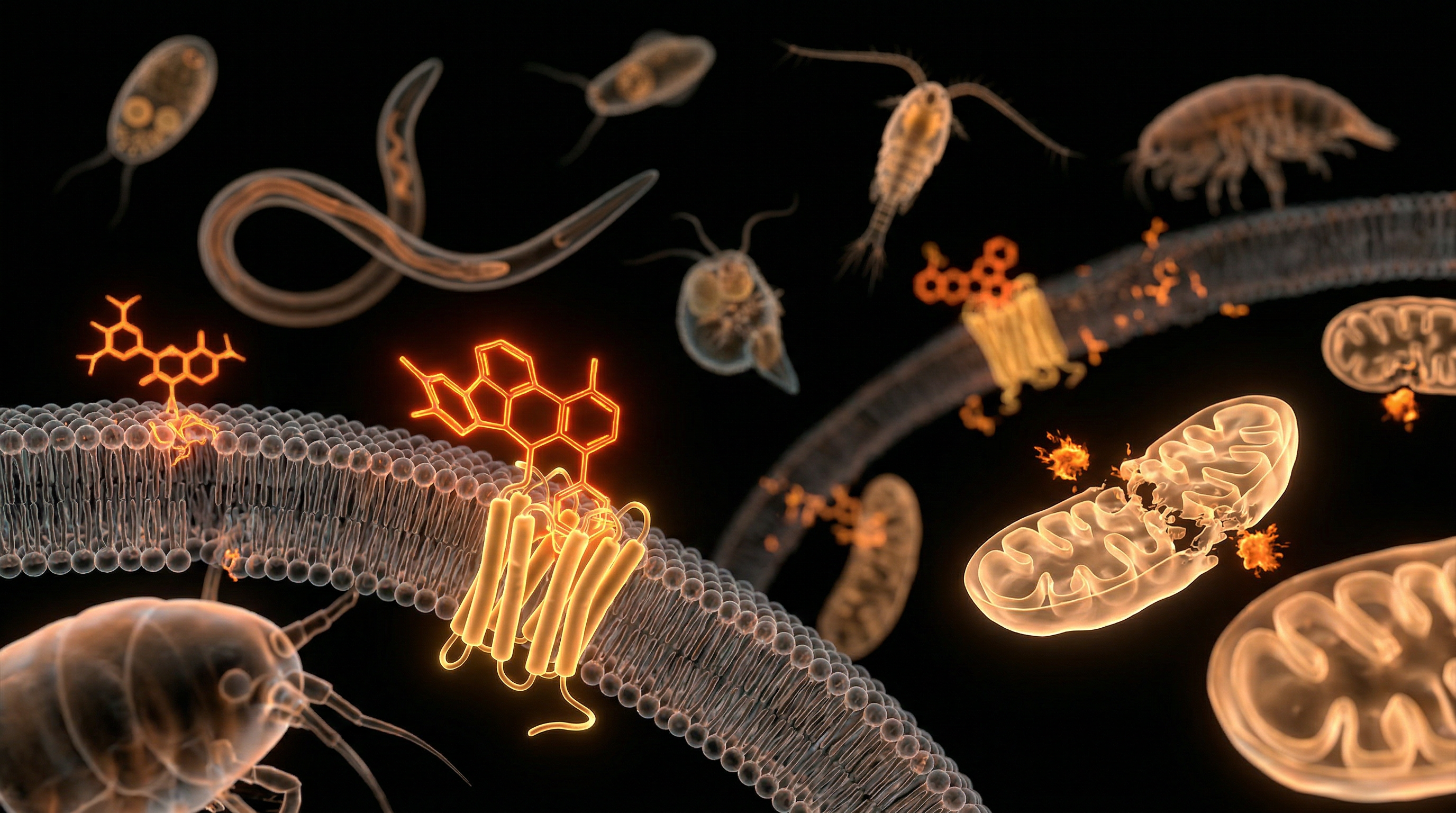
Benthic organisms, ranging from microscopic foraminifera to the more complex polychaete worms, molluscs, and deep-sea echinoderms, form the bedrock of the marine food web. They are the "engine room" of the ocean, responsible for bioturbation—the churning of sediment—and the critical recycling of nutrients that fuel the entire primary production of the seas. As heavier polymers such as Polyvinyl Chloride (PVC), Polyethylene Terephthalate (PET), and various reinforced composites lose buoyancy through biofouling and inherent density, they descend into the benthic environment.
This is not merely an aesthetic issue of "litter" on the seabed. It is a profound toxicological assault. The accumulation of these particles creates a high-concentration "toxic soup" in the sediment-water interface. For the organisms that inhabit this zone, plastic is not an external pollutant; it has become a fundamental, albeit lethal, component of their habitat. This article serves as a deep dive into the physiological, cellular, and ecological devastation caused by benthic plastic toxicity, exposing the gaps in a narrative that has, until now, largely ignored the foundations of our oceanic ecosystems.
The Biology — How It Works
To understand the gravity of benthic toxicity, one must first understand the unique biological role of the organisms that reside there. The benthic zone is characterised by high pressure, low temperatures, and a reliance on "marine snow"—a constant drizzle of organic detritus falling from the productive upper layers of the ocean.
The Sentinels of the Sediment
Benthic organisms are classified by their feeding strategies, all of which make them uniquely vulnerable to plastic ingestion:
- Deposit Feeders: Organisms like the lugworm (Arenicola marina) or sea cucumbers ingest vast quantities of sediment to extract organic nutrients. In a plastic-polluted seabed, these creatures are effectively forced to consume polymers as a significant percentage of their diet.
- Filter Feeders: Benthic bivalves and cold-water corals extract particles from the water column immediately above the sediment. Nanoplastics, which remain suspended longer than larger particles, are readily captured by their delicate filtering apparatus.
- Bioturbators: These are the "gardeners" of the seafloor. By burrowing and turning the soil, they facilitate oxygen penetration and nutrient cycling. When these organisms are compromised, the seabed becomes anoxic (oxygen-depleted), leading to "dead zones."
Nutrient Cycling and the Biological Pump
The ocean acts as a massive carbon sink, and benthic life is the final stage of the Biological Carbon Pump. When organic matter falls to the floor, benthic microbes and macrofauna break it down, sequestering carbon in the sediment and releasing essential nutrients like nitrogen, phosphorus, and silica back into the water column via upwelling.
Callout: Modern research suggests that high concentrations of microplastics in benthic sediments can reduce the efficiency of nutrient recycling by up to 25%, a deficit that echoes upward through the entire marine food chain, potentially limiting the productivity of phytoplankton in the surface layers.
The biology of these organisms is finely tuned to distinguish between "food" (organic detritus) and "non-food" (sand/silt). However, the physical properties of microplastics—their size, shape, and the biofilms that grow on them—trick the sensory receptors of these creatures. This leads to pathological ingestion, where the organism’s gut is filled with non-nutritive material, leading to a state of chronic starvation despite a full stomach.
Mechanisms at the Cellular Level
The true horror of plastic toxicity is not found in the gut of a whale, but at the scale of the individual cell within a benthic worm or mollusc. Nanoplastics (particles smaller than 1 micrometre) possess the ability to translocate across biological membranes, entering the circulatory system and eventually the intracellular environment.
Transcellular Transport and the Protein Corona
When a nanoplastic particle enters a biological fluid (such as haemolymph), it is immediately coated with proteins and lipids, forming what is known as a "protein corona." This biological disguise allows the particle to bypass the cell’s natural defences. Through processes such as endocytosis or macropinocytosis, the cell actively pulls the toxic particle into its interior, mistaking it for a nutrient or a signalling molecule.
Oxidative Stress and Mitochondrial Dysfunction
Once inside the cell, the presence of a chemically inert but physically abrasive particle triggers a massive immune response. The cell's primary defence is the production of Reactive Oxygen Species (ROS).
- The Mechanism: In a healthy cell, ROS are managed by antioxidants. In a plastic-burdened cell, the overproduction of ROS leads to oxidative stress, which damages DNA, lipids, and proteins.
- Mitochondrial Impact: Nanoplastics have been observed to localise within the mitochondria—the cell's power plant. This disrupts the electron transport chain, leading to a "bioenergetic crisis" where the organism no longer has the energy to forage, reproduce, or repair its tissues.
Lysosomal Rupture: The "Suicide Bag" Effect
Lysosomes are organelles responsible for breaking down cellular waste. When a benthic organism ingests nanoplastics, the lysosomes attempt to digest them. Because the synthetic polymers are indigestible, the lysosome becomes overdistended and eventually ruptures. This releases digestive enzymes into the cytoplasm, essentially causing the cell to digest itself from the inside out—a process known as autophagy gone rogue.
Environmental Threats and Biological Disruptors
While the physical presence of plastic is damaging, its role as a chemical vector is what truly classifies it as a systemic threat. Plastics are not pure polymers; they are "chemical cocktails" containing additives designed to provide flexibility, colour, or UV resistance.
The Trojan Horse Effect
Microplastics act as magnets for Persistent Organic Pollutants (POPs) already present in the seawater, such as DDT, PCBs, and heavy metals like mercury and lead. Due to the hydrophobic nature of both the plastic and these chemicals, they bind together in high concentrations.
Fact: Concentrations of toxic chemicals on the surface of a microplastic particle can be up to one million times higher than in the surrounding seawater.
When a benthic organism ingests the plastic, the change in pH and temperature within the digestive tract causes these toxins to "desorb" or unbind from the plastic and enter the organism's tissues. The plastic acts as a Trojan Horse, delivering concentrated doses of industrial poisons directly into the heart of the food web.
Endocrine Disruption
Many plastic additives, such as Bisphenol A (BPA) and Phthalates, are known endocrine disruptors. In benthic invertebrates, these chemicals mimic or block natural hormones.
- Reproductive Failure: Exposure to phthalates has been linked to "imposex" (the development of male characteristics in females) in marine gastropods.
- Developmental Stunting: Larval stages of benthic species are particularly sensitive; exposure to plastic-leached chemicals often results in permanent developmental deformities, preventing the organism from ever reaching reproductive maturity.
The Cascade: From Exposure to Disease
The impact of benthic toxicity is not limited to the individual; it cascades through the ecosystem, leading to a collapse of biological stability. This process follows a predictable, yet devastating, trajectory.
Phase 1: Sub-lethal Impairment
Initially, the organism survives but is "physiologically taxed." It spends more energy on cellular repair and immune response than on growth. We observe a reduction in bioturbation rates. For example, a lugworm burdened by microplastics will burrow less deeply and less frequently. This leads to a reduction in sediment oxygenation.
Phase 2: Population Decline and Genetic Erosion
As reproductive success drops, the population density of key benthic species falls below a critical threshold. Genetic diversity begins to erode, as only a few individuals survive long enough to spawn. This makes the entire population more vulnerable to other stressors, such as rising ocean temperatures or acidification.
Phase 3: Community Shift and Trophic Collapse
When the "engineering" species (like worms and bivalves) disappear, the entire structure of the seabed changes.
- Anoxia: Without bioturbation, the sediment becomes compacted and oxygen-starved.
- Microbial Shifts: The healthy microbial community is replaced by anaerobic bacteria that produce hydrogen sulphide, which is toxic to most higher life forms.
- Trophic Scarcity: Predatory species, such as cod and haddock, which rely on benthic invertebrates for food, find their prey disappearing or becoming too toxic to consume. This is the point of no return for commercial fisheries.
What the Mainstream Narrative Omits
The current discourse surrounding marine plastic is carefully curated to focus on "consumer responsibility" and "visible pollution." This narrative serves to shield the industrial complexes responsible for the manufacturing and disposal of these polymers from true accountability.
The Myth of "Degradability"
The mainstream narrative often touts "biodegradable" plastics as a solution. However, in the high-pressure, low-temperature, and low-oxygen environment of the deep seabed, these materials do not degrade as advertised. They often fragment into microplastics faster than conventional plastics, increasing the surface area available for toxin adsorption and cellular ingestion. "Biodegradable" in the lab does not mean "safe" on the ocean floor.
The "Sinking Flux" Silence
There is a profound lack of reporting on the Sinking Flux. Industrial polymers like PVC and PET are denser than seawater from the moment they are produced. Unlike Polyethylene (used in plastic bags), they do not float. They sink immediately. This means that for decades, industrial waste has been accumulating on the seabed, invisible to satellite monitoring and surface-level clean-up efforts. The mainstream media ignores this because there is no "photogenic" way to show a million tonnes of PVC dust covering the Atlantic shelf.
The Secrecy of Additives
Chemical corporations are not required to disclose the specific proprietary blends of additives used in their plastics. We are effectively "flying blind" when it comes to the toxicological profiles of these materials. Researchers are finding thousands of unidentified chemical signals in benthic tissues that correlate with plastic ingestion—chemicals that have never been tested for safety in a marine context.
The UK Context
The United Kingdom, as an island nation with a vast continental shelf, is at the epicentre of this crisis. The waters surrounding the UK, particularly the North Sea and the English Channel, are among the most heavily trafficked and industrially impacted in the world.
The Dogger Bank and the "Plastic Graveyard"
The Dogger Bank, a shallow area of the North Sea, is a vital nursery for numerous fish species. Recent sediment cores have revealed alarming concentrations of microplastics, largely derived from the abrasion of fishing gear and the breakdown of industrial protective coatings used in North Sea oil and gas infrastructure.
The Atlantic Frontier
To the west of Scotland, the deep-sea canyons of the Rockall Trough act as "funnels," concentrating plastic debris that is carried by the North Atlantic Current. This area is home to ancient cold-water corals (Lophelia pertusa). Unlike tropical corals, these are slow-growing and highly sensitive. Recent surveys have found microplastics embedded within the skeletal structures of these corals, causing "stifling" and tissue necrosis.
Economic Impact: The Shellfish Industry
The UK’s lucrative langoustine (Nephrops norvegicus) and scallop industries are directly threatened. Nephrops are scavengers that live in burrows in the mud. Studies have shown that a high percentage of langoustines caught in the Clyde Sea have plastic fibres in their stomachs. This raises significant concerns for food security and human health, as these toxins bioaccumulate in the parts of the shellfish consumed by humans.
Statistic: In some UK coastal sediments, the concentration of microplastics has been measured at over 25,000 particles per kilogramme of dry sediment—a level that was once thought impossible outside of a laboratory setting.
Protective Measures and Recovery Protocols
Reversing the damage to the ocean floor is a monumental task, but it is not impossible if immediate and radical shifts in policy and science are implemented.
1. The Precautionary Principle and Additive Regulation
We must move beyond "plastic bans" and toward "chemical transparency." Legislation must be enacted to force manufacturers to use only "Ocean-Safe" additives that are proven to be non-toxic and fully bio-assimilable in deep-sea conditions. If a polymer cannot be proven safe for a benthic worm, it should not be manufactured.
2. Enhanced Sediment Monitoring
Current "water quality" tests are insufficient. The UK must implement a mandatory Seabed Integrity Protocol, involving regular sediment core sampling across all Marine Protected Areas (MPAs). This data must be publicly accessible to bypass industrial gatekeeping.
3. Bioremediation Research
There is burgeoning interest in using specialized microbes or fungi to break down plastics in situ. However, this must be approached with caution. Introducing non-native "plastic-eating" bacteria could have unforeseen consequences on the delicate benthic microbial balance. Research should focus on stimulating native deep-sea microbes that have already begun to evolve plastic-degrading enzymes.
4. Reforming the Fishing Industry
A significant portion of benthic plastic comes from "ghost gear"—lost or discarded fishing nets and pots. Transitioning to biodegradable gear and implementing a "deposit-return" scheme for industrial fishing equipment is essential to stop the flow of high-density polymers to the seabed.
Summary: Key Takeaways
The threat of benthic organism toxicity represents a fundamental disruption of the Earth's life-support systems. To summarise the crisis:
- The Seabed is the Final Sink: Heavier-than-water plastics (PVC, PET) and biofouled microplastics accumulate on the ocean floor, where they remain indefinitely due to low temperatures and lack of UV light.
- Bioturbation is the Engine of the Ocean: Benthic organisms are the primary drivers of nutrient cycling and carbon sequestration. Their impairment via plastic ingestion threatens the productivity of the entire marine ecosystem.
- Cellular Infiltration: Nanoplastics bypass biological barriers, causing oxidative stress, mitochondrial failure, and lysosomal rupture within the cells of benthic life.
- Chemical Vectors: Plastics act as "Trojan Horses," concentrating and delivering lethal doses of Persistent Organic Pollutants (POPs) and endocrine disruptors into the food web.
- Industrial Concealment: The focus on surface plastic and consumer litter obscures the far more dangerous reality of industrial-scale benthic accumulation and the toxicity of proprietary chemical additives.
- UK Vulnerability: The UK’s shelf seas and deep-water coral reefs are currently functioning as plastic graveyards, with direct implications for the health of our fisheries and the stability of our marine environment.
The time for superficial solutions has passed. Understanding the benthic abyss is no longer a matter of scientific curiosity; it is a matter of planetary survival. If we allow the foundation of the ocean to crumble, the rest of the structure will inevitably follow. At INNERSTANDING, we remain committed to exposing these hidden truths, providing the scientific clarity needed to confront the industrial forces that continue to treat our oceans as a bottomless waste bin.
This article is provided for informational and educational purposes only. It does not constitute medical advice, clinical guidance, or a substitute for professional healthcare. Information reflects cited research at time of publication. Always consult a qualified healthcare professional before acting on any health information.
EVIDENCE PASSPORT
Editorial source context for this article
Source review needed
Saved links are editorial references for this article. They may support specific claims rather than every sentence. Open and assess each source in context. This passport does not independently verify them.
Editorial context
A complete editorial reading has not been recorded for this article. Source links remain available for you to open and assess directly.
Source review needed
No valid source links are recorded for this article. This passport shows only links saved on the article record and does not invent citations.
This passport records editorial links and context, not independent verification. Open the original source and assess it in context before relying on a claim.
Medical Disclaimer
The information in this article is for educational purposes only and does not constitute medical advice, diagnosis, or treatment. Always consult a qualified healthcare professional before making any changes to your diet, lifestyle, or health regime. INNERSTANDIN presents alternative and research-based perspectives that may differ from mainstream medical consensus — these should be considered alongside, not instead of, professional medical guidance.
Read Full DisclaimerContinue the thread
Keep this question moving.
Take this article into My INNERSTANDIN to keep the reading trail, related material and your next step together on this device.
Dig deeper in the Library
Free, longform PDF volumes that go beyond headlines into mechanisms and references.