
Beyond Sperm Count: The Impact of Oxidative Stress and Modern Environmental Exposures on DNA Fragmentation
Updated April 2026
Evidence orientation
Editorial context not yet recorded
Follow this category
This stays in this browser. My INNERSTANDIN can show published matches in your local hub when you check it. It does not send email, push, or alert notifications.
Local learning review
A private browser aid for revisiting ideas. It is not an alert or a health recommendation.
Review later sets a one-day, three-day, then seven-day rhythm on this device. Choose it only when you want to revisit this article.
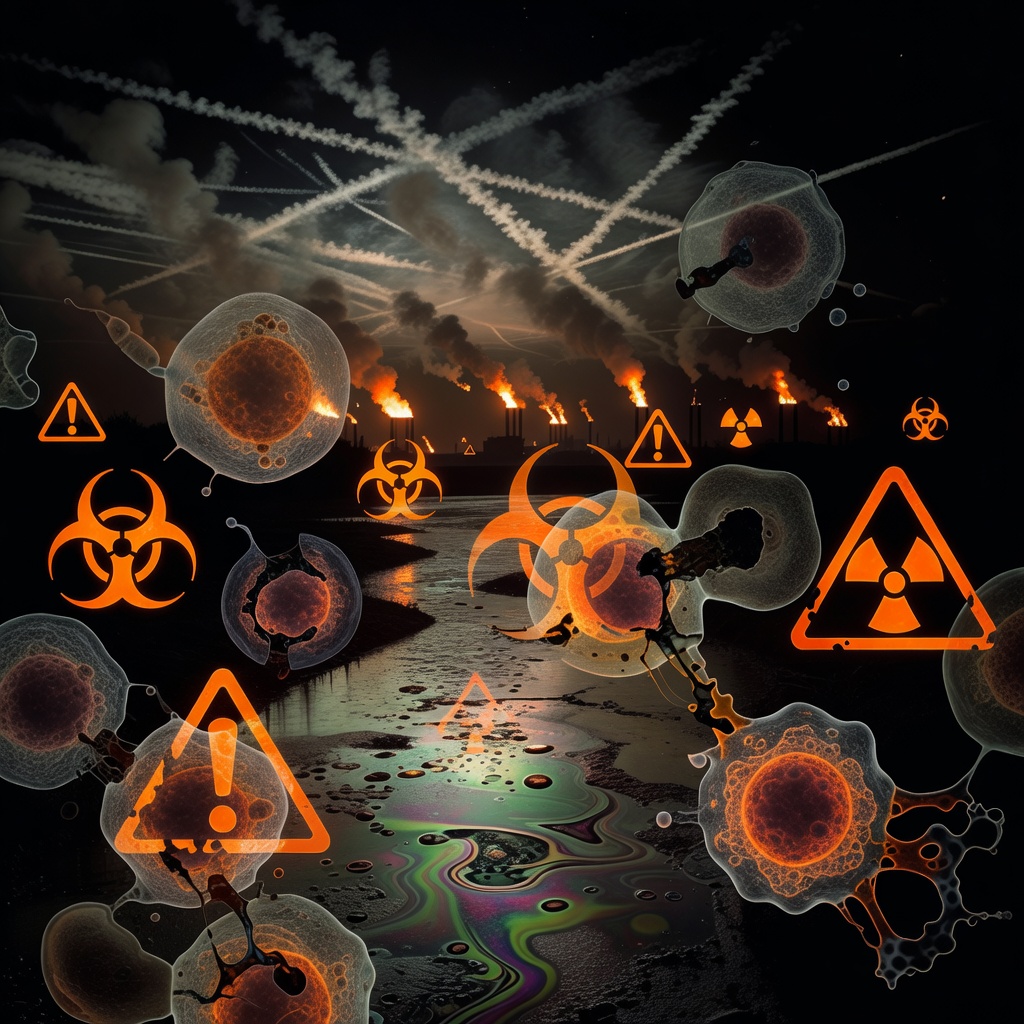
For decades, the standard measure of male fertility has been the basic semen analysis. Men have been told that if their sperm count is high, their motility (movement) is brisk, and their morphology (shape) is within normal ranges, they are "fertile." However, this narrative is dangerously incomplete. We are currently witnessing a global decline in reproductive health that the standard microscope test fails to explain.
While a man may have millions of swimming sperm, the "cargo" those sperm carry—the paternal DNA—may be fractured, degraded, and incapable of sustaining a healthy pregnancy. This phenomenon, known as Sperm DNA Fragmentation (SDF), is the hidden frontier of male reproductive health. At the heart of this genetic breakdown lies Oxidative Stress, fueled by an increasingly toxic modern environment.
The Illusion of the Semen Analysis
The traditional semen analysis is a rudimentary tool. It looks at the "delivery trucks" but fails to inspect the "package" inside. A man can have a perfectly normal semen analysis and still suffer from high levels of DNA fragmentation, leading to unexplained infertility, recurrent miscarriages, and failed IVF cycles.
Key Fact: Research indicates that up to 25% of men with "normal" semen parameters actually possess high levels of DNA fragmentation, rendering them subfertile in ways traditional testing cannot detect.
DNA fragmentation refers to breaks or lesions in the genetic material within the sperm head. While the egg has a limited capacity to repair some DNA damage after fertilisation, if the damage exceeds a certain threshold, the embryo will either fail to implant or stop developing shortly thereafter.
Biological Mechanisms: The Path of Oxidative Stress
To understand why DNA breaks, we must understand Reactive Oxygen Species (ROS). In small amounts, ROS are essential for sperm function, particularly for capacitation (the process that allows sperm to penetrate an egg). However, when the production of these free radicals outweighs the body’s antioxidant defences, a state of Oxidative Stress occurs.
The Vulnerability of Sperm
Sperm are uniquely susceptible to oxidative damage for two reasons:
- Lack of Cytoplasm: Unlike other cells, sperm have very little cytoplasm, which contains the primary antioxidant enzymes needed to neutralise free radicals.
- Polyunsaturated Fatty Acids (PUFAs): The sperm membrane is rich in PUFAs, which provide the fluidity needed for swimming. However, these fats are highly prone to lipid peroxidation, a chain reaction where free radicals "steal" electrons from the cell membrane, leading to structural collapse and DNA damage.
Single vs. Double-Strand Breaks
Not all fragmentation is equal. Single-strand DNA breaks are often caused by oxidative stress during the transit through the epididymis. Double-strand DNA breaks are more severe and are frequently linked to issues during the initial stages of sperm production (spermatogenesis) in the testes. Both significantly diminish the chances of a successful live birth.
The UK Context: A Quiet Crisis
In the United Kingdom, infertility now affects 1 in 7 couples. While historically framed as a "female issue," we now know that male factors contribute to at least 50% of all cases. Despite this, the NHS often treats male factor testing as an afterthought.
The UK's modern landscape presents unique challenges. The rise of "Ultra-Processed Foods" (UPFs), sedentary office-based lifestyles, and the "Postcode Lottery" of fertility care mean that many British men are never offered a Sperm DNA Fragmentation Index (DFI) test until they have already endured the emotional and financial trauma of multiple failed IVF rounds.
Furthermore, the average age of fatherhood in the UK has been steadily rising. Paternal age is a significant driver of DNA fragmentation, as the biological machinery for producing sperm becomes less efficient and more prone to "copying errors" over time.
Modern Environmental Exposures: The "Truth" About Our Habitat
We are living in an era of unprecedented chemical exposure. These "invisible" factors are the primary drivers of the oxidative stress that shatters paternal DNA.
Endocrine Disrupting Chemicals (EDCs)
Our environment is saturated with Xenoestrogens—synthetic chemicals that mimic the female hormone oestrogen.
- Phthalates: Found in plastics, synthetic fragrances, and personal care products (shampoos, deodorants).
- Bisphenol A (BPA): Common in till receipts and the lining of tinned foods.
EDCs interfere with the Hypothalamic-Pituitary-Gonadal (HPG) axis, disrupting the delicate hormonal balance required for healthy sperm production.
The Microplastic Revelation
Recent studies have sent shockwaves through the scientific community by discovering microplastics in 100% of human testicular tissue samples tested. These particles cause localised inflammation and chronic oxidative stress within the testes, directly damaging the DNA of developing sperm.
Electromagnetic Fields (EMFs) and Heat
The modern habit of keeping a smartphone in a trouser pocket or a laptop on the lap is devastating for sperm.
- Thermal Radiation: The testes must remain 2–3 degrees Celsius cooler than the rest of the body. Excessive heat causes "heat stress," which triggers ROS production.
- Non-Ionizing Radiation: Emerging evidence suggests that EMFs from mobile devices can disrupt the mitochondrial membrane of sperm, leading to leakage of free radicals and subsequent DNA fragmentation.
Air Pollution
For those living in major UK cities like London, Manchester, or Birmingham, Nitrogen Dioxide and Particulate Matter (PM2.5) are constant threats. These pollutants enter the bloodstream and induce systemic inflammation, which eventually manifests as oxidative damage in the reproductive tract.
Protective Strategies: Reclaiming Genetic Integrity
The good news is that sperm take approximately 72 to 90 days to develop. This "90-day window" provides a critical opportunity for men to reduce oxidative stress and improve their DNA fragmentation scores through targeted interventions.
1. Nutritional Armoury
Antioxidants are the primary "offence" against DNA fragmentation. However, more is not always better; a balance is required to avoid "reductive stress."
- Coenzyme Q10 (Ubiquinol): Vital for mitochondrial energy and protecting the sperm membrane from lipid peroxidation.
- Zinc & Selenium: These minerals are essential for the structural integrity of the sperm head and the "packaging" of DNA.
- L-Carnitine: Helps shuttle fatty acids into the mitochondria for energy, reducing the production of waste ROS.
- Vitamin C & E: Work synergistically to neutralise free radicals in the seminal fluid.
2. Lifestyle De-toxification
- The "Scrote-Fridge" Principle: Avoid hot baths, saunas, and tight-fitting underwear. Opt for loose "boxer" style shorts to allow for proper thermoregulation.
- Digital Hygiene: Never keep a phone in your pocket while it is actively searching for a signal (Wi-Fi/4G/5G). Move laptops to a desk.
- Organic and Plastic-Free: Where possible, switch to organic produce to avoid organophosphate pesticides, which are known to increase DFI. Replace plastic Tupperware and water bottles with glass or stainless steel.
3. The Impact of Vaping and Alcohol
While the UK has seen a decline in traditional smoking, vaping has surged. The heating elements in vapes can release heavy metals (lead, nickel, chromium) which are potent pro-oxidants. Similarly, alcohol metabolises into acetaldehyde, a toxin that triggers a massive burst of ROS in the reproductive system.
Beyond the Microscope: The Need for Advanced Testing
If a couple has experienced recurrent pregnancy loss or failed assisted conception, a standard semen analysis is no longer sufficient. INNERSTANDING advocates for the inclusion of the following tests:
- Sperm DNA Fragmentation Index (DFI): Usually performed via the HALO or TUNEL assay. A DFI over 20-30% is considered high-risk for infertility.
- MiOXSYS: A newer technology that measures the Oxidation-Reduction Potential (ORP) in semen, providing a real-time snapshot of the oxidative stress levels.
"To ignore DNA fragmentation is to ignore the blueprint of the next generation. We must stop blaming 'bad luck' for pregnancy loss and start looking at the molecular health of the sperm."
Key Takeaways: Protecting Your Legacy
- Sperm Count is a Vanity Metric: A high count does not guarantee genetic health. DNA fragmentation is a more accurate predictor of fertility and healthy offspring.
- Oxidative Stress is the Enemy: It is the primary mechanism behind DNA breaks, caused by an imbalance between free radicals and antioxidants.
- Environment is Choice: While we cannot control all pollution, we can control our "micro-environment"—the plastics we touch, the food we eat, and where we store our technology.
- The 90-Day Turnaround: Male fertility is dynamic. Within three months of significant lifestyle changes and antioxidant support, DNA fragmentation can often be significantly reduced.
- Advocate for Testing: Do not accept "unexplained infertility" as a diagnosis until a DFI test has been performed.
The health of the next generation begins long before conception. By understanding the impact of oxidative stress and environmental toxins, men can move beyond the "numbers" and take radical responsibility for the genetic integrity of their future children. It is time to look deeper than the microscope allows.
This article is provided for informational and educational purposes only. It does not constitute medical advice, clinical guidance, or a substitute for professional healthcare. Information reflects cited research at time of publication. Always consult a qualified healthcare professional before acting on any health information.
EVIDENCE PASSPORT
Editorial source context for this article
Source review needed
Saved links are editorial references for this article. They may support specific claims rather than every sentence. Open and assess each source in context. This passport does not independently verify them.
Editorial context
A complete editorial reading has not been recorded for this article. Source links remain available for you to open and assess directly.
Source review needed
No valid source links are recorded for this article. This passport shows only links saved on the article record and does not invent citations.
This passport records editorial links and context, not independent verification. Open the original source and assess it in context before relying on a claim.
Medical Disclaimer
The information in this article is for educational purposes only and does not constitute medical advice, diagnosis, or treatment. Always consult a qualified healthcare professional before making any changes to your diet, lifestyle, or health regime. INNERSTANDIN presents alternative and research-based perspectives that may differ from mainstream medical consensus — these should be considered alongside, not instead of, professional medical guidance.
Read Full DisclaimerContinue the thread
Keep this question moving.
Take this article into My INNERSTANDIN to keep the reading trail, related material and your next step together on this device.