
Beyond the 9-to-5: Why the UK’s Always-On Culture is a Circadian Crisis
Updated May 2026
This analysis examines how the UK’s work culture induces circadian misalignment, disrupting cellular oscillators and metabolic signaling through the lens of time-restricted nutrition.
Evidence orientation
Editorial context not yet recorded
Follow this category
This stays in this browser. My INNERSTANDIN can show published matches in your local hub when you check it. It does not send email, push, or alert notifications.
Local learning review
A private browser aid for revisiting ideas. It is not an alert or a health recommendation.
Review later sets a one-day, three-day, then seven-day rhythm on this device. Choose it only when you want to revisit this article.
Overview
The current UK socio-economic landscape is defined by an uncompromising "always-on" architecture, a paradigm that has effectively decoupled human biology from the terrestrial light-dark cycle. While the industrial revolution began the erosion of natural rhythms, the contemporary digital era has formalised a state of permanent circadian desynchrony. At INNERSTANDIN, we recognise this not merely as a lifestyle inconvenience, but as a systemic biological crisis—an evolutionary mismatch where our 24-hour metabolic machinery is forced to operate within a non-linear, 24/7 hyper-connected framework. This misalignment, primarily driven by erratic photic exposure and nocturnal nutrient intake, represents a fundamental assault on the body’s temporal organisation.
At the molecular core of this crisis lies the disruption of the circadian timing system, a hierarchical network comprising the central master clock in the suprachiasmatic nucleus (SCN) and a myriad of peripheral oscillators located in metabolic tissues such as the liver, pancreas, and skeletal muscle. Under physiological conditions, these clocks are synchronised via primary zeitgebers—namely light and food. However, the UK’s shift towards late-phase caloric consumption and blue-light-induced melatonin suppression has fractured this internal harmony. Research published in The Lancet Public Health and findings from the UK Biobank underscore a harrowing correlation between non-traditional work hours and an escalated risk of metabolic syndrome, Type 2 diabetes, and cardiovascular pathology. The mechanism is clear: when nutrient intake occurs during the biological night—a phase evolutionarily reserved for cellular repair and glycaemic stability—the peripheral clocks in the digestive tract and liver undergo a phase shift that contradicts the SCN.
This state of "metabolic twilight" results in profound physiological impairment. Studies in Cell Metabolism have demonstrated that nocturnal feeding disrupts the expression of core clock genes, including BMAL1 and PER2, leading to attenuated postprandial glucose clearance and impaired insulin sensitivity. Furthermore, the suppression of autophagic flux during the late-night hours prevents the clearance of cellular debris, exacerbating systemic inflammation and oxidative stress. For the UK population, where late-night takeaway culture and erratic shift patterns are normalised, the cumulative effect is a nationwide surge in chronic "dis-ease" that traditional pharmacology struggles to address. To achieve true INNERSTANDIN of our health, we must acknowledge that the timing of nutrient ingestion—circadian nutrition—is as critical as the macronutrient composition itself. The current crisis demands a radical shift from "what" we eat to a sophisticated, evidence-led comprehension of "when" we eat, restoring the temporal integrity that our biology mandates.
The Biology — How It Works
At the molecular core of the UK’s escalating public health crisis lies a fundamental desynchrony between our evolutionary programming and the socio-economic mandates of "Always-On" hyper-connectivity. To grasp the gravity of this circadian crisis, one must look beyond simple sleep deprivation and interrogate the transcription-translation feedback loops (TTFLs) that govern every cellular process in the human body. At INNERSTANDIN, we recognise that the biological clock is not a singular entity, but a hierarchical system of oscillators. While the Suprachiasmatic Nucleus (SCN) in the hypothalamus acts as the master pacemaker—entrained primarily by photic cues—the peripheral clocks located in the liver, pancreas, and adipose tissue are governed by non-photic zeitgebers, most notably nutrient intake.
The molecular machinery driving these rhythms involves a complex interplay of "clock genes," primarily CLOCK and BMAL1, which heterodimerise to drive the expression of Period (PER) and Cryptochrome (CRY) genes. This 24-hour oscillation regulates roughly 30% of the mammalian transcriptome, dictating the timing of metabolic pathways, DNA repair, and proteostasis. When the UK workforce engages in late-night caloric consumption—driven by high-pressure nocturnal professional demands—a catastrophic "circadian misalignment" occurs. The SCN signals "night" via melatonin secretion, yet the peripheral metabolic clocks are forcibly reset to "day" by the sudden influx of glucose and amino acids. This uncoupling of the master and peripheral oscillators leads to a state of internal temporal anarchy.
Research published in The Lancet and Cell Metabolism elucidates the systemic fallout of this desynchrony. Postprandial glucose clearance is significantly impaired during the biological night; the pancreatic beta-cells exhibit reduced sensitivity to GLP-1, and skeletal muscle shows a marked decline in insulin-stimulated GLUT4 translocation. For the London-based professional finishing a meal at 22:00, the body is biologically ill-equipped to process it. This results in prolonged postprandial hyperglycaemia and hyperinsulinaemia—precursors to Type 2 diabetes and metabolic syndrome that are now endemic across Britain. Furthermore, the disruption of the BMAL1 pathway suppresses the nocturnal activation of autophagy and mitophagy, the cellular "cleanup" processes essential for preventing neurodegeneration and oncogenesis. At INNERSTANDIN, we contend that the "Always-On" culture is not merely a social burden but a biochemical assault, forcing the human organism into a perpetual state of metabolic inflexibility. By eating outside the narrow biological window dictated by our evolutionary blueprint, we are effectively silencing the genetic instructions required for cellular longevity and systemic homeostasis.
Mechanisms at the Cellular Level
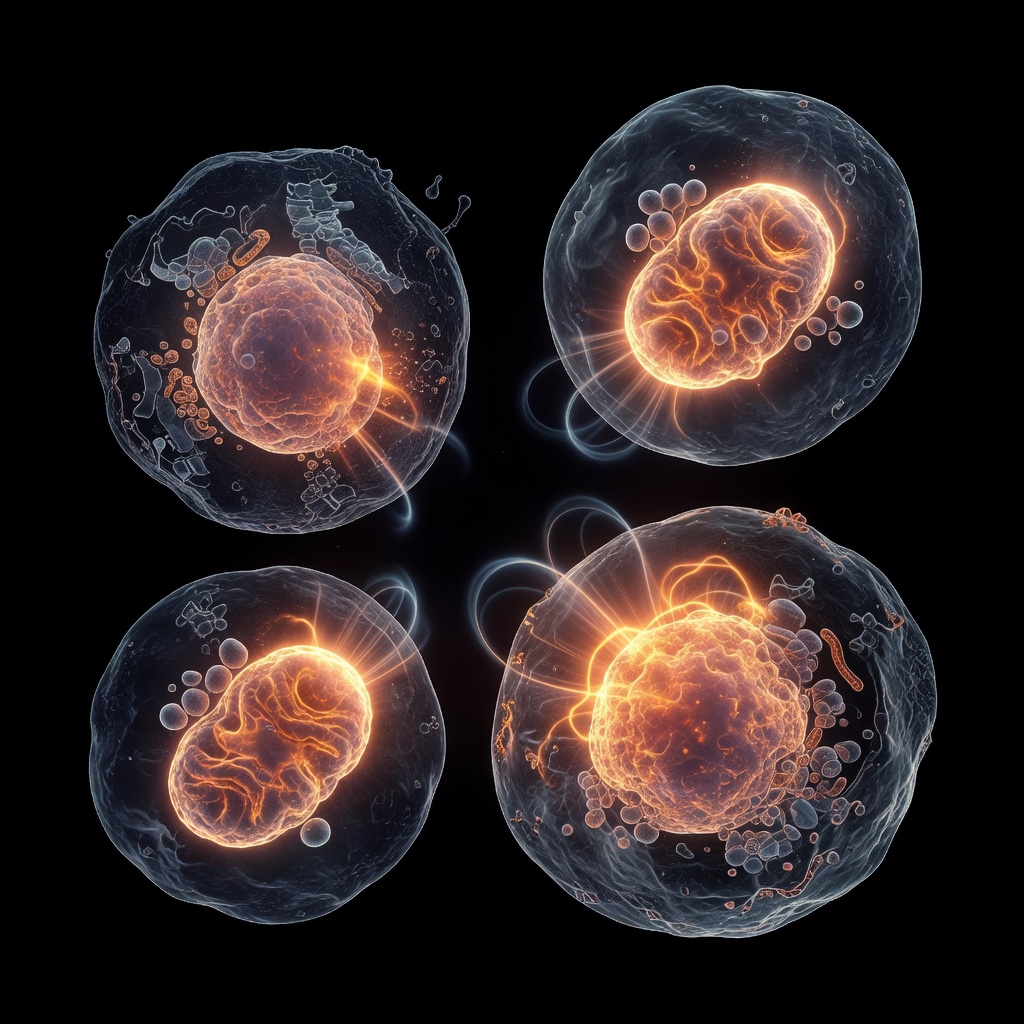
To comprehend the physiological erosion caused by the UK’s "always-on" culture, one must look beyond the macro-symptoms of fatigue and delve into the intricate transcription-translation feedback loops (TTFL) that govern every cell in the human body. At the heart of this cellular machinery lies the canonical molecular clock—a sophisticated oscillatory system comprising the heterodimeric complex of CLOCK (Circadian Locomotor Output Cycles Kaput) and BMAL1 (Brain and Muscle ARNT-Like 1). In a state of biological equilibrium, this complex binds to E-box elements in the promoters of Period (PER1, PER2, PER3) and Cryptochrome (CRY1, CRY2) genes, driving their expression during the day. As these proteins accumulate, they translocate back into the nucleus to inhibit their own transcription, creating a self-sustaining 24-hour rhythm.
However, the "always-on" paradigm, characterised by late-night digital interface exposure and the ubiquity of midnight caloric intake via the UK’s hyper-efficient food delivery infrastructure, induces a state of profound circadian desynchrony. While the central pacemaker in the Suprachiasmatic Nucleus (SCN) is primarily entrained by photic stimuli (light), peripheral oscillators in the liver, pancreas, and adipose tissue are predominantly regulated by nutrient intake. When a worker in London or Manchester consumes a high-glycaemic meal at 11:00 PM, they trigger a "phase shift" in peripheral clocks that contradicts the "darkness" signal received by the SCN. This uncoupling of central and peripheral rhythms—referred to in Cell Metabolism as "metabolic jet lag"—disrupts the temporal compartmentalisation of biochemical pathways.
At the metabolic level, this desynchrony impairs the activation of AMPK (adenosine monophosphate-activated protein kinase) and SIRT1 (Sirtuin-1), the primary nutrient sensors that link circadian rhythms to energy homeostasis. Research published in The Lancet Diabetes & Endocrinology highlights that chronic disruption of these pathways leads to attenuated insulin sensitivity and the nocturnal upregulation of lipogenic enzymes. Essentially, the body is forced to process nutrients at a time when its cellular machinery is programmed for autophagy and DNA repair. The failure of these "housekeeping" mechanisms allows for the accumulation of reactive oxygen species (ROS) and pro-inflammatory cytokines, creating a fertile ground for the chronic low-grade inflammation that underpins the UK’s rising rates of metabolic syndrome and Type 2 diabetes.
Furthermore, the epigenetic implications are staggering. Chronic circadian misalignment alters the chromatin landscape, modifying the accessibility of genes involved in cholesterol transport and glucose oxidation. For the INNERSTANDIN student, the truth is stark: the UK's disregard for the biological clock is not merely a social issue; it is a systematic dismantling of cellular integrity. By bypassing the natural fasting window required for mitochondrial mitophagy, our "always-on" lifestyle ensures that damaged organelles remain within the cytoplasm, accelerating cellular senescence and compromising the very foundations of human longevity. Transcending this crisis requires more than just better sleep; it necessitates a radical realignment of our nutrient-intake windows to match the evolutionary ancient rhythms of our molecular architecture.
Environmental Threats and Biological Disruptors
The contemporary British landscape is no longer governed by the solar cycle, but by the relentless, high-energy visible (HEV) blue light of the digital economy. This shift from natural photoperiods to a 24-hour hyper-connectivity constitutes a profound biological assault, facilitating a state of "circadian chaos" that the INNERSTANDIN framework identifies as a primary driver of metabolic decay. In the UK, where shift work affects approximately 14% of the workforce and "social jetlag"—the discrepancy between biological and social clocks—is endemic in urban centres like London and Manchester, the environmental threats to our temporal biology are both systemic and pervasive.
The primary disruptor is the decoupling of the central pacemaker, the suprachiasmatic nucleus (SCN), from peripheral oscillators located in the liver, pancreas, and adipose tissue. This desynchronisation is exacerbated by the UK’s "always-on" professional culture, which necessitates late-night cognitive engagement. Research published in The Lancet Public Health underscores that such persistent circadian misalignment is not merely a sleep issue; it is a metabolic catastrophe. Exposure to artificial light at night (ALAN) suppresses the nocturnal secretion of melatonin, a hormone that does more than regulate sleep—it is a critical mediator of glucose homeostasis and mitochondrial antioxidant defence. When melatonin is suppressed, the insulin sensitivity of peripheral tissues is significantly attenuated, leading to postprandial glycaemic excursions that would not occur during daylight hours.
Furthermore, the environmental threat extends to the timing of nutritional intake. In the "always-on" culture, the British worker often consumes a significant percentage of their daily caloric intake during the biological night. This activates the nutrient-sensing pathways—such as mTOR and AMPK—at a phase when the body is evolutionarily programmed for cellular repair and autophagy, not substrate metabolism. Data from Cell Metabolism indicates that late-night feeding disrupts the expression of core clock genes like BMAL1 and CLOCK, effectively "resetting" the liver clock independently of the SCN. This "internal desynchrony" results in a pro-inflammatory state and metabolic endotoxaemia, as the gut microbiome also undergoes circadian fluctuations that are interrupted by nocturnal feeding.
At INNERSTANDIN, we recognise that these disruptors are not merely lifestyle choices but are built into the UK’s socio-economic infrastructure. The ubiquity of ultra-processed, calorie-dense foods, combined with the psychological stress of the "gig economy," creates a feedback loop where stress-induced cortisol spikes further antagonise insulin and disrupt the circadian rhythm of the HPA axis. This is a systemic crisis: the British environment has become a biological mismatch for the human genome, necessitating a radical reappraisal of how we synchronise our nutritional windows with our internal temporal architecture. To ignore this is to invite the unchecked progression of cardiometabolic syndrome across the national population.
The Cascade: From Exposure to Disease
The physiological disintegration triggered by the UK’s "always-on" professional landscape is not merely a matter of fatigue; it is a profound molecular "uncoupling" of the master pacemakers. At the heart of this crisis lies the desynchronisation between the Suprachiasmatic Nucleus (SCN)—the central chronometer governed by photic input—and the peripheral oscillators located in the liver, pancreas, and skeletal muscle, which are primarily entrained by nutrient intake. When an individual engages in late-night cognitive labour under the glare of high-energy visible (HEV) blue light while consuming calorie-dense "convenience" snacks, they initiate a catastrophic signalling mismatch. At INNERSTANDIN, we recognise this as the "Circadian Mismatch Cascade," where the central clock signals night, but the metabolic periphery is forced into a state of daytime processing.
The biochemical fallout begins with the suppression of pineal melatonin, which, as evidenced by research published in The Lancet, does more than regulate sleep; it acts as a potent antioxidant and a modulator of insulin sensitivity. Concurrently, the nocturnal activation of the HPA axis—driven by the cortisol spikes of "deadline culture"—antagonises insulin action, leading to transient hyperglycaemia. When we overlay this with late-phase nutrient intake, we see a blunt disruption of the BMAL1 and CLOCK gene expressions. These core molecular oscillators normally regulate the rate-limiting steps of lipogenesis and gluconeogenesis. In the "always-on" model, their rhythmic expression is flattened, leading to what Nature Reviews Endocrinology describes as metabolic inflexibility: the body’s inability to switch efficiently between oxidising carbohydrates and fats.
Furthermore, the systemic impact extends to the gastrointestinal tract. The UK’s reliance on irregular, late-night feeding patterns disrupts the rhythmic secretion of ghrelin and leptin, inducing a state of "circadian hunger" that persists even in a surplus of energy. This is compounded by the disruption of the gut microbiome’s diurnal fluctuations. Data from the UK Biobank suggests that chronic circadian disruption is a significant driver of intestinal permeability and systemic low-grade inflammation, evidenced by elevated C-reactive protein (CRP) and pro-inflammatory cytokines like IL-6. This inflammatory state is the precursor to the UK’s most pressing non-communicable diseases, including Type 2 diabetes, non-alcoholic fatty liver disease (NAFLD), and cardiovascular hypertrophy. We are witnessing a transition from a temporary lifestyle choice to a permanent epigenetic shift, where the "cascade" effectively hardwires the individual for metabolic syndrome before they have even reached middle age. Through the lens of INNERSTANDIN, it is clear that the "always-on" culture is not a badge of productivity, but a biological prerequisite for systemic failure.
What the Mainstream Narrative Omits
The prevailing public health discourse in the United Kingdom remains stubbornly tethered to a thermodynamic reductionism—the "calories in, calories out" model—which fundamentally ignores the temporal dimension of human metabolism. While mainstream nutritional advice focuses almost exclusively on macronutrient ratios and glycemic indices, it fails to account for the chronobiological reality that our metabolic efficiency is not a constant, but a rhythm. At INNERSTANDIN, we recognise that the UK’s "always-on" culture is not merely a social phenomenon; it is a direct assault on the Suprachiasmatic Nucleus (SCN) and the peripheral oscillators that govern every physiological process.
What the mainstream narrative omits
is the critical role of peripheral circadian clocks located in the liver, pancreas, and adipose tissue. Research published in The Lancet and Nature Communications highlights that these peripheral clocks are primarily entrained by nutrient intake, rather than light. When the UK workforce engages in late-night snacking or "shift-work style" erratic eating patterns, they induce a state of "circadian misalignment." This occurs when the master clock in the brain (stimulated by artificial blue light from digital devices) signals daytime, while the metabolic organs are struggling to process nutrients during their genetically programmed rest phase.
The biochemical consequences of this misalignment are profound and often overlooked. For instance, the expression of the core clock gene BMAL1 regulates the transcription of key metabolic enzymes. Late-night nutrient ingestion disrupts the rhythmic secretion of adiponectin and increases postprandial lipemia, which significantly elevates the risk of cardiovascular disease—a leading cause of mortality in the UK. Furthermore, the "melatonin-insulin axis" is a critical piece of the puzzle absent from standard dietary guidelines. Melatonin receptors (MTNR1B) are expressed on pancreatic beta cells; as melatonin levels rise to prepare the body for sleep, they actively inhibit insulin secretion. Therefore, a late-night meal in a typical London office environment results in prolonged hyperglycemia, as the body is physiologically incapable of disposing of glucose efficiently during the biological night.
By failing to integrate "chrononutrition" into the national health conversation, we are ignoring the molecular basis of the UK's metabolic syndrome epidemic. True INNERSTANDIN of human biology requires acknowledging that when we eat is just as pharmacologically significant as what we eat. Time-Restricted Eating (TRE) is not a "fad diet"; it is a corrective biological intervention designed to resynchronise the transcriptome and proteome with the 24-hour solar cycle, mitigating the systemic inflammation and proteotoxic stress inherent in an "always-on" society.
The UK Context
The United Kingdom’s transition into a hyper-connected, 24-hour service economy has precipitated a quiet biological crisis: the systematic erosion of the circadian rhythm. Within the British socio-economic framework, the "always-on" culture is no longer merely a workplace grievance; it is a profound disruptor of human chronobiology. Data from the UK Biobank and longitudinal studies published in The Lancet underscore a burgeoning epidemic of "social jetlag"—the chronic misalignment between an individual’s biological clock and their socially mandated sleep-wake cycles. In the UK, where roughly one in nine workers are engaged in night shifts and a significant portion of the professional workforce operates across international time zones, the physiological cost of this temporal displacement is reaching a critical mass.
At the heart of this crisis is the desynchronisation of the suprachiasmatic nucleus (SCN) from peripheral oscillators located in the liver, gut, and adipose tissue. For the UK population, this is exacerbated by a unique intersection of high-irradiance blue light exposure from digital devices and a pervasive late-night "takeaway culture." Research indicates that the British public increasingly consumes a significant percentage of their daily caloric intake during the biological night—a period when the pancreas is physiologically primed for insulin rest. This nocturnal feeding triggers exacerbated postprandial glucose excursions and impairs lipid clearance, as the expression of key clock genes like BMAL1 and CLOCK becomes attenuated in peripheral tissues.
At INNERSTANDIN, we observe that the systemic impact of this circadian mismatch is a primary driver of the UK’s escalating metabolic syndrome statistics. The British Heart Foundation and various peer-reviewed analyses suggest that this chronodisruption contributes significantly to the prevalence of Type 2 diabetes and cardiovascular pathology across the British Isles. Furthermore, the UK’s northern latitude contributes to seasonal affective volatility, which, when compounded by artificial light at night (ALAN), suppresses melatonin synthesis and disrupts the glymphatic system’s nocturnal neuro-cleansing processes. The result is a population that is metabolically inflexible, neurologically fatigued, and biologically aged beyond its chronological years. This is not a failure of individual willpower, but a predictable consequence of a societal architecture that ignores the evolutionary imperatives of the circadian scaffold. The UK context reveals that when the 9-to-5 dissolves, the internal biological synchrony that sustains human health dissolves with it.
Protective Measures and Recovery Protocols
To mitigate the systemic erosion of the British physiological blueprint, we must move beyond cosmetic lifestyle advice and implement rigorous chronobiological interventions. The primary objective of a recovery protocol in an "always-on" culture is the forced realignment of the Suprachiasmatic Nucleus (SCN) with peripheral oscillators located in the liver, pancreas, and adipose tissue. When the UK workforce operates outside the natural solar cycle, these peripheral clocks become decoupled, leading to a state of internal temporal anarchy. At INNERSTANDIN, we identify this as "metabolic incoherence"—a state where the gut is primed for nutrient absorption while the master clock signals for cellular repair.
The most potent tool for re-establishing this synchrony is Time-Restricted Eating (TRE). Research published in Cell Metabolism and The Lancet underscores that the timing of nutrient intake is arguably more critical than the macronutrient composition itself for those experiencing circadian strain. By enforcing a strict 8-to-10-hour feeding window, ideally commencing no later than 09:00, individuals can stimulate the cyclic expression of core clock genes (BMAL1 and CLOCK). This exogenous "zeitgeber" (time-giver) activates the SIRT1-mediated deacetylation of BMAL1, effectively resetting the liver's metabolic rhythm. For the UK shift worker or the late-night corporate executive, the protocol must mandate the cessation of caloric intake at least four hours prior to sleep to prevent postprandial glucose excursions. During the nocturnal phase, the body’s insulin sensitivity is naturally suppressed via melatonin-induced inhibition of pancreatic beta-cells; consuming calories during this window—common in the UK’s "deliveroo culture"—induces a state of transient diabetes and systemic inflammation.
Recovery protocols must also address the depletion of nicotinamide adenine dinucleotide (NAD+), which serves as a critical cofactor for both sirtuins and PARP enzymes involved in DNA repair. Circadian disruption accelerates the decline of NAD+ levels, further impairing the robustness of the PER2/CRY1 oscillatory loops. Evidence-led supplementation with NAD+ precursors, such as Nicotinamide Mononucleotide (NMN), alongside the activation of the AMPK pathway through polyphenolic compounds like resveratrol or berberine, can pharmacologically "nudge" the molecular clock back into phase. Furthermore, to combat the "blue light toxicity" pervasive in London’s financial districts and creative hubs, the protocol requires the aggressive filtration of short-wavelength light (400-490nm) post-dusk to protect the endogenous melatonin surge.
Ultimately, the INNERSTANDIN approach necessitates a rejection of the "sleep when you're dead" mantra. True biological recovery requires the strategic use of nutrient-free fasting periods to induce autophagy, clearing the cellular debris generated by the oxidative stress of the 24/7 economy. Without these protective measures, the British workforce remains on a trajectory toward a public health crisis characterized by unparalleled rates of cardiometabolic syndrome and neurodegenerative decline. Realignment is not a luxury; it is a fundamental requirement for cellular survival in a de-synchronised world.
Summary: Key Takeaways
The systematic erosion of Britain’s biological temporal integrity constitutes a primary driver of the escalating national cardiometabolic crisis. INNERSTANDIN posits that the UK’s pervasive "always-on" culture facilitates a chronic state of circadian desynchrony, where nocturnal caloric intake and erratic photic stimuli decouple the master pacemaker within the suprachiasmatic nucleus (SCN) from peripheral metabolic oscillators in the liver, pancreas, and skeletal muscle. Peer-reviewed data published in The Lancet Public Health and Nature Communications underscore that post-sunset feeding—ubiquitous amongst the UK’s shift-working and "grind culture" demographics—collides with the physiological nadir of insulin sensitivity and the nocturnal surge of melatonin, which actively inhibits glucose-stimulated insulin secretion.
Consequently, this temporal misalignment induces systemic low-grade inflammation, reduces autophagic flux via suppressed FoxO3a transcription, and fundamentally impairs proteostasis. Transitioning to a rigorous 8-to-10-hour Time-Restricted Eating (TRE) window is not merely a dietary trend but a critical evolutionary realignment. By synchronising nutrient ingestion with the diurnal expression of CLOCK and BMAL1 genes, individuals can recalibrate the molecular machinery governing lipid metabolism and glycaemic control, effectively dismantling the biological damage accrued through the UK’s dysfunctional socio-economic temporal paradigm. The evidence from the UK Biobank confirms that without this temporal discipline, the modern professional remains trapped in a state of metabolic disharmony, regardless of caloric quantity.
This article is provided for informational and educational purposes only. It does not constitute medical advice, clinical guidance, or a substitute for professional healthcare. Information reflects cited research at time of publication. Always consult a qualified healthcare professional before acting on any health information.
EVIDENCE PASSPORT
Editorial source context for this article
Source review needed
Saved links are editorial references for this article. They may support specific claims rather than every sentence. Open and assess each source in context. This passport does not independently verify them.
Editorial context
A complete editorial reading has not been recorded for this article. Source links remain available for you to open and assess directly.
Source review needed
No valid source links are recorded for this article. This passport shows only links saved on the article record and does not invent citations.
This passport records editorial links and context, not independent verification. Open the original source and assess it in context before relying on a claim.
Medical Disclaimer
The information in this article is for educational purposes only and does not constitute medical advice, diagnosis, or treatment. Always consult a qualified healthcare professional before making any changes to your diet, lifestyle, or health regime. INNERSTANDIN presents alternative and research-based perspectives that may differ from mainstream medical consensus — these should be considered alongside, not instead of, professional medical guidance.
Read Full DisclaimerContinue the thread
Keep this question moving.
Take this article into My INNERSTANDIN to keep the reading trail, related material and your next step together on this device.
Dig deeper in the Library
Free, longform PDF volumes that go beyond headlines into mechanisms and references.