
Biofilm Bastions: The Hidden Architecture of Treatment-Resistant UK Infections
Updated May 2026
Pathogens create protective matrices that shield them from both the immune system and antibiotics. Breaking these barriers is essential for resolving chronic British health issues.
Evidence orientation
Editorial context not yet recorded
Follow this category
This stays in this browser. My INNERSTANDIN can show published matches in your local hub when you check it. It does not send email, push, or alert notifications.
Local learning review
A private browser aid for revisiting ideas. It is not an alert or a health recommendation.
Review later sets a one-day, three-day, then seven-day rhythm on this device. Choose it only when you want to revisit this article.
Overview
In the hushed corridors of British microbiology labs and the increasingly strained wards of the NHS, a silent crisis is unfolding—one that traditional medicine is spectacularly ill-equipped to handle. While the public focus remains fixed on viral pandemics and the broad-spectrum threat of antimicrobial resistance (AMR), a more clandestine and sophisticated biological strategy is at play: the biofilm. These are not merely clusters of bacteria; they are highly engineered, socio-biological fortresses that shield pathogens from the most potent antibiotics and the most aggressive immune responses.
For decades, the medical establishment has operated under the reductionist "Planktonic Paradigm." This view posits that bacteria exist primarily as free-floating, individual cells that are easily targeted by chemical interventions. However, we now know that upwards of 80% of all human infections—and nearly 100% of chronic, treatment-resistant cases in the UK—are governed by biofilm dynamics. These "Biofilm Bastions" represent a form of biological collective intelligence. Within these structures, pathogens create a shared Extracellular Polymeric Substance (EPS)—a "shield" of DNA, proteins, and sugars that renders them up to 1,000 times more resistant to antibiotics than their free-floating counterparts.
This article serves as an expose and a technical deep-dive into the hidden architecture of these microbial cities. We will explore how biofilms are driving the UK’s chronic illness epidemic—from recurring UTIs and non-healing surgical wounds to the complex, multi-systemic presentations of Lyme disease and chronic fatigue. The era of the "magic bullet" antibiotic is over; to resolve the health crisis of the 21st century, we must learn to dismantle the bastion.
The Biology — How It Works
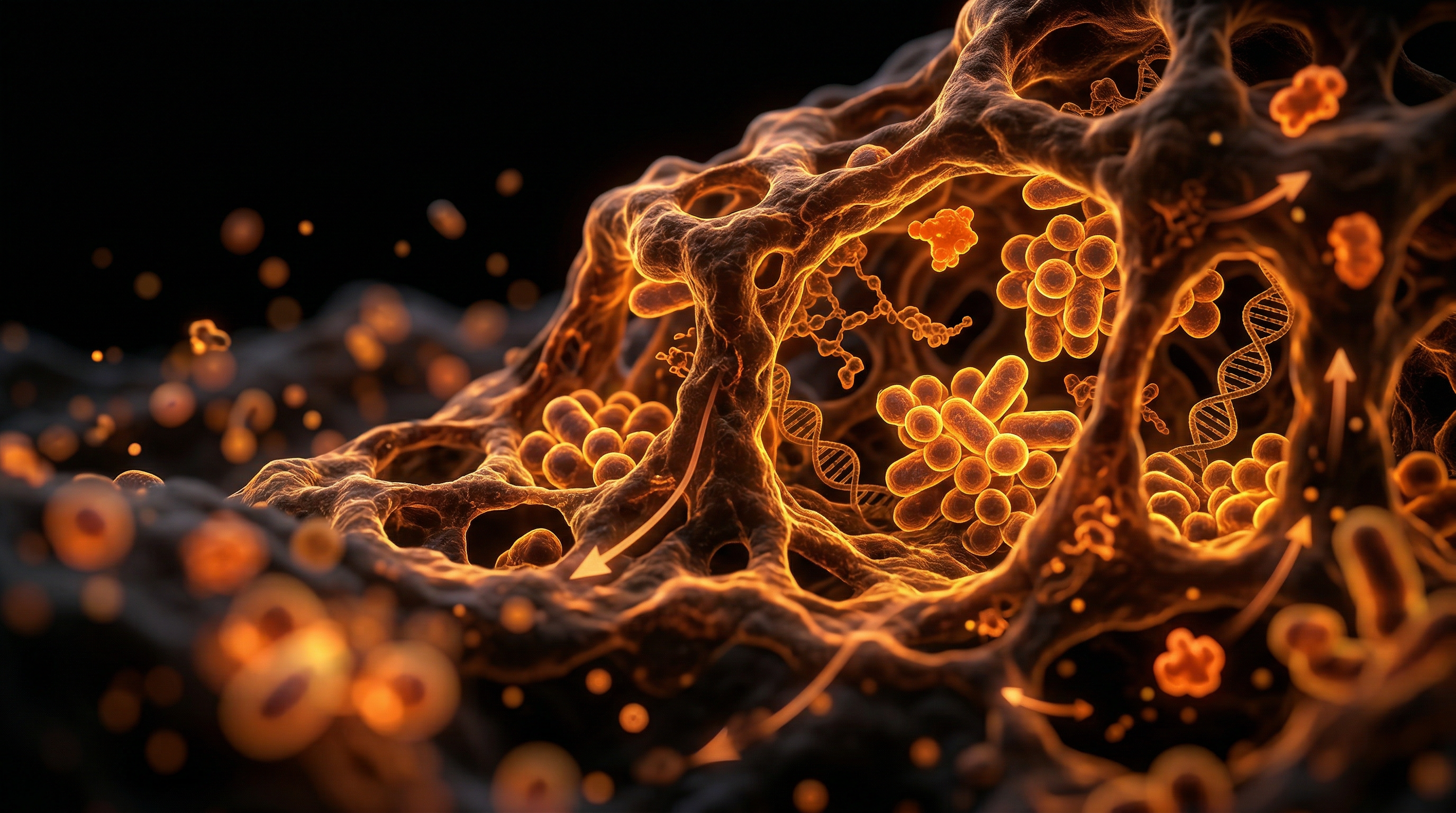
A biofilm is not a random accumulation of microbes. It is a structured community, often containing multiple species (bacteria, fungi, and even viruses), that adheres to either biotic surfaces (human tissue) or abiotic surfaces (medical implants, catheters, or even microplastics in the water supply).
The lifecycle of a biofilm follows a sophisticated five-stage developmental process:
1. Reversible Attachment
The process begins when free-floating (planktonic) bacteria encounter a surface. Through weak van der Waals forces and hydrophobic interactions, the pioneers make initial contact. At this stage, the bacteria can still be easily dislodged.
2. Irreversible Attachment
The microbes begin to produce "glue"—sticky appendages known as pili and fimbriae. They anchor themselves to the surface and start secreting the first layers of the EPS. Once this threshold is crossed, the bacteria undergo a profound genetic shift, switching off genes for motility (like flagella) and switching on genes for matrix production.
3. Maturation Phase I
The colony begins to grow through cellular division and the recruitment of other microbes. The EPS matrix thickens, creating a physical barrier. This matrix is not just a wall; it is a complex web of extracellular DNA (eDNA), lipids, and polysaccharides that provides structural integrity.
4. Maturation Phase II: The Architecture of Survival
The biofilm reaches its peak complexity. It develops "water channels" that act as a primitive circulatory system, delivering nutrients to the deep interior and whisking away metabolic waste. The architecture is deliberately porous yet robust, allowing the community to survive in high-shear environments like the human bloodstream or a fast-flowing British water pipe.
5. Dispersion
When the colony becomes too large or nutrients become scarce, the biofilm "seeds" the environment. It undergoes a programmed release of planktonic cells, which travel to new sites to start the cycle again. This explains the "relapsing-remitting" nature of many UK infections: the patient feels better as the biofilm matures, only to suffer an "acute flare" when dispersion occurs.
Key Statistic: According to the National Institutes of Health (NIH), biofilms are responsible for over 65% of all microbial infections and 80% of chronic infections in developed nations.
Mechanisms at the Cellular Level
To understand why these structures are so resilient, we must look at the molecular "handshakes" and metabolic shifts occurring within the matrix.
Quorum Sensing: The Microbial Internet
Bacteria within a biofilm communicate via chemical signalling molecules called autoinducers. This process, known as Quorum Sensing (QS), allows the colony to "count" its population. Only when a specific density is reached do the bacteria activate certain "virulence genes." This is a tactical masterstroke; by staying "quiet" and not producing toxins initially, the bacteria avoid alerting the human immune system until their fortress is strong enough to withstand an attack.
The EPS Matrix: A Chemical Sieve
The EPS is the primary reason for antibiotic failure. It acts as a:
- Diffusion Barrier: Large antibiotic molecules struggle to penetrate the dense mesh of polysaccharides.
- Chemical Neutraliser: The matrix contains enzymes (like beta-lactamases) that actively degrade antibiotics as they attempt to pass through.
- Anionic Shield: Many antibiotics are positively charged, while the biofilm matrix is often negatively charged, causing the drugs to be "trapped" on the periphery.
Persister Cells: The Hibernating Elite
Within the deep, oxygen-deprived layers of the biofilm, a subpopulation of bacteria enters a state of metabolic dormancy. These are called Persister Cells. Because most antibiotics work by disrupting active metabolic processes (like cell wall synthesis or DNA replication), they are useless against these "hibernating" cells. When the course of antibiotics ends and the "active" bacteria are killed, the persister cells wake up and rebuild the entire colony from scratch.
Horizontal Gene Transfer (HGT)
The proximity of cells within a biofilm creates a "hotbed" for the exchange of genetic material. Through conjugation, bacteria can pass antibiotic-resistance genes (plasmids) to one another with frightening efficiency. A biofilm is essentially a university for pathogens, where they share the latest "blueprints" for defeating modern medicine.
Environmental Threats and Biological Disruptors
The resilience of biofilms in the modern Briton is not solely a product of evolution; it is being exacerbated by our toxic environment. We are inadvertently providing the "building materials" for these bastions.
Heavy Metal Sequestration
Biofilms have an affinity for heavy metals like lead, mercury, and aluminium. These metals, often found in UK tap water (due to Victorian-era piping) and industrial pollution, are integrated into the EPS matrix. This serves two purposes for the pathogen: it detoxifies the bacteria's immediate environment and hardens the biofilm structure, making it physically tougher to disrupt.
Glyphosate and the Microbiome
The widespread use of glyphosate-based herbicides in British agriculture has been shown to disrupt the Shikimate pathway in beneficial gut bacteria. This "microbial dysbiosis" creates an ecological void that biofilm-forming pathogens (like Clostridium difficile or Pseudomonas aeruginosa) are quick to fill. Glyphosate may also act as a chemical stressor that triggers bacteria to "hunker down" into biofilm mode as a survival mechanism.
The Role of Mould and Mycotoxins
In the damp British climate, indoor mould (Stachybotrys and Aspergillus) is a pervasive issue. Mycotoxins produced by these moulds are immunosuppressive. Furthermore, research suggests a "synergistic" relationship between fungal and bacterial biofilms. In cases of "Chronic Inflammatory Response Syndrome" (CIRS), patients often harbour multi-species biofilms in the nasal passages and gut that are reinforced by environmental mould exposure.
Microplastics: The New Scaffolding
Recent studies have identified the "Plastisphere"—a phenomenon where pathogenic biofilms form on microplastic particles. As microplastics become ubiquitous in the UK food chain and water supply, they act as "Trojan Horses," transporting mature, highly resistant biofilm communities directly into the human GI tract.
The Cascade: From Exposure to Disease
The transition from a healthy state to a chronic, biofilm-mediated disease state is rarely an overnight event. It is a slow, methodical "colonisation" of the host.
Stage 1: The Initial Breach
This could be a minor infection—a UTI, a chest infection, or a tick bite. Under normal circumstances, a healthy immune system or a short course of antibiotics would clear this. However, if the pathogen is a prolific biofilm-former (like Borrelia or Staphylococcus), it immediately seeks a niche to "set anchor."
Stage 2: The Establishment of the Niche
The bacteria find a "quiet" area—joint fluid, the lining of the bladder, or the deep recesses of the sinuses. They begin the five-stage development cycle. At this point, the patient may have "negative" blood tests because the bacteria are no longer circulating in the blood (planktonic); they are tucked away in the tissue (sessile).
Stage 3: Systemic Inflammation
Even if the bacteria are hidden, their metabolic waste and the constant, frustrated efforts of the immune system to reach them create a state of chronic low-grade inflammation. The immune system begins to fire "blindly," leading to the tissue damage and "brain fog" characteristic of many modern UK ailments.
Stage 4: The Fortress Matures
The biofilm incorporates host materials—such as fibrin and calcium—to further camouflage itself. This is "Molecular Mimicry." The immune system now sees the biofilm as "self" or simply as a piece of scarred tissue, allowing the pathogens to reside in the body indefinitely.
Important Callout: Standard NHS diagnostic tests, such as simple urine cultures or blood films, are designed to detect planktonic bacteria. They frequently return "false negatives" in patients with mature biofilms, leading to the gaslighting of patients who are told their symptoms are "psychosomatic."
What the Mainstream Narrative Omits
The refusal of mainstream medicine to pivot toward a biofilm-centric model of infection is not merely an oversight; it is a systemic failure rooted in the economics of the pharmaceutical industry and the inertia of clinical guidelines.
The Failure of the "One Germ, One Drug" Model
Western medicine is built on the Koch’s Postulates model—isolate one pathogen, apply one chemical. Biofilms, being multi-species and architecturally complex, laugh at this approach. By treating a biofilm-mediated infection with standard "short-course" antibiotics, we are often just killing the weak planktonic cells on the surface, while the "Persister" cells in the interior learn how to resist that specific drug for the next time.
The "Stealth" Nature of Chronic Lyme
In the UK, Lyme disease (Borreliosis) is a point of significant contention. The "mainstream" view often ignores the fact that Borrelia burgdorferi is a master of biofilm formation. When patients continue to suffer after the standard three weeks of Doxycycline, they are often told they have "Post-Treatment Lyme Disease Syndrome"—a term that implies the infection is gone, but the "echo" remains. In reality, the Borrelia has often simply "retreated into the bastions," waiting for the antibiotic pressure to subside.
The Economics of Chronic Illness
There is little profit in "curing" a biofilm. Biofilm disruption requires a multi-pronged, often natural-product-based approach (enzymes, chelators, herbal antimicrobials) that cannot be easily patented. The current model of "managing" chronic symptoms with life-long prescriptions (steroids, anti-inflammatories, biologicals) is far more lucrative than the intensive work of dismantling the biological architecture of the infection itself.
The "Hidden" Dental Connection
British dental health is often focused on cavities and extractions, but the oral biofilm (dental plaque) is the most sophisticated biofilm in the human body. Pathogens from the mouth, such as Porphyromonas gingivalis, can migrate from the oral "bastion" into the bloodstream, contributing to heart disease, Alzheimer’s, and systemic inflammation. This "Oral-Systemic Link" is frequently ignored in general GP practice.
The UK Context
The United Kingdom presents a unique set of challenges that make its population particularly vulnerable to "Biofilm Bastions."
The Victorian Legacy
Much of the UK’s water infrastructure dates back to the 19th century. The internal surfaces of these ageing pipes are coated in thick, "legacy" biofilms that have survived a century of chlorination. These pipes can harbour pathogens like Legionella and Mycobacteria, providing a constant "low-dose" exposure to biofilm-forming organisms.
The Climate Factor
The British climate is characterised by high humidity and moderate temperatures—perfect conditions for environmental biofilms. The prevalence of "damp and mould" in UK housing (affecting an estimated 3.4 million homes) means that many Britons are living in a constant "bio-aerosol" of mould spores and bacteria, which prime the respiratory system for biofilm colonisation.
The NHS Crisis and "Protocol Medicine"
The NHS, while a vital institution, relies heavily on "Standard of Care" (SoC) protocols. These protocols are often 10–15 years behind the current research in biofilm science. GPs are pressured to reduce antibiotic prescriptions, but when they do prescribe, they are limited to short courses that are insufficient to penetrate a mature biofilm matrix. This creates a "revolving door" of patients who are never truly cleared of their infections.
The Rise of AMR in British Rivers
Recent investigations into UK water companies have revealed the staggering amount of raw sewage being pumped into British rivers. This sewage is a "melting pot" for antibiotic residues and diverse bacteria, creating the perfect environment for the evolution of highly resistant "super-biofilms" that can then re-enter the human food chain or be encountered during recreational water use.
Protective Measures and Recovery Protocols
Dismantling a "Biofilm Bastion" requires more than just "stronger" drugs. It requires a strategic, multi-phase tactical assault on the matrix itself.
Phase 1: Opening the Gates (Enzymatic Dissolution)
The first step is to degrade the EPS matrix. Proteolytic enzymes are the primary tool for this.
- Serrapeptase and Nattokinase: These enzymes "digest" the fibrin and protein components of the biofilm.
- Lumbrokinase: A more potent fibrinolytic that can break down the "blood-clot" like structures some bacteria use for cover.
- Alpha-Amylase and Cellulase: These help break down the polysaccharide (sugar) chains that give the matrix its "slimy" consistency.
Phase 2: Chelating the Foundation
Since biofilms use minerals (calcium, magnesium, iron) and heavy metals to "cross-link" their matrix, chelating agents can weaken the structure.
- EDTA (Ethylenediaminetetraacetic acid): Often used in a suppository or liposomal form to "pull" the mineral "bricks" out of the biofilm wall.
- Lactoferrin: A naturally occurring protein that "starves" the biofilm of iron, which is essential for its structural integrity and quorum sensing.
Phase 3: The Targeted Strike
Once the matrix is thinned, the underlying pathogens are finally "vulnerable." This is the time for antimicrobials.
- Liposomal Essential Oils: Oils like Oregano, Thyme, and Cinnamon have potent anti-biofilm properties and can penetrate tissues effectively when liposomal.
- Stevia (Whole Leaf Extract): Research from the University of New Haven showed that specific Stevia extracts were more effective at killing Borrelia biofilms than triple-antibiotic combinations.
- Bacteriophage Therapy: An emerging field in the UK where "bacteria-eating" viruses are used to specifically target and dissolve pathogenic colonies without harming the beneficial microbiome.
Phase 4: Quorum Quenching
To prevent the "bastion" from rebuilding, we must "jam" their communication lines.
- Quercetin and Apigenin: These flavonoids have been shown to interfere with quorum-sensing molecules, effectively "muting" the bacteria.
- Garlic (Allicin): One of the most studied "quorum quenchers" in nature.
Phase 5: Environmental and Lifestyle Support
- Water Filtration: Using high-grade "Reverse Osmosis" or "Distillation" to ensure that the "building blocks" (heavy metals) for biofilms are not being ingested.
- Low-EMF Environments: Emerging research suggests that Electromagnetic Fields (EMFs) can stress bacteria, actually triggering them to produce more protective biofilm as a defence mechanism. Creating a "sleep sanctuary" free of Wi-Fi and cellular signals may be a critical, yet overlooked, part of recovery.
- The "Bioresonant" Approach: Utilising specific frequencies (such as those used in Rife technology or Targeted PEMF) to physically disrupt the vibrational integrity of the EPS matrix.
Summary: Key Takeaways
The revelation of the "Biofilm Bastion" is a paradigm-shifting moment for health in the UK. We can no longer afford to view infection as a simple battle between a drug and a bug. We must view it as an architectural and ecological challenge.
- Biofilms are the rule, not the exception: Chronic illness in the UK is largely a biofilm problem.
- The EPS matrix is a fortress: It provides a physical, chemical, and biological shield that traditional antibiotics cannot easily breach.
- Diagnostic blind spots: Current NHS testing is poorly equipped to detect sessile (biofilm-bound) pathogens, leading to chronic misdiagnosis.
- The Environmental Synergy: UK-specific factors like Victorian infrastructure, damp housing, and glyphosate use are actively strengthening these microbial fortresses.
- Dismantling is a multi-step process: Success requires a sequential approach of dissolving the matrix, chelating the minerals, striking the pathogens, and quenching their communication.
As we move forward, the "Biofilm Paradigm" offers a bridge between the rigour of molecular biology and the wisdom of systemic, holistic intervention. By understanding the hidden architecture of these "bastions," we can finally move beyond the management of chronic symptoms and toward the genuine resolution of the "unresolvable" infections plaguing the British Isles. The walls are thick, but with the right tools, they can be brought down.
This article is provided for informational and educational purposes only. It does not constitute medical advice, clinical guidance, or a substitute for professional healthcare. Information reflects cited research at time of publication. Always consult a qualified healthcare professional before acting on any health information.
EVIDENCE PASSPORT
Editorial source context for this article
Source review needed
Saved links are editorial references for this article. They may support specific claims rather than every sentence. Open and assess each source in context. This passport does not independently verify them.
Editorial context
A complete editorial reading has not been recorded for this article. Source links remain available for you to open and assess directly.
Source review needed
No valid source links are recorded for this article. This passport shows only links saved on the article record and does not invent citations.
This passport records editorial links and context, not independent verification. Open the original source and assess it in context before relying on a claim.
Medical Disclaimer
The information in this article is for educational purposes only and does not constitute medical advice, diagnosis, or treatment. Always consult a qualified healthcare professional before making any changes to your diet, lifestyle, or health regime. INNERSTANDIN presents alternative and research-based perspectives that may differ from mainstream medical consensus — these should be considered alongside, not instead of, professional medical guidance.
Read Full DisclaimerContinue the thread
Keep this question moving.
Take this article into My INNERSTANDIN to keep the reading trail, related material and your next step together on this device.