
Calcium Paradox: The Vitamin K2 Disconnection
Updated May 2026
Without Vitamin K2, calcium is often deposited in UK arteries rather than bones, leading to soft tissue calcification. This article explores the synergistic relationship between fat-soluble vitamins and mineral transport.
Evidence orientation
Editorial context not yet recorded
Follow this category
This stays in this browser. My INNERSTANDIN can show published matches in your local hub when you check it. It does not send email, push, or alert notifications.
Local learning review
A private browser aid for revisiting ideas. It is not an alert or a health recommendation.
Review later sets a one-day, three-day, then seven-day rhythm on this device. Choose it only when you want to revisit this article.
Overview
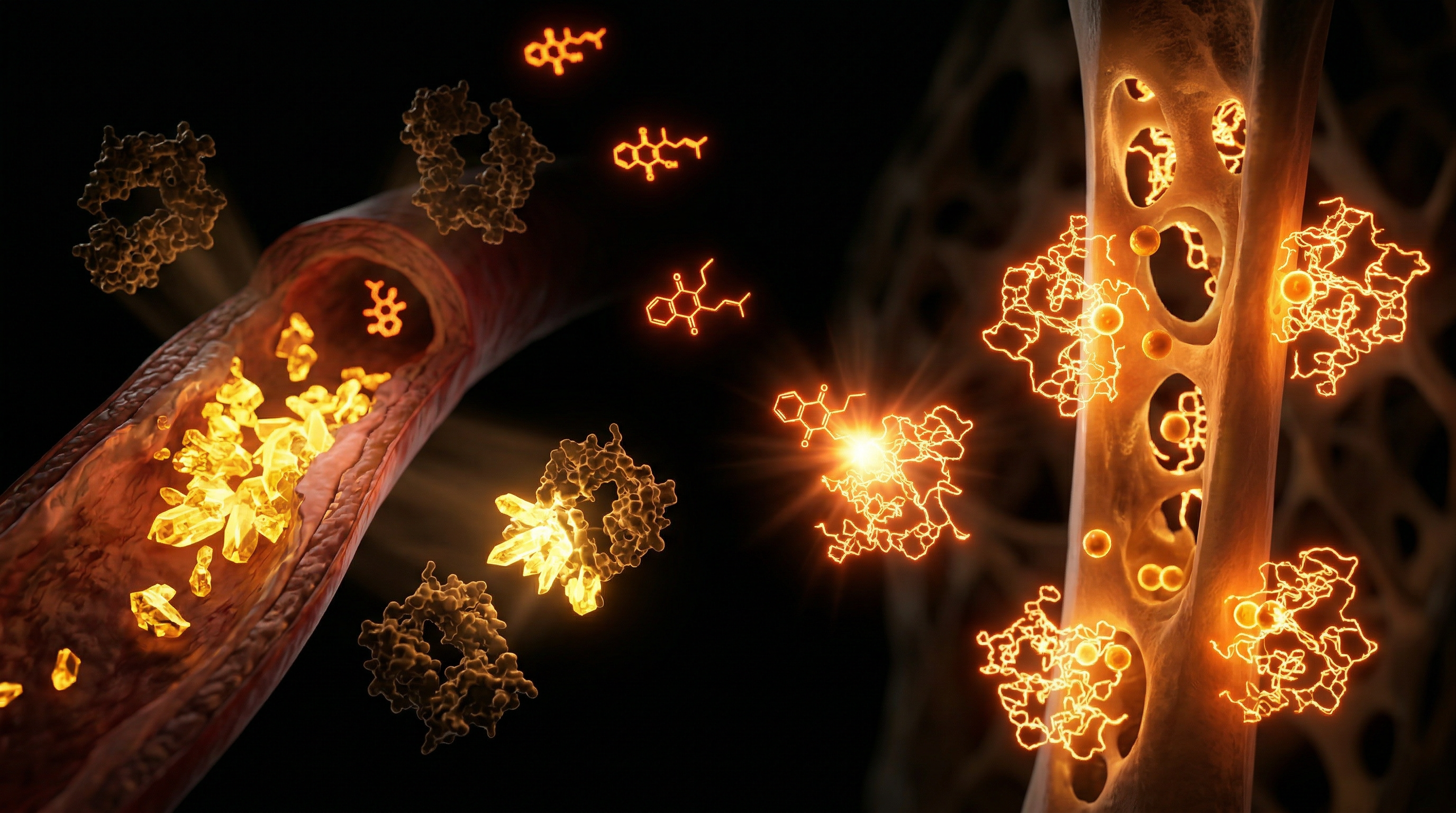
For decades, the medical establishment has championed a singular, reductionist narrative: to build strong bones and prevent the brittle decline of osteoporosis, one must consume vast quantities of calcium. In the United Kingdom, this directive has been etched into the public consciousness through dairy marketing campaigns and NHS guidelines. Yet, as the population increased its calcium intake via fortified cereals, supplements, and pasteurised dairy, a disturbing trend emerged. Rates of osteoporosis remained stubbornly high, while simultaneously, the incidence of cardiovascular disease—specifically arterial calcification—skyrocketed.
This is the Calcium Paradox. It is a biological contradiction where an abundance of a vital mineral does not lead to skeletal integrity, but rather to the literal "stoning" of the soft tissues. We find ourselves in a state of physiological chaos: bones are hollowing out (osteoporosis) while the cardiovascular system is turning to rock (atherosclerosis).
The missing link, the "traffic warden" of the mineral world, is Vitamin K2 (Menaquinone). While Vitamin K1 is well-known for its role in blood coagulation, its sibling, K2, has been criminally overlooked by mainstream dietetics. Vitamin K2 is the essential cofactor required to activate the proteins that transport calcium. Without it, calcium is a "rogue element." It drifts through the bloodstream, settling into the delicate lining of the arteries, the heart valves, and the kidneys.
This article serves as a deep-seated investigation into the systemic failure of modern nutritional science to recognise the Vitamin K2 disconnection. We will explore the biochemical synergy required for mineral homeostasis and expose how environmental and industrial shifts have stripped this life-saving nutrient from the British food chain, leaving a trail of chronic disease in its wake.
Important Fact: The Rotterdam Study, a landmark longitudinal trial involving 4,800 participants over ten years, revealed that high intake of Vitamin K2—but not K1—reduced the risk of arterial calcification by 52% and cardiovascular mortality by 50%.
##
The Biology — How It Works
To understand the Calcium Paradox, we must first dismantle the myth that vitamins work in isolation. In the human body, calcium metabolism is governed by a triad of fat-soluble nutrients: Vitamin A, Vitamin D3, and Vitamin K2.
The Trio of Mineral Transport
- Vitamin D3 (The Absorber): Vitamin D3 acts as the gatekeeper. Its primary role is to ensure that calcium is absorbed from the intestinal tract into the bloodstream. Without D3, we cannot access the calcium we ingest. However, D3 does not specify where that calcium should go.
- Vitamin K2 (The Director): This is the most critical and most neglected step. Vitamin K2 activates specific proteins—namely Osteocalcin and Matrix Gla Protein (MGP)—which act as the biological "satnav" for calcium.
- Vitamin A (The Regulator): Vitamin A works in tandem with D3 to signal the production of these calcium-binding proteins.
The K1 vs. K2 Distinction
Mainstream nutritional guidelines often conflate Vitamin K1 (phylloquinone) and Vitamin K2 (menaquinone), categorising them simply as "Vitamin K." This is a scientific oversight of massive proportions.
- Vitamin K1: Found in green leafy vegetables (spinach, kale). Its primary destination is the liver, where it activates clotting factors.
- Vitamin K2: Found in fermented foods and animal fats. Its primary destination is the extra-hepatic tissues—the bones and the vasculature.
The human body’s ability to convert K1 into K2 is extremely inefficient, particularly in the presence of gut dysbiosis or aging. Thus, a diet rich in kale but lacking in K2-dense animal products or fermented foods leaves the skeletal and cardiovascular systems dangerously unprotected.
The Role of Activator X
In the 1930s, the pioneering dentist and researcher Weston A. Price identified a "price-less" substance he called Activator X. He observed that traditional populations consuming grass-fed butter and organ meats were immune to tooth decay and chronic disease. Decades later, modern science confirmed that Activator X was, in fact, Vitamin K2. It is the catalyst that allows the body to utilise minerals correctly. Without this activator, the "bricks" (calcium) of the body are delivered to the wrong construction site.
##
Mechanisms at the Cellular Level
The "disconnection" between calcium and the skeletal system occurs at the level of protein carboxylation. This is the biochemical process that transforms inactive proteins into functional tools.
The Carboxylation Cycle
Vitamin K2 acts as a cofactor for the enzyme gamma-glutamyl carboxylase. This enzyme attaches a carboxyl group to glutamate residues on specific proteins, creating "Gla" residues. These Gla residues have a high affinity for calcium ions; they effectively act like "claws" that grab calcium and lock it into place.
1. Osteocalcin: The Bone Builder
Produced by osteoblasts (bone-building cells), Osteocalcin is the protein responsible for knitting calcium into the hydroxyapatite matrix of the bone. However, Osteocalcin is secreted in an inactive, "undercarboxylated" form (ucOC). It requires Vitamin K2 to be carboxylated.
- If K2 is absent, Osteocalcin remains inactive.
- Calcium cannot be anchored to the bone.
- The result: Skeletal porosity and increased fracture risk.
2. Matrix Gla Protein (MGP): The Arterial Protector
MGP is perhaps the most powerful inhibitor of soft-tissue calcification currently known to science. It is found in the smooth muscle cells of the blood vessels. Like Osteocalcin, MGP is secreted in an inactive form. When Vitamin K2 is present, MGP is carboxylated and begins to actively repel calcium from the arterial walls.
- In a K2-deficient state, undercarboxylated MGP (ucMGP) is useless.
- Calcium begins to deposit in the elastic fibres of the arteries.
- The smooth muscle cells in the arteries undergo a "phenotypic switch," where they start behaving like bone cells (osteoblasts), turning the flexible artery into a rigid, bone-like structure.
Key Statistic: Clinical studies have shown that individuals with the highest levels of undercarboxylated MGP (a marker of K2 deficiency) have a significantly higher "Calcium Score"—a measure of the volume of calcified plaque in the coronary arteries.
3. Gas6: The Cellular Survival Protein
Vitamin K2 also carboxylates Growth Arrest-Specific 6 (Gas6), a protein involved in cell growth and preventing programmed cell death (apoptosis) in the vascular system. When Gas6 is inactive, the lining of the blood vessels becomes brittle and prone to injury, further accelerating the buildup of plaque.
##
Environmental Threats and Biological Disruptors
The Vitamin K2 deficiency crisis is not an accident of nature; it is a direct consequence of the industrialisation of the British food supply and the widespread use of certain pharmaceutical interventions.
The Death of Grass-Fed Agriculture
Vitamin K2 is produced by bacteria. In the traditional agricultural model, cows would graze on fast-growing green grass, which is rich in Vitamin K1. The bacteria in the cow's rumen would then convert this K1 into the highly bioavailable Vitamin K2 (specifically the MK-4 isoform), which would concentrate in the butterfat and organ meats. In the modern UK context, grain-fed, intensive farming practices have removed the K1 source. If the cow does not eat grass, the butter, milk, and beef will contain virtually no Vitamin K2. We have essentially engineered a "K2-free" diet.
The Microbiome Collapse
The human gut microbiome is capable of synthesising certain isoforms of Vitamin K2 (MK-7 through MK-13). However, the UK’s over-reliance on broad-spectrum antibiotics and the consumption of ultra-processed foods laden with emulsifiers and preservatives has decimated the microbial diversity required for this synthesis. Furthermore, the ubiquitous presence of glyphosate (the active ingredient in many herbicides used on British wheat and rapeseed) acts as an antibiotic in the gut, further stifling K2 production.
Pharmaceutical Interference: The Statin and Warfarin Trap
Perhaps the most egregious "biological disruptor" is the very medication prescribed to prevent heart disease.
- Statins: While designed to lower cholesterol, statins inhibit the synthesis of Coenzyme Q10 and, crucially, the synthesis of Vitamin K2. By blocking the mevalonate pathway, statins inadvertently accelerate the calcification of the arteries they are supposed to protect.
- Warfarin (Coumadin): This common blood thinner works specifically by inhibiting the Vitamin K cycle. While it prevents clots, it also prevents the carboxylation of MGP. Patients on long-term Warfarin therapy are known to experience rapid, systemic arterial calcification—a side effect that is rarely discussed in clinical consultations.
##
The Cascade: From Exposure to Disease
The disconnection between Vitamin K2 and calcium triggers a slow-motion biological collapse. This is not a sudden illness, but a "cascade" of degenerative changes that span decades.
Stage 1: The Silent Accumulation
In the early stages of K2 deficiency, there are no overt symptoms. However, at the cellular level, MGP is failing. Calcium starts to bind to elastin fibres in the tunica media (the middle layer of the arterial wall). This is often misdiagnosed as simple "aging."
Stage 2: Loss of Vascular Compliance
As calcification intensifies, the arteries lose their elasticity. This leads to Isolated Systolic Hypertension—where the top number of the blood pressure reading rises because the "pipes" are no longer flexible enough to absorb the pressure of the heart's pulse. This creates a feedback loop: high pressure damages the arterial lining, leading to more inflammation and more calcium deposition.
Stage 3: The Bone-Vascular Axis Crisis
The body, sensing a "lack" of calcium in the bones (due to inactive Osteocalcin), triggers the parathyroid gland to release more calcium into the blood. This creates a state of hypercalcaemia in the micro-environment of the tissues. The bones become increasingly fragile (osteopenia/osteoporosis), while the heart valves (especially the aortic valve) begin to stenose or "harden."
Stage 4: End-Stage Events
The final stage of the cascade is the rupture of unstable, calcified plaques. When a plaque is heavily calcified, it becomes brittle. The mechanical stress of blood flow can cause these brittle plaques to crack, triggering a massive clotting response. This is the primary cause of myocardial infarction (heart attack) and ischaemic stroke.
Callout Fact: Research published in the journal Atherosclerosis found that for every standard deviation increase in inactive MGP, the risk of heart failure increases by 14%.
##
What the Mainstream Narrative Omits
The refusal of health authorities to acknowledge the Vitamin K2 crisis is a case study in institutional inertia and pharmaceutical bias.
The RDA Fallacy
The current Recommended Dietary Allowance (RDA) for Vitamin K in the UK is based solely on the requirements for blood clotting (K1). There is no specific RDA for Vitamin K2. This implies that as long as your blood clots, you are "healthy." This ignores the entire extra-hepatic function of K2. By failing to distinguish between K1 and K2, the government effectively ignores the primary mechanism for preventing arterial calcification.
The "Calcium is King" Dogma
The dairy industry is a powerful lobby in the UK. The narrative that "milk builds strong bones" is so deeply entrenched that questioning it is seen as heresy. However, pasteurisation and homogenisation, combined with grain-feeding, mean that modern British dairy is a rich source of calcium but a poor source of the K2 needed to manage it. We are essentially giving the population the "bricks" without the "bricklayers."
The Cholesterol Diversion
For fifty years, the medical system has focused almost exclusively on LDL cholesterol as the "villain" of heart disease. This has been highly profitable for the manufacturers of statin drugs. By focusing on cholesterol, the role of mineral dysregulation and arterial calcification has been pushed to the periphery. You can have "perfect" cholesterol levels and still die of a heart attack caused by a heavily calcified coronary artery—a condition that Vitamin K2 could have prevented.
##
The UK Context
The Vitamin K2 disconnection is particularly acute in the United Kingdom due to a combination of geography, culture, and public health policy.
The "Northern Latitude" Problem
Vitamin K2 works synergistically with Vitamin D3. In the UK, the lack of sunlight for six months of the year means that the majority of the population is chronically D3 deficient. When the British public does supplement with Vitamin D, or eats Vitamin D-fortified foods, they increase their demand for Vitamin K2. Without K2, Vitamin D-induced calcium absorption can actually accelerate arterial calcification. This is a "silent epidemic" caused by well-intentioned but incomplete supplementation.
The British Diet and the Fermentation Gap
Unlike Japan (with Natto), France (with Brie and Roquefort), or the Netherlands (with Gouda), the traditional British diet lacks high-K2 fermented foods. The British "Stiff Upper Lip" seems to extend to our arteries.
- Natto: A Japanese fermented soy dish, Natto contains the highest concentration of K2 (MK-7) in the world. It is virtually non-existent in the British diet.
- Cheese: While Britain produces excellent cheeses, the trend towards "low-fat" dairy has stripped the K2-rich fats away. Furthermore, mass-produced "supermarket cheddar" lacks the bacterial diversity of traditionally aged, raw-milk cheeses.
- Organ Meats: The consumption of liver, kidneys, and "sweetbreads"—once staples of the British diet—has plummeted. These are primary sources of the MK-4 isoform of K2.
NHS Screening Failures
In the UK, the standard of care for bone health is the DEXA scan, which measures bone mineral density. However, there is no routine screening for arterial calcification (such as a CT Calcium Score) or for undercarboxylated MGP. We are measuring the "emptiness" of the bones but not the "fullness" of the arteries. This one-sided diagnostic approach ensures that the Calcium Paradox remains invisible until a catastrophic event occurs.
##
Protective Measures and Recovery Protocols
Reversing the damage of the Calcium Paradox requires a tactical shift in how we approach nutrition and supplementation. It is not enough to simply "take a vitamin"; we must restore the biochemical harmony of the body.
1. Therapeutic Dosing of Vitamin K2
To address existing calcification and bone loss, dietary intake alone is often insufficient.
- MK-7 (Menaquinone-7): Derived from fermentation. It has a long half-life in the body (approx. 72 hours), making it ideal for maintaining steady levels of MGP activation. Recommended dosage: 180mcg – 360mcg daily.
- MK-4 (Menaquinone-4): The animal-derived form. It has a short half-life but is essential for gene expression and brain health. Recommended dosage: 500mcg – 1000mcg daily.
- Note: Always consult a healthcare professional if taking anti-coagulants.
2. The Magnesium Master Key
Magnesium is the "forgotten" mineral that acts as a natural calcium channel blocker. It keeps calcium dissolved in the blood so it doesn't form crystals. In the UK, soil depletion has led to a 40% decline in magnesium content in vegetables. Supplementing with Magnesium Glycinate or Malate is essential to support K2's function.
3. Sourcing "Activator X" Foods
To maintain K2 levels naturally, one must seek out specific, high-quality fats:
- Grass-fed Butter/Ghee: Look for a deep yellow colour (indicative of K1 to K2 conversion).
- Aged Cheeses: Gouda, Jarlsberg, and Edam are particularly high in K2 due to the specific bacteria used in their fermentation.
- Pastured Egg Yolks: The yolk is the storage site for K2. Avoid "cage-free" (grain-fed) and opt for "pastured" or "organic" where the hens have access to grass and insects.
- Natto: For those who can tolerate the pungent taste and "stringy" texture, 15g of Natto daily provides more K2 than any other food source.
4. Monitoring Progress
Don't rely on standard blood tests, which only measure total Vitamin K and are often misleading.
- ucMGP Test: Measures undercarboxylated Matrix Gla Protein. High levels indicate a functional K2 deficiency.
- CT Coronary Calcium Scan: Provides a definitive "Calcium Score." A rising score over time is a clear indication that the K2/D3/Calcium balance is skewed.
- HbA1c: Blood sugar management is vital, as high glucose (glycation) damages the proteins that K2 is trying to activate.
Callout Fact: A study in the Journal of Nutrition demonstrated that for every 10mcg of Vitamin K2 consumed, the risk of coronary events decreased by 9%.
##
Summary: Key Takeaways
The Calcium Paradox is a man-made tragedy, a biological "disconnection" born of industrial convenience and scientific reductionism. For too long, the UK's approach to health has been to "add more" without understanding the "how."
- The Paradox: Calcium is a rogue element; without a director, it builds "bones" in your arteries and "stones" in your kidneys.
- The Traffic Warden: Vitamin K2 is the essential cofactor that activates Osteocalcin (for bones) and Matrix Gla Protein (for arteries).
- The Industrial Void: Modern British farming, the decline of fermented foods, and the overuse of antibiotics and statins have created a nationwide K2 deficiency.
- The Synergy: Vitamin D3 increases calcium absorption, but without K2, this can be dangerous. Magnesium is the necessary partner to keep calcium fluid.
- The Solution: We must move beyond the "Calcium is King" narrative. By restoring Vitamin K2 to the diet through grass-fed fats, aged cheeses, and targeted supplementation, we can begin to reverse the calcification of the British population.
The era of the "soft bone, hard artery" must end. We must demand a more sophisticated understanding of nutrition—one that respects the intricate, fat-soluble dance of mineral transport. The knowledge of the "Activator X" is no longer a secret of traditional tribes; it is a biological imperative for the modern world.
This article is provided for informational and educational purposes only. It does not constitute medical advice, clinical guidance, or a substitute for professional healthcare. Information reflects cited research at time of publication. Always consult a qualified healthcare professional before acting on any health information.
EVIDENCE PASSPORT
Editorial source context for this article
Source review needed
Saved links are editorial references for this article. They may support specific claims rather than every sentence. Open and assess each source in context. This passport does not independently verify them.
Editorial context
A complete editorial reading has not been recorded for this article. Source links remain available for you to open and assess directly.
Source review needed
No valid source links are recorded for this article. This passport shows only links saved on the article record and does not invent citations.
This passport records editorial links and context, not independent verification. Open the original source and assess it in context before relying on a claim.
Medical Disclaimer
The information in this article is for educational purposes only and does not constitute medical advice, diagnosis, or treatment. Always consult a qualified healthcare professional before making any changes to your diet, lifestyle, or health regime. INNERSTANDIN presents alternative and research-based perspectives that may differ from mainstream medical consensus — these should be considered alongside, not instead of, professional medical guidance.
Read Full DisclaimerContinue the thread
Keep this question moving.
Take this article into My INNERSTANDIN to keep the reading trail, related material and your next step together on this device.
Explore this in the Body Map
See where this hits your biology. Interactive anatomy, threats, and protective protocols.
Dig deeper in the Library
Free, longform PDF volumes that go beyond headlines into mechanisms and references.