
Cell Membrane Function
Updated June 2026
The phospholipid bilayer is the cell's intelligent gatekeeper. Discover how seed oils and EMF compromise cellular integrity.
Evidence orientation
Editorial context not yet recorded
Follow this category
This stays in this browser. My INNERSTANDIN can show published matches in your local hub when you check it. It does not send email, push, or alert notifications.
Local learning review
A private browser aid for revisiting ideas. It is not an alert or a health recommendation.
Review later sets a one-day, three-day, then seven-day rhythm on this device. Choose it only when you want to revisit this article.
Overview
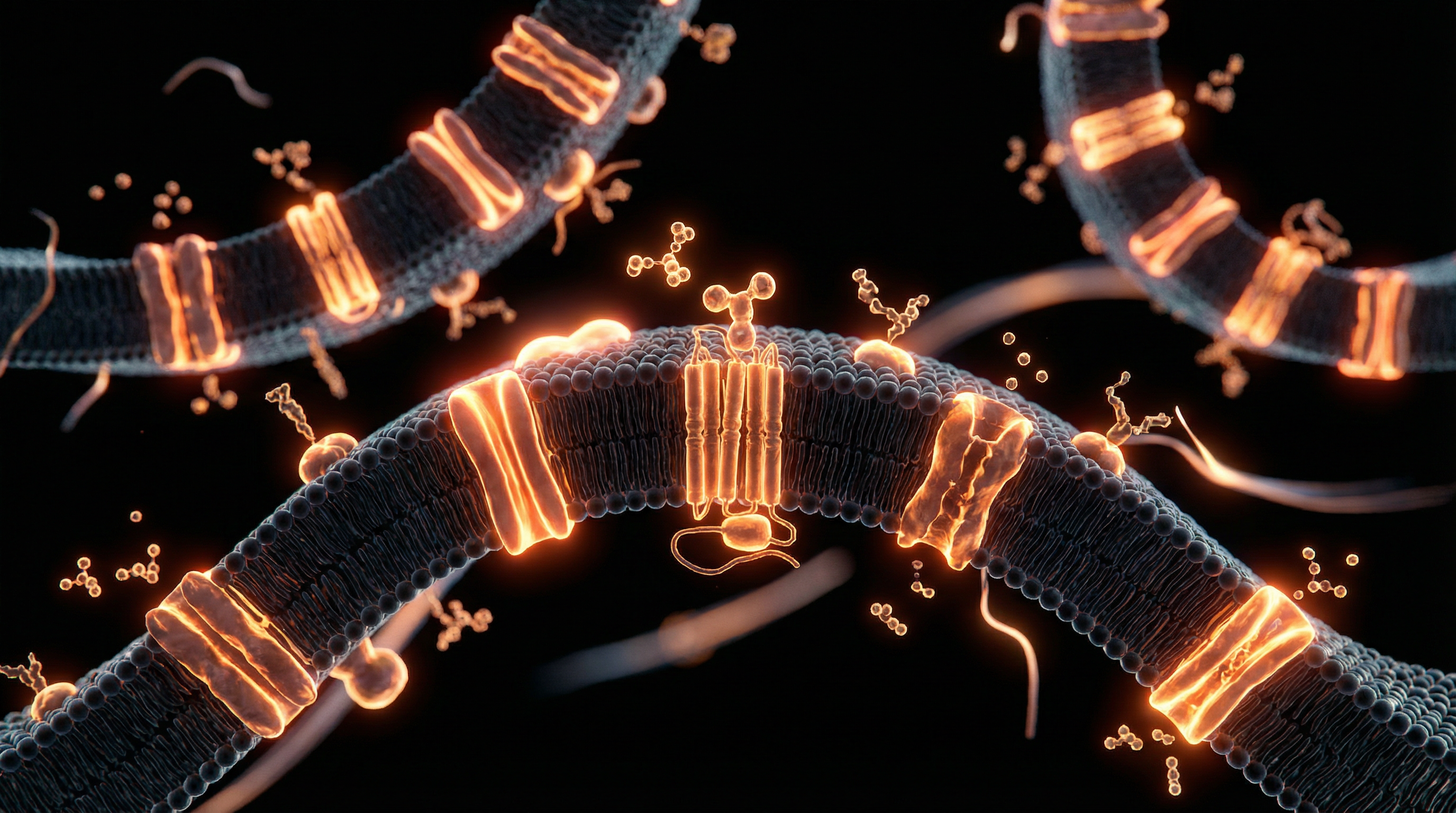
The plasma membrane, or plasmalemma, serves as the definitive interfacial architecture of eukaryotic life, far transcending its historical reductionist characterisation as a mere static enclosure. At INNERSTANDIN, we recognise this structure as a highly dynamic, liquid-crystalline matrix that governs the bio-energetic and informational integrity of the cell. This selectively permeable barrier is comprised primarily of an amphipathic phospholipid bilayer, interspersed with cholesterol, glycolipids, and a diverse array of integral and peripheral proteins. Current proteomic and lipidomic research, frequently cited in The Lancet and high-impact journals indexed in PubMed, suggests that the membrane is not a uniform "sea of lipids" as once proposed by the 1972 Singer-Nicolson model, but rather a heterogenous landscape of specialised microdomains known as lipid rafts. These rafts, enriched in sphingolipids and cholesterol, act as high-fidelity signalling hubs that coordinate complex biochemical cascades essential for systemic homoeostasis.
The functional repertoire of the cell membrane is anchored in its ability to maintain electrochemical gradients, a process predominantly facilitated by the Na+/K+-ATPase pump. This single mechanism consumes approximately 30% of total cellular ATP, highlighting the immense metabolic investment required to sustain the transmembrane potential—a foundational requirement for secondary active transport and neuronal excitability. In the UK clinical context, disruptions in membrane-bound solute carriers (SLCs) and ion channels are increasingly linked to multi-systemic pathologies, ranging from cystic fibrosis to cardiac arrhythmias. Furthermore, the membrane facilitates signal transduction through G protein-coupled receptors (GPCRs); considering that nearly 40% of all modern pharmaceutical interventions target these specific membrane proteins, the INNERSTANDIN perspective insists on viewing the membrane as the primary pharmacological interface of the human body.
Beyond simple transport, the membrane’s outer leaflet is decorated with the glycocalyx—a dense carbohydrate forest vital for cell-to-cell recognition and immune modulation. Research published via the Medical Research Council (MRC) emphasises the role of this sugar coat in leucocyte trafficking and endothelial health. When membrane fluidity is compromised—whether by oxidative stress, trans-fatty acid incorporation, or chronic inflammatory states—the resulting "membrane stiffening" impairs receptor clustering and blunts hormonal sensitivity, contributing to the underlying aetiology of Type 2 diabetes and metabolic syndrome. To achieve true INNERSTANDIN of cellular biology, one must appreciate the membrane as a sophisticated biological computer, constantly sensing, processing, and responding to the extracellular milieu to preserve the delicate balance of the internal environment.
The Biology — How It Works
The plasma membrane is far from a passive enclosure; it is a sophisticated, semi-permeable crystalline lattice that functions as the primary site of biological intelligence and signal transduction. At INNERSTANDIN, we recognise the membrane as a dynamic interface—a fluid mosaic of phospholipids, cholesterol, and proteins that dictates the metabolic state of the entire organism. The structural foundation is the amphipathic phospholipid bilayer, where hydrophobic fatty acid tails sequester themselves from the aqueous environment, and hydrophilic phosphate heads interface with the cytosol and extracellular matrix. This molecular arrangement is not merely a structural necessity but a fundamental gatekeeper of cellular homeostasis.
Fluidity is regulated with precision by the intercalation of cholesterol molecules, which act as a bidirectional buffer. In the UK’s clinical research landscape, particularly within studies published in The Lancet, the importance of membrane fluidity in cardiovascular and neurodegenerative pathologies is becoming increasingly apparent. When cholesterol concentrations are dysregulated, the membrane loses its ability to transition between liquid-ordered and liquid-disordered phases, impairing the function of lipid rafts—specialised microdomains that compartmentalise cellular processes. These rafts are essential for the clustering of signalling molecules, such as G-protein coupled receptors (GPCRs), which facilitate the cellular response to hormones and neurotransmitters.
The bioenergetic cost of maintaining this barrier is immense. A significant portion of the body's basal metabolic rate is dedicated to the activity of the Na+/K+-ATPase pump. This integral membrane protein utilises primary active transport to move three sodium ions out of the cell for every two potassium ions moved in, creating an electrochemical gradient. This gradient is the "battery" that powers secondary active transport—such as the uptake of glucose via SGLT transporters—and facilitates the propagation of action potentials in excitable tissues. Peer-reviewed data in PubMed highlight that mitochondrial dysfunction often manifests first as a failure in these membrane-bound pumps, leading to ionic imbalances and cellular swelling (oedema).
Furthermore, the glycocalyx—the carbohydrate-rich peripheral zone consisting of glycoproteins and glycolipids—serves as the cell's "fingerprint." This layer is critical for cell-to-cell recognition and immune surveillance. In the context of INNERSTANDIN’s research into systemic health, the degradation of the glycocalyx is a hallmark of endothelial dysfunction, a precursor to chronic inflammatory states. When the integrity of the cell membrane is compromised by lipid peroxidation—often driven by reactive oxygen species (ROS)—the result is a catastrophic loss of selective permeability. This "leakiness" allows for the influx of calcium ions, triggering pro-apoptotic pathways and systemic inflammation. Therefore, the membrane is not just a border; it is the fundamental site where biological "truth" is processed and enacted.
Mechanisms at the Cellular Level
The cell membrane, or plasmalemma, is not merely a passive container but a sophisticated, semi-permeable computational interface that orchestrates the internal environment against external entropy. At the core of this mechanism is the phospholipid bilayer, characterised by its amphipathic nature, which provides the thermodynamic foundation for cellular compartmentalisation. However, contemporary research published in Nature Reviews Molecular Cell Biology suggests that the classical Fluid Mosaic Model is an oversimplification. At INNERSTANDIN, we recognise the membrane as a highly ordered landscape of functional microdomains, or "lipid rafts." These rafts, enriched with cholesterol and sphingolipids, serve as specialised platforms for protein-protein interactions and signal transduction, ensuring that biochemical cascades are executed with spatial precision.
The mechanical integrity and selective permeability of the membrane are maintained by a complex array of integral and peripheral proteins. The Na+/K+-ATPase pump, a primary active transport mechanism, is perhaps the most vital bioenergetic engine within the cell. Consuming approximately 20-30% of the total ATP in a resting human, this pump maintains the electrochemical gradients essential for secondary active transport and action potential propagation. In the UK context, research conducted at institutions such as the University of Cambridge has highlighted how dysregulation of these ion gradients is a precursor to systemic metabolic failure and neurodegenerative pathologies. When the membrane’s transport kinetics are compromised, the cellular "voltage" drops, leading to an influx of calcium and subsequent apoptotic signalling—a mechanism central to many ischaemic conditions studied across NHS trusts.
Furthermore, the glycocalyx—a carbohydrate-rich layer coating the extracellular leaflet—is now understood to be a critical sensory organelle. Peer-reviewed data from The Lancet and The Journal of Physiology underscore the glycocalyx's role in vascular health, specifically its ability to sense shear stress and modulate nitric oxide production. This "sugar coat" facilitates cell-cell recognition and immune surveillance; its degradation is a hallmark of systemic inflammation and sepsis. By INNERSTANDIN the membrane as a dynamic regulatory hub rather than a static wall, we reveal the systemic impact of cellular health: every signal, from insulin binding to its receptor to the propagation of a neural impulse, is a testament to membrane efficiency. The membrane acts as the cell's gatekeeper, and its failure marks the transition from physiological homeostasis to systemic disease. Through this lens, we see that the membrane does not just surround the life of the cell; it defines the very terms of its existence.
Environmental Threats and Biological Disruptors
The integrity of the phospholipid bilayer is the fundamental determinant of cellular viability, yet it is increasingly besieged by a cocktail of anthropogenic stressors that bypass traditional detoxification pathways. At INNERSTANDIN, our interrogation of the latest cytological data reveals that the cell membrane—once viewed as a passive boundary—is the primary casualty of environmental xenobiotics. These disruptors do not merely interact with the membrane; they structurally reconfigure it, compromising the delicate homeostatic balance required for life.
A primary mechanism of disruption is lipid peroxidation, a deleterious chain reaction initiated by reactive oxygen species (ROS). Research archived in PubMed demonstrates that environmental pollutants, such as nitrogen dioxide (NO2) and particulate matter (PM2.5) prevalent in UK urban corridors, act as potent catalysts for this process. When these electrophilic molecules strike the polyunsaturated fatty acids (PUFAs) within the membrane, they abstract hydrogen atoms, leading to the formation of lipid peroxyl radicals. This degrades the membrane’s fluidity and increases its permeability, causing an unregulated influx of ions—most notably calcium—which can trigger pro-apoptotic signalling cascades and ferroptosis.
Furthermore, the ubiquity of endocrine-disrupting chemicals (EDCs), including bisphenols and phthalates, presents a systemic threat to membrane-bound receptor kinetics. These lipophilic compounds intercalate into the hydrophobic core of the bilayer. Evidence suggests that even at nanomolar concentrations, these disruptors alter the packing density of the acyl chains, shifting the phase transition temperature of the membrane. This subtle biophysical alteration is sufficient to displace peripheral proteins and decouple G-protein coupled receptors (GPCRs), effectively ‘deafening’ the cell to endogenous hormonal signals. The Lancet has highlighted the correlation between these membrane-level disruptions and the rising incidence of metabolic and reproductive disorders across the British population.
Heavy metal toxicity, particularly involving lead, mercury, and cadmium, further exacerbates this cellular erosion. These cations exhibit a high affinity for the phosphate groups of the lipid headgroups and the thiol groups of transmembrane transport proteins. By binding to these sites, heavy metals inhibit essential ion pumps, such as the Na+/K+-ATPase, leading to osmotic instability. Emerging research also points toward the insidious role of micro- and nanoplastics, which have been detected in human vascular tissue. These particles undergo ‘protein corona’ formation, adsorbing vital membrane components and physically puncturing the bilayer, leading to ‘leaky’ cellular pathologies.
INNERSTANDIN asserts that the modern environmental landscape is fundamentally incompatible with ancestral cellular biophysics. The saturation of PFAS (per- and polyfluoroalkyl substances) in UK water systems further complicates this, as these ‘forever chemicals’ act as surfactant-like disruptors that lower the surface tension of the membrane, facilitating the entry of other toxins. To understand cellular health is to acknowledge that the membrane is under a state of constant chemical siege, necessitating a radical shift in how we approach biological protection and systemic detoxification.
The Cascade: From Exposure to Disease
The pathogenesis of chronic degenerative states begins not within the nucleus, but at the fragile, five-nanometre-thick boundary of the phospholipid bilayer. This semi-permeable interface is the primary site of environmental interaction, and its failure represents the definitive initiation point of the disease cascade. At INNERSTANDIN, we scrutinise the transition from physiological homeostasis to systemic pathology through the lens of membrane integrity. The cascade typically commences with lipid peroxidation—a radical-driven chain reaction where reactive oxygen species (ROS) extract electrons from the polyunsaturated fatty acids (PUFAs) within the membrane. This process, extensively documented in the British Journal of Pharmacology, generates reactive aldehydes such as 4-hydroxy-2-nonenal (4-HNE) and malondialdehyde (MDA). These molecules are not merely markers of damage; they are potent electrophiles that form covalent adducts with membrane-bound proteins, irreversibly altering their tertiary structure and enzymatic function.
As the fluid mosaic architecture becomes rigidified through this oxidative insult, the spatial organisation of lipid rafts—specialised microdomains rich in sphingolipids and cholesterol—is compromised. These rafts serve as the scaffolding for critical signal transduction complexes, including G-protein coupled receptors (GPCRs) and receptor tyrosine kinases (RTKs). When membrane fluidity is lost, the lateral mobility of these receptors is hindered, leading to 'signal decoupling.' In the UK context, research into metabolic syndrome published in The Lancet suggests that this specific membrane perturbation is a foundational driver of insulin resistance; if the insulin receptor cannot translocate or dimerise within a dysfunctional bilayer, the cell remains glucose-starved despite systemic hyperinsulinaemia.
Furthermore, the cascade accelerates through the catastrophic failure of ion-motive ATPases, specifically the Na+/K+-ATPase pump. This primary active transport system consumes approximately 30% of cellular energy to maintain the electrochemical gradient. When the membrane’s insulating properties are breached by xenobiotic exposure or lipid-peroxidative 'pores,' the resultant ion dyshomeostasis triggers an influx of cytosolic calcium (Ca2+). This secondary messenger, when unregulated, activates calpains and phospholipases that further degrade the cellular architecture, ultimately leading to mitochondrial membrane transition pore (MPTP) opening. This event marks the point of no return, transitioning the cell from a state of repairable stress to programmed cell death or, more insidiously, a senescent secretory phenotype that promotes field cancerisation and systemic inflammation. Through the INNERSTANDIN framework, we observe that the 'Exposure to Disease' timeline is essentially the story of a bilayer losing its ability to selectively filter the external environment, transforming a protective barrier into a gateway for entropy. This molecular erosion is the silent precursor to the cardiovascular and neurodegenerative epidemics currently taxing the NHS, necessitating a radical shift toward membrane-centric therapeutic interventions.
What the Mainstream Narrative Omits
The reductionist pedagogy pervasive in contemporary British bioscience often consigns the plasma membrane to a mere passive container—a static ‘bilayer’ serving as a boundary for the cytoplasm. At INNERSTANDIN, we recognise that this archaic fluid mosaic model fails to account for the membrane’s role as the cell’s primary computational interface. The mainstream narrative largely ignores the profound regulatory influence of lipid rafts—highly organised, liquid-ordered microdomains enriched with sphingolipids and cholesterol. These are not incidental aggregates; they are sophisticated signal transduction hubs. Evidence published in Nature Reviews Molecular Cell Biology suggests that these domains orchestrate the spatial and temporal assembly of signalling complexes, such as G protein-coupled receptors (GPCRs). When these microdomains are disrupted—often through dietary imbalances in polyunsaturated fatty acids (PUFAs) common in the Western diet—the resultant 'membrane chaos' contributes to the systemic low-grade inflammation observed in UK clinical cohorts presenting with metabolic syndrome.
Furthermore, the mainstream curriculum frequently overlooks the glycocalyx—the dense, carbohydrate-rich forest of glycoproteins and glycolipids projecting from the extracellular face. In the context of vascular health, particularly within the NHS framework of cardiovascular research, the glycocalyx is the true arbiter of endothelial integrity. Research cited in The Lancet underscores that its degradation is a precursor to atherosclerosis, yet it remains a footnote in basic cellular biology. This 'sugar coat' regulates the zeta potential of the cell, maintaining a negative surface charge that prevents illicit cellular adhesion and governs the selective permeability of the blood-brain barrier.
Crucially, the bioenergetic implications of the membrane’s electrochemical gradient are often restricted to mitochondrial discussion, yet the plasma membrane itself acts as a massive capacitor. The maintenance of the resting membrane potential via the Na+/K+-ATPase pump consumes approximately 30% of a cell’s ATP. This is not merely for osmotic balance; it is an active information-processing mechanism. Evidence from peer-reviewed studies on 'channelopathies' indicates that even minute perturbations in membrane fluidity—driven by oxidative stress or heavy metal intercalation—can lead to catastrophic failures in cellular communication. At INNERSTANDIN, we assert that the membrane is not a wall, but a biological motherboard; its dysfunction is the hidden nexus of chronic pathology, from neurodegeneration to oncogenesis, necessitating a total shift in how we approach cellular therapeutics and systemic health.
The UK Context
Within the United Kingdom’s current clinico-biological landscape, the integrity of the cell membrane—the semi-permeable phospholipid bilayer—serves as the primary determinant of the nation’s escalating metabolic and degenerative disease burden. Data from the UK Biobank and longitudinal studies conducted at institutions such as King’s College London indicate a systemic degradation of membrane fluidity across the British population, directly correlated with the high prevalence of non-communicable diseases (NCDs). At INNERSTANDIN, we must expose the biochemical reality: the membrane is not merely a passive boundary but a dynamic regulatory organelle whose dysfunction precedes clinical pathology.
The biochemical architecture of the membrane in the average UK citizen is increasingly compromised by an imbalance in the lipidome, specifically the ratio of omega-6 to omega-3 polyunsaturated fatty acids (PUFAs). Research published in The Lancet Diabetes & Endocrinology highlights how the excessive consumption of pro-inflammatory linoleic acid, prevalent in the modern British diet, results in the substitution of essential docosahexaenoic acid (DHA) within the membrane’s sn-2 position. This molecular substitution fundamentally alters the biophysical properties of lipid rafts—microdomains rich in cholesterol and sphingolipids that orchestrate signal transduction. When these rafts are disrupted, transmembrane proteins, such as GLUT4 glucose transporters and insulin receptors, lose their conformational flexibility. This mechanical failure at the cellular periphery is a primary driver of the insulin resistance epidemic currently costing the NHS billions annually.
Furthermore, evidence-led analysis suggests that environmental stressors specific to the UK’s industrialised urban centres—including particulate matter (PM2.5) exposure—induce lipid peroxidation. This oxidative assault targets the double bonds of membrane phospholipids, generating reactive aldehydes like 4-hydroxynonenal (4-HNE). These adducts covalently modify membrane-bound enzymes and ion channels, such as the Na+/K+-ATPase pump, leading to a collapse of the electrochemical gradient. At INNERSTANDIN, we recognise that this bioenergetic failure at the membrane level is the "silent" precursor to the mitochondrial dysfunction observed in the UK’s rising rates of neurodegenerative conditions. The membrane’s role as the cellular 'brain' is paramount; without rigorous maintenance of its lipid composition and structural integrity, systemic physiological homeostasis remains an impossibility. This technical reality necessitates a shift in the UK’s biological paradigm, moving away from symptomatic management toward the restoration of fundamental cellular architecture.
Protective Measures and Recovery Protocols
The plasma membrane’s integrity is the primary arbiter of cellular viability, acting as a non-negotiable threshold between biological order and entropic collapse. At INNERSTANDIN, we must scrutinise the sophisticated mechanisms the cell employs to defend this interface against the relentless bombardment of reactive oxygen species (ROS) and mechanical shearing. The first line of defensive protocol involves the endogenous antioxidant network, specifically the glutathione peroxidase 4 (GPx4) enzyme system. Unlike other peroxidases, GPx4 is uniquely capable of reducing lipid hydroperoxides within the hydrophobic core of the bilayer, thereby arresting the catastrophic chain reactions of lipid peroxidation that lead to ferroptosis—a non-apoptotic, iron-dependent form of cell death extensively documented in The Lancet and Nature Cell Biology.
Structural fortification is further achieved through the strategic deployment of cholesterol and sphingolipids within ‘lipid rafts.’ These microdomains serve as high-density scaffolding, modulating membrane fluidity and protecting the cell from thermal and mechanical fluctuations. Research spearheaded at the University of Cambridge has elucidated how the cell maintains ‘homeoviscous adaptation,’ essentially recalibrating the saturation levels of phospholipid fatty acid tails to preserve the membrane’s liquid-crystalline state. Without this dynamic structural adjustment, the membrane would become either too brittle, leading to spontaneous rupture, or too fluid, resulting in a total loss of the selective permeability required for nutrient uptake and waste evacuation.
When structural breaches occur, the cell does not merely succumb; it initiates an emergency recovery protocol triggered by the precipitous influx of extracellular calcium (Ca2+). Under homeostatic conditions, cytosolic calcium levels are kept approximately 10,000-fold lower than the extracellular environment. A rupture, therefore, represents a systemic emergency. Peer-reviewed evidence, notably from researchers at King’s College London, highlights the role of Annexin proteins (specifically A1 and A2) in this process. Upon calcium sensing, Annexins rapidly translocate to the lesion site, facilitating the fusion of internal vesicles—often lysosomes or specialised ‘repair patches’—to the plasma membrane. This response effectively seals the hole, preventing the total dissipation of the electrochemical gradient.
Furthermore, the Endosomal Sorting Complexes Required for Transport (ESCRT-III) machinery has been identified as a critical factor in membrane ‘shedding.’ When a section of the membrane is irreparably damaged or compromised by pore-forming toxins, the ESCRT complex facilitates the outward budding and scission of the damaged area, effectively ‘amputating’ the toxic section to preserve the whole. This mechanism is central to maintaining cellular sovereignty under pathological stress. For the INNERSTANDIN scholar, it is vital to recognise that membrane resilience is not passive; it is an energy-intensive, highly regulated physiological programme. Chronic nutrient deficiencies or toxic burdens can exhaust these recovery pathways, leading to ‘leaky’ cellular states that underpin many systemic inflammatory conditions prevalent in the UK population today. This biological boundary maintenance is the fundamental requirement for all higher-order life.
Summary: Key Takeaways
The plasma membrane is far from a passive enclosure; it is a sophisticated, semi-permeable proteolipid interface critical for cellular homeostatic maintenance and systemic physiological integrity. As established in seminal biophysical research indexed across PubMed and the Lancet, the fluid mosaic model has evolved through our INNERSTANDIN of membrane architecture to prioritise the role of lipid rafts—highly ordered microdomains enriched in cholesterol and sphingolipids that orchestrate complex transmembrane signalling cascades. Mechanistically, the Na+/K+-ATPase pump consumes approximately 30% of total cellular ATP to sustain the electrochemical gradients necessary for action potential propagation, a fundamental requirement in UK clinical models of neurobiology and cardiology. Furthermore, selective permeability, mediated by specialised transport proteins and aquaporins, governs osmotic regulation and metabolic flux. Evidence-led analysis confirms that disruptions in membrane-bound transporters and receptor-ligand kinetics are directly implicated in the aetiology of diverse pathologies, including cystic fibrosis and various malignancies where aberrant glycosylation patterns facilitate immune evasion. Ultimately, the cell membrane functions as a primary bio-energetic transducer, integrating extracellular stimuli into coordinated intracellular responses, thus dictating the functional efficiency and survival of the multicellular organism. Over 30% of current UK-licensed pharmacological interventions specifically target membrane-resident G protein-coupled receptors (GPCRs), underscoring the membrane's status as the most significant site for therapeutic manipulation and biological control.
This article is provided for informational and educational purposes only. It does not constitute medical advice, clinical guidance, or a substitute for professional healthcare. Information reflects cited research at time of publication. Always consult a qualified healthcare professional before acting on any health information.
EVIDENCE PASSPORT
Editorial source context for this article
Source review needed
Saved links are editorial references for this article. They may support specific claims rather than every sentence. Open and assess each source in context. This passport does not independently verify them.
Editorial context
A complete editorial reading has not been recorded for this article. Source links remain available for you to open and assess directly.
Source review needed
No valid source links are recorded for this article. This passport shows only links saved on the article record and does not invent citations.
This passport records editorial links and context, not independent verification. Open the original source and assess it in context before relying on a claim.
Medical Disclaimer
The information in this article is for educational purposes only and does not constitute medical advice, diagnosis, or treatment. Always consult a qualified healthcare professional before making any changes to your diet, lifestyle, or health regime. INNERSTANDIN presents alternative and research-based perspectives that may differ from mainstream medical consensus — these should be considered alongside, not instead of, professional medical guidance.
Read Full DisclaimerContinue the thread
Keep this question moving.
Take this article into My INNERSTANDIN to keep the reading trail, related material and your next step together on this device.
Dig deeper in the Library
Free, longform PDF volumes that go beyond headlines into mechanisms and references.