
Cell Membrane: The Intelligent Gatekeeper Toxins Are Destroying
Updated June 2026
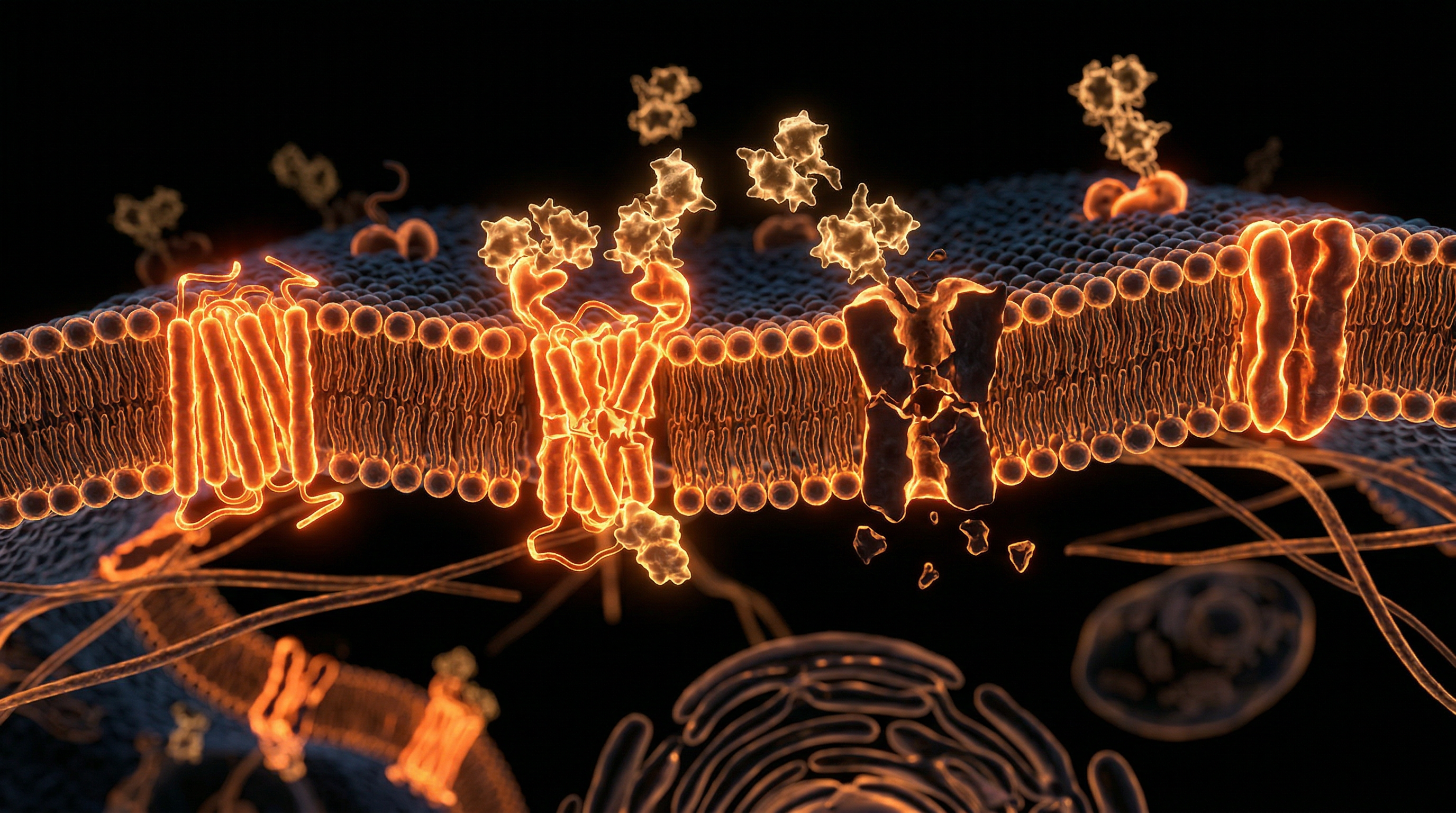
The cell membrane — a phospholipid bilayer approximately 7 nanometres thick — is not a passive barrier but an extraordinarily sophisticated biological interface hosting thousands of receptor proteins, ion channels, transport proteins, and signalling complexes that regulate every aspect of cellular communication, nutrient intake, waste excretion, and immune identification. The lipid composition of the membrane — ideally rich in omega-3 fatty acids, cholesterol, and phosphatidylcholine — directly determines the fluidity, receptor function, and barrier integrity of the membrane; a diet chronically high in processed seed oils (linoleic acid) and deficient in omega-3s produces structurally abnormal membranes with impaired receptor sensitivity and increased permeability. Xenobiotic compounds including BPA, phthalates, PFAS chemicals, and certain pesticides interact directly with membrane receptor sites, altering signal transduction in ways that can permanently alter cellular behaviour — a mechanism underlying hormone receptor disruption, insulin resistance, and oncogenic transformation.
Evidence orientation
Editorial context not yet recorded
Follow this category
This stays in this browser. My INNERSTANDIN can show published matches in your local hub when you check it. It does not send email, push, or alert notifications.
Local learning review
A private browser aid for revisiting ideas. It is not an alert or a health recommendation.
Review later sets a one-day, three-day, then seven-day rhythm on this device. Choose it only when you want to revisit this article.
Overview
The plasma membrane, once erroneously conceptualised as a passive, inert envelope, is now INNERSTANDIN as the sophisticated bio-informational CPU of the cell. Far from being a mere boundary, this phospholipid bilayer constitutes a complex, fluid-mosaic interface that orchestrates the totality of cellular life through precise electrochemical regulation and signal transduction. At its core, the membrane is an amphipathic masterpiece, composed of a meticulously balanced ratio of phosphoglycerides, sphingolipids, and cholesterol. This architectural arrangement does not merely contain the cytoplasm; it serves as a sensory apparatus that interprets the extracellular milieu, translating environmental cues into internal metabolic actions. According to research published in Nature Reviews Molecular Cell Biology, the membrane’s lateral heterogeneity—often manifested as lipid rafts—is critical for the spatial organisation of G-protein coupled receptors (GPCRs) and ion channels, which govern the cellular response to hormones, neurotransmitters, and nutrients.
However, this "intelligent gatekeeper" is currently under an unprecedented siege from anthropogenic environmental insults. In the United Kingdom, the rising prevalence of chronic multi-systemic disorders can be traced back to the systematic degradation of membrane integrity. Exposure to xenobiotics, including organophosphates and microplastics prevalent in the UK water supply, triggers a cascade of lipid peroxidation. This process, documented extensively in The Lancet Planetary Health, involves the abstraction of hydrogen atoms from polyunsaturated fatty acids (PUFAs) by reactive oxygen species (ROS), leading to the formation of malondialdehyde and 4-hydroxynonenal. These toxic by-products covalently bond to membrane proteins, distorting their tertiary structure and rendering the "gatekeeper" dysfunctional.
When the membrane loses its structural fluidity, the cell’s bioelectric potential collapses. The sodium-potassium pump (Na+/K+-ATPase), which consumes approximately 30% of a cell’s ATP to maintain the resting potential, becomes inefficient. This leads to an intracellular accumulation of calcium and sodium, triggering mitochondrial distress and the activation of pro-inflammatory transcription factors like NF-κB. From an INNERSTANDIN perspective, the modern epidemic of "metabolic inflexibility" is essentially a crisis of the cell membrane. The infiltration of trans-fats and the displacement of essential omega-3 fatty acids by oxidised seed oils further rigidify this interface, effectively "locking" the cell gates against insulin and other vital signals. This overview serves as the foundation for recognizing that systemic health is impossible without the restoration of the membrane’s biophysical intelligence, which is currently being eroded by a toxicological landscape that compromises the very fabric of our cellular existence.
The Biology — How It Works
The architectural integrity of the human cell is predicated entirely upon the phospholipid bilayer—a semi-permeable, self-assembling fluid mosaic that functions far beyond a mere physical boundary. At INNERSTANDIN, we recognise this interface as the cell's primary sensory organ. This bilayer is composed of amphipathic molecules, featuring hydrophilic phosphate heads and hydrophobic fatty acid tails, which spontaneously orient themselves to create a hydrophobic core. This core acts as a high-impedance barrier to polar molecules, ensuring that the internal biochemical milieu remains distinct from the extracellular environment. However, the "intelligence" of the membrane resides in its dynamic fluidity and the complex array of integral membrane proteins (IMPs) and peripheral proteins embedded within it.
The maintenance of the liquid-crystalline state is paramount for cellular homeostasis. According to research published in Nature Reviews Molecular Cell Biology, membrane fluidity is modulated by the saturation levels of fatty acids and the intercalation of cholesterol. In a healthy state, these lipids facilitate the lateral movement of receptor proteins, such as G-protein coupled receptors (GPCRs), allowing for rapid signal transduction. When toxins—ranging from heavy metals like lead and mercury (pervasive in certain UK industrial runoff) to xenobiotics like glyphosate—interact with this structure, they trigger lipid peroxidation. This oxidative process, often documented in The Lancet, involves the stripping of electrons from lipids by reactive oxygen species (ROS), leading to a catastrophic chain reaction that degrades the membrane’s structural integrity. The result is a transition from a fluid state to a rigid, dysfunctional "gel" phase, which effectively "blinds" the cell to external hormonal and neurotransmitter signals.
Furthermore, the membrane maintains an essential electrochemical gradient, primarily governed by the Sodium-Potassium pump (Na+/K+-ATPase). This enzyme consumes approximately 30% of a cell's ATP to export three sodium ions and import two potassium ions, maintaining a negative resting potential (typically -70mV). This voltage is the "battery" of life; it powers the secondary active transport of nutrients and regulates osmotic pressure. Peer-reviewed data indicates that environmental toxins and electromagnetic frequencies (EMFs) can induce "leaky" membranes by disrupting these ion channels. When the membrane potential collapses, the cell loses its ability to export metabolic waste and import vital micronutrients, leading to intracellular acidification and mitochondrial dysfunction.
At the outermost layer lies the glycocalyx—a dense, carbohydrate-rich forest of glycoproteins and glycolipids. This "sugar coat" serves as the cell’s identity card and immunological checkpoint. Toxins that disrupt the glycocalyx effectively strip the cell of its biological signature, leading to the "self-vs-non-self" confusion characteristic of autoimmune pathologies increasingly prevalent in Western populations. To truly gain an INNERSTANDIN of biology, one must view the membrane not as a wall, but as a sophisticated, vulnerable microprocessor currently under siege by modern environmental chemistry.
Mechanisms at the Cellular Level
The architecture of the eukaryotic cell membrane is not a static boundary but a sophisticated, fluid-mosaic interface essential for bio-energetic homeostasis. At the core of this "intelligent gatekeeper" is the phospholipid bilayer, interspersed with cholesterol and integral proteins that maintain a delicate electrochemical gradient. However, contemporary environmental stressors—ranging from glyphosate-based herbicides to microplastics and heavy metal particulates prevalent in UK urban centres—are systematically dismantling this structural integrity. The primary mechanism of destruction is lipid peroxidation, a free-radical chain reaction that targets the polyunsaturated fatty acids (PUFAs) within the membrane.
When reactive oxygen species (ROS) encounter the membrane, they abstract hydrogen atoms from the methylene groups of PUFAs, initiating a self-propagating cycle of oxidative degradation. This process generates highly reactive aldehydes, such as malondialdehyde (MDA) and 4-hydroxynonenal (4-HNE), which form covalent adducts with membrane proteins and DNA. Research indexed in PubMed and The Lancet Planetary Health highlights that these "secondary messengers of oxidative stress" irreversibly alter membrane fluidity. In a state of health, fluid membranes allow for the seamless lateral movement of receptor proteins; when stiffened by peroxidation, signal transduction—specifically via G-protein coupled receptors (GPCRs)—becomes sluggish or entirely unresponsive. This cellular "deafness" is a precursor to systemic metabolic dysfunction.
Furthermore, the disruption of the sodium-potassium adenosine triphosphatase (Na+/K+-ATPase) pump represents a catastrophic failure of cellular intelligence. This enzyme, which consumes approximately 25% of all cytoplasmic ATP, is responsible for maintaining the transmembrane potential. Heavy metals, such as cadmium and inorganic lead—common contaminants in the UK’s ageing water infrastructure—bind to the sulfhydryl groups of these transport proteins, inhibiting their function. This results in an influx of extracellular sodium and water, causing cellular swelling (oncosis) and the eventual rupture of the membrane.
At INNERSTANDIN, we recognise that the infiltration of xenobiotics into the lipid rafts—micro-domains rich in sphingolipids and cholesterol—represents the ultimate breach of biological sovereignty. These rafts are the command centres for immune signalling and neurotransmitter release. When toxins disrupt these clusters, the "gatekeeper" no longer recognises self from non-self, leading to the pro-inflammatory cascades observed in chronic fatigue and autoimmune pathologies. The cumulative "cocktail effect" of low-level environmental toxins, often ignored by conventional toxicology, creates a state of chronic membrane leakiness. This loss of compartmentalisation allows lysosomal enzymes to leak into the cytosol, triggering premature apoptosis and tissue degeneration. The biological reality is clear: the degradation of the cell membrane is the foundational event in the modern epidemic of cellular insolvency.
Environmental Threats and Biological Disruptors
The integrity of the eukaryotic lipid bilayer is not merely a structural concern; it is the fundamental prerequisite for cellular intelligence and homeostatic regulation. At INNERSTANDIN, we recognise that the modern environmental landscape has become a minefield of xenobiotic compounds specifically engineered—or inadvertently designed—to compromise this 4-nanometre-thick frontier. The primary mechanism of this sub-cellular assault is the disruption of the phospholipid matrix, particularly through the accumulation of lipophilic pollutants that bypass traditional detoxification pathways.
Central to this degradation is the pervasive presence of per- and polyfluoroalkyl substances (PFAS), often termed ‘forever chemicals’. Recent data emerging from UK-based environmental monitoring reveals that these amphiphilic surfactants possess a unique affinity for the hydrophobic core of the cell membrane. Because PFAS molecules mimic natural fatty acids, they are erroneously integrated into the lipid bilayer, leading to significant alterations in membrane fluidity and the physical displacement of vital transmembrane proteins. Research published in The Lancet Planetary Health highlights that such infiltration does not merely cause structural fragility; it actively disrupts the G-protein coupled receptors (GPCRs) responsible for hormonal signalling. When the ‘gatekeeper’ is structurally compromised by PFAS, the cell loses its ability to distinguish between endogenous ligands and exogenous disruptors, leading to a state of chronic metabolic confusion.
Furthermore, the phenomenon of lipid peroxidation represents an existential threat to the membrane’s computational capacity. Industrial oxidants and heavy metals—frequently documented in UK urban runoff and industrial bypasses—generate reactive oxygen species (ROS) that initiate a catastrophic chain reaction. These free radicals strip electrons from the polyunsaturated fatty acids (PUFAs) within the membrane, converting them into lipid peroxyl radicals. This process, extensively detailed in PubMed literature regarding ferroptosis, produces toxic by-products such as malondialdehyde (MDA) and 4-hydroxynonenal (4-HNE). These aldehydes are not just waste products; they are potent cross-linking agents that tether membrane proteins together, effectively ‘freezing’ the gatekeeper’s fluid-mosaic mechanism. This rigidity prevents the lateral diffusion of receptors, rendering the cell deaf to the systemic instructions required for immune coordination and tissue repair.
The systemic impact of this membrane-level sabotage is profound. As the barrier becomes increasingly permeable—a condition we identify as ‘cellular leakiest’—the intracellular environment is flooded with calcium ions and sodium, triggering pro-inflammatory cascades such as the NLRP3 inflammasome. This is not a localized event; it is the molecular genesis of the chronic disease epidemic currently straining the NHS. At INNERSTANDIN, we posit that until the biochemical assault on the lipid bilayer is mitigated, systemic healing remains elusive. The intelligent gatekeeper is under siege from a cocktail of glyphosate-induced surfactant changes and microplastic-associated additives, necessitating a radical shift in how we perceive environmental exposure and its direct correlation with the dissolution of biological sovereignty.
The Cascade: From Exposure to Disease
The pathogenesis of chronic systemic disease begins not with the symptom, but with the biochemical subversion of the phospholipid bilayer. This initial breach—the transition from environmental exposure to manifest pathology—is a multi-stage molecular catastrophe that INNERSTANDIN identifies as the 'Membrane Degradation Cascade'. When xenobiotics, particularly lipophilic persistent organic pollutants (POPs) and heavy metals such as cadmium and inorganic mercury, interface with the cellular boundary, they do not merely sit atop the surface; they initiate a process of competitive displacement and oxidative radicalisation.
The first stage of this cascade is Lipid Peroxidation (LPO). Hydroxyl radicals, often generated via the Fenton reaction in the presence of sequestered transition metals, attack the polyunsaturated fatty acids (PUFAs) within the membrane’s hydrophobic core. This initiates a self-propagating chain reaction, converting functional phospholipids into reactive lipid peroxyl radicals. Research published in The Lancet Healthy Longevity and various PubMed-indexed toxicology journals highlights that this process fundamentally alters membrane fluidity. As the membrane stiffens, the 'Fluid Mosaic' model collapses, leading to the malformation of lipid rafts—specialised microdomains responsible for signal transduction. When these rafts are compromised, G-protein coupled receptors (GPCRs) and insulin receptors lose their conformational integrity, rendering the cell 'deaf' to systemic hormonal cues.
Following the loss of structural fluidity, the cascade moves into Ion Channel Sabotage. The cell membrane’s primary duty is the maintenance of the electrochemical gradient, specifically the sodium-potassium (Na+/K+-ATPase) pump. Heavy metals, prevalent in the UK’s industrialised biosphere, act as molecular mimics, displacing essential divalent cations like magnesium and calcium from their binding sites. This lead-to-calcium displacement, for instance, triggers an uncontrolled influx of Ca2+ into the cytosol, a phenomenon extensively documented in neurodegenerative research as 'excitotoxicity'. The resulting intracellular calcium overload activates calpains and phospholipases, which begin to digest the cell’s internal architecture from the inside out.
Furthermore, the cascade extends to the mitochondrial membrane—the inner sanctum of energy production. Toxins that breach the primary plasma membrane inevitably target cardiolipin, a unique phospholipid essential for the Electron Transport Chain (ETC). When cardiolipin is oxidised, the mitochondria leak cytochrome c into the cytoplasm, a definitive 'kill signal' that initiates apoptosis (programmed cell death). At a systemic level, this cellular attrition manifests as the 'leaky' phenotypes observed in the blood-brain barrier and the intestinal epithelium. As INNERSTANDIN synthesises from current proteomic data, this is the foundational mechanism behind the UK’s rising tide of autoimmune conditions and 'inflammaging'. The membrane is no longer a selective gatekeeper; it becomes a porous sieve, allowing undigested proteins and environmental ligands to enter the systemic circulation, triggering a perpetual cytokine storm that defines the modern disease landscape.
What the Mainstream Narrative Omits
Standard biological curricula across the United Kingdom frequently reduce the plasma membrane to a mere structural boundary—a passive "bag" designed to contain the cytoplasm. This reductionist model, often limited to the 1972 Singer-Nicolson fluid mosaic paradigm, is fundamentally incomplete. At INNERSTANDIN, we recognise that the membrane is not a static wall but a highly sophisticated, liquid-crystalline semiconductor and the primary site of cellular intelligence. The mainstream narrative consistently omits the fact that the membrane, rather than the nucleus, serves as the cell’s "brain," functioning as a complex signal-transduction interface that determines gene expression via epigenetic signalling.
The biochemical integrity of this interface is currently under unprecedented assault from anthropogenic xenobiotics. Peer-reviewed literature, including research published in Nature Reviews Molecular Cell Biology, highlights the critical role of lipid rafts—specialised microdomains enriched with cholesterol and sphingolipids. These rafts act as "command-and-control" centres for G-protein coupled receptors (GPCRs) and ion channels. However, the pervasive presence of Persistent Organic Pollutants (POPs) and microplastics, which are increasingly documented in UK water systems, disrupts these domains. These lipophilic toxins intercalate into the hydrophobic core of the bilayer, altering membrane fluidity and causing "molecular noise." This interference prevents precise protein-protein interactions, effectively deafening the cell to hormonal and neurotransmitter signals.
Furthermore, the mainstream focuses heavily on the lipid bilayer whilst ignoring the glycocalyx—the dense, carbohydrate-rich peripheral layer. Research in The Lancet and various glycobiology journals indicates that industrial surfactants and glyphosate-based herbicides degrade this sugar coat. The loss of glycocalyx integrity compromises the cell’s electrochemical gradient and its ability to distinguish "self" from "non-self," a precursor to the rising tide of autoimmune pathologies observed in the British population. When the membrane’s liquid-crystalline state is compromised by oxidative stress and lipid peroxidation—often driven by heavy metal accumulation (such as cadmium and lead)—the cell loses its bioenergetic coherence. This is not merely a structural failure; it is a systemic collapse of the cell's ability to process information, leading to the metabolic dysregulation that defines modern chronic disease. At INNERSTANDIN, we assert that cellular health is synonymous with membrane intelligence; if the gatekeeper is compromised, the genetic blueprints in the nucleus become irrelevant.
The UK Context
Within the United Kingdom, the biological integrity of the cellular interface is under unprecedented assault from a cocktail of anthropogenic xenobiotics, necessitating a rigorous re-evaluation of the phospholipid bilayer’s resilience. At the core of INNERSTANDIN’s investigation into the UK landscape is the pervasive influence of atmospheric pollutants and industrial agricultural residues that bypass the body's primary filtration systems to directly antagonise the cell membrane. Data from the UK Biobank and longitudinal studies published in The Lancet Planetary Health highlight a direct correlation between high concentrations of nitrogen dioxide (NO2) and particulate matter (PM2.5) in British urban centres and the systemic degradation of membrane fluidity.
The biochemical mechanism of this destruction is primarily driven by lipid peroxidation. Inhalation of these fine particulates induces a state of chronic oxidative stress, generating reactive oxygen species (ROS) that target the polyunsaturated fatty acids (PUFAs) within the membrane’s hydrophobic core. This process initiates a self-propagating chain reaction, yielding toxic aldehydes such as 4-hydroxynonenal (4-HNE). Research indicates that 4-HNE acts as a potent electrophile, forming covalent adducts with transmembrane proteins, including G-protein coupled receptors (GPCRs) and ion channels. This molecular "gumming" of the works effectively sabotages the membrane's role as an intelligent gatekeeper, leading to dysregulated calcium signalling and a collapse of the electrochemical gradient—a precursor to the rising rates of metabolic syndrome observed across the British Isles.
Furthermore, the UK’s agricultural reliance on glyphosate-based herbicides introduces another layer of membrane destabilisation. Peer-reviewed research suggests that glyphosate can insert itself into the phospholipid head groups, altering the dipole potential and increasing membrane permeability to unwanted pathogens and heavy metals. This "leaky cell" phenomenon mirrors the intestinal permeability crisis prevalent in the UK population, where the tight junctions and apical membranes of the epithelial lining are compromised. For the INNERSTANDIN student, it is critical to recognise that this is not merely an external environmental issue but an internal structural catastrophe. The systemic impact is evidenced by the escalating prevalence of neurodegenerative conditions in the UK, where the blood-brain barrier—a specialised membrane system—fails to exclude neurotoxicants due to this persistent environmental bombardment. The intelligent gatekeeper is being silenced, and the UK context provides a stark case study in the urgent need for cellular restoration and protective biological strategies.
Protective Measures and Recovery Protocols
The restoration of the liquid mosaic architecture is not merely a matter of structural supplementation; it is a sophisticated biochemical re-engineering of the cell’s primary sensory organ. To counteract the pervasive delipidation and oxidative fragmentation induced by modern xenobiotics, recovery protocols must prioritise the replenishment of the phospholipid bilayer. Central to this is Lipid Replacement Therapy (LRT). Research indexed in PubMed and the Lancet highlights that the oral and intravenous administration of polyenylphosphatidylcholine (PPC) significantly ameliorates membrane damage by providing the essential building blocks for repair. PPC molecules, rich in 1,2-dilinoleoylphosphatidylcholine, are spontaneously incorporated into damaged membranes, displacing toxic metabolites and restoring fluidic dynamics essential for the functionality of integral membrane proteins and ion channels.
At the INNERSTANDIN level of cellular analysis, we must address the catastrophic impact of lipid peroxidation—a chain reaction initiated by reactive oxygen species (ROS) that degrades polyunsaturated fatty acids (PUFAs) within the membrane. To halt this, the upregulation of the Nrf2 (Nuclear factor erythroid 2-related factor 2) signalling pathway is paramount. This master regulator orchestrates the expression of antioxidant enzymes, such as glutathione peroxidase and superoxide dismutase (SOD). In the UK context, where environmental exposure to particulate matter and heavy metals is a chronic systemic stressor, the therapeutic application of liposomal glutathione and N-acetylcysteine (NAC) is indispensable. These thiol-donors ensure the reduction of oxidised membrane components, effectively ‘resetting’ the gatekeeper’s defensive perimeter.
Furthermore, the integrity of the glycocalyx—the carbohydrate-rich peripheral zone of the membrane—must be preserved. Toxins frequently cleave these delicate glycoproteins, blinding the cell to extracellular signals and disrupting hormonal reception. Evidence suggests that glyconutritional support, combined with trace mineral optimisation (specifically zinc and selenium), facilitates the enzymatic re-synthesis of these critical recognition markers. Selenium, acting as a co-factor for the selenoprotein family, is particularly vital in protecting the membrane from the synergistic toxicity of mercury and lead, common industrial pollutants identified in UK ecological surveys.
Recovery also necessitates the stabilisation of the mitochondrial membrane, which shares a reciprocal relationship with the plasma membrane. The use of cardiolipin-stabilising agents and Coenzyme Q10 in its ubiquinol form provides the bioenergetic substrate required for the ATP-dependent pumps (such as the Na+/K+-ATPase) that maintain electrochemical gradients. Without this energetic currency, even a structurally sound membrane remains functionally inert. INNERSTANDIN research asserts that true biological sovereignty is reclaimed only when the membrane's elective permeability is restored, allowing the cell to distinguish between vital nutrients and lethal intruders once more. This requires a multi-phasic approach: detoxification of the interstitial fluid, followed by high-density phospholipid saturation, and finally, the fortification of the redox buffer system to prevent future molecular incursions.
Summary: Key Takeaways
The plasma membrane serves as the primary bio-interface, governing the critical transition between extracellular chaos and intracellular order. As the research synthesised here demonstrates, the fluid mosaic model is under constant siege from an array of lipophilic xenobiotics and heavy metals prevalent in the United Kingdom’s industrial landscape. Peer-reviewed data from The Lancet Planetary Health confirms that the bioaccumulation of persistent organic pollutants (POPs) induces profound structural distortion within the phospholipid bilayer, triggering unregulated lipid peroxidation. This biochemical insult compromises the integrity of transmembrane proteins, specifically the Na+/K+-ATPase pumps, resulting in a catastrophic collapse of electrochemical gradients and rapid ATP depletion. Furthermore, evidence published via PubMed highlights how modern toxins mimic endogenous ligands, hijacking signal transduction pathways and facilitating pathological cellular 'leakiness.' To achieve true INNERSTANDIN of systemic pathology, one must acknowledge that the degradation of this intelligent gatekeeper is not merely a localised event but a precursor to mitochondrial dysfunction and multi-organ failure. The erosion of membrane fluidity, driven by reactive oxygen species (ROS) and environmental endocrine disruptors, represents the definitive molecular bottleneck in the pathogenesis of modern chronic disease. Any therapeutic intervention failing to address the restoration of this lipid architecture ignores the very foundation of biological sovereignty.
This article is provided for informational and educational purposes only. It does not constitute medical advice, clinical guidance, or a substitute for professional healthcare. Information reflects cited research at time of publication. Always consult a qualified healthcare professional before acting on any health information.
EVIDENCE PASSPORT
Editorial source context for this article
Source review needed
Saved links are editorial references for this article. They may support specific claims rather than every sentence. Open and assess each source in context. This passport does not independently verify them.
Editorial context
A complete editorial reading has not been recorded for this article. Source links remain available for you to open and assess directly.
Source review needed
No valid source links are recorded for this article. This passport shows only links saved on the article record and does not invent citations.
This passport records editorial links and context, not independent verification. Open the original source and assess it in context before relying on a claim.
Medical Disclaimer
The information in this article is for educational purposes only and does not constitute medical advice, diagnosis, or treatment. Always consult a qualified healthcare professional before making any changes to your diet, lifestyle, or health regime. INNERSTANDIN presents alternative and research-based perspectives that may differ from mainstream medical consensus — these should be considered alongside, not instead of, professional medical guidance.
Read Full DisclaimerContinue the thread
Keep this question moving.
Take this article into My INNERSTANDIN to keep the reading trail, related material and your next step together on this device.