
Cerebral Stagnation: The Glymphatic Impact of UK's Chronic Sleep Crisis
Updated May 2026
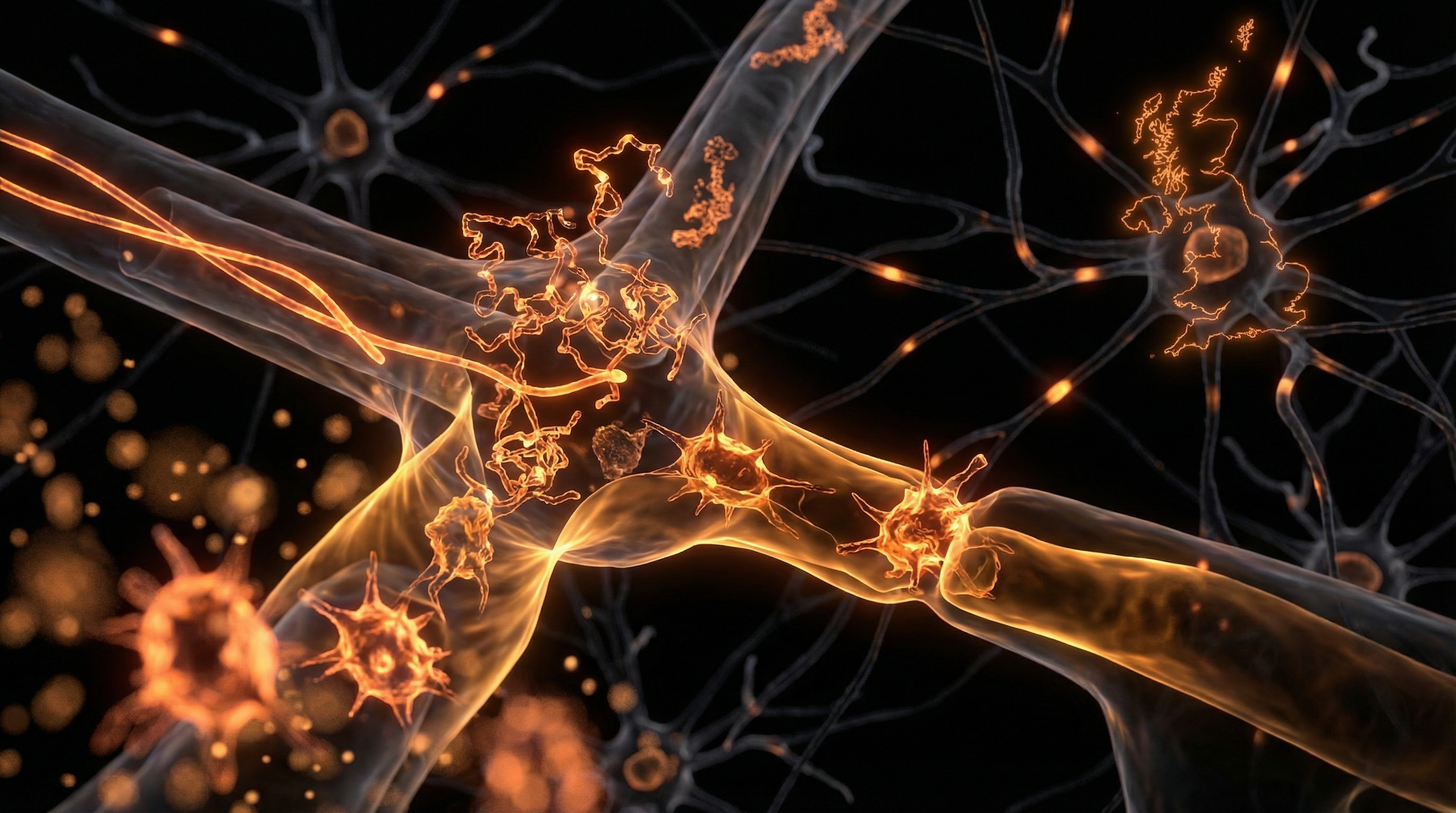
The UK's blue-light saturated environment is inhibiting the brain's waste clearance system, leading to the accumulation of amyloid-beta. We detail the mechanical process of CSF-interstitial fluid exchange that only occurs during deep sleep.
Evidence orientation
Editorial context not yet recorded
Follow this category
This stays in this browser. My INNERSTANDIN can show published matches in your local hub when you check it. It does not send email, push, or alert notifications.
Local learning review
A private browser aid for revisiting ideas. It is not an alert or a health recommendation.
Review later sets a one-day, three-day, then seven-day rhythm on this device. Choose it only when you want to revisit this article.
Overview
The United Kingdom is currently caught in the grip of a silent, microscopic pandemic. While public health discourse focuses heavily on infectious pathogens and cardiovascular statistics, a more insidious process of biological decay is unfolding within the craniums of millions. This is the phenomenon of Cerebral Stagnation. At its core, this crisis is driven by the systematic failure of the Glymphatic System—the brain’s recently discovered waste-clearance mechanism—under the pressure of a modern, blue-light-saturated, and chronically sleep-deprived society.
For decades, the scientific community believed the brain was an immunological outlier, devoid of a traditional lymphatic system. It was only in 2012 that researchers at the University of Rochester identified the glymphatic pathway, a sophisticated macroscopic waste clearance system that utilises a perivascular network to eliminate metabolic byproducts from the central nervous system (CNS). Crucially, this system operates almost exclusively during the deepest stages of non-rapid eye movement (NREM) sleep.
In the UK, the "always-on" culture, coupled with the aggressive rollout of high-intensity LED street lighting and ubiquitous screen usage, has decimated the quality of British sleep. The result is a nation of individuals whose brains are effectively "swimming in their own metabolic filth." When the glymphatic system fails to engage, neurotoxic waste products, most notably Amyloid-beta and Tau proteins, begin to aggregate. This is not merely a matter of feeling "tired"; it is the literal stagnation of the brain’s interstitial environment, creating a fertile ground for neurodegenerative pathologies including Alzheimer’s, Parkinson’s, and vascular dementia.
Key Statistic: Recent surveys indicate that over 30% of the UK population survives on less than six hours of sleep per night, a threshold below which glymphatic clearance is functionally incapacitated.
This article serves as a technical exposé on the mechanisms of this stagnation, the environmental triggers unique to the British Isles, and the biological price of prioritising economic productivity over circadian integrity.
##
The Biology — How It Works
To understand cerebral stagnation, one must first comprehend the elegant, yet fragile, plumbing of the brain. The glymphatic system (a term derived from "glial" cells and "lymphatic") is a functional waste clearance pathway that piggybacks on the brain’s vasculature.
Unlike the rest of the body, which relies on the lymphatic vessels to return interstitial fluid to the blood, the brain is encased in the rigid skull, leaving no room for traditional lymphatic expansion. Instead, the brain uses Cerebrospinal Fluid (CSF).
The Perivascular Space
The process begins with the influx of CSF into the brain parenchyma. This fluid travels along the Virchow-Robin spaces—the gaps surrounding the arteries that penetrate deep into the brain tissue. This movement is driven by the pulsatile energy of the cardiac cycle; every heartbeat acts as a mechanical pump, pushing CSF further into the dense neural architecture.
The Exchange
Once the CSF reaches the deep tissue, it must cross from the perivascular space into the interstitial space (the fluid-filled gaps between neurons). This is where the magic of the glymphatic system occurs. During wakefulness, the interstitial space is incredibly cramped, accounting for only about 14% of the brain's volume. This high resistance prevents fluid from flowing freely.
However, during deep, slow-wave sleep, a dramatic physiological shift occurs. The interstitial space expands by as much as 60%. This expansion reduces resistance, allowing the CSF to flush through the brain tissue like a high-pressure hose, gathering metabolic debris. This fluid, now termed "interstitial fluid" (ISF), eventually drains into the perivenous spaces (around the veins) and is directed out of the cranium toward the cervical lymph nodes in the neck.
The Role of NREM Sleep
The glymphatic system is not a 24/7 operation. It is highly sensitive to the brain's arousal state. Research confirms that glymphatic activity is highest during NREM sleep and is significantly inhibited during wakefulness. This is primarily due to the transition in the brain’s chemical environment. When we are awake, the brain is flooded with noradrenaline (norepinephrine), a neurotransmitter that keeps us alert but also keeps the interstitial space tightly constricted. Only when noradrenaline levels plummet during deep sleep can the "waste gates" open.
##
Mechanisms at the Cellular Level
At the microscopic scale, the glymphatic system is governed by a specialised class of cells known as Astrocytes. These star-shaped glial cells are the primary regulators of the brain’s internal environment, and they hold the key to the entire clearance mechanism.
Aquaporin-4 (AQP4): The Water Gates
The critical component of the astrocyte is the Aquaporin-4 (AQP4) water channel. These channels are highly concentrated on the "end-feet" of the astrocytes—the parts of the cell that wrap around the brain’s blood vessels.
The AQP4 channels act as selective gateways. They facilitate the rapid movement of water and solutes between the perivascular space and the brain tissue. Without these channels, the flow of CSF would be too slow to effectively "scrub" the brain. In individuals with compromised glymphatic function—often seen in the aging population or those with chronic sleep disorders—these AQP4 channels become "mislocalised." Instead of being concentrated on the end-feet near the vessels, they drift away, leading to a total breakdown of the fluid exchange process.
The Locus Coeruleus Connection
The "master switch" for this cellular process resides in the locus coeruleus, a small nucleus in the brainstem responsible for the brain's stress response. The locus coeruleus pumps noradrenaline throughout the cortex.
- Wakefulness: High noradrenaline levels cause astrocytes to swell, physically blocking the interstitial channels.
- Deep Sleep: The locus coeruleus falls silent. Astrocytes shrink, and the AQP4 channels begin to facilitate the massive influx of CSF.
Metabolic Debris: The Targets of Clearance
What exactly is being cleared? The glymphatic system is responsible for removing several "dirty" metabolites produced by the high-energy demands of neural firing:
- Amyloid-beta (Aβ): A protein fragment that, when allowed to accumulate, forms the plaques characteristic of Alzheimer’s disease.
- Tau Protein: Associated with neurofibrillary tangles that "strangle" neurons from the inside.
- Lactate: A byproduct of glucose metabolism that can become toxic in high concentrations.
When the cellular mechanisms of the AQP4 channels are disrupted—whether by age, trauma, or sleep deprivation—these toxins remain trapped in the brain. This is the biological definition of stagnation.
##
Environmental Threats and Biological Disruptors
The modern UK environment is uniquely hostile to glymphatic health. We have created a habitat that is biologically "anti-sleep," effectively locking the brain in a permanent state of high noradrenaline and low clearance.
The Blue Light Siege
The primary disruptor is the artificial light spectrum. In the last 15 years, the UK has undergone a massive transition from warm, incandescent lighting to High-Intensity Discharge (HID) and Light Emitting Diode (LED) technology. This is evident in everything from domestic lightbulbs to the ubiquity of smartphone screens.
These LEDs are heavily weighted in the blue part of the spectrum (roughly 450-490nm). This specific wavelength is a powerful biological signal. It strikes the melanopsin-containing retinal ganglion cells in the eye, which send a direct signal to the Suprachiasmatic Nucleus (SCN)—the body's master clock.
Important Callout: Exposure to blue light in the evening suppresses the production of melatonin, the "hormone of darkness," by up to 85%. Melatonin is not just a sleep aid; it is a critical regulator of the glymphatic system's initiation.
The UK's LED Streetlight Crisis
The UK government’s drive for energy efficiency has led to the replacement of traditional orange sodium streetlights with "daylight-mimicking" white LEDs. While energy-efficient, these lights create a pervasive "sky glow" that penetrates even thick curtains in urban centres like London, Birmingham, and Manchester. This constant environmental light pollution prevents the deep, restorative NREM sleep stages where glymphatic clearance is most active.
Electromagnetic Frequencies (EMFs) and Cortisol
While often dismissed in mainstream discourse, emerging research suggests that constant exposure to high-frequency EMFs (from 5G infrastructure and domestic Wi-Fi) may interfere with the calcium signalling in astrocytes. Since AQP4 function is partially dependent on calcium ions, the "electrosmog" of the modern UK city may be physically impairing the cellular mechanics of brain detox. Furthermore, the high-stress, high-cortisol lifestyle prevalent in the UK's competitive workforce keeps the locus coeruleus active long into the night, maintaining the "wakefulness" constriction of the brain's interstitial spaces.
##
The Cascade: From Exposure to Disease
Cerebral stagnation is not a binary state; it is a progressive cascade of biological failure. When the glymphatic system is inhibited, the brain enters a state of chronic neuroinflammation.
Phase 1: The Accumulation
In the initial stages, the failure to clear Amyloid-beta leads to a subtle increase in "brain fog," cognitive fatigue, and irritability. These are often dismissed as signs of "getting older" or "working too hard." In reality, they are the early markers of protein aggregation.
Phase 2: The Plaque Formation
As stagnation persists, the concentration of Aβ reaches a critical threshold. The proteins begin to misfold and clump together into insoluble plaques. These plaques are physically obstructive; they further impede the flow of CSF, creating a "feedback loop" of stagnation. The more plaques you have, the harder it is for the glymphatic system to work.
Phase 3: The Tau Tangle and Neuronal Death
Once Aβ plaques are established, they trigger the secondary accumulation of Tau proteins. Tau is particularly destructive because it disrupts the internal transport system of the neuron. When the glymphatic system fails to wash away these excess Tau proteins, the neurons eventually lose their structural integrity and die. This is the point of no return—the transition into clinical dementia.
The Vascular Link
It is also vital to note the impact on the blood-brain barrier (BBB). Cerebral stagnation causes the perivascular spaces to become "clogged" with metabolic waste. This puts pressure on the delicate capillaries of the brain, leading to micro-bleeds and a breakdown of the BBB. This allows systemic toxins from the blood to enter the brain, further accelerating the neurodegenerative process.
Warning Fact: Chronic sleep deprivation (less than 6 hours for a period of one month) has been shown in PET scans to increase Amyloid-beta levels in the brain to a degree comparable to individuals with genetic predispositions for Alzheimer’s.
##
What the Mainstream Narrative Omits
The current public health narrative in the UK regarding sleep and brain health is woefully inadequate, focusing on "sleep hygiene" tips like avoiding caffeine or taking warm baths. This "lifestyle" approach omits the deeper, more disturbing truths about our biological reality.
The Profitability of Sleep Deprivation
The modern economy is fundamentally at odds with the glymphatic system. A sleeping population is a non-consuming, non-productive population. The "gig economy," 24-hour delivery services, and the gamification of social media are all designed to keep the brain in an aroused, noradrenergic state. Mainstream health advice rarely acknowledges that the very structure of our society is "glymphatically toxic."
The Pharmaceutical Diversion
For decades, pharmaceutical companies have spent billions trying to develop drugs that "dissolve" Amyloid plaques. Almost all of these trials have failed. The reason is simple: they are trying to fix a plumbing problem with a chemical patch. You cannot "drug" your way out of a system that is physically unable to flush its own waste. The focus on "pills for plaques" diverts attention from the fundamental need for systemic environmental change—specifically, the reduction of light pollution and the restoration of natural circadian rhythms.
The Ignored Link to Gut Health
The mainstream narrative also frequently ignores the Gut-Brain-Glymphatic axis. The glymphatic system does not work in isolation. Chronic inflammation in the gut (often caused by the processed "Western Diet" prevalent in the UK) leads to the release of cytokines that can cross the BBB and "shut down" astrocyte function. A stagnant brain is often the result of a stagnant, inflamed gut.
##
The UK Context
The UK presents a unique case study in cerebral stagnation. Several factors converge here to create a "perfect storm" for neurodegeneration.
The Urban-Rural Divide
In the UK, the density of the population means that even "rural" areas are rarely truly dark. The "Skyglow" map of Britain shows that over 90% of the population lives under light-polluted skies. This is far higher than in many parts of the US or Australia, meaning the British brain has almost no seasonal or nocturnal respite from light-induced glymphatic inhibition.
The NHS Burden
The impact of this crisis on the NHS is catastrophic. We are seeing a "shifted curve" in dementia diagnoses, with cases appearing in individuals in their early 50s. This early-onset neurodegeneration is a direct consequence of the first generation to be exposed to 24/7 digital connectivity and LED saturation throughout their entire adult lives.
The "Stiff Upper Lip" Culture
There is a cultural pride in the UK associated with "soldiering on" despite exhaustion. This psychological trait, while historically lauded, is biologically suicidal. The cultural dismissal of sleep as a "luxury" rather than a non-negotiable metabolic requirement is perhaps the greatest hurdle to addressing the glymphatic crisis.
Callout: In the UK, dementia and Alzheimer’s are now the leading causes of death, surpassing heart disease. This correlates directly with the rise of the digital age and the subsequent decline in sleep quality.
##
Protective Measures and Recovery Protocols
While the systemic threats are significant, there are specific, science-based protocols that can "force-start" the glymphatic system and mitigate the effects of cerebral stagnation.
1. The Darkness Protocol
To re-sensitise the glymphatic system, one must master the light environment.
- Blackout Conditions: The bedroom must be "pitch black." Any ambient light from streetlamps or electronics will inhibit melatonin and, by extension, glymphatic flow.
- Amber/Red Shift: After 8:00 PM, all lighting should be shifted to the red end of the spectrum (below 600nm). Red light does not suppress melatonin.
- Blue-Blockers: High-quality, medical-grade blue-light blocking glasses (orange or red lenses) are mandatory for anyone using screens in the evening.
2. Physical Positioning
Recent research suggests that body posture during sleep significantly impacts glymphatic efficiency.
- The Side-Sleeping Advantage: Studies using dynamic contrast-enhanced MRI have shown that glymphatic transport is most efficient in the lateral (side) position. Sleeping on one's back (supine) or stomach (prone) is markedly less effective for waste clearance.
3. Temperature Regulation
The glymphatic system is highly sensitive to thermoregulation. The body must drop its core temperature by approximately 1–1.5 degrees Celsius to enter deep NREM sleep.
- The Cool Room: The ideal sleeping temperature for the UK climate is between 16–18°C.
- Warm Bathing: Taking a warm bath or shower before bed causes vasodilation in the hands and feet, which helps the body dump heat and triggers the glymphatic "on-switch."
4. Nutritional Catalysts
Specific compounds can support astrocyte health and AQP4 function:
- Magnesium Threonate: This specific form of magnesium crosses the blood-brain barrier and has been shown to improve synaptic plasticity and potentially support glymphatic clearance.
- Omega-3 Fatty Acids: Specifically DHA, which is a major structural component of the astrocyte membranes.
- Sulforaphane: Found in cruciferous vegetables (broccoli sprouts), this compound activates the Nrf2 pathway, which helps protect the glymphatic system from oxidative stress.
5. Intermittent Fasting and Autophagy
Glymphatic clearance works in tandem with autophagy (cellular self-eating). By finishing the last meal at least 3-4 hours before sleep, the body can shift its energy from digestion to glymphatic "scrubbing." Elevated insulin levels at night are a direct inhibitor of the deep sleep stages required for waste removal.
##
Summary: Key Takeaways
The "Cerebral Stagnation" crisis in the UK is a multifaceted biological failure driven by the collision of ancient physiology with modern technology.
- The Glymphatic System is the brain's internal plumbing, responsible for "washing" the brain of neurotoxic waste during deep sleep.
- NREM Sleep is the only time this system functions at full capacity; without it, proteins like Amyloid-beta and Tau accumulate.
- The UK’s Environment, specifically the prevalence of blue-light LED technology and a 24/7 work culture, is a primary driver of glymphatic failure.
- Astrocytes and AQP4 channels are the cellular "gatekeepers" of this process. Their malfunction leads directly to neurodegenerative disease.
- Mainstream Medicine often fails to address the root "plumbing" issue, focusing instead on ineffective symptomatic treatments.
- Proactive Recovery requires a radical restructuring of the light environment, sleep posture, and metabolic timing to ensure the brain can detoxify.
We must move beyond the idea of sleep as "rest" and begin to see it as "active maintenance." In the context of the UK’s chronic sleep crisis, the choice is simple: we either provide our brains with the darkness and time they need to clear the metabolic sludge, or we face a future of collective cognitive decline. The "stiff upper lip" will not protect us from the biological reality of a stagnant brain. The time for INNERSTANDING the depth of this crisis is now.
This article is provided for informational and educational purposes only. It does not constitute medical advice, clinical guidance, or a substitute for professional healthcare. Information reflects cited research at time of publication. Always consult a qualified healthcare professional before acting on any health information.
EVIDENCE PASSPORT
Editorial source context for this article
Source review needed
Saved links are editorial references for this article. They may support specific claims rather than every sentence. Open and assess each source in context. This passport does not independently verify them.
Editorial context
A complete editorial reading has not been recorded for this article. Source links remain available for you to open and assess directly.
Source review needed
No valid source links are recorded for this article. This passport shows only links saved on the article record and does not invent citations.
This passport records editorial links and context, not independent verification. Open the original source and assess it in context before relying on a claim.
Medical Disclaimer
The information in this article is for educational purposes only and does not constitute medical advice, diagnosis, or treatment. Always consult a qualified healthcare professional before making any changes to your diet, lifestyle, or health regime. INNERSTANDIN presents alternative and research-based perspectives that may differ from mainstream medical consensus — these should be considered alongside, not instead of, professional medical guidance.
Read Full DisclaimerContinue the thread
Keep this question moving.
Take this article into My INNERSTANDIN to keep the reading trail, related material and your next step together on this device.
Explore this in the Body Map
See where this hits your biology. Interactive anatomy, threats, and protective protocols.
Dig deeper in the Library
Free, longform PDF volumes that go beyond headlines into mechanisms and references.