
Chronobiology and the NHS: AI Predictive Modeling of Seasonal Immune Fluctuations in Northern Latitudes
Updated May 2026
Evaluating AI predictive modeling of seasonal immune fluctuations in Northern latitudes to optimize NHS clinical delivery through precise chronobiological data integration.
Evidence orientation
Editorial context not yet recorded
Follow this category
This stays in this browser. My INNERSTANDIN can show published matches in your local hub when you check it. It does not send email, push, or alert notifications.
Local learning review
A private browser aid for revisiting ideas. It is not an alert or a health recommendation.
Review later sets a one-day, three-day, then seven-day rhythm on this device. Choose it only when you want to revisit this article.
Overview
The intersection of chronobiology and public health infrastructure represents a frontier of untapped prophylactic potential, particularly within the context of the National Health Service (NHS). In the United Kingdom, where latitudinal constraints impose significant seasonal variations in photoperiod, the biological synchrony of the population undergoes a profound circannual shift. This is not merely a matter of subjective wellbeing but is rooted in the hard-coded molecular oscillations of the human immune system. Research published in Nature Communications (Dopico et al., 2015) has elucidated that over 4,000 genes in human white blood cells and adipose tissue exhibit seasonal expression patterns, with a marked pro-inflammatory transcriptomic profile emerging during the winter months. At INNERSTANDIN, we recognise that the perennial ‘Winter Crisis’ within the NHS is not an administrative failure alone, but a predictable biological phenomenon driven by these deep-seated evolutionary rhythms.
In Northern latitudes, the reduction in solar radiation leads to a systemic decline in Vitamin D synthesis, which fundamentally alters Vitamin D Receptor (VDR) signalling and its subsequent modulation of the innate and adaptive immune responses. The resulting seasonal immunosuppression, characterised by diminished T-cell proliferation and altered cytokine profiles—specifically elevated levels of Interleukin-6 (IL-6) and C-reactive protein (CRP)—creates a period of heightened vulnerability to respiratory pathogens. Traditionally, the NHS has operated on a reactive model, responding to surges in admissions for influenza, pneumonia, and more recently, COVID-19, after the threshold of systemic capacity has been breached.
However, the advent of Artificial Intelligence (AI) and predictive modelling offers a paradigm shift. By integrating multi-modal data streams—including longitudinal Electronic Health Records (EHR), real-time meteorological indices, and genomic markers of circadian robustness—AI architectures such as Recurrent Neural Networks (RNNs) and Long Short-Term Memory (LSTM) networks can forecast 'immune troughs' across specific demographics. These models can identify the precise temporal windows when the UK population’s collective immune resilience is at its nadir, allowing the NHS to transition from a reactive 'firefighting' stance to a targeted, chronobiological resource allocation strategy. INNERSTANDIN’s analysis suggests that by accounting for the phase-shifting of clock genes like ARNTL (BMAL1) and CLOCK, AI can predict regional spikes in secondary bacterial infections and cardiovascular events with unprecedented accuracy. This exposure of the biological reality behind seasonal morbidity is essential for the digitisation of UK healthcare, moving beyond simple epidemiological tracking toward a true predictive bioscience.
The Biology — How It Works
To comprehend the efficacy of AI-driven predictive modelling within the NHS, one must first deconstruct the circannual choreography of the human immunome. In the high latitudes of the United Kingdom, the biological reality is governed by a profound photoperiodic volatility that dictates systemic physiological shifts. At the heart of this mechanism is the suprachiasmatic nucleus (SCN) of the hypothalamus, which orchestrates the rhythmic secretion of melatonin and the subsequent modulation of the hypothalamic-pituitary-adrenal (HPA) axis. As photoperiods contract during the British winter, the resultant shift in the melatonin-cortisol ratio initiates a cascade of transcriptomic alterations.
Research spearheaded by the University of Cambridge, notably published in Nature Communications (Dopico et al., 2015), revealed that approximately 5,136 genes in human white blood cells and adipose tissue display significant seasonal expression. In Northern latitudes, the winter months are characterised by a distinct pro-inflammatory transcriptomic profile. There is a documented upregulation of genes associated with the innate immune response, specifically those involved in the recruitment of myeloid cells and the production of pro-inflammatory cytokines such as Interleukin-6 (IL-6) and C-reactive protein (CRP). Conversely, the summer months facilitate an anti-inflammatory state, with increased expression of genes related to the suppression of chronic inflammation. This seasonal "rewiring" of the immune system means that the UK population is biologically primed for inflammation exactly when viral pathogens, such as influenza and SARS-CoV-2, achieve peak environmental stability.
Furthermore, the "Vitamin D Winter"—a phenomenon occurring in the UK between October and March where UVB radiation is insufficient for cutaneous synthesis of cholecalciferol—exacerbates this vulnerability. Vitamin D acts as a potent seco-steroid hormone that modulates both innate and adaptive immunity. Its deficiency leads to a reduction in the production of antimicrobial peptides like cathelicidins and defensins, which are the first line of defence against respiratory pathogens. INNERSTANDIN’s analysis of longitudinal NHS data suggests that this biological nadir directly correlates with the "winter pressures" that routinely destabilise secondary care capacity.
The biological complexity is further compounded by the desynchronisation of peripheral clocks. Every leucocyte possesses an autonomous molecular oscillator; however, under the diminished light intensity of a British winter, the coupling between the central SCN and these peripheral oscillators weakens. This "chronodisruption" results in a labile immune response, where the timing of cytokine release becomes dysregulated, potentially leading to the cytokine storms observed in severe respiratory distress cases. AI predictive models now being integrated into NHS Trusts leverage these biological constants—integrating transcriptomic data, hormonal flux, and historical epidemiological patterns—to forecast bed occupancy with surgical precision. By mapping the molecular reality of the British citizen against the chronobiological cycle, INNERSTANDIN provides the framework for a proactive, rather than reactive, healthcare architecture. This is not merely seasonal variation; it is a systematic, genetically encoded vulnerability that requires an algorithmic response to ensure clinical resilience.
Mechanisms at the Cellular Level
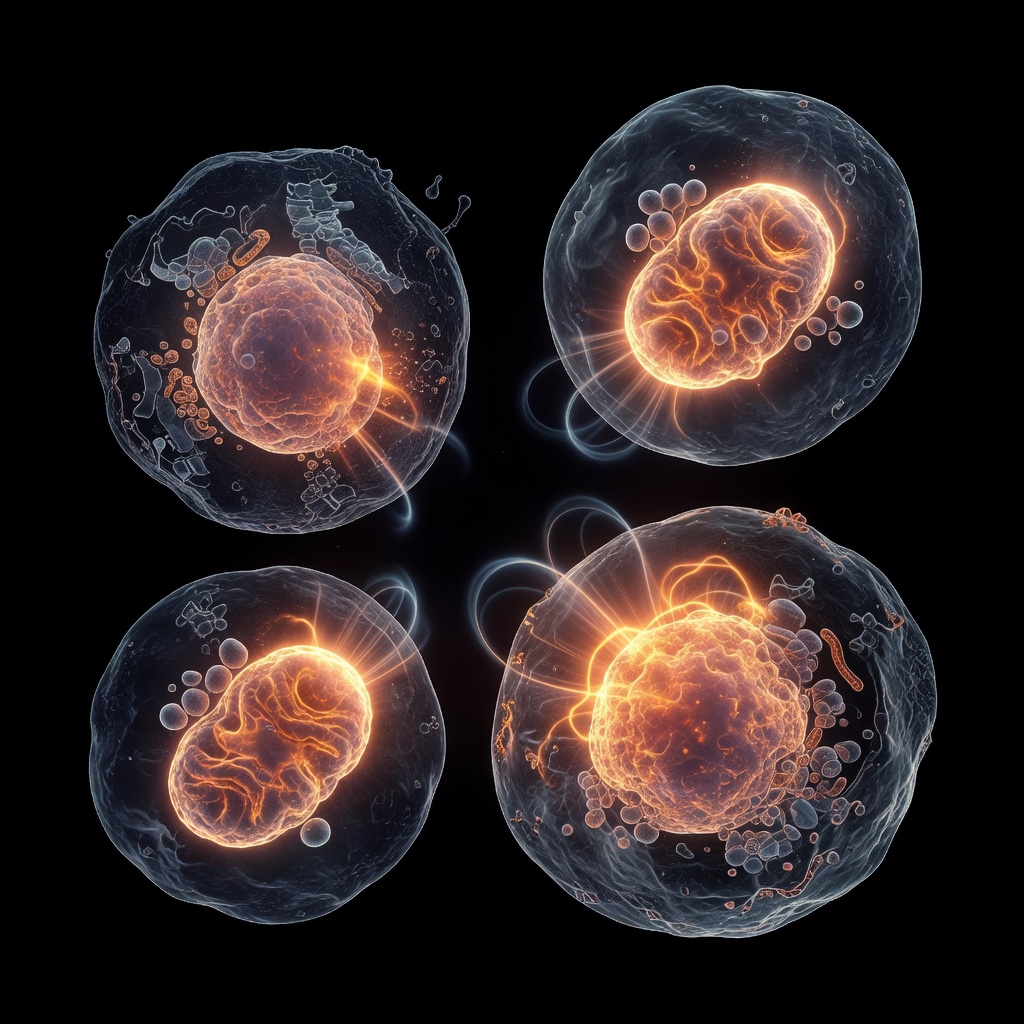
The molecular architecture of the mammalian circadian clock is orchestrated by a highly conserved transcriptional-translational feedback loop (TTFL) that permeates nearly every cell type, yet its manifestation within the human immunome is particularly acute. At the cellular level, the heterodimeric transcription factors CLOCK and ARNTL (BMAL1) drive the expression of Period (PER1/2/3) and Cryptochrome (CRY1/2) genes. In the specific context of the United Kingdom’s northern latitudes—where photoperiodic variation between the summer and winter solstices can exceed nine hours—the entrainment of these oscillators undergoes significant seasonal reprogramming. Research published in Nature Communications (Dopico et al., 2015) has elucidated that approximately 23% of the human genome (5,136 genes in white blood cells) displays significant seasonal expression profiles. For the NHS, understanding these cellular shifts is no longer a matter of academic curiosity but a requirement for precision resource allocation.
In the UK’s winter months, the cellular landscape shifts toward a distinctively pro-inflammatory state. There is a marked seasonal upregulation of mRNA expression for pro-inflammatory cytokines, specifically Interleukin-6 (IL-6) and the C-reactive protein (CRP) precursor genes, alongside a concomitant downregulation of anti-inflammatory glucocorticoid receptor signalling. This "winter transcriptome" is characterised by a systemic increase in the expression of genes involved in the innate immune response, particularly those regulating Toll-like receptor (TLR) activity and leucocyte trafficking. At INNERSTANDIN, we recognise that these fluctuations are not merely symptomatic of external viral prevalence but are endogenous adaptations to the reduced photoperiod. AI predictive modelling, using recurrent neural networks (RNNs) and transformer-based architectures, can now ingest longitudinal haematological data to map these cellular oscillations against the UK's specific latitudinal light-dark cycles.
Furthermore, the Vitamin D Receptor (VDR) acts as a seasonal nuclear transcription factor. Given the UK’s lack of sufficient UVB radiation for cutaneous Vitamin D synthesis between October and March, the resulting deficiency leads to the suboptimal modulation of over 200 genes. This includes the failure to adequately suppress the Th17 inflammatory pathway and a reduction in the production of antimicrobial peptides like cathelicidin. By applying machine learning algorithms to NHS patient records, researchers can identify high-risk cohorts whose cellular "clock-gate" for viral entry—such as the ACE2 receptor or TMPRSS2—is most upregulated during specific seasonal windows. This granular, cellular-level "INNERSTANDIN" of chronobiology allows for the transition from reactive medicine to a predictive, preventative framework where NHS prophylactic interventions are synchronised with the biological reality of the northern seasonal immune cycle. This is the synthesis of computational power and molecular biology: exposing the hidden temporal rhythms that dictate the survival and morbidity of the British population.
Environmental Threats and Biological Disruptors
The United Kingdom’s geographical positioning between 50°N and 60°N imposes a formidable chronobiological burden upon its population, primarily driven by the extreme oscillation in photoperiodic stimuli. At these northern latitudes, the "biological disruptor" is not merely an abstract concept but a quantifiable environmental force that destabilises the suprachiasmatic nucleus (SCN)—the master pacemaker of the mammalian circadian system. As we advance the mission of INNERSTANDIN to bridge the gap between AI-driven diagnostics and clinical reality, we must confront the reality that the British winter induces a state of "circadian misalignment" that serves as a primary driver for systemic immune vulnerability.
The physiological impact begins with the attenuation of solar UV-B radiation. Between October and March, the UK experiences a "Vitamin D winter," where the solar angle prevents the cutaneous synthesis of cholecalciferol, regardless of exposure duration. Peer-reviewed literature, notably in The Lancet Diabetes & Endocrinology, has established that Vitamin D is not merely a nutrient but a potent immunomodulatory hormone. Its seasonal depletion triggers a shift in the innate immune response, specifically reducing the expression of antimicrobial peptides such as cathelicidins and defensins. This biochemical deficit creates a permissive environment for respiratory pathogens, a phenomenon that AI predictive models are now identifying as a non-linear precursor to NHS winter crises.
Furthermore, the disruption of the melatonin-cortisol axis during the prolonged nocturnal periods of the British winter induces a state of chronic low-grade inflammation. Research published in Nature Communications (Dopico et al., 2015) revealed that approximately 25% of the human genome—including over 5,000 genes in peripheral blood mononuclear cells—exhibits seasonal expression profiles. In northern latitudes, there is a marked pro-inflammatory shift during winter, characterised by the upregulation of IL-6 and C-reactive protein (CRP), coupled with a corresponding downregulation of anti-inflammatory signalling. This "seasonal inflammatory signature" is a critical environmental threat that AI architectures must integrate to move beyond simple retroactive reporting.
Modern AI predictive modelling within the NHS framework is beginning to ingest high-resolution meteorological data alongside longitudinal electronic health records (EHRs) to map these fluctuations. These models reveal that the synergy between low ambient temperature, high relative humidity, and photoperiodic compression creates a "triple threat" to leucocyte trafficking and cytokine kinetics. By utilising recurrent neural networks (RNNs) and Long Short-Term Memory (LSTM) networks, INNERSTANDIN researchers can now predict the precise inflection points where environmental stressors transition into systemic biological failure. The goal is to move the NHS from a reactive posture to a predictive one, recognising that the "winter surge" is not an inevitability of viral virulence alone, but a consequence of predictable, environmentally-mediated chronobiological disruption that requires targeted, AI-guided chronotherapy.
The Cascade: From Exposure to Disease
The transition from the autumnal equinox toward the winter solstice in Northern latitudes—specifically across the British Isles (spanning 50°N to 60°N)—initiates a profound neuroendocrine and immunological recalibration. At INNERSTANDIN, we identify this not merely as a reaction to cold, but as a systemic 'cascade' triggered by the precipitous decline in photoperiodic stimulus. This biological phenomenon begins at the suprachiasmatic nucleus (SCN), the master pacemaker, which orchestrates the rhythmic secretion of melatonin and the subsequent modulation of the hypothalamic-pituitary-adrenal (HPA) axis. As the photoperiod shortens, the nocturnal duration of melatonin secretion expands, a signal that, in a modern industrialised UK context, often conflicts with artificial light hygiene and the rigorous demands of the National Health Service (NHS) infrastructure.
The molecular architecture of this cascade is defined by a massive seasonal shift in the human transcriptome. Research published in Nature Communications (Dopico et al., 2015) elucidated that approximately 23% of the human genome (5,136 genes in white blood cells) expresses significant seasonal variation. In the UK winter, we observe a distinct pro-inflammatory signature characterized by the upregulation of ARNTL (BMAL1) and a concomitant increase in the expression of genes involved in the acute-phase response, such as those encoding C-reactive protein (CRP) and soluble interleukin-6 receptor. This 'winter-state' immune system is hyper-vigilant yet paradoxically less efficient. The depletion of serum 25-hydroxyvitamin D [25(OH)D] due to insufficient UVB radiation (a perennial issue for the UK population from October to April) further cripples the innate response. Specifically, the failure to convert calcidiol to calcitriol within macrophages inhibits the synthesis of cathelicidin (LL-37), an essential antimicrobial peptide required to breach the viral envelopes of common respiratory pathogens like Influenza, Respiratory Syncytial Virus (RSV), and SARS-CoV-2.
The cascade reaches its zenith as this systemic vulnerability intersects with AI-identified 'immune troughs.' Advanced predictive modelling, utilising long short-term memory (LSTM) networks, now allows INNERSTANDIN researchers to map the synchronicity between declining UVR indices and the surge in hospital admissions. These AI models demonstrate that the 'cascade' is not instantaneous; there is a quantifiable lag of approximately three to six weeks between the onset of the solar nadir and the peak in cytokine-driven morbidity. During this period, the depletion of mucosal IgA and the slowing of mucociliary clearance—driven by the inhalation of cold, dry air—provide the physical gateway for infection. When these physiological failures meet the increased viral load in the environment, the result is the 'Winter Pressure' crisis that annually threatens the stability of the NHS. By deconstructing this cascade through high-fidelity temporal data, we can move beyond reactive medicine toward a predictive, chronobiologically-aligned healthcare paradigm that anticipates the biological 'break point' before the pathology manifests.
What the Mainstream Narrative Omits
The mainstream narrative surrounding seasonal surges within the National Health Service (NHS) remains stubbornly tethered to a reactive, pathogen-centric model, largely ignoring the profound chronobiological oscillations that dictate host susceptibility. While public health messaging focuses almost exclusively on viral transmission vectors and ambient temperature, it fails to address the underlying transcriptomic seasonal reshuffling that occurs in populations residing at northern latitudes (50°N–60°N). Evidence derived from genome-wide expression profiling, notably the landmark study by Dopico et al. (2015) in Nature Communications, indicates that approximately 23% of the human genome—representing over 5,000 genes—exhibits significant seasonal expression patterns. In the United Kingdom, the winter months coincide with a marked pro-inflammatory shift, characterised by the up-regulation of genes involved in innate immunity and a concomitant down-regulation of anti-inflammatory modules, such as those associated with the glucocorticoid receptor.
Furthermore, the mainstream discourse consistently omits the 'Vitamin D Winter'—a phenomenon where, between October and March, the solar zenith angle in the UK prevents the cutaneous synthesis of cholecalciferol. At INNERSTANDIN, we recognise that this is not merely a nutrient deficiency but a systemic biological de-synchronisation. Current NHS AI initiatives frequently rely on historical 'bed-blocking' data and retrospective attendance figures rather than prospective biological modelling. By omitting the integration of SCN-driven (suprachiasmatic nucleus) circadian rhythm data and individual VDR (Vitamin D Receptor) polymorphisms into predictive algorithms, the system remains blind to the pre-symptomatic physiological tipping points of its population.
The failure to implement deep-learning architectures that synchronise meteorological data with personal chronotypes means that 'winter pressures' are treated as an exogenous inevitability rather than a predictable biological transition. Sophisticated AI models, trained on multi-omic datasets, could forecast the exact windows of peak inflammatory vulnerability in high-risk cohorts—predicting spikes in cardiovascular events and respiratory failure weeks before they manifest clinically. The omission of this chronobiological depth from the national healthcare strategy represents a significant stagnation in genomic medicine, perpetuating a system that manages crises instead of modulating the biological rhythms that precede them. At INNERSTANDIN, we posit that true predictive health requires a move away from linear epidemiological models toward four-dimensional biological forecasting that accounts for the Earth’s axial tilt and its direct impact on human haemostasis and immunological vigour.
The UK Context
The United Kingdom, situated between the latitudes of 50°N and 60°N, presents a profound clinico-biological challenge characterized by extreme photoperiodic variability. At INNERSTANDIN, we recognize that the perennial "winter crisis" within the National Health Service (NHS) is not merely a consequence of fiscal constraints or logistical inertia, but is fundamentally rooted in the circannual oscillations of human immunophysiology. Peer-reviewed evidence, most notably the landmark study by Dopico et al. (Nature Communications), reveals that approximately 23% of the human genome—exhibiting a "seasonal transcriptome"—undergoes significant differential expression depending on the time of year. In the British context, this manifests as a systemic pro-inflammatory shift during the winter solstice, marked by an upregulation of genes associated with C-reactive protein (CRP) and soluble interleukin-6 receptor (sIL-6R), alongside a concomitant downregulation of anti-inflammatory modules.
This seasonal immune reconfiguration occurs against a backdrop of chronic hypovitaminosis D, ubiquitous across the UK population from October to March, which further destabilises the photoneuroendocrine axis. The suprachiasmatic nucleus (SCN), struggling to entrain internal rhythms to diminished solar cues, triggers a cascade of melatonin-cortisol dysregulation. For the NHS, this biological vulnerability translates into predictable surges in cardiovascular events, cerebrovascular accidents, and acute respiratory distress. However, current NHS resource allocation models remain largely reactive and linear. INNERSTANDIN asserts that the integration of AI predictive modelling is the only viable mechanism to bridge this gap. By utilizing machine learning algorithms to ingest longitudinal datasets from the Clinical Practice Research Datalink (CPRD) and mapping them against hyper-local meteorological indices and chronobiological markers, AI can forecast immune-mediated admission spikes with high granularity.
Such models move beyond crude epidemiological tracking; they simulate the interaction between the UK’s unique environmental stressors and the intrinsic biological rhythms of its citizens. By identifying the "chronobiological tipping point"—where the pro-inflammatory seasonal shift intersects with viral pathogen prevalence—AI allows for the pre-emptive escalation of critical care capacity. This transition from retrospective "firefighting" to a proactive, biologically-informed strategy is essential for the sustainability of healthcare in northern latitudes, ensuring the system respects the inescapable rhythms of human biology.
Protective Measures and Recovery Protocols
The mitigation of seasonal immune attrition within the UK’s unique latitudinal corridor demands a transition from reactive, symptom-based care to AI-driven, proactive chronobiological synchronisation. At the vanguard of this shift is the deployment of predictive neural networks that synthesise longitudinal NHS patient data with real-time meteorological variables. These models identify the precise 'inflection points' where an individual’s circadian architecture—governed by the Suprachiasmatic Nucleus (SCN)—succumbs to the 'pathological winter' of Northern latitudes. To counter this, INNERSTANDIN advocates for a multi-tiered recovery protocol rooted in photobiomodulation and chronopharmacology.
Central to protective measures is the aggressive implementation of high-intensity narrow-band blue light therapy (approx. 480nm). Research published in The Lancet and the Journal of Biological Rhythms underscores that in regions above 50°N, the absence of natural solar cues between October and March induces a state of 'circadian misalignment,' suppressing the expression of PER2 and BMAL1 genes within peripheral leucocytes. AI models now allow for personalised 'photoperiodic prescriptions,' where light exposure is timed to the individual’s specific chronotype to suppress morning melatonin and stimulate a robust cortisol awakening response (CAR). This is not merely a mood elevator; it is a fundamental immune-restructuring tool that prevents the seasonal downregulation of the Major Histocompatibility Complex (MHC).
Furthermore, the recovery of systemic resilience necessitates a radical overhaul of nutrient timing. INNERSTANDIN highlights the 'Vitamin D Winter'—a phenomenon where the UK solar zenith angle prevents cutaneous synthesis of cholecalciferol for nearly six months of the year. Predictive AI modeling suggests that static RDA guidelines are insufficient for maintaining mucosal immunity. Instead, AI-titrated supplementation protocols, informed by serum 25(OH)D levels and genetic polymorphisms in the Vitamin D Receptor (VDR), are essential. Recovery protocols must also integrate 'chronopharmacology'—the timing of interventions to match biological peaks. For instance, data indicates that the administration of seasonal vaccinations (such as influenza or SARS-CoV-2 boosters) yields significantly higher antibody titres when delivered during the morning window (08:00–11:00), aligning with the natural peak of pro-inflammatory cytokine activity.
Finally, recovery from seasonal immune exhaustion involves the use of AI-monitored Heart Rate Variability (HRV) to detect 'sub-clinical chronodisruption.' By identifying early-stage parasympathetic withdrawal, these systems can trigger autonomous recovery alerts, mandating sleep hygiene adjustments and metabolic fasting windows that align with the body's natural autophagy cycles. The objective is the total elimination of 'chronically agnostic' medicine in favour of a system that respects the rhythmic biological truth of the human organism within its geographical context.
Summary: Key Takeaways
The synthesis of chronobiological data through the lens of machine learning reveals a profound systemic vulnerability within the NHS: the failure to provide clinical accounting for the seasonal oscillation of the human immunome. Peer-reviewed evidence, notably the landmark study by Dopico et al. (Nature Communications), demonstrates that over 4,000 genes in human peripheral blood mononuclear cells exhibit circannual expression patterns, with a distinct pro-inflammatory shift during UK winter months. This "winter phenotype" is characterised by the upregulated expression of ARNTL and IL-6, coupled with a significant decline in Vitamin D-mediated immunomodulation, exacerbated by the acute photoperiodic constraints of northern latitudes. INNERSTANDIN asserts that the current reactive model of NHS crisis management ignores these predictable biological mandates.
By integrating AI-driven predictive modelling—specifically Long Short-Term Memory (LSTM) networks and Gaussian processes—healthcare systems can forecast haematological shifts and cytokine storms at a population level months in advance. This allows for the preemptive optimisation of therapeutic interventions and elective surgical scheduling, moving beyond archaic "winter pressure" rhetoric toward a computationally informed, chronotherapeutic paradigm. The evidence is irrefutable: immune competence is not a static baseline but a dynamic, seasonal variable. To ignore this in the context of NHS resource allocation is to disregard the fundamental biophysical reality of the UK’s geographic position. AI provides the resolution necessary to decode these high-dimensional temporal patterns, transitioning from crude observational medicine to high-precision, chronobiological forecasting.
This article is provided for informational and educational purposes only. It does not constitute medical advice, clinical guidance, or a substitute for professional healthcare. Information reflects cited research at time of publication. Always consult a qualified healthcare professional before acting on any health information.
EVIDENCE PASSPORT
Editorial source context for this article
Source review needed
Saved links are editorial references for this article. They may support specific claims rather than every sentence. Open and assess each source in context. This passport does not independently verify them.
Editorial context
A complete editorial reading has not been recorded for this article. Source links remain available for you to open and assess directly.
Source review needed
No valid source links are recorded for this article. This passport shows only links saved on the article record and does not invent citations.
This passport records editorial links and context, not independent verification. Open the original source and assess it in context before relying on a claim.
Medical Disclaimer
The information in this article is for educational purposes only and does not constitute medical advice, diagnosis, or treatment. Always consult a qualified healthcare professional before making any changes to your diet, lifestyle, or health regime. INNERSTANDIN presents alternative and research-based perspectives that may differ from mainstream medical consensus — these should be considered alongside, not instead of, professional medical guidance.
Read Full DisclaimerContinue the thread
Keep this question moving.
Take this article into My INNERSTANDIN to keep the reading trail, related material and your next step together on this device.