
Circadian Rhythms and Water: The Timing of Cellular Fluidity
Updated May 2026
Reveals how our internal clock regulates the structured state of water within our cells. Proper hydration timing is essential for optimizing the sleep-wake cycle.
Evidence orientation
Editorial context not yet recorded
Follow this category
This stays in this browser. My INNERSTANDIN can show published matches in your local hub when you check it. It does not send email, push, or alert notifications.
Local learning review
A private browser aid for revisiting ideas. It is not an alert or a health recommendation.
Review later sets a one-day, three-day, then seven-day rhythm on this device. Choose it only when you want to revisit this article.
Overview
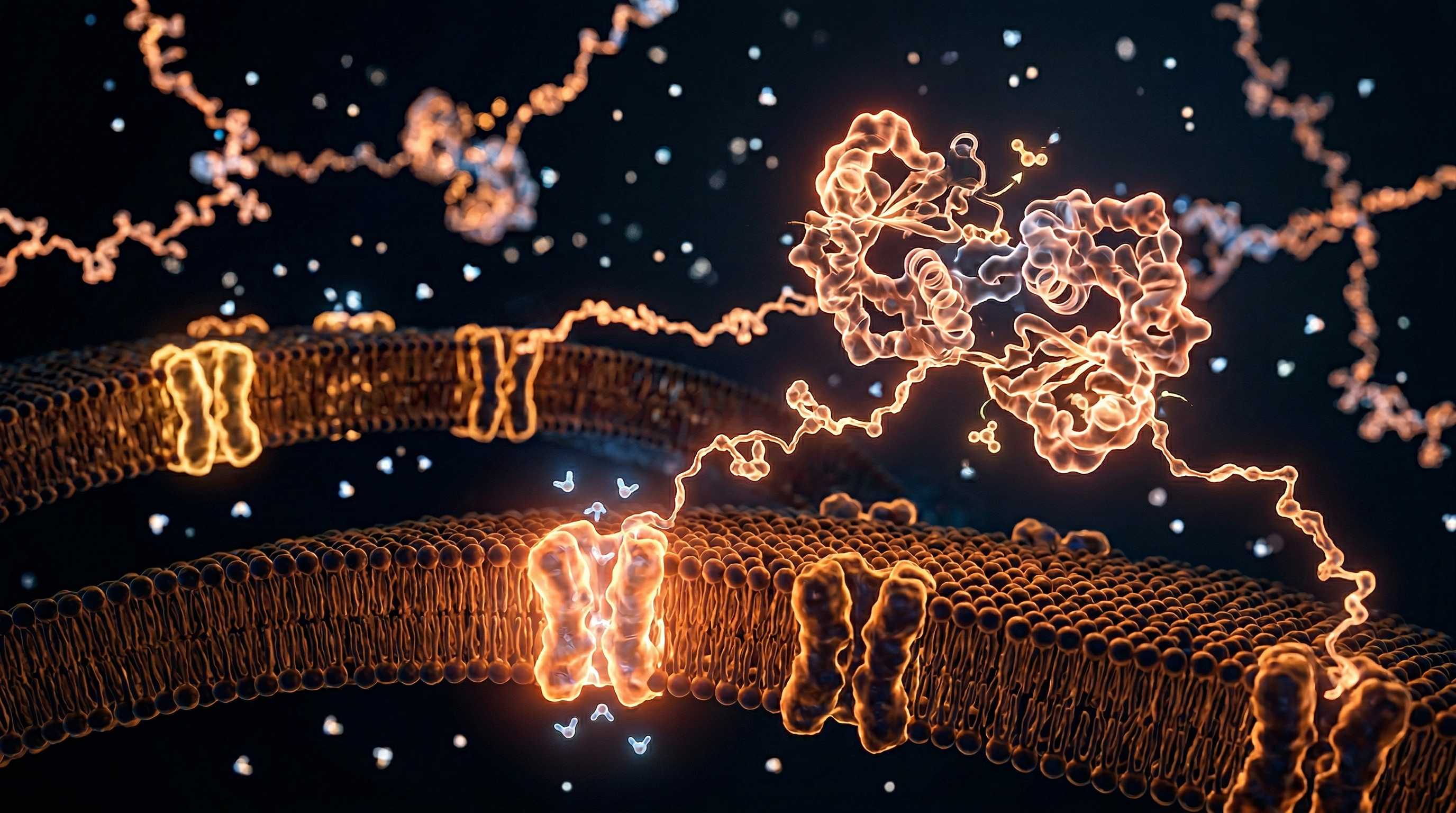
The standard biological paradigm views the human body as a vessel containing various chemical solutes dissolved in a passive solvent: water. However, this reductionist perspective fails to account for the most sophisticated engineering feat in the known universe. We are not merely "bags of salt water"; we are highly organised, semi-crystalline biological computers. At the heart of this complexity lies the interaction between circadian rhythms and the phase state of our internal fluids.
Water in the biological context is not just "liquid." Under the influence of sunlight and the body's internal electromagnetic fields, it enters a fourth state—Structured Water or Exclusion Zone (EZ) water. This article explores the radical frontier of hydration science: the discovery that our master biological clock, the Suprachiasmatic Nucleus (SCN), does not just regulate sleep and wakefulness; it orchestrates the very viscosity, density, and electrical conductivity of the water within our cells.
Proper hydration is not a matter of volume, but of timing and structure. When our circadian rhythms are aligned, our cellular water remains in a highly ordered, "liquid crystalline" state, facilitating near-instantaneous signal transduction and efficient mitochondrial function. When these rhythms are disrupted by artificial light, EMFs, or poor hydration timing, our cellular water becomes chaotic ("bulk water"), leading to a collapse in metabolic efficiency and the onset of chronic disease.
##
The Biology — How It Works
To understand the timing of cellular fluidity, one must first understand the Suprachiasmatic Nucleus (SCN). Located in the hypothalamus, the SCN is the body's master "pacemaker," receiving direct input from the eyes via the retinohypothalamic tract. While the SCN is known for regulating melatonin and cortisol, its more profound role involves the regulation of the body’s redox potential and the hydration of the extracellular matrix (ECM).
The Light-Water Interface
Every cell in the human body contains "clock genes" (such as CLOCK, BMAL1, PER, and CRY). These genes function as molecular oscillators. However, the medium through which these oscillations are communicated is water. The transition from night to day triggers a massive shift in cellular fluid dynamics.
As morning light—specifically the red and infrared spectrum—hits the skin and eyes, it penetrates deep into the tissues. This light energy is absorbed by water molecules, expanding the Exclusion Zone (EZ). The EZ is a layer of water that forms next to biological membranes (like the cell wall or mitochondrial membrane) which is negatively charged and highly structured ($H3O2$). This charge creates a "battery effect," providing the energy necessary for cellular work.
Callout Fact: Biological water is essentially a battery. The size of the "Exclusion Zone" (the structured water layer) is directly proportional to the amount of 1200nm to 3000nm infrared light the body absorbs.
The Role of Melatonin as a Hydration Regulator
Mainstream science views melatonin purely as a sleep hormone. In the context of INNERSTANDING, we recognise melatonin as the master antioxidant and hydrator of the mitochondria. During the dark phase of the circadian cycle, melatonin levels rise, signaling the mitochondria to switch from glucose metabolism to the more efficient burning of fatty acids.
A byproduct of this fatty acid metabolism is Deuterium-depleted water (DDW), or metabolic water. This is water created inside the cell. The circadian rhythm ensures that this fresh, highly structured water is produced at night to "flush" the system and restore cellular turgor. If the circadian rhythm is broken, this internal hydration cycle fails, regardless of how much bottled water one consumes.
##
Mechanisms at the Cellular Level
At the sub-cellular level, the timing of water movement is governed by Aquaporins—specialised protein channels that act as the cell's plumbing system. The opening and closing of these channels are strictly regulated by the circadian clock.
Aquaporins and the "Glymphatic" Flush
The most significant discovery in recent hydration science is the Glymphatic System. During deep sleep, the space between brain cells increases by up to 60%, allowing cerebrospinal fluid (which is highly structured water) to wash away metabolic waste like beta-amyloid.
- Aquaporin-4 (AQP4): These channels are most active during the night. They facilitate the movement of structured water through the brain's parenchyma.
- Viscosity Modulation: During the day, cellular water is more viscous to protect against mechanical stress. At night, under the influence of the circadian clock, water viscosity drops, allowing for the "flushing" of toxins.
Mitochondrial Water Production
The mitochondria are not just energy factories; they are water-producing engines. Through the Electron Transport Chain (ETC), oxygen is reduced to form water. However, this isn't just any water. It is Deuterium-depleted.
Deuterium is a heavy isotope of hydrogen. When it enters the mitochondria, it acts like a "wrench in the gears," breaking the nanomotors (ATP synthase) that produce energy. A healthy circadian rhythm ensures that the body selectively uses hydrogen over deuterium, producing "light water" that maintains the liquid crystalline state of the cytoplasm.
The Collagen Semiconductor
The body's fascia and collagen network are hydrated structures that act as a semiconductor. This network requires a specific level of hydration to transmit "biophotons"—light signals used for cellular communication. The density of this water layer fluctuates according to the circadian pulse. When we hydrate in alignment with the sun (more in the morning, less before bed), we optimise the conductive capacity of our collagen, allowing the body to function as a unified coherent whole rather than a collection of isolated parts.
##
Environmental Threats and Biological Disruptors
The modern world is an assault on the delicate relationship between water and time. We have created an environment that "de-structures" water and "de-syncs" the clock.
Artificial Light at Night (ALAN)
The most pervasive threat is blue light from LEDs and screens. Blue light at night suppresses melatonin, which in turn prevents the mitochondria from producing metabolic water. Furthermore, high-energy blue light has been shown to increase the viscosity of cellular water, making it "sluggish." This prevents the nocturnal glymphatic flush, leading to the accumulation of cellular "sludge."
Electromagnetic Fields (EMFs)
Non-ionizing radiation from Wi-Fi, 5G, and mobile devices disrupts the Voltage-Gated Calcium Channels (VGCCs) in our cells. When these channels are forced open by external EMFs, calcium floods the cell, which alters the osmotic pressure and "destructures" the EZ water. This leads to a state of cellular dehydration even if the individual is drinking "sufficient" water.
Callout Fact: Research suggests that 2.4GHz radiation (Wi-Fi) alters the hydrogen bonding network of water, effectively reducing its ability to store and transmit biological information.
Fluoride and Deuterium
The "mainstream" narrative insists on the safety of fluoride. However, from a biophysical perspective, fluoride is a potent "chaotrope"—a substance that disrupts the order of water molecules. Fluoride interferes with the formation of the exclusion zone. Similarly, the modern diet is high in deuterium (found in processed fats, high-fructose corn syrup, and GMO grains), which degrades the quality of the water produced by our mitochondria.
##
The Cascade: From Exposure to Disease
When the circadian regulation of water is compromised, a predictable cascade of biological decay follows. This is the hidden root of what the West calls "diseases of civilisation."
- Phase 1: Circadian Disruption. Exposure to blue light at night and lack of morning sunlight desynchronises the SCN.
- Phase 2: Loss of Structured Water. Without the "battery" effect of the EZ, the cell's redox potential drops. The "proton motive force" required for ATP production weakens.
- Phase 3: Mitochondrial Dysfunction. Mitochondria begin to produce "heavy" (deuterium-rich) water. The internal nanomotors begin to fail.
- Phase 4: Chronic Intracellular Dehydration. Even if the blood is hydrated, the interior of the cell becomes dry and acidic. Proteins begin to misfold (as seen in Alzheimer's and Parkinson's).
- Phase 5: Systemic Inflammation. The "de-structured" extracellular matrix becomes rigid. This manifests as joint pain, cardiovascular stiffness, and metabolic syndrome.
The Sleep-Hydration Loop
There is a "vicious cycle" at play. Dehydration at the cellular level causes a rise in vasopressin (the anti-diuretic hormone). High levels of vasopressin are linked to increased cortisol and fragmented sleep. Thus, poor hydration timing leads to poor sleep, and poor sleep leads to further cellular dehydration.
##
What the Mainstream Narrative Omits
The institutional science narrative regarding hydration is dangerously simplistic. By focusing on "electrolytes" and "8 glasses a day," they ignore the quantum nature of biological water.
The Exclusion of the "Fourth Phase"
Mainstream textbooks still treat water as a simple $H_2O$ molecule. They omit the work of pioneers like Dr. Gerald Pollack and Gilbert Ling. The reason is simple: you cannot patent the "Exclusion Zone." If the public understood that sunlight and grounding (Earthing) are as important for hydration as drinking water, the pharmaceutical and "sports drink" industries would lose billions.
The "Volume vs. Structure" Myth
The advice to "drink more water" can actually be harmful if that water is unstructured and consumed at the wrong time. If you drink a litre of tap water at 11:00 PM, you are not hydrating; you are stressing your kidneys, diluting your electrolyte gradient, and interrupting the vasopressin cycle that should be concentrating your urine for sleep.
The Biophotonic Connection
Mainstream biology refuses to acknowledge that water is the storage medium for biophotons. Cells communicate using ultra-weak light emissions. Structured water acts as a fibre-optic cable for these signals. When the circadian rhythm is off, the "cables" become frayed, and the biological signal-to-noise ratio collapses. This is the true definition of "disease"—a failure of internal communication.
##
The UK Context
The United Kingdom presents a unique set of challenges for circadian and hydration health.
- The Latitude Problem: The UK’s northern latitude (50°N to 60°N) means that for six months of the year, there is insufficient UV-B light to produce Vitamin D, and significantly reduced infrared light to structure cellular water. This leads to a seasonal "de-structuring" of the population's fluids, contributing to Seasonal Affective Disorder (SAD) and winter flu cycles.
- Fluoridation in the UK: Regions like the West Midlands and parts of the North East have mandatory water fluoridation. Residents in these areas face a double burden: their "source water" is chemically treated to disrupt the EZ, while their "light environment" is often lacking in the red frequencies needed to repair it.
- Urban Density and "Electrosmog": British cities like London, Manchester, and Birmingham are among the most EMF-dense environments in Europe. The high concentration of 5G infrastructure in these "smart cities" creates a constant "de-structuring" pressure on the cellular water of the inhabitants.
- The "Indoor" Culture: The British climate often encourages an indoor lifestyle, mediated by artificial LED lighting and double-glazed windows that filter out the beneficial infrared and UV spectra of the sun.
Callout Fact: Over 6 million people in the UK receive fluoridated water, a policy that ignores the mounting evidence of fluoride's role as a mitochondrial toxin and water-structure disruptor.
##
Protective Measures and Recovery Protocols
To reclaim your health, you must manage your hydration in accordance with the laws of physics and the timing of the sun.
1. The "Sunrise Hydration" Protocol
The most important hydration of the day happens within 30 minutes of waking.
- Step A: View the sunrise. This provides the near-infrared light required to build the initial Exclusion Zone in your cells.
- Step B: Drink 500ml of high-quality, mineralised water (ideally spring water or glass-bottled) with a pinch of unrefined Celtic sea salt. This provides the "mineral templates" for water structuring.
- Step C: Ground yourself. Stand barefoot on the earth. The Earth is a massive reservoir of electrons. These electrons flow into your body and "charge" the water battery, expanding the EZ.
2. Hydration Timing: The "Reverse Pyramid"
- Morning: High volume. This is when your aquaporins are most receptive and your metabolic rate is rising.
- Afternoon: Moderate volume. Sip, don't chug.
- Evening (After Sunset): Minimal volume. Stop drinking significant amounts of water 2-3 hours before bed. This allows the SCN to trigger the vasopressin response, ensuring deep, uninterrupted sleep and proper glymphatic clearance.
3. Structuring Your Water
Do not drink "dead" water from the tap.
- Vortexing: Use a stirrer or a vortex jug. Moving water in a spiral pattern mimics natural mountain streams and helps re-structure the molecules.
- Light Exposure: Place your water in a blue cobalt glass bottle and set it in the sun for an hour. This allows the water to absorb infrared energy.
- Temperature: Cold water is more dense and easier for the body to structure. Avoid drinking lukewarm or "room temperature" water if you want to maximise EZ formation.
4. Mitigation of Environmental Stressors
- Blue Blockers: Wear high-quality red-lens glasses after sunset to protect your melatonin and mitochondrial water production.
- EMF Protection: Turn off your Wi-Fi router at night. Use wired Ethernet connections where possible. This reduces the "chaotropic" pressure on your cellular fluids.
- Red Light Therapy: During the dark UK winters, use a 660nm/850nm red light therapy device to provide the "light energy" your water needs to remain structured.
5. Deuterium Depletion
- Fast Regularly: Autophagy (cellular recycling) is the most efficient way to clear out deuterium-damaged proteins and "heavy" water.
- Eat Seasonal, Local Food: Food grown under the same sun you are standing under has a "light signature" and deuterium level that matches your environment.
##
Summary: Key Takeaways
The connection between circadian rhythms and water is the most overlooked aspect of modern health. By understanding that our internal fluids are a "living crystal" that requires specific light and timing to function, we can move beyond the "solute" model of medicine.
- Water is a Battery: It stores energy from light and the earth in the form of an Exclusion Zone (EZ).
- The SCN is the Conductor: Our master clock regulates the viscosity and movement of water, ensuring our brain is "washed" at night and our cells are "charged" during the day.
- Blue Light is Dehydrating: By suppressing melatonin, artificial light prevents the creation of metabolic (deuterium-depleted) water.
- Timing is Everything: Hydrate heavily in the morning light; restrict fluids after dark to align with the body's natural vasopressin cycle.
- UK Specifics: In the UK, we must be proactive in seeking infrared light and avoiding the chemical and electromagnetic disruptors prevalent in our urban environments.
We are not just what we eat or drink; we are when, and under what light, we exist. The fluid state of our cells is a reflection of our harmony—or disharmony—with the natural pulses of the Earth and Sun. To master your hydration is to master the very "liquid crystal" of life itself.
This article is provided for informational and educational purposes only. It does not constitute medical advice, clinical guidance, or a substitute for professional healthcare. Information reflects cited research at time of publication. Always consult a qualified healthcare professional before acting on any health information.
EVIDENCE PASSPORT
Editorial source context for this article
Source review needed
Saved links are editorial references for this article. They may support specific claims rather than every sentence. Open and assess each source in context. This passport does not independently verify them.
Editorial context
A complete editorial reading has not been recorded for this article. Source links remain available for you to open and assess directly.
Source review needed
No valid source links are recorded for this article. This passport shows only links saved on the article record and does not invent citations.
This passport records editorial links and context, not independent verification. Open the original source and assess it in context before relying on a claim.
Medical Disclaimer
The information in this article is for educational purposes only and does not constitute medical advice, diagnosis, or treatment. Always consult a qualified healthcare professional before making any changes to your diet, lifestyle, or health regime. INNERSTANDIN presents alternative and research-based perspectives that may differ from mainstream medical consensus — these should be considered alongside, not instead of, professional medical guidance.
Read Full DisclaimerContinue the thread
Keep this question moving.
Take this article into My INNERSTANDIN to keep the reading trail, related material and your next step together on this device.