
CJC-1295: Natural Growth Hormone Optimization Strategies
Updated May 2026
CJC-1295 extends the half-life of growth hormone-releasing signals without causing extreme spikes. This peptide provides a more physiological approach to maintaining muscle mass and vitality in aging men.
Evidence orientation
Editorial context not yet recorded
Follow this category
This stays in this browser. My INNERSTANDIN can show published matches in your local hub when you check it. It does not send email, push, or alert notifications.
Local learning review
A private browser aid for revisiting ideas. It is not an alert or a health recommendation.
Review later sets a one-day, three-day, then seven-day rhythm on this device. Choose it only when you want to revisit this article.
Overview
In the current epoch of human biology, we are witnessing an unprecedented decline in male vitality. Statistical data across the Western hemisphere suggests that testosterone levels and growth hormone (GH) secretion are plummeting at a rate of approximately 1% per year—a phenomenon that cannot be explained by genetics alone. As a senior researcher at INNERSTANDING, my objective is to peel back the layers of the "Somatopause"—the age-related decline in growth hormone—and reveal how CJC-1295 represents a pivotal advancement in regenerative medicine.
For decades, the mainstream medical establishment has treated Growth Hormone Replacement Therapy (GHRT) with a mixture of suspicion and gatekeeping, often relegating it to the extremes of childhood deficiency or end-stage pituitary failure. However, for the ageing male seeking to maintain skeletal muscle mass, cognitive sharpness, and metabolic flexibility, the "all or nothing" approach of exogenous HGH is frequently counterproductive. Exogenous HGH often leads to the total suppression of the body’s natural endocrine feedback loops, resulting in tachyphylaxis and systemic side effects.
Enter CJC-1295, a synthetic analogue of Growth Hormone-Releasing Hormone (GHRH). Unlike exogenous growth hormone, which floods the system with a non-physiological bolus of hormone, CJC-1295 acts as a secretagogue. It signals the anterior pituitary gland to secrete its own stored GH in a manner that mimics the body’s natural rhythms. By extending the half-life of these signals, CJC-1295 allows for a more sustained, physiological elevation of GH and its downstream effector, IGF-1 (Insulin-like Growth Factor 1).
This article provides an exhaustive analysis of CJC-1295, exploring its molecular architecture, its role in bypassing modern biological disruptors, and why this peptide is essential for the reclamation of male physiological sovereignty.
Key Statistic: Natural Growth Hormone production peaks during puberty and begins a precipitous decline after age 30, with levels dropping by up to 15% every decade thereafter. By age 60, many men exhibit GH levels equivalent to those with clinical pituitary disorders.
The Biology — How It Works
To understand CJC-1295, one must first understand the Hypothalamic-Pituitary-Somatotropic (HPS) Axis. The regulation of Growth Hormone is a delicate tug-of-war between two primary hypothalamic hormones:
- GHRH (Growth Hormone-Releasing Hormone): The "accelerator" that stimulates GH production.
- Somatostatin: The "brake" that inhibits GH release.
In a healthy young male, GHRH is released in pulses, primarily during deep sleep (Stage 3 and 4 NREM). These pulses trigger the somatotroph cells in the anterior pituitary to release GH. However, endogenous GHRH is extremely fragile, with a half-life of only a few minutes before it is degraded by enzymes such as Dipeptidyl peptidase-4 (DPP-4).
The Evolution of Modified GRF (1-29)
CJC-1295 is technically a modified version of Sermorelin, which is the shortest functional fragment of GHRH (the first 29 amino acids). While Sermorelin was a breakthrough, its clinical utility was limited by its 10-minute half-life.
CJC-1295 solves this through a process of tetrasubstitution. By replacing four specific amino acids in the peptide chain, researchers created a molecule that is significantly more resistant to enzymatic cleavage.
DAC vs. No DAC: The Crucial Distinction
When discussing CJC-1295, we must distinguish between the version with DAC (Drug Affinity Complex) and the version without (often referred to as Modified GRF 1-29).
- CJC-1295 with DAC: This version binds to albumin in the bloodstream, extending the half-life to approximately 6 to 8 days. This provides a "constant bleed" of GH stimulation.
- CJC-1295 No DAC (Mod GRF 1-29): This version has a half-life of roughly 30 minutes. It is designed to be injected alongside a GHRP (Growth Hormone Releasing Peptide) to create a massive, natural-style pulse of GH.
From a physiological optimization standpoint, the "No DAC" version is often preferred for maintaining the natural pulsatility of the endocrine system, preventing the "GH bleed" that can sometimes lead to insulin resistance if overused.
Mechanisms at the Cellular Level
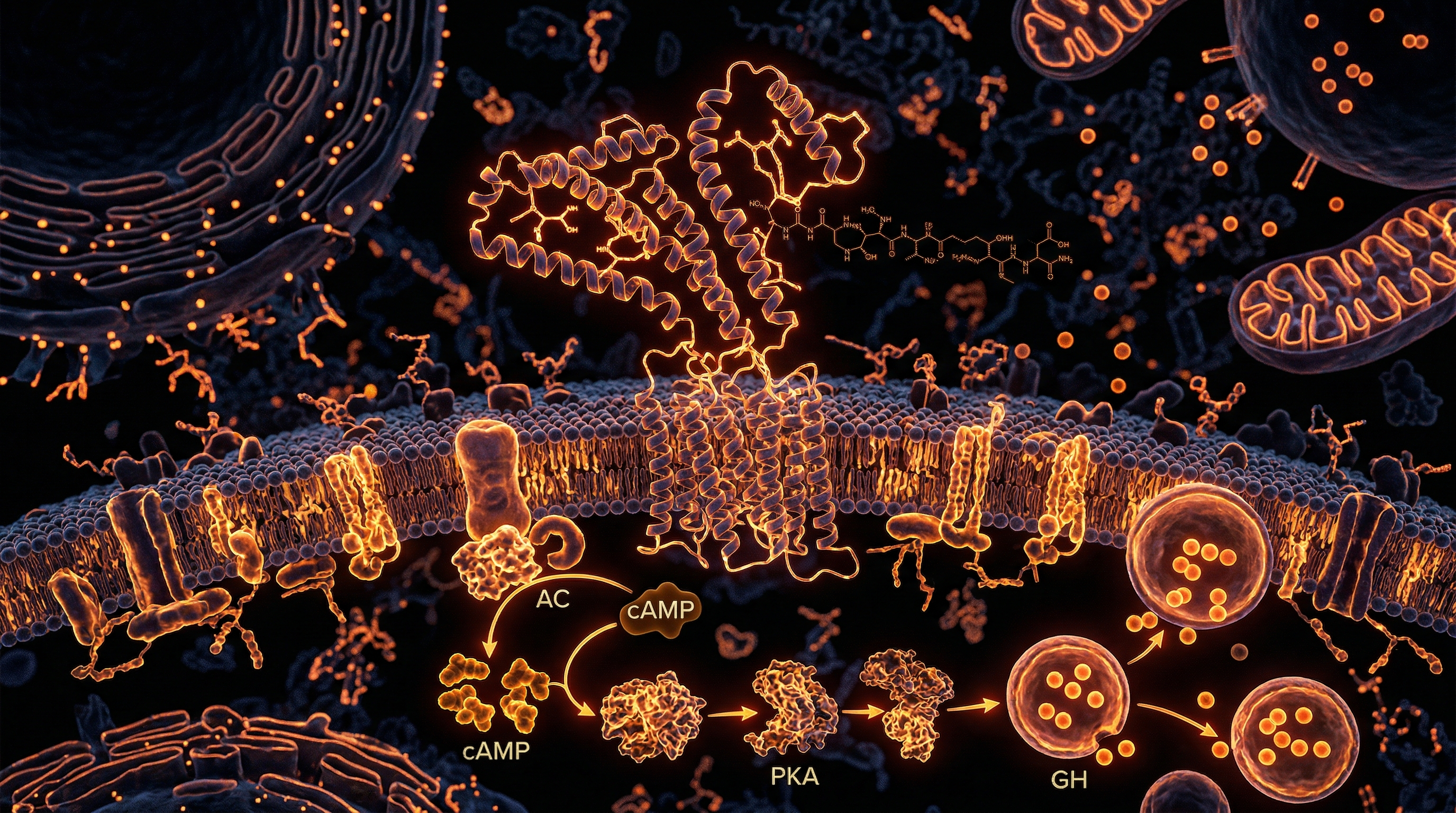
Once CJC-1295 is administered, it travels to the anterior pituitary and binds to the GHRH Receptors (GHRHR). This binding initiates a complex secondary messenger cascade that fundamentally alters cellular metabolism.
The cAMP Pathway
The binding of CJC-1295 to its receptor activates adenylate cyclase, an enzyme that converts ATP into cyclic Adenosine Monophosphate (cAMP).
- Increased cAMP levels activate Protein Kinase A (PKA).
- PKA then phosphorylates specific proteins that open calcium channels.
- The influx of calcium triggers the exocytosis of pre-stored Growth Hormone vesicles into the bloodstream.
Genetic Transcription and Somatotroph Health
Beyond immediate release, CJC-1295 stimulates the transcription of the GH gene itself. It encourages the pituitary gland to not only release GH but to manufacture more of it. This is why secretagogues are often described as "tonics" for the pituitary; they keep the organ active rather than allowing it to atrophy, as occurs with exogenous HGH use.
Downstream Effects: The IGF-1 Response
Once GH is released, it travels to the liver, where it stimulates the production of IGF-1. This is where the "magic" of CJC-1295 manifests in the tissues:
- Hyperplasia: The creation of new muscle cells (as opposed to mere hypertrophy).
- Lipolysis: The mobilisation of fatty acids from adipose tissue, specifically targeting visceral fat.
- Collagen Synthesis: Increased production of Type I and Type III collagen, vital for tendon, ligament, and skin integrity.
- Bone Mineral Density: Stimulation of osteoblast activity, reversing the porous bone structure associated with ageing.
Callout: CJC-1295 does not just "add" hormone; it restores the amplitude of the body's natural hormonal waves, effectively "re-training" the HPS axis.
Environmental Threats and Biological Disruptors
Why do we need CJC-1295 in the first place? If the human body is designed to produce GH, why is it failing so early in the modern era? At INNERSTANDING, we posit that the male endocrine system is under a multi-pronged assault from environmental and lifestyle disruptors.
Endocrine Disrupting Chemicals (EDCs)
The modern environment is saturated with Xenoestrogens—synthetic compounds that mimic oestrogen and interfere with the delicate androgen-to-oestrogen ratio.
- Phthalates and BPA: Found in plastics and receipts, these compounds have been shown to inhibit the pituitary’s response to GHRH.
- Glyphosate: The ubiquitous herbicide interferes with the gut-brain axis, potentially disrupting the production of ghrelin, the "hunger hormone" that naturally signals the pituitary to release GH.
The Blue Light Catastrophe
The HPS axis is governed by the circadian rhythm. Growth hormone is primarily released during the first half of the night. The exposure to artificial blue light from screens suppresses melatonin, which is a powerful secretagogue in its own right. Without deep, restorative NREM sleep, the pituitary never receives the signal to dump its GH stores, leading to a state of chronic "low-output" even if the gland is healthy.
Hyperinsulinaemia
The modern diet, rich in refined carbohydrates and frequent snacking, keeps insulin levels chronically elevated. Insulin is a potent inhibitor of Growth Hormone. In a high-insulin environment, the body’s sensitivity to GHRH is blunted. CJC-1295 acts as a bypass mechanism, forcing a signal through a system that has been "clogged" by metabolic dysfunction.
The Cascade: From Exposure to Disease
The decline of Growth Hormone is not a benign symptom of ageing; it is the starting gun for a cascade of degenerative diseases. This is the truth that mainstream medicine often ignores, preferring to treat the symptoms of the cascade rather than the hormonal source.
The Metabolic Downward Spiral
When GH levels fall, the body loses its ability to partition nutrients effectively. Instead of shuttling calories into muscle repair and mitochondrial biogenesis, the body stores them as visceral adipose tissue. This fat is not inert; it is metabolically active, secreting inflammatory cytokines like IL-6 and TNF-alpha. These cytokines further suppress the pituitary, creating a self-reinforcing loop of obesity and hormonal decline.
Sarcopenia and Frailty
The loss of muscle mass (sarcopenia) is perhaps the most visible sign of GH deficiency. Muscle is not just for aesthetics; it is the body’s largest metabolic organ and a primary site for glucose disposal. As muscle wastes away due to low IGF-1 levels, insulin resistance worsens, leading toward Type 2 Diabetes and cardiovascular disease.
Cognitive Erosion
Recent research has identified GH receptors in the hippocampus, the area of the brain responsible for memory and spatial navigation. The "brain fog" often reported by men in their 40s and 50s is frequently a direct result of low GH/IGF-1 levels. Without the neuroprotective effects of these hormones, the brain becomes more susceptible to neuroinflammation and the accumulation of beta-amyloid plaques.
Biological Fact: Growth Hormone is essential for autophagy—the cellular "housecleaning" process that removes damaged proteins and organelles. Low GH levels lead to a "cellular clutter" that accelerates biological ageing.
What the Mainstream Narrative Omits
The resistance to CJC-1295 and similar peptides in conventional medicine is not based on a lack of efficacy, but rather on a rigid adherence to an outdated pharmaceutical model.
The "Reference Range" Fallacy
If a man gets a blood test and his GH or IGF-1 levels are at the bottom 5% of the population for his age, he is often told he is "normal." But "normal" for a 50-year-old in the 21st century is a state of sub-optimal health. Mainstream medicine ignores the Optimal Range, which is the level associated with peak performance and disease resistance.
The Suppression of Preventative Endocrine Care
The pharmaceutical industry profits more from treating the results of GH decline (statins for high cholesterol, metformin for diabetes, antidepressants for low mood) than from the prevention of that decline. CJC-1295 is a "threat" to this model because it addresses the root cause of systemic degeneration.
The Mislabeling of Peptides as "Performance Enhancing Drugs"
By categorising peptides like CJC-1295 alongside toxic anabolic steroids, the media creates a "fear barrier" for the average man. In reality, CJC-1295 is a bio-identical signalling molecule. It is far more aligned with the body's natural physiology than the synthetic blood pressure medications or statins that are handed out routinely.
The UK Context
In the United Kingdom, the landscape for peptide therapy is uniquely complex. While the UK has a rich history of endocrinology research, the National Health Service (NHS) is currently ill-equipped to handle preventative hormonal optimisation.
The NHS vs. Private Excellence
Under the NHS, Growth Hormone is strictly rationed. To qualify for HGH, a patient must usually demonstrate a total failure of the pituitary gland via an Insulin Tolerance Test (ITT)—a procedure that is both unpleasant and potentially dangerous. This leaves millions of men in a "grey zone" of sub-clinical deficiency.
Consequently, a burgeoning private sector has emerged, particularly in London’s Harley Street district. Private clinics are increasingly utilising CJC-1295 and Ipamorelin as a more nuanced, safer alternative to HGH.
Regulatory Status
In the UK, CJC-1295 is not currently "licensed" for general medical use by the MHRA (Medicines and Healthcare products Regulatory Agency), but it is also not a controlled substance in the same vein as Class A or B drugs. It exists in a legal "research" category. This means that while it cannot be marketed as a food supplement, it is accessible to those who understand the science and seek it out through the correct channels of "research purposes."
The Rise of Biohacking in Britain
The UK has one of the most active "biohacking" communities in Europe. From the boardrooms of the City of London to the tech hubs of Manchester, high-performing men are turning to CJC-1295 to maintain their competitive edge. They are moving away from the "wait until it breaks" model of British healthcare towards a "proactive maintenance" model.
Protective Measures and Recovery Protocols
If one decides to embark on a CJC-1295 protocol, it must be done with scientific precision. "More" is not "better" in the world of peptides. The goal is homeostasis, not supraphysiological excess.
The Synergistic "Stack": CJC-1295 + Ipamorelin
The most effective way to use CJC-1295 (No DAC) is in combination with Ipamorelin.
- CJC-1295 acts on the GHRH receptor.
- Ipamorelin acts on the Ghrelin receptor (GHSR) and suppresses Somatostatin.
When taken together, they create a synergistic effect that produces a GH pulse far greater than either could achieve alone. This is the "Gold Standard" for natural optimization.
Administration Guidelines
To mimic the body's natural rhythm:
- Timing: Administer via subcutaneous injection before bed on an empty stomach. GH is inhibited by food (especially carbs and fats), so a 2-3 hour fasting window before and after is essential.
- Frequency: A common protocol is "5 days on, 2 days off." This prevents receptor desensitisation and allows the pituitary to rest.
- Dosage: Typically, 100mcg of CJC-1295 (No DAC) and 100-250mcg of Ipamorelin per dose.
Lifestyle Potentiators
A peptide protocol is only as good as the foundation it sits upon. To maximise the benefits of CJC-1295:
- Resistance Training: Lifting heavy weights increases the density of GH receptors in the muscle tissue.
- Intermittent Fasting: Short-term fasting naturally spikes GH; CJC-1295 amplifies this effect.
- Sauna Use: Heat shock proteins and thermal stress are powerful triggers for GH release.
- Deep Sleep: Prioritise sleep hygiene (cool room, zero light, no screens) to ensure the peptide-induced signals have the proper "biological stage" to act upon.
Monitoring and Bloodwork
One must monitor IGF-1 levels through blood testing every 3-6 months. The goal is to move the IGF-1 from the lower quartiles to the upper-middle range (e.g., 200-250 ng/mL for a middle-aged man). Additionally, monitoring fasting glucose is vital, as chronically high GH can theoretically impact insulin sensitivity, although this is much rarer with CJC-1295 than with HGH.
Summary: Key Takeaways
CJC-1295 represents a shift in the paradigm of male health—from the blunt instrument of hormone replacement to the elegant precision of hormone modulation.
- Secretagogue Superiority: CJC-1295 stimulates the pituitary to release its own GH, preserving the natural HPS axis and preventing the "shutdown" associated with HGH.
- Molecular Refinement: The tetrasubstituted modification of GHRH (1-29) allows the peptide to survive enzymatic degradation, making it a viable therapeutic tool.
- Metabolic Restoration: By increasing IGF-1 levels, CJC-1295 promotes lipolysis (fat loss), muscle repair, and improved bone density.
- Environmental Shield: It provides a mechanism to overcome the endocrine-disrupting effects of modern life, including xenoestrogens, blue light, and chronic stress.
- Strategic Use: The "No DAC" version, used synergistically with Ipamorelin, is the most physiological approach to reclaiming youthful vitality.
At INNERSTANDING, we believe that the reclamation of one’s biology is the ultimate act of sovereignty. In an era that seems designed to deplete male energy and health, tools like CJC-1295 offer a scientifically grounded path back to vitality. The somatopause is not an inevitability; it is a condition that can be managed, mitigated, and mastered.
This article is provided for informational and educational purposes only. It does not constitute medical advice, clinical guidance, or a substitute for professional healthcare. Information reflects cited research at time of publication. Always consult a qualified healthcare professional before acting on any health information.
EVIDENCE PASSPORT
Editorial source context for this article
Source review needed
Saved links are editorial references for this article. They may support specific claims rather than every sentence. Open and assess each source in context. This passport does not independently verify them.
Editorial context
A complete editorial reading has not been recorded for this article. Source links remain available for you to open and assess directly.
Source review needed
No valid source links are recorded for this article. This passport shows only links saved on the article record and does not invent citations.
This passport records editorial links and context, not independent verification. Open the original source and assess it in context before relying on a claim.
Medical Disclaimer
The information in this article is for educational purposes only and does not constitute medical advice, diagnosis, or treatment. Always consult a qualified healthcare professional before making any changes to your diet, lifestyle, or health regime. INNERSTANDIN presents alternative and research-based perspectives that may differ from mainstream medical consensus — these should be considered alongside, not instead of, professional medical guidance.
Read Full DisclaimerContinue the thread
Keep this question moving.
Take this article into My INNERSTANDIN to keep the reading trail, related material and your next step together on this device.
Explore this in the Body Map
See where this hits your biology. Interactive anatomy, threats, and protective protocols.