
Starting with the Body Map
Start with five suggested organs, then follow one question
Two ways in: Use Organ Explorer to browse the atlas by system, organ or topic, or open Health Pathway to organise a question across selected areas. Follow the guide below for source-aware reading and clear boundaries.
Explore all systems linked to a specific condition
NERVOUS SYSTEM | 9 STRUCTURES
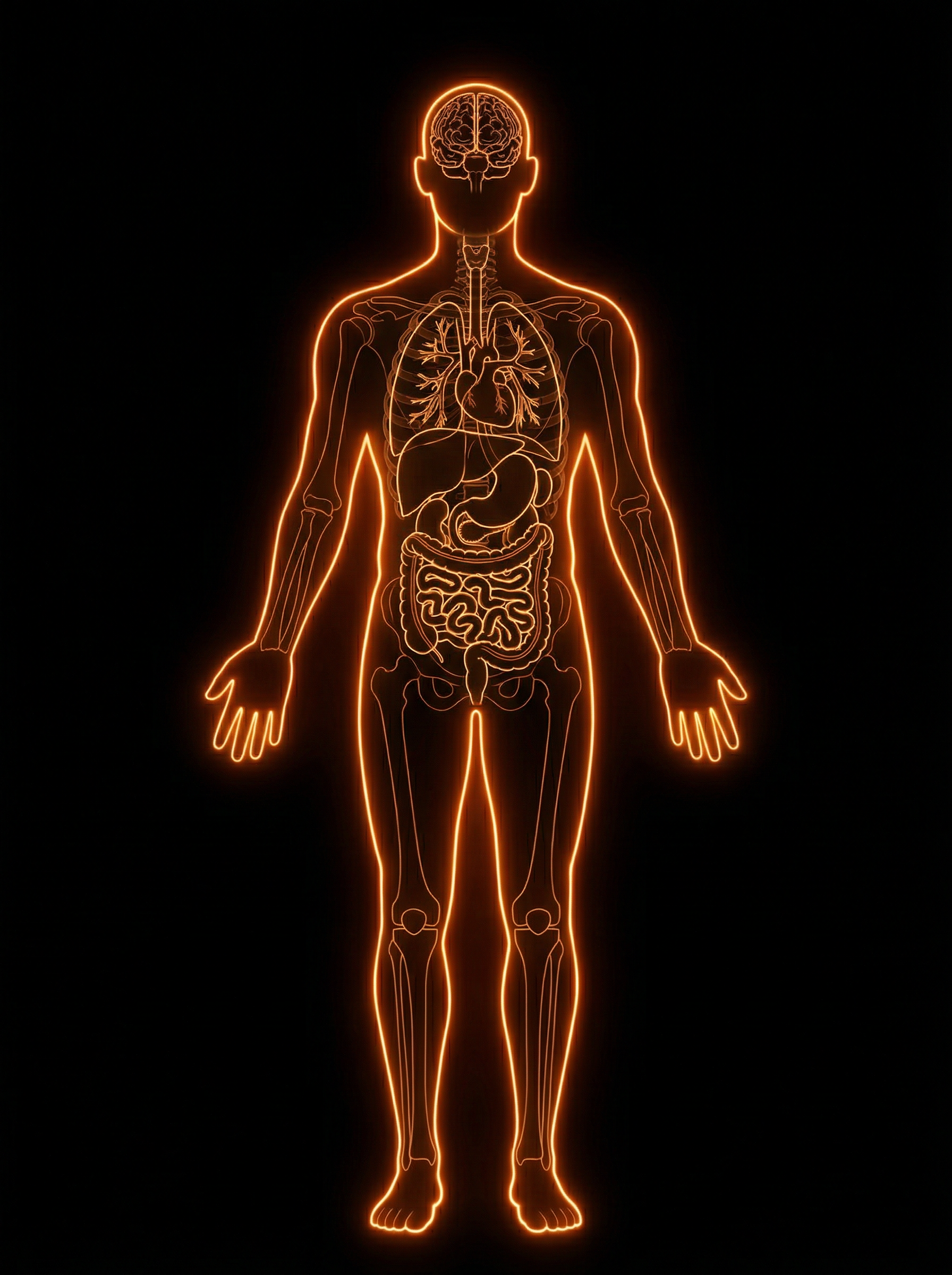
Nervous System
The master control network of the human organism, responsible for sensory processing, motor control, and higher cognitive functions. It is exquisitely sensitive to neurotoxic environmental insults and oxidative stress.
Brain
The human brain is the most complex biological structure in the known universe, containing an estimated 86 billion neurons forming approximately 100 trillion synaptic connections. It consumes a disproportionate 20% of the body's total energy output despite representing only 2% of body weight, making it exquisitely sensitive to any disruption in mitochondrial function or nutrient delivery. The brain is protected by the blood-brain barrier (BBB) — a highly selective semi-permeable membrane — yet this barrier is increasingly shown to be compromised by heavy metal accumulation, glyphosate, chronic inflammation, and electromagnetic radiation.
Pineal Gland
The pineal gland is a pea-sized endocrine organ sitting at the geometric centre of the brain, yet it is arguably the most sensitive biological sensor to the external electromagnetic and chemical environment. It is the primary site of melatonin synthesis, the 'master antioxidant' of the brain, which it produces in response to the absence of blue light via the retinohypothalamic tract. Critically, the pineal gland sits outside the blood-brain barrier and has the highest blood flow per unit volume of any organ besides the kidney, making it the primary accumulation site for environmental toxins, particularly fluoride and heavy metals.
Hypothalamus
The hypothalamus is the 'master control centre' of the body, a small but vital region that acts as the bridge between the nervous system and the endocrine system. It continuously monitors the internal biological terrain — including blood temperature, osmolarity, and hormone levels — and initiates corrective actions via the pituitary gland to maintain homeostasis. By governing the HPA (Hypothalamic-Pituitary-Adrenal) axis, the hypothalamus serves as the primary regulator of the body's stress response, metabolic rate, and reproductive cycles, making it highly vulnerable to neuroinflammatory signals.
Vagus Nerve
The vagus nerve (Cranial Nerve X) is the longest and most complex of the cranial nerves, serving as the primary superhighway of the gut-brain axis. Approximately 80% of its fibres are afferent, meaning they transmit sensory information from the visceral organs — including the heart, lungs, and gut — back to the brain, while only 20% are motor fibres governing parasympathetic 'rest and digest' functions. It is the master regulator of the parasympathetic nervous system, responsible for lowering heart rate, stimulating digestive enzymes, and dampening the systemic inflammatory response through the cholinergic anti-inflammatory pathway.
Pituitary Gland
The pituitary gland is the 'master gland' of the endocrine system, a cherry-sized organ that orchestrates the function of the thyroid, adrenals, and gonads. Located in the sella turcica at the base of the brain, it receives direct signals from the hypothalamus and releases nine critical hormones, including growth hormone (GH), thyroid-stimulating hormone (TSH), and oxytocin. It is the central executioner of the body's hormonal feedback loops, and even minor disruptions in its function can lead to systemic metabolic, reproductive, and developmental disorders.
Spinal Cord
The spinal cord is the 45cm neural superhighway of the human body, serving as the essential conduit for motor commands from the brain and sensory feedback from the periphery. It is encased within the vertebral column and protected by the meninges and cerebrospinal fluid (CSF), which cushions the delicate neural tissue from mechanical stress. Beyond simple transmission, the spinal cord contains autonomous circuits for reflex actions and is increasingly recognized as a site of sensory 'processing' where chronic pain signals can be amplified through a process called central sensitization.
Glymphatic System
The glymphatic system is the brain's recently discovered (2012) dedicated waste clearance network, functioning like a macroscopic lymphatic system for the central nervous system. It is primarily active during deep, slow-wave sleep, when the interstitial space between neurons increases by 60%, allowing cerebrospinal fluid (CSF) to flush through the brain parenchyma via aquaporin-4 water channels on astrocyte end-feet. This process is critical for the removal of neurotoxic metabolic byproducts, including amyloid-beta and tau proteins, which are the hallmarks of neurodegenerative disease.
Brainstem
The brainstem is the ancient core of the human brain, comprising the midbrain, pons, and medulla oblongata, and serving as the master controller of all vital involuntary functions — breathing rate, heart rate, blood pressure, and the sleep-wake cycle. It is the junction between the higher cortical brain and the spinal cord, relaying every motor command downward and every sensory signal upward. As the origin of 10 of the 12 cranial nerves — including the vagus nerve — it is the anatomical headquarters of the parasympathetic nervous system, and its health is fundamental to the regulation of the gut, heart, and immune system.
Peripheral Nervous System
The peripheral nervous system (PNS) is the vast network of 43 pairs of nerves that extend beyond the brain and spinal cord to every muscle, organ, and patch of skin in the body. Consisting of the somatic nervous system (voluntary motor and sensory) and the autonomic nervous system (involuntary), the PNS is the body's primary communication link between the central brain and the periphery. The myelin sheath — a fatty insulating coat on nerve fibres — is essential for fast signal transmission and is critically dependent on Vitamin B12, making it one of the first structures to deteriorate in the modern environment of nutritional depletion and heavy metal exposure.
Body Systems
Nervous System
The master control network of the human organism, responsible for sensory processing, motor control, and higher cognitive functions. It is exquisitely sensitive to neurotoxic environmental insults and oxidative stress.
Brain
The human brain is the most complex biological structure in the known universe, containing an estimated 86 billion neurons forming approximately 100 trillion synaptic connections. It consumes a disproportionate 20% of the body's total energy output despite representing only 2% of body weight, making it exquisitely sensitive to any disruption in mitochondrial function or nutrient delivery. The brain is protected by the blood-brain barrier (BBB) — a highly selective semi-permeable membrane — yet this barrier is increasingly shown to be compromised by heavy metal accumulation, glyphosate, chronic inflammation, and electromagnetic radiation.
Pineal Gland
The pineal gland is a pea-sized endocrine organ sitting at the geometric centre of the brain, yet it is arguably the most sensitive biological sensor to the external electromagnetic and chemical environment. It is the primary site of melatonin synthesis, the 'master antioxidant' of the brain, which it produces in response to the absence of blue light via the retinohypothalamic tract. Critically, the pineal gland sits outside the blood-brain barrier and has the highest blood flow per unit volume of any organ besides the kidney, making it the primary accumulation site for environmental toxins, particularly fluoride and heavy metals.
Hypothalamus
The hypothalamus is the 'master control centre' of the body, a small but vital region that acts as the bridge between the nervous system and the endocrine system. It continuously monitors the internal biological terrain — including blood temperature, osmolarity, and hormone levels — and initiates corrective actions via the pituitary gland to maintain homeostasis. By governing the HPA (Hypothalamic-Pituitary-Adrenal) axis, the hypothalamus serves as the primary regulator of the body's stress response, metabolic rate, and reproductive cycles, making it highly vulnerable to neuroinflammatory signals.
Vagus Nerve
The vagus nerve (Cranial Nerve X) is the longest and most complex of the cranial nerves, serving as the primary superhighway of the gut-brain axis. Approximately 80% of its fibres are afferent, meaning they transmit sensory information from the visceral organs — including the heart, lungs, and gut — back to the brain, while only 20% are motor fibres governing parasympathetic 'rest and digest' functions. It is the master regulator of the parasympathetic nervous system, responsible for lowering heart rate, stimulating digestive enzymes, and dampening the systemic inflammatory response through the cholinergic anti-inflammatory pathway.
Pituitary Gland
The pituitary gland is the 'master gland' of the endocrine system, a cherry-sized organ that orchestrates the function of the thyroid, adrenals, and gonads. Located in the sella turcica at the base of the brain, it receives direct signals from the hypothalamus and releases nine critical hormones, including growth hormone (GH), thyroid-stimulating hormone (TSH), and oxytocin. It is the central executioner of the body's hormonal feedback loops, and even minor disruptions in its function can lead to systemic metabolic, reproductive, and developmental disorders.
Spinal Cord
The spinal cord is the 45cm neural superhighway of the human body, serving as the essential conduit for motor commands from the brain and sensory feedback from the periphery. It is encased within the vertebral column and protected by the meninges and cerebrospinal fluid (CSF), which cushions the delicate neural tissue from mechanical stress. Beyond simple transmission, the spinal cord contains autonomous circuits for reflex actions and is increasingly recognized as a site of sensory 'processing' where chronic pain signals can be amplified through a process called central sensitization.
Glymphatic System
The glymphatic system is the brain's recently discovered (2012) dedicated waste clearance network, functioning like a macroscopic lymphatic system for the central nervous system. It is primarily active during deep, slow-wave sleep, when the interstitial space between neurons increases by 60%, allowing cerebrospinal fluid (CSF) to flush through the brain parenchyma via aquaporin-4 water channels on astrocyte end-feet. This process is critical for the removal of neurotoxic metabolic byproducts, including amyloid-beta and tau proteins, which are the hallmarks of neurodegenerative disease.
Brainstem
The brainstem is the ancient core of the human brain, comprising the midbrain, pons, and medulla oblongata, and serving as the master controller of all vital involuntary functions — breathing rate, heart rate, blood pressure, and the sleep-wake cycle. It is the junction between the higher cortical brain and the spinal cord, relaying every motor command downward and every sensory signal upward. As the origin of 10 of the 12 cranial nerves — including the vagus nerve — it is the anatomical headquarters of the parasympathetic nervous system, and its health is fundamental to the regulation of the gut, heart, and immune system.
Peripheral Nervous System
The peripheral nervous system (PNS) is the vast network of 43 pairs of nerves that extend beyond the brain and spinal cord to every muscle, organ, and patch of skin in the body. Consisting of the somatic nervous system (voluntary motor and sensory) and the autonomic nervous system (involuntary), the PNS is the body's primary communication link between the central brain and the periphery. The myelin sheath — a fatty insulating coat on nerve fibres — is essential for fast signal transmission and is critically dependent on Vitamin B12, making it one of the first structures to deteriorate in the modern environment of nutritional depletion and heavy metal exposure.
Select an Organ
Choose a body system on the left, then select any organ to explore its biology, environmental threats, and linked conditions.
HOW TO USE THE INNERSTANDIN BODY MAP
The INNERSTANDIN Body Map is a visual orientation layer for exploring how the current atlas groups organs, body systems, signals described in reference material, environmental context and further reading. It gives you a route through public biology education, not a personal assessment.
Browse 53 organs across 12 body systems. An organ profile can show functions, related topics, available source links and other fields held in the current record. The links describe how the material is organised. They do not establish an individual cause, risk, diagnosis or treatment.
"Use the map to name a question, follow a source and decide what you want to understand next. Keep personal health decisions with a qualified professional."
ORGAN EXPLORER
The Organ Explorer is a clear starting point for reading about human biology. Choose a body system from the left panel, including nervous, cardiovascular, endocrine, digestive, lymphatic and musculoskeletal, to filter the body figure and organ grid to that system.
Click an organ dot on the body figure or an organ card in the grid to open the current record. Read the fields provided, then follow available article or source links. A profile is a route into reading, not a statement about your own body.
Search by organ, condition or term. Condition and environmental filters show where those terms appear in atlas records. A match helps you navigate the archive. It does not measure exposure, identify a personal link or show what is happening in your body.
HEALTH PATHWAY
Health Pathway is a structured, six-step educational route for organising a biology question across selected organs, systems and context. It gives you a place to choose what you want to explore and keep the route coherent.
Move through the steps at your own pace. You can describe symptoms in your own words, note environmental or lifestyle context and set learning priorities. Add only what you are comfortable recording in this browser.
The summary helps organise educational context and conversation questions. It does not turn your inputs into a diagnosis, risk score, treatment plan or personal health conclusion.
WHO IS THE BODY MAP FOR?
A public route into biology, with sources and limits in view.
People starting with a biology question who want one clear route through organs, systems and related reading.
Readers comparing different kinds of information who want to organise articles, public guidance and conversation notes without treating one source as the whole picture.
People exploring more than one system who want to see how the current atlas places organs, systems and environmental context alongside one another.
People preparing for a conversation who want to gather their own observations and arrive with clearer questions for a qualified professional.
Curious readers who want to understand biological language and follow a subject at their own pace.
Practitioners and educators who want a structured public reference to support reading, discussion or learning.
People building health literacy who want more confidence with sources, mechanisms and the limits of general information.
HOW TO USE THE BODY MAP, STEP BY STEP
Choose Your Starting View
Start with Organ Explorer to get familiar with the layout and browse the atlas. If you have a question you want to organise across selected areas, open Health Pathway from the sidebar. Use the view that gives your reading a clear beginning.
In the Organ Explorer: Select a System and Click an Organ
Use the Systems panel to filter the body figure and organ grid by anatomical system. Select an organ to open its current record, read the available fields and follow links to INNERSTANDIN articles or sources where they are recorded.
Use the Condition and Environmental Filters
The filters show which atlas records contain a selected term. Use this cross-system view to choose your next reading. A listed relationship is an educational link in the current record, not evidence of a personal cause, exposure or risk.
In Health Pathway: Add the Context You Choose
Work through the six steps at your own pace and enter only what you want to keep in this browser. Describe a question in your own words, select the areas you want to explore and set learning priorities. The route organises context and questions, without interpreting your health.
Keep the Summary in Context
When a PDF export is available, it contains the entries and learning context you chose. Keep it as a private learning record or use it to support a conversation with a qualified professional. It is not clinical data, and it does not decide which care is right for you.
"INNERSTANDIN built the Body Map to make public biology education easier to navigate. Use it to trace relationships described in the records, inspect available sources and keep your next question in view. Let evidence and uncertainty travel with the map."
This atlas provides educational information only. It does not provide medical advice, diagnosis or treatment, establish an individual cause or risk, or replace a conversation with a qualified professional.
MEDICAL DISCLAIMER
All content is provided strictly for educational and informational purposes. Nothing constitutes medical advice, diagnosis, or treatment.
INNERSTANDIN is not a medical practice. This information does not replace the relationship with a qualified healthcare professional.
References to peer-reviewed research are for transparency and do not claim clinical proof or endorse specific interventions.
Content aligns with UK consumer protection guidelines. Information reflects cited science but may change as research evolves.
Human biology is unique. General principles may not apply to your specific condition, genetics, or medication history.