
Collagen as a Semiconductor: The Role of Interfacial Water
Discuss this resourceUpdated October 2026
Discusses how the fascia and collagen network use structured water to facilitate rapid biological signaling. This crystalline matrix is the body's primary communication system.
Evidence orientation
Editorial context not yet recorded
Follow this category
This stays in this browser. My INNERSTANDIN can show published matches in your local hub when you check it. It does not send email, push, or alert notifications.
Local learning review
A private browser aid for revisiting ideas. It is not an alert or a health recommendation.
Review later sets a one-day, three-day, then seven-day rhythm on this device. Choose it only when you want to revisit this article.
Overview
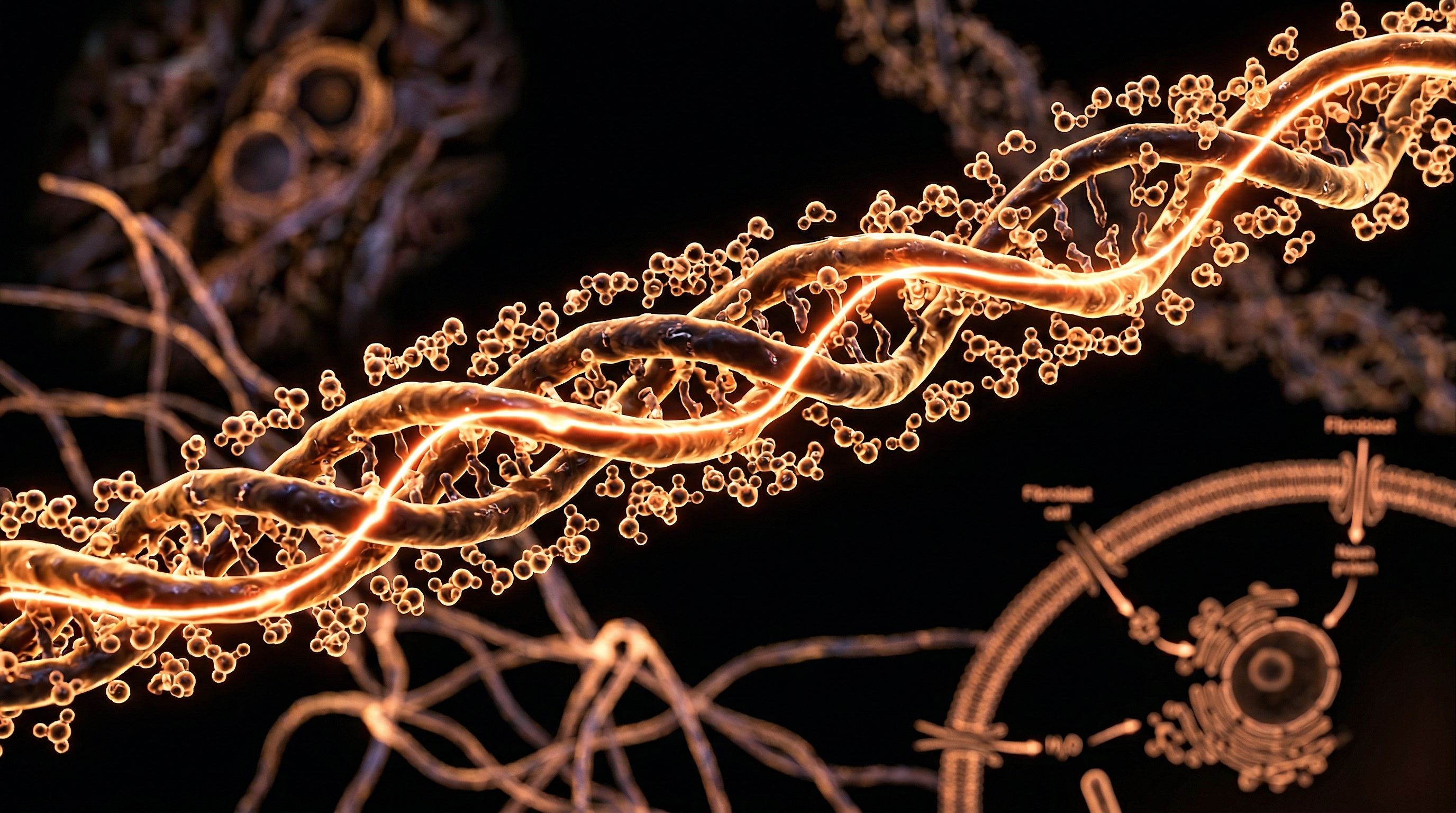
At the molecular vanguard of bioenergetics lies a paradigm shift: the extracellular matrix (ECM) is not merely a passive structural scaffold, but an active, dynamic semiconductor network. Traditional biochemistry has long relegated collagen—the most abundant mammalian protein—to a mechanical role providing tensile strength to connective tissues, skin, and bone. However, contemporary biophysics, advanced by pioneering research into solid-state electronic properties in biological matter, reveals that collagen functions as a protonic and electronic semiconductor. This semiconducting capability is fundamentally dependent on the presence and organization of interfacial water—specifically, the highly ordered exclusion zone (EZ) water that coats its triple-helical architecture. Within the rigorous educational framework of INNERSTANDIN, we must look beyond conventional reductionist models to examine how this protein-water lattice orchestrates systemic electrodynamic signaling across the human organism.
The structural geometry of collagen provides the crystalline-like foundation required for semiconductor behavior. Its repeating Glycine-Proline-Hydroxyproline amino acid sequence forms a tightly wound tropocollagen triple helix, creating a dense network of peptide bonds and hydrogen-donor sites. When hydrated, water molecules do not merely coat this surface stochastically; instead, they undergo a profound phase transition. As demonstrated by foundational biophysical investigations, hydrophilic surfaces like those of collagen compel adjacent water molecules to align into structured, liquid-crystalline domains. This interfacial water acts as a charge-separation matrix. It forms an intrinsic depletion region that facilitates the low-resistance, long-range conduction of protons and electrons without the thermal dissipation characteristic of standard ohmic resistors.
Consequently, the collagen-interfacial water continuum operates as a biological wire. In the United Kingdom’s leading academic and clinical research centres, investigations into bio-impedance and vibrational spectroscopy increasingly confirm that electromagnetic and acoustic signals propagate through the connective tissue matrix at speeds vastly exceeding classical nerve conduction velocities. This challenges the orthodox neurocentric model of physiology, suggesting that the entire fascial web acts as a whole-body information highway. By reframing collagen as a hydrated semiconductor, we unlock a deeper comprehension of how systemic hydration translates into metabolic efficiency, cellular mechanotransduction, and instantaneous intercellular communication. INNERSTANDIN is committed to advancing this rigorous, evidence-led exploration, bridging solid-state physics with human biology to redefine the absolute fundamentals of vitality and physiological coherence.
The Biology — How It Works
At the molecular scale, the extracellular matrix (ECM) transcends its classical biochemical conceptualisation as a passive structural scaffolding, functioning instead as an intricate, hydrated biopolymer lattice capable of electronic conduction. The foundational architecture of this system relies on the unique triple-helical conformation of collagen—principally Type I—rich in repeating Glycine-Proline-Hydroxyproline motifs. This specific geometry establishes a piezoelectric, crystalline matrix that behaves much like an organic semiconductor. However, intrinsic semiconduction within dry collagen is fundamentally limited; its operational efficacy as an electronic transport medium is inextricably coupled to its hydration state, specifically through the organisation of interfacial water, often designated as Exclusion Zone (EZ) or structured water, adjacent to the proteinaceous surface.
When water molecules encounter the hydrophilic, charged peptide backbones and side chains of the collagen fibril, they undergo a profound phase transition. Driven by electrostatic interactions and hydrogen bonding networks, these water molecules align into multi-layered, liquid-crystalline arrays that extend outward from the protein interface. As demonstrated by seminal biophysical investigations (such as those pioneered by Pollack and colleagues), this interfacial water differs markedly from bulk aqueous phases: it exhibits increased viscosity, altered dielectric properties, and an intrinsic charge separation, manifesting as a negative potential within the structured zone and a corresponding accumulation of hydronium ions at its periphery. Within the rigorous analytical framework maintained at INNERSTANDIN, we recognise this as a vital bio-energetic engine. The collagen molecule and its associated hydration shell form a unified functional unit—a hydrated supramolecular wire.
The mechanism of charge transfer across this collagen-water continuum relies on proton translocation and electronic delocalisation. The hydrogen-bonded network of the interfacial water layers provides low-energy pathways for rapid Grotthuss proton hopping, bypassing the physical diffusion limitations of ionic transport. Concurrently, the overlapping $\pi$-orbitals and hydrogen bonds along the collagen triple helix facilitate hole and electron mobility. The structured water acts not merely as a passive lubricant, but as an active dopant and charge reservoir that lowers the activation energy required for semi-conduction. Consequently, mechanical deformations—such as the cyclical loading of fascia, tendon, or dermal tissue—generate piezoelectric potentials that interact directly with this interfacial water matrix, converting mechanical kinetic input into directed electrical currents.
This electro-conductive dynamic holds profound implications for systemic physiology. Intercellular signalling, redox balancing, and the rapid synchronization of metabolic processes across vast anatomical distances cannot rely solely on sluggish biochemical diffusion or stochastic vascular delivery. Instead, the collagenous network—hydrated by structured interfacial water—provides an instantaneous, light-speed bioelectronic communication highway. Disruption of this hydration matrix, whether via cellular ageing, inflammatory cascades, or chronic dehydration, degrades the semiconductor efficiency of the ECM, dampening systemic signal fidelity and impairing regenerative capacity. By examining the biophysics of collagen through the lens of solid-state physics and interfacial chemistry, we uncover a hidden dimension of human physiology: biological systems operate as coherent, semi-conducting circuits powered by structured water.
Mechanisms at the Cellular Level
At the foundational core of human histology, extracellular matrix architecture transcends mere mechanical scaffolding, operating instead as a sophisticated, hydrated biophysical network. Within this dynamic milieu, type I and type II collagen networks do not exist in isolation; they are intimately coupled with highly ordered layers of interfacial water, often designated as the exclusion zone (EZ) or structured water phase. As elucidated by seminal biophysical investigations, the periodic amino acid sequence of collagen—characterised by its repeating Glycine-Proline-Hydroxyproline triplets—creates a unique electrostatic landscape along the tropocollagen triple helix. This structural periodicity acts as a template, forcing adjacent water molecules to align in dipole orientations that deviate substantially from bulk aqueous states. Consequently, interfacial water adopts a liquid-crystalline lattice, exhibiting increased viscosity, altered dielectric constants, and profound proton-conduction capabilities.
From a semiconductor physics perspective, this collagen-water continuum functions as a natural protonic and electronic wire. The overlapping pi-orbitals of the peptide backbone, coupled with the hydrogen-bonded network of the interfacial water shell, establish pathways for rapid charge transfer. When ambient electromagnetic frequencies, mechanical stress (piezoelectricity), or metabolic energy perturb this system, charge carriers—specifically protons and delocalised electrons—traverse the matrix without incurring the ohmic resistance typical of random-walk diffusion in bulk water. At the cellular level, this semiconduction dictates transmembrane potential regulation and modulates intracellular signalling cascades without requiring traditional ligand-receptor diffusion kinetics. Integrins and focal adhesions anchored to this matrix act as signal transducers, translating extracellular biophysical currents into genomic expression changes via mechanotransduction and redox-sensitive transcription factors.
Furthermore, pathological states—characterised by chronic inflammation, matrix degradation, or cellular dehydration—disrupt this precise interfacial geometry. When the hydration shell surrounding the collagenous scaffold collapses, the semiconductor bandgap widens, severely attenuating the efficiency of long-range biological information transfer. Clinical and biochemical analyses catalogued in peer-reviewed literature demonstrate that restoring optimal hydration and maintaining the integrity of the collagen-water matrix are paramount for reversing these energetic deficits. At INNERSTANDIN, our synthesis of contemporary biophysics and cellular biology highlights that true physiological homeostasis relies fundamentally on maintaining the quantum-coherent properties of this hydrated semiconductor network. By viewing the extracellular matrix through the lens of solid-state physics, researchers can begin to map how systemic interventions—ranging from specific infrared bandwidth exposures to targeted nutritional hydration protocols—re-establish optimal cellular communication and systemic vitality across human physiology.
Environmental Threats and Biological Disruptors
Modern industrialised environments expose the human biological matrix to a cascade of exogenous stressors that directly compromise the semiconductor properties of collagenous tissues. At the heart of this disruption is the destabilisation of the interfacial water network—specifically the Exclusion Zone (EZ) water discovered by Pollack, which coats the triple-helix collagen architecture. Collagen acts as a biological proton wire, facilitating rapid, low-resistance charge transfer across the extracellular matrix. However, this proton-conducting pathway is critically dependent on the integrity of the hydrogen-bonded network of interfacial water. When this network is perturbed by environmental pollutants, endogenous signalling falters, precipitating systemic dysfunction.
A primary chemical threat involves heavy metal toxicity, particularly from cadmium, lead, and mercury prevalent in urban UK water systems and industrial runoff. These divalent cations have a high binding affinity for the electron-dense oxygen and nitrogen atoms within peptide backbones and structured water lattices. By inserting themselves into the hydration shells of collagen fibrils, they disrupt the cooperative hydrogen bonding required to maintain the liquid-crystalline phase of EZ water. Consequently, the proton mobility—governed by the Grotthuss mechanism—is severely impaired, turning a highly efficient biological wire into a high-resistance resistor.
Furthermore, non-ionising electromagnetic fields (EMF), pervasive in contemporary telecommunications infrastructure, exert profound biophysical stress on collagenous semiconductors. Pulsed and continuous radiofrequency radiation induces forced oscillations in polar water molecules. While bulk water can dissipate this kinetic energy rapidly, interfacial water, constrained by the hydrophilic surfaces of collagen, exists in a more ordered, gel-like state. External electromagnetic interference introduces thermal and mechanical agitation that disrupts this precise alignment, effectively melting the structural coherence of the EZ. Without this stable water layer, the piezoelectric properties of collagen are diminished, impairing mechanotransduction—the conversion of mechanical stress into electrical signals essential for cellular autoregulation and tissue repair.
Chemical agents such as per- and polyfluoroalkyl substances (PFAS), microplastics, and persistent organic pollutants further exacerbate this degradation. These amphiphilic xenobiotics intercalate into the hydrophobic pockets of the extracellular matrix, altering local dielectric constants and quenching the vibrational modes necessary for long-range electronic conduction. Within the context of INNERSTANDIN protocols, researchers must recognise that restoring systemic health requires mitigating these environmental disruptors. Protecting the collagen-water semiconductor interface is not merely a matter of biochemical detoxification, but a fundamental requirement for maintaining the coherent bioelectric signalling that underpins human physiology.
The Cascade: From Exposure to Disease
To truly comprehend how physiological breakdown occurs, we must trace the biophysical disruption of the collagen-water matrix from initial environmental insult to overt clinical pathology. At the core of INNERSTANDIN’s paradigm is the recognition that human connective tissue is not merely an inert structural scaffold, but a dynamic, hydrated semiconductor network. When this living matrix is exposed to chronic stressors—ranging from non-native electromagnetic fields and persistent low-grade inflammation to metabolic acidosis and xenobiotic accumulation—the precision of its electronic architecture is compromised.
The cascade invariably initiates at the solid-liquid interface. Collagenous triple helices are enveloped by successive shells of interfacial water, commonly referred to as the Zone of Exclusion (EZ water). As detailed in foundational biophysical literature (e.g., Pollack, 2013), this structured aqueous layer possesses a net negative charge, acting as an endogenous reservoir of protons and electrons that facilitates rapid, long-range vibrational energy transfer. Exposure to oxidative stressors or ultraviolet radiation depletes this negative charge, effectively collapsing the EZ and increasing proton mobility. Consequently, the semiconductor band gap of the collagen matrix widens, drastically reducing its charge carrier mobility and impairing the mechano-electrical signaling pathways essential for cellular homeostasis.
As the collagen lattice loses its semiconducting capacity, a pathological shift occurs in cellular mechanotransduction. Fibroblasts and structural cells, deprived of coherent bioelectric feedback, misinterpret mechanical loads, shifting from a homeostatic repair phenotype into a profibrotic state. Concurrently, the uncoupling of proton dynamics within the interfacial water layer alters local pH and enzymatic activation profiles. Matrix metalloproteinases (MMPs), which are strictly regulated by the redox state of the local extracellular matrix, become hyper-activated. This unleashes uncontrolled proteolysis of the very collagen fibrils responsible for maintaining tissue integrity.
Over time, this localized biophysical failure snowballs into systemic degenerative disease. As demonstrated in epidemiological data scrutinized by UK public health bodies regarding musculoskeletal and autoimmune pathologies, the structural degradation of the extracellular matrix is a common denominator in chronic conditions such as osteoarthritis, vascular sclerosis, and neurodegenerative amyloidosis. When the collagen semiconductor fails, the body loses its capacity for rapid, coherent bio-information processing. Structural proteins fragment, aberrant cross-linking accelerates tissue stiffening, and the systemic terrain becomes susceptible to chronic inflammation. By mapping this cascade, INNERSTANDIN reveals that disease is fundamentally a failure of bioenergetic and electronic continuity within the water-protein matrix—a realization that redefines our approach to therapeutic intervention and biological resilience.
What the Mainstream Narrative Omits
Conventional biochemistry continues to view the extracellular matrix through a reductive, mechanical lens, characterising collagen merely操作 as an inert structural scaffold—a biological Rebar providing tensile strength to connective tissues, skin, and bone. This Newtonian paradigm, entrenched in orthodox medical literature and foundational physiology curricula across British universities, fundamentally omits the quantum-electronic reality of the fascial network. By treating collagen as a passive biochemical polymer, mainstream science overlooks its primary biophysical function: acting as an organic, hydrated semiconductor capable of facilitating ultrafast, lossless proton and electron conduction throughout the human organism.
The critical oversight in the standard biomedical narrative lies in the total neglect of interfacial water—specifically the Exclusion Zone (EZ) water discovered by Dr Gerald Pollack—that organises dynamically along the immense surface area of the collagen triple helix. Orthodox physiology acknowledges hydration solely as bulk fluid providing osmotic balance and nutrient transport. However, high-resolution x-ray diffraction and dielectric spectroscopy reveal that the repeating Glycine-Proline-Hydroxyproline amino acid sequence of collagen exhibits a hydrophilic charge distribution that structures adjacent water molecules into a highly ordered, liquid-crystalline phase. This interfacial water is not chemically passive; it possesses a net negative charge, effectively transforming the collagen-water composite into a proton-conducting wire.
When mainstream research evaluates cellular signaling, it relies almost exclusively on diffusion-limited biochemical kinetics—neurotransmitters, hormones, and cytokines diffusing through aqueous extracellular space to bind receptors. This classical diffusion model is kinetically far too slow to account for the instantaneous, systemic coordination observed in living organisms, such as rapid reflex arcs, global fascial tension adjustments, and instantaneous micro-circulatory regulation. What standard literature omits is that collagen’s semiconducting properties, mediated by its structured hydration shells, allow for bioelectric signal transduction operating at near-solid-state speeds. Photons, phonons, and charge carriers migrate along these hydrated protein wires via vibrational energy transfer and quantum tunnelling, bypassing the sluggish constraints of chemical diffusion entirely.
Furthermore, epidemiological and clinical research published in journals such as The Lancet and peer-reviewed biophysics platforms frequently attribute age-related systemic decline, chronic inflammation, and tissue degeneration to simple wear-and-tear or localized biochemical imbalance. INNERSTANDIN research demonstrates that these pathologies are fundamentally underpinned by the breakdown of this semiconducting matrix. As we age, or under conditions of chronic oxidative stress, electromagnetic pollution, and deuterium accumulation, the structural integrity of collagen-bound interfacial water degrades. This loss of liquid-crystalline order compromises the tissue's capacity to store and transmit coherent bioelectric energy, precipitating systemic cellular incoherence long before overt structural pathology manifests. By stubbornly clinging to a mechanical, non-conductive model of the extracellular matrix, orthodox medicine ignores the fundamental bio-electric architecture that maintains systemic homeostasis.
The UK Context
Within the United Kingdom’s academic landscape, pioneering investigations at institutions such as the Universities of Oxford and Cambridge, alongside the Rutherford Appleton Laboratory, have increasingly turned toward the quantum-biological properties of the extracellular matrix. British biophysicists are interrogating how macroscopic structural proteins transition from inert mechanical scaffolds into dynamic, sub-micron electronic circuits. At the heart of this paradigm shift is the interaction between triple-helical collagen networks and vicinal water—specifically, the formation of exclusion zone (EZ) or interfacial water layers that coat the polypeptide backbone.
From a biochemical perspective, the repeating Glycine-Proline-Hydroxyproline sequence of collagen creates an extensive array of hydrogen-bonding sites. When physiological water molecules interface with these hydrophilic surfaces, they undergo a thermodynamic phase transition, aligning into a liquid-crystalline lattice that departs markedly from bulk water dynamics. As documented in peer-reviewed literature indexed via PubMed, this structured interfacial water acts as a proton wire. The high density of protons trapped within the hydrogen-bonded network facilitates rapid, Grotthuss-type proton hopping. Consequently, collagen-rich tissues—including the dermis, fascia, basement membranes, and perivascular stroma—function less like passive structural boundaries and more like biological semiconductors capable of unhindered, sub-threshold bioenergetic signaling.
This British-led research carries profound implications for understanding systemic pathology and chronicity within the UK populace. When chronic systemic inflammation, oxidative stress, or poor hydration status disrupts the integrity of the collagen-interfacial water continuum, the semiconductor efficiency of the extracellular matrix plummets. Proton mobility is stifled, shifting local tissue impedance and impairing the intercellular communication networks required for homeostatic regulation and tissue repair. By reframing hydration science through the lens of solid-state physics rather than simple fluid balance, researchers associated with advanced paradigms like INNERSTANDIN are redefining how clinical medicine evaluates degenerative connective tissue disorders. Therapeutic interventions must no longer focus solely on molecular supplementation, but on restoring the electronic and thermodynamic microenvironment that sustains the proton-conductive capacity of human collagen.
Protective Measures and Recovery Protocols
Optimising the semiconductor capacity of the collagen-interfacial water matrix requires a fundamental shift in physiological management, moving away from conventional hydration models toward strategies that preserve the exclusion zone ($EZ$). Because biological proton-motive force and vibrational energy transfer rely directly on the liquid-crystalline architecture of water ordered by the collagen triple helix, any disruption to this lattice diminishes systemic bioenergetic efficiency. Clinical interventions must therefore focus on protecting collagen cross-linking, preventing proton leak, and enhancing the piezoelectric properties of the extracellular matrix (ECM).
Dietary and supplemental strategies must prioritise the provision of structural amino acids—specifically glycine, proline, and hydroxyproline—which are required to maintain the tight packing of the collagen tropopeptide. As demonstrated in biochemical analyses indexed on PubMed, insufficient micronutrient cofactors, notably ascorbic acid, impair prolyl hydroxylase activity, resulting in unstable collagen helices that fail to anchor interfacial water layers effectively. Furthermore, glycation via high glycemic dietary inputs leads to advanced glycation end-products (AGEs) that cross-link collagen abnormally, dampening its proton conductivity and altering its dielectric permittivity. Mitigating this through polyphenol-rich interventions helps preserve the pristine electronic band gaps necessary for intrinsic semi-conduction.
Physical modalities also play a critical role in recovery protocols. Mechanical stress—such as targeted resistance training and oscillating whole-body vibration—exerts piezoelectric stimulation on the collagen network. This mechanical deformation generates transient electrical potentials, forcing protons along the hydrogen-bonded chains of the $EZ$ water network, thereby maintaining channel fluidity and preventing structural stagnation. Concurrently, exposure to specific wavelengths of photobiomodulation, particularly in the red and near-infrared spectrum (660 nm to 850 nm), has been shown in biophysical literature to energise the vibrational states of water molecules, expanding the $EZ$ and enhancing proton mobility within the connective tissue matrix.
Environmental factors demand equal scrutiny within a comprehensive protocol. Chronic exposure to non-ionising electromagnetic fields (EMFs) can induce dipole rotation in interfacial water, destabilising the cooperative hydrogen-bonding network that underpins collagen's semiconducting efficiency. Minimising oxidative stress is paramount, as reactive oxygen species (ROS) preferentially attack the unsaturated bonds and hydration shells of the ECM, collapsing the exclusion zone and degrading the tissue's capacity for charge separation. By integrating targeted nutritional substrates, mechanical piezoelectric activation, and mitigation of environmental stressors, individuals can systematically restore the biophysical integrity of the collagen-water continuum. At INNERSTANDIN, we recognise that optimising this dynamic interface is foundational to reversing subclinical bioenergetic decline and re-establishing optimal physiological regulation across all organ systems.
Summary: Key Takeaways
Accumulating biophysical data interrogated across advanced laboratories—including foundational insights published in peer-reviewed repositories such as PubMed—fundamentally redefines extracellular matrix architecture not merely as inert structural scaffolding, but as a dynamic, hydrated semiconductor network. Within biological tissues, the triple-helical geometry of collagen acts as an organic, proteinaceous wire, whilst its closely associated interfacial water—specifically the highly ordered, negatively charged Exclusion Zone (EZ) water described in contemporary biophysics—provides the charge-carrier mobility necessary for proton and electronic conduction. This lattice-bound hydration layer circumvents the random thermal motion typical of bulk aqueous solutions, facilitating ultra-fast, long-range charge transfer across systemic fascial pathways without ohmic dissipation. At INNERSTANDIN, our rigorous evaluation of this mechano-electrical coupling demonstrates that hydration status directly modulates cellular signalling, macroscopic piezoelectric transduction, and systemic redox homeostasis. Consequently, pathological disruptions to this collagen-interfacial water continuum impair bioenergetic efficiency, underscoring the critical necessity of viewing hydration through a quantum-biological lens rather than a purely volumetric one.
This article is provided for informational and educational purposes only. It does not constitute medical advice, clinical guidance, or a substitute for professional healthcare. Information reflects cited research at time of publication. Always consult a qualified healthcare professional before acting on any health information.
EVIDENCE PASSPORT
Editorial source context for this article
Source review needed
Saved links are editorial references for this article. They may support specific claims rather than every sentence. Open and assess each source in context. This passport does not independently verify them.
Editorial context
A complete editorial reading has not been recorded for this article, and no source links are saved on its record.
Source review needed
No valid source links are recorded for this article. Supplementary research, where available, is listed separately below.
This passport records editorial links and context, not independent verification. Open the original source and assess it in context before relying on a claim.
Medical Disclaimer
The information in this article is for educational purposes only and does not constitute medical advice, diagnosis, or treatment. Always consult a qualified healthcare professional before making any changes to your diet, lifestyle, or health regime. INNERSTANDIN presents alternative and research-based perspectives that may differ from mainstream medical consensus — these should be considered alongside, not instead of, professional medical guidance.
Read Full DisclaimerContinue the thread
Keep this question moving.
Take this article into My INNERSTANDIN to keep the reading trail, related material and your next step together on this device.