
Copper, Zinc, and Manganese: The Trace Element Cofactors of Osteoblastic Enzyme Activity
Updated May 2026
Evidence orientation
Editorial context not yet recorded
Follow this category
This stays in this browser. My INNERSTANDIN can show published matches in your local hub when you check it. It does not send email, push, or alert notifications.
Local learning review
A private browser aid for revisiting ideas. It is not an alert or a health recommendation.
Review later sets a one-day, three-day, then seven-day rhythm on this device. Choose it only when you want to revisit this article.
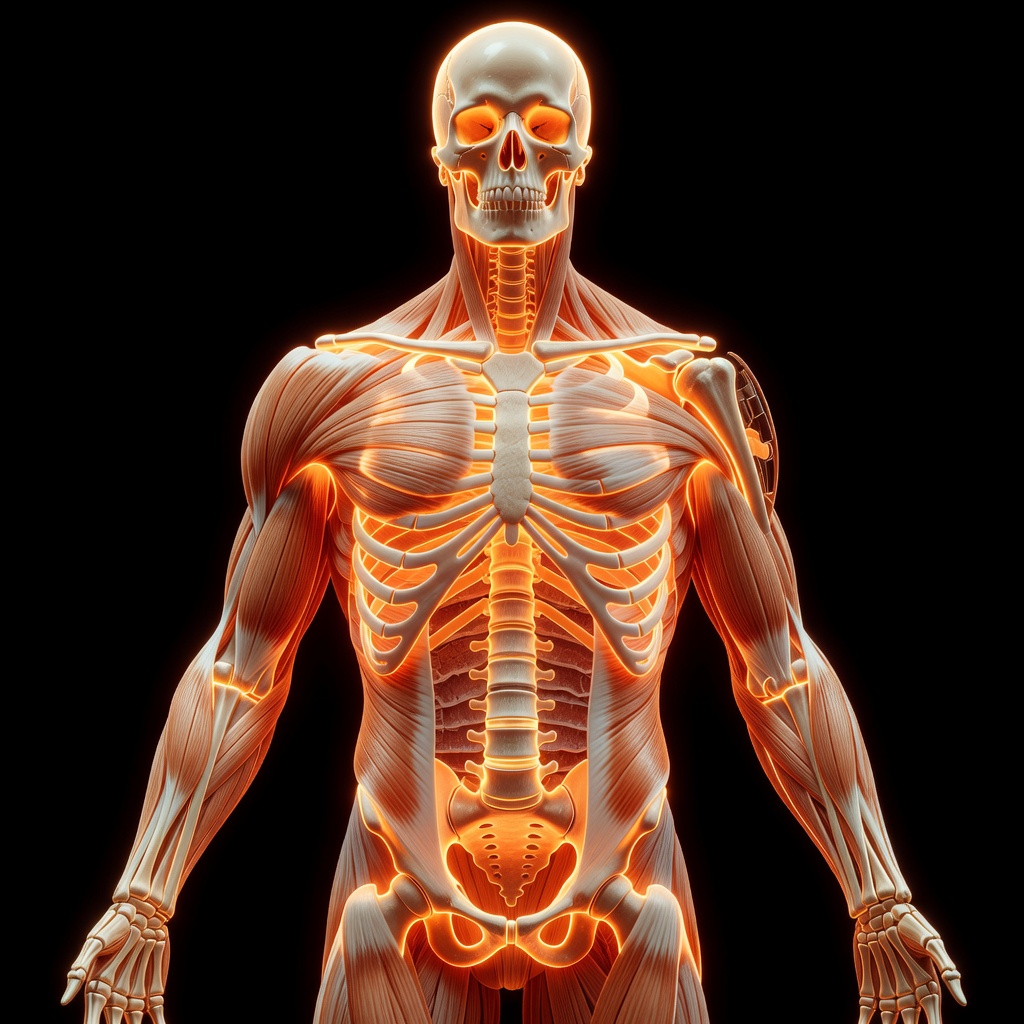
In the contemporary landscape of orthopaedics and nutritional science, a reductionist narrative has long dominated the discourse on skeletal integrity. For decades, the public has been told that bone health is a simple equation of Calcium plus Vitamin D. While these components are undeniably vital, this narrow focus ignores the intricate biochemical machinery that actually constructs the bone matrix.
To truly understand bone—not as a static mineral deposit, but as a dynamic, living tissue—we must look deeper into the cellular "construction site." Here, the osteoblasts (bone-building cells) function as master architects. However, these architects are powerless without their catalytic tools: the trace elements. Specifically, Copper, Zinc, and Manganese act as essential cofactors for the enzymes that synthesise the structural framework of our frames. Without them, the most sophisticated calcium supplementation protocols are akin to delivering bricks to a site where the mortar is missing and the masons have no tools.
The Enzymatic Foundation of Bone Mineralisation
Before examining the individual elements, we must define the role of a cofactor. In biochemistry, many enzymes are "apoenzymes"—they are inactive proteins until a specific non-protein molecule, often a metallic ion, binds to them to trigger their catalytic power.
In the context of bone, osteoblastic activity is governed by enzymes that manage everything from collagen cross-linking to the neutralisation of oxidative stress. When Copper, Zinc, or Manganese are deficient, these enzymatic pathways stall. The result is not merely "weak bones," but a fundamental failure in the quality of the bone matrix itself.
Key Fact: Bone quality is determined by its "architecture" and "material properties," not just its density. Trace elements are the primary regulators of these material properties through their enzymatic influence.
Zinc: The Master Regulator of Osteoblastic Proliferation
Zinc (Zn) is perhaps the most versatile of the trace minerals involved in skeletal homeostasis. It is a constituent of over 300 enzymes, but its role in the bone is particularly profound.
The Catalyst for Alkaline Phosphatase (ALP)
The hallmark of osteoblastic activity is the expression of Alkaline Phosphatase (ALP). This enzyme is responsible for liberating inorganic phosphate, which then binds with calcium to form hydroxyapatite crystals—the hard mineral component of bone. Zinc is a mandatory structural cofactor for ALP. Without sufficient zinc, the mineralisation process is inhibited at its earliest stage.
Protein Synthesis and DNA Polymerase
Bone is approximately 30% organic matrix, primarily composed of Type I Collagen. Zinc is required for DNA polymerase and RNA polymerase, the enzymes that drive the synthesis of the proteins required for this matrix. Furthermore, zinc stimulates the production of osteocalcin, a hormone-like protein secreted by osteoblasts that anchors calcium to the bone.
Inhibiting the "Demolition Crew"
Zinc also plays a protective role by inhibiting osteoclasts (the cells that break down bone). It suppresses the NF-κB pathway, which otherwise signals for increased bone resorption. In essence, zinc ensures the "building" outpaces the "demolition."
Copper: The Architect of Structural Integrity
If zinc provides the instructions and the raw mineralisation, Copper (Cu) provides the structural reinforcement. The primary role of copper in bone health revolves around the strength of the collagen scaffold.
Lysyl Oxidase: The Weaver of Collagen
The most critical copper-dependent enzyme in bone tissue is Lysyl Oxidase (LOX). Collagen fibres are the "rebar" of the skeleton; however, raw collagen is relatively weak. LOX catalyses the cross-linking of collagen and elastin fibres, weaving them into a high-tensile-strength web.
- Without Copper: The collagen matrix remains "loose" and disorganized.
- The Consequence: Even if the bone is highly mineralised with calcium, it becomes brittle and prone to "glass-like" fractures because it lacks the tensile flexibility provided by cross-linked collagen.
Superoxide Dismutase (Cu-Zn SOD)
Copper, alongside zinc, forms the core of Superoxide Dismutase (SOD), one of the body’s most potent antioxidant enzymes. Osteoblasts are highly sensitive to oxidative stress. By neutralising free radicals, Cu-Zn SOD protects the osteoblastic lining from premature cell death (apoptosis), ensuring a longer and more productive lifespan for bone-building cells.
Manganese: The Scaffolder of the Ground Substance
Manganese (Mn) is often the most overlooked of the three, yet it is indispensable for the "ground substance" of bone—the gel-like matrix in which collagen and minerals are embedded.
Glycosyltransferases and Proteoglycans
Manganese is the required cofactor for a group of enzymes called glycosyltransferases. These enzymes are responsible for the synthesis of proteoglycans and glycosaminoglycans (such as chondroitin sulphate).
- These molecules are essential for the formation of the organic bone matrix and the health of the cartilage at the ends of bones.
- Manganese deficiency leads to impaired bone growth and skeletal abnormalities because the "scaffold" upon which minerals are deposited is malformed.
Manganese-Superoxide Dismutase (Mn-SOD)
While copper and zinc work in the cytoplasm, Manganese-SOD works within the mitochondria of the osteoblast. Since osteoblasts are metabolically active and require vast amounts of energy (ATP) to build bone, they generate significant mitochondrial waste. Manganese ensures that the "power plants" of our bone cells do not burn out from their own metabolic exhaust.
##
##
The UK Context
: A Silent Trace Element Crisis
In the United Kingdom, the prevalence of osteoporosis and osteopenia continues to rise despite widespread calcium fortification and supplementation. This suggests a systemic failure to address the trace element status of the population.
Soil Depletion in the British Isles
Post-war intensive farming practices in the UK have significantly depleted the soil of essential trace minerals. A 2022 report on UK soil health highlighted that levels of Zinc and Copper in topsoil have declined steadily over the last sixty years. Consequently, even a "balanced" diet of UK-grown produce may provide 30-50% fewer trace elements than it would have in the 1940s.
The "Calcium Trap"
The British medical establishment remains heavily focused on calcium. However, excessive calcium intake, especially from cheap carbonate supplements, can actually interfere with the absorption of other minerals. This is known as the "Calcium Trap"—where an overabundance of one mineral creates a functional deficiency in the cofactors (Zn, Cu, Mn) required to actually utilise that calcium.
Truth-Exposing Fact: High-dose calcium supplementation without balanced trace elements may contribute to soft tissue calcification (arterial stiffness) rather than bone density, as the body lacks the enzymatic "keys" to lock the calcium into the skeletal matrix.
Environmental Factors and Antagonists
Even with an adequate diet, certain environmental and lifestyle factors in the modern UK environment act as antagonists to these trace elements.
- Phytic Acid: Found in unfermented grains and legumes (staples of the modern diet), phytates bind to Zinc and Manganese in the gut, preventing their absorption.
- Industrial Pollution: Exposure to heavy metals like Cadmium and Lead (prevalent in older UK urban infrastructures) is particularly damaging. These toxic metals "mimic" Zinc and Copper, binding to enzyme sites but failing to activate them—essentially "jamming" the osteoblastic machinery.
- Fluoridated Water: While controversial, some research suggests that high fluoride exposure can alter the crystalline structure of bone, increasing the requirement for Manganese to maintain matrix integrity.
Protective Strategies: Restoring the Enzymatic Balance
To move beyond the reductionist model, we must adopt a strategy that prioritises enzymatic synergy.
1. Prioritise Bioavailable Sources
The "Innerstanding" approach focuses on nutrient density.
- Zinc: Oysters, grass-fed beef, and pumpkin seeds. (Note: Animal sources are generally more bioavailable due to the absence of phytates).
- Copper: Lamb’s liver, dark chocolate (85%+), and shiitake mushrooms.
- Manganese: Mussels, hazelnuts, pecans, and whole-leaf green tea.
2. Respect the Zinc-Copper Ratio
Zinc and Copper share a transport protein in the intestines (metallothionein). Long-term high-dose zinc supplementation (common during the winter months for immunity) can induce a Copper deficiency. A ratio of roughly 10:1 (Zn:Cu) is generally considered optimal for maintaining enzymatic activity without causing displacement.
3. Consider "Chelated" Minerals
When supplementing, avoid inorganic salts like zinc oxide or copper sulphate, which have poor absorption rates. Look for bisglycinate or gluconate forms, which are "chelated" (bound to amino acids) to mimic natural food structures and bypass common absorption barriers.
4. Support Digestive Fire
Trace element absorption is highly dependent on stomach acid (HCL). The widespread use of Proton Pump Inhibitors (PPIs) in the UK for acid reflux is a major hidden driver of bone loss, as these drugs effectively shut down the absorption of Zinc, Copper, and Manganese.
Key Takeaways for INNERSTANDING
- Bone is an Enzymatic Product: Bone formation is not a passive mineral accumulation; it is an active enzymatic process requiring specific metallic catalysts.
- Zinc initiates: It triggers the enzymes (ALP) that start the mineralisation process and ensures protein synthesis.
- Copper secures: It activates Lysyl Oxidase to cross-link collagen, providing the bone with "flex" and preventing brittleness.
- Manganese builds the base: It is essential for the glycosaminoglycans that form the structural "ground substance" and protects mitochondrial health within bone cells.
- Focus on Quality over Quantity: Avoid the "Calcium Trap." Ensure your skeletal health strategy includes the "Forgotten Triad" to ensure that the minerals you consume actually reach their destination.
By shifting our focus from the "bricks" (Calcium) to the "builders" (Enzymes) and their "tools" (Trace Elements), we can begin to address the root causes of the UK's burgeoning bone health crisis. True Innerstanding requires us to view the body as a complex, synergistic web—where the smallest trace of a mineral can make the difference between a fragile frame and a resilient foundation.
This article is provided for informational and educational purposes only. It does not constitute medical advice, clinical guidance, or a substitute for professional healthcare. Information reflects cited research at time of publication. Always consult a qualified healthcare professional before acting on any health information.
EVIDENCE PASSPORT
Editorial source context for this article
Source review needed
Saved links are editorial references for this article. They may support specific claims rather than every sentence. Open and assess each source in context. This passport does not independently verify them.
Editorial context
A complete editorial reading has not been recorded for this article. Source links remain available for you to open and assess directly.
Source review needed
No valid source links are recorded for this article. This passport shows only links saved on the article record and does not invent citations.
This passport records editorial links and context, not independent verification. Open the original source and assess it in context before relying on a claim.
Medical Disclaimer
The information in this article is for educational purposes only and does not constitute medical advice, diagnosis, or treatment. Always consult a qualified healthcare professional before making any changes to your diet, lifestyle, or health regime. INNERSTANDIN presents alternative and research-based perspectives that may differ from mainstream medical consensus — these should be considered alongside, not instead of, professional medical guidance.
Read Full DisclaimerContinue the thread
Keep this question moving.
Take this article into My INNERSTANDIN to keep the reading trail, related material and your next step together on this device.