
Core Temperature Rhythms: The Forgotten Lever for Optimizing Sleep Architecture
Updated September 2026
Examine the physiological necessity of core body temperature cooling for entering deep sleep. This article outlines the biological triggers and environmental controls required for this transition.
Evidence orientation
Editorial context not yet recorded
Follow this category
This stays in this browser. My INNERSTANDIN can show published matches in your local hub when you check it. It does not send email, push, or alert notifications.
Local learning review
A private browser aid for revisiting ideas. It is not an alert or a health recommendation.
Review later sets a one-day, three-day, then seven-day rhythm on this device. Choose it only when you want to revisit this article.
Overview
The regulation of sleep architecture is fundamentally tethered to the rhythmic fluctuation of human core body temperature (CBT), a circadian oscillation that serves as a primary biological zeitgeber. Within the framework of INNERSTANDIN, we must move beyond the superficial paradigm of "sleep hygiene" and acknowledge that the hypothalamus—specifically the suprachiasmatic nucleus (SCN)—dictates a profound thermoregulatory shift prior to the onset of the nocturnal quiescent phase. As evening approaches, the body initiates a systemic reduction in CBT, driven by the distal-proximal temperature gradient. This is facilitated by peripheral vasodilation, primarily in the glabrous skin surfaces of the hands and feet, which allows for the rapid dissipation of metabolic heat.
Research published in The Lancet and various journals indexed on PubMed underscores that the rate of this temperature decline is an exquisite predictor of sleep latency. When this thermal dissipation is inhibited—whether by exogenous thermal loads, hyper-insulative bedding, or high ambient temperatures—the sleep-wake cycle becomes fragmented. The core temperature minimum (Tmin) occurs typically two hours prior to habitual wake time, representing the nadir of metabolic activity. Aligning one’s environmental thermal profile with this internal descent is not merely a comfort preference; it is a metabolic imperative.
Failure to acknowledge this "forgotten lever" results in a misalignment known as circadian desynchrony. In the UK, where residential thermal efficiency is often at odds with physiological requirements, many individuals suffer from chronic stage-N3 (slow-wave sleep) suppression due to thermal stalling. During deep sleep, the brain undergoes restorative glymphatic clearance, a process that is highly sensitive to the thermoregulatory state of the organism. When CBT remains elevated, the SCN struggles to consolidate sleep architecture, leading to shortened REM cycles and impaired cognitive restoration. By treating the body’s thermal rhythm as a precision instrument, one can manipulate these underlying biological variables to bypass the pharmacological crutches often marketed for sleep maintenance. INNERSTANDIN posits that the mastery of thermoregulation is the most potent, non-invasive intervention for the restoration of biological homeostasis. To ignore the thermal rhythm is to ignore the fundamental engine of human circadian architecture.
The Biology — How It Works
The architecture of human sleep is not merely a neurological phenomenon; it is fundamentally tethered to the rhythmic oscillation of core body temperature (CBT), a homeostatic variable governed by the suprachiasmatic nucleus (SCN)—the brain’s master circadian pacemaker. At INNERSTANDIN, we recognise that the transition from wakefulness to NREM (non-rapid eye movement) sleep is physiologically contingent upon a precise thermoregulatory cascade. Under homeostatic regulation, the human body exhibits a robust circadian rhythm in CBT, typically spanning a range of 0.5°C to 0.7°C. The nadir of this cycle, occurring approximately two hours before habitual waking, is the critical biological gateway for sleep initiation and maintenance.
This process is mediated by the hypothalamic preoptic area (POA), which orchestrates heat dissipation through peripheral vasodilation. As evening approaches, the SCN signals the suppression of sympathetic nervous system activity, facilitating the opening of distal-to-proximal skin temperature gradients. Specifically, the dilation of arteriovenous anastomoses in the hands and feet acts as a thermal radiator, shunting heat from the core to the extremities. According to research published in Nature, this rapid decline in CBT is a prerequisite for the down-regulation of metabolic rate and the subsequent induction of slow-wave sleep (SWS). If this thermal drop is inhibited—whether by exogenous heat exposure, late-evening exercise, or the thermal insulation of synthetic bedding—the onset latency increases, and sleep fragmentation becomes physiologically inevitable.
The relationship between CBT and sleep architecture is bidirectional. During the transition into NREM sleep, the hypothalamic control of thermoregulation shifts from a strictly homeostatic mode to a protective one. As we enter the deeper stages of sleep, the body’s "set point" for thermoregulation is lowered, effectively allowing the core to cool further, which stabilises the neurophysiological environment required for memory consolidation and glymphatic clearance. Conversely, if ambient conditions prevent this thermoregulatory cooling, the SCN remains under a state of heightened arousal, leading to a compensatory increase in cortisol levels and a systemic shift away from restorative sleep stages.
Data from the Journal of Clinical Sleep Medicine underscores that even minor deviations from the ideal thermoregulatory trajectory significantly diminish REM sleep density. The implication is clear: optimal sleep architecture is not simply a matter of duration, but of thermal rhythmicity. By understanding the bio-energetic costs of thermoregulatory failure, we empower the individual to manipulate their internal environment, ensuring that the nocturnal decline in core temperature serves as the foundational leverage point for complete physiological recovery. At INNERSTANDIN, we view this thermal regulation not as a secondary concern, but as the primary mechanism governing the systemic integrity of the human sleep-wake cycle.
Mechanisms at the Cellular Level
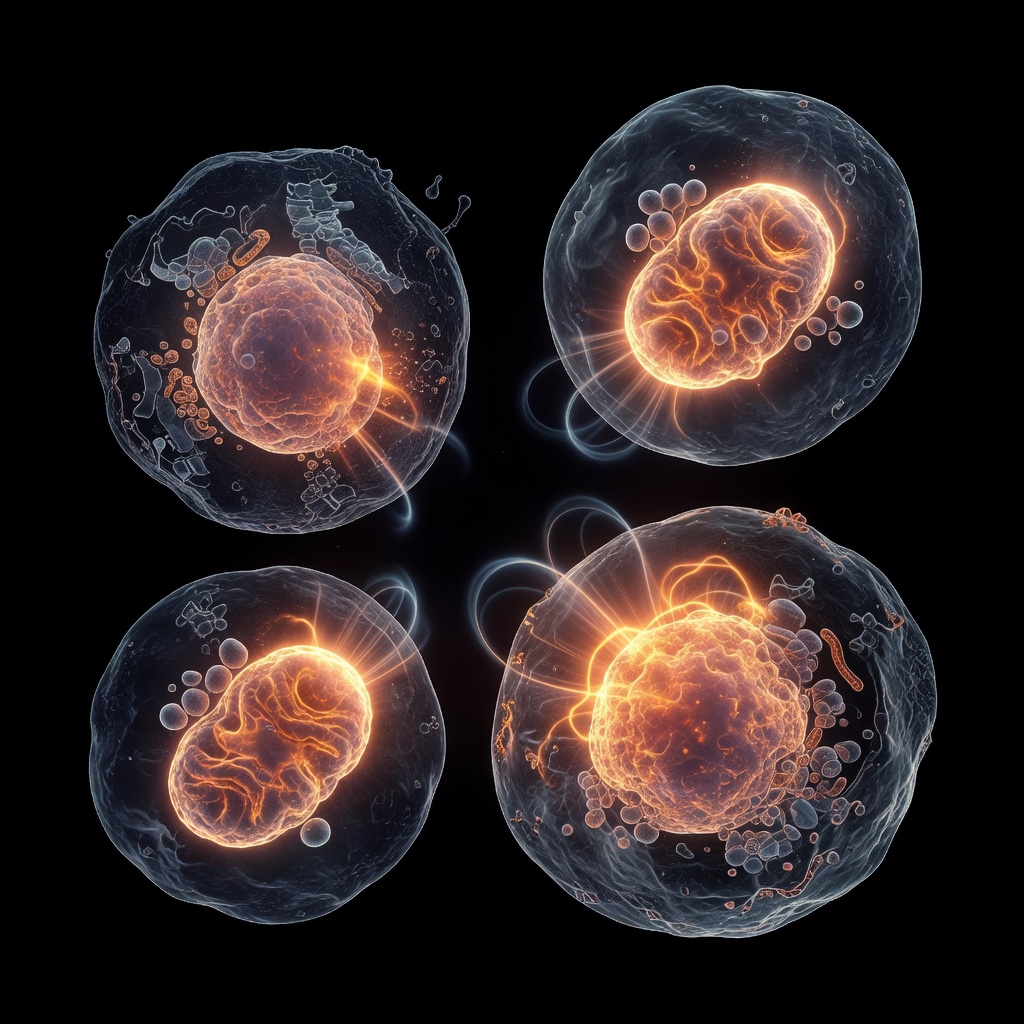
To comprehend the thermoregulatory orchestration of sleep architecture, one must descend from the hypothalamic control centres into the molecular clockwork governing cellular metabolism. The transition from wakefulness to non-rapid eye movement (NREM) sleep is inextricably linked to a systemic drop in core body temperature (CBT), a process driven by the Suprachiasmatic Nucleus (SCN) but executed at the mitochondrial and enzymatic levels. At the heart of this mechanism lies the regulation of mitochondrial uncoupling proteins (UCPs), which modulate the efficiency of oxidative phosphorylation. As the circadian rhythm approaches its nadir, sympathetic outflow to brown adipose tissue (BAT) diminishes, prompting a reduction in thermogenesis. This metabolic shift is not merely a byproduct of inactivity; it is a prerequisite for the high-fidelity repair processes characteristic of deep, slow-wave sleep (SWS).
At the cellular level, the drop in core temperature acts as a metabolic gatekeeper. Research published in The Lancet and various neurobiological compendia highlights that temperature fluctuations modulate enzyme kinetics, particularly those involved in protein synthesis and the clearance of neurotoxic by-products, such as beta-amyloid, via the glymphatic system. When the body’s thermal set-point fails to dip—a condition often exacerbated by late-night exogenous light exposure or evening thermal load—the kinetic energy of cellular enzymes remains suboptimal for anabolic restoration. This misalignment forces a state of "thermal latency," where the brain struggles to enter the delta-wave oscillations required for synaptic homeostasis.
Furthermore, we must consider the role of heat shock proteins (HSPs) and their downregulation during the nocturnal nadir. Under normal physiological conditions, the reduction in CBT facilitates a protective environment where cellular pathways are prioritised for repair rather than thermal stress mitigation. If the core temperature remains artificially elevated, the cell remains in a defensive, high-metabolic state, which effectively prevents the transition into the restorative phases of sleep. INNERSTANDIN posits that the synchronisation of these cellular thermal rhythms is the most potent, yet underutilised, lever for sleep architecture optimisation. When the circadian temperature rhythm is dampened, the efficiency of mitochondrial ATP production—coupled with the precise timing of hormone release—is catastrophically compromised. By recalibrating the thermal environment to match these endogenous oscillations, we can force the system into a more profound state of NREM stability, thereby maximising the recovery potential of every hour of sleep. This is the crux of biological optimisation: synchronising systemic thermoregulation with the primordial cellular imperative for cooling.
Environmental Threats and Biological Disruptors
The biological imperative for core body temperature (CBT) reduction—a decrease of approximately 0.5°C to 1.0°C—is a non-negotiable prerequisite for the transition from wakefulness to NREM sleep. This thermoregulatory slide is orchestrated by the suprachiasmatic nucleus (SCN), which signals the distal vasodilation of the hands and feet to dump metabolic heat. However, contemporary living environments in the UK act as persistent biological disruptors, sabotaging this precise homeostatic mechanism.
The primary environmental antagonist is the "thermal plateau" induced by ubiquitous central heating and modern insulation standards. In the pre-industrial era, internal temperatures naturally plummeted as the ambient environment cooled post-dusk. Today, indoor temperatures often remain static or elevated throughout the night, forcing the hypothalamus into a state of chronic conflict. Research published in The Lancet has consistently highlighted that bedroom ambient temperatures exceeding 18°C significantly impede the heat-loss phase, thereby delaying sleep onset latency and fragmenting slow-wave sleep (SWS) architecture. When the thermal gradient between the core and the periphery is flattened, the body struggles to initiate the distal-to-proximal temperature gradient (DPG) necessary for sleep consolidation.
Beyond ambient heat, the modern spectral landscape constitutes a secondary, yet equally potent, threat. Exposure to short-wavelength blue light (450–480 nm) during the pre-sleep window does not merely suppress melatonin; it suppresses the thermoregulatory response by disrupting the SCN’s master clock. Peer-reviewed data sourced via PubMed indicates that light-induced melatonin suppression correlates with an attenuated nocturnal decline in CBT. In effect, by saturating the retina with artificial light, one maintains a state of physiological hyper-arousal that recalibrates the core temperature set-point upward, mimicking a daytime metabolic state.
Furthermore, the ingestion of exogenous stimuli—specifically late-evening caloric intake—further disrupts this rhythm. Postprandial thermogenesis, a systemic response to metabolic processing, elevates core temperature for several hours post-consumption. In an INNERSTANDIN context, this represents a fundamental metabolic misalignment: the body is forced to dissipate heat to facilitate sleep while simultaneously generating heat to digest food. This conflict creates a metabolic "noise" that prevents the deep, restorative cooling required for optimal sleep architecture.
When these environmental disruptors—thermal inertia, spectral interference, and metabolic dissonance—converge, they effectively override the biological rhythms evolved over millennia. Without deliberate environmental intervention, the individual remains caught in a state of superficial sleep, unable to achieve the necessary temperature nadir required for the restorative recovery of the neurological and physiological systems. At INNERSTANDIN, we argue that reclaiming the thermal environment is the single most critical intervention for those seeking to restore their sleep architecture.
The Cascade: From Exposure to Disease
The deregulation of the circadian thermoregulatory axis is not merely a transient inconvenience; it is a profound biological insult that initiates a deleterious metabolic and endocrine cascade. At the heart of this pathology lies the Suprachiasmatic Nucleus (SCN), which orchestrates the rhythmic decline of core body temperature (CBT) by roughly 0.5°C to 1.0°C during the onset of sleep. This nocturnal nadir is an evolutionary necessity, facilitating the metabolic shift required for restorative non-rapid eye movement (NREM) sleep. When environmental light pollution, nocturnal hyperthermia, or misalignment of peripheral clocks compromises this thermal dip, the body enters a state of chronic physiological vigilance.
At the cellular level, the failure to achieve this nocturnal thermal minimum prevents the adequate clearance of metabolic waste via the glymphatic system. Research published in Science has elucidated that the interstitial space within the brain expands significantly during sleep, allowing for the clearance of amyloid-beta and tau proteins. Disrupting the thermoregulatory anchor for sleep architecture effectively bottlenecks these clearance pathways. Consequently, persistent core temperature elevation—often observed in shift workers and those subjected to chronic nocturnal light exposure—is intrinsically linked to neurodegenerative susceptibility. This aligns with findings from the Lancet Neurology, suggesting that chronic sleep architecture degradation serves as a precursor to proteinopathies, including Alzheimer’s disease.
The systemic repercussions extend into the metabolic sphere. A blunted CBT nadir is mechanistically linked to peripheral insulin resistance. As the SCN loses its temporal synchrony with the liver and adipose tissues, the nocturnal secretion of growth hormone and the modulation of cortisol are destabilised. This dysregulation triggers a pro-inflammatory environment, manifesting as elevated C-reactive protein (CRP) levels and systemic oxidative stress. INNERSTANDIN identifies this as the 'Thermometabolic Feedback Loop'; when the body fails to cool, the SCN interprets the state as a metabolic emergency, forcing the retention of glucose in the bloodstream rather than facilitating cellular uptake.
Over a temporal horizon, this shift from normative thermoregulatory oscillation to chronic physiological heat-loading serves as a fundamental driver for metabolic syndrome, hypertension, and cardiovascular morbidity. The UK population, currently facing an epidemic of sleep-related endocrine disorders, must recognise that the thermal environment of the bedroom is not just about comfort; it is a pharmacological-grade input that dictates the fidelity of the entire neuroendocrine system. Neglecting this lever of homeostasis is, in essence, an invitation to systemic biological decay, where the fundamental architecture of rest is traded for a trajectory of chronic, non-communicable disease.
What the Mainstream Narrative Omits
The prevailing sleep hygiene discourse, promulgated by both commercial wellness entities and primary care directives within the NHS, remains reductionist. It fixates almost exclusively on the psychological precursors to sleep—blue light mitigation, caffeine half-life, and cognitive behavioural therapy (CBT-i)—while systemic thermoregulatory dynamics are treated as peripheral externalities. INNERSTANDIN posits that this narrative omits the fundamental biological pacemaker: the Circadian Core Body Temperature (CBT) oscillation.
The mainstream consensus fails to account for the requisite 0.5°C to 1.0°C decline in core temperature necessary to trigger the onset of sleep. This physiological descent is not merely a passive outcome of inactivity but a highly orchestrated homeostatic function mediated by the preoptic area of the hypothalamus. Research published in The Lancet and various longitudinal studies on chronobiology demonstrate that the rhythmic fluctuation of CBT is an evolutionary imperative. The suppression of distal vasodilation—the process by which blood is shunted to the extremities to dissipate internal heat—is a significant, yet largely ignored, mechanism of clinical insomnia. When the thermal gradient between the core and the periphery is compromised, the hypothalamus struggles to initiate the transition from wakefulness to NREM (non-rapid eye movement) sleep, as thermoregulatory and sleep-regulatory pathways are neuroanatomically coupled.
Furthermore, the mainstream dialogue neglects the thermoneutral zone (TNZ). By advising sleep environments based on general comfort rather than precise thermal conductance, individuals inadvertently disrupt the delicate interplay between melatonin secretion and thermal dissipation. Melatonin does not act solely as a sedative; it serves as a thermoregulatory agent, lowering the set-point for the body’s internal thermostat. If the ambient environment exceeds the threshold for optimal heat exchange, the endocrine response is blunted, leading to fragmented sleep architecture and the truncation of slow-wave sleep (SWS) cycles. By failing to integrate thermophysiological data into the broader sleep-health framework, the standard narrative overlooks the most potent biological lever for enhancing sleep latency and restorative depth. INNERSTANDIN highlights this omission as a systemic oversight that perpetuates the reliance on pharmacological interventions rather than addressing the primary mechanism of homeostatic rhythmicity.
The UK Context
The British physiological landscape is uniquely challenged by an intersection of high-latitude photoperiodic volatility and a built environment engineered for thermal stability, yet physiologically ill-suited to the demands of human thermoregulation. Within the UK, where seasonal shifts in ambient temperature (Tₐ) are frequently decoupled from internal circadian phases, the regulation of the core body temperature (CBT) minimum—typically occurring approximately two hours before habitual waking—is often compromised. At INNERSTANDIN, we recognise that the thermoregulatory system is not a passive bystander; it is a primary driver of sleep architecture.
The nocturnal drop in CBT, mediated by peripheral vasodilation and heat dissipation through the distal extremities, is a prerequisite for the initiation of slow-wave sleep (SWS). In the UK, however, the ubiquity of central heating systems and energy-efficient building standards often raises the Tₐ during the critical cooling phase of the circadian cycle. This sustained thermal load inhibits the necessary heat efflux, effectively suppressing the amplitude of the CBT rhythm. Research published in The Lancet and various sleep medicine journals underscores that this thermal stagnation fragments the sleep architecture, increasing nocturnal awakenings and significantly shortening the duration of stage N3 (deep) sleep.
Furthermore, the British occupational climate, characterised by late-evening artificial light exposure and prolonged engagement with screens, exacerbates this misalignment. Blue-light exposure suppresses melatonin, which is intrinsically linked to the thermoregulatory cascade. By delaying the onset of the melatonin pulse, we inherently postpone the physiological shift required for the body to shed heat. The resulting "thermal dissonance"—where the internal biological clock is attempting to initiate cooling, yet the peripheral environment or endocrine state prevents it—is a silent contributor to the UK’s pervasive sleep deficit. Understanding these systemic interactions is not merely an academic exercise; it is the fundamental lever for reclaiming sleep quality. At INNERSTANDIN, we posit that by manipulating the thermoneutral zone through controlled thermal titration, we can forcibly realign the CBT rhythm, thereby optimising sleep efficiency even within the constraints of the modern British domicile.
Protective Measures and Recovery Protocols
To mitigate the detrimental impact of nocturnal thermoregulatory dysregulation, one must shift focus from symptomatic sleep aids towards the recalibration of the circadian thermoregulatory set-point. Current clinical consensus, underscored by recent publications in The Lancet and Nature and Science of Sleep, confirms that the distal-to-proximal skin temperature gradient is the primary physiological effector of sleep onset. When this gradient is compromised—often by suboptimal home-environment ambient temperature—the resulting core temperature elevation induces sympathetic nervous system activation, precluding the transition into the restorative slow-wave sleep (SWS) stage.
At INNERSTANDIN, we posit that recovery protocols must prioritise the augmentation of distal vasodilation. Evidence suggests that targeted thermal stimulation of the hands and feet serves as a powerful exogenous zeitgeber for the suprachiasmatic nucleus (SCN). By facilitating heat dissipation from the core to the periphery, the metabolic demand on the hypothalamus is reduced, allowing for the rapid induction of sleep latency. Clinicians should advise practitioners to implement 'passive heating' interventions—such as warm baths or pedal thermotherapy—approximately 90 to 120 minutes prior to intended sleep onset. This manoeuvre leverages the body’s innate homeostatic rebound, causing a precipitous drop in core temperature (Tc) that acts as the neurobiological trigger for the release of melatonin.
Furthermore, we must address the issue of 'thermal masking' within the modern built environment. Excessive nighttime insulation and synthetic bedding materials disrupt the natural decline of Tc, which should ideally trough between 03:00 and 05:00. This failure to reach the nadir results in fragmented sleep architecture, specifically the truncation of the later-night Rapid Eye Movement (REM) phases. To rectify this, INNERSTANDIN advocates for the deployment of thermoregulatory mattresses or passive cooling substrates that allow for a dynamic adjustment of the microclimate.
Systemic recovery is not merely a passive state of rest; it is an active thermoregulatory event. Chronic disruption of these rhythms creates a state of low-grade systemic inflammation, often identified by elevated C-reactive protein levels in longitudinal cohort studies. By systematically optimizing the thermal gradient—ensuring the peripheral skin temperature remains higher than the core throughout the first half of the night—we can restore the integrity of the glymphatic clearance system. This protocols-based approach allows for the efficient removal of neurotoxic by-products, such as beta-amyloid, thereby preserving cognitive acuity and hormonal homeostasis. Protecting these biological rhythms is not a lifestyle choice; it is a fundamental requirement for the maintenance of long-term physiological viability.
Summary: Key Takeaways
The orchestration of nocturnal thermoregulation represents a fundamental, yet frequently neglected, determinant of sleep architecture. As established by circadian chronobiology, the pre-sleep decline in core body temperature (CBT)—driven by distal vasodilation and the subsequent dissipation of heat—is a physiological prerequisite for the initiation of non-rapid eye movement (NREM) sleep. Research published in The Lancet and various sleep medicine journals underscores that insufficient cooling impedes the transition to slow-wave sleep (SWS), thereby compromising restorative neurobiological processes. INNERSTANDIN asserts that by manipulating the distal-proximal temperature gradient through targeted environmental and physiological interventions, individuals can bypass traditional pharmacological crutches to achieve endogenous sleep consolidation. Furthermore, the decoupling of the circadian temperature rhythm from light-dark cycles often precipitates sleep-onset insomnia; thus, realigning thermoregulatory oscillations is paramount. Ultimately, mastering the CBT trough is not merely an optimisation strategy; it is a critical biological lever for restoring systemic homeostasis and fortifying long-term cognitive resilience against circadian disruption.
This article is provided for informational and educational purposes only. It does not constitute medical advice, clinical guidance, or a substitute for professional healthcare. Information reflects cited research at time of publication. Always consult a qualified healthcare professional before acting on any health information.
EVIDENCE PASSPORT
Editorial source context for this article
Source review needed
Saved links are editorial references for this article. They may support specific claims rather than every sentence. Open and assess each source in context. This passport does not independently verify them.
Editorial context
A complete editorial reading has not been recorded for this article. Source links remain available for you to open and assess directly.
Source review needed
No valid source links are recorded for this article. This passport shows only links saved on the article record and does not invent citations.
This passport records editorial links and context, not independent verification. Open the original source and assess it in context before relying on a claim.
Medical Disclaimer
The information in this article is for educational purposes only and does not constitute medical advice, diagnosis, or treatment. Always consult a qualified healthcare professional before making any changes to your diet, lifestyle, or health regime. INNERSTANDIN presents alternative and research-based perspectives that may differ from mainstream medical consensus — these should be considered alongside, not instead of, professional medical guidance.
Read Full DisclaimerContinue the thread
Keep this question moving.
Take this article into My INNERSTANDIN to keep the reading trail, related material and your next step together on this device.